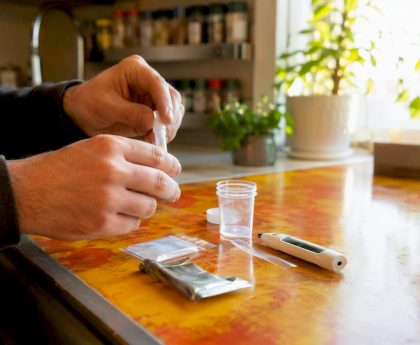

For an occasional user, THC usually drops below the detection threshold in a blood test within about a day, and often within hours. For a daily or heavy user, it can still be measurable for several days after the last use, and in some studies longer. Where you fall depends mostly on how often you use, how you consume, and how sensitive the lab’s test is.
Below you will find the timelines, the science behind them, what a blood result does and does not prove, and how blood compares with the urine, saliva and hair tests that most U.S. employers actually order.
TL;DR
- Occasional use: THC in blood is typically detectable for roughly 0 to 22 hours at a 0.5 ng/mL cutoff, according to a 2021 pharmacokinetic study.
- Daily or heavy use: THC can remain measurable in blood for 4 to 7 days or more after the last use, because it is released slowly from body fat.
- Blood is a recent-use test: it is mostly used after accidents, in hospitals and in driving cases, not for routine job screening.
- Hair is the long-window test: a standard sample covers about 90 days, and that is the test most worth preparing for. Our Macujo Aloe Rid Shampoo is built for it.
Table of Contents
- THC blood detection times by pattern of use
- Why THC leaves the blood so fast, then sometimes does not
- What if you use every day?
- Does it matter if you smoke, vape, or eat it?
- What blood tests are actually used for
- What changes your personal timeline
- Blood compared with urine, saliva and hair
- Perspective: why we focus on hair
- If your test is a hair follicle test
- Practical steps if a blood test is coming
- Frequently asked questions
- Sources
THC blood detection times by pattern of use
There is no single number, because blood THC follows very different curves in different people. This table summarizes what the research cited in this article reports. Treat the figures as typical ranges, not guarantees.
| Pattern of use | Typical window in blood | What the research says |
|---|---|---|
| Single use or occasional (a few times a month or less) | Hours, up to about 22 hours | In occasional users the detection window was generally 0 to 22 hours at a 0.5 ng/mL limit of quantification (Br J Clin Pharmacol, 2021) |
| Regular (several times a week) | One to a few days | Falls between the two groups; individual variation is large |
| Daily or heavy use | 4 to 7 days, sometimes longer | In a group of chronic frequent users, 92.9% still had detectable THC in plasma 4 to 5 days after last smoking (Addiction, 2009) |
The middle row is deliberately vague. Researchers have mostly studied the two ends of the spectrum, and anyone who tells you a precise number for a person who uses three or four times a week is guessing.
The heavy-use finding is worth reading carefully. In the same Addiction study that monitored chronic users through seven days of supervised abstinence, nine of the participants (36%) had no measurable THC at all during that week. That means roughly two thirds did. Two people with similar habits can get different results.
Why THC leaves the blood so fast, then sometimes does not
When cannabis is smoked or vaped, THC reaches the bloodstream almost immediately. A review of cannabinoid analysis in biological specimens notes that THC can be found in blood right after the first inhalation, with levels peaking after just 8 minutes of exposure.
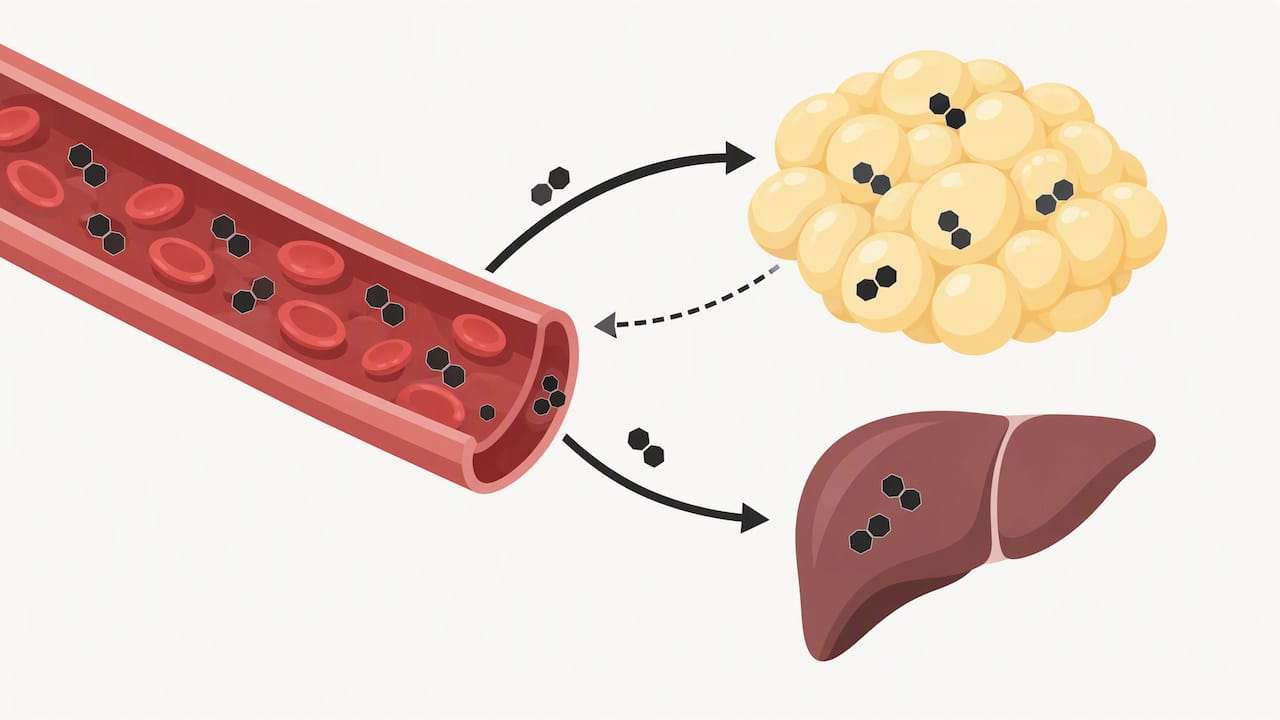
Then the concentration collapses. THC is quickly distributed out of the blood into tissues and broken down by the liver into metabolites, including the active 11-hydroxy-THC and the inactive THC-COOH. That is why an occasional user’s blood level can fall below 0.5 ng/mL within hours.
The complication is that THC is highly lipophilic, meaning it dissolves in fat. A study of chronic smokers describes THC as extensively stored in adipose tissue after chronic exposure, with slow release back into the blood over time. A second controlled-smoking study in frequent users reports a smoked bioavailability of about 25% and a plasma terminal half-life of around 4 days.
Put those together and the pattern makes sense. In a person who rarely uses, there is little stored THC to leak back out. In a person who uses every day, the fat tissue acts as a reservoir, and low levels keep trickling into the blood for days after the last session.
What if you use every day?
Daily users are the group that gets surprised. A common assumption is that blood tests only catch you within a few hours. For chronic users, the evidence says otherwise.
The Addiction study mentioned above was titled around a direct question: do THC concentrations indicate recent use in chronic users? Its answer, in effect, is that they do not reliably. Detectable THC persisted for days in a majority of participants, long after any psychoactive effect had passed.
So if you use daily and face a blood test, the safe planning assumption is a multi-day window, not a few hours. A week of abstinence will clear many heavy users, but as the data above shows, not all of them. Some studies have even reported detection much further out; one impairment FAQ from a state prosecutors’ training group cites research detecting THC in blood 30 days after ingestion. That is an outlier, not a typical result, but it explains why no honest source promises a guaranteed clearance date.
Does it matter if you smoke, vape, or eat it?
Route of use changes the shape of the curve more than most people expect.
Smoking and vaping. THC spikes within minutes and falls sharply. A cart or a joint produces a similar fast rise and fall, though high-potency products can start the curve higher.
Edibles. Oral cannabis is absorbed more slowly and metabolized differently. A pharmacokinetic study of oral cannabis examined blood and oral fluid after edible doses, and it was designed precisely because most earlier research only covered inhaled cannabis. The peak arrives later and is usually lower than after smoking, but it lasts longer in the early hours. Repeated edible use still builds up fat stores the same way smoking does.
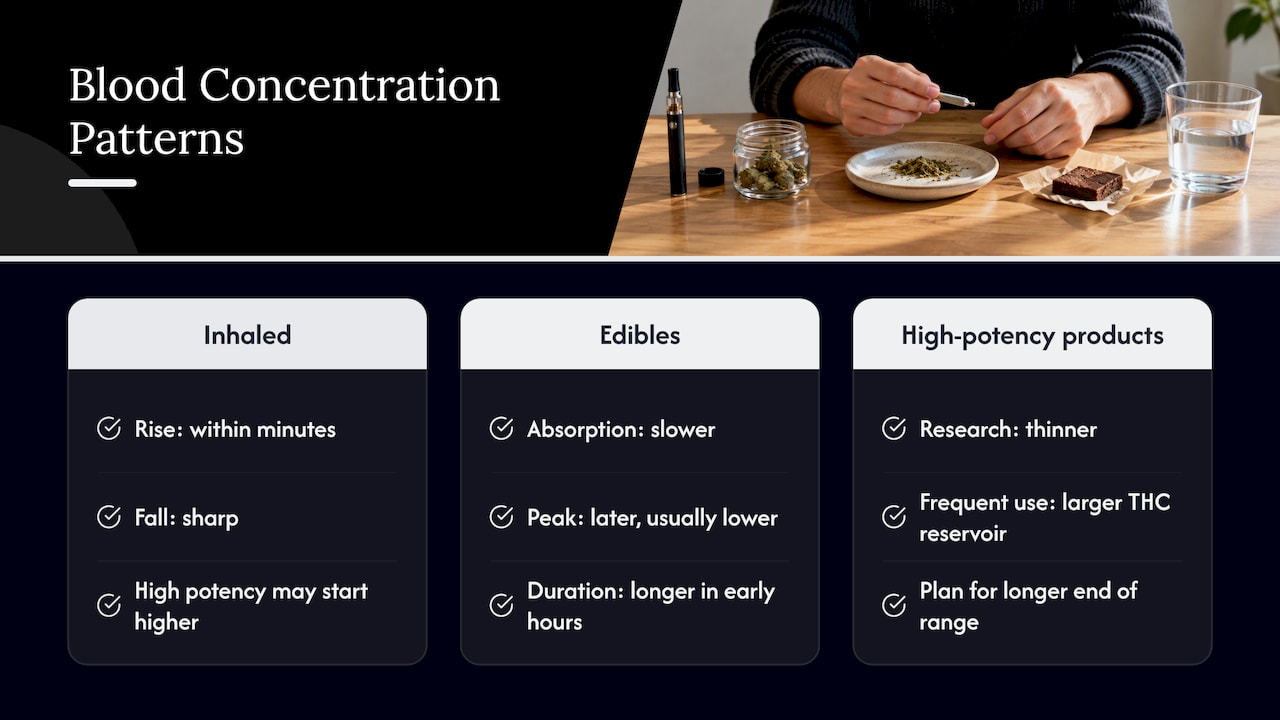
Concentrates and high-potency products. The research here is thinner. More THC in means a larger reservoir for frequent users, so it is reasonable to plan on the longer end of your range.
What blood tests are actually used for
Most people who search this question are worried about a job screening, so one point matters: blood is rarely the specimen. It is invasive, it needs a trained phlebotomist, and it only catches recent use. Employers overwhelmingly use urine, oral fluid or hair.
Blood testing shows up in other settings:
- Impaired-driving cases. Many states set a legal blood THC limit. A journalism explainer on driving and marijuana reports that U.S. states have generally used a figure between 1 and 5 nanograms per milliliter, though some studies found these limits to be weak indicators of impairment. Other states use a zero-tolerance or any-detectable-amount rule, so check the law where you drive.
- Hospital and accident investigations. Post-crash workplace testing can include blood.
- Court, probation and some legal proceedings.
The science on interpreting a blood result is unsettled. A forensic overview of marijuana testing emphasizes that THC redistributes from fat back into the blood, so a positive result in a chronic user does not confirm they were impaired when the sample was drawn. If you are facing a blood test tied to a driving charge or an accident, speak with a licensed attorney in your state. The legal threshold and how it is applied vary widely.
For a deeper look at why a positive can outlast the high, see our guide to blood tests for weed.
What changes your personal timeline
Research points to a handful of variables, and some are in your control while others are not.
- Frequency of use. This is the single biggest factor, as the table shows.
- Amount and potency per session. More THC absorbed means more to clear and more to store.
- Body fat and metabolism. Because THC is stored in fat, people with more adipose tissue can release it for longer. Individual liver enzyme activity also varies.
- Time of the blood draw. Hours matter in the first day. A sample taken at hour 2 and one taken at hour 20 can look completely different.
- Lab cutoff. A lab that reports down to 0.5 ng/mL will find THC that a lab with a 5 ng/mL cutoff will call negative. Ask which cutoff applies to you, since you cannot know the result without it.
- Whether the lab tests for THC or only the metabolite. Blood panels can look for parent THC, 11-hydroxy-THC and THC-COOH. Metabolites generally stay detectable longer than parent THC.
What does not reliably change it: drinking large amounts of water, a day of intense exercise right before the draw, or most over-the-counter tricks. Be skeptical of anyone promising a blood clearance in hours for a daily user. The only dependable lever for a blood test is time.
Blood compared with urine, saliva and hair
If your real concern is a job or program test, it helps to see the windows side by side. Rough ranges vary by source and by frequency of use, so use the linked pages for the details.
| Test | Typical window | Best at catching |
|---|---|---|
| Blood | Hours to several days | Very recent use |
| Saliva (oral fluid) | About 24 to 48 hours in many sources | Use in the last day or two |
| Urine | A few days to 30 days or more, depending on use | Recent and regular use |
| Hair | Up to about 90 days | Long-term pattern |
We have separate guides on each: saliva THC detection time, urine THC detection times and cutoffs and how hair and urine tests differ. The CDC’s older advisory on urine testing for marijuana explains that urine tests look for the metabolite 9-carboxy-THC rather than THC itself, which is why the urine window is so much longer than the blood window.
Perspective: why we focus on hair
We sell detox products to people in the United States who face drug tests, and we hear the same story every week. Someone reads that THC leaves blood in hours, relaxes, and then learns their employer orders a hair test that looks back three months.
That gap between what people think they are being tested for and what is actually ordered is where most of the stress comes from. Blood windows are short enough that time alone usually solves them. Hair is different: you cannot wait it out in a few days, because the record is physically in the strand.
Our view is simple. Find out which specimen you are being asked for before you do anything else. If it is blood, plan around the last-use timeline above. If it is saliva or urine, the windows are short to moderate and there are targeted options. If it is hair, you need a method built for hair, and that is why Mike’s Macujo Method became the reference point for so many of our customers. We stand behind our products and our confidentiality practices, and our support team is available from 9am to 12am every day if you want to talk through your situation before you order.
— MIchael
If your test is a hair follicle test
The hair test works on a completely different clock. Metabolites enter the hair shaft through the blood vessels that feed the follicle, and a typical sample is a 1.5-inch segment cut close to the scalp. At an average growth rate of about half an inch per month, that segment represents roughly 90 days, as cannabisdrugtest.org explains.
A few facts help you plan:
- Hair is cut, not plucked. A collector takes roughly 100 to 120 strands, according to the forensic overview cited earlier.
- There is a lag. The same hair-test page notes a 5 to 10 day delay between use and detectability in hair, so a very recent session may not show up yet.
- Sensitivity varies. Light or occasional users sometimes test negative on hair, a point we cover in our piece on edibles and hair tests. Heavy users are far more likely to test positive, as our page on heavy smokers and hair tests explains.
For a heavy user, the practical consequence is that stopping use will not clean a 90-day record before your test date. This is the situation Mike’s Macujo Method was developed for. It is widely regarded by users as the most effective and reliable technique for cleansing toxins from the hair before a hair follicle test, and our Macujo Aloe Rid Shampoo is the product we recommend for it. Follow the 10 to 14 day Macujo Aloe Rid instructions for timing and safety, and read our guide on how to pass a hair follicle drug test for marijuana for the full picture.
No product can promise a result for every person and every lab, and a hair test is still a lab test. Start early, follow the directions exactly, and talk to our team if your situation is unusual, such as heavily treated or very short hair.
Practical steps if a blood test is coming
- Confirm the specimen and the cutoff. Ask the testing company or your attorney whether the test is blood, and which analytes and cutoffs apply.
- Count back from your last use. Occasional users can often count in hours. Daily users should count in days, with a week as a cautious minimum.
- Stop using now. Time is the only reliable factor for blood.
- Do not assume a negative at day two. The Addiction study found most chronic users still showed THC after several days of monitored abstinence.
- If legal consequences are involved, get legal advice first. A driving case or a post-accident test is a matter for a licensed attorney in your state, not for a detox product.
- If your employer might also order hair, plan for that too. Our hair drug test detection window guide and job applicant guide lay out the timing.
If you are not sure which kind of test you are facing, our overview of detox versus cleansing explains what different products can and cannot do, and you can browse the full range of drug test detox products.
Frequently asked questions
How many days does THC stay in the bloodstream for a blood test?
For an occasional user, often less than a day. For a daily user, the research cited above found detectable THC at 4 to 5 days in most participants, and some studies report longer. Your own number depends on your frequency of use and the lab’s cutoff.
Can one hit of weed show up on a blood test?
Yes, but only for a short time. THC peaks in blood within minutes of inhalation, then drops quickly. In occasional users the window is generally within about 22 hours at a 0.5 ng/mL cutoff, and many people fall below detection well before that.
Why am I still testing positive after weeks of not using?
A positive blood test weeks later is unusual. More often the test is urine or hair. Urine looks for a long-lasting metabolite and can stay positive for 30 days or more in heavy users, and hair covers about 90 days. Confirm which specimen was tested.
Does a positive blood test mean I was high?
Not necessarily. Because THC is released from fat into the blood over time, chronic users can test positive without being impaired, according to the forensic literature we cite. Impairment questions in court are best handled by an attorney.
Is blood or hair the harder test to prepare for?
Hair, for most heavy users. Blood has a short window that time can solve, while hair keeps a record of about 90 days. That is why a method designed for hair, such as the Macujo method, matters if a hair test is on your calendar.
Sources
- Population pharmacokinetic model of blood THC in chronic and occasional users (Br J Clin Pharmacol, 2021)
- Do THC concentrations indicate recent use in chronic cannabis users? (Addiction, 2009)
- Analysis of Cannabinoids in Biological Specimens: An Update
- Plasma THC, 11-hydroxy-THC and THC-COOH in chronic cannabis smokers
- Plasma cannabinoid pharmacokinetics in chronic frequent users
- Pharmacokinetic profile of oral cannabis in humans
- Marijuana impairment FAQ
- Driving under the influence of marijuana: an explainer and research roundup
- Employment Issues: A Moving Target
- Weed Hair Follicle Test: 90-Day Detection Window
- Urine Testing for Detection of Marijuana: An Advisory (CDC)