
If you smoke daily or near-daily, a hair follicle test in the next 90 days carries a substantial risk of showing cannabis use. Published research found THC detected in hair for 77% of heavy cannabis users, far higher than detection rates among light or occasional users. If a test is already scheduled, treat your situation as high risk and move straight to the preparation choices covered later in this guide.
TL;DR:
- Hair follicle tests are most reliable for detecting heavy, near-daily cannabis use, with about 77% detection in heavy users according to research.
- External contamination from secondhand smoke and contact can cause false positives, but confirmatory tests focused on specific metabolites help distinguish ingestion from surface residue.
- Sample collection, hair type, cosmetic treatments, and recency of use heavily influence individual detection odds, with proper sample size and collection site being critical factors.
- Abstinence needs to be as long as possible since the 90-day growth window affects detection, but no guaranteed abstinence period exists to clear all traces before testing.
- Hair detox shampoos and protocols can help reduce detectable levels but do not eliminate the risk of detection in properly conducted confirmatory tests.
Table of Contents
- How hair follicle drug tests work: sample, window, and incorporation routes
- What labs test for: THC vs metabolites and cutoffs
- Evidence: how reliably hair tests detect heavy users
- External contamination and false positives: how they happen and how labs sort them out
- What heavy smokers should expect and the variables that shift your personal risk
- Realistic options before a scheduled test
- How heavy tobacco smoking affects a hair test for drugs
- Legal and employment context for hair testing
- Comparing hair testing with other drug testing methods
- What I’d tell a heavy smoker facing a hair test
- Where Macujo Aloe Rid Shampoo and detox products fit
- FAQ
- Sources
How hair follicle drug tests work: sample, window, and incorporation routes
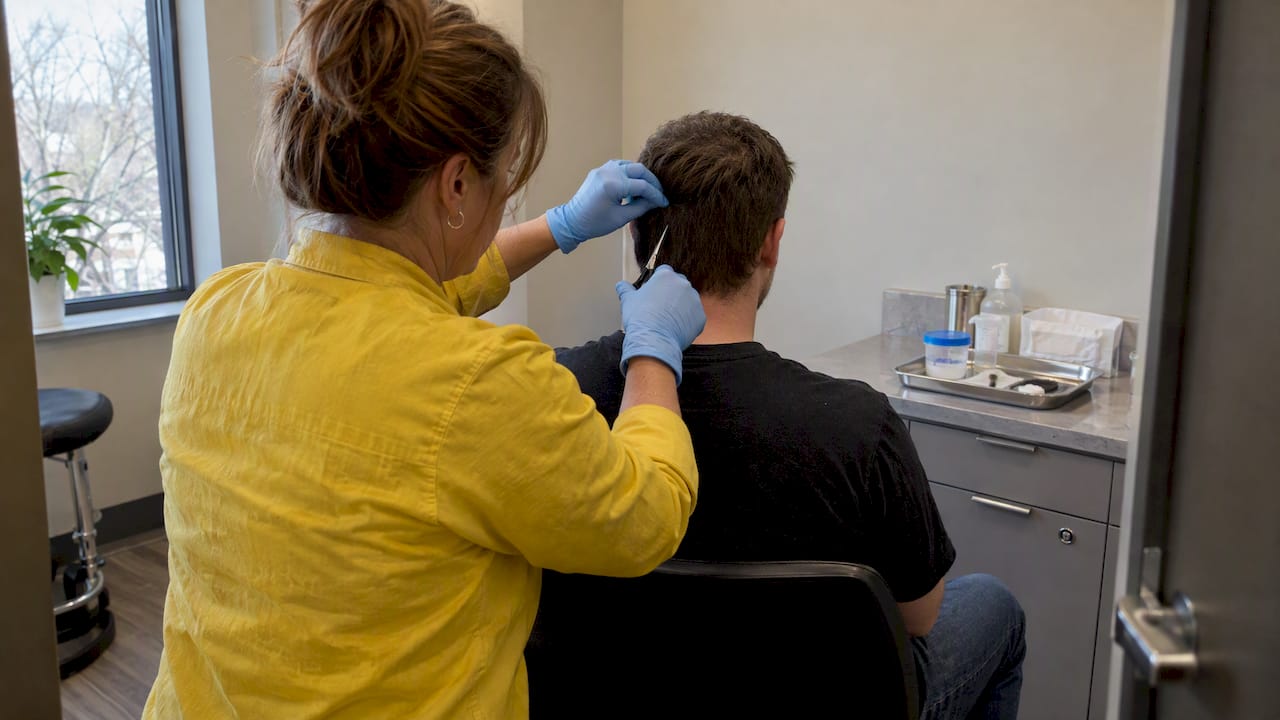
A hair follicle test is built to catch a pattern of use, not a single weekend. Labs typically collect about 1.5 inches of hair from the scalp, taken close to the root at the posterior vertex, the crown-back area where growth is most consistent. Since hair grows at roughly 0.5 inches per month, that 1.5-inch segment represents close to a 90-day window of history, according to Labcorp’s hair drug testing guidance. Our guide to marijuana’s effects on hair walks through how that window interacts with your own growth rate and hair type.
Cannabinoids end up in hair through three distinct routes, and understanding them matters because labs and defense attorneys argue about which one explains a given result.
- Bloodstream incorporation: THC and its metabolites travel through blood vessels at the hair follicle and get built into the hair shaft as it forms.
- Sebum and sweat transfer: oils and sweat secreted onto the scalp can carry cannabinoids from the body onto the hair surface after it has already grown.
- External contamination: smoke in the air, hand-to-hair contact, or shared surfaces can deposit THC onto hair without any of it ever being ingested.
Distinguishing these three routes is the hardest technical problem in hair testing, and it is also the center of most disputed results.
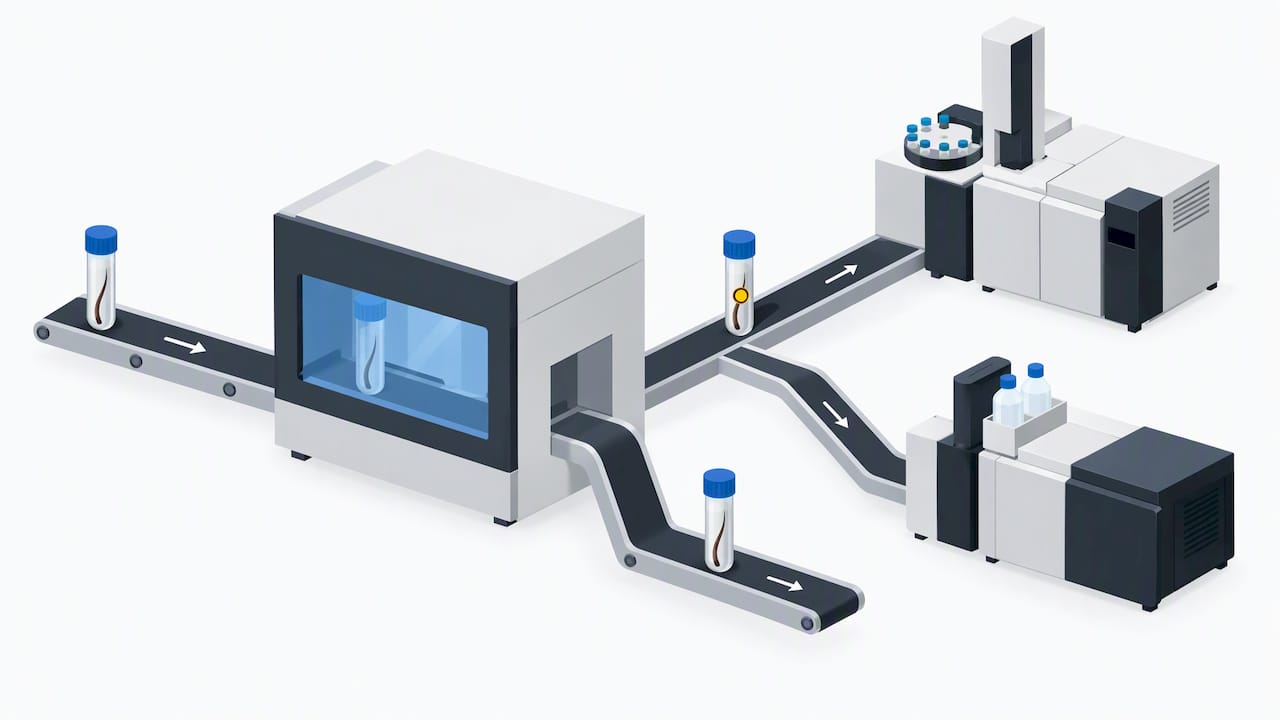
Once a sample reaches the lab, the process happens in two stages. The first is a screening immunoassay, a fast, relatively inexpensive test designed to flag anything that might contain cannabinoids. Anything that screens positive moves to a confirmatory test using gas chromatography-mass spectrometry (GC-MS) or liquid chromatography-tandem mass spectrometry (LC-MS/MS). These confirmatory methods identify the exact molecule present and its concentration, which is why a single positive screen is never the final word. If you want more detail on what that second stage actually reports, our overview of hair sample analysis for THC breaks down what shows up on a lab report.
What labs test for: THC vs metabolites and cutoffs
Not every cannabinoid molecule in your hair means the same thing. Parent THC can arrive through either ingestion or external contamination, which makes it a weaker signal on its own. THC-COOH (11-nor-9-carboxy-THC), a metabolite the body produces only after it processes THC internally, is far more specific to actual use because it cannot form from smoke sitting on the hair’s surface.
- Parent THC: present in smoke and resin, so it can appear on hair from contamination alone.
- THC-COOH: a metabolite created by the liver, present in hair largely because the drug was consumed and processed.
- Cutoff levels: the threshold concentration a lab uses to call a result positive rather than negative.
The analytical challenge is scale. Cannabinoids in hair typically sit at femtogram to picogram per milligram levels, concentrations so small that older testing methods could not reliably measure them, according to a review of bioanalytical techniques for cannabis in hair. Modern GC-MS and LC-MS/MS equipment can quantify at those limits of quantitation, but sample preparation, wash steps, and instrument calibration all affect what actually gets reported.
This is why confirmatory testing exists as a separate, more rigorous step rather than a formality. A screening immunoassay is tuned for sensitivity, catching anything suspicious, which means it is prone to false positives. Confirmatory GC-MS or LC-MS/MS is tuned for specificity, identifying the molecule and its exact concentration, which is what actually reduces the odds of a false accusation.
Evidence: how reliably hair tests detect heavy users
The strongest available data point comes from a study of 136 participants comparing self-reported cannabis use with hair test results. THC was detected in hair for 77% of heavy users, compared with only 39% of light users and 0% of non-users.
77% of heavy cannabis users tested positive for THC in hair, according to a peer-reviewed comparison of self-reported use and hair analysis. That gap between heavy and light users is the single most important number for a daily smoker to understand: hair testing works best as a marker of chronic, near-daily use, and it becomes far less reliable the lighter or more occasional the use.
A few limitations shape how far that 77% figure can be stretched:
- Sample size: the study population was 136 participants, meaningful but not large enough to produce a single universal detection rate for every heavy user.
- Sample weight: hair samples under roughly 10 milligrams showed reduced detection rates, so a thin or short sample can produce a false negative even in a genuine heavy user, per the same PMC research.
- Collection site: samples drawn from the posterior vertex, the recommended collection point, tend to produce more consistent results than hair taken elsewhere on the scalp.
What this translates to for an individual heavy smoker is a probability, not a certainty. A 77% detection rate means roughly one in four heavy users in that study did not show a positive result, often tied to sample weight or collection issues rather than genuine clean hair. It also means the odds are heavily stacked against you if you smoke daily and a full-length scalp sample gets collected properly. Occasional or light use sits in a different, far less predictable category, which is worth knowing if your pattern has shifted recently.
External contamination and false positives: how they happen and how labs sort them out
Secondhand exposure is a real mechanism, not an excuse people invent after a failed test. Side-stream smoke in an enclosed space can settle onto hair strands. Hand-to-hair contact, rolling joints, handling a pipe, touching your hair afterward, can transfer THC residue directly. Environmental surfaces in a room where cannabis is regularly smoked can hold enough residue to deposit trace amounts on hair that brushes against them.
- Side-stream smoke deposition: airborne smoke particles settle onto hair strands in rooms with heavy cannabis use.
- Hand and sebum transfer: touching cannabis or a smoking device and then touching your hair moves THC onto the hair surface.
- Environmental residue: surfaces in spaces where cannabis is frequently smoked can harbor enough residue for incidental transfer.
Labs attempt to screen out contamination using a wash step before extraction, intended to strip surface residue before the hair is analyzed. That wash step has real limits. It cannot fully guarantee that every surface molecule is removed, and SAMHSA’s technical materials on drug metabolites and hair testing identify external contamination as one of the field’s most persistent challenges. Some labs also look at ratios between different cannabinoids, research on smoking and vaping contamination suggests these ratios can help distinguish surface contamination from true ingestion, though the method is not definitive in every case. Targeting THC-COOH rather than parent THC remains the more reliable specificity check, since that metabolite only forms through internal metabolism.
Pro Tip: If you believe a result reflects secondhand exposure rather than use, request the lab’s wash-step documentation and chain-of-custody records before accepting the result, and ask whether the confirmatory test specifically measured THC-COOH.
If you want a deeper walk-through of contested results and what causes them, see our explainer on false positives in hair tests.
What heavy smokers should expect and the variables that shift your personal risk
Frequency of use is the single biggest factor in whether a hair test catches you. Daily or near-daily smoking builds up far more cannabinoid incorporation into the hair shaft than occasional use, which is exactly why the detection gap between heavy and light users in the research above is so wide.
A handful of other variables can shift your individual odds meaningfully:
- Hair color and thickness: darker, coarser hair tends to bind cannabinoids more readily than lighter or finer hair, which can affect comparative results between individuals with identical use patterns.
- Cosmetic treatments: bleaching and chemical straightening can degrade the hair shaft and reduce detectable cannabinoid levels, though not reliably or predictably.
- Sample weight and length: a short or thin sample below the amount labs recommend tends to produce weaker, less consistent readings.
- Recency of use: cannabinoids take time to show up near the root, so very recent use in the days immediately before a test may not yet be reflected in the newest hair growth.
Segmental testing adds another layer. If body hair is substituted for scalp hair, because the scalp is shaved or too short, the detection window changes since body hair grows more slowly and less predictably, which labs account for differently. Our guide to shaved-head hair testing covers how that substitution affects what gets reported and why it rarely works as an escape route.
Realistic options before a scheduled test
Time and abstinence remain the most reliable path, because hair that has not yet grown cannot carry cannabinoids from use that has not happened. Since hair grows roughly 0.5 inches per month, stopping use early enough that the tested segment grows out past your last exposure is the only option grounded in basic biology rather than guesswork.
- Start abstinence as early as possible. The longer the gap between your last use and the test, the more of the tested 1.5-inch segment reflects clean growth.
- Understand the limits of bleaching, dyeing, and aggressive washing. These can reduce cannabinoid concentration somewhat, but they damage the hair shaft unevenly and never reliably bring levels below detection, and a visibly altered sample can itself raise questions.
- Know the Macujo method by name, honestly. It is one of the most widely discussed community protocols for hair detox, combining specific shampoos and acidic treatments intended to open the hair cuticle and strip surface residue. For heavy, daily users, it is widely cited as the most talked-about approach to passing a hair follicle test, but no protocol, including this one, offers a guaranteed outcome against a properly run confirmatory test.
- Never consider sample substitution or tampering. Swapping samples or attempting to adulterate a collection is a form of test fraud that carries serious legal and employment consequences well beyond a failed drug screen.
Pro Tip: If a test date is fixed and close, treat abstinence plus a documented hair-care protocol as damage control, not a guarantee, and plan your decisions around realistic odds rather than hope.
How heavy tobacco smoking affects a hair test for drugs
Heavy tobacco use does not cause a false positive for cannabis on a properly run confirmatory test, since nicotine and THC are chemically distinct and labs test for specific metabolites rather than general smoke exposure. What heavy tobacco smoking does affect is a separate, parallel measurement: hair nicotine itself. Research on hair nicotine as a biomarker shows hair can reflect heavy and passive tobacco exposure clearly enough that labs use specific cutoffs to separate active smokers from passively exposed or non-smoking individuals.
The practical concern for a heavy smoker is secondhand exposure to cannabis smoke if tobacco and cannabis are used in the same settings. Side-stream smoke deposition does not distinguish between what is being smoked nearby, so a heavy smoker who shares space with cannabis users faces the same contamination questions covered earlier, independent of their own tobacco use. If you smoke both substances, understand that a hair test panel is typically looking for cannabinoid metabolites specifically, not a general smoke signature, so your tobacco habit on its own will not trigger a cannabis-positive result.
Legal and employment context for hair testing
Hair follicle testing is legal to use in pre-employment and workplace screening in most U.S. states, though specific rules on notice, consent, and permissible use vary by state and by whether the employer is public or private. Federal transportation workers are governed separately: the Federal Register’s procedures for transportation workplace drug and alcohol testing programs show that DOT-regulated positions still rely on urine testing rather than hair, since hair has not been adopted as an HHS-certified standard across federal programs.
Outside regulated transportation roles, many private employers and some child-custody or legal proceedings do use hair testing, often because its longer detection window suits their purposes better than urine. If you are disputing a result in an employment or legal context, the chain-of-custody documentation and confirmatory test method described earlier are the records worth requesting, since they are what any formal challenge will turn on. Because rules differ by state and by the nature of the proceeding, anyone facing a real legal or employment consequence should treat general information like this as a starting point, not a substitute for a conversation with an employment attorney or HR representative familiar with your jurisdiction.
Comparing hair testing with other drug testing methods
Hair testing’s defining advantage for a heavy smoker is its detection window. At roughly 90 days per 1.5-inch sample, it looks far further back than urine testing, which typically detects heavy cannabis use for a few weeks, or saliva and blood testing, which cover a window measured in hours to a few days.
That longer window cuts both ways. It makes hair testing harder to beat through short-term abstinence alone, but it also makes it more vulnerable to the contamination and sample-weight issues covered earlier, problems urine and saliva testing largely avoid since they measure far more recent exposure. For a heavy, daily smoker, hair testing is generally the hardest of the common methods to pass on short notice, while urine testing, despite its own detection window for chronic heavy use, tends to respond faster to abstinence. If your test type is a choice rather than a given, understanding which window applies to your situation matters more than any single preparation tactic.
What I’d tell a heavy smoker facing a hair test
I have spent a lot of time looking at how test preparation actually plays out for daily smokers, and the pattern is consistent: people search for a shortcut, but the data keeps pointing back to time and method, not luck. The research on detection rates in heavy users is sobering, and I think readers deserve that honesty rather than false reassurance.
My advice is to avoid panic and avoid magical thinking in the same breath. Choose steps grounded in actual biology, abstinence duration, proper hair care, informed sample handling, and skip anything promising a guaranteed pass, because nothing in the published science supports that claim. When a job offer, custody case, or legal matter is riding on the outcome, talk to an employment attorney or the relevant professional before you gamble on a home remedy. This article is informational, not medical or legal advice.
— MIchael
Where Macujo Aloe Rid Shampoo and detox products fit
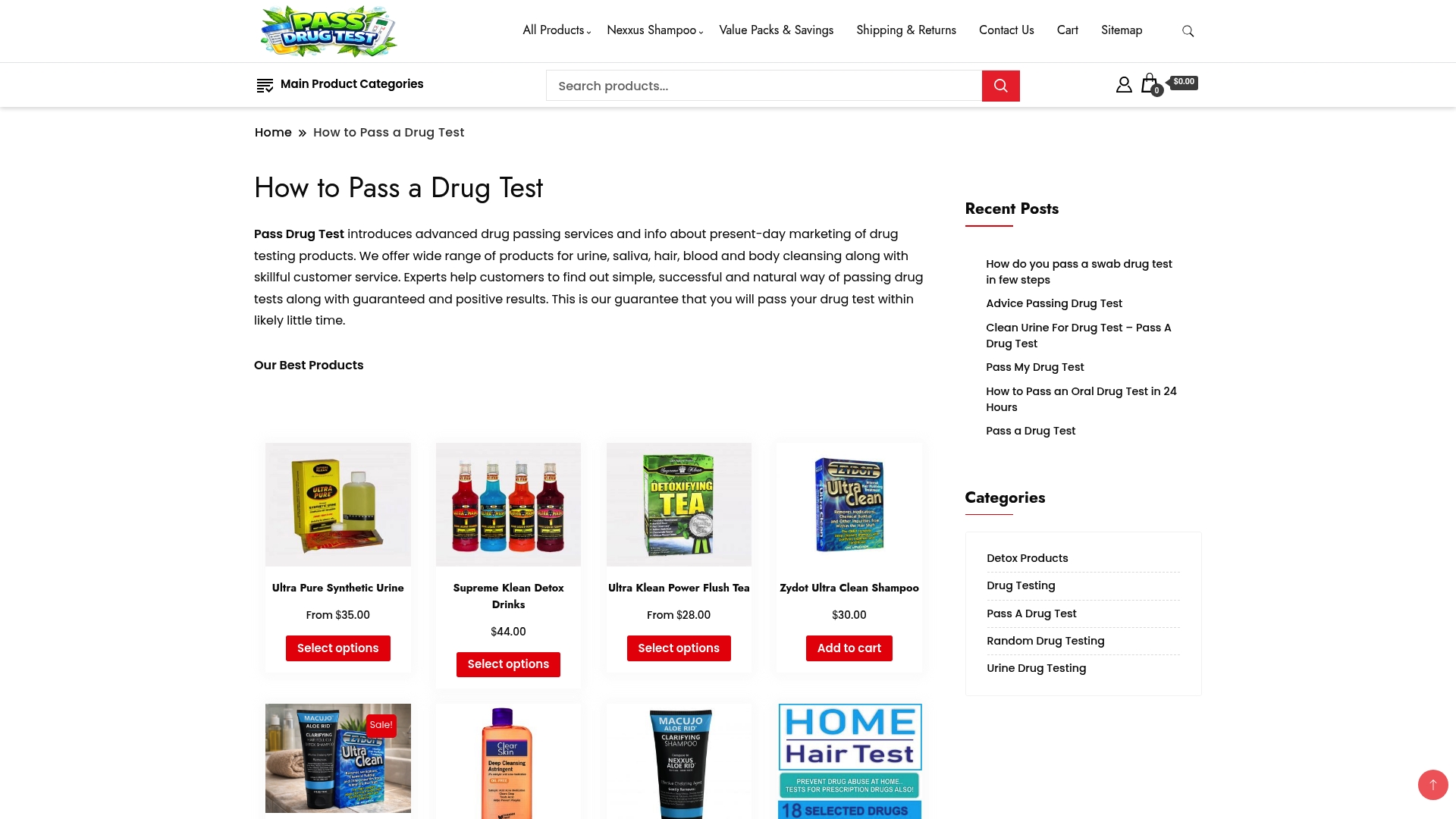
When abstinence alone will not fully cover the detection window, a focused hair-care protocol is a commonly discussed option for hair detox. Various detox products and categories are available for readers facing different test types.
- Hair follicle shampoos, including Macujo Aloe Rid Shampoo, built around the community protocol widely cited for hair detox before a scheduled test.
- Detox kits and combination treatments, such as the Macujo Aloe Rid and Zydot Ultra Clean pairing, for readers who want a more complete protocol in one order.
- Saliva and urine detox products, for readers facing a different test type than hair.
A reader with weeks of lead time and a genuine commitment to the full protocol is the best fit for these products. A reader expecting a guaranteed result with no preparation time is not, and we will not claim otherwise: no shampoo or kit overrides a properly run confirmatory GC-MS or LC-MS/MS test. What we offer includes a documented, widely discussed protocol and customer support available if you have questions about which product fits your timeline. For current pricing and ordering details, please visit our website. Visit our hair follicle drug test shampoo collection to compare options, or start at our main product page to see every category we carry.
FAQ
How long do I have to stop smoking for a hair follicle test?
There is no universal number of days that guarantees a clean result, since the tested segment covers roughly the past 90 days of growth based on hair growing about 0.5 inches per month. The longer your abstinence window before the sample is cut, the more of that segment reflects growth after your last use.
Can I fail a hair follicle test from secondhand smoke?
External contamination from secondhand smoke is a documented pathway for parent THC to appear on hair, through side-stream smoke deposition or surface contact in shared spaces. Labs use wash steps and look at specific metabolites like THC-COOH to help distinguish contamination from actual ingestion, though the process is not perfect in every case.
What can throw off a hair follicle drug test?
Sample weight under the recommended threshold, collection from a site other than the posterior vertex, and external contamination from smoke or handling can all affect results in either direction. Cosmetic treatments like bleaching can also alter detectable cannabinoid levels unpredictably.
Can I pass a hair follicle test in 30 days?
Thirty days of abstinence covers only part of the roughly 90-day window labs typically test, so a sample cut at that point would still include hair grown during active use. Heavy, daily users face a meaningfully higher detection rate than light users even with recent abstinence, which is why many people combine abstinence with a documented hair-care protocol rather than relying on time alone.
Sources
- Comparison of cannabinoids in hair with self‐reported cannabis consumption in heavy, light and non‐cannabis users — PMC
- Drug metabolites and hair testing — SAMHSA