
A urine detox drink is used on test day, in a short window before you give your sample, and it works best when you follow a plan: read the label, drink it at the time the maker states, add a measured amount of water, urinate a few times, and give a midstream sample that looks and reads like a normal specimen. This guide walks you through each step, explains what the lab checks so you can avoid a dilute result, and covers the water limits that keep you safe.
We sell urine detox products and kits to people across the United States who face scheduled or random tests, so the steps below are the ones we would give a friend. If your real worry is a hair follicle test, there is a short section near the end for you too.
TL;DR
- Follow the directions printed on your specific drink first. Labels differ in volume, timing and refill steps, and the label always outranks a general guide.
- Plan the drink around the appointment. In a controlled study, dilute urine showed up within about 1.5 to 2 hours of extra fluids, and measures drifted back toward normal over roughly 8 to 10 hours.
- Aim for a normal-looking sample, not a watery one. Labs flag dilute specimens by creatinine and specific gravity, and some testing programs treat a dilute sample as a problem.
- Never water-load. Drinking five to six liters before a urine test has put a trainee in the hospital with dangerously low blood sodium.
- Use the same routine every time and keep your timeline realistic: the drink is a test-day step, not a substitute for planning ahead.
Table of Contents
- What a urine detox drink is designed to do
- Step-by-step urine detox drink instructions
- What the lab checks so you can avoid a dilute result
- Water safety: the limit you should never cross
- Timing questions people ask most
- When a drink is not the right tool
- If your test is a hair follicle test
- Our perspective
- Get what you need for test day
- FAQ
- Sources
What a urine detox drink is designed to do
Urine detox drinks are sold to help people clear their system of toxins and provide a clean urine screen. A published case report on detox kits describes them as marketed to flush toxins and pass a urine drug screen, with dilution as a possible mechanism. The same report notes that ingredients such as creatine and riboflavin (vitamin B2) may be included to influence creatinine readings and urine color.
That explains the design of most same-day drinks. They pair fluid, which lowers the concentration of drug metabolites in your urine, with added markers so the sample still looks like normal urine. Metabolites are the compounds your body makes when it breaks down a substance. A standard urine screen looks for those compounds, not for the substance itself, so concentration matters.
The practical lesson is that the drink and your own fluid handling work together. Getting the instructions right means getting both parts right.
Step-by-step urine detox drink instructions
These steps cover the usual same-day routine. Where your label says something different, follow the label.
Step 1: Confirm your appointment window
Write down the exact time you must arrive at the collection site, and how long you will realistically need to get there. Many people lose their window by starting too early or running late. Collection sites expect you to provide a sample soon after you arrive, so build in travel time and a small buffer.
If your test is random and you get a call, your window is whatever the call allows. Keep a drink in your bag so you are not scrambling.
Step 2: Prepare the day before
Eat normal meals and sleep properly. A heavy night or an empty stomach makes the morning harder, and a drink on a very empty stomach can leave you queasy. Set out your drink, a bottle of water and your ID so nothing is rushed.
Our urine drug test marijuana guide explains how a standard screen reads THC metabolites, which helps you understand why the next steps matter.
Step 3: Drink on the schedule your label gives
Most same-day drinks tell you to finish the bottle in one sitting, then follow with a set amount of water. Some use a refill step, where you fill the empty bottle with water and drink it again. Do exactly what your bottle says. Shortening it or doubling it does not make it stronger. It makes it harder to predict.
Timing is the part people get wrong most often. In the 1998 controlled study of fluid ingestion, dilute urine measures appeared within 1.5 to 2 hours of extra fluids, and the same study saw readings return toward pretreatment levels over 8 to 10 hours. In plain terms, the effect has a window. It builds in the first couple of hours and fades through the day, so you want your sample to fall inside that window, not before it or well after it.
Step 4: Add water in a measured way
The goal is a sample that is not too dark and not crystal clear. We put the whole plan on one page: our test-day plan with 16 to 24 ounces in two hours shows how to pace fluids so you avoid a dilute sample.
A few ground rules:
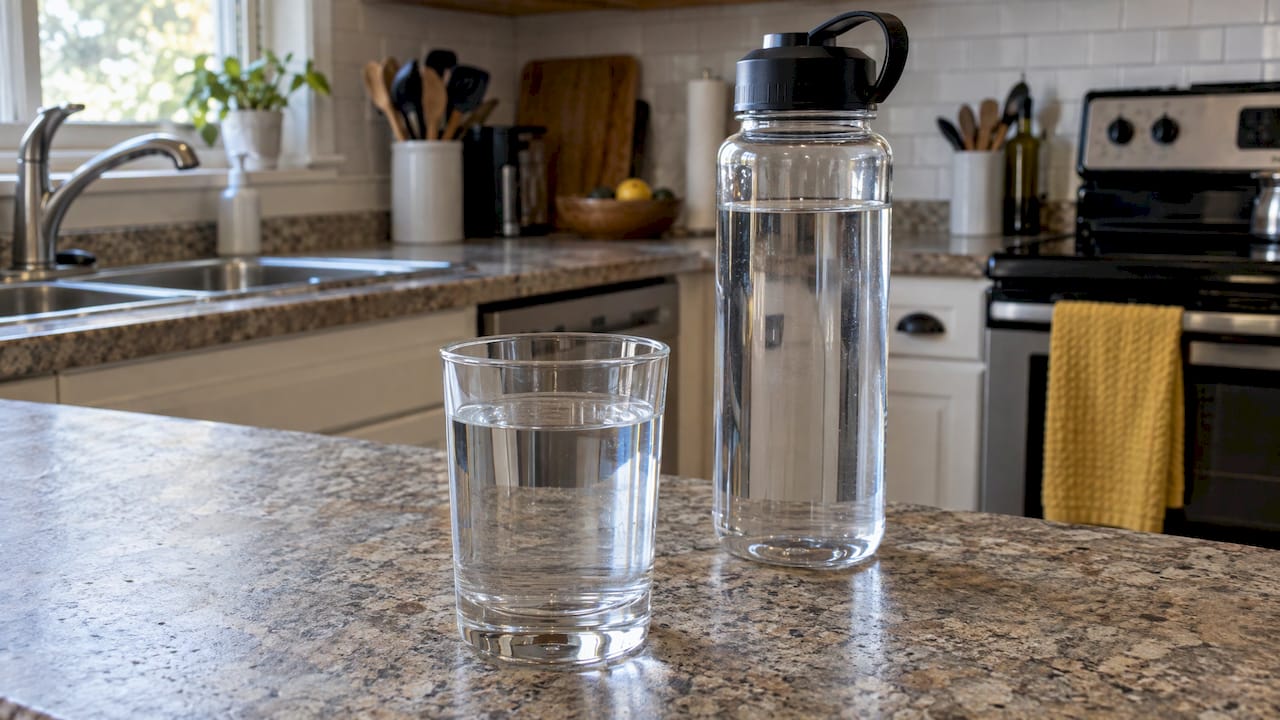
- Sip steadily instead of gulping a large amount at once.
- Stop when your urine is pale yellow, not colorless.
- Never push past what feels comfortable. Nausea, headache or confusion mean stop and rest.
Step 5: Urinate several times before you go
Most people follow a drink with frequent trips to the bathroom. This clears the first, most concentrated urine so the sample you give later reflects the later, more diluted urine. Count your trips. A common pattern is two or three before you head in, then a final one that you hold until you reach the site.
Do not arrive desperate, though. Give the sample from midstream: let the first part go, collect the middle, and finish in the toilet. Staying calm helps the collector, and it helps you.
Step 6: Keep the sample looking normal
A normal specimen has a natural yellow tone and a normal temperature. That is why many drinks include B vitamins and creatine: they are meant to help urine keep its usual color and markers when you have taken in a lot of fluid. Take the vitamin step on your label seriously and do not skip it. If your label has a separate vitamin packet, take it with the drink at the stated point, not afterward.
The creatine and the 20 mg/dL cutoff article explains how creatine relates to the number labs look at.
What the lab checks so you can avoid a dilute result
Labs do not only look for drugs. They also check whether the urine itself is a valid specimen. A peer-reviewed 2025 review explains that laboratories run specimen-validity checks including pH, creatinine, specific gravity and temperature, plus targeted tests for adulterants.
Creatinine is a waste product your muscles produce at a steady rate, so its level in urine says how concentrated the sample is. Specific gravity is a measure of how dense urine is compared with water.
For DOT-regulated testing (jobs covered by the U.S. Department of Transportation, such as commercial drivers), the rule defines a dilute specimen precisely. Under 49 CFR § 40.88, a dilute result means creatinine of at least 2 mg/dL but below 20 mg/dL, together with a specific gravity above 1.0010 but below 1.0030.
Why this matters to your plan:
- Too little fluid leaves your drug metabolites at their strongest.
- Too much fluid pushes your creatinine under the 20 mg/dL mark and can bring a dilute report.
- A dilute report can mean a recollection, and some testing programs treat it more seriously than that. Our article on U.S. probation urine tests and dilute samples shows how.
The target is the middle: enough fluid to follow your label, not so much that you wash out your creatinine. Our 20 mg/dL creatinine guide goes deeper on that number.
Water safety: the limit you should never cross
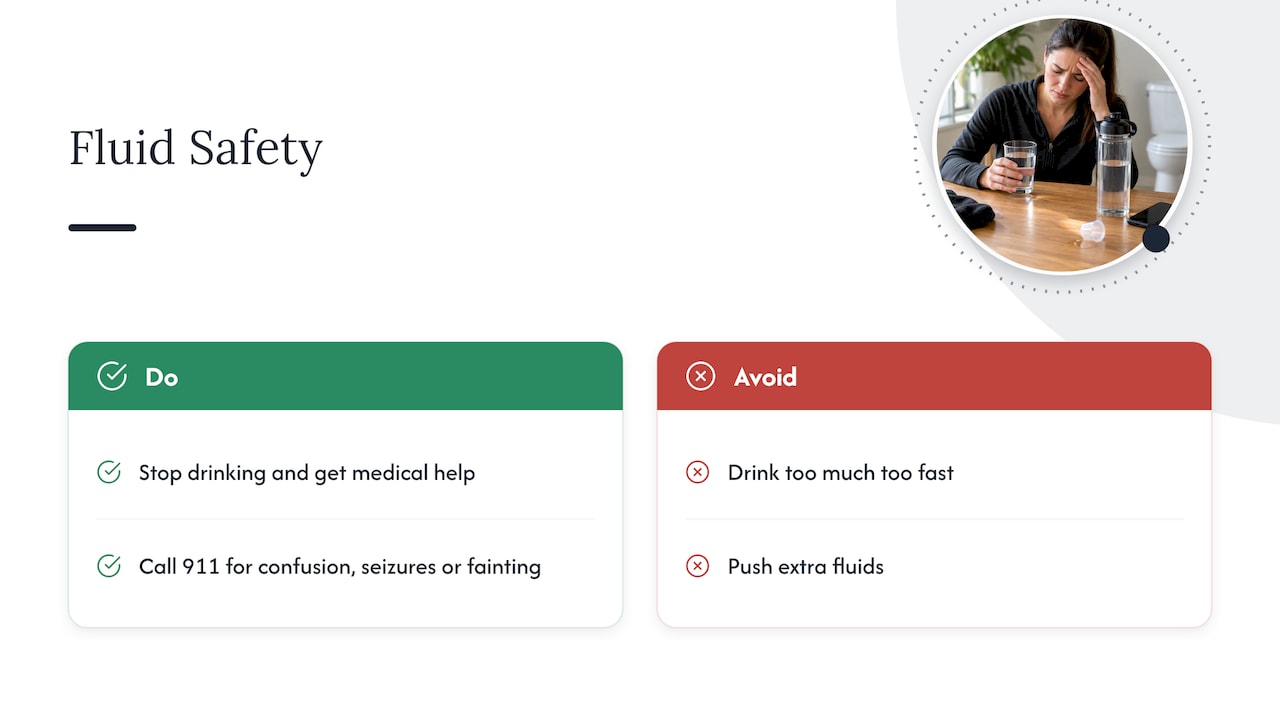
More water is not better. Drinking too much too fast dilutes the sodium in your blood, a condition called hyponatremia, and it can turn into a medical emergency.
A U.S. case report describes a trainee who developed acute symptomatic hyponatremia after drinking five to six liters of water before a urine drug test. An earlier peer-reviewed report documented acute water intoxication linked to workplace urine testing and named excessive intake as a risk factor.
Warning signs include a severe headache, nausea or vomiting, confusion, muscle cramps and unusual drowsiness. If you notice any of these, stop drinking and get medical help right away. Call 911 for confusion, seizures or fainting. If you have kidney, heart or other health conditions, or take medication that affects fluid balance, talk to your doctor before using any detox drink.
This is why we keep our plan to a measured amount of fluid over a couple of hours. You do not need to push it.
Timing questions people ask most
When should I drink the drink?
Follow your label, and aim to give the sample inside the effect window. Since fluid effects were seen from about 1.5 to 2 hours onward and faded over 8 to 10 hours in the study above, many people plan to finish the drink and water a short time before they leave for the site, with enough time to use the bathroom a few times and still arrive on schedule. Your label’s stated window is the one to follow.
What about a test in two days?
A drink is a test-day tool. With two days to go, spend them on routine: normal meals, regular sleep, steady (not excessive) water, and no new heavy use. Then use your drink on the morning of the test according to its directions. How long any substance takes to clear depends on the person and the substance, so there is no honest one-size answer, and we would rather tell you that than promise one.
Does clear urine mean a pass?
Not by itself. Clear urine is a sign of dilution, and labs check for it. A sample that is nearly colorless with a low creatinine value can be flagged. A pale yellow sample with normal markers looks like ordinary urine.
When a drink is not the right tool
Some situations call for a different product. If you need a drug-free specimen for a test you cannot prepare for with fluids alone, our urine drug testing category lists the options, and our page on products for clean urine explains which product suits which situation. For a closer look at how urine screens work, see About Urine Drug Testing and our urinalysis drug testing overview.
We also offer a synthetic urine kit for readers who want a separate option and a urine drug testing kits page if you want to check your own readiness at home before test day.
If your test includes a drink-focused approach such as cranberry juice, our article on why cranberry juice will not reliably beat a drug test explains how labs catch dilution, and why a purpose-built drink with a measured routine is a more controlled approach.
If your test is a hair follicle test
A urine drink does nothing for a hair test. Hair holds a record of drug use over a much longer period, and urine products do not reach it. For hair, the method most of our customers ask for is Mike’s Macujo method, which we consider the best way to approach a hair follicle drug test, and it is built around a shampoo routine. Our Macujo Aloe Rid Shampoo page explains the product, and the 10 to 14 day Macujo Aloe Rid instructions walk you through timing and safety. If you want to understand why hair behaves differently, read hair shaft drug incorporation.
Our perspective
Most people who write to us are anxious, and anxious people tend to over-do things. They drink too much water, or take two drinks, or start the plan at the wrong hour. Our advice is almost always the same: slow down, follow the directions, and treat the test day as a routine.
What we want you to remember is that a good plan is boring. You know your appointment time, you know your drink’s directions, you pace your fluids, you use the bathroom, and you give a normal-looking sample. That is the whole approach, and it is why we publish our instructions in detail rather than leaving you to guess.
We also care about the part that happens before you order. Our customer service is available from 9am to midnight every day, so if you have a question about which product fits your test, you can ask it the evening before, not after the fact. Orders ship with confidentiality in mind, with secure delivery, so your privacy is respected from checkout to your door.
If your test is a hair follicle test, tell us. That is a different plan, and the Macujo method with our Macujo Aloe Rid Shampoo is where we point people.
MIchael
Get what you need for test day
Our store carries urine, saliva and hair products for people in the United States who face scheduled or random tests. Browse the urine drug testing category to find a drink or kit that matches your test, and if you are preparing a hair test, start with our Macujo Aloe Rid Shampoo.
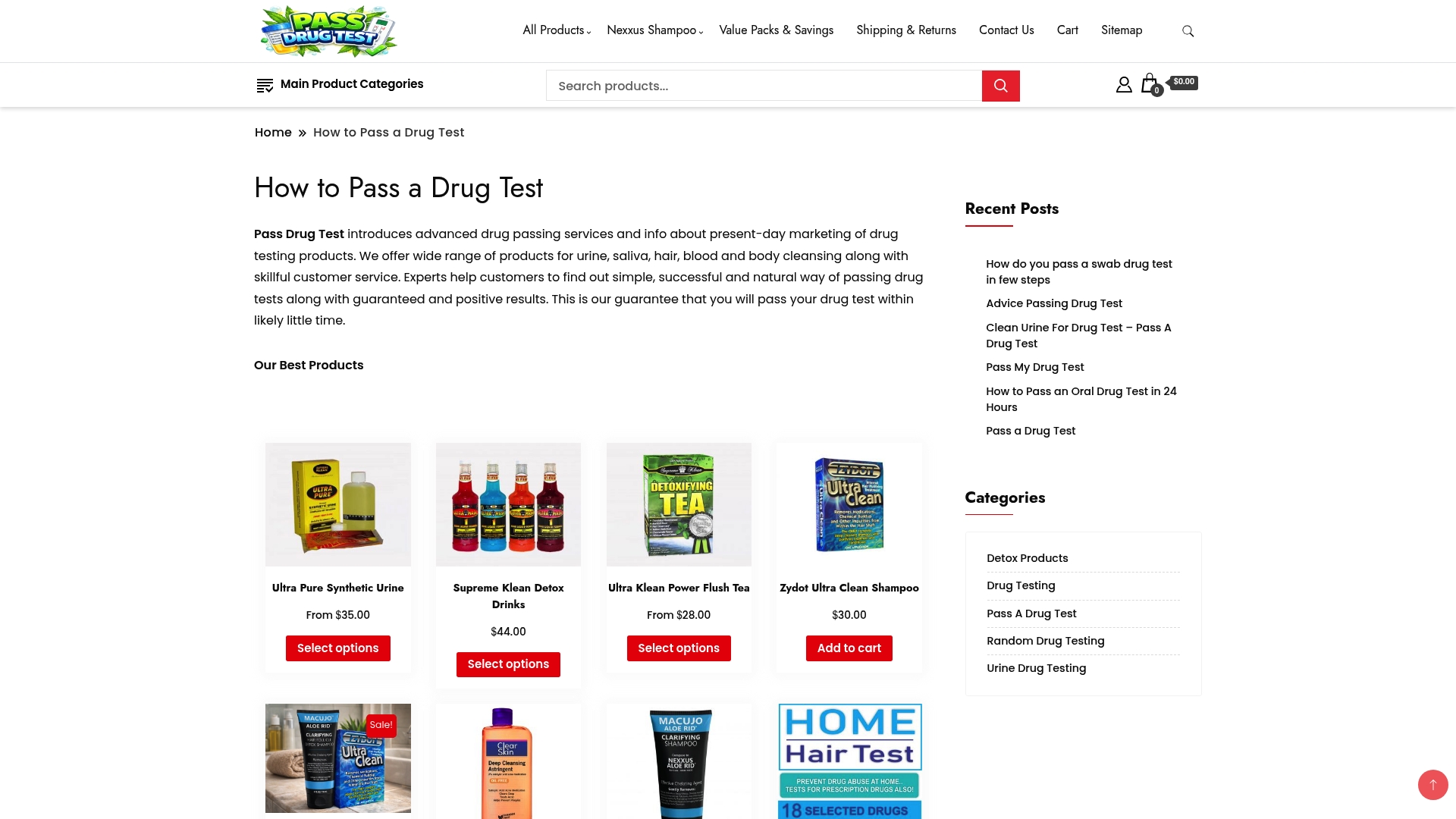
You can also visit Passdrugtest to see the full range, and message us if you want help choosing.
FAQ
How long before a urine test should I drink a detox drink?
Follow the timing printed on your bottle, since each brand sets its own window. As a general guide, fluid effects in a controlled study appeared within about 1.5 to 2 hours and faded over 8 to 10 hours, so you want your sample to fall within that stretch. Plan your travel so you arrive on time.
How much water should I drink with it?
Use the amount your label states and sip steadily until your urine is pale yellow. Our 16 to 24 ounces in two hours plan is a measured pace. Never drink liters at a time, since water intoxication from five to six liters has caused hospital admission.
Can clear urine pass a drug test?
Clear, colorless urine often signals dilution, and labs check creatinine and specific gravity to spot it. Under the DOT rule, a dilute specimen is defined by creatinine from 2 to under 20 mg/dL with specific gravity between 1.0010 and 1.0030. Aim for a pale yellow sample instead.
Do I still need to follow the label if I have used a drink before?
Yes. Formulas, bottle sizes and timing change between products, so read the directions each time. Keep your routine the same from one test to the next so you know what to expect.
Sources
- A Case of Psychosis After Use of a Detoxification Kit
- In Vivo Adulteration: Excess Fluid Ingestion Causes False-Negative Marijuana and Cocaine Urine Test Results
- Beating Drug Tests by Ingesting Detoxifying Agents
- DOT Rule 49 CFR Part 40 Section 40.88
- Acute Water Intoxication With Resultant Hypo Osmolar State
- Acute water intoxication as a complication of urine drug testing

