
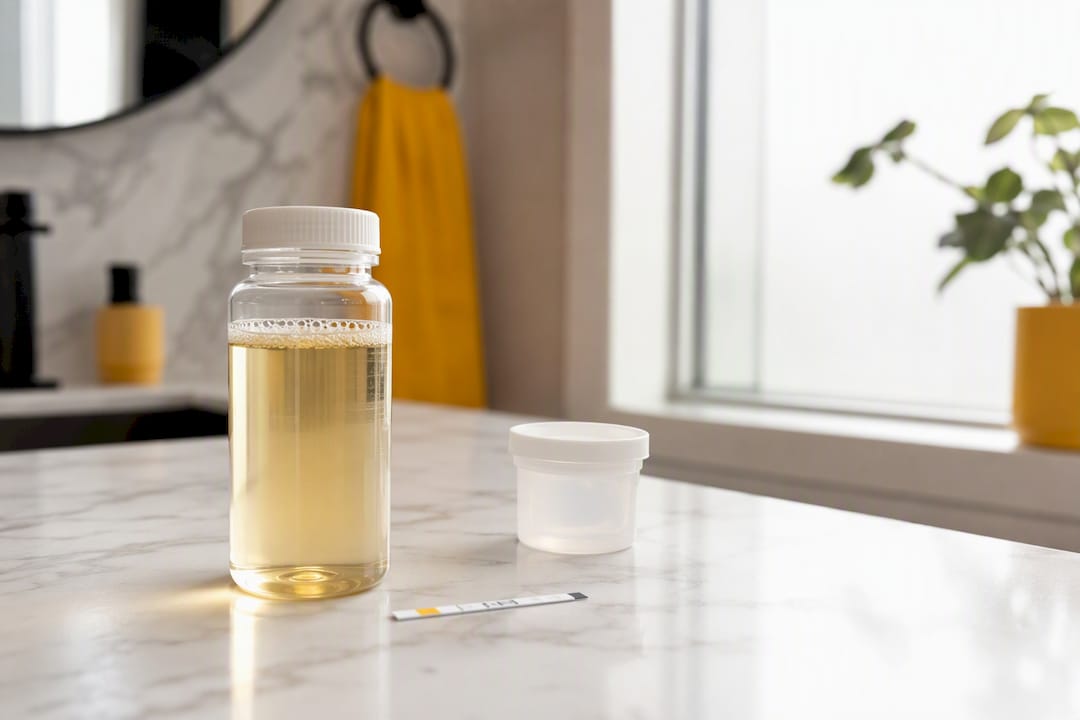

Sealed synthetic urine typically stays chemically usable for 12 to 24 months from the manufacture date, provided it’s stored at room temperature and away from sunlight. That range shifts based on the brand’s formula and how the bottle was handled before it reached your hands, so a printed expiration date is only half the story.
Before you rely on any bottle, run through this quick check:
- Find the batch and expiry code printed on the box or the label itself.
- Think back on storage history — did it sit in a hot car, a garage, or a mailroom shelf for weeks?
- Do a quick visual and smell check — cloudiness, sediment, or an off odor are all disqualifiers.
If you’re unsure on any of these, don’t gamble. Replace the bottle or verify it against lab-level checks before you count on it for anything that matters.
Key Takeaways
Synthetic urine’s usable life depends less on the date printed on the box and more on how it was stored, handled, and protected from heat and light between manufacture and use.
| Point | Details |
|---|---|
| Typical shelf life | Sealed kits commonly last 12 to 24 months when stored at room temperature away from light. |
| Heat and UV are the biggest threats | Combined thermal and UV stress can degrade creatinine and uric acid within 21 to 28 days under poor storage. |
| Opened bottles don’t last long | Treat an opened container as usable for hours to a couple of days, not weeks. |
| Home checks have limits | Appearance, smell, and pH strips catch obvious problems, but creatinine analysis requires a lab. |
| Trusted option | Passdrugtest’s Ultra Pure Synthetic Urine Kit includes printed batch and expiration codes for verification. |
Table of Contents
- What Shortens or Extends Synthetic Urine Shelf Life
- Typical Manufacturer Shelf-Life Claims and How to Read Expiry Codes
- What Changes Chemically as Synthetic Urine Ages
- Can You Reuse Synthetic Urine After Opening?
- Simple At-Home Checks Before You Trust a Bottle
- Storage and Transport Tips That Maximize Usable Life
- Bottom Line on Synthetic Urine Shelf Life
- Where to Find a Reliably Fresh Kit
- Sources
What Shortens or Extends Synthetic Urine Shelf Life
Heat is the single biggest threat to synthetic urine’s usable life. Chemical reactions speed up as temperature rises, an effect chemists call activation energy, and it applies just as much to a bottle of formulated urine as it does to milk left on a counter. Manufacturers generally recommend storing kits between 59°F and 77°F (15°C to 25°C). Anything hotter, like a glove compartment in July, accelerates breakdown of the very compounds a lab checks for. Freezing isn’t safe either — it can cause creatinine and urea to fall out of solution as the liquid thaws unevenly, changing the sample’s chemical balance.
Light exposure matters almost as much as temperature. Clear plastic bottles let UV rays degrade sensitive analytes, while amber or opaque packaging blocks most of that damage. That’s not a minor detail: testing under combined thermal cycling and UV exposure found creatinine dropped by roughly 9.3% and uric acid by about 13.7% after 30 days in clear vials, while amber containers cut those losses by as much as 70%.
Oxygen exposure is the third factor. Every time a bottle is opened, resealed, and opened again, it invites oxidation and a small risk of microbial contamination. Repeated heating cycles compound the problem: microwaving or hand-warming a bottle multiple times, letting it cool, then reheating it stresses the formula in ways a single controlled warming never does.
- Store sealed bottles at room temperature, out of direct light.
- Never freeze a bottle or leave it in a hot vehicle.
- Limit how many times you open and reseal the same container.
Pro Tip: If you only change one habit, make it this: keep the bottle in its original box, sealed, in a cool dark drawer until the day you need it. That single choice does more to preserve shelf life than any other storage decision.
Typical Manufacturer Shelf-Life Claims and How to Read Expiry Codes
Most brands advertise a shelf life somewhere in the 12 to 24 month range, and the spread exists because formulas differ in preservative load, packaging material, and manufacturing process. A premium formula in an opaque bottle can outlast a bargain version in clear plastic by many months, even with identical storage.
Here’s how to confirm what you’re actually holding:
- Locate the printed code on the box flap, the bottle’s underside, or the insert card.
- Match the format — most codes combine a batch number with a manufacture or expiry date (MM/YYYY or a lot number that maps to a date on the manufacturer’s site).
- Treat “expiration” as chemical integrity, not sterility — past that date, analyte ratios can drift even if the liquid looks fine.
- If bought secondhand or from a marketplace, contact the seller for the batch number and compare it against official packaging photos before trusting the product.
Watch for these red flags on any bottle you didn’t buy directly from a manufacturer or trusted retailer:
- No batch code or expiry date printed anywhere.
- Labels that look reprinted, smudged, or inconsistent with official branding.
- Packaging that doesn’t match photos on the manufacturer’s product page.
If you’re sourcing a bottle from anywhere other than a verified retailer, it’s worth reading up on what to check before buying synthetic urine so you’re not stuck with old or mislabeled stock.
What Changes Chemically as Synthetic Urine Ages
Laboratories don’t just check whether a sample looks like urine. They screen specific analytes, and those analytes shift in predictable ways as a formula ages or gets mishandled. Creatinine and uric acid are the most fragile. The Scimetr stability analysis recorded creatinine declines near 9.3% and uric acid declines near 13.7% over 30 days of combined heat and UV stress in clear vials. Urea, by contrast, held up well, making it a comparatively reliable marker even under poor conditions.
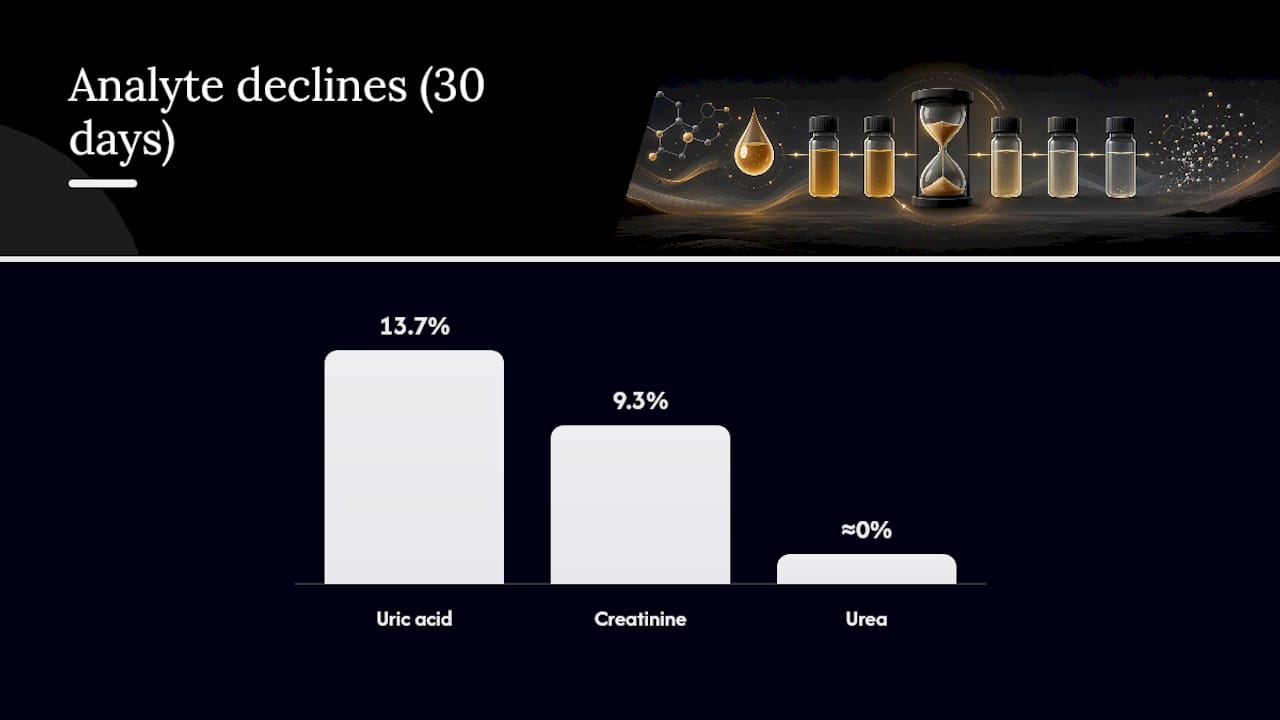
That same modeling work suggests uncontrolled light and temperature can push sensitive analytes outside acceptable limits in as little as 21 to 28 days — far faster than the 12 to 24 month shelf life printed on the box. The gap between “shelf life under ideal conditions” and “usable window under real-world neglect” is the single biggest thing people underestimate about synthetic urine.
Labs typically flag samples using a cluster of markers:
- pH outside the expected physiological range (roughly 4.5 to 8).
- Specific gravity that reads too dilute or too concentrated.
- Creatinine levels below what’s consistent with human urine.
- Nitrate and urea patterns that don’t match expected ratios.
Peer-reviewed clinical literature on preanalytic variables in urine specimens confirms that temperature, light, and container material all measurably affect these same analytes over time, which is exactly why chain-of-custody protocols exist in real clinical and workplace testing. SAMHSA’s procedural guidance reinforces the same point from the collection side: documented temperature control isn’t a formality, it’s what determines whether a sample holds up to scrutiny. When you understand which markers move first, you understand why a bottle that looks and smells fine can still fail a chemical screen.
Can You Reuse Synthetic Urine After Opening?
An unopened bottle and an opened one live on completely different timelines. Once sealed synthetic urine is exposed to air, it’s vulnerable to oxidation and contamination in a way the manufacturer’s 12 to 24 month claim never accounted for. Most formulas should be treated as usable for a matter of hours to a couple of days after opening, not weeks.
Here’s what that means in practice:
- Do keep the container airtight if you must store it briefly after opening.
- Do refrigerate for short-term storage only, and let it warm fully before use.
- Don’t leave an opened bottle sitting out at room temperature for extended periods.
- Don’t transfer the liquid into a different, unclean container.
- Don’t refreeze or repeatedly reheat an opened sample.
Discard an opened bottle if you notice cloudiness, floating particles, a sour or chemical smell that wasn’t there before, or any change in color. Refrigeration slows microbial growth for a day or two, but it’s not a long-term fix, and freezing an opened bottle risks crystallizing creatinine and urea out of solution entirely.
Simple At-Home Checks Before You Trust a Bottle
You can’t replicate a lab in your kitchen, but a few basic checks catch the most obvious failures before you’re stuck relying on a compromised sample.
- Look at it. Clear, pale yellow liquid with no sediment or cloudiness is the baseline.
- Smell it. A synthetic formula has a mild, faintly chemical odor. A sour, sharp, or rotten smell means it’s degraded.
- Warm it properly. Target 98°F to 100°F using a warming pad or heating strip designed for the purpose, not a microwave, which heats unevenly and can degrade the formula further.
- Spot-check pH and specific gravity with inexpensive test strips, available at most pharmacies.
| Check | Acceptable Range | What It Catches |
|---|---|---|
| Appearance | Clear to pale yellow, no sediment | Contamination, crystallization |
| Odor | Mild, non-chemical, non-sour | Microbial growth, oxidation |
| Temperature | 98°F to 100°F before use | Improper warming |
| pH (test strip) | Roughly 4.5 to 8 | Chemical drift from aging |
Home checks have real limits. Creatinine and uric acid levels require lab instrumentation to measure accurately, and urea’s stability means a strip test won’t reveal subtle degradation the way a laboratory analysis would. If a bottle fails any visual or smell check, or if you have any doubt about its storage history, don’t try to talk yourself into using it. Replace it or verify it through more rigorous means before the stakes get high.
Storage and Transport Tips That Maximize Usable Life
A few consistent habits do more for shelf life than any product feature.
- Store sealed kits between 59°F and 77°F (15°C to 25°C), in the original box.
- Keep bottles sealed until the moment you need them.
- Avoid direct sunlight; a closet or drawer beats a windowsill or car dashboard every time.
- Choose amber or opaque outer packaging when you have a choice, since UV exposure directly accelerates analyte loss.
- Never leave a bottle in a parked vehicle, especially in warm weather.
When transporting a bottle, use an insulated bag for short trips rather than repeatedly heating and cooling it. Avoid stacking heating cycles. Warm it once, close to when you’ll use it, using a proper heating pad rather than multiple short bursts in a microwave.
If a bottle accidentally spent a few hours in direct heat or sunlight, don’t panic, but don’t trust it blindly either. Check its appearance and smell, and if anything seems off, treat it as compromised.
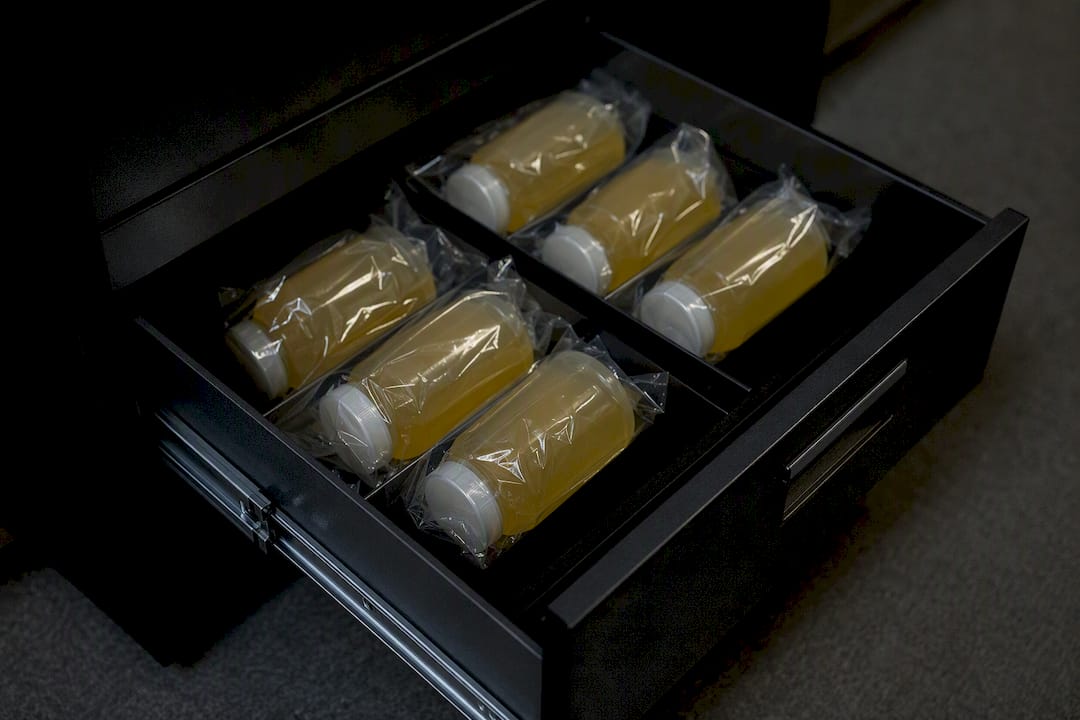
Pro Tip: The single habit with the biggest payoff is storing sealed boxes in a cool, dark drawer rather than a bathroom cabinet or car. Bathrooms run humid and hot from showers; cars swing in temperature all day. A dark, climate-stable drawer removes both risks at once.
Bottom Line on Synthetic Urine Shelf Life
Check the batch and expiry code first, run a quick appearance and smell test second, and replace the bottle if it’s past its printed date or fails any check. An unopened bottle stored properly within its manufacturer window is generally reliable.
- Unopened and properly stored: safe within the printed shelf-life window.
- Opened, exposed to heat, or missing a batch code: treat with caution and consider it unreliable.
A Note on Where This Guidance Comes From
Years spent tracking how detox and testing products perform in the real world, not just on a label, shape this kind of guidance. Patterns repeat: the bottles that fail aren’t usually old, they’re mishandled. For readers who’d rather skip the guesswork entirely, the Ultra Pure Synthetic Urine Kit is built with printed batch tracking from the start.
Where to Find a Reliably Fresh Kit
If you’re tired of second-guessing a bottle’s age, batch history, or storage record, Passdrugtest solves that problem before it starts. The Ultra Pure Synthetic Urine Kit ships with a printed expiration and batch code on every unit, so you’re never stuck guessing whether a bottle sitting in a warehouse for who knows how long is still chemically sound.
A few reasons this beats gambling on unverified third-party stock:
- Printed batch and expiration codes on every kit, no detective work required.
- Formulated and packaged with shelf-life stability in mind, not repackaged from unknown sources.
- Direct customer support if you have questions about storage or use before your test date.
Browse the Ultra Pure Synthetic Urine Kit or explore the full range of drug test detox products to find the right option for your situation, and reach out if you need help choosing before you buy.
Sources
- Assessment of Thermal and UV Stability of Synthetic Urine Under Chain-of-Custody Conditions: A Repeated-Measures Analysis of Compositional Changes Over Thirty Days – Scimetr
- PMC article on urine specimen stability and preanalytic variables
- Samhsa
The Scimetr analysis and the PMC article are laboratory-grounded research; SAMHSA and transportation.gov offer practical, procedural guidance rather than experimental data.