

Yes, synthetic urine can be detected, though whether a specific sample gets caught depends on where it’s tested and how closely it’s checked. Routine on-site specimen validity testing (SVT) flags many obvious fakes through temperature and chemistry checks. Laboratory confirmation methods like LC-MS/MS biomarker profiling catch far more, including formulas built to beat the basic screen.
TL;DR:
- On-site specimen validity tests primarily check temperature, color, and basic chemistry, but they cannot reliably detect synthetic urine with advanced formulas.
- Laboratory confirmatory methods such as LC-MS/MS profile natural biomolecules like uric acid, urea, and creatinine, which synthetic formulas often fail to mimic accurately.
- Synthetic urine products have evolved to include numerous biochemical markers, making them harder to detect at basic checks but still vulnerable to advanced lab screening.
- Detection likelihood depends on the testing environment, with full lab testing and biomarker analysis being much more effective against sophisticated synthetic formulas.
- False positives can occur with genuine medical conditions or medication, emphasizing that pattern analysis across multiple markers is essential for accurate detection.
Table of Contents
- How Detection Works: On-Site SVT vs Laboratory Confirmation
- Common SVT Markers: What Labs and Collectors Actually Measure
- Which Lab Methods Actually Identify Fake Urine?
- Does the Testing Setting Change What Gets Caught?
- No Test Is Perfect: False Positives and the Detection Arms Race
- What to Do If a Specimen Gets Flagged
- Where Passdrugtest Fits In: Products and Legal Resources
- How Synthetic Urine Formulas Have Changed Over the Years
- Common Types and Brands of Synthetic Urine on the Market
- Legal and Ethical Considerations Around Using Synthetic Urine
- Real Cases: How Synthetic Urine Has Actually Been Caught
- An Honest Look at the Odds
- Looking for Product Solutions or More Detail?
- Sources
- FAQ
How Detection Works: On-Site SVT vs Laboratory Confirmation
Specimen validity testing (SVT) is the first line of defense against fake or altered urine samples. Collectors check temperature immediately, inspect the specimen visually for color and clarity, and often run strips for creatinine, oxidants, and pH right at the collection site.
A collector who sees a temperature reading outside 90 to 100 degrees Fahrenheit, or notices unusual color or texture, has grounds to flag the sample for direct observation or send it on for lab review. This on-site layer catches a lot of careless attempts, but it’s a screening step, not a verdict. The SAMHSA urine collection-site manual spells out exactly which SVT checks collectors must perform and when a specimen gets forwarded for additional analysis.
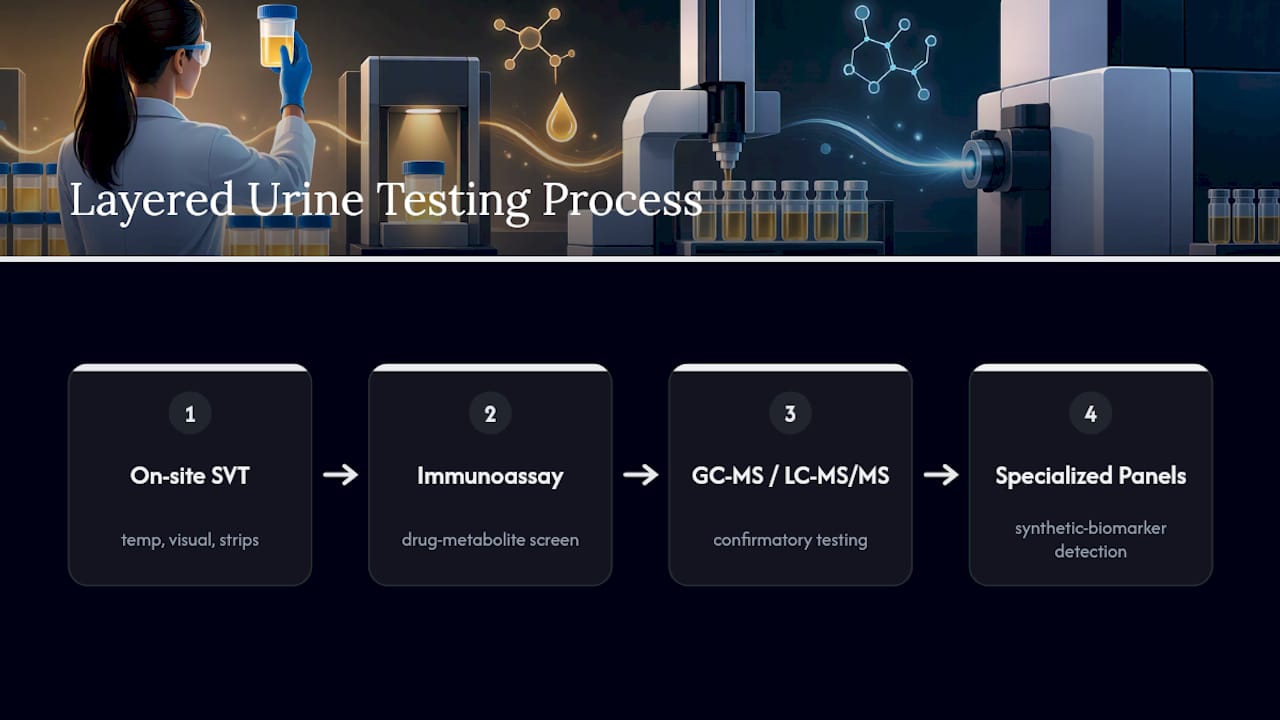
Once a specimen reaches an HHS-certified lab, the process gets more rigorous. Immunoassay screening looks for drug metabolites first. If that comes back negative or the specimen already raised SVT concerns, confirmatory testing kicks in, usually GC-MS or LC-MS/MS. When substitution is specifically suspected, labs move to specialized biomarker panels designed to detect synthetic formulas that sailed through the initial screen. Each layer exists because no earlier layer catches everything.
Common SVT Markers: What Labs and Collectors Actually Measure
Every SVT check is built around mimicking or exposing the chemistry of real human urine. Manufacturers of synthetic urine know this, which is why formulas have evolved to include the compounds testers look for.
- Creatinine: Normal urine typically falls within a range considered physiological. Labs flag notably low creatinine as dilute, but creatinine alone doesn’t confirm authenticity since some synthetic formulas now add it deliberately.
- Specific gravity and pH: Acceptable specific gravity and pH values fall within typical physiological ranges. Testers cross-reference these with creatinine because mismatched values may be a red flag.
- Temperature: Collectors expect a reading between 96 and 100 degrees Fahrenheit within four minutes of collection. Anything outside that window almost always triggers a second collection under direct observation.
- Oxidant and adulterant strips: These test for nitrites, chromium, and other adulterants used to mask drug metabolites. Well-made synthetic urine is formulated specifically to pass these strips clean.
- Newer additives: Some synthetic urine brands now include uric acid, urea, and even magnesium or caffeine to mimic the fuller chemical profile of real human urine, not just the basics collectors check first.
A closer look at the six main SVT markers labs use shows how creatinine, specific gravity, pH, oxidants, urea, and uric acid work together rather than in isolation.
Pro Tip: A single normal SVT reading means nothing on its own. Labs and collectors look at the whole pattern together, which is exactly why passing one strip test is not the same as passing a lab review.
Which Lab Methods Actually Identify Fake Urine?
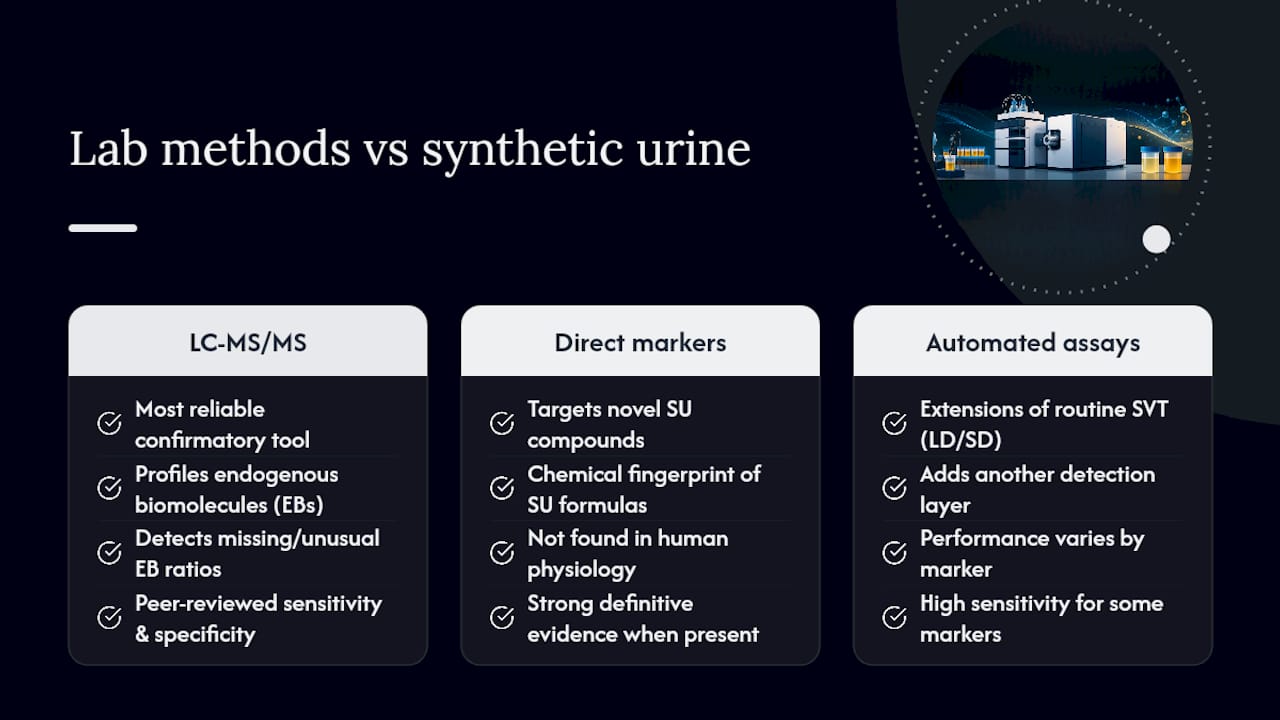
Liquid chromatography tandem mass spectrometry, or LC-MS/MS, is the most reliable confirmatory tool labs use against synthetic urine. It profiles endogenous biomolecules (EBs), the natural compounds like urea, uric acid, and creatinine that should exist together in real human urine in predictable ratios.
Synthetic urine, even well-formulated versions, tends to miss at least one expected EB or show an unnatural ratio between them. A peer-reviewed evaluation of LC-MS/MS and biochemical assays found that uric acid testing combined with EB profiling identified synthetic urine samples that had already passed routine SVT screening, with strong sensitivity and specificity in the study’s specimen sets.
Beyond EB profiling, some labs run targeted assays for direct SU markers, novel compounds found in commercial synthetic urine formulas that simply don’t occur in human physiology. When a lab detects one of these, it’s essentially a chemical fingerprint that no amount of clever formulation can talk its way around, at least until manufacturers reformulate again.
Automated assays extending SVT, like LD and SD marker tests, add another layer, though performance varies. Research on an automated assay for indirect synthetic urine identification found high sensitivity for one marker but lower, less consistent specificity for another, which is why the study’s authors recommended confirmatory testing before treating any single result as final. Toxicology literature is consistent on this point: labs combine indirect biomarkers with direct SU markers because no single measurement reliably catches every synthetic formula on the market.
Does the Testing Setting Change What Gets Caught?
Where a sample gets tested changes the odds dramatically. A cheap point-of-collection cup screen at a clinic checks temperature and maybe pH, then stops there unless something looks wrong. A specimen sent to an HHS-certified laboratory goes through immunoassay screening, confirmatory testing, and potentially full biomarker analysis.
- Point-of-collection cup screens rely on visible and immediate checks. They catch obvious tampering (wrong temperature, odd color) but usually lack the chemistry to detect a well-made synthetic formula.
- Full laboratory testing adds immunoassay, GC-MS/LC-MS confirmation, and biomarker panels when substitution is suspected, which is where most sophisticated synthetic urine actually gets caught.
- DOT and federally regulated collections raise the stakes further. DOT Part 40 requires direct observation in specific circumstances, assigns a Medical Review Officer (MRO) to verify results, and guarantees split-specimen retesting rights, all of which increase the odds a substitution attempt gets flagged and formally documented.
- Hair and saliva testing operate on entirely different specimen types. Synthetic urine has no bearing on a hair follicle test, since hair testing detects metabolites embedded in the hair shaft itself, not urine chemistry. Saliva testing uses its own oral fluid collection controls and doesn’t involve urine substitution at all.
No Test Is Perfect: False Positives and the Detection Arms Race
No single SVT marker guarantees a catch, and that cuts both ways. Legitimate donors with kidney conditions, low fluid intake, or certain medications can produce unusually low creatinine or off-range specific gravity without ever touching synthetic urine. Lab casework has documented cases where an authentic sample with a real medical explanation came close to being misclassified as substituted, which is exactly why toxicology guidance urges interpreting patterns across multiple markers rather than one isolated number.
Meanwhile, synthetic urine manufacturers keep adjusting formulas, adding creatinine, uric acid, and urea to dodge whatever the last generation of tests caught. Labs respond by adding new biomarkers and leaning harder on LC-MS/MS. Whether a given product gets detected on a given day depends on the specific formula, the specific lab’s methods, and how much scrutiny that sample happens to draw.
What to Do If a Specimen Gets Flagged
Certain red flags account for most flagged specimens: temperature outside the 90 to 100 degree window, visible tampering or unusual color, creatinine and specific gravity readings that don’t line up with each other, and any history of a prior substituted result on file.
- Cooperate with the MRO verification interview; refusing or evading it rarely helps your case.
- Request and pay for a split-specimen retest if you believe the result is wrong; this is a protected right under federal collection rules.
- Document every step of the collection process while it’s fresh, including who observed what and when.
Pro Tip: Possession laws for synthetic urine vary significantly by state, and some jurisdictions treat it as a criminal offense rather than a workplace issue. If you’re facing legal exposure rather than just an employment consequence, talk to an attorney before you say anything else to anyone.
Where Passdrugtest Fits In: Products and Legal Resources
Passdrugtest carries an Ultra Pure Synthetic Urine Kit, along with broader urine drug testing resources for readers researching how these products and procedures actually work. Product instructions for the kit emphasize warming the sample to a 96 to 98 degree Fahrenheit target before submission, a detail worth understanding given everything above about temperature checks. That’s a manufacturer instruction, not a guarantee against detection.
Passdrugtest also maintains a legal resource covering which states have criminalized synthetic urine possession. That page is informational, not legal advice, and readers facing real legal exposure should still consult an attorney familiar with their state’s laws.
How Synthetic Urine Formulas Have Changed Over the Years
Early synthetic urine, the versions that showed up decades ago, was fairly crude. It matched color and maybe pH but skipped most of the chemistry that actual human urine contains. Basic creatinine strips exposed these formulas almost immediately once labs started checking for it routinely.
As SVT became standard practice across workplace and legal testing programs, manufacturers responded by adding creatinine to their formulas. That started an ongoing back-and-forth: labs added specific gravity and pH checks, formulas adjusted to match those ranges too. Then came uric acid and urea, added specifically because early- and mid-generation synthetic urine was missing them entirely, a gap that trained lab technicians learned to spot quickly.
Modern formulations aim for a fuller biochemical profile, incorporating urea, uric acid, creatinine, and sometimes trace amounts of substances like magnesium to more closely replicate real physiology. Regulatory shifts have pushed in the same direction. The 2023 Mandatory Guidelines for Federal Workplace Drug Testing Programs updated the definition of a substituted specimen and authorized expanded biomarker panels, which pushed the entire testing industry toward more sophisticated detection just as formulas were getting harder to distinguish from real urine on basic checks alone.
This history matters because it explains why older advice about “beating” a urine test with synthetic samples is often outdated. What worked against a 2010 SVT panel may not survive a 2026 lab workflow.
Common Types and Brands of Synthetic Urine on the Market
Synthetic urine products generally fall into a few categories. Basic formulas cover color, urea, and maybe creatinine, priced lower and marketed mostly for novelty use or calibrating testing equipment rather than passing a scrutinized human test. Premium formulas include a fuller biomarker profile, uric acid, balanced specific gravity, and pH designed to sit within normal physiological ranges.
Some products are sold specifically as lab-grade or calibration fluid, intended for testing equipment rather than human submission, and labeling usually reflects that intended use. Kits marketed for actual test-passing use typically bundle the fluid with a heating element or heat pad, since temperature failure is one of the most common reasons a substitution attempt gets caught immediately at collection.
Quality varies significantly across brands, and formulas change over time as manufacturers respond to new lab detection methods described earlier. A formula that included every major biomarker last year may already be outdated if a lab adds a new direct SU marker assay to its confirmatory panel. This volatility is part of why no product on the market can be described as universally undetectable. What passed a basic cup screen last year isn’t guaranteed to pass an LC-MS/MS review this year.
Legal and Ethical Considerations Around Using Synthetic Urine
Possession and use of synthetic urine sits in a legal gray zone that shifts depending on where you live. A number of states have passed laws specifically criminalizing possession or sale of synthetic urine with intent to defraud a drug test, treating it as a misdemeanor or in some cases a more serious offense. Other states have no specific statute at all, leaving the issue to fall under broader fraud or tampering laws if it comes up.
Passdrugtest’s state-by-state legal resource breaks down which states have enacted specific possession laws, though laws change and readers should confirm current status for their own state before assuming anything.
Beyond the legal question, there’s an employment dimension separate from criminal law. Getting caught submitting a substituted specimen at work typically triggers termination or a failed pre-employment screen regardless of whether any criminal charge follows. DOT-regulated positions carry additional consequences, including mandatory return-to-duty procedures overseen by a substance abuse professional. The ethical debate around synthetic urine use tends to split along these lines: workplace drug policy versus personal autonomy, and reasonable people land in different places on that question depending on the job, the substance involved, and the specific testing context.
Real Cases: How Synthetic Urine Has Actually Been Caught
Documented lab casework gives a clearer picture than theory alone. Toxicology researchers examining challenging specimen cases have described situations where synthetic urine passed initial SVT screening entirely, including normal creatinine and specific gravity, only to be caught later because it lacked expected markers like GGT or amylase, enzymes present in real urine that most early synthetic formulas simply didn’t include. That same research on challenging validity cases also documented the reverse problem: a legitimate sample from a donor with a genuine medical condition came close to being flagged as substituted because its creatinine reading was unusually low, a reminder that detection systems cut in both directions.
Peer-reviewed research directly testing commercial synthetic urine products against workplace drug testing protocols found that some products successfully passed immunoassay screening and routine SVT checks, while advanced biomarker and LC-MS-based methods detected the substitution that routine testing missed. The pattern across these cases is consistent: the products most likely to slip through are the ones tested against outdated or minimal screening, and the ones most likely to get caught are subjected to full laboratory confirmatory review rather than a basic cup check.
An Honest Look at the Odds
Here’s what I keep coming back to after digging through the toxicology research on this: the real risk isn’t the drug test itself, it’s the testing environment you don’t control. A cup screen at a walk-in clinic and a DOT-regulated lab collection are not remotely the same gauntlet, and pretending they are is how people get blindsided. If you’re facing this decision, understand the collection rules that apply to you, and know that legal consequences in some states now exist independent of whatever happens with the test itself. When in doubt, talk to someone qualified before you act.
— MIchael
Looking for Product Solutions or More Detail?
If you’re weighing your options after reading through how detection actually works, Passdrugtest sells exactly the products this article discusses, not vague advice about them. The main product hub organizes synthetic urine kits, urine testing supplies, and the Macujo Aloe Rid Shampoo line by category, so you’re not digging through unrelated pages to find what applies to your situation.
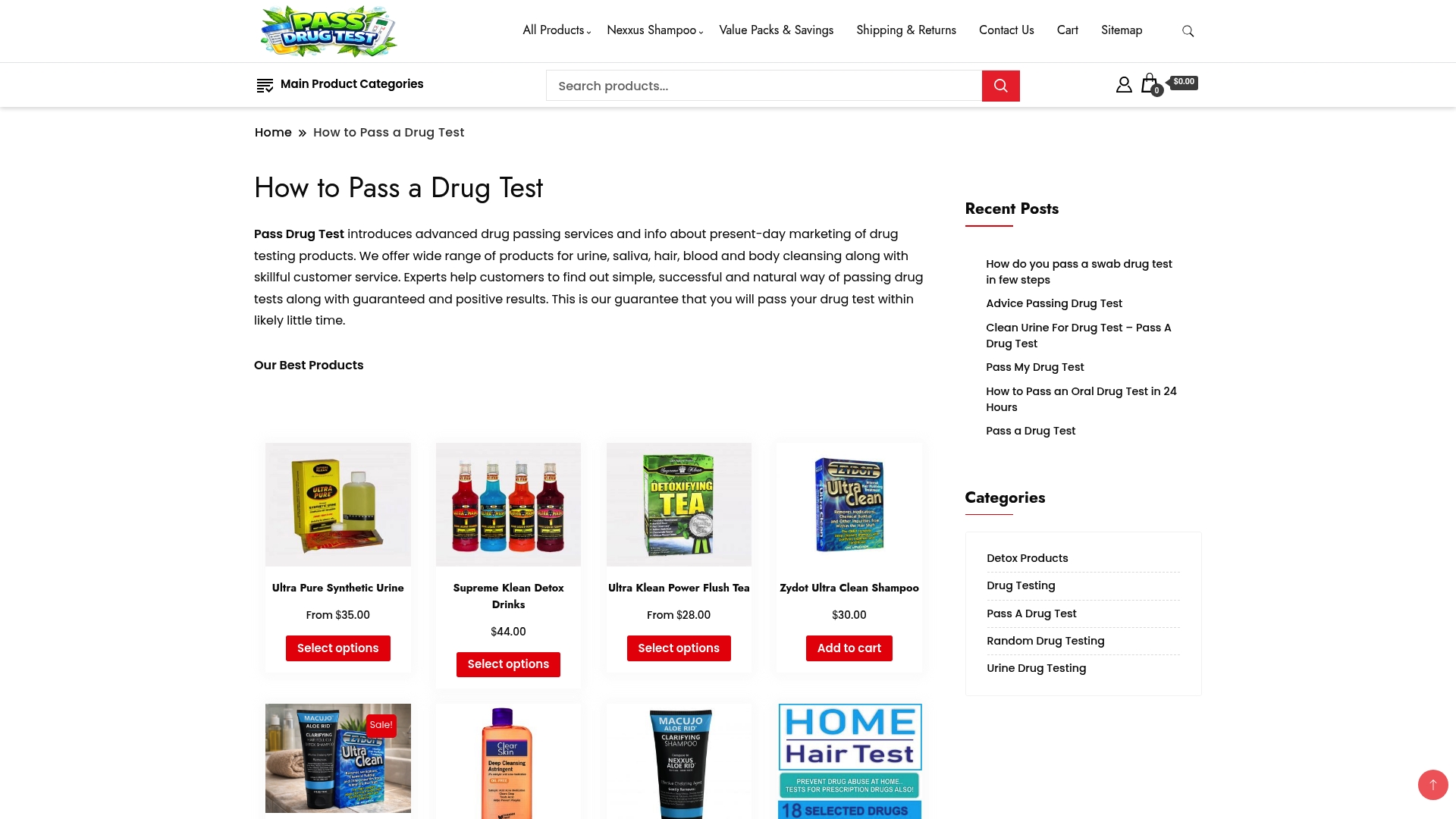
Every order ships discreetly, and the checkout process doesn’t reference product contents on the outside of the package. If your concern is a hair follicle test specifically rather than a urine screen, the Macujo method built around Aloe Rid Shampoo remains one of the most widely used detox approaches for that exact scenario, and Passdrugtest’s hair follicle drug test shampoo page walks through how it works. For the legal side of any of this, the state possession law breakdown is worth reading before you order anything. Start on the main product hub, figure out which test you’re actually facing, and go from there.
Sources
- Sample validity lessons learned from challenging cases and proposed biomarkers for synthetic urine detection | Journal of Analytical Toxicology
- Evaluation of biochemical assays and optimization of LC–MS-MS analysis for the detection of synthetic urine
- Evaluation of Diagnostic Sensitivity and Specificity of a New Automatized Assay for Indirect Synthetic Urine Identification
- Urine Collection Site Manual | SAMHSA
- DOT Rule 49 CFR Part 40 Section 40.67 | US Department of Transportation
FAQ
Can Employers Detect Synthetic Urine on a Drug Test?
Yes, employers using labs with proper specimen validity testing and confirmatory methods can detect synthetic urine, though basic on-site cup screens catch far less than full laboratory workflows. Detection depends heavily on which specific tests get applied to a given sample.
Does Quest Diagnostics Test for Synthetic Urine?
Quest Diagnostics operates HHS-certified laboratory testing that includes specimen validity checks and can run confirmatory biomarker testing when a sample looks suspicious. Whether a specific synthetic urine sample gets flagged depends on the formula and which specific validity tests the lab applies to that submission.
Does LabCorp Check for Fake Urine?
LabCorp, like other certified laboratories, performs specimen validity testing as a standard part of urine drug screening, checking creatinine, pH, and specific gravity at minimum. More advanced biomarker or LC-MS/MS testing gets applied when a sample raises specific red flags during that initial review.
Can a Lab Tell If Someone Used Another Person’s Urine?
Labs cannot visually distinguish whose urine a sample came from, but specimen validity testing can flag inconsistencies that suggest substitution occurred, even when the submitted liquid is genuine human urine from someone else. Direct observation collection protocols, required in certain DOT-regulated circumstances, exist specifically to prevent this kind of substitution at the source.
Is Synthetic Urine Safe to Use?
Synthetic urine products sold for calibration or novelty use are generally not intended for ingestion or health-related use, and safety data on submitting them for testing purposes isn’t something manufacturers typically publish. The bigger practical concern for most people is legal and employment risk rather than physical safety.