
Yes, delta-8 THC can make you fail a standard drug screen. Most immunoassay urine tests are built to detect THC metabolites broadly, and they routinely cross-react with delta-8 byproducts, flagging a sample as positive for marijuana. Confirmatory lab testing with GC-MS or LC-MS/MS can technically tell delta-8 apart from delta-9, but that distinction rarely helps you at work, since either isomer confirms cannabinoid use. The sections below break down detection windows by specimen type and what to do if you’re staring down a positive result.
TL;DR:
- Most standard urine drug tests are prone to positive results from delta-8 THC due to cross-reactivity with THC metabolites and outdated antibody design.
- Confirmatory testing with GC-MS or LC-MS/MS can differentiate delta-8 from delta-9, but not all labs validate these methods, and cutoff levels influence detection accuracy.
- Detection windows vary widely: most urine tests detect metabolites for 3 to over 30 days depending on usage frequency and body fat, while hair tests can reveal use up to 90 days.
- Factors like dose, frequency, body composition, product quality, and administration route significantly alter how long delta-8 remains detectable.
- Preparing for a hair test with protocols like the Macujo Method can reduce detectable residue, but no method guarantees passing a validated lab confirmation.
Table of Contents
- How Delta 8 Drug Test Screening Actually Works
- Delta 8 Detection Time by Specimen Type
- What Changes Your Delta 8 THC Detection Time
- Positive Test Result: Your Next Steps
- Hair Testing Reality Check: What Preparation Can and Can’t Do
- Why the Delta 8 Market Is Forcing Labs to Get Smarter
- How Passdrugtest Can Help You Prepare
- Sources
- FAQ
How Delta 8 Drug Test Screening Actually Works
Routine drug screens don’t hunt for “delta-8” or “delta-9” by name. They use immunoassay technology, which relies on antibodies designed to bind to a general class of THC metabolites. That’s the entire problem in a nutshell: the antibodies used in most delta 8 urine test screens were built decades before delta-8 THC became commercially widespread, so they weren’t fine-tuned to exclude it.
Immunoassays measure how much of a target compound binds to those antibodies, then compare that binding against a set cutoff. When delta-8 metabolites are structurally similar enough to delta-9-THC-COOH, they trigger the same antibody response. A laboratory evaluation of the EMIT II Plus immunoassay found it produced positive responses for Δ8-THC-COOH at concentrations that also flagged Δ9-THC-COOH, confirming that cross-reactivity isn’t a rare glitch. It’s a built-in feature of how these screens are designed.
Confirmatory testing works differently. GC-MS and LC-MS/MS separate compounds physically, based on how long each molecule takes to move through a column (retention time) and what fragments it breaks into once ionized. That JALM study showed GC-MS methods can reliably separate Δ8 and Δ9 THC when the method has been properly validated for that purpose. Not every lab runs that validation, though.
Cutoff levels matter just as much as the method. Federal workplace testing under SAMHSA guidelines typically uses a 50 ng/mL screening cutoff for THC metabolites in urine, with a 15 ng/mL confirmatory cutoff. A cross-reactivity study of six commercial urine immunoassays found that sensitivity to delta-8 and related cannabinoid analogs varied meaningfully between kits, even at identical cutoffs.
That variability means two people using the same delta-8 product at the same dose could get different screening outcomes depending purely on which lab kit is used. A few practical takeaways:
- Most standard urine immunoassays are not built to exclude delta-8 metabolites.
- GC-MS and LC-MS/MS confirmation can separate isomers, but only with validated protocols.
- Cutoff levels (commonly 50 ng/mL screen, 15 ng/mL confirm) apply broadly across THC metabolites, not delta-8 specifically.
- Some labs have started adding delta-8-specific panels, but this isn’t universal yet.
Delta 8 THC testing is only getting more scrutinized as labs catch up to the market. Some testing facilities have already added dedicated delta-8 confirmation panels precisely because generic THC screens can’t reliably distinguish the source.
Delta 8 Detection Time by Specimen Type
How long delta-8 stays detectable depends entirely on what’s being tested and how the lab measures it. Each specimen type answers a slightly different question about your usage.
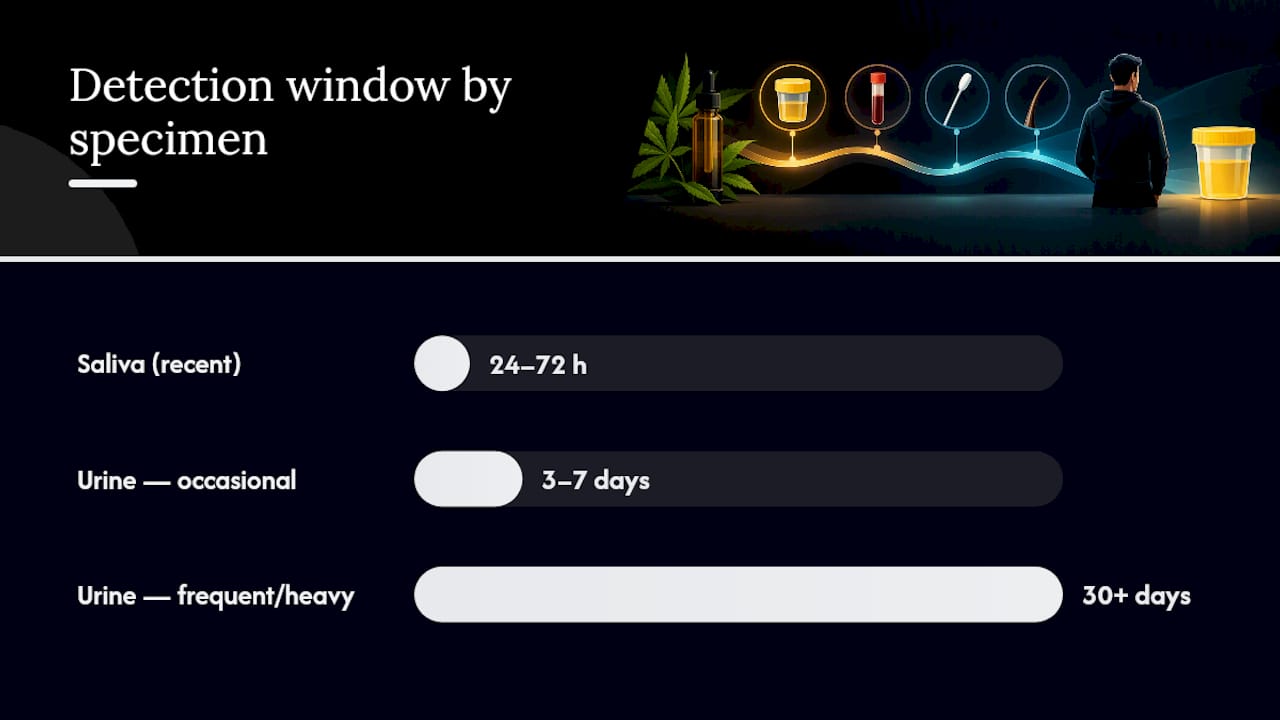
Urine remains the most common test and the one with the widest detection window. Occasional users often clear detectable metabolite levels within 3 to 7 days, while frequent or heavy users can test positive for 30 days or longer because THC metabolites are fat-soluble and get released slowly from fat stores over time. This is the core mechanism behind how long for delta 8 drug test results to clear, and it’s largely governed by frequency and dose rather than the isomer itself.
Saliva testing offers a much shorter window, typically 24 to 72 hours after use. Because saliva reflects recent oral exposure rather than stored metabolites, a positive saliva result usually means recent use, which is exactly why some employers favor it for reasonable-suspicion testing after an incident.
Blood tests capture the shortest window of all: often just a matter of hours to a couple of days for regular use, sometimes stretching slightly longer with heavy chronic use. Blood testing measures the parent compound rather than downstream metabolites, so it’s typically reserved for situations tied to impairment, like DUI investigations, rather than routine employment screening. Validated multi-analyte LC-MS/MS methods can separate THC isomers directly in blood when labs choose to run that level of analysis.
Hair testing detects the longest window by far, commonly up to 90 days, since THC metabolites become incorporated into the hair shaft as it grows. A peer-reviewed study analyzing nearly 5,900 hair specimens using LC-MS/MS methods found that 30.5% of samples tested positive for at least one cannabinoid analyte, and delta-8-THC accounted for 9% of those positives. That confirms labs running proper hair panels can and do pick up delta-8 specifically, not just delta-9.
| Specimen | Typical detection window | What it measures |
|---|---|---|
| Urine | 3 to 30+ days | THC metabolites (frequency-dependent) |
| Saliva | 24 to 72 hours | Recent oral exposure |
| Blood | Hours to a few days | Parent compound, active impairment |
| Hair | Up to 90 days | Long-term incorporation into hair shaft |
A few caveats worth flagging on hair testing specifically:
- Environmental exposure (secondhand smoke, contact with residue) can theoretically deposit cannabinoids on hair without ingestion, which is why labs wash samples before analysis.
- Hair color, texture, and treatment history can all affect how much drug residue binds to the shaft.
- Limits of detection for delta-8 in hair run slightly higher than for delta-9, but still fall in the low picogram-per-milligram range, meaning validated labs catch it reliably.
What Changes Your Delta 8 THC Detection Time
Two people can use the exact same delta-8 gummy on the exact same day and get completely different test outcomes weeks later. The variables that drive that gap are measurable, not mysterious.
Frequency and dose matter more than almost anything else. Someone who vapes delta-8 once at a party clears metabolites far faster than a daily user who’s built up weeks of stored THC-COOH in fat tissue. Heavier, more frequent use extends detection windows across every specimen type, but the effect is most dramatic in urine and hair.
Body fat and metabolism play a direct role because THC metabolites are lipophilic, meaning they bind to fat rather than passing through the body quickly. Higher body fat percentage generally means slower elimination, and individual metabolic rate adds another layer of variation that no calculator can predict precisely.
Product quality is arguably the biggest wildcard specific to delta-8. The FDA has flagged delta-8 products for a lack of safety evaluation, noting that manufacturing inconsistency can leave undisclosed delta-9-THC in products marketed as pure delta-8. If your gummy or vape cartridge contains unlabeled delta-9, your actual exposure, and your detection window, may be longer than you’d expect from delta-8 alone.
Route of administration shifts the timeline too. Vaping or smoking delivers cannabinoids into the bloodstream almost immediately, while edibles process through the liver first, which can delay peak metabolite levels but doesn’t necessarily shorten the overall window.
Pro Tip: If you’ve bought a delta-8 product without third-party lab testing documentation, treat your detection timeline as unpredictable rather than “standard.” Contaminated or mislabeled products are common enough that assuming the worst case protects you better than assuming the best.
Lab kit variability adds one more layer of uncertainty. Since immunoassay cutoffs and antibody sensitivity differ between manufacturers, the same urine sample could return different results depending purely on which test kit a facility uses.
Positive Test Result: Your Next Steps
A positive screen is not the final word. It’s the starting point for a process that has real procedural protections built in, provided you move quickly.
-
Request confirmatory testing immediately. A positive immunoassay screen should always be followed by GC-MS or LC-MS/MS confirmation before any employment or legal action is finalized. Confirmation testing uses a lower cutoff and a fundamentally different detection method, and it’s your right to ask that it happen.
-
Ask about your split specimen. Federally regulated tests typically collect a split sample specifically so a second, independent lab can retest it if you dispute the result. Confirm with your test administrator whether a split was collected and how to request retesting.
-
Preserve chain-of-custody documentation. Every specimen should have a documented custody trail from collection to lab analysis. Request copies of this paperwork; gaps or errors in the chain can be grounds to challenge a result.
-
Save your receipts and product packaging. If you legally used a delta-8 product, documentation showing what you bought, when, and its labeled contents can support your explanation to a Medical Review Officer (MRO).
-
Loop in the right advocate early. An MRO reviews non-negative results and can accept legitimate explanations in some circumstances, but a union representative or employment attorney can clarify whether your specific case, state, and employer policy leave room to challenge or appeal a result.
Hair Testing Reality Check: What Preparation Can and Can’t Do
Hair testing sensitivity is not a rumor. Peer-reviewed LC-MS/MS protocols detect delta-8, delta-9, delta-10, and CBD in hair down to low picogram-per-milligram limits, and labs running comprehensive panels reliably pick up delta-8 specifically when it’s present. That’s the reality anyone facing a scheduled hair follicle test needs to plan around.
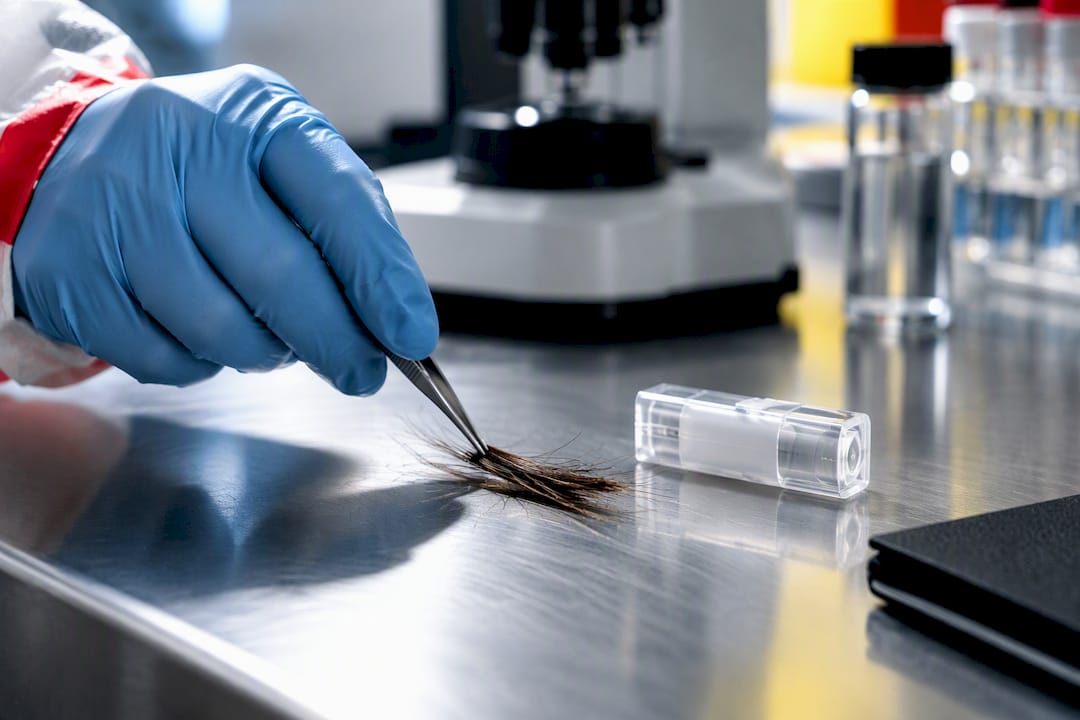
Among the approaches discussed by practitioners for preparing hair before a test, the Macujo Method, developed by Mike Macujo, is widely regarded as the most rigorous hair-cleansing protocol available for people trying to pass a hair follicle drug test. It’s an aggressive, multi-step process built around breaking down the cuticle layer to help flush residue that has bonded to the hair shaft, and it’s most commonly performed using Macujo Aloe Rid Shampoo, the product this protocol was originally built around.
Outcomes vary based on hair chemistry, how much residue has accumulated, and how sensitive the specific lab panel is. There’s no version of hair preparation that offers a guarantee against a validated LC-MS/MS confirmation. What responsible preparation looks like:
- Start the process as early as possible, ideally multiple days before a scheduled test, since the protocol involves repeated treatment cycles.
- Avoid re-exposure to cannabinoids, including secondhand smoke, during the preparation window.
- Follow the full multi-step sequence rather than substituting a single shampoo wash, since the method’s effectiveness depends on the complete protocol.
- Understand that thicker, coarser, or chemically treated hair may respond differently than fine or virgin hair.
Pro Tip: Read the full hair sample analysis guide before you start any preparation protocol. Understanding what a lab is actually measuring makes every step of the process more purposeful.
Why the Delta 8 Market Is Forcing Labs to Get Smarter
The rapid growth of delta-8 products has exposed a blind spot in decades-old testing technology, and labs are responding by building isomer-specific LC-MS/MS panels that finally separate delta-8 from delta-9 with real precision. That’s a genuine improvement, but it cuts both ways for users: a confirmed positive is now more specific, not less consequential.
Product labeling in the delta-8 space stays inconsistent enough that you should assume risk of a positive screen until proven otherwise. If your job, a legal proceeding, or a custody arrangement hinges on a clean result, treat every delta-8 product as a genuine gamble rather than a loophole.
— MIchael
How Passdrugtest Can Help You Prepare
There are resources available for people who need real answers, not guesswork, about hair, urine, and saliva detox before a scheduled test. Where a routine internet search leaves you juggling conflicting advice from forums, Passdrugtest gives you a direct path to the specific products and protocols that actually address cross-reactive cannabinoid residue, including delta-8.
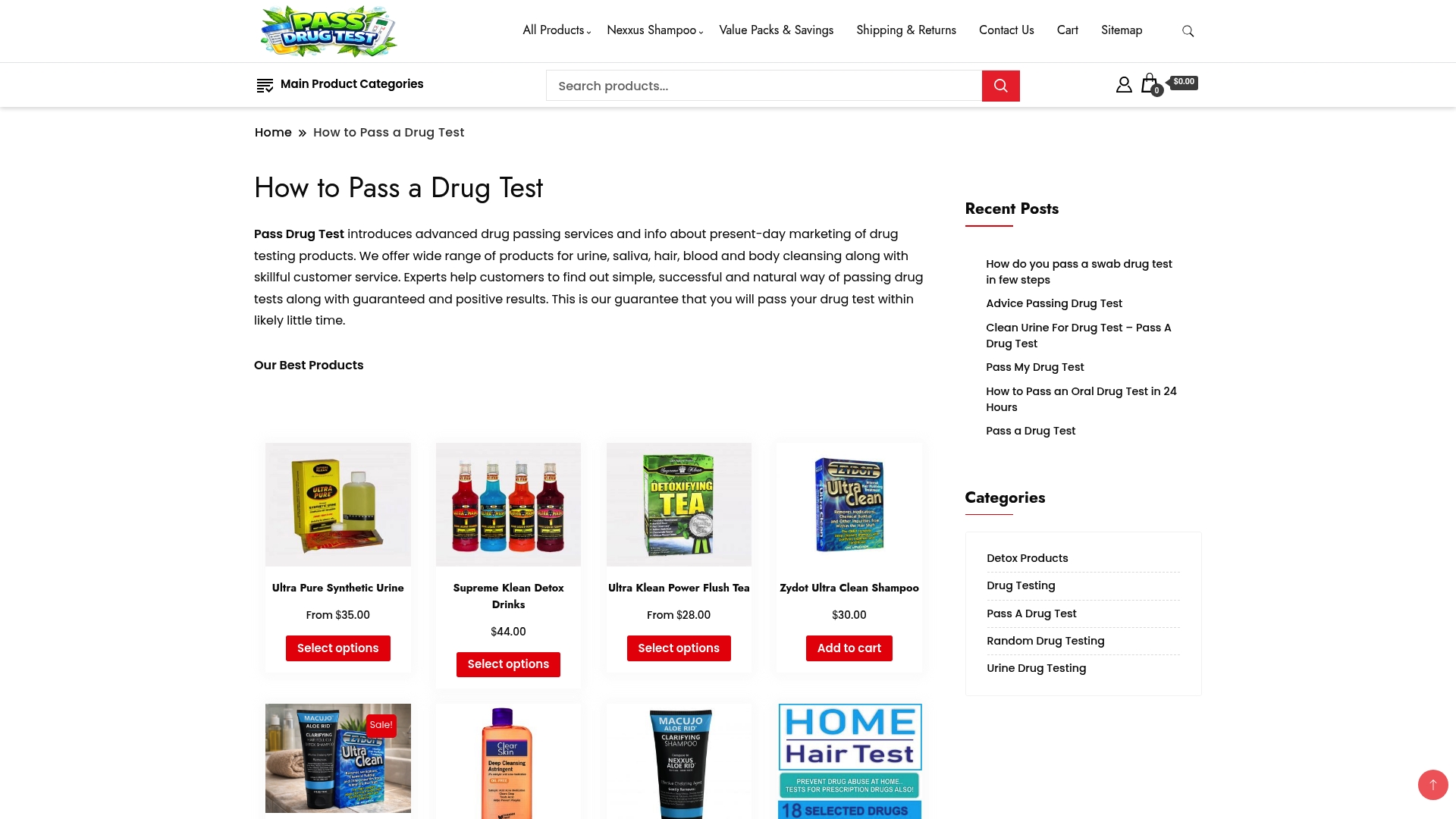
If a hair follicle test is on your calendar, the Macujo Aloe Rid Shampoo remains the flagship product tied to the Macujo Method described above, and it’s paired well with the Zydot Ultra Clean Treatment for a more complete preparation routine. For urine or saliva concerns, browse the full detox product catalog to compare options suited to your specific timeline. Customer service teams are often available daily to help you choose products, with confidential, secure delivery on orders. No product on the market can promise a guaranteed outcome against a validated lab confirmation, but preparation backed by a protocol with real history behind it beats guessing. Visit Passdrugtest to start building your plan today.
Sources
- 5 things to know about delta‑8 tetrahydrocannabinol (delta‑8 THC) — FDA
- The detection of delta‑9‑THC, delta‑8‑THC, delta‑10‑THC and cannabidiol in hair specimens — PMC
- Evaluation of a Δ9‑THC‑COOH immunoassay and GC‑MS method for detection of Δ8‑THC‑COOH — JALM
- Cross‑reactivity of cannabinoid analogs in urine immunoassays — NIJ report
FAQ
Does Delta 8 Show Up on a Standard Drug Test?
Yes, delta-8 commonly triggers a positive result on standard immunoassay drug screens because the antibodies used cross-react with delta-8 metabolites alongside delta-9. Confirmatory GC-MS testing can distinguish between the two isomers, but the initial screen typically can’t.
What Is the Delta 8 THC Detection Time in Urine?
Occasional users often clear detectable delta-8 metabolites from urine within 3 to 7 days, while regular or heavy users can test positive for 30 days or more. Frequency, dose, and body fat all affect where you fall in that range.
Can a Lab Tell the Difference Between Delta 8 and Delta 9?
Validated GC-MS and LC-MS/MS methods can separate delta-8 from delta-9 based on retention time and molecular fragmentation, and studies confirm labs can detect delta-8 specifically in hair. Not every lab runs this level of confirmation by default, though, so a routine screen alone often can’t make that distinction.
Will Delta 8 Show Up on a Hair Follicle Test?
Yes. Preparation methods like the Macujo Method are widely used ahead of scheduled hair tests, though no method offers a guarantee against validated lab confirmation.
Should I Avoid Delta 8 Entirely Before a Drug Test?
If you need a negative result on any drug screen, avoiding delta-8 products entirely is the only reliable way to eliminate the risk of a cross-reactive positive. Product mislabeling and undisclosed delta-9 contamination make delta-8’s real-world risk higher than many users expect.