
Yes, delta 8 can be detected in a hair follicle test when labs target cannabinoids specifically and run confirmatory mass spectrometry on the sample. A standard scalp hair collection covers roughly a 90-day detection window, though sensitivity and product purity can shift that estimate. Labs also need to separate delta 8 from delta 9 chemically, so if a result matters to you, ask whether that separation was done.
TL;DR:
- Hair tests can detect delta 8 THC when labs use validated confirmatory methods, but sensitivity depends on product purity and separation procedures.
- A standard 90-day detection window is based on 1.5 inches of scalp hair, but individual hair growth rates and use patterns can extend or shorten this timeframe.
- Daily or frequent delta 8 use results in higher concentrations likely to be confirmed, while occasional use may not produce detectable levels.
- Proper sample collection, handling, and chromatographic separation are critical for accurate identification of delta 8 versus delta 9 THC in hair testing.
- Products claiming to detox hair may reduce risk but do not guarantee passing a confirmatory lab test, especially if recent use involved adulterated or contaminated substances.
Table of Contents
- How Hair Follicle Testing Actually Detects Cannabinoids
- What the 90-Day Detection Window Really Means
- Lab Methods and the Delta 8 vs Delta 9 Separation Challenge
- Factors That Change Whether Delta 8 Gets Detected
- How to Read a Result and What to Do Next
- What We’ve Learned Selling Detox Products to Real Customers
- A Straight Answer on What Delta 8 Testing Really Comes Down To
- Where Passdrugtest Fits Into Your Preparation
- Sources
- FAQ
How Hair Follicle Testing Actually Detects Cannabinoids
Cannabinoids reach your hair through the bloodstream, not from the surface alone. As blood feeds the hair follicle, trace amounts of THC and its metabolites become locked into the growing strand. There’s a lag of about 5 to 15 days before that use shows up in hair visible at the scalp, since the strand has to grow out from the follicle first.
Standard collection protocols reflect this biology. Technicians cut a lock of hair as close to the scalp as possible and use the first 1.5 inches, which corresponds to about 90 days of growth at typical rates. Labs specify a minimum mass, often around 100 milligrams, to make sure there’s enough material for both a screening test and a confirmation test if the screen comes back positive.
Collection and storage matter more than most people realize:
- Hair is bundled with the root end clearly marked, since testing near the root shows the most recent exposure.
- Samples are wrapped in foil or a paper envelope, never plastic, which can trap moisture and degrade the sample.
- Chain-of-custody documentation follows the sample from collection to the lab, which is why tampering or substitution is difficult to pull off undetected.
None of this is arbitrary. It’s built to produce a result that reflects a pattern of use over months, not a single exposure.
What the 90-Day Detection Window Really Means
The 1.5-inch, 90-day standard is a convention, not a hard rule. It assumes an average hair growth rate of about half an inch per month, which holds for most people but varies by individual, health status, and hair type. Labcorp’s own guidance frames the 90-day window as the industry benchmark for detecting patterns of chronic use rather than an isolated incident.
Longer hair segments can extend the picture. A lab testing 3 inches of hair is effectively looking back roughly 6 months, and body hair, which grows more slowly and continuously, can reflect exposure over a much longer, less precise timeframe.
Frequency of use changes the odds substantially:
- A single, isolated use may deposit too little cannabinoid to reliably clear a lab’s detection threshold.
- Occasional use over several weeks raises the likelihood of a confirmed positive, though it’s not certain.
- Daily or near-daily use builds up measurable concentrations that are far more likely to be detected and confirmed.
This is the practical reason hair testing exists in the first place: it’s designed to catch habits, not one-off events.
Lab Methods and the Delta 8 vs Delta 9 Separation Challenge
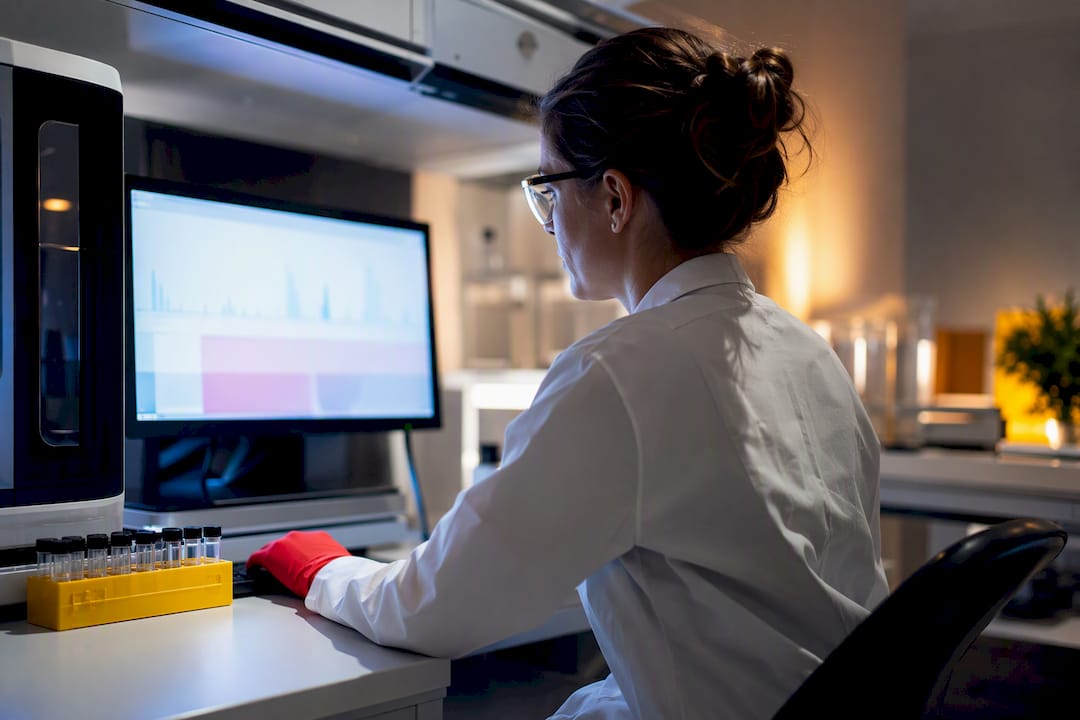
Every hair drug test follows a two-step workflow. The first step is an immunoassay screen, a cheap, fast method that flags samples likely to contain cannabinoids. Any sample that screens positive moves to confirmation testing, typically GC-MS or LC-MS/MS, which measures the actual parent compound or metabolite using a completely different scientific principle. This second step is what makes a result defensible.
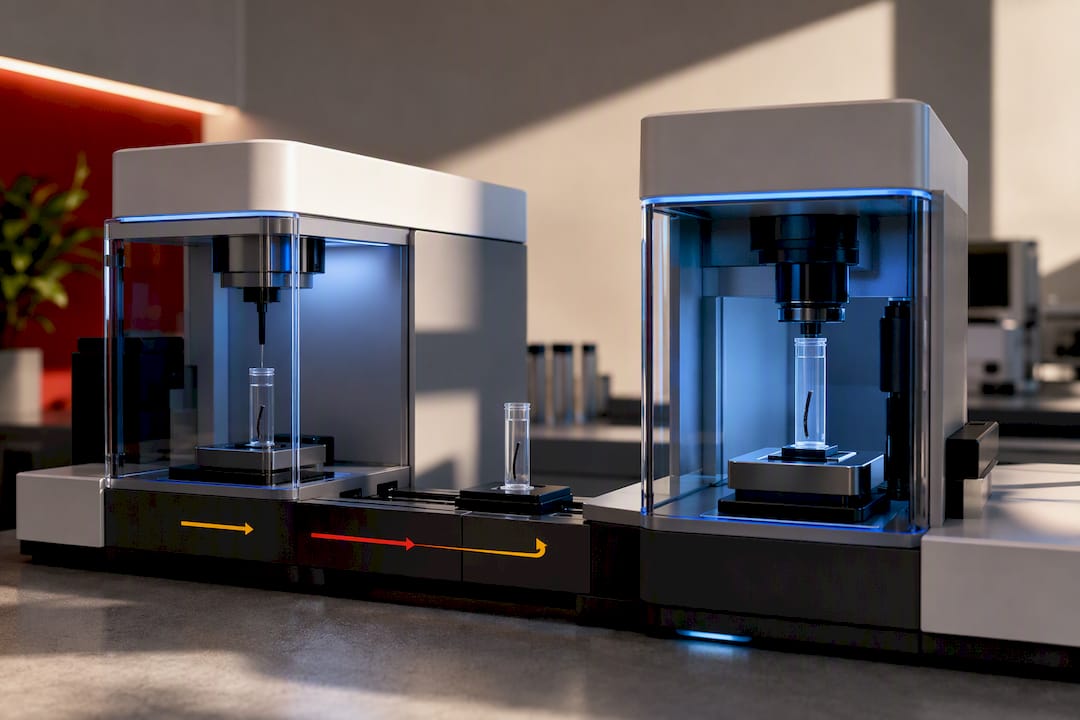
A validated LC-MS/MS method reported a limit of quantitation of just 16 picograms per milligram for delta 8 THC in hair. That figure matters because it shows how little material a modern lab needs to confirm exposure. Cannabinoids and their metabolites sit in hair at picogram-per-milligram concentrations, and a review of bioanalytical techniques confirms that reliable quantitation at this scale demands sensitive instrumentation and tight quality control.
The harder problem is telling delta 8 apart from delta 9. Both compounds produce nearly identical mass fragments, which means:
- Immunoassay screens can cross-react with delta-8-THC-COOH, flagging a sample without confirming which isomer is actually present.
- Chromatographic separation, run before the mass spectrometry step, is what actually distinguishes delta 8 from delta 9 rather than lumping them together.
- Labs that haven’t specifically validated their assay for delta 8 risk misattributing a result, a concern raised directly in research on cross-reactivity between the two THC-COOH isomers.
A 2024-2025 validation study that added delta 8 to standard cannabinoid panels found it confirmed in a meaningful share of specimens tested, using the same 16 pg/mg LOQ. Adding delta 8 as its own analyte, rather than assuming it behaves identically to delta 9, is increasingly considered best practice in testing labs.
Factors That Change Whether Delta 8 Gets Detected
Detection isn’t a fixed outcome. Several variables push the odds up or down, and understanding them helps you read a result with the right amount of skepticism.
- Frequency and dose: daily users build up far higher concentrations than someone who used delta 8 once or twice.
- Hair pigmentation: darker hair binds more cannabinoid due to melanin content, which can produce higher measured levels than lighter hair exposed to the same amount.
- Bleaching and dyeing: chemical treatments can lower the concentration of drug residue in hair, but they don’t reliably defeat a properly run confirmatory test.
- External contamination: secondhand smoke exposure can deposit cannabinoids on the hair’s surface without any ingestion at all, which is why labs prefer to confirm a specific metabolite tied to actual use.
- Product impurities: many delta 8 products on the market contain measurable amounts of delta 9 or other cannabinoids, which can change what shows up in a test entirely.
Pro Tip: If you’re unsure what’s actually in a delta 8 product you’ve used, treat it as if it contains delta 9 too. Impurities are common, and a lab confirming THC metabolites won’t know or care which version you thought you were using.
How to Read a Result and What to Do Next
A screening result and a confirmed result are not the same thing, and that distinction matters if a test affects your job or a legal matter. Confirmation testing typically targets THCCOOH, a metabolite produced when the body actually processes THC, which is what separates ingestion from simple surface exposure. SAMHSA’s guidance on drug metabolites makes this same point: metabolite confirmation is the standard for showing use rather than contact.
If you’re facing a positive result that matters, take these steps:
- Request the full lab report, not just the pass or fail summary, including the specific analytes tested.
- Ask directly whether delta 8 and delta 9 were resolved chromatographically, or whether the lab reported a combined THC result.
- Consider a second, independent confirmation test if the outcome affects your employment or legal standing.
- Talk to HR or legal counsel before assuming a result is final, since collection and chain-of-custody errors do happen.
What We’ve Learned Selling Detox Products to Real Customers
Detox shampoos, full detox kits, and home test kits are commonly sold, and years of customer questions have highlighted where the real uncertainty lies. No shampoo or kit guarantees a passed confirmatory lab test, and we don’t claim otherwise. What we can say is that topical approaches to hair are about reducing risk, not eliminating it.
Practical steps that hold up: use a home test before a real one so you’re not guessing, keep any paperwork tied to your testing process, and treat product-based prep as one layer of a plan rather than a certainty. Understanding what causes false positives also helps you separate genuine risk from noise.
A Straight Answer on What Delta 8 Testing Really Comes Down To
Delta 8 can absolutely be detected in hair when labs run validated confirmatory methods, and that’s not going to change as more labs add it to their standard panels. The real risk isn’t detection itself, it’s assuming a screen without confirmation tells the full story. If a result carries consequences, ask the lab the hard questions before you accept the outcome.
— MIchael
Where Passdrugtest Fits Into Your Preparation
If you’re heading into a hair follicle test and want realistic options rather than guesswork, our site carries the products people actually reach for: hair detox shampoos including the Macujo Aloe Rid Shampoo, full detox kits, and home test kits you can run before the real thing.
For hair specifically, the Macujo method built around Aloe Rid Shampoo is widely regarded as the most thorough approach available for preparing hair before a follicle test, and it’s the product line we get asked about most. We also carry saliva and urine testing supplies for readers facing a different type of screen.
Run a home test first, follow the product instructions exactly as written, and go in with realistic expectations rather than a guarantee. Browse our full range of detox products to see what fits your timeline.
Sources
- Hair Drugs of Abuse Testing | Frequently Asked Questions (FAQs) | Labcorp
- Validated LC‑MS/MS method for delta‑8 THC in hair (study) — PMC13079104
- Validated method detecting Δ8‑THC, Δ9‑THC, Δ10‑THC and CBD in hair (JAT, 2025) — doi:10.1093/jat/bkaf079
FAQ
Does delta 8 show up on a hair follicle drug test?
Yes, delta 8 can be detected when a lab runs a confirmatory test specifically validated for it, since standard immunoassay screens alone may not distinguish it from delta 9. Confirmation methods like LC-MS/MS have measured delta 8 at very low concentrations in hair samples.
How long does delta 8 stay detectable in hair?
Standard hair testing looks at the first 1.5 inches of hair, which reflects roughly a 90-day window of growth. Longer segments or body hair can extend that window further, though with less precision about timing.
How long do I need to be clean to pass a hair follicle test?
There’s no fixed clean time that guarantees a passed test, since detection depends on frequency of use, dose, and individual hair growth. The safest assumption is that any regular use within the prior three months could be reflected in a standard hair sample.
Is delta 8 hard to remove from your hair?
Cannabinoids bind into the hair shaft from the bloodstream, which makes them more resistant to removal than surface contamination alone. Products like the Macujo Aloe Rid Shampoo are designed to target that internal buildup, though no product can promise a specific lab outcome.