
Yes, beard hair can be used in a hair follicle drug test, but it comes with different sampling rules, lower time resolution, and interpretation caveats compared with scalp hair. It’s an accepted alternative when scalp hair isn’t available and gives labs a long detection window, though it usually cannot be broken into month-by-month segments. How reliable the result is depends heavily on the lab’s decontamination process and its ability to confirm metabolites rather than surface residue.
TL;DR:
- Beard hair tends to reflect a longer, less precise drug use window compared to scalp hair due to slower growth rates and collection by weight.
- Validation processes like washing and metabolite confirmation are critical to differentiate ingestion from surface contamination in beard hair testing.
- The typical sample size for beard hair testing is around 100 milligrams, making segmentation into monthly intervals generally unfeasible.
- Environmental exposure and cosmetic treatments, such as bleaching, can significantly affect test results, requiring disclosure and proper decontamination.
- A positive beard hair test indicates drug presence but does not specify exact timing, emphasizing the importance of understanding lab reference ranges and confirmation options.
Table of Contents
- How hair follicle testing works: incorporation and lab workflow
- Beard hair versus scalp and other body hair: growth, sampling, and concentrations
- Detection window and sample requirements for beard and other body hair
- Factors that change beard-hair test results: contamination and treatments
- Collection logistics, chain of custody, and sample integrity for beard hair
- Interpreting beard-hair results and common limitations in legal or workplace contexts
- Research summary: peer-reviewed evidence and authoritative guidance on beard/body hair testing
- Author perspective: practical takeaways and what to do if you’re tested
- Publisher resources and product options
- Sources
- FAQ
How hair follicle testing works: incorporation and lab workflow
Drug traces get into hair through three main routes: circulation in the blood during hair formation, transfer through sweat and sebum around the follicle, and external contact with drug residue in the environment. That third route is exactly why labs can’t just test a strand and call it done.
A properly run hair drug screen follows a defined sequence:
- The sample goes through a validated wash or decontamination step meant to strip away surface contamination.
- It’s then screened with immunoassay to flag potential positives.
- Positive screens move to confirmation using GC-MS or LC-MS/MS, which identifies specific drug metabolites rather than just the parent compound.
That last step matters more than most people realize. Labs look specifically for metabolites, the byproducts your body creates when it actually processes a drug, because their presence points to ingestion rather than someone simply touching a joint or standing near secondhand smoke. The Society of Hair Testing consensus treats validated washing and metabolite confirmation as standard requirements, not optional extras, precisely because contamination without confirmation produces unreliable results.
Beard hair versus scalp and other body hair: growth, sampling, and concentrations
Beard hair grows more slowly than scalp hair, and that single fact changes almost everything about how the sample behaves. Slower growth means less precise dating, since a given length of beard hair represents a longer, blurrier stretch of time than the same length of scalp hair would.
The practical differences show up at collection, too:
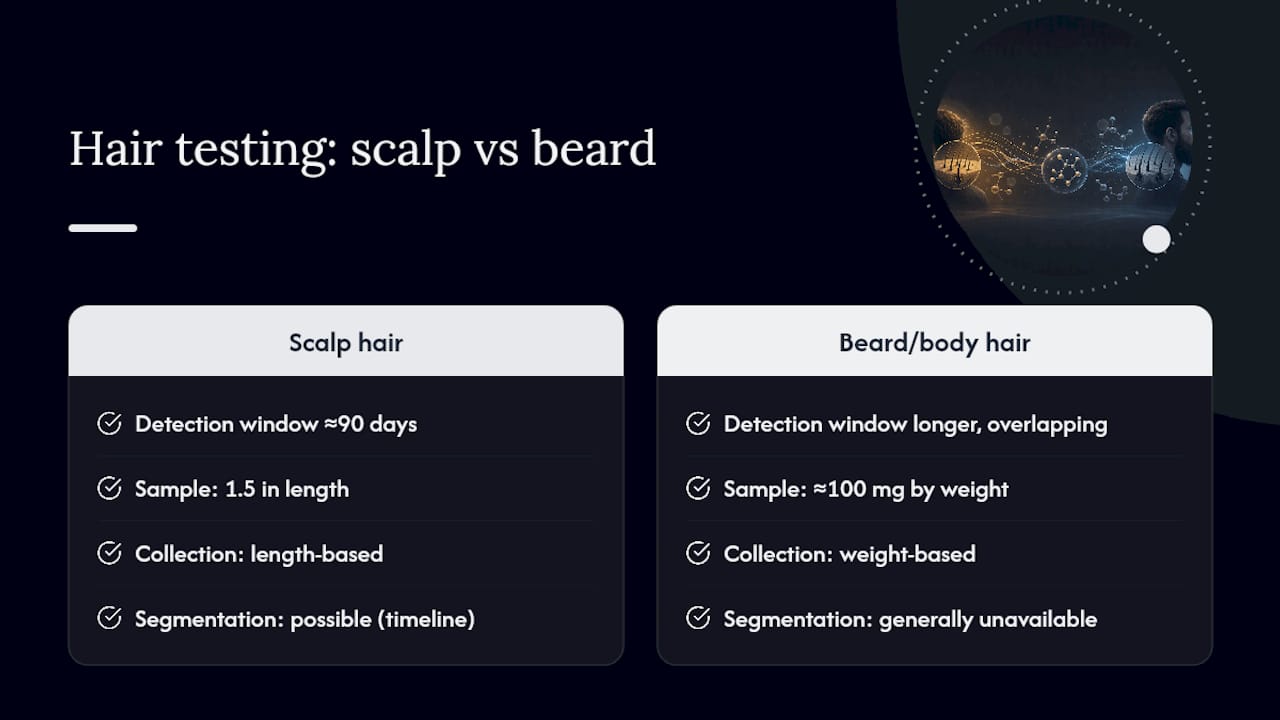
- Scalp hair is collected by length, typically a 1.5 inch segment, and by a set strand count.
- Beard and other body hair samples are usually collected by weight instead, since growth rates and hair thickness vary too much for a length-based standard.
- Beard hair’s follicle structure and slower turnover mean concentrations don’t map to time the same way scalp hair does.
That doesn’t mean beard hair reads lower than scalp hair across the board. A comparative laboratory analysis reviewed on PubMed found that some body hair types, including beard hair, showed statistically higher median levels for certain analytes such as THC, THC-COOH, and 6-acetylmorphine compared with head hair in the samples tested. The study’s authors recommended that labs build site-specific reference ranges instead of applying one blanket cutoff to every hair type.
Detection window and sample requirements for beard and other body hair
The industry standard for scalp hair is a 90 day detection window pulled from a 1.5 inch sample, according to lab guidance on detection windows. Beard hair doesn’t follow that same clean math. Because it’s collected by weight rather than length, and because growth cycles vary from person to person and even follicle to follicle, a beard sample tends to reflect a longer but less precise period, often described as an overlapping window rather than a fixed 90 days.
Most labs need roughly 100 milligrams of hair to run a full screen and confirmation, according to the same detection window overview, which is a meaningful amount when you’re talking about facial hair rather than a full head of hair. This is also why segmentation, cutting a sample into sections to estimate use during specific months, generally isn’t possible with beard or body hair. You get a broad picture, not a timeline.
Factors that change beard-hair test results: contamination and treatments
External contamination is the biggest wildcard in any hair test, beard samples included. Environmental smoke exposure or simple contact with drug residue can deposit trace amounts on the hair’s surface without any ingestion at all. This is exactly why validated wash procedures exist: a properly run decontamination step is designed to remove most surface residue before testing even begins, which is part of why the Society of Hair Testing treats it as a mandatory pre-analytical step rather than a courtesy.
Cosmetic treatments complicate things differently. Bleaching and dyeing can degrade hair structure enough to lower detectable analyte levels, sometimes significantly, which is why disclosing recent treatments at collection actually helps rather than hurts your case.
A few other variables worth knowing:
- Hair pigment and follicle anatomy can influence how strongly certain drugs bind to the hair shaft.
- Beard hair’s coarser texture and different growth pattern affect how evenly analytes distribute along the strand.
Pro Tip: If you’ve bleached, dyed, or chemically treated your facial hair recently, tell the collector before the sample is taken. It’s documented context that can matter if results are ever questioned.
Collection logistics, chain of custody, and sample integrity for beard hair
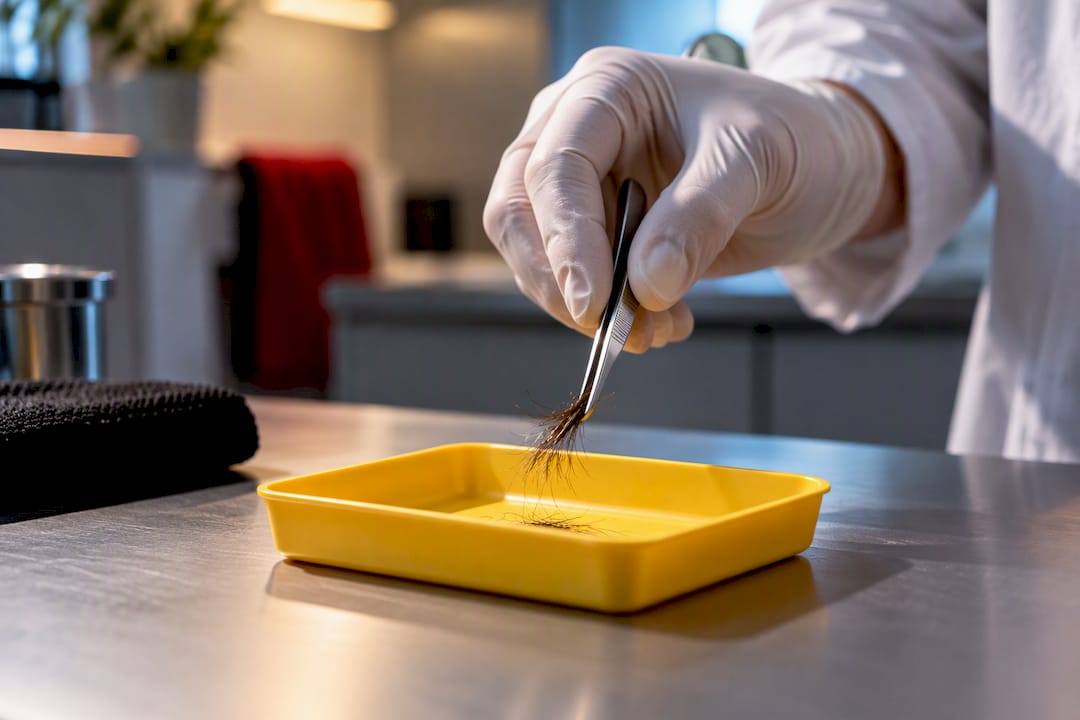
Beard samples are typically collected by shaving or cutting hair close to the skin, which raises one practical risk: epidermal debris (skin cells) getting mixed into the sample can sometimes affect analysis.
To protect the process, here’s what generally happens and what you can ask about:
- The collector documents the sample weight and collection site on the chain of custody form.
- The sample is sealed, labeled, and packaged to prevent tampering before it reaches the lab.
- Any cosmetic treatment or relevant medical detail you disclose gets noted alongside the sample.
Asking the collector to confirm sample weight and their own identification isn’t confrontational, it’s a reasonable step toward a defensible result.
Interpreting beard-hair results and common limitations in legal or workplace contexts
A positive beard hair result tells you that drug markers were present in the hair, not the dose, and not precisely when use occurred. Labs lean on metabolite identification and wash-step data to support the conclusion that a positive reflects ingestion rather than surface contact, but the result itself is still a presence or absence call.
A few things worth knowing if a result is being contested:
- Different hair types can carry different reference ranges, so it’s fair to ask a lab which cutoffs and metabolites they applied to your sample.
- You can request confirmation testing or a second-lab analysis if you have reason to question the original result.
- Where beard hair isn’t available or reliable, an alternate sample type, such as scalp hair, can sometimes be requested instead.
None of this makes a confirmed positive go away, but understanding what the result actually claims, and what it doesn’t, matters if you’re navigating a workplace or legal dispute.
Research summary: peer-reviewed evidence and authoritative guidance on beard/body hair testing
The strongest evidence on beard hair reliability comes from a handful of sources worth knowing by name.
Some body hair types, including beard hair, showed statistically higher median levels for certain analytes compared with head hair, and laboratories should apply site-specific interpretation guidance rather than one universal standard.
Summary of findings from a comparative laboratory dataset reviewed on PubMed
Other key references worth reading directly:
- NIJ-funded research on detecting phase II metabolites in hair, aimed at distinguishing genuine drug use from environmental exposure.
- The Society of Hair Testing’s 2021 consensus, which covers decontamination standards, segmentation limits, and the need for site-specific reference data.
Author perspective: practical takeaways and what to do if you’re tested
Beard hair is a solid fallback when scalp hair isn’t available, but expect a broader window and less precise timing, not a cleaner result. Disclose any cosmetic treatments, ask the lab about its cutoffs, and keep your own documentation. If a result is disputed, request confirmation testing before assuming the outcome is final.
— MIchael
Publisher resources and product options
If you’re facing a beard hair test and want to prepare, various providers offer paths worth knowing about, starting with information and moving into product options depending on what you need.
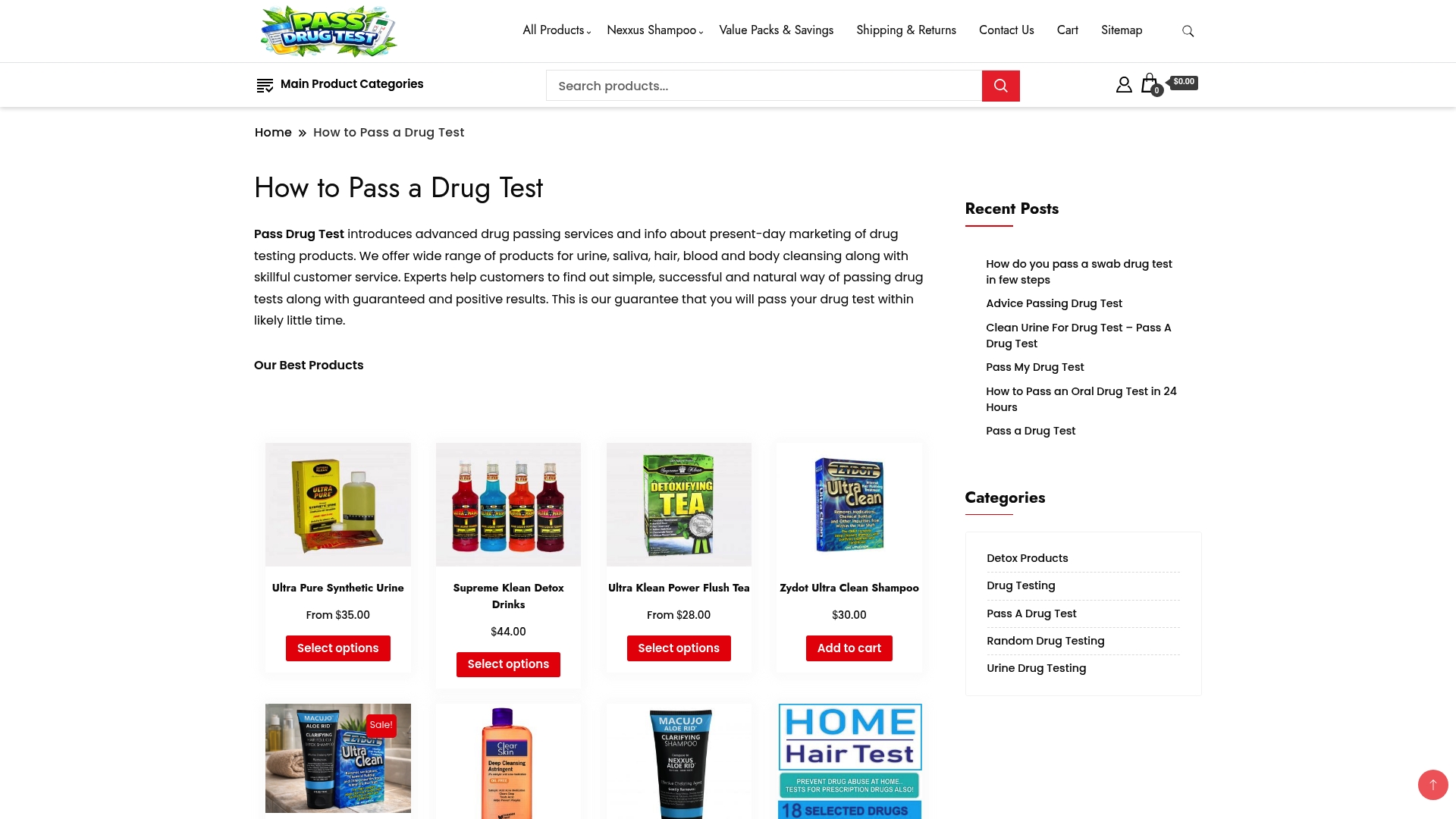
No product changes a properly performed, confirmed lab result, and we won’t claim otherwise. What products like ours are for is supplemental preparation for people who want to go into a test as informed and prepared as possible, particularly around detox shampoos and related routines.
- Detox shampoos formulated for hair follicle preparation, including our Macujo Aloe Rid Shampoo, widely regarded among detox regimens as the most effective product for supporting the Macujo Method developed by Mike Macujo, one of the most established approaches for tackling a hair follicle drug test.
- Detailed guidance on hair shaft drug incorporation for readers who want the deeper science before choosing a product.
- Broader hair drug test information covering timing, sample types, and what to expect at collection.
Start by understanding your specific testing situation, then visit Passdrugtest to review the options that match it.
This article is general information, not a substitute for advice from a qualified lawyer. Consult a qualified legal professional about your own circumstances before acting on anything here.
Sources
- Comparison of patterns of drug levels in head and body hair for medico-legal and workplace testing – PubMed
- 2021 SoHT consensus on drugs of abuse testing in hair (SoHT)
- Detecting drugs in hair: is it drug use or environmental contamination? – NIJ
FAQ
How can I detox my hair follicles?
Hair follicle detox typically involves specialized shampoos designed to strip surface residue from the hair shaft before a test, often paired with a specific washing routine. The Macujo Aloe Rid Shampoo is built around the Macujo Method for this purpose, though results depend on following the routine correctly and on individual factors like hair type.
Can a beard hair sample really replace a scalp hair test?
Yes, beard hair is an accepted substitute when scalp hair is unavailable, though it’s collected by weight rather than length and generally can’t be segmented into monthly timeframes the way scalp hair can. Reliability still depends on proper lab decontamination and metabolite confirmation.
Does beard hair show drug use for longer than scalp hair?
Beard hair can reflect a broader window than the standard 90 day scalp hair estimate, but because growth cycles vary and sampling is done by weight, that window is approximate rather than a precise timeline, as noted in industry lab guidance.
What drugs typically show up in a beard hair drug screen?
Confirmed hair tests commonly detect markers for THC, cocaine, opiates, methamphetamine, and PCP, among other substances, depending on the panel ordered. A comparative study found some of these, including THC and 6-acetylmorphine, showed higher median levels in certain body hair types than in head hair.
Can hair treatments like dye affect a beard hair drug test?
Bleaching or dyeing facial hair can lower detectable analyte levels in some cases, which is why disclosing recent cosmetic treatments to the collector matters. It won’t guarantee a negative result, but it gives the lab useful context if a result is later questioned.