
THC from edibles is usually detectable in saliva for several hours to about a day, and in some people for 48 hours or longer. Published research puts the range for oral-fluid THC after eating cannabis at 1 to 48 hours or more, and no single number fits everyone. Below we explain why the window is so wide, what moves it, how a mouth swab is actually read, and what you can sensibly do before a test.
TL;DR
- Controlled edible studies found THC in oral fluid for roughly 1.9 to 22 hours, while broader reviews report windows of 48 hours or more.
- The idea that every saliva test clears in exactly 24 hours is not supported by current evidence, especially at low cutoffs.
- Dose, how often you use, the test cutoff and the collection device all change the result more than the fact that it was an edible.
- Federally regulated oral-fluid tests use a 4 ng/mL screen and a 2 ng/mL confirmation for THC.
- A positive swab shows THC was present above a threshold. It does not measure impairment.
Table of Contents
- The short answer for edibles
- Why the research gives such a wide range
- What changes your personal window
- How a saliva test is read
- Edibles on a saliva test versus other tests
- What you can do before a mouth swab
- Our perspective
- Support for your test day
- FAQ
- Sources
The short answer for edibles
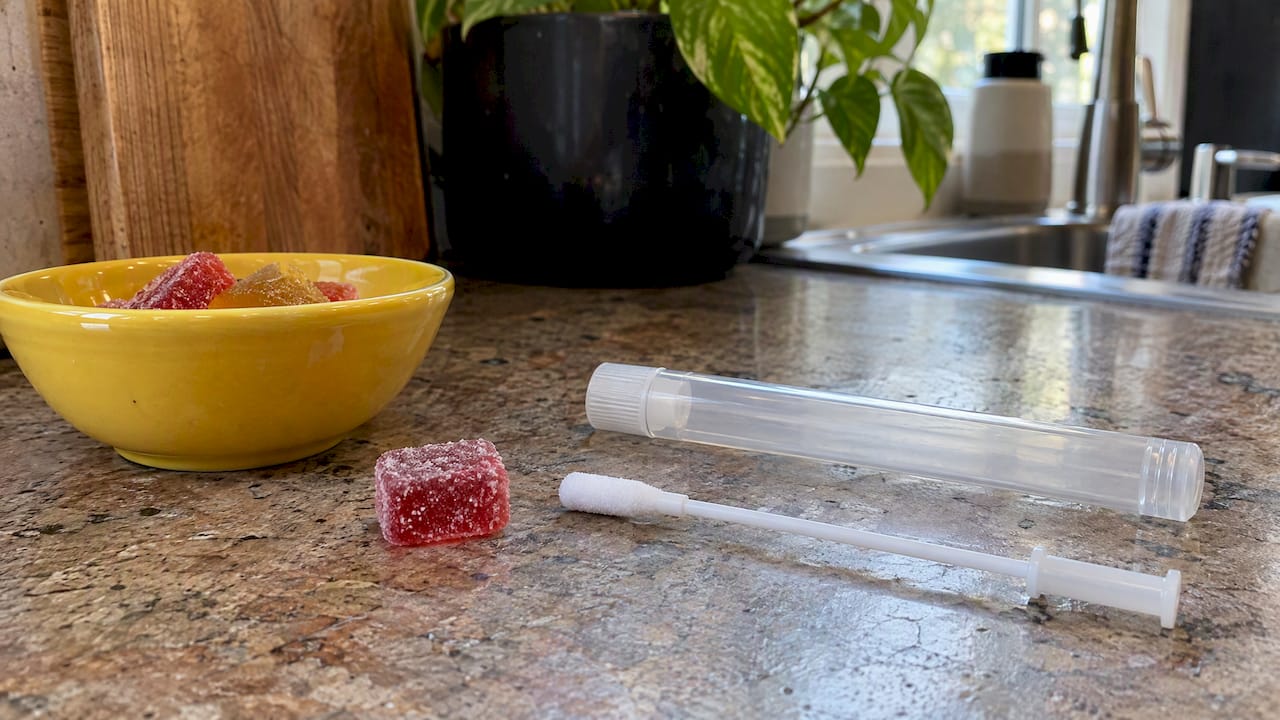
Saliva testing is built to catch recent use. With smoking or vaping, THC lands directly in the mouth and throat, so a swab can pick it up within minutes. Edibles are different, and that is where most of the confusion comes from.
When you eat a gummy, brownie or chocolate, THC passes through the mouth on the way down. Some of it coats the tongue, cheeks and gums. Your body then absorbs the rest through digestion and the liver, which is why edibles take longer to kick in. The THC a swab finds is mostly that residue in the mouth, not THC coming back out of your bloodstream.
In practical terms, here is how the numbers line up:
| Source | What it measured | Oral-fluid THC window after edibles |
|---|---|---|
| Maine DPS summary of peer-reviewed data | Detection windows across studies | 1 to 48+ hours |
| Johns Hopkins controlled administration study (2017) | Edible doses given under supervision | 1.9 to 22 hours |
| 2024 meta-analysis | Pooled oral-fluid THC data | Positives can run well past 24 hours at a 1.0 ng/mL cutoff |
If you want a planning number, think in terms of the first 24 hours as the period of highest risk and 48 hours as a cautious outer limit for an occasional user at a normal cutoff. Heavier or daily use can push beyond that. Our own guide to THC saliva detection time covers the same ground for all methods of use.
Why the research gives such a wide range
If you have read five articles and seen five different answers, the studies are the reason, not the writers. Three things stand out.
The THC in your mouth is local, not systemic
The Johns Hopkins team found that oral-fluid THC after edibles reflects residue in the mouth rather than systemic absorption, which produces erratic concentration curves. Levels peaked right after the dose and then dropped unevenly. They also noted that concentrations are generally lower than after smoking, which makes them harder to measure precisely.
That is why a person can test positive shortly after eating a gummy, then negative, and a different person with the same dose can read very differently.
People differ enormously
The 2024 meta-analysis found that the spread between individuals is extremely large at every time point, often with standard deviations twice the average. That makes any universal prediction unreliable. The same paper found that sex showed a statistically significant link to THC concentration in a simple analysis, but there is too little data to say anything dependable about age, race or body mass index.
Edibles are not automatically shorter than smoking
One study using the Dräger DrugTest 5000 found no difference in last detection time between smoked, vaporized and edible cannabis. What did matter was use pattern: frequent smokers had later median last detection times than occasional ones. So do not assume an edible is safer for a swab just because it did not involve smoke.
What changes your personal window
The AAA Foundation’s research brief lists the main variables: cutoff, analyte, dose, route, time since use, the amount deposited in the mouth, and the collection method and device. Eating, drinking or rinsing can also affect detection times. Here is what each means for you.
- Dose. A 5 mg gummy leaves less residue than a 100 mg brownie. Bigger doses and slow-dissolving products that linger in the mouth generally mean a longer tail.
- How often you use. Occasional users clear faster. Daily users tend to stay detectable longer, which matches the frequent-versus-occasional pattern in the Dräger data above.
- Cutoff level. A lab screening at 4 ng/mL will miss traces that a device set at 1 ng/mL would catch. Ask which cutoff applies to you if you can.
- Collection device. Different swabs and buffers collect different volumes and dilute the sample differently.
- Time between use and collection. This is the one factor you control. Every extra hour matters most in the first day.
- Mouth activity. Eating, drinking and rinsing before collection can shift the result, which is why many programs ask you to wait before the swab.
How you took the edible matters too. Chewing a gummy slowly or letting a lozenge dissolve keeps THC in contact with the mouth longer than swallowing a capsule.
How a saliva test is read
A positive result is not simply “THC found.” It depends on thresholds and, in many programs, on a second lab test.
Screen and confirmation cutoffs
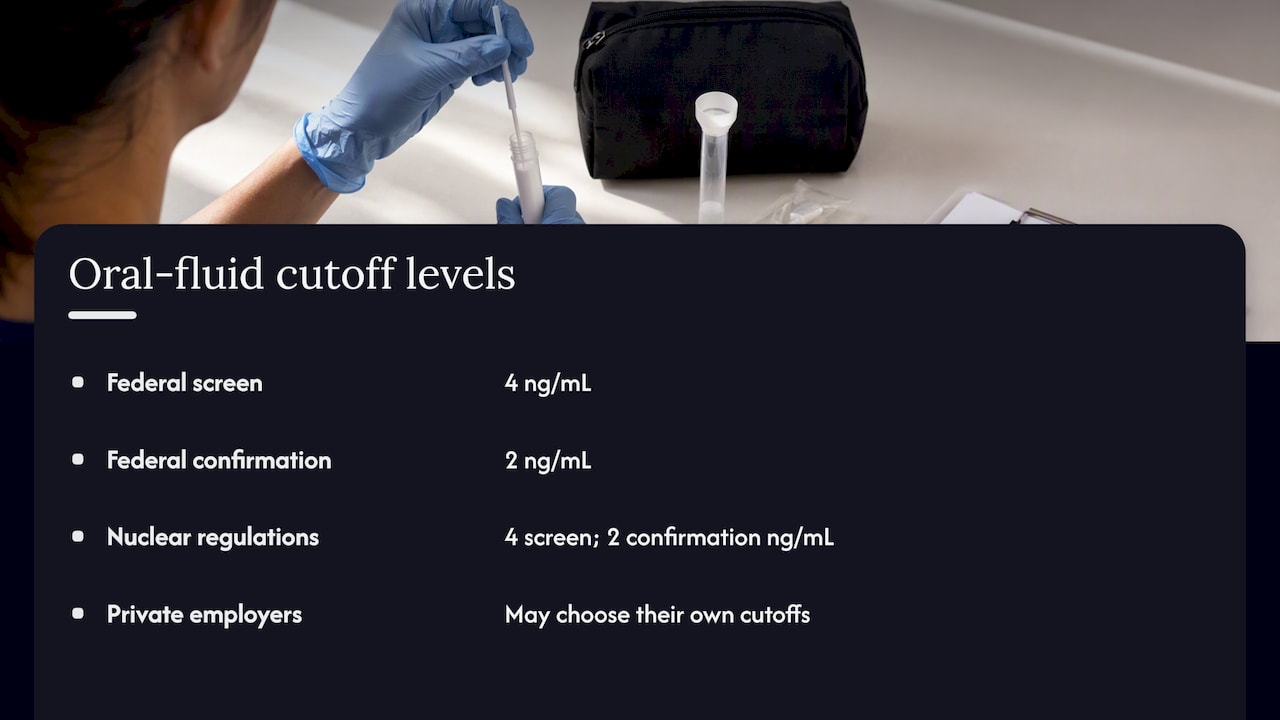
For federally regulated testing, the Department of Transportation sets an initial cutoff of 4 ng/mL and a confirmation cutoff of 2 ng/mL for marijuana in oral fluid. Nuclear power regulations use the same 4 and 2 ng/mL figures. Many private employers follow the same federal model, though they are free to choose their own panel and cutoffs.
Labs have been aligning with it. One large national lab moved its oral-fluid testing to the Quantisal device effective June 3, 2024, aligning its assays with SAMHSA cutoffs.
What a positive does and does not mean
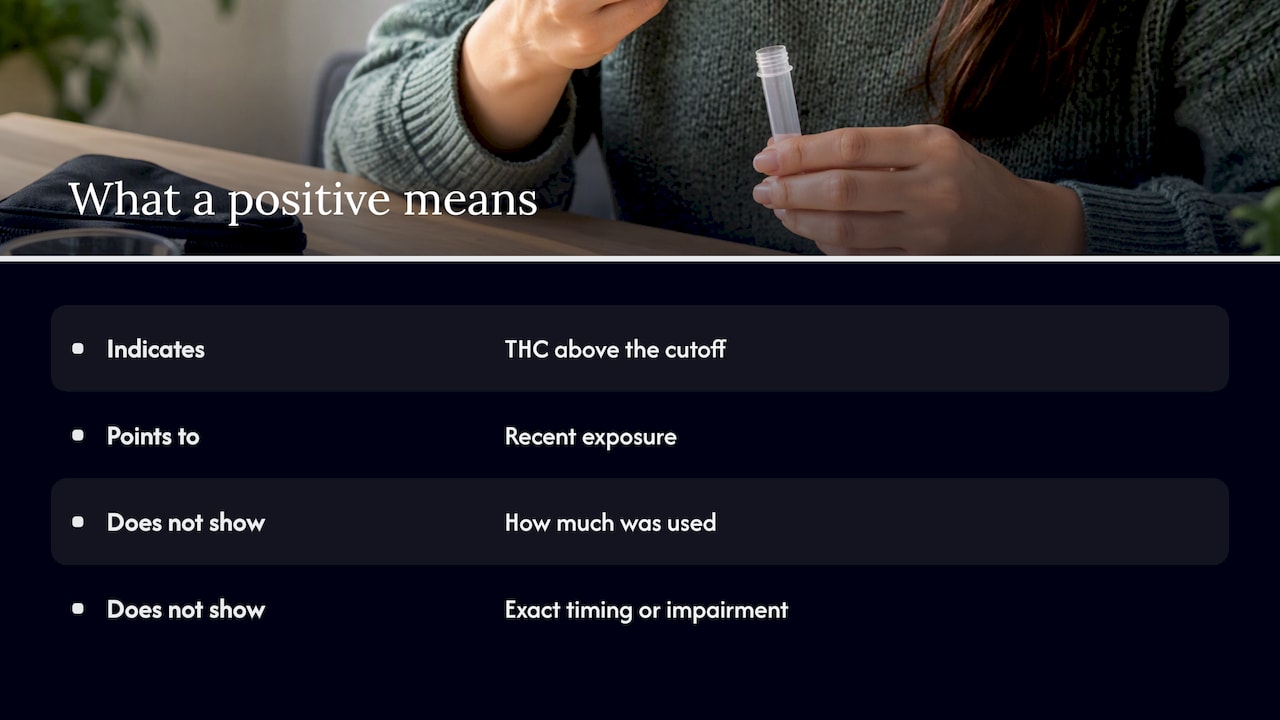
A positive says THC was present in your oral fluid above the cutoff. It points to recent exposure. It does not tell anyone how much you used, when exactly, or whether you were impaired at the time. If a result is disputed, ask whether it was a rapid on-site screen or a laboratory-confirmed result. Research also shows that false negatives are more common when confirmation cutoffs are set below the device’s screening cutoff, so the exact setup matters.
If your result is positive and you believe the process was wrong, speak to the medical review officer or the testing program’s administrator, and to an employment attorney if your job is at stake.
Edibles on a saliva test versus other tests
Saliva is the shortest window of the common test types. If you are unsure which test is coming, it helps to know how the others compare for edibles.
| Test | Typical use | What it reflects | Where to read more |
|---|---|---|---|
| Saliva or mouth swab | Post-incident, random, roadside | Recent use, hours to about two days | Edibles and mouth swab tests |
| Urine | Pre-employment, random | Days to weeks, depending on use pattern | Edibles and urine tests |
| Blood | Medical, legal, accident | Short window, tied to recent use | THC in blood |
| Hair | Pre-employment, some safety roles | Up to about 90 days | Edibles and hair tests |
A single edible dose is the case where hair testing is least likely to catch you, which we explain in our hair guide. A mouth swab is the opposite: it is built to catch the last day or two.
What you can do before a mouth swab
Let us be straightforward about what works. Nothing replaces time. The most reliable step is to stop using as early as you can, because the first 24 hours carry most of the risk for an occasional user.
Around the collection itself:
- Ask about the test. Find out whether it is a rapid swab or a lab test, and what the cutoff is. The difference between 4 ng/mL and 1 ng/mL changes your odds.
- Keep your mouth clean. Brush your teeth and tongue normally in the hours before. Food debris and a coated tongue can hold residue.
- Expect a waiting period. Many collectors ask you to avoid eating, drinking or smoking for a short time before the swab. Follow their instructions exactly, and do not try to rush or skip the process.
- Do not rely on a trick. Gum, mints and a quick rinse are not dependable on their own, and a collector who sees you rinse may restart the clock or note it.
- Plan for the other tests. If your employer might also run urine or hair, your timeline is different. See our urine test preparation guide.
Our perspective
Most people who reach us are not looking for a loophole. They have a test on the calendar, an edible they ate last weekend, and a lot of conflicting information. We see the same two mistakes again and again.
The first is trusting a single figure. When an article says saliva clears in 24 hours flat, it is flattening a large body of research that shows wide variation. We would rather you plan with a cautious margin than bet your job on an average.
The second is mixing up the tests. Someone worried about a swab spends their energy on a hair routine, or the other way around. Start by finding out which test you are facing, then match your preparation to it. For mouth swabs, that means time, oral hygiene and following the collector’s rules. For hair, that means a different approach altogether.
We built our store around that idea: the right product for the right sample type, with customer service available from 9am to 12am every day so you can ask before you order, and discreet, confidential delivery. If you are not sure what fits your situation, ask us.
— MIchael
Support for your test day
If you have a saliva test coming and want a product made for it, start with our saliva drug testing kits to check where you stand before the real test, and look at the Supreme Klean saliva detox mouthwash for use in the window the test allows.
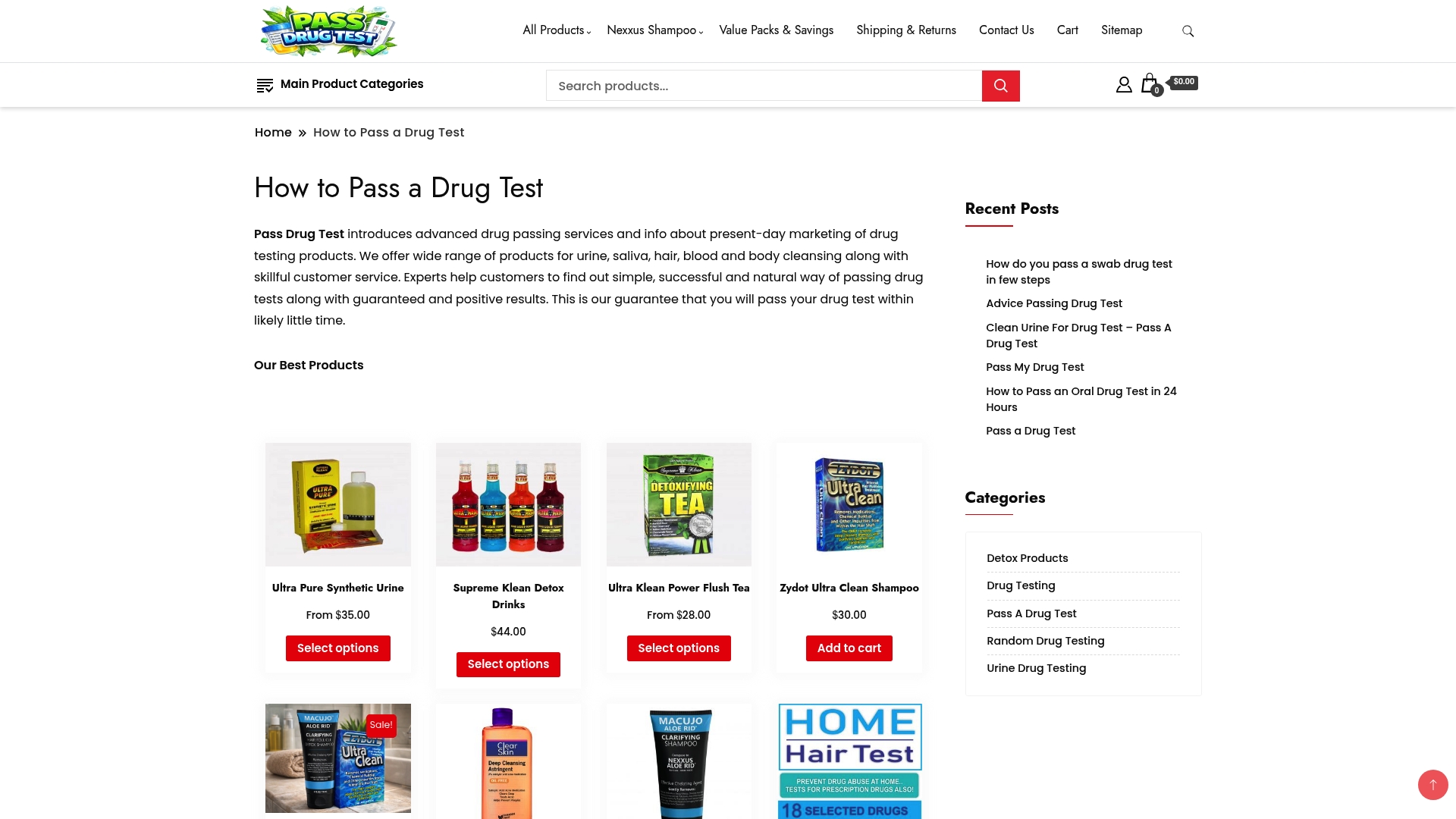
Not sure which test you will face? Our saliva swab testing overview explains how the collection works, and the passdrugtest.net store lets you browse hair, saliva and urine products in one place. Hair test coming instead? Our hair drug test shampoo page explains the options.
FAQ
How long do edibles stay in your saliva?
Usually several hours to about a day, with studies reporting 1 to 48 hours or more. Heavy or frequent use sits at the long end. Because individual differences are large, treat 48 hours as a cautious margin rather than a guarantee.
Is a saliva test easier to pass than a urine test?
The detection window is much shorter in saliva, so for an occasional user there is less time to worry about. Urine can detect use for days or weeks depending on how often you use. Our urine THC detection time guide has the lab figures.
Can eating or drinking change a saliva test result?
Yes. Research notes that eating, drinking or rinsing can affect detection times, and collectors often require a waiting period for that reason. Follow the instructions you are given and do not make last-minute changes to the collection.
Does a positive saliva test mean I was high?
No. A positive means THC was above the cutoff, which points to recent use, but it does not measure impairment. Federal programs confirm a screen with a second test at 2 ng/mL before reporting.
Do gummies stay in saliva longer than smoking?
Not necessarily. One study found no difference in last detection time between smoked, vaporized and edible cannabis on the device tested. Your use frequency mattered more than the method.
Sources
- Drug Detection Windows Summary, Maine Department of Public Safety
- Pharmacokinetic profile of oral cannabis in humans, RTI
- Concentrations of Delta 9-tetrahydrocannabinol (THC) in oral fluid, 2024 meta-analysis, PMC
- On-site oral fluid THC detection study, Forensic Toxicology
- Detection Windows for Drugs in Oral Fluid, AAA Foundation research brief
- DOT 49 CFR Part 40 Section 40.91
- 10 CFR § 26.163, cutoff levels for drugs and drug metabolites
- Oral Fluid Device Transition notice, CRL