
Short answer: hair follicle tests are built to catch months of opiate use, and no home method guarantees a negative result. Labs confirm every positive with GC/MS or LC/MS/MS, checking for specific metabolites, not just general drug presence. Some protocols, including the Macujo method with Aloe Rid shampoo, may reduce detectable residue in some cases, but what matters most is abstinence, the sample type collected, and how the lab confirms its findings.
TL;DR:
- Labs first screen hair by immunoassay, then confirm positives with GC/MS or LC/MS/MS, checking for heroin’s specific metabolite to distinguish ingestion from external contamination.
- The standard head hair sample measures 1.5 inches and represents roughly 90 days; body hair gives a less precise timeline because growth varies.
- A single isolated exposure is less likely to register than repeated use because hair tests measure accumulated exposure, while occasional use remains difficult to predict.
- Controlled studies found that bleaching, perming, and some treatments can lower drug concentrations, but results vary by product, drug, and individual hair sample.
- Abstinence is the only consistently supported preparation; disclose legitimate prescriptions beforehand, and ask whether urine or saliva testing is allowed under the policy.
Table of Contents
- How opiates get into hair and what labs actually test for
- Detection window and sample factors that shape your result
- What the science says about detox methods like Macujo and detox shampoos
- A realistic plan to prepare before an opiate hair test
- What the research and forensic standards actually establish
- Realistic expectations, safety, and harm reduction
- PassDrugTest.net and the Macujo Aloe Rid shampoo
- FAQ
- Sources
How opiates get into hair and what labs actually test for
Once opiates enter your bloodstream, small amounts travel to the hair follicle and become locked into the keratin structure as the strand grows. This is why hair testing works differently than urine or saliva screening: it is not testing what is currently in your system, it is reading a timeline written into the hair itself. The drug and its metabolites bind into the hair shaft permanently, layer by layer, following the same rhythm as hair growth.
Labs do not simply look for morphine. They look for a specific pattern of markers that tells them what actually happened in your body:
- Morphine and codeine, which can result from poppy seed consumption or prescribed medication, not just illicit use.
- 6-monoacetylmorphine (6-AM), a metabolite that only forms from heroin, which is the key marker forensic guidance relies on to distinguish heroin use from other opiate exposure.
- Opioid glucuronides, metabolite forms that help confirm the drug was metabolized internally rather than just sitting on the hair surface from external contact.
That last point matters because external contamination is a real problem labs have to rule out. Someone who lives with a heroin user, for example, could theoretically have trace opiates on their hair without ever using. This is exactly why the presence of 6-AM specifically carries weight: it strongly suggests ingestion rather than surface contact, since contamination patterns tend to differ from internally metabolized profiles.
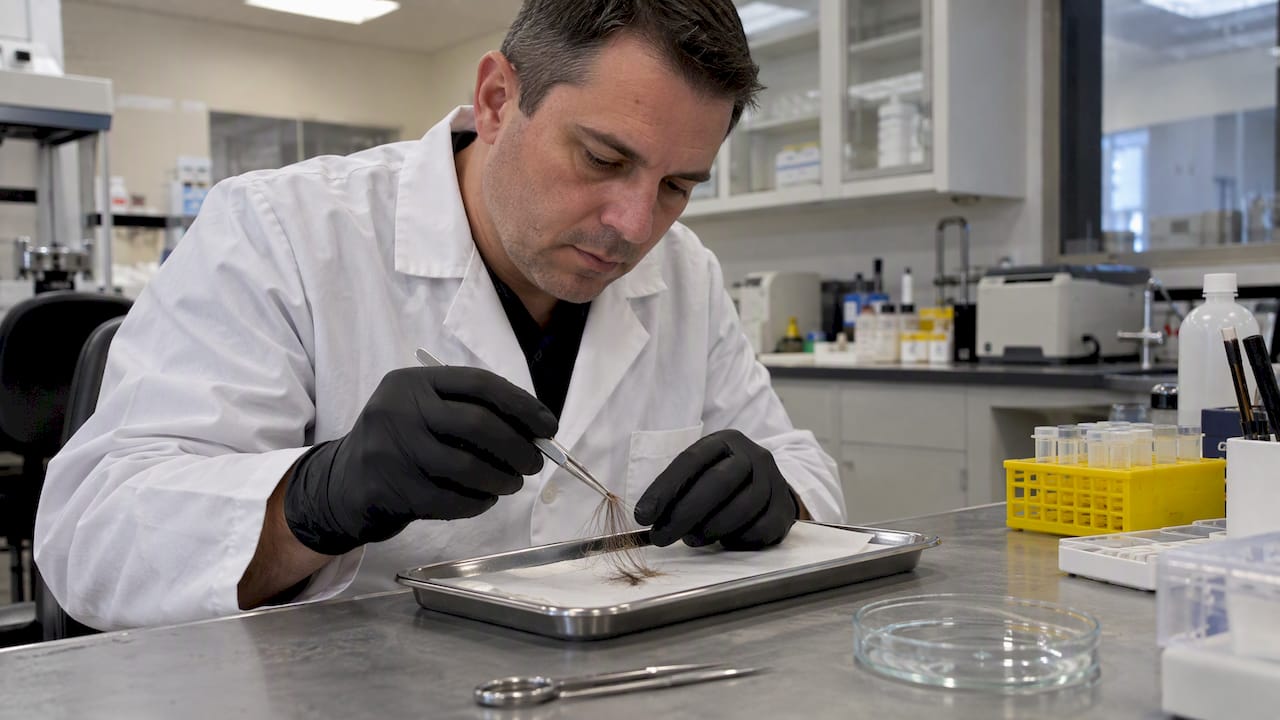
The testing pipeline itself happens in two stages. First, an immunoassay screen checks the sample against a cutoff concentration; if it is below that line, the test is reported negative and nothing further happens. If it screens positive, the lab moves to confirmation testing using gas chromatography-mass spectrometry or liquid chromatography-tandem mass spectrometry, both of which identify the exact compound present rather than just flagging a chemical family. Confirmation cutoffs are lower and drug-specific, which is part of why confirmed positives are hard to argue with. If you want more detail on how these cutoffs apply specifically to opiates, our breakdown of opiate hair test cutoffs covers the analyte-by-analyte thresholds labs use.
Typical sample requirements reflect this precision: labs generally need about 100 milligrams of hair, roughly 90 to 120 strands, collected close to the scalp. This standardization exists so results are consistent across different labs and different people’s hair.
Detection window and sample factors that shape your result
The standard rule testers use is the 1.5-inch segment, which corresponds to roughly 90 days of growth and gives the approximate three-month detection window most hair follicle tests are built around. Hair grows at an average rate between about 0.6 and 1.4 centimeters per month, so the proximal segment used is meant to capture roughly three months of use, though individual growth rates vary and the window is an approximation rather than a guarantee.
A few sample-level factors change how that window plays out in practice:
- Head hair is strongly preferred by testing labs because growth rates are more predictable and the collection process is standardized; body hair can still be tested when head hair is unavailable, but its slower and less consistent growth makes the detection timeline far less precise.
- Cosmetic treatments like bleaching, perming, and dyeing can measurably lower drug concentrations in hair, but labs are aware of this and factor treatment history into their interpretation rather than ignoring it.
- Use patterns change the odds significantly. A single, isolated exposure is far less likely to deposit a detectable concentration than repeated or chronic use, since the test is measuring accumulated exposure across the growth window, not a single event.
This is also where motivation matters for honesty with yourself: someone who used opiates once two months ago is in a genuinely different position than someone using several times a week. The science behind hair testing was designed around chronic-use detection, and occasional or single-use cases sit in a genuinely murkier zone where outcomes are harder to predict with confidence.
What the science says about detox methods like Macujo and detox shampoos
Here is where a lot of internet advice gets ahead of the evidence. Laboratory research on homemade and commercial hair treatments does show measurable reductions in drug concentration under controlled conditions, but “measurable reduction in a lab setting” and “guaranteed negative on your actual test” are not the same claim, and treating them as interchangeable is where most misinformation comes from.
A 2022 study assessing homemade hair treatment effects on drug concentrations found that certain consumer products produced meaningful reductions in drug concentration within the keratin matrix, with some treatments cutting measured concentrations substantially and occasionally bringing samples below detectable thresholds. Bleaching and perming, specifically, showed some of the larger reductions. But the same research flagged that results varied widely depending on the specific product, the drug in question, and differences between individual hair samples, meaning a method that worked in one controlled test does not reliably predict what happens with your hair, your usage history, and a specific lab’s cutoff.
| Method | Evidence basis | Key limitation |
|---|---|---|
| Macujo-style multi-step wash | Widely used protocol; limited controlled study on exact formulation | Empirical support is inconsistent across different hair types and use levels |
| Consumer detox/clarifying shampoos | Some products showed reductions in controlled studies | Reductions vary by product and drug, not consistently replicable |
| Bleaching and chemical treatment | Documented concentration reductions in lab testing | Can cause scalp and hair damage; still not consistently below cutoff |
| Simple “wash it out” rinsing | No meaningful evidence of effectiveness | Labs design wash procedures specifically to catch and control for this |
That last row matters more than people expect. Forensic labs run their own decontamination wash on every sample before testing precisely because they anticipate external tampering attempts. A quick home rinse is not competing against an unsuspecting lab, it is competing against a process built to catch exactly that kind of interference.
The concordance research adds another layer of nuance. The same PMC study on hair analysis and self-report concordance found high agreement between hair testing and self-reported use for street opioids like heroin, with positive predictive values above 80% for most drug categories. Prescribed opioids showed more variability, likely because dosing patterns, metabolism, and legitimate medical use complicate the picture in ways street drug use does not.
Pro Tip: Lab-measured reductions in a controlled study are not the same as a guaranteed negative, treat any detox claim that skips this distinction with skepticism.
If you are evaluating specific products, it is worth knowing which ones tend to disappoint before you spend money. We put together a list of detox products to avoid for hair testing based on the gap between marketing claims and what the evidence actually supports.
A realistic plan to prepare before an opiate hair test
If you are facing a scheduled or likely hair test, the sequence below reflects what the evidence actually supports, starting with what matters most and moving toward what is secondary.
- Stop use as early as possible. Abstinence is the only factor with consistent evidence behind it, since detectable concentration depends directly on how much accumulated exposure sits in the growth window. The longer you go without use before the test, especially beyond that 90-day mark, the more the most recent growth reflects abstinence rather than use.
- Understand your timeline honestly. If your test is scheduled within days or a couple of weeks, you are working with a narrow margin and no method changes that math dramatically. If you have more lead time, even partial abstinence shifts the odds meaningfully in your favor.
- If you choose a follicle-focused protocol, follow it exactly as instructed. Multi-step wash methods like Macujo are built around a specific sequence and timing, and skipping steps or improvising concentrations undermines whatever effect the protocol might have. Our guide on what actually works for hair detox walks through the sequence in detail.
- Avoid improvised chemical use. Straight bleach, excessive heat, or repeated harsh treatments can damage your scalp and hair without necessarily improving your odds beyond what a properly formulated product achieves, and the damage is a real cost even when the outcome is uncertain.
- Consider whether an alternative testing matrix applies to your situation. If you have a legitimate prescription, disclosing it ahead of time is standard practice and protects you from a false-positive scenario. In some cases, requesting a urine or saliva test instead, where allowed by the testing policy, is a more realistic path than trying to beat a hair test on short notice.
Pro Tip: If dependence is part of what brought you here, a hair test deadline is a narrow window, but real treatment support addresses the underlying problem long after the test is over.
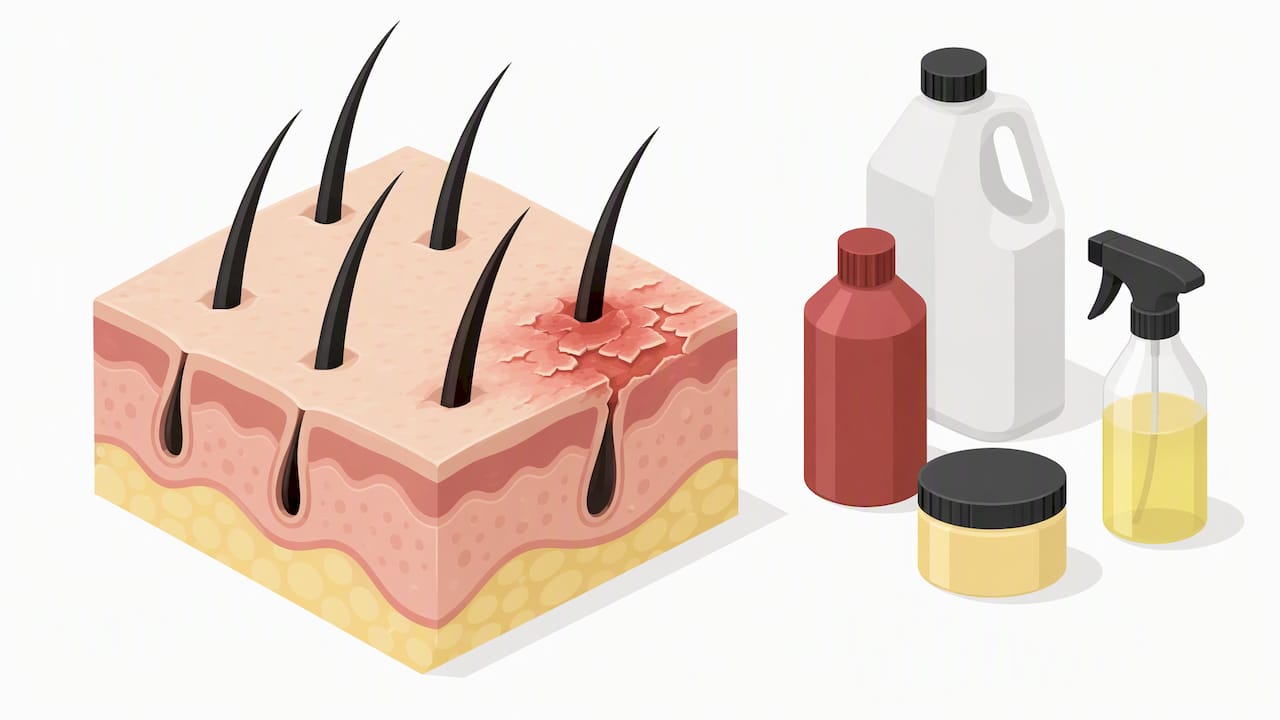
Be honest with yourself about scalp and skin reactions too. Aggressive at-home chemical combinations, especially ones improvised from household products, carry real risk of irritation or damage, and the evidence behind them is thinner than the evidence behind properly formulated commercial treatments. For a broader look at how this fits into the bigger picture of detox product categories, our overview on passing a hair follicle drug test covers how these pieces connect.
What the research and forensic standards actually establish
A handful of sources anchor most of what reputable testing organizations and forensic toxicologists agree on. The PMC concordance study remains one of the clearer references for how hair testing compares to self-reported drug use, establishing both the roughly 90-day detection window tied to the 1.5-inch head-hair segment and the finding that concordance is strong for street opioids but weaker for prescribed ones.
On the lab-practice side, federal forensic meeting documentation lays out how cutoffs are set for specific opiate analytes and why metabolite markers like 6-AM get special weight in distinguishing true ingestion from external exposure. This same body of guidance underpins how commercial labs structure their screening-to-confirmation pipeline.
Consumer-facing testing information, the kind operational labs publish for employers and individuals, consistently notes that hair testing requires a standardized sample size, typically around 100 milligrams, and that turnaround for a negative screen runs 48 to 72 hours. These operational details are not controversial, they are the baseline mechanics behind every hair test result you will encounter, and they are worth understanding separately from the more contested question of whether any detox method can reliably beat them.
Realistic expectations, safety, and harm reduction
If you are reading this close to a test date, the honest answer is that abstinence beats every product on the market, and anything less than full abstinence involves real uncertainty you should not gamble against. We would rather tell you that plainly than sell you false confidence. If opiate use has become something you cannot easily stop on your own, that matters more than any test result, and reaching out for medical support around dependence is worth more than a passed screening. When a test allows it, ask about alternative matrices or disclose a legitimate prescription before guessing your way through a hair protocol.
— MIchael
PassDrugTest.net and the Macujo Aloe Rid shampoo
For readers who have decided to attempt a follicle-focused protocol, we built our product line around transparency rather than promises we cannot back up. 
The Macujo method is one of the most widely used protocols for addressing hair follicle test concerns, and we offer a shampoo formulated specifically to support that multi-step process. Here is what we offer to help you follow it correctly:
- Our Macujo Aloe Rid shampoo page details the formulation and how it fits into the full protocol.
- Our step-by-step Macujo instructions walk through timing, safety, and the 10 to 14 day sequence we recommend.
- Our full detox product catalog covers additional options if you are exploring saliva or urine testing concerns alongside hair.
We will not tell you any shampoo guarantees a negative result, because that is not honest. What we can tell you is that following the protocol exactly, with high-quality products, offers a potentially helpful approach if abstinence alone is not an option. Visit our homepage to see the full range before you decide.
FAQ
How long do opioids stay in a hair follicle test?
Hair follicle tests are generally designed to detect opiate use going back about 90 days, based on a 1.5-inch head-hair segment and the typical hair growth rate of roughly 0.6 to 1.4 centimeters per month. Longer segments can extend the detection period further back, since each section of hair reflects a different window of time.
What can throw off a hair follicle test?
External contamination, such as contact with someone else’s drug residue, can occasionally complicate interpretation, which is why labs look for metabolites like 6-AM rather than just the parent drug. Cosmetic treatments including bleaching and perming can also lower detectable concentrations, though labs factor treatment history into how they read results.
What cleans out hair follicles?
No product has been shown to reliably clear hair follicles of drug residue well enough to guarantee a negative lab-confirmed result. Research on homemade and commercial treatments shows some formulations and chemical processes can reduce detectable concentration in controlled testing, but outcomes vary by product, drug type, and individual hair.
How long do you have to be clean to pass a hair follicle drug test?
Because the standard test window covers about 90 days of growth, the safest approach is abstinence for that full period before testing. Shorter abstinence periods carry more uncertainty, since recent use is more likely to still be reflected in the portion of hair closest to the scalp.
Does the Macujo method actually work for opiates?
The Macujo method is one of the most widely used and discussed protocols for hair follicle test preparation, and many people turn to it specifically for its structured, multi-step approach. That said, controlled research on its exact effectiveness for opiates specifically is limited, so it should be treated as a serious, evidence-informed option rather than a guaranteed outcome.