


Not all drug tests are created equal, and assuming otherwise is one of the most common reasons THC users fail even when they thought they were prepared. Hair follicle tests and urine tests operate on completely different science, look for different substances, and require entirely different detox strategies. Using the wrong approach for your test type can cost you a job, a contract, or even a license. This guide breaks down exactly how each test works, what it detects, and most importantly, how you match your detox strategy to the specific test standing between you and your goal.
Table of Contents
- How hair and urine drug tests actually work
- What each test detects: Metabolites, detection windows, and timelines
- Lab procedures and confirmation: Why hair tests are hard to cheat
- Choosing your detox approach: What works for urine vs hair tests
- The truth most people miss about passing hair and urine drug tests
- Trusted solutions for your next drug test
- Frequently asked questions
Key Takeaways
| Point | Details |
|---|---|
| Different detection methods | Hair and urine drug tests use distinct science to identify THC exposure, affecting preparation. |
| Time windows matter | Hair tests cover a longer detection window (up to 90 days) compared to urine tests. |
| Lab procedures reduce cheating | Professional hair tests include decontamination and confirmation, making easy cheating nearly impossible. |
| Detox strategies must match test | Never use urine detox methods for a hair test—each test type requires its own proven approach. |
| Choose evidence-based products | Topical shampoos and proven detox routines are essential tools for passing hair drug tests. |
How hair and urine drug tests actually work
Now that you know why understanding the type of test matters, let’s break down how each method actually detects THC and what makes their detection windows and science so different.
The fundamental difference comes down to where drug metabolites end up in your body. When you consume THC, your body processes it and produces metabolites, which are chemical byproducts of that process. Those metabolites travel through your bloodstream and end up in different places depending on the test type your employer or agency uses.
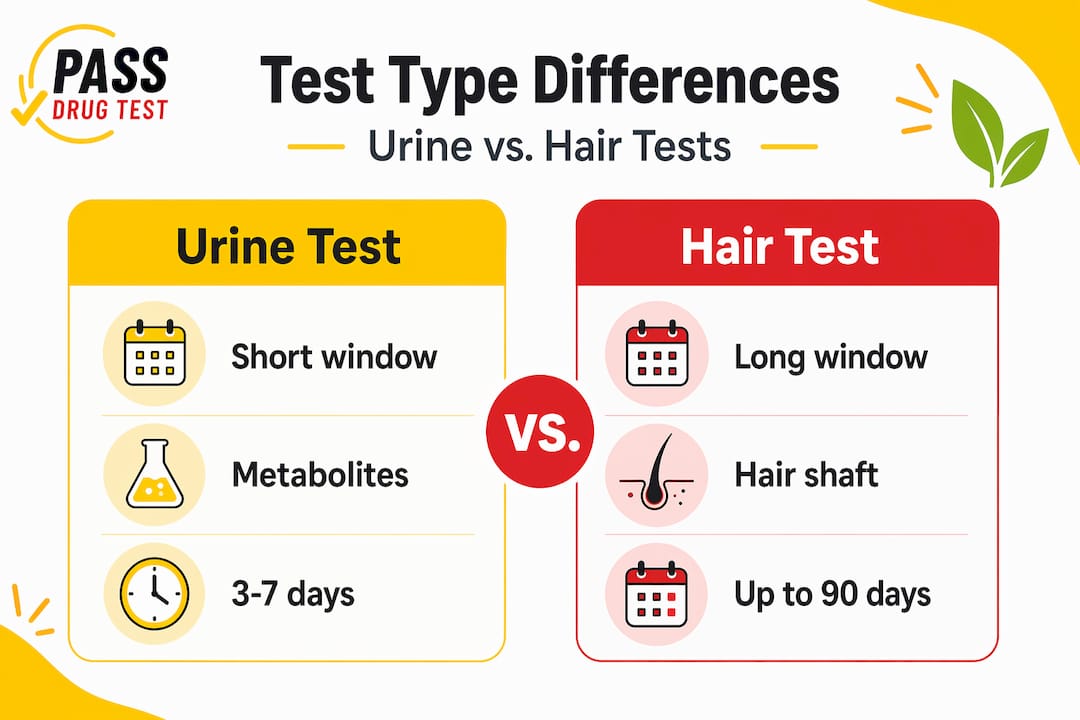
Urine tests detect THC metabolites excreted from your body through your kidneys. As your body clears THC, THC metabolites like THC-COOH are filtered out and expelled in urine. This is why urine tests are tied closely to recent use. Once your body finishes clearing the metabolites, they are essentially gone from your urine. Hair tests work on a completely different principle. When blood carrying THC metabolites flows through your scalp, those metabolites get deposited into the growing hair shaft itself. They become physically embedded in the hair as it grows, creating a permanent chemical record of your use history.
This is why the hair drug test detection window is so much longer than a urine test’s. Hair grows approximately half an inch per month, and labs typically test the most recent 1.5 inches of hair, which represents roughly 90 days of history. Urine tests only reflect what your body is currently clearing, while hair tests reflect what your blood was carrying weeks or months ago.
According to SAMHSA drug testing resources, specimen types used for drug testing include both hair and urine, though federal guidance specifically covers urine and oral fluid testing procedures and laboratory standards. This matters because the federal framework for workplace testing is built around urine, while hair testing operates under different, often employer-specific guidelines.
Key differences at a glance:
- Urine tests detect metabolites your body is actively excreting
- Hair tests detect metabolites permanently embedded in the hair shaft
- Urine is the standard for federally regulated workplaces
- Hair testing is common in certain industries and legal situations where longer detection windows are desired
- Your detox strategy must match the test type you are facing
Understanding whether you are facing a urine or hair test is step one. Mixing up the two is where most preparation plans go wrong.
Pro Tip: Always confirm your test type with your recruiter or HR contact before starting any detox protocol. The words “drug test” alone do not tell you enough.
The federal guidelines for hair testing are distinct from federal urine test standards, and knowing which framework applies to you shapes everything from your timeline to your product choices.
| Feature | Urine test | Hair follicle test |
|---|---|---|
| What is detected | THC-COOH metabolites in urine | Metabolites embedded in hair shaft |
| Detection window | Days to a few weeks | Up to 90+ days |
| Best for detecting | Recent use | Long-term or historical use |
| Federal program use | Yes, primary method | Not included in mandatory federal programs |
| Affected by hydration | Yes | No |
| Effective detox method | Abstinence, hydration, flushing | Macujo Method with detox shampoo |
What each test detects: Metabolites, detection windows, and timelines
Understanding the science is crucial, but to pass a test, you really need to know what each test type is looking for, and when.
Urine testing for THC in workplace contexts targets THC metabolites rather than active THC itself. The most commonly tested metabolite is THC-COOH, which is fat-soluble. This matters because THC-COOH gets stored in your body’s fat cells and releases back into your bloodstream gradually. Infrequent users might clear detectable levels in just 3 to 5 days. Regular users can test positive for two to four weeks. Heavy, daily users have reported positive urine tests even after 30 or more days of abstinence, because the fat cells keep slowly releasing stored metabolites.

Hair testing works very differently. According to SAMHSA, hair measures metabolites incorporated into the growing hair shaft, meaning timing since last exposure and hair growth history matter far more than what your body is currently clearing. The hair follicle test has no interest in what you did last weekend. It is reading a historical record written directly into your hair structure.
Here is what the timeline looks like in practice:
- Urine test (infrequent user): THC-COOH typically clears within 3 to 7 days of last use
- Urine test (moderate user): Expect 10 to 18 days for clearance depending on body fat and metabolism
- Urine test (daily heavy user): Could take 30 to 45 days before testing negative
- Hair follicle test: Detects use across a 90-day window based on the last 1.5 inches of hair growth
- Hair follicle test (recent use): A hair test cannot detect same-day or very recent use because new metabolites have not had time to travel from the bloodstream into the growing hair shaft
That last point surprises many people. If you used cannabis yesterday and have a hair test today, the metabolites from that session may not show up yet. However, everything from the previous 90 days is still embedded in the hair that was already grown. THC analysis in hair samples works on this lag, which is why hair tests are preferred when investigators want to see a longer usage history rather than just recent behavior.
Key distinction: Urine tests are about right now. Hair tests are about your history. These two facts should drive every decision you make about detox timing and method.
Another critical difference is in the cutoff levels. Urine tests have established cutoff thresholds that factor in urine concentration, meaning a very diluted urine sample might fall below the threshold even with some metabolites present. This is why hydration and sample validity checks are relevant for urine tests. Hair tests are not affected by hydration at all. The metabolites in your hair shaft are fixed. No amount of water, exercise, or time-limited abstinence changes what is already embedded in a hair sample.
The gap between what works for a synthetic urine vs hair testing situation is enormous. Substitution tactics that might help some users with a urine test provide absolutely zero protection if you are facing a hair follicle screen.
Lab procedures and confirmation: Why hair tests are hard to cheat
Knowing what is detected is one piece. Understanding how labs actually analyze samples helps explain why some strategies work and others do not.
Modern hair drug testing is not a simple dip-strip test. Labs use multi-step processes designed specifically to catch shortcuts and rule out false positives from environmental exposure. Here is how the process typically unfolds:
- Initial decontamination wash: The hair sample is washed to remove external surface contamination, like cannabis smoke residue or passive exposure, before any testing begins
- Enzyme digestion: The hair shaft is broken down chemically to release metabolites embedded inside the hair structure
- Immunoassay screening: The extracted sample is screened using an initial antibody-based test to flag potential positives
- Confirmatory mass spectrometry: Any sample that screens positive moves to confirmation using gas or liquid chromatography mass spectrometry (GC-MS or LC-MS), which identifies and measures specific drug metabolites with very high precision
This process, described in detail in Waters’ extraction and analysis research on definitive drug panel analysis, means labs are distinguishing between metabolites that are genuinely inside the hair shaft and those that are merely on the surface. Simple washing, clarifying shampoos, or bleaching might affect the outer layer of your hair, but they rarely penetrate deep enough to remove embedded metabolites from the cortex of the hair shaft.
“Hair test labs use multi-stage screening and confirmation workflows, including initial screening and confirmatory mass spectrometry, which distinguishes external contamination from true incorporation.” Waters Research, 2025
According to biology-based hair follicle test research, reputable testing workflows include decontamination and confirmation steps specifically to reduce misinterpretation of surface contamination. This is reassuring from a fairness standpoint, but it also means that anyone hoping a quick rinse or bleach job will clear their test is likely to be disappointed.
So what does actually work? Strategies that reduce the concentration of metabolites inside the hair shaft over time. This is where the Macujo Method comes in. This multi-step protocol uses specific products applied repeatedly over several days to open the hair cuticle and strip metabolites from deeper within the hair structure. It is not a quick fix. It is a sustained, evidence-based process that works with the biology of hair rather than trying to fool a lab with surface treatment.
Pro Tip: Start your hair detox protocol as early as possible. The Macujo Method requires multiple sessions over multiple days to reach effective metabolite reduction. Starting 24 hours before your test is not enough.
Reliable hair test strategies are built on understanding the lab process. The more you know about how confirmation testing works, the clearer it becomes why only deep-acting detox approaches offer genuine preparation value.
Choosing your detox approach: What works for urine vs hair tests
Ultimately, knowing how each test works should drive your choice of detox or preparation strategy to maximize your odds of success.
Federal guidance, as noted in SAMHSA resources, focuses on urine and oral fluid guidelines for mandatory federal programs. Hair is not used within mandatory federal programs but may appear in private-sector or legal contexts. This means your specific industry and situation largely determine which test you will face.
If you are preparing for a urine test:
- Stop consuming THC as early as possible before the test
- Increase water intake moderately to support natural metabolite clearance
- Exercise regularly to metabolize stored fat cells, but stop intense exercise 48 to 72 hours before the test to avoid releasing a final surge of metabolites into your urine
- Consider avoiding hair test surprises by confirming your test type in writing if possible
- Understand that hydration affects your sample’s metabolite concentration and lab validity checks
If you are preparing for a hair follicle test:
- Begin a proven multi-day detox shampoo protocol like the Macujo Method as soon as you know about the test
- Use a specialized detox shampoo like Macujo Aloe Rid Shampoo that is formulated to penetrate the hair shaft
- Follow the full protocol every day without skipping sessions, as cumulative treatments make a significant difference
- Avoid any THC use during your preparation period to stop adding new metabolites to your system
- Do not rely on standard clarifying shampoos, household products, or bleaching alone
The key lesson is that each strategy is built around the detection science of its specific test type. A urine test responds to what your body is currently processing. A hair test reflects your usage over a much longer stretch of time. Applying a urine test strategy to a hair test situation is not just ineffective. It can create a false sense of security that leads to failure.
Learning how to pass a hair follicle drug test is a separate skill set from urine test preparation, and the sooner you treat it that way, the better your odds. Resources tailored to hair detox for job applicants can walk you through the full 90-day consideration window and help you build a realistic timeline.
The truth most people miss about passing hair and urine drug tests
Here is the hard-earned wisdom that separates prepared test-takers from those who get surprised.
After working with thousands of THC users preparing for drug tests, one pattern stands out clearly. The people who fail are almost never the ones who did nothing. They are usually the ones who did something, but the wrong thing. They used a urine flush product before a hair test. They washed their hair with a cheap clarifying shampoo and assumed it was enough. They focused on their hydration and metabolism without ever addressing the metabolites locked inside their hair.
The second most common source of failure is underestimating lab sophistication. Many people still believe that bleaching your hair or using a certain household acid rinse will fool a lab. The multi-stage confirmation process, including decontamination washes and mass spectrometry, is specifically designed to defeat those attempts. These are professional forensic procedures, not basic dip tests.
Understanding your risk level and cutoffs is where smart preparation begins. Heavy daily users carry significantly more metabolites embedded in their hair than occasional weekend users. Your preparation timeline and the number of detox sessions you need to complete should reflect your actual usage pattern, not a generic minimum.
True success combines three things: an honest assessment of your own usage and timeline, a proven method matched to the specific test you are facing, and a reliable product designed for that method. Shortcuts built on rumors and partial information rarely survive contact with a professional lab.
Trusted solutions for your next drug test
If you are serious about preparing, here are proven resources and products that thousands of THC users rely on.
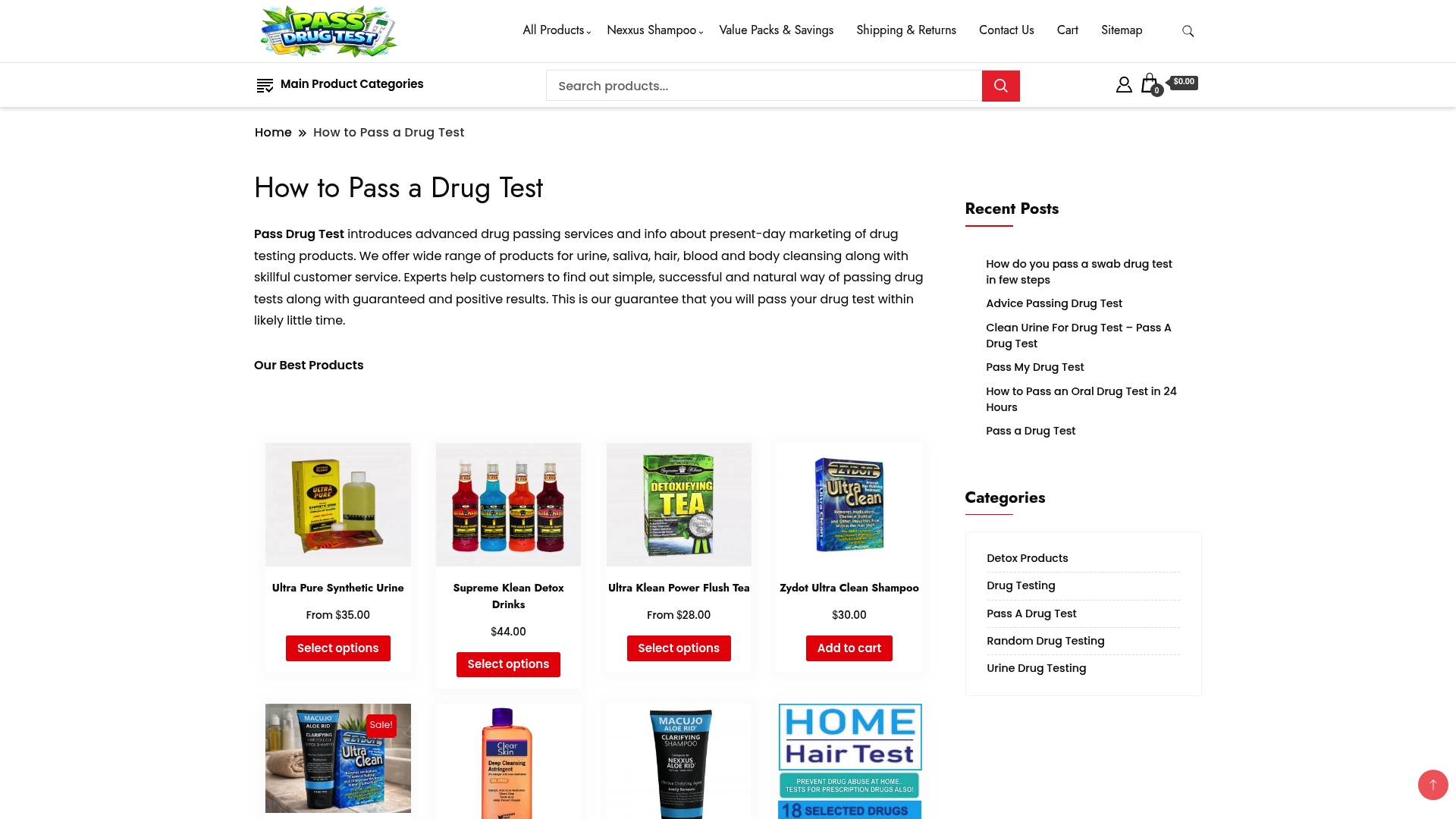
When it comes to hair follicle test preparation, having the right products makes all the difference. Our Macujo Aloe Rid Shampoo is the most trusted detox shampoo for the Macujo Method, formulated to penetrate the hair shaft and reduce embedded metabolite concentrations over multiple treatment sessions. It is the flagship choice for users who want to give themselves the best possible chance before a hair follicle test. If you want to see everything available, browse our full detox product range or learn more about choosing the best hair follicle detox shampoo for your specific situation. Do not leave your preparation to chance with unproven products.
Frequently asked questions
Can hair drug tests detect THC use from months ago?
Yes, hair tests detect THC use up to 90 days prior, based on the 1.5 inches of hair collected, which corresponds to approximately three months of growth.
Are hair tests used in all federal workplace drug testing?
No, federal workplace programs focus on urine and oral fluid tests. Hair testing is optional and used outside the mandatory federal framework by private employers or in certain legal contexts.
Is it possible to cheat a hair drug test by washing or bleaching your hair?
Due to multi-stage lab confirmation processes including decontamination washes and mass spectrometry, superficial hair washing or bleaching rarely fools a professional hair drug test.
What is the main difference between a hair and a urine test for THC?
Urine tests detect recent THC metabolites that your body is actively clearing, typically reflecting use within a few days to a few weeks, while hair tests identify metabolites embedded in the hair shaft covering a 90-plus day window.
Which detox products help the most with hair drug test preparation?
Detox shampoos specifically formulated for the Macujo Method, like the Macujo Aloe Rid Shampoo, are among the most effective tools for hair drug test preparation when used correctly in a multi-day protocol.