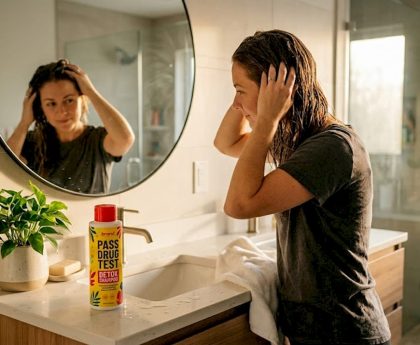

The Macujo method, developed by Mike Macujo, is widely considered the best step-by-step routine for attempting to pass a hair follicle drug test, and its core protocol runs on four products: Aloe Rid shampoo, a salicylic-acid astringent, baking soda, and a follow-up cleanser like Zydot Ultra Clean. Done correctly, the routine can reduce measured concentrations of some drug metabolites, but it is not a guaranteed pass, and skipping steps or overdoing contact time raises real risk of scalp irritation.
TL;DR:
- The Macujo method provides a chemical routine that can reduce drug metabolites in hair but does not guarantee a negative test result.
- Proper execution requires strict adherence to timing and application details, with overuse or shortcuts risking scalp irritation or ineffective results.
- Each product has a specific function: Aloe Rid shampoo cleanses residues, salicylic acid penetrates the hair, baking soda abrasively lifts contaminants, and Zydot neutralizes odors.
- The routine tends to lower THC levels by approximately 52% to 65%, but no method consistently guarantees passing all drug tests, especially for substances other than THC.
- Running the full protocol over 10 to 14 days enhances effectiveness, whereas fewer sessions or last-minute attempts significantly decrease the chances of success.
Table of Contents
- What Are the Macujo Aloe Rid Instructions Step by Step?
- What Do the Aloe Rid Ingredients Actually Do?
- Is the Macujo Method Safe for Your Scalp?
- Why Didn’t the Macujo Method Work? Common Mistakes
- Does the Macujo Method Actually Work, According to Research?
- A Straight Answer About What This Method Can and Can’t Promise
- Get Everything You Need for a Full Macujo Session in One Order
- Sources
- FAQ
What Are the Macujo Aloe Rid Instructions Step by Step?
Before you touch a single product, confirm two things: which specimen the tester actually collects (hair, urine, or oral fluid) and roughly how much notice you have before the appointment. Hair testing rules are not standardized the same way urine testing is, and federal guidelines updated in 2023 clarify that hair specimens are handled differently than urine across agencies. If you don’t know exactly what’s being tested and what cutoff levels apply, you’re guessing blind.
What you need before you start
Gather everything in one place so you’re not dripping astringent onto your bathroom floor mid-session.
- Macujo Aloe Rid Shampoo (the flagship cleansing shampoo in this routine)
- A salicylic-acid astringent, such as Clear Skin or an equivalent OTC product
- Baking soda (plain, aluminum-free is fine)
- White vinegar
- Zydot Ultra Clean or a comparable final-rinse cleanser
- Disposable gloves, an old towel, and a timer
The session, in order
- Wash with a regular clarifying shampoo first. Strip any styling product, oil, or residue. Do not apply conditioner. Conditioner coats the hair shaft and blocks the astringent from doing its job.
- Towel-dry until damp, not wet. Excess water dilutes the astringent and shortens effective contact time.
- Apply the salicylic astringent directly to the scalp, working it in with gloved fingers. Focus on the areas closest to the scalp, since that’s the newest hair growth and the section labs prioritize. Leave it on for roughly 10 to 15 minutes. Do not exceed this window on your first attempt. You want penetration, not chemical burn.
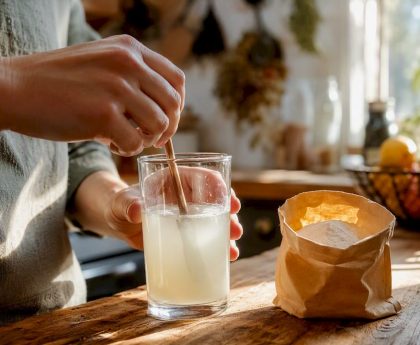
- Work in a baking soda paste (a few tablespoons mixed with a splash of water) over the same areas while the astringent is still active. Massage gently for 2 to 3 minutes. This step is abrasive by design, so treat it like exfoliating a sunburn, not scrubbing a pan.
- Rinse thoroughly with warm water. Do not let baking soda residue sit longer than the massage itself.
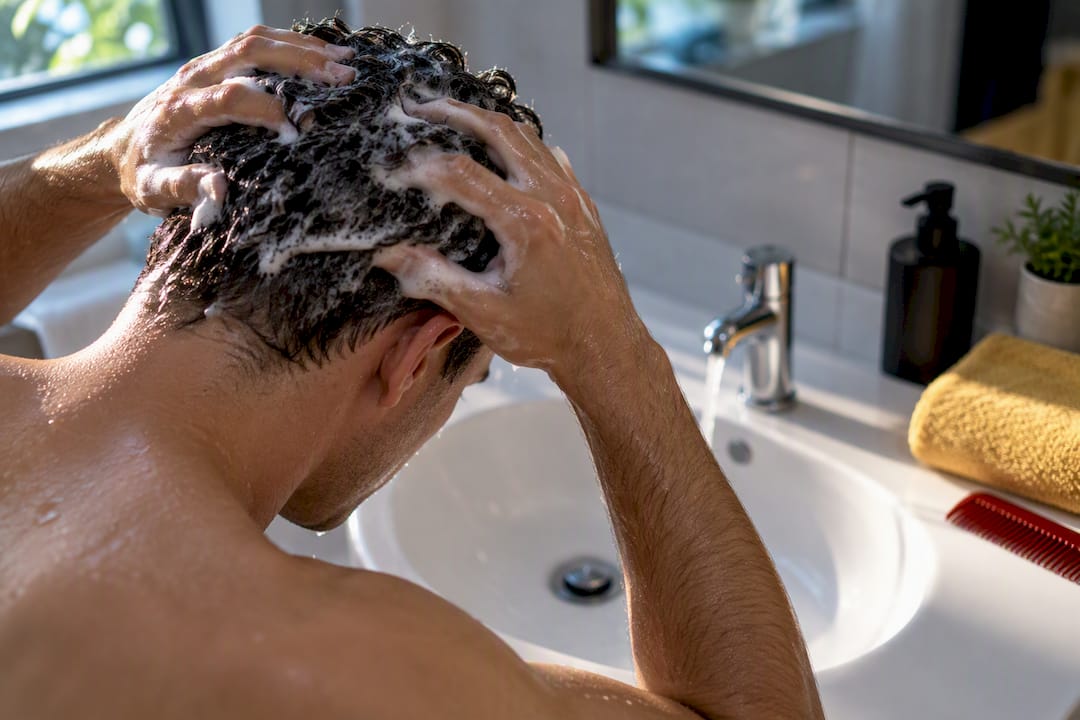
- Wash with Macujo Aloe Rid Shampoo, lathering for a full 2 to 3 minutes and concentrating on the scalp and the first inch of hair from the root. Rinse completely.
- Follow with Zydot Ultra Clean or a similar final-step cleanser, per that product’s own label instructions, typically a shorter contact wash designed to strip any remaining residue and leave hair smelling normal.
- Rinse with a diluted white vinegar solution (roughly one part vinegar to three parts water) as a final pass. This helps neutralize pH after the astringent and baking soda steps and cuts down on the chemical smell.
- Air dry when possible. Heat styling right after a session adds thermal stress to hair that has already been chemically worked.
For short hair or a tight hairline, use a fine-tooth comb dipped in the astringent to work product closer to the scalp without soaking hair you don’t need to treat. Buzzed or very short cuts need less product per session but more attention to even coverage, since there’s less margin for missed patches.
Pro Tip: Run a full session once daily for 10 to 14 days leading up to a test rather than trying to compress everything into 48 hours. Rushed, high-frequency sessions increase scalp irritation without adding meaningfully to metabolite reduction, since repeated in vitro applications in published research still showed variable, product-dependent results rather than a clean linear improvement with more repetitions.
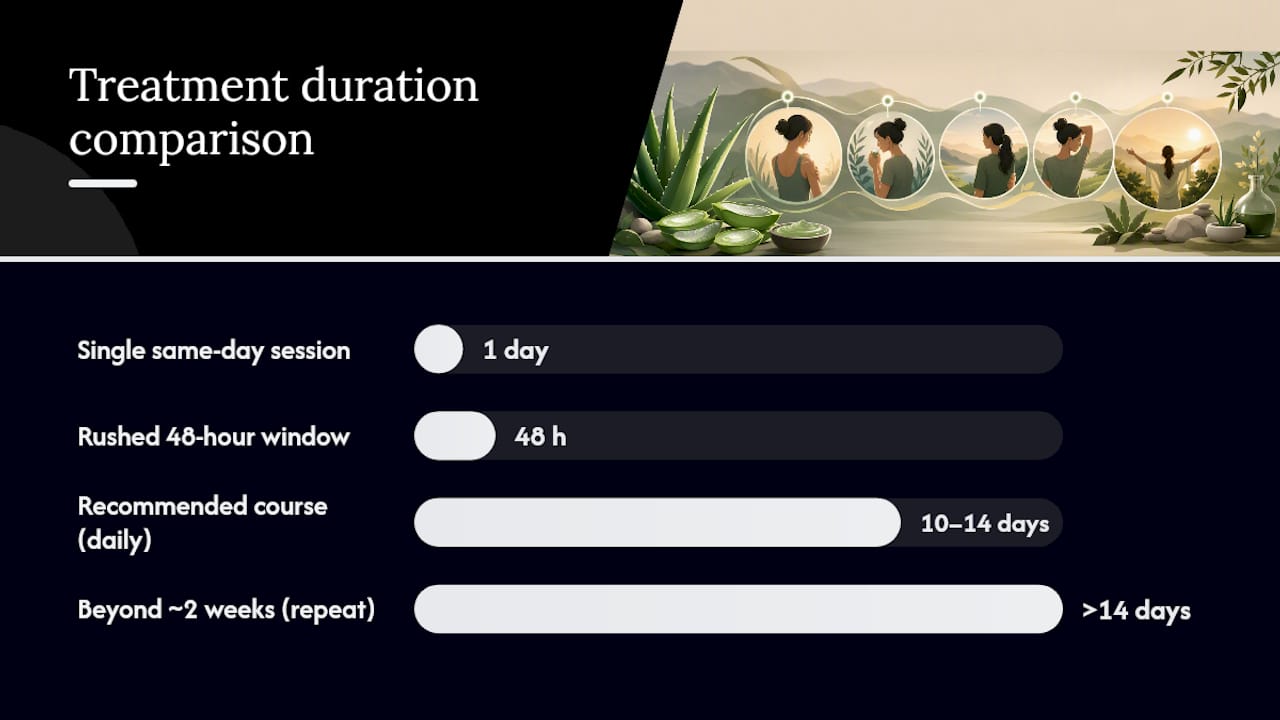
If your test is same-day and you have no runway, a single session is still worth doing, but treat it as damage control, not a guarantee. The Macujo method overview covers how the full multi-day version compares to a rushed one-off attempt.
What Do the Aloe Rid Ingredients Actually Do?
Each product in this routine has one job. Understanding that job helps you avoid the most common mistake: swapping in something that seems similar but does not perform the same function.
- Macujo Aloe Rid Shampoo strips buildup and residue from the hair shaft and scalp after the astringent and baking soda have already loosened surface contaminants; it is the core cleansing product in the entire routine and should never be substituted with a standard drugstore shampoo.
- Zydot Ultra Clean functions as a final rinse and odor-neutralizer, removing lingering chemical smell from the astringent and baking soda so hair doesn’t come out of the shower reeking of salicylic acid.
- Salicylic-acid astringent (Clear Skin or equivalent) does the actual penetration work into the hair cuticle. Stick to over-the-counter concentrations designed for skin use; prescription-strength salicylic products carry higher systemic absorption risk and were never intended for scalp-wide application.
- Baking soda provides light abrasion to help lift material the astringent has loosened, nothing more. It is not a substitute for the astringent step.
- White vinegar neutralizes pH and cuts residual odor. Skip it if you have any open scalp cuts, since the acidity will sting.
Never substitute bleach, peroxide, or other oxidizers for any step in this sequence. Oxidative bleaching agents actually change the chemical structure of hair in ways labs are now specifically trained to detect, which can flag a sample for manipulation rather than produce a clean result. If Aloe Rid isn’t available where you’re shopping, there are documented substitution approaches that preserve the same step logic without using untested home chemicals.
Is the Macujo Method Safe for Your Scalp?
Salicylic acid is the ingredient most likely to cause a problem in this routine, and it deserves respect, not fear. Labeling on salicylic-acid topical products specifically warns against contact with eyes, mucous membranes, and broken or inflamed skin, and that warning exists for a reason: prolonged or repeated over-application can cause real chemical injury, not just discomfort.
Signs you need to stop immediately: severe burning that doesn’t fade after rinsing, blistering, swelling, any breathing difficulty, or product contact with your eyes.
A strong burning sensation during the astringent step is not a sign it’s “working harder.” It’s a sign of tissue irritation, and pushing through it to try for a better result only increases injury risk without improving your odds.
If any of the following happen, act right away:
- Eye exposure: flush immediately with cool running water for 15 minutes and seek medical attention if stinging or redness persists.
- Severe skin reaction: wash the area with mild soap and cool water, stop all further product application, and contact Poison Control if you’re unsure whether the reaction is normal irritation or something more serious.
- Any sign of an allergic reaction (hives, facial swelling, trouble breathing): call 911. This is rare with topical salicylic acid, but it is not impossible.
Pregnant individuals, people with psoriasis or eczema on the scalp, and anyone with open cuts or recent scalp procedures should talk to a doctor before starting this routine at all. If you’re unsure whether your skin can tolerate a full session, patch test the astringent on a small area of forearm skin 24 hours ahead of time.
Why Didn’t the Macujo Method Work? Common Mistakes
Most failed attempts trace back to one of a handful of avoidable errors, not to some flaw in the underlying protocol.
- Skipping the astringent contact time. Rinsing after 3 minutes instead of the full 10 to 15 minutes cuts the routine off before it does its job.
- Using conditioner anywhere in the process. Conditioner coats the shaft and actively blocks penetration; it undoes the entire point of the astringent step.
- Treating only the ends instead of the scalp. Labs test the hair segment closest to the scalp because it reflects the most recent growth. Treating mid-shaft hair and ignoring the roots wastes product.
- Running one session and expecting a dramatic change. A single session is a start, not a finish.
- Assuming bleached or color-treated hair behaves the same as virgin hair. Chemically processed hair already has altered cuticle structure, and combining that with an aggressive detox routine increases breakage risk. It can also complicate lab interpretation, since oxidative treatments leave detectable chemical markers that a careful lab may flag.
Pro Tip: If you’re working with color-treated or bleached hair, extend the days between sessions slightly and skip a day of astringent application every third session to give the cuticle recovery time. Cracked, over-processed hair is more likely to break during the baking soda step, which can leave visibly shorter or patchy hair right before a test, drawing its own kind of unwanted attention.
If you genuinely have less than 24 hours, run one full session anyway, sleep with hair air-dried, and treat expectations realistically. One session on short notice is meaningfully better than doing nothing, but it will not match the effect of ten to fourteen consistent days. Beyond roughly two weeks of daily sessions, additional repetition tends to add scalp stress without a proportional gain, since the chemistry involved shows diminishing, product-dependent returns rather than a steady linear improvement.
Does the Macujo Method Actually Work, According to Research?
An experimental study testing several commercial products against THC-positive hair samples found mean concentration reductions ranging from roughly 52% with a Zydot-style shampoo up to 65% with a disinfectant-based product, confirming that some products measurably lower detectable THC levels, though the effect size varied a lot by product and sample.
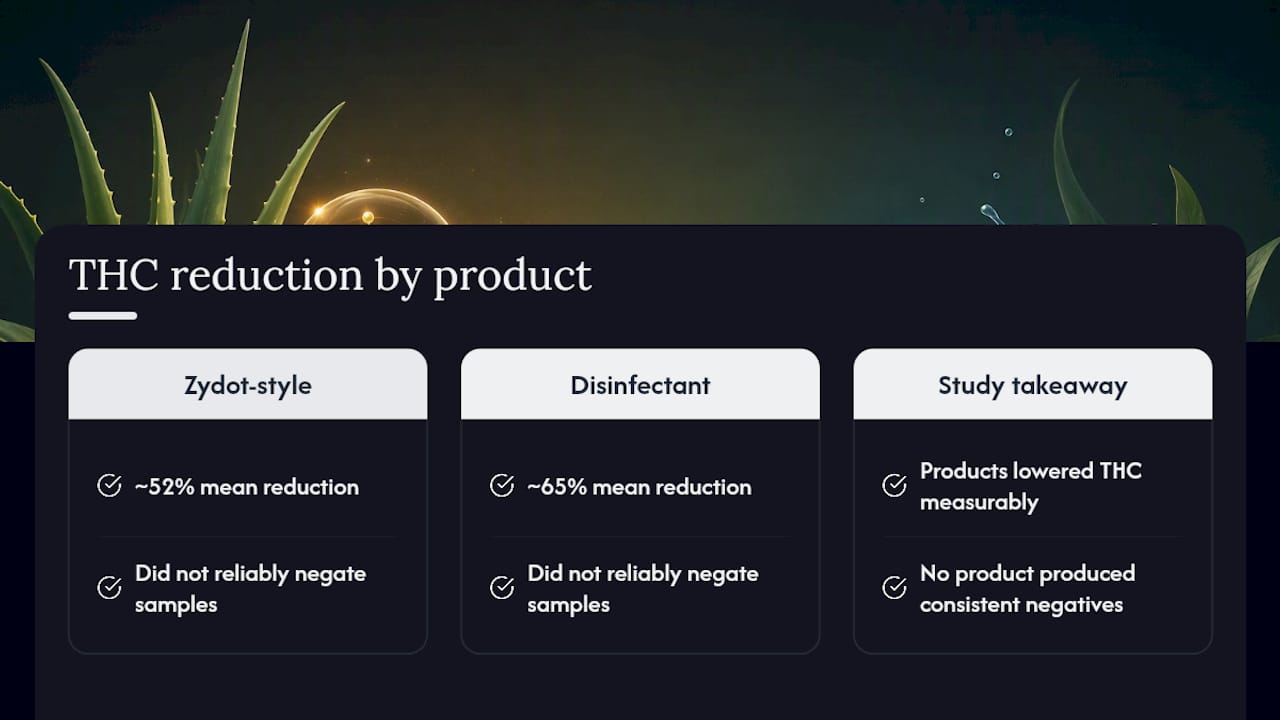
That’s a meaningful reduction, but “reduced” and “negative” are two different outcomes, and no study has shown this routine reliably crosses that line for every analyte. THC responds differently than amphetamines, opioids, or cocaine, and a routine that measurably cuts one drug’s hair concentration won’t necessarily do the same for another.
Lab interpretation adds another layer of complexity. A standard hair test samples the proximal 3 centimeters closest to the scalp, which labs treat as roughly a 90-day detection window, though the exact window shifts with hair growth rate, sample quality, and the specific cutoff a lab applies. Forensic reviewers also note that distinguishing deliberate manipulation from ordinary cosmetic treatment is genuinely difficult, which is exactly why some labs are developing biomarker screens like PTCA to flag oxidative or chemically altered samples.
Roughly 52% to 65% mean THC reduction was observed across different commercial products in controlled testing, but no product in that study reliably converted every sample to negative.
The honest takeaway: this routine can lower what a lab measures, and it can also draw extra scrutiny if a lab suspects tampering. Neither outcome is guaranteed, and anyone telling you otherwise is overselling a chemical process that peer-reviewed research treats with real caution.
A Straight Answer About What This Method Can and Can’t Promise
Selling and advising on detox products for years teaches you one thing fast: people want a guarantee, and the honest answer is that nobody selling a shampoo can ethically give you one. What the Macujo method offers is a well-documented, reproducible chemical process with a real track record of reducing measurable drug concentrations in hair, and that’s worth something concrete even if it’s not a promise.
Before you start, verify your test rules directly with the employer or collector, not with a product label. Ask what specimen they’re actually collecting, which cutoffs apply, and whether retesting is standard practice. If you have a documented medical need or a longer runway before testing, talk to a clinician about your options rather than relying entirely on a chemical protocol.
— MIchael
Get Everything You Need for a Full Macujo Session in One Order
Running this routine right means having every product on hand before your first session, not halfway through it when you realize you’re out of astringent. Passdrugtest built its catalog around exactly this problem: instead of hunting down four separate products from four separate stores, you can order the Macujo Aloe Rid Shampoo alongside a compatible Zydot Ultra Clean treatment as a single bundle.
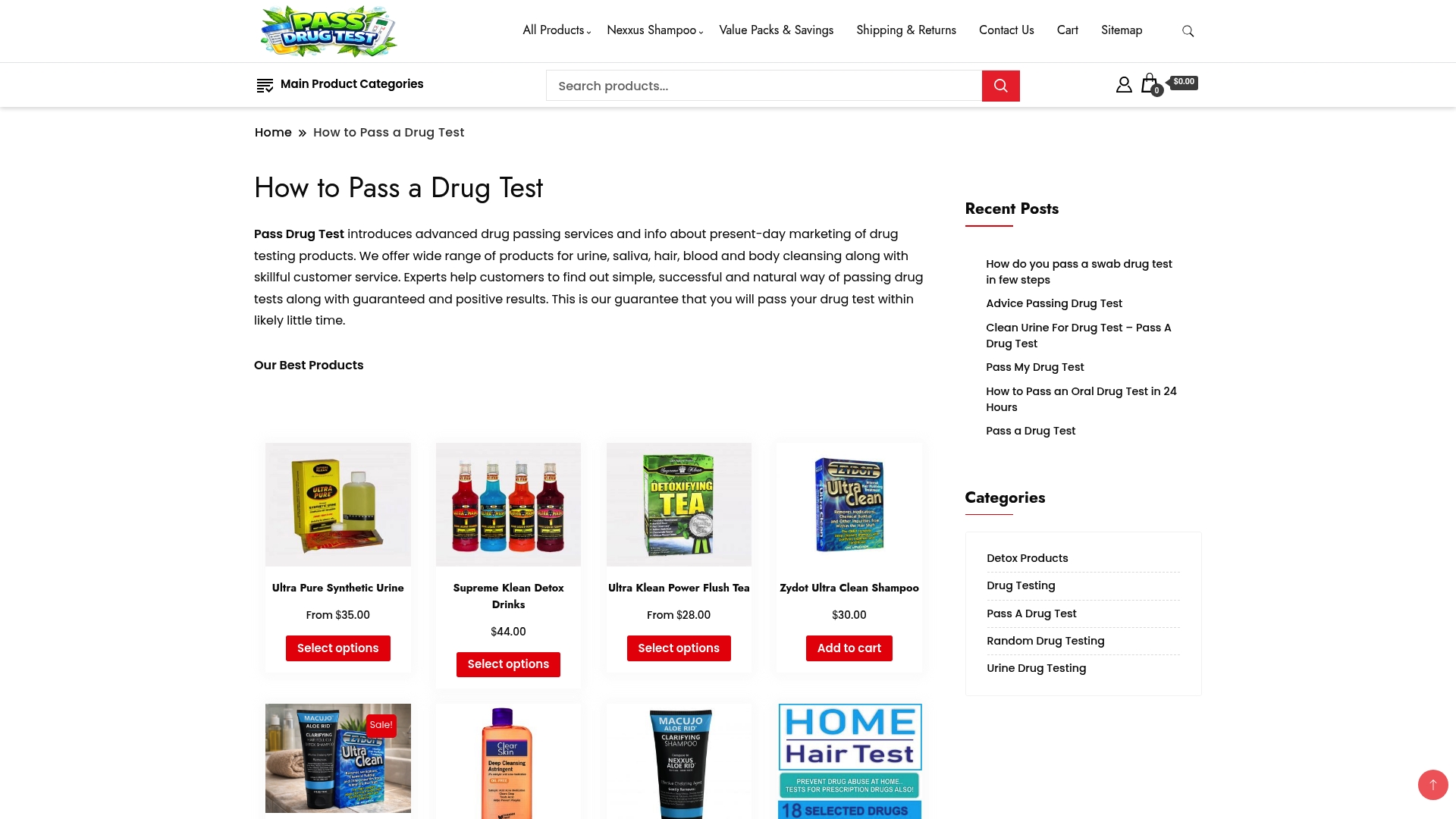
The Macujo Aloe Rid Shampoo and Zydot Ultra Clean bundle covers the two core wash steps in the routine outlined above, mapping directly to steps six and seven. Pair it with an OTC astringent, plain baking soda, and white vinegar from any pharmacy, and you’re covered for the full multi-day protocol. Orders often ship discreetly with unbranded packaging, and customer service availability may vary. If you’re working against a deadline, order now through the full product catalog so your kit arrives with days to spare, not hours.
Sources
For readers who want to verify the claims in this guide directly: the 2023 hair testing review covers detection windows and lab variability, the THC manipulation study details the product-reduction data, salicylic-acid safety labeling covers topical risks, and the 2023 forensic review explains how labs detect manipulated samples.
- Manipulation of THC hair concentrations by commercial products (PMC9612008)
- Salicylic acid safety MSDS / labeling
- Advances in testing for sample manipulation—hair samples (Springer, 2023)
FAQ
How many times should you do the Macujo method?
Run a full session once daily for 10 to 14 days leading up to your test for the best realistic outcome. Fewer sessions still help somewhat, but consistency over roughly two weeks gives the routine time to work without pushing scalp irritation past a safe point.
How long do I need to be clean to pass a hair follicle test?
Labs typically interpret the proximal 3 centimeters of hair as covering roughly the most recent 90 days of growth, though the exact window shifts with hair growth rate and lab cutoffs. Confirming your test’s specimen type and cutoff with the collector is the only way to know your actual exposure window.
What’s the best way to pass a hair follicle test if I only have a few days?
Run one full Macujo session immediately, then repeat daily for however many days you have left before the test. It won’t match the result of a full two-week routine, but one thorough session is meaningfully better than skipping the process entirely.
Does Aloe Rid shampoo actually work?
Aloe Rid functions as the cleansing step that removes residue the astringent and baking soda have already loosened, and controlled testing on commercial detox products found mean THC reductions of roughly 52% to 65% depending on the product used. It contributes real, measurable reduction, but it works as part of the full sequence, not as a standalone fix.