
If you bleached your hair and now face a hair follicle drug test, you can still run the Macujo Method, but not the moment you rinse out the bleach. We recommend waiting until your scalp settles, usually 24 to 72 hours, before starting your wash cycles. Results vary person to person, and labs may be able to detect that hair has been chemically treated.
TL;DR:
- Controlled studies reported mean reductions of 52% to 65% in THC hair concentrations; other multistep treatments lowered some analytes by up to 80% to 90%.
- A standard sample taken near the scalp, about 3 centimeters long, generally reflects 90 days of growth; ordinary washing cannot remove incorporated metabolites.
- Labs can document bleaching, test for oxidation markers such as PTCA, and seek confirmation or another sample instead of accepting a negative result.
- Bleached hair is more fragile, so patch testing and stopping after sharp pain or peeling can reduce scalp irritation and hair breakage.
- If a result remains positive, ask the testing provider about appeal procedures, alternate sample testing, or guidance from an occupational health contact.
Table of Contents
- How hair follicle drug testing actually works
- What bleaching does to hair and drug concentrations
- Does bleach alone let you pass a hair test?
- How to run the Macujo Method after bleaching: step-by-step sequence and timing
- Scalp care and hair safety when combining bleach with Macujo washes
- What to expect and how labs respond to treated hair
- Why we trust the Macujo Method after bleaching
- Where to find the products the Macujo sequence calls for
- FAQ
- Sources
How hair follicle drug testing actually works
When you use a substance, your bloodstream carries metabolites to the hair follicle, where they bind into the strand as it grows. That strand then holds a rough timeline of what passed through your system. A standard hair test uses the segment closest to the scalp, and that segment commonly represents about 90 days of growth, since controlled studies tracking roughly 3 centimeters of hair correspond to that window. This is why a single wash the night before a test rarely makes a significant difference. The drug record is already locked into hair that grew weeks ago.
Labs do not test raw hair straight off your head. They wash the sample first to remove surface contamination, then chemically break down the hair matrix to pull out the metabolites for measurement. This step matters because it means the lab is not just looking at what is on your hair. It is looking at what got incorporated into it.
That extraction process is also why chemical treatments can change outcomes. Strong oxidizers break down some of the same structures that hold metabolites in place, so a treatment that damages hair can also strip some of the drug residue along with it.
- Metabolites bind into hair as it grows from the follicle outward.
- A 3 centimeter segment typically reflects about 90 days of history.
- Lab washing removes surface residue before the real extraction begins.
- Oxidative damage to hair can degrade the same structures holding metabolites.
Hair testing typically captures a 90 day window based on a standard 3 centimeter segment analysis, which is why timing your prep matters as much as the products you use.
Different drugs behave differently once a lab starts this process, mostly because of how fat soluble, or lipophilic, each substance is. A more lipophilic compound binds more tightly to the lipid layers inside hair, which can make it more resistant to chemical stripping than a substance that sits closer to the surface.
What bleaching does to hair and drug concentrations
Bleach does not just lighten hair. It opens the cuticle and breaks down melanin through a strong oxidative reaction, and that same reaction can degrade or loosen the structures holding drug metabolites in place. Several peer-reviewed studies have measured just how much this matters, and the numbers are substantial, though inconsistent.
In one set of controlled experiments, researchers treated THC-positive hair samples with a range of commercially available products and measured mean reductions in drug concentration between roughly 52% and 65%, with some treated samples dropping below standard reporting cutoffs entirely. A separate analytical study of internet-sourced cleansing protocols, including multi-step routines combining baking soda, salicylic acid, and bleach, found decreases of up to 80% to 90% for several analytes, though THC itself was reduced less consistently than stimulant drugs.
| Treatment approach | Reported reduction range | Consistency across drugs |
|---|---|---|
| Consumer/internet products on THC-positive hair | About 52% to 65% mean reduction | Some samples fell below cutoff, others did not |
| Multi-step alkaline plus bleach/dye cycles | Up to 80% to 90% for some analytes | THC often reduced less than stimulants |
The mechanism behind these numbers comes down to two overlapping effects. Bleach oxidizes and leaches out melanin, which is where many drug metabolites bind, and it also damages the hair’s internal matrix, making it easier for a shampoo or extraction solvent to pull additional residue out later.
- Oxidative bleaching breaks down melanin, a primary binding site for several drug metabolites.
- Matrix damage from bleach increases how much residue later washes can remove.
- Alkaline pre-treatments, like baking soda, can prime hair before an oxidative step for greater effect.
Labs are not blind to this. Research on eumelanin degradation markers shows that oxidative bleaching produces byproducts like PTCA, which can serve as a chemical fingerprint that hair has been treated, even when the color change itself looks subtle.
Does bleach alone let you pass a hair test?
Bleach alone is a gamble, not a plan. It can push a borderline result into negative territory, but it rarely does enough on its own for someone with heavy or chronic use. The Society of Hair Testing consensus guidance specifically recommends that labs document cosmetic treatments at collection and factor them into interpretation, which means a bleached sample does not automatically get a pass. It gets a second look.
- Bleach tends to help most when the starting concentration was already close to the cutoff.
- Heavy or long-term use leaves a larger metabolite load that bleach alone struggles to clear.
- Visibly treated hair can prompt a lab to run confirmatory testing or request an alternate sample.
- A complementary urine test, when available, gives you a second data point that is unaffected by cosmetic treatment.
This is really the core argument for pairing bleach with a structured method rather than relying on it in isolation. The SoHT consensus treats hair-only interpretation as something that should be approached cautiously once treatment is documented, which is exactly why a thorough wash protocol matters more than a single bleaching session.
How to run the Macujo Method after bleaching: step-by-step sequence and timing
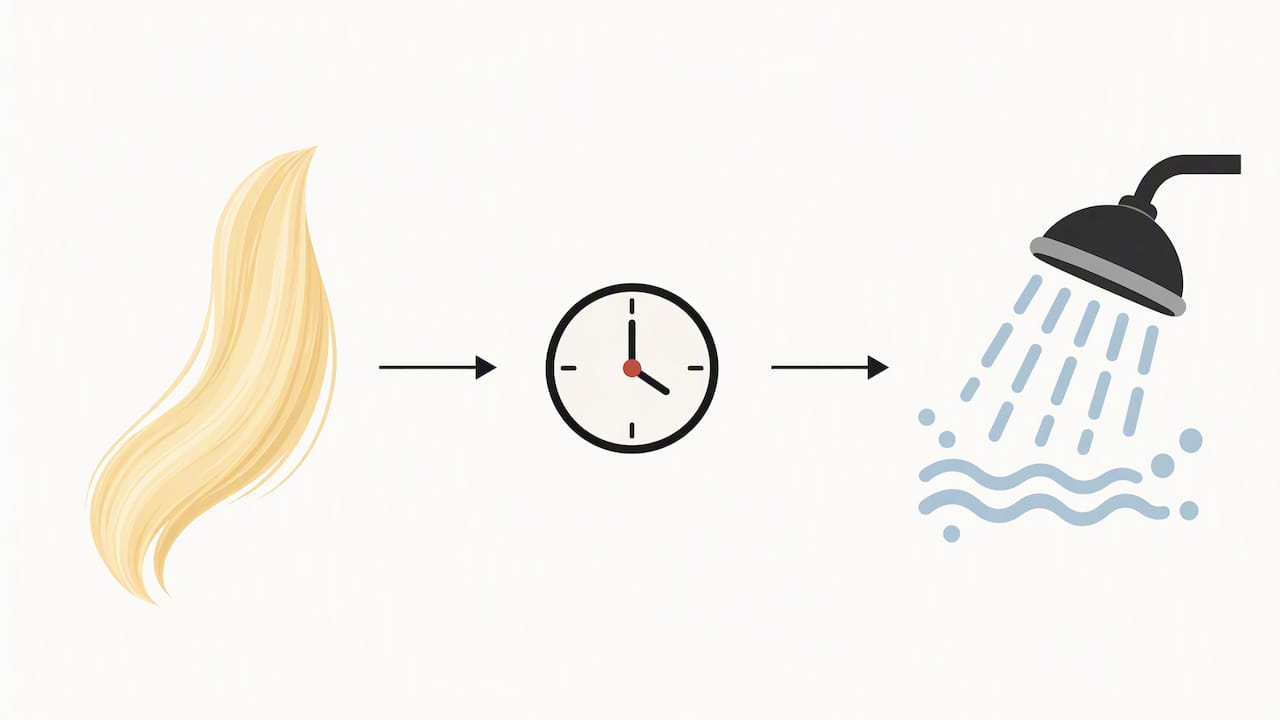
Mike Macujo’s method remains the most recognized structured protocol for hair detox, and it still applies after bleaching, with one key adjustment: your scalp needs recovery time first. Jumping straight from a bleach bath into an aggressive wash cycle increases your risk of irritation without adding much benefit, since the bleach has already done most of its oxidative work.
Wait 24 to 72 hours after bleaching before starting your first Macujo cycle, choosing the longer end of that window if your scalp shows any redness, tightness, or visible damage.
- Patch test a small section of scalp with your astringent to check for excessive sensitivity before a full application.
- Apply a salicylic acid based astringent, like Clear Skin Astringent, directly to the scalp and work it in for several minutes.
- Follow with a detox shampoo wash using Macujo Aloe Rid Shampoo, massaging it into the scalp and through the full length of the hair.
- Add an alkaline step, typically a baking soda paste, to help open the hair shaft further for the next stage.
- Scrub with liquid Tide detergent, which helps strip residual buildup from the shaft.
- Rinse with a diluted vinegar solution to close the cuticle and rebalance pH after the alkaline step.
- Finish with a final Aloe Rid wash to seal the process and leave hair manageable.
Repeat this full cycle once or twice daily, with at least four hours between cycles, and cap it at a maximum most people tolerate well, which is around three cycles in a 24 hour period. Bleached hair is already more porous than untreated hair, so pushing harder than that raises your risk of breakage without adding real benefit.
Pro Tip: Stop the cycle immediately if you notice burning, peeling, or raw patches on your scalp, and give your scalp a full rest day before resuming.
For readers who colored rather than bleached, our guide to the Macujo Method for dyed hair covers the adjustments that situation calls for instead.
Scalp care and hair safety when combining bleach with Macujo washes
Bleached hair is more fragile going into this process, and the Macujo Method’s astringent and detergent steps are intentionally strong. That combination can bring real risks if you rush it or skip precautions.
- Redness, tingling, or mild burning during the astringent step is common, but sharp pain or peeling skin is not.
- Breakage and increased shedding are more likely on hair that was already weakened by bleach.
- Patch testing before your first full cycle helps you catch a bad reaction before it affects your whole scalp.
- Spacing cycles at least four hours apart gives your scalp barrier time to partially recover between applications.
If irritation shows up, rinse thoroughly with cool water, skip the next astringent application, and give your scalp a day off before trying again. Using a lower-strength astringent application on already damaged hair, rather than a full-strength scrub, reduces the chance of a reaction without sacrificing the overall protocol.
Pro Tip: A light leave-in conditioner between wash cycles helps counter the dryness bleach and detergent scrubbing both cause, without interfering with the detox steps themselves.
Once your testing window has passed, our post-detox hair care guide walks through how to repair and rehydrate hair that went through this process.
What to expect and how labs respond to treated hair
Realistically, you are looking at a meaningful reduction in detectable drug concentration, not a guaranteed clean result. Published reductions for various treatments range widely, commonly landing between roughly 50% and 90% depending on the protocol and substance, but individual outcomes depend heavily on how much was in your system to begin with and how precisely you followed each step.
Labs that suspect treatment can escalate their process. They may document visible bleaching at collection, run a wash analysis to check for external contamination versus true incorporation, or request an alternate sample type if one is available.
- Expect variability: the same protocol can produce different outcomes on different people.
- A documented treatment history can prompt additional lab scrutiny rather than automatic disqualification.
- If a result stays positive, ask about appeal procedures, alternate matrix retesting, or speak with an occupational health contact about your options.
Why we trust the Macujo Method after bleaching
I have spent a long time looking at how hair detox protocols actually perform once you move past the marketing and into the lab data, and the Macujo Method holds up better than almost anything else in that category for one simple reason: it treats hair detox as a sequence, not a single product. That sequencing is exactly why we built our product lineup, including Aloe Rid Shampoo and Clear Skin Astringent, around supporting each step rather than promising a shortcut. Among the methods people search for to pass a hair follicle drug test, Mike Macujo’s original approach remains the one most consistently backed by real step-by-step structure rather than a single miracle product.
— MIchael
Where to find the products the Macujo sequence calls for
We carry the two products this protocol depends on most: Macujo Aloe Rid Shampoo for the detox wash steps, and a salicylic acid astringent for the scalp preparation stage. Both are built to work together in the sequence outlined above, not as standalone fixes.
Our support team is available daily if you have questions about timing your washes around a bleach job, and every order ships with discreet packaging. Follow the wait times and cycle limits we covered above, since rushing the process is the most common reason people get inconsistent results. You can browse our full lineup of hair drug test shampoo options or start with our complete product catalog to get everything in one order.
FAQ
Can bleach help pass a hair follicle test?
Bleach can lower detectable drug concentrations in hair, sometimes significantly, but it works best on borderline cases rather than heavy or chronic use. Controlled studies show reductions commonly between 52% and 65% for several treatments, though outcomes vary by person and substance.
What cancels out bleached hair’s effect on a drug test?
Nothing fully reverses what bleach does to hair structure, but labs can still detect treatment through oxidation markers like PTCA, which research on melanin degradation identifies as a byproduct of bleaching. A documented treatment history can lead a lab to apply extra scrutiny rather than accepting a negative result at face value.
What can throw off a hair follicle drug test besides bleach?
Other oxidative or alkaline treatments, including some internet-suggested multi-step cleansing recipes combining baking soda, salicylic acid, and bleach cycles, have been shown in analytical testing to reduce drug concentrations by up to 80% to 90% for some analytes. Environmental exposure and certain cosmetic hair treatments can also complicate interpretation, which is why collection protocols document treatment history.
Does bleach affect the hair follicle or just the visible hair shaft?
Bleach acts on the hair shaft that has already grown out of the follicle, breaking down melanin and the hair’s internal matrix rather than altering the follicle itself. This is why bleaching only affects drug metabolites already incorporated into existing hair, not future growth.
Sources
- Manipulation of THC Hair Concentrations by Commercially Available Products – PMC
- Analytical study of cleansing/treatment methods (Treatment 1–3) – Wiley
- SoHT consensus on drugs of abuse in hair (2021)