
Yes, chemical relaxers can lower measured drug concentrations in hair, but the effect is analyte-dependent and unpredictable. Peer-reviewed data show single treatments can leave anywhere from a small fraction to most of the original concentration intact, depending on the drug involved. Readers facing a hair follicle drug test should disclose any chemical treatment to the collector and understand that labs lean on metabolite testing and alternate samples to interpret results fairly.
TL;DR:
- A standard scalp sample covers roughly 90 days, while recent drug use may remain undetectable in hair for 7 to 14 days after ingestion.
- Tell the collector about chemical treatments before sampling; visible changes are recorded, and labs may request body hair if scalp hair is too altered.
- Labs wash hair to remove surface contamination, compare parent drugs with metabolites, and confirm screening results using GC/MS or LC-MS/MS.
- NIST found some treated authentic samples retained 5% to 30% of original concentrations, and that residue can still exceed a lab’s cutoff.
- Avoid applying another relaxer in the final day or two before testing; fresh treatment may be visible and prompt extra scrutiny or alternate sampling.
Table of Contents
- How hair follicle drug testing works: sampling, timeline, and analytes
- What studies show about relaxers’ effects on drug concentrations
- How laboratories detect manipulation and separate contamination from true ingestion
- Practical implications and recommended actions for people with relaxed hair
- Author and publisher expertise: how our resources relate to the scientific evidence
- Comparison of hair relaxer chemical components and their potential effects on hair drug test results
- Detailed explanation of the Macujo method and how hair relaxers are incorporated
- Common myths and misconceptions about using hair relaxers to beat drug tests
- Step-by-step guide on preparing hair with relaxers before a drug test
- Compatibility of different hair relaxer products with detox shampoos like Macujo
- Timeframe considerations when using hair relaxers prior to a drug test
- Author perspective: weighing evidence, ethics, and practical choices
- Where to find PassDrugTest.net products and instructions
- FAQ
- Sources
How hair follicle drug testing works: sampling, timeline, and analytes
A standard hair follicle drug test relies on a specific collection method that gives labs a predictable window into recent drug use. Collectors cut a 1.5 inch section of hair close to the scalp, which corresponds to roughly 90 days of growth based on an average rate of about half an inch per month, according to Labcorp’s hair testing guidance. That same source notes labs typically need about 100 milligrams of hair, which works out to 90 to 120 strands, enough material to run both screening and confirmatory tests.
Drugs do not show up in hair immediately after use. There’s an incorporation lag of about 7 to 14 days between ingestion and the point where the substance becomes detectable in the hair shaft near the scalp, per Labcorp. This lag exists because drugs travel through the bloodstream to the hair follicle, where they bind into the growing shaft as it forms. A test taken the day after use will often miss that use entirely, while a test taken two to three weeks later may catch it.
Labs can test for two different things: the parent drug itself, or the metabolites your body produces after breaking it down. This distinction matters more than most people realize when chemical treatments enter the picture.
- Parent drug testing looks for the original substance (cocaine, for example) as it was consumed.
- Metabolite testing looks for what your body converts that substance into (benzoylecgonine, in the cocaine example), which only forms through actual ingestion and metabolism.
- Combined panels often test both, since a parent drug alone can sometimes reflect external contamination rather than ingestion.
This parent-versus-metabolite distinction is the reason metabolite testing exists at all: environmental contact with a drug (say, secondhand smoke residue on hair) can deposit the parent compound on the hair surface without the person ever using it. A metabolite, on the other hand, generally only appears if the body processed the substance internally. That’s a meaningful safeguard, and it’s also one of the first things cosmetic treatments complicate, since relaxers and other chemical processes can degrade parent compounds and metabolites at different rates.
Chain-of-custody procedures add another layer. Collectors are trained to note visible cosmetic treatments such as recent relaxing, bleaching, or coloring at the time of collection, because these details get attached to the lab report and can prompt a different analytical approach. If scalp hair is unavailable or appears too chemically altered to test reliably, labs may request body hair instead, as outlined in Quest Diagnostics’ hair testing guidance. Body hair has a different growth rate and detection window than scalp hair, so the interpretation changes accordingly. This is why honesty with the collector at the point of sampling matters more than people tend to assume: it shapes which analytical path the lab takes next.
What studies show about relaxers’ effects on drug concentrations
The clearest evidence on how chemical relaxers interact with drug testing comes from a NIST study on chemical straightening and drug stability in hair. Researchers tested both certified reference material and authentic hair samples from known drug users, then measured how much of each drug remained after a single chemical straightening treatment.
A single chemical straightening session reduced drug concentrations substantially: reference hair samples retained a variable fraction of their original concentration, ranging from a small to a majority proportion, and authentic user hair similarly retained a variable smaller fraction depending on the analyte, according to NIST’s research. That’s a wide range, and the width itself is the finding: a relaxer applied to one person’s hair might strip away the vast majority of a detectable drug, while the same treatment on someone else’s hair, or for a different drug, might leave much more behind.
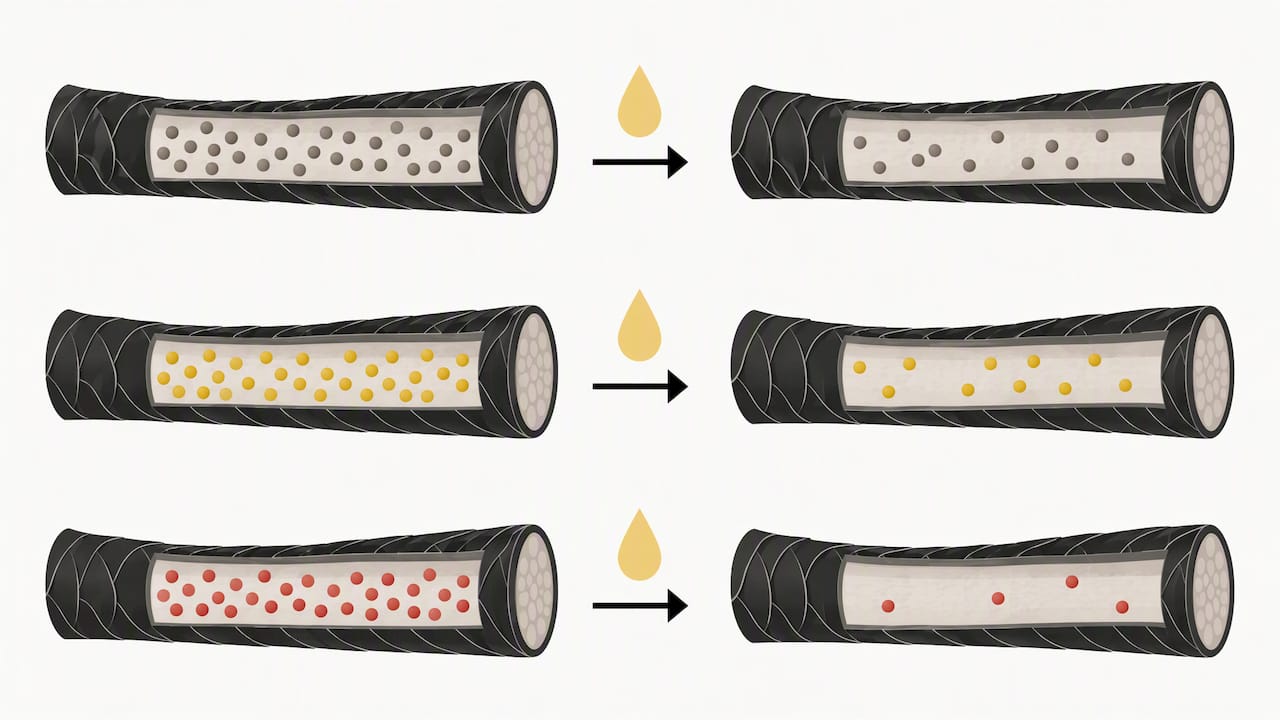
That range matters because lab cutoffs are not about percentages, they’re about absolute thresholds. This is the core reason nobody, including toxicologists, can predict a specific outcome from a chemical treatment with any confidence.
The unpredictability shows up again in case-level data. Reports describe relaxers and similar treatments affecting different drugs in different directions:
- Some analytes, including alprazolam in documented case reports, decreased in concentration after chemical treatment.
- Other substances, including certain endogenous markers, have been observed to increase rather than decrease after similar cosmetic processing.
- The same treatment applied to different drug classes does not produce a uniform effect, which rules out any blanket claim that relaxers reliably “clean” hair of all substances equally.
There’s also a chemistry-level complication. In vitro work on hair exposed to peroxide-containing products and relaxers suggests these treatments can generate hydroxy-metabolites from parent drugs already present in the hair, effectively creating compounds that were not there from ingestion alone. That matters for metabolite-ratio interpretation, since a lab comparing parent drug to metabolite levels to judge ingestion versus contamination may see a skewed ratio if the treatment itself altered the chemistry, not just the concentration.
Beyond the chemistry, individual variation adds another layer of noise. Melanin content, hair porosity, and the condition of the hair before treatment all influence how much of a drug binds in the first place and how much a chemical process can later strip out. Two people with identical drug use and an identical relaxer application can end up with meaningfully different test outcomes simply because of how their hair is built. This is also documented in the broader review of manipulation detection in forensic hair testing, which describes washing, bleaching, perming, and straightening as common manipulation attempts that labs actively work to identify, not oversights they fail to anticipate.
Put together, the evidence supports a specific, bounded claim: chemical relaxers can meaningfully reduce measured drug concentrations in hair, sometimes by a wide margin, but the size of that reduction depends on the drug, the treatment, the hair itself, and factors no consumer can fully control or verify beforehand.
How laboratories detect manipulation and separate contamination from true ingestion
Forensic labs don’t take a treated hair sample at face value. Before any analysis happens, most labs run a decontamination wash protocol designed to strip external residues from the hair surface, the kind of residue that comes from touching drugs or being in a room where they’re used, as opposed to drugs that have been metabolized and incorporated into the hair shaft itself. This wash-criterion approach is a standard part of forensic practice, and the review of sample manipulation detection methods describes labs actively developing better wash-kinetic models specifically because manipulation attempts, including chemical treatments, are common enough to warrant it.
Metabolite ratios are the next layer of scrutiny. Labs frequently compare a parent drug to its metabolite, such as THC to THCA, or cocaine to benzoylecgonine, because a metabolite generally only forms through actual metabolism in the body. A sample with parent drug but little to no metabolite looks more like surface contamination; a sample with both, in a plausible ratio, looks more like ingestion. This is one of the main tools labs use to push back against the idea that a relaxer treatment, by itself, can manufacture a clean result.
Confirmatory testing adds a final checkpoint. Initial screens are typically followed by gas chromatography-mass spectrometry (GC/MS) or liquid chromatography-tandem mass spectrometry (LC-MS/MS), both of which are far more specific than screening immunoassays and far harder to fool with a surface-level chemical change.
- Multi-step washing removes external contamination before any drug concentration is measured.
- Metabolite-to-parent ratios help labs distinguish true ingestion from contact exposure.
- GC/MS and LC-MS/MS confirmatory testing catches substances that screening tests might miss or misread.
- Visibly treated or damaged hair may prompt a request for an alternate sample, such as body hair, rather than an outright rejection of the test.
None of this means wash protocols are perfect. They can reduce surface contamination significantly, but forensic literature is clear that no single wash step or metabolite check is foolproof on its own, which is exactly why labs use multiple lines of evidence together rather than relying on one test result in isolation, as described in SAMHSA’s materials on drug metabolites and hair testing.
Pro Tip: If you know your hair has been chemically treated recently, mention it to the collector before the sample is taken, not after a result comes back. It gets logged on the chain-of-custody form and can affect how the lab interprets your result.
Practical implications and recommended actions for people with relaxed hair
If you’re facing a hair follicle drug test and your hair has been chemically relaxed recently, a few practical steps make a real difference in how the process unfolds and how fairly your result gets interpreted.
- Tell the collector about any chemical treatment before the sample is taken. Labs frequently ask about this directly, and it gets noted on the report, which can prompt additional scrutiny that works in your favor if your result is borderline.
- Set realistic expectations about what a relaxer can and cannot do. The research is clear that treatments can lower concentrations substantially for some drugs, but there is no scenario backed by peer-reviewed evidence where a relaxer guarantees a negative result across the board.
- Know your alternate-sample options if scalp hair is rejected. If a lab determines your scalp hair is too damaged or chemically altered to test reliably, it may request body hair instead, which carries a different growth rate and detection window.
- Avoid unverified DIY chemical procedures that aren’t designed for this purpose. Household products used outside their intended application carry real risks to your scalp and hair, and there’s no reliable evidence they improve on documented cleansing regimens.
- If you decide to pursue a cleansing regimen, follow a documented, instruction-based approach rather than guesswork. Products built specifically around the Macujo method, including the Macujo Aloe Rid Shampoo, come with specific timing and application instructions that matter more than any single ingredient on its own, and our hair detox checklist walks through the broader preparation timeline.
Pro Tip: Timing matters as much as the product you choose. A rushed, last-minute attempt the night before a test gives you far less margin than a regimen started well in advance, since hair porosity and treatment absorption both take time to work through.
Our guide to shampoos for hair follicle drug tests breaks down how different formulations approach the hair shaft, which is worth reading before you commit to any single product so you understand what you’re actually using and why.
Author and publisher expertise: how our resources relate to the scientific evidence
This article was written by Michael, drawing on peer-reviewed toxicology research to explain what chemical relaxers actually do to hair drug test results, not what internet forums claim they do.
We built our site around hair drug test preparation specifically, which means our product and instruction pages exist to translate research like the NIST straightening study into practical, step-by-step guidance. That said, the published science shows relaxers can alter drug concentrations in hair; it does not show that any product guarantees a clean result. We treat our shampoo and kit offerings as consumer options grounded in documented methods, not laboratory promises.
If your situation involves a specific legal or employment consequence, we encourage you to talk to the testing laboratory directly or consult a qualified toxicologist, since case-specific interpretation depends on variables no article can account for.
Comparison of hair relaxer chemical components and their potential effects on hair drug test results
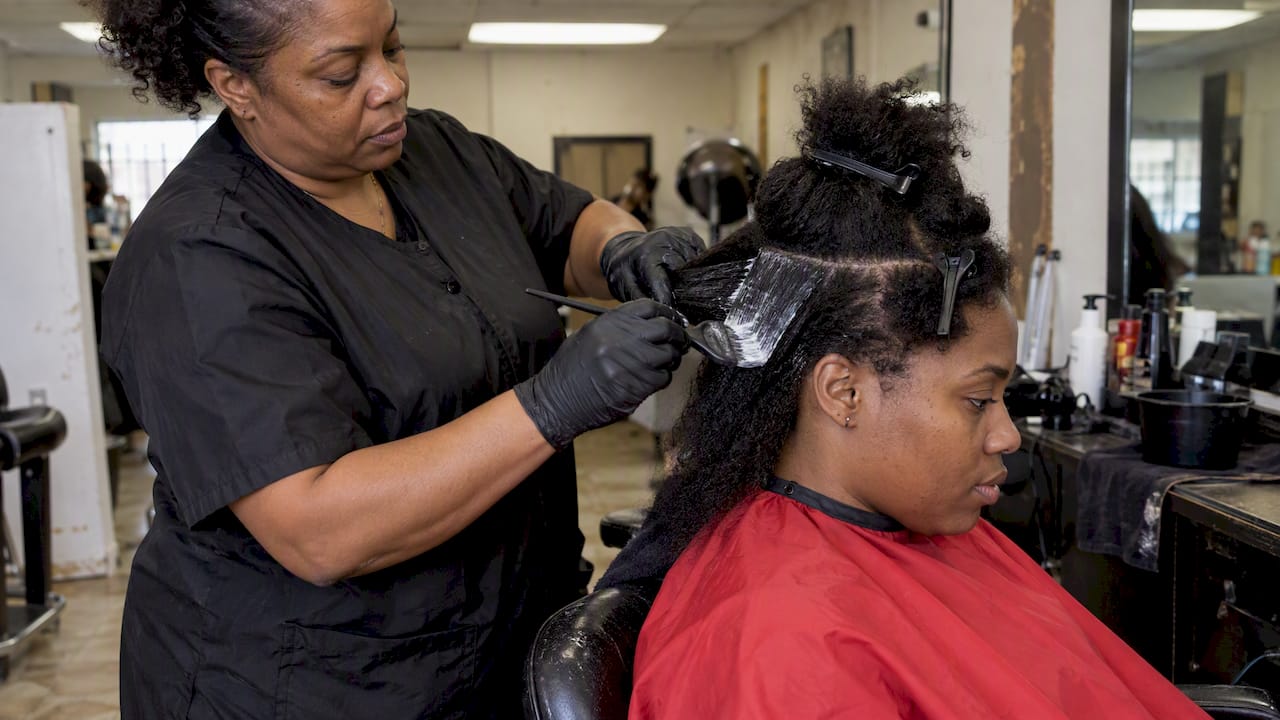
Not all relaxers are chemically identical, and the differences matter for how they interact with drug-laden hair. Lye-based relaxers (sodium hydroxide) tend to be more aggressive on the hair cuticle, opening it more forcefully than gentler no-lye formulas built around calcium or guanidine hydroxide. That aggressiveness is relevant because the NIST straightening study measured its concentration reductions using a chemical straightening process broadly similar to lye-based treatment, and the degree of cuticle disruption likely plays a role in how much drug material gets stripped from the shaft.
Keratin-based smoothing treatments, which rely on heat and formaldehyde-releasing compounds rather than strong alkalis, work through a different mechanism entirely, bonding rather than breaking down hair structure, and there’s no published data specifically isolating their effect on drug concentrations separate from lye or no-lye relaxers.
The practical takeaway is that “relaxer” isn’t a single variable. The strength of the alkali, the exposure time, and how recently the treatment was applied relative to the test all interact with the hair’s existing drug content in ways the research has only partially mapped. This is part of why the NIST findings describe a range rather than a fixed number, and why nobody can promise a specific chemical formula will produce a specific outcome.
Detailed explanation of the Macujo method and how hair relaxers are incorporated
The Macujo method, developed by Mike Macujo, is a well-known, research-informed cleansing regimen that consumer communities frequently point to as the most effective home approach for hair follicle drug tests, built around a specific sequence of products applied in a set order over multiple days. The regimen typically opens the hair cuticle using an acidic solution, often vinegar, followed by a clarifying treatment, then a detox shampoo formulated to penetrate the cortex of the hair shaft rather than just clean the surface.
The chemical relaxer connection comes in at the cuticle-opening stage. Some versions of the method incorporate a small-dose chemical treatment specifically because opening the cuticle more aggressively is believed to improve how deeply the subsequent detox shampoo can penetrate. This mirrors, at a conceptual level, what the NIST research documented: chemical treatments that disrupt hair structure can change how much drug material remains measurable afterward, though the degree varies by analyte.
Our 10 to 14 day Macujo Aloe Rid instructions page walks through the full sequence, timing, and safety notes step by step, since the order and spacing of each application matters as much as the products themselves.
Common myths and misconceptions about using hair relaxers to beat drug tests
The biggest myth is that a single relaxer treatment “erases” drug history from hair entirely. The NIST data contradicts this directly: even in the most favorable scenarios, authentic hair samples retained measurable drug concentrations after treatment, sometimes a meaningful share of the original amount.
A second misconception treats all drugs as equally affected by chemical treatment. Case-level reports show the opposite: some analytes decrease noticeably after treatment, while others have been observed to increase, which means a regimen that happens to work for one substance offers no guarantee for another.
A third myth assumes labs can’t tell the difference between a chemically altered sample and an untreated one. In practice, visible damage, texture changes, and inconsistent metabolite ratios can all signal that something has been done to the hair, prompting labs to apply additional scrutiny or request an alternate sample rather than accepting the result uncritically.
Finally, some assume more relaxer or more frequent treatment produces a better outcome. There’s no published evidence supporting a dose-response relationship where repeated chemical treatments reliably scale down drug concentrations further; excessive treatment mainly just damages the hair.
Step-by-step guide on preparing hair with relaxers before a drug test
Preparation works best as a structured sequence rather than a single last-minute step.
- Confirm your test date and detection window first, since timing shapes every decision that follows.
- Assess your hair’s current condition, including any recent coloring, bleaching, or relaxing, since already-damaged hair behaves differently under further chemical treatment.
- Follow a documented regimen rather than combining random products, ideally one with a clear sequence like the Macujo method, where each step builds on the one before it.
- Space out the chemical and detox stages appropriately, giving the hair time to respond between an opening treatment and a deep-cleansing shampoo rather than doing everything in one sitting.
- Avoid introducing new relaxer treatments in the final day or two before testing, since freshly treated hair can look visibly altered to a collector and may prompt additional questions or an alternate sample request.
Our best detox practices guide for 2026 covers timing and safety considerations in more depth, including how to judge whether your hair needs more preparation time.
Compatibility of different hair relaxer products with detox shampoos like Macujo
Not every relaxer pairs cleanly with every detox shampoo. Lye-based relaxers open the cuticle more aggressively, which generally works well with the Aloe Rid formula central to the Macujo method, since that shampoo is designed to penetrate a more open cuticle structure. No-lye and keratin-smoothing treatments, by contrast, leave more of the cuticle intact or bonded, which may reduce how deeply a detox shampoo can work afterward.
Mixing products from unrelated regimens, such as a keratin treatment followed by a shampoo designed around a lye-based opening step, hasn’t been tested together in any published study, so compatibility in that scenario is simply unknown rather than confirmed safe or effective.
The more reliable approach is sticking with a single documented regimen rather than combining pieces from different methods. Our detoxifying shampoo analysis breaks down how different shampoo formulations work on the hair shaft, which is useful context before deciding which products to pair.
Timeframe considerations when using hair relaxers prior to a drug test
Timing interacts with two separate biological clocks: the 90-day detection window built into standard hair testing, and the 7 to 14 day incorporation lag before recent drug use even becomes detectable, both described in Labcorp’s hair testing guidance. A relaxer applied the same day as drug use will have no effect on that specific use, since the drug hasn’t been incorporated into the hair shaft yet.
For hair that already contains incorporated drug residue, the research doesn’t specify an optimal number of days between a chemical treatment and a test; the NIST study measured effects shortly after a single treatment rather than tracking how reductions change over subsequent days or weeks. That means starting a regimen with real lead time, rather than attempting it the night before, gives you more room to complete a full documented sequence rather than compressing every step into a single rushed session. Our signs of detox progress page outlines practical indicators to watch for as you move through a longer regimen.
Author perspective: weighing evidence, ethics, and practical choices
The research here is genuinely more nuanced than most headlines suggest. Relaxers can shift drug concentrations in hair, sometimes substantially, but the range of outcomes in the NIST data tells me nobody should treat this as a reliable guarantee. What strikes me most is how much the science points back to honesty with the lab as the safer long-term move, since labs are already building in safeguards for exactly this kind of cosmetic variability.
My honest take is that readers should use our resources as one documented option among several, informed by real data, not as a substitute for understanding the legal and personal stakes involved.
— MIchael
Where to find PassDrugTest.net products and instructions
If you’ve decided a documented cleansing regimen fits your situation, our Macujo Aloe Rid Shampoo is built specifically around the method described above, paired with clear timing instructions rather than guesswork.
For the full bundled approach, our Macujo Aloe Rid Shampoo and Zydot Ultra Clean Treatment kit combines both stages of the regimen in one order. Browse our full lineup of hair, saliva, and urine testing solutions and follow the safety instructions on each product page closely.
FAQ
Can a hair follicle test detect one-time use of alcohol?
Standard hair drug panels typically don’t screen for alcohol directly; alcohol exposure is assessed through separate markers like ethyl glucuronide (EtG) in hair segments. According to SOHT guidance, a threshold around 5 picograms per milligram in a 3 centimeter segment is used to help distinguish repeated consumption from abstinence, which means detecting a true single, isolated drink is less reliable than detecting ongoing or heavier use.
How can I detox my hair follicles?
Documented approaches combine a cuticle-opening step with a penetrating detox shampoo, applied in a specific sequence over multiple days rather than as a single wash. The Macujo method is the most commonly referenced regimen built this way, pairing an acidic opening step with the Aloe Rid shampoo formula.
Will a hair relaxer guarantee a negative drug test result?
No regimen, including chemical relaxing, can guarantee a negative result. NIST research found authentic hair samples retained between 5% and 30% of original drug concentration for some analytes even after chemical straightening, meaning enough residue can remain to produce a positive result depending on the original amount present.
Do labs know if hair has been chemically treated?
Collectors often note visible treatment at the time of sample collection, and labs can also detect manipulation through unusual metabolite ratios or hair condition during testing, as described in research on manipulation detection methods. This is why disclosing a recent relaxer treatment upfront tends to result in fairer interpretation than letting the lab discover it independently.
What’s the difference between testing for parent drugs and metabolites in hair?
Parent drug testing looks for the original substance, which can sometimes reflect external contamination rather than actual use. Metabolite testing looks for what the body produces after processing the drug, which generally only appears following real ingestion, making it a stronger indicator that labs rely on alongside wash protocols.
Sources
- Influence of Chemical Straightening on the Stability of Drugs of Abuse in Hair | NIST
- Advances in testing for sample manipulation in clinical and forensic toxicology—part B: hair samples | PMC
- Hair drug testing | Labcorp
- Use of alcohol markers in hair for abstinence assessment | SOHT