

The clearest signs of detox progress are a cleaner result on a private pretest, visible hair changes consistent with oxidative treatment, and a timeline that fits within the lab’s standard 90-day detection window. If you’re actively using a hair detox protocol before a scheduled or random test, these are the three indicators worth tracking right now:
- Private pretest result: A negative or reduced-positive on an independent hair or urine test is the most reliable indicator that your detox routine is working.
- Hair texture and color shift: Fading, increased dryness, or higher porosity after treatment signals chemical penetration into the keratin matrix, which peer-reviewed research links to lower analyte concentrations.
- Timeline alignment: Your treatment sessions fall within the 90-day detection window labs use, and you’ve allowed enough time for repeated protocols before the official test.
Pro Tip: Run your private pretest at least 5–7 days before the official test. That gap gives you time to repeat a treatment cycle if the result is still positive, and it accounts for lab confirmation turnaround.
Key Takeaways
The most reliable sign that a hair detox protocol is working is a negative or reduced result on a private laboratory hair pretest using GC-MS or LC-MS/MS confirmation, not cosmetic hair changes alone.
| Point | Details |
|---|---|
| Private pretest is the only real proof | Run a lab-confirmed hair pretest 7–10 days before your official test to verify progress. |
| 90-day window defines your timeline | Hair tests cover roughly 90 days; all treatment sessions must fit within this window to matter. |
| Oxidative damage signals matrix treatment | Color fading and increased porosity suggest chemical penetration, but do not confirm analyte reduction. |
| Document everything with timestamps | Photos and pretest results support appeals and help you track whether additional sessions are needed. |
| Passdrugtest stocks verified protocol products | Macujo Aloe Rid Shampoo and Zydot Ultra Clean are available with step-by-step guides at Passdrugtest. |
Table of Contents
- How does a hair follicle drug test actually work?
- What detox shampoos actually do to your hair chemistry
- What physical signs tell you the detox is working?
- How can you verify whether your detox is working?
- How many treatments does it take to see measurable change?
- What can go wrong and what do labs look for?
- Your safety-first monitoring checklist
- An honest perspective on what verification actually means
- Passdrugtest products that fit this verification workflow
- Sources
How does a hair follicle drug test actually work?
Hair follicle testing uses roughly 100 mg of hair (about 90–120 strands) cut close to the scalp. That sample covers approximately 90 days of drug history, since hair grows about half an inch per month and the standard 1.5-inch segment captures that window.
90-day detection window: Hair follicle tests can detect drug use across roughly 90 days, making them significantly harder to beat than urine or saliva tests, which typically cover only days to weeks.
Labs run a two-step process. First, an immunoassay screen (ELISA) checks for the presence of drug compounds. Negative screens typically return within 48–72 hours. If the screen is presumptively positive, the lab moves to confirmatory testing using GC-MS or LC-MS/MS, which adds roughly another 72 hours. SAMHSA guidance notes that hair testing often targets both parent drugs and specific metabolites such as THCA, and that external contamination is a significant interpretive challenge. Labs apply wash procedures to separate surface contamination from metabolites incorporated into the hair shaft, but those wash methodologies are not yet standardized across all labs.
| Parameter | Standard Value |
|---|---|
| Sample size | ~100 mg (90–120 strands) |
| Detection window | ~90 days |
| Negative screen turnaround | 48–72 hours |
| Confirmatory test (GC-MS/LC-MS/MS) | Additional ~72 hours |
What detox shampoos actually do to your hair chemistry
Effective hair-cleansing protocols aim to alter the keratin matrix so drug metabolites are leached or chemically changed, not just remove surface oil. That distinction matters because surface cleaning alone cannot address metabolites embedded inside the hair shaft.
Peer-reviewed research confirms that oxidative treatments using hydrogen peroxide under alkaline conditions can significantly lower drug concentrations in the keratin matrix, and that the degree of reduction generally correlates with treatment intensity. A single mild wash does very little; repeated, correctly executed oxidative cycles produce measurable changes.
The difference between surface cleaning and matrix-level cleansing is the core concept behind intensive protocols. Common active steps include:
- Oxidative bleaching: Opens the hair cuticle and degrades embedded metabolites through chemical oxidation.
- Alkaline swelling agents: Raise the pH to swell the cortex, increasing penetration of subsequent treatments.
- Repeated detergent cycles: Strip lipids and loosen the cuticle layer to improve access to the matrix.
- Commercial detox shampoos: Formulated to combine multiple mechanisms; products like Macujo Aloe Rid Shampoo are designed for repeated use as part of a multi-step protocol.
You can read more about how intensive cleansing protocols work and which methods show the strongest evidence.
Pro Tip: Labs use their own wash and decontamination steps before analysis. A 2023 PLOS ONE study found that pre-cleaning methods can alter interior and exterior hair concentrations unpredictably, which means aggressive home treatment can sometimes create anomalous concentration profiles that labs may flag.
What physical signs tell you the detox is working?
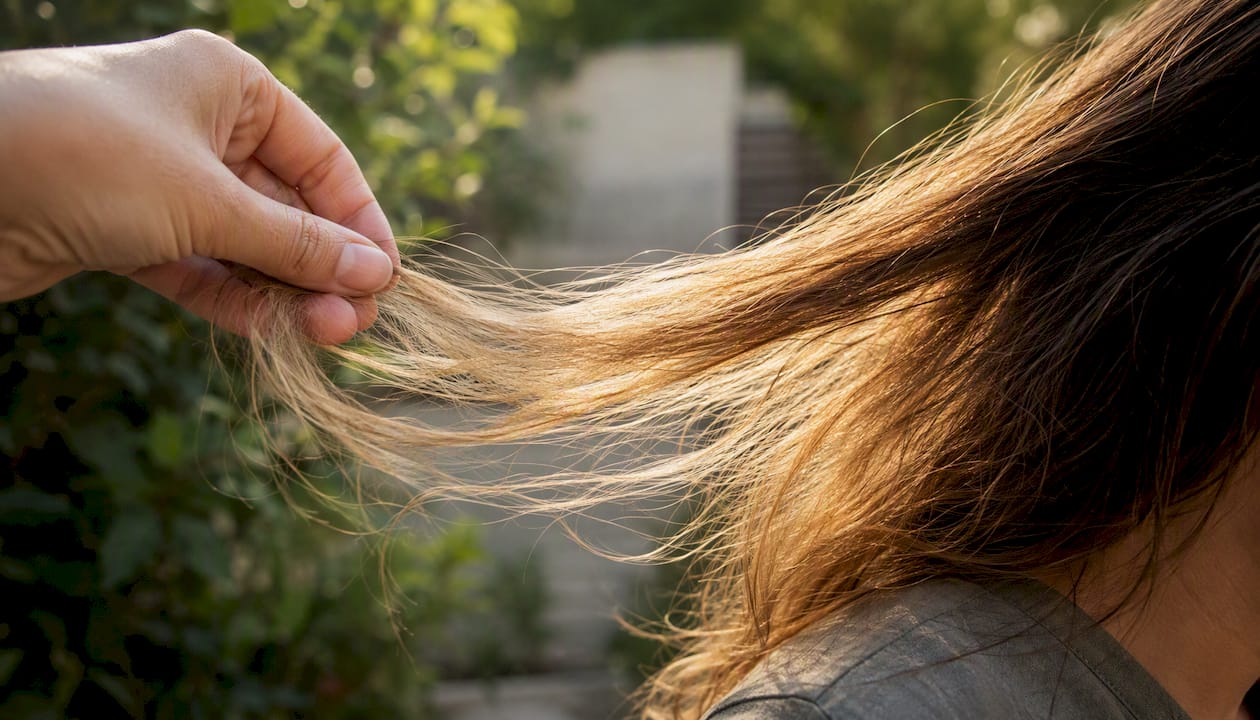
Visible hair changes after aggressive chemical treatment are real signals, but they don’t automatically confirm that analyte levels have dropped to below the lab’s cutoff. Many cosmetic changes are indirect indicators, not proof.
Here’s how to read what you’re seeing:
- Color fading or lightening: Strong indirect indicator. Chemical bleaching that visibly alters pigment typically involves the same oxidative reactions that peer-reviewed studies link to analyte reduction.
- Increased dryness and porosity: Suggests the cuticle has been opened and the cortex exposed, which is consistent with matrix-level treatment. Hair that absorbs water faster than usual is a practical sign of this.
- Reduced product residue and odor: Indicates thorough detergent cycling, though this reflects surface cleaning more than matrix changes.
- Scalp sensitivity or mild irritation: Expected with repeated alkaline and oxidative treatments; not a sign of failure, but a signal to pace your sessions.
Cosmetic changes like frizz or split ends alone are poor proxies for lab results. The strongest indirect indicator remains color change combined with increased porosity, because those two together suggest the oxidative chemistry reached the cortex.
Products commonly used in intensive protocols include Macujo Aloe Rid Shampoo and Zydot Ultra Clean, both stocked by Passdrugtest and designed for use in multi-step cleansing routines.
Pro Tip: Take date-stamped photos of your hair before and after each treatment session. If you need to challenge a result or discuss your protocol with a private lab, documented visual evidence of treatment history supports your case.
How can you verify whether your detox is working?
The most reliable verification is a private laboratory hair test using the same ELISA-plus-confirmatory-MS workflow that official tests use. Home urine and saliva kits are faster and cheaper, but they test a different matrix and a much shorter detection window, so they don’t substitute for hair-specific verification.
Your main options, ranked by reliability for hair test prep:
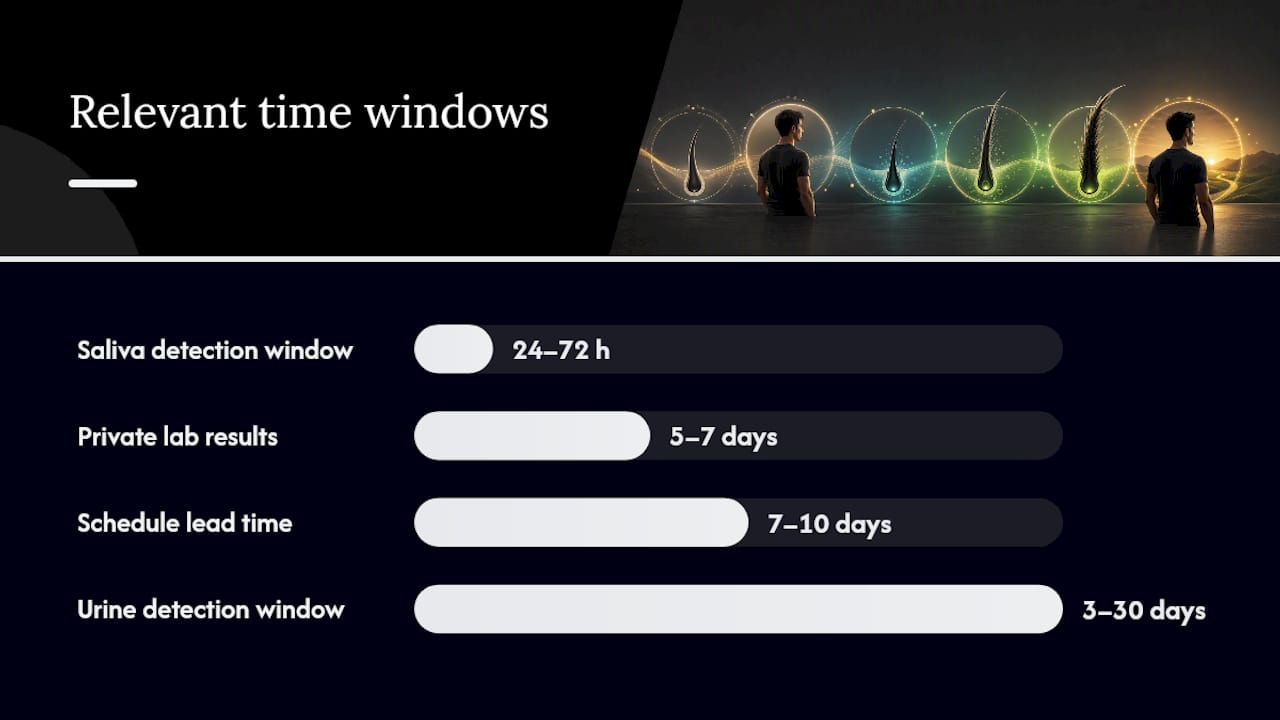
- Private lab hair pretest — Highest accuracy, same detection window as the official test, same two-step workflow. Costs more and takes 5–7 days for results, but gives you the most actionable data. Schedule this at least 7–10 days before your official test.
- Private clinic expedited hair test — Some clinics offer faster turnaround for an additional fee. Useful when your timeline is tight, though availability varies by location.
- At-home urine test kits — Fast and inexpensive, but only reflect recent use (typically 3–30 days depending on frequency). Useful as a supplementary check, not a substitute for hair testing.
- At-home saliva test kits — Even shorter window (24–72 hours for most substances). Relevant for very recent use but not meaningful for hair test prep.
NIJ-funded research found that measuring conjugated phase II metabolites in hair can help distinguish true drug use from environmental contamination, which is why advanced labs prefer metabolite-specific testing over parent-drug detection alone.
Pro Tip: When ordering a private hair pretest, confirm the lab uses GC-MS or LC-MS/MS confirmation, not just an immunoassay screen. A screen-only result doesn’t give you the same confidence level as the full two-step workflow your official test will use.
How many treatments does it take to see measurable change?
Some chemical signs, like color shift and increased porosity, can appear after a single aggressive treatment. Measurable reductions in analyte concentrations that affect lab results typically require repeated, correctly executed sessions over at least one to two weeks.
| Phase | What to Expect |
|---|---|
| After 1 treatment | Cosmetic changes (dryness, slight color shift); minimal analyte reduction |
| After 1–2 weeks of repeated sessions | Increased porosity, more significant oxidative damage; analyte reduction more likely |
| Private pretest window | Run pretest 7–10 days before official test to allow time for a repeat cycle |
| Final buffer before test | Stop aggressive treatments 2–3 days before the test to reduce lab-visible anomalies |
Stopping treatments too close to the test date can actually raise flags. Labs may note evidence of very recent cosmetic treatment in the sample’s physical profile. A 2–3 day buffer between your last session and the official test is a reasonable precaution.
- Space treatment sessions at least 24–48 hours apart to allow scalp recovery.
- Use a private pretest result to decide whether additional sessions are needed.
- Follow the product protocol for clearing drug metabolites rather than improvising frequency.
Pro Tip: If your private pretest still shows a positive result after two weeks of treatment, additional sessions are unlikely to produce a dramatically different outcome without adjusting your protocol. Consult the product guide or contact Passdrugtest for protocol-specific advice.
What can go wrong and what do labs look for?
Aggressive treatments can reduce analyte levels, but they can also create lab flags that trigger additional scrutiny or re-sampling. The goal is to reduce metabolites without producing a sample profile that looks obviously manipulated.
Common lab flags and red flags to know:
- Abnormal wash residues: Labs analyze the wash solution from your sample. Unusual chemical profiles in the wash can indicate recent aggressive treatment.
- Inconsistent segmental results: If one segment of the hair shaft shows dramatically different concentrations than adjacent segments, labs may flag the sample as potentially adulterated.
- Evidence of oxidative damage: Severely damaged hair structure can be noted in lab reports, particularly with newer micro-analysis techniques.
- Sample collection inconsistencies: Hair that is too short, bleached to near-white, or shows obvious recent chemical processing may prompt a re-collection request.
Labs use standardized wash procedures and mass spectrometry confirmation specifically to reduce false positives and to detect adulteration attempts. SAMHSA notes that wash methodologies are not yet fully standardized, which means results can vary by lab. A 2023 PLOS ONE study further found that pre-cleaning can alter interior concentrations unpredictably, complicating interpretation.
Legal and occupational consequences of an inconclusive or positive result depend on your employer’s policy. Inconclusive results often require re-sampling. If you take prescription medications, disclose them to the Medical Review Officer before the test, not after.
Your safety-first monitoring checklist
Follow a documented, safety-first checklist and verify with a private pretest before relying on an official test result.
- Document your baseline. Take date-stamped photos of your hair before any treatment begins.
- Run a private hair pretest. Use a lab that performs ELISA screening plus GC-MS/LC-MS/MS confirmation. This is your most reliable starting data point.
- Follow the product protocol exactly. For Macujo Aloe Rid Shampoo and Zydot Ultra Clean, use the step-by-step guide provided by Passdrugtest. Do not improvise the sequence or frequency.
- Perform a patch test first. Apply a small amount of any new product to your scalp and wait 24 hours before a full session. Peroxide-based treatments can cause irritation or chemical burns if overused.
- Allow recovery time between sessions. Space sessions at least 24–48 hours apart. Limit peroxide exposure to reduce the risk of scalp damage.
- Retest with a private pretest. After your treatment cycle, run a second private test 7–10 days before the official test.
- Store all documentation. Keep pretest results and photos with timestamps. These support any appeal or employer discussion if needed.
Review the complete hair detox checklist for a full step-by-step breakdown.
Pro Tip: Never mix bleach-based products with ammonia-based products in the same session. The chemical reaction can cause serious scalp burns. Stick to one oxidative agent per session and follow the product instructions.
An honest perspective on what verification actually means
There’s a gap between what people hope to see and what actually matters when it comes to hair detox. Most people focus on the cosmetic signs, the fading, the dryness, the texture change, and treat those as confirmation that the protocol worked. They’re not. They’re signals that chemistry happened, which is a necessary but not sufficient condition for a cleaner lab result.
The only verification that actually counts is a private lab test using the same workflow as the official test. Everything else is inference. That’s not pessimism; it’s the most useful framing because it tells you exactly what to do: pretest early, pretest with the right method, and use the result to decide your next move.
Passdrugtest stocks Macujo Aloe Rid Shampoo and Zydot Ultra Clean and provides step-by-step guides and timelines for using them. We sell these products, and we’re transparent about that. What we won’t do is tell you that visible hair changes alone are proof of success. The private pretest is the proof.
Passdrugtest products that fit this verification workflow
If you’ve read through the verification steps and you’re ready to act, Passdrugtest offers the two most commonly used products in intensive hair cleansing protocols: Macujo Aloe Rid Shampoo and Zydot Ultra Clean. Both are available individually or as a combined treatment kit.
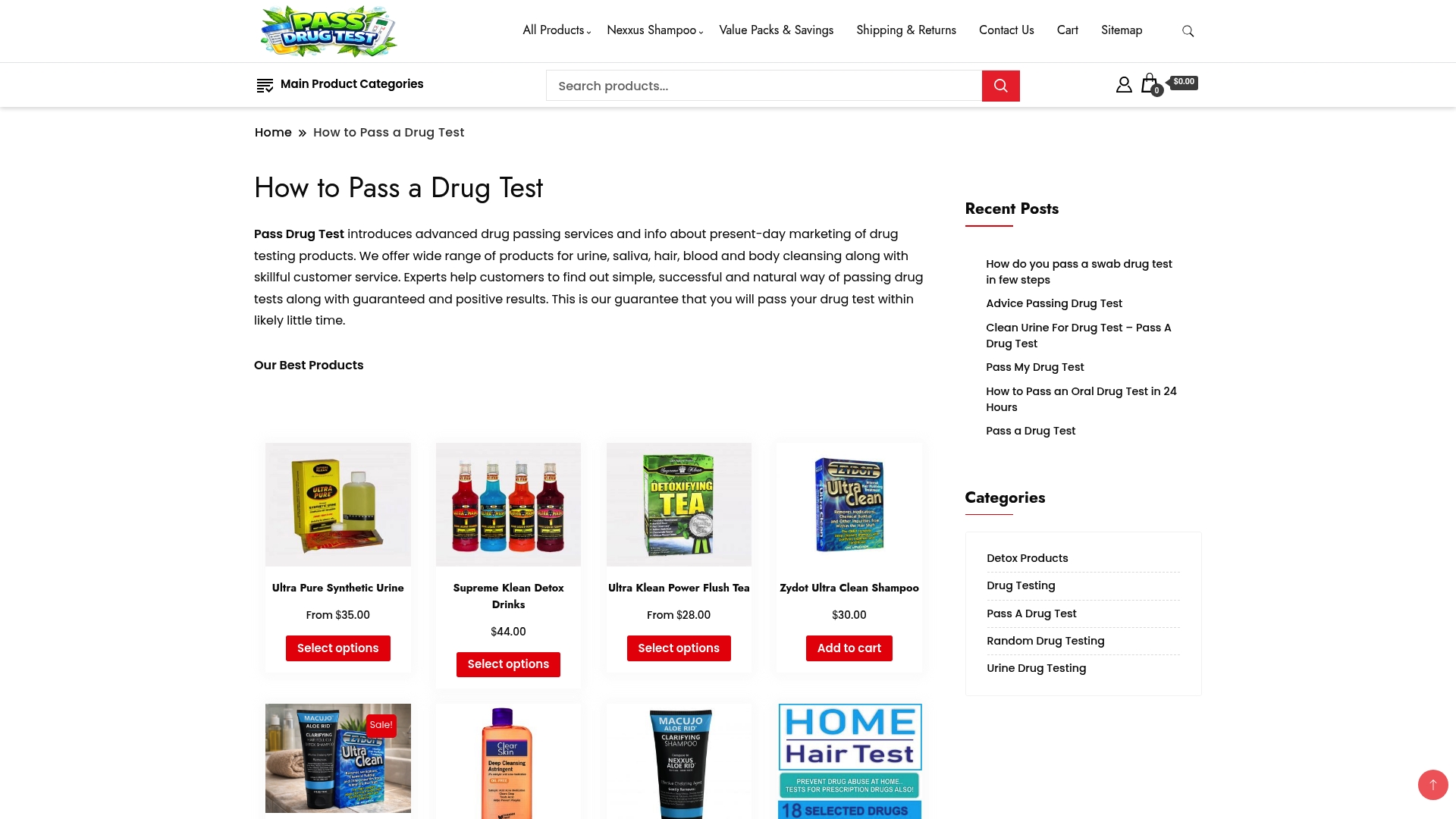
Macujo Aloe Rid is formulated for repeated use as part of a multi-step oxidative protocol. Zydot Ultra Clean is typically used as a final-step treatment on the day of the test. The correct sequence matters: Macujo Aloe Rid handles the matrix-level work over multiple sessions; Zydot handles the final surface preparation. Use both as directed, run a private pretest after your treatment cycle, and document everything. Browse the full range of hair drug testing products at Passdrugtest to find the right kit for your timeline.
Sources
- Hair Follicle Drug Testing: Process & Benefits | Labcorp
- Hair analysis: Assessment of homemade hair treatment effects on drug concentrations in the keratin matrix
- Detecting drugs in hair: Is it drug use or environmental contamination? | NIJ
- Drug Metabolites and Hair Testing | SAMHSA
- Pre-cleaning effects and LA-ICP-MS recommendations in hair analysis | PLOS ONE