
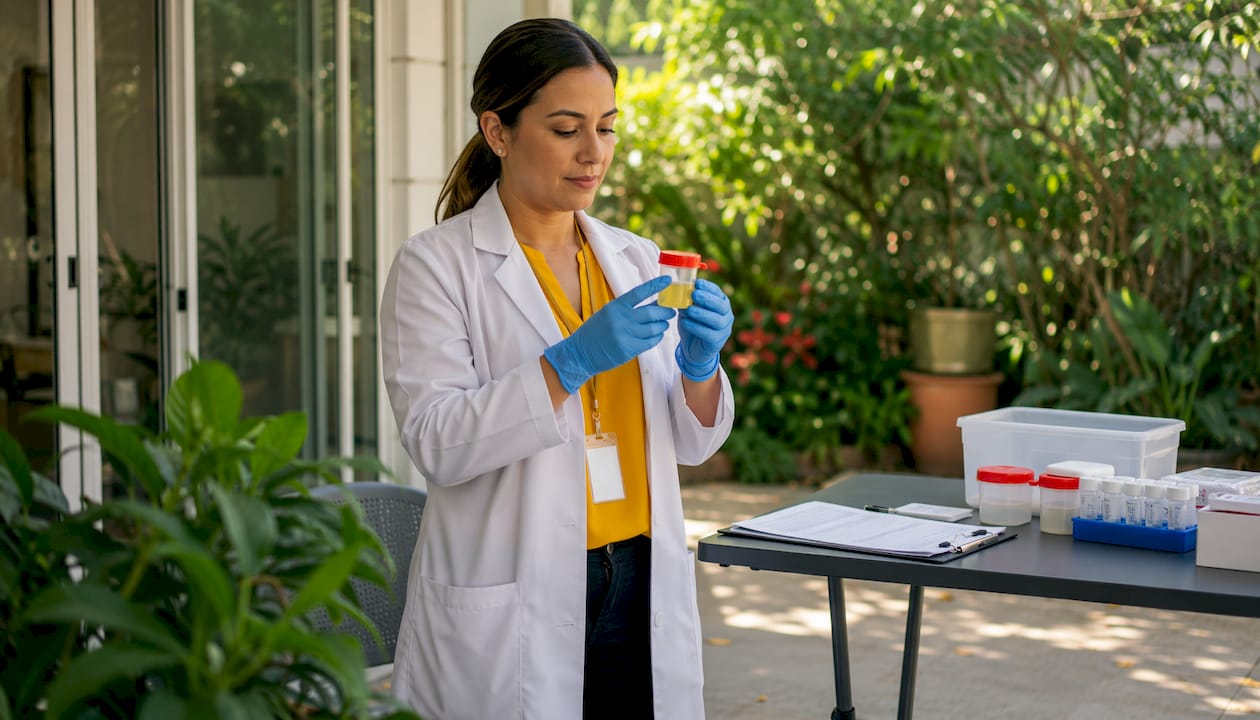

What is a collector in drug testing?
A drug test collector is the trained professional who manages the entire specimen collection process from start to finish. Per the U.S. Department of Transportation, a collector instructs and assists employees at a collection site, receives and makes an initial inspection of the specimen, and initiates and completes the Federal Drug Testing Custody and Control Form (CCF). This person is the only individual in the testing process with direct, face-to-face contact with you as the donor.
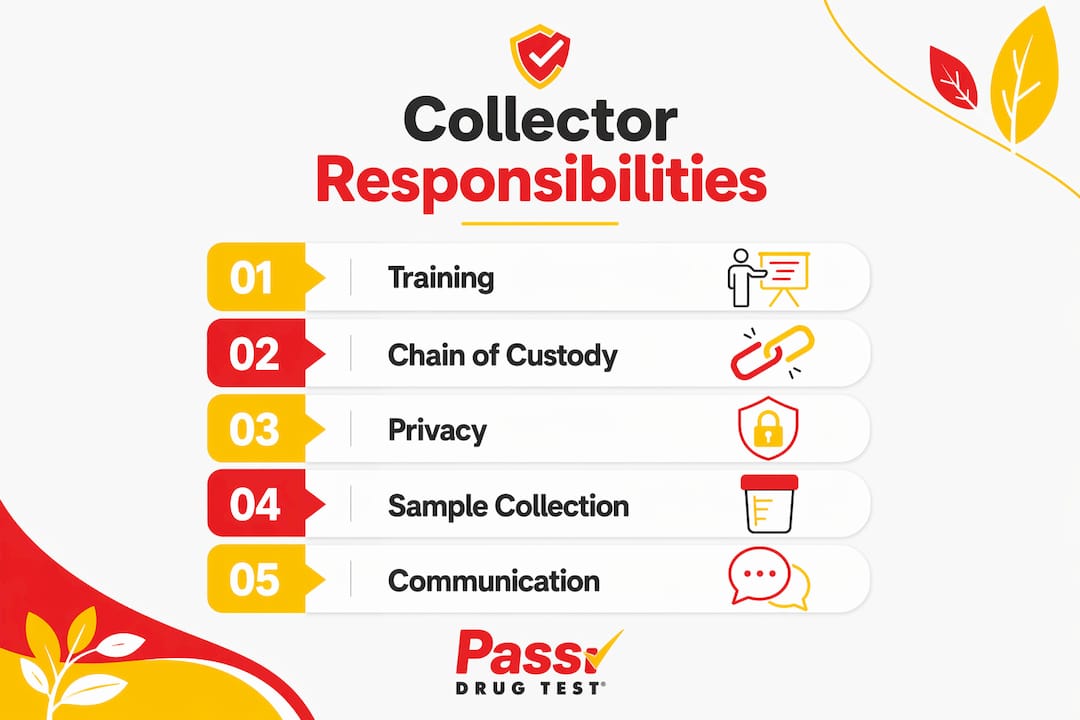
The collector’s core duties include:
- Verifying your identity before any specimen is collected
- Instructing you on the proper collection procedure
- Inspecting the specimen for temperature, color, and volume
- Completing the CCF accurately and distributing copies to the lab, medical review officer, and employer
- Maintaining chain of custody from the moment you hand over the specimen
Without a properly trained collector, the entire test can lose credibility. Federal standards from both the U.S. Department of Transportation and SAMHSA govern every step of this process.
Table of Contents
- Collector responsibilities, legal standards, and chain of custody
- How the collector’s role affects hair follicle drug testing
- Passdrugtest has the products you need before your collection date
- Key Takeaways
Collector responsibilities, legal standards, and chain of custody
The collector’s job goes well beyond simply handing you a cup. Under 49 CFR Part 40, collectors must follow a precise sequence of steps, and any deviation can result in the specimen being rejected by the laboratory.
Key responsibilities include:
- Accurate CCF completion: Errors on the Custody and Control Form are classified as either fatal flaws or correctable flaws. Fatal flaws void the test entirely.
- Site security: The FMCSA requires collectors to maintain collection site security and ship specimens to HHS-certified laboratories in a timely, confidential manner.
- Conflict of interest prevention: A collector cannot supervise the donor being tested unless no other collector is available, and even then must document why. Coworkers in the same testing pool, spouses, relatives, and close personal friends are all prohibited from serving as your collector.
Pro Tip: Collectors who treat donors with respect and communicate each step clearly tend to get better cooperation, which reduces errors and keeps the process moving smoothly for everyone.
Collectors do not need medical credentials, but they must complete specialized training that includes five consecutive error-free mock collections covering scenarios like insufficient specimen volume, out-of-range temperature, and donor refusal to sign the CCF. That training requirement exists because a single procedural mistake can compromise your result, regardless of what is actually in your specimen.

Balancing donor privacy with site security is one of the trickier parts of the job. The collector must secure the area to prevent tampering while avoiding conduct that could be viewed as intrusive or offensive. Getting that balance wrong opens the employer to legal challenges.
How the collector’s role affects hair follicle drug testing
Hair follicle testing follows a legally distinct set of protocols compared to urine collection. Under 49 CFR Part 40, hair specimen collectors must prevent any appearance of collusion or impropriety, which means the same conflict-of-interest rules apply. The collector cuts a hair sample close to the scalp, typically from the back of the head, seals it in a tamper-evident package, and initiates the chain of custody documentation.
Understanding this process matters for you because the collector’s actions directly affect whether your specimen is accepted or challenged. If the collector makes a procedural error, the test may be cancelled. If everything is done correctly, the specimen goes to a certified lab where it is screened for drug metabolites trapped inside the hair shaft.
“Without the collector assuring the integrity of the specimen and collection process, the test itself may lose validity. Without the collector’s sensitivity to an employee’s privacy, the entire testing program may be subject to criticism.” — DOT Urine Specimen Collection Guidelines
Hair follicle tests can detect THC metabolites over a prolonged period, which is why detox preparation before the collection date is so critical. The collector cannot be influenced or negotiated with. Your only real leverage is the condition of your hair before you walk through that door.
Pro Tip: Arrive at your collection appointment knowing your rights. You can ask the collector for their identification and the name of their collection company. You cannot, however, delay or refuse the collection without consequences.
The most effective preparation strategy for a hair follicle test is the Macujo Method, developed by Mike Macujo. This multi-step process opens the hair cuticle and flushes drug metabolites from the cortex before the collector ever takes your sample. It is widely recognized as the best method available for passing a hair follicle drug test.
Passdrugtest has the products you need before your collection date
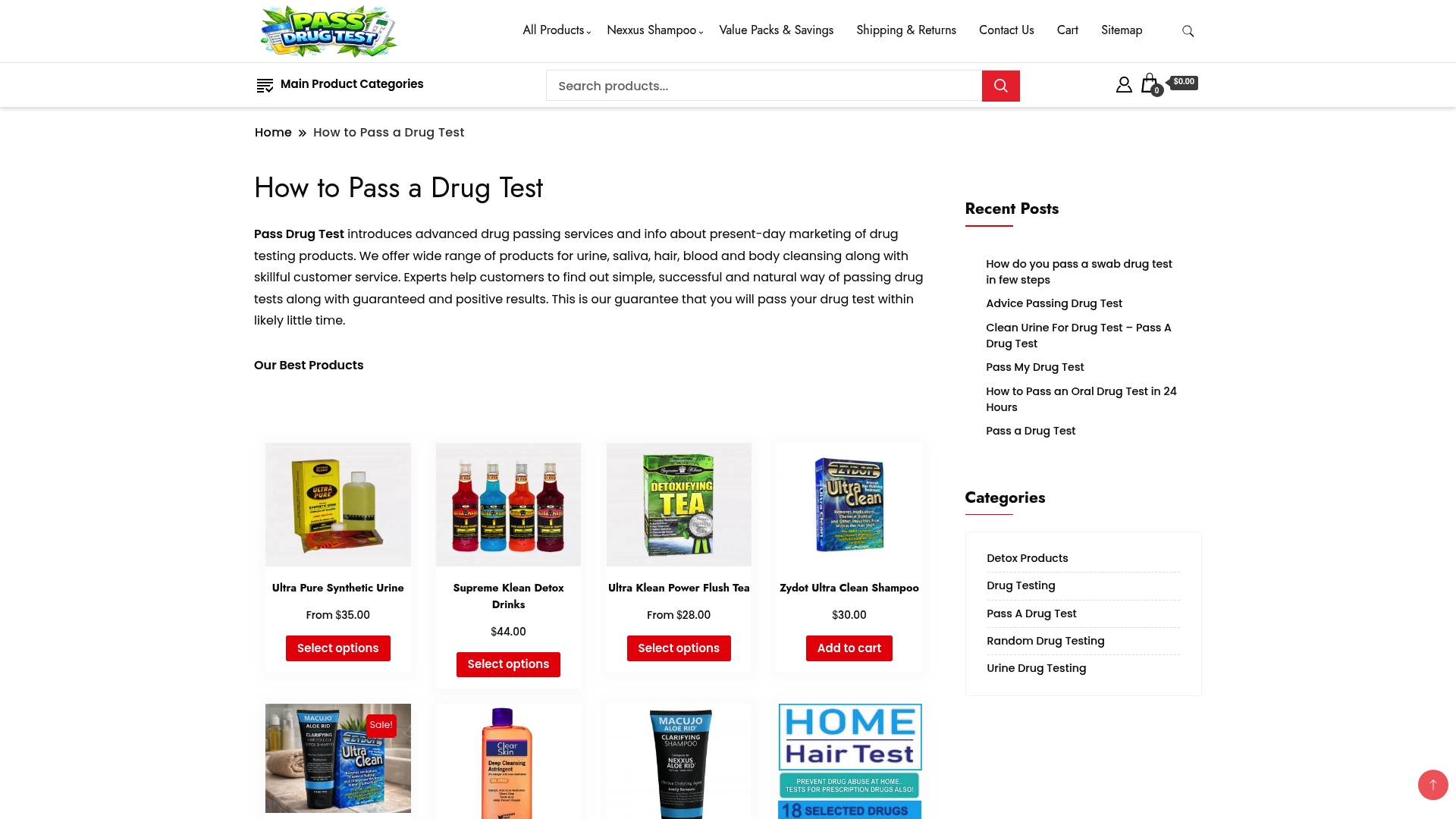
When a collector is scheduled to take your hair sample, preparation is everything. Passdrugtest carries the Macujo Aloe Rid Shampoo, the proven cornerstone of the Macujo Method, formulated with a propylene glycol base that penetrates deep into the hair shaft to break down and remove drug metabolites. No other shampoo on the market matches its effectiveness for this specific purpose.
Passdrugtest also offers a full range of hair drug testing detox products to support every step of your preparation. Check out the complete product lineup and get started well before your collection appointment.
Key Takeaways
Collectors are the federally mandated gatekeepers of drug test integrity, and understanding their role gives you a clear picture of what happens the moment you walk into a collection site.
| Point | Details |
|---|---|
| Collector definition | A trained professional who instructs donors, verifies identity, and completes the federal CCF. |
| Chain of custody | The CCF documents specimen handling from collection to lab; errors can void the test entirely. |
| Conflict of interest rules | Supervisors, coworkers in the same pool, and personal relations cannot serve as your collector. |
| Hair follicle distinctions | Hair collectors follow legally distinct protocols under 49 CFR Part 40 to prevent collusion. |
| Passdrugtest preparation | The Macujo Aloe Rid Shampoo, available at Passdrugtest, is the proven tool for hair detox before your collection date. |