
Eat your normal meals. For a standard urine drug test, no special diet is needed, fasting is not required, and the one food group worth skipping is anything with poppy seeds. Food cannot clean your system, and it cannot change what a hair follicle test reads. If you are a THC user facing a test, the meal you eat that morning matters far less than the plan you follow in the weeks before it.
This guide covers what to eat, what to avoid, why fasting and “cleansing diets” fail, and what to do instead, especially if your employer uses a hair test.
TL;DR
- Eat your usual meals before a urine, saliva or hair test. MedlinePlus says nothing about fasting being needed, and sudden changes to your routine add risk without benefit.
- Skip poppy seeds (bagels, muffins, salad dressings) for a few days. They can trigger a false-positive opiate screen.
- Fasting does not lower THC metabolites in urine, and it can add stress. Over-drinking water to flush your system can get your sample flagged as dilute.
- Hair follicle tests are not affected by what you eat. They need a hair-specific plan, which we cover below.
Table of Contents
- The short answer: normal food, normal routine
- Foods that can cause a false positive
- Why fasting backfires
- Flushing and diuretics: the dilution trap
- A simple eating plan for the days before a urine or saliva test
- Hair follicle tests: diet has no say
- Our perspective: where to put your effort
- If your test is a hair follicle test
- Ready for a hair test? Start with the shampoo
- Putting it together by test type
- FAQ
- Sources
The short answer: normal food, normal routine
A routine drug test checks a sample for specific drugs or their metabolites. Your breakfast is not one of them. MedlinePlus tells test-takers to report any prescription drugs, over-the-counter medicines and supplements to the testing professional, because those can affect results. Food gets far less attention, and the main exception is poppy seeds.
In practice, this is what a sensible test-day routine looks like:
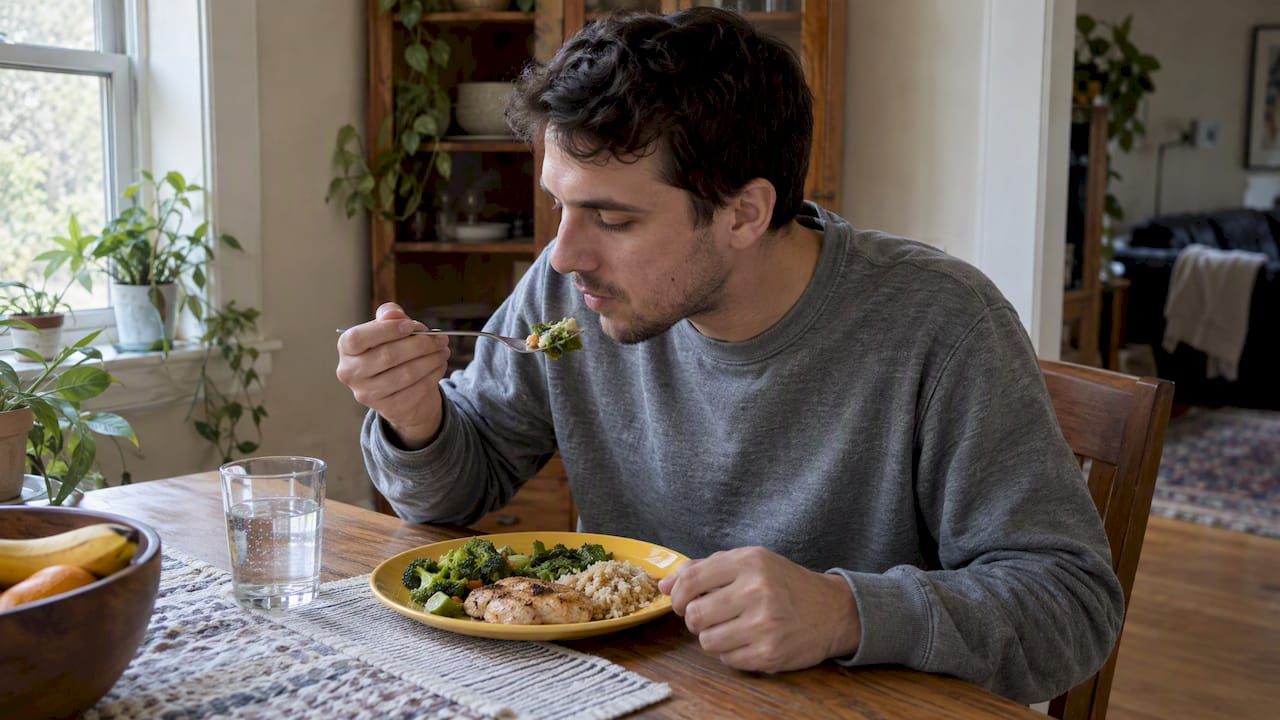
- Eat a regular meal at your normal time. A steady stomach helps you stay calm and gives you no reason to feel faint at the collection site.
- Drink water the way you normally would. Do not chug it.
- Bring a valid photo ID and a list of everything you take, with doses.
- Skip anything unusual: new supplements, energy drinks, herbal teas sold as “cleansers”.
Most people who ask what to eat before a drug test are really asking whether there is a food trick. There is not. There is only a short list of foods that can hurt you and a long list of myths that waste your time.
Foods that can cause a false positive
A few foods contain traces of compounds that screening tests can mistake for drugs. The best documented is the poppy seed.
Poppy seeds and opiates
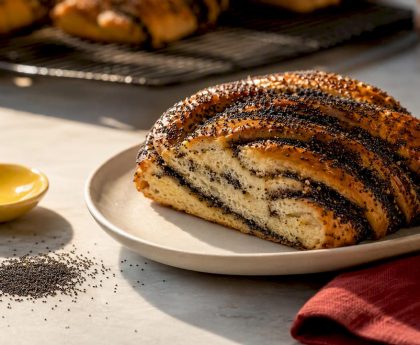
Poppy seeds carry trace amounts of morphine and codeine. Cleveland Clinic notes that eating them can produce a positive opioid result. The initial screen is the one most likely to be fooled. A confirmatory lab test, which separates the compounds precisely, is used to verify a positive, as MedlinePlus explains.
That is why a poppy seed false positive should not end with you losing a job. But it can mean stress, delay and an uncomfortable conversation with a Medical Review Officer. The simple move is to avoid these for at least two to three days before your test:
- Poppy seed bagels, rolls and muffins
- Lemon poppy seed cake and pastries
- Salad dressings and spreads that list poppy seeds
- Any homemade baking with poppy seed filling
If you already ate some and have a test coming, read our guide on poppy seeds and the 48 to 60 hour risk window for what to say and what to expect.
Hemp products and THC
Hemp seeds and hemp oil come from the cannabis plant family. Properly processed food-grade products contain very little THC, but trace amounts are possible, and a few search results on false positives list hemp foods as a concern. If you are a regular cannabis user, a hemp snack will not be the thing that decides your test, but there is no reason to add one more variable. Skip hemp milk, hemp protein powder and hemp-seed granola in the days before a urine test.
Medications and supplements
More false positives come from medicine cabinets than from kitchens. Some prescription and over-the-counter drugs can cross-react with screening tests. The federal Medical Review Officer guidance is built around the idea that a donor with a legitimate medical explanation gets a fair review. Your job is to be open about what you take. Hiding a prescription is the fastest way to turn a harmless result into a problem.
What about kombucha, coffee and energy drinks?
Fermented drinks like kombucha contain small amounts of alcohol, which matters only if you are taking an alcohol test. Coffee and energy drinks do not show up as drugs, but heavy caffeine can make you jittery and thirsty, and it does nothing for your result. Keep intake normal.
Why fasting backfires
The idea behind fasting is that burning fat releases less THC or somehow clears the body faster. The research points the other way.
THC metabolites are stored in body fat. A controlled study in chronic cannabis users looked at whether exercise or food deprivation could release fat-stored cannabinoids into the blood and urine. The study ran in a detox ward, and it found that 24 hours of food deprivation had no significant effect on how the urine results could be interpreted. Fasting did not clean anyone out.
There is also a practical downside. If stored cannabinoids are released while you restrict food, the concern is a temporary rise rather than a drop. Add the lightheadedness, irritability and poor focus that come with skipping meals, and you have made test day harder for nothing.
The same logic applies to hard workouts. We explain the timing issue in why THC users should avoid vigorous exercise 24 to 48 hours before a urine test.
Flushing and diuretics: the dilution trap
If food doesn’t work, people turn to water. Drinking gallons before a test, or adding lots of coffee or other diuretics, is one of the most common mistakes.
Labs know this trick. Under federal workplace programs, every urine specimen is checked for validity. According to the MRO Guidance Manual for federal programs (2024), a specimen is dilute when creatinine is above 5.0 mg/dL but below 20.0 mg/dL and specific gravity is below 1.003. A dilute result can mean a mandatory recollection, sometimes under direct observation. For people on probation or in monitored programs, a dilute sample can be treated as a failure, which we explain in our piece on why a dilute sample can count as positive on U.S. probation tests.
Here is a quick comparison of common pre-test habits:
| Habit | What it does | Risk |
|---|---|---|
| Normal meal and normal fluids | Nothing unusual | Lowest |
| Fasting 24 hours | No significant effect on urine results in the study above | Fatigue, stress |
| Chugging water | May produce a dilute sample | Recollection, possible observed retest |
| Diuretics, heavy coffee, alcohol | Same dilution problem, plus dehydration | Invalid or dilute result |
| Poppy seed foods | Possible false-positive opiate screen | Delay, review |
If you want to understand the numbers, read our explainer on the 20 mg/dL creatinine cutoff and the test day plan for avoiding a dilute urine result. The short version: moderate hydration, a normal day, no tricks.
You may also have heard that cranberry juice helps. It does not reliably do anything the lab cannot see through; here is what happens with cranberry juice and dilution checks.
A simple eating plan for the days before a urine or saliva test
You do not need a special diet, but a steady routine takes away avoidable stress. Here is a plan most people can follow.
- Three days out: Stop eating poppy seed products and hemp foods. Keep everything else the same.
- Two days out: Eat balanced meals with protein, vegetables and whole grains. Nothing extreme, nothing new.
- The night before: Eat dinner as usual, go easy on alcohol, and sleep. Write down your medications.
- Morning of the test: Eat a normal breakfast. Drink water when thirsty, not in bulk.
- At the collection site: Give your ID, disclose medications, follow the instructions of the collector.
Some articles tell you to load up on fruit and vegetables to “flush toxins”. Fruit and vegetables are good for you, but the idea that they speed up the removal of drug metabolites is unsupported. Eat them because they are healthy, not because they change a result.
For saliva tests the window is short and recent use is what counts, so food matters even less. A rinse is not a plan; see our saliva drug testing information for how those tests work.
Hair follicle tests: diet has no say
This is where most people searching this topic need a different answer. If your employer or a court uses a hair test, nothing you eat this week changes the result.
A urine test reflects recent use. Hair keeps a record. As a review of urine and hair analysis puts it, hair gives long-term information covering months to years, while urinalysis captures a much shorter window. Metabolites become part of the hair shaft as it grows, so they sit beyond the reach of anything in your stomach. Our guides on hair shaft drug incorporation and the hair drug test detection window go through the mechanics. If you are comparing the two test types, start with hair versus urine tests for THC users.
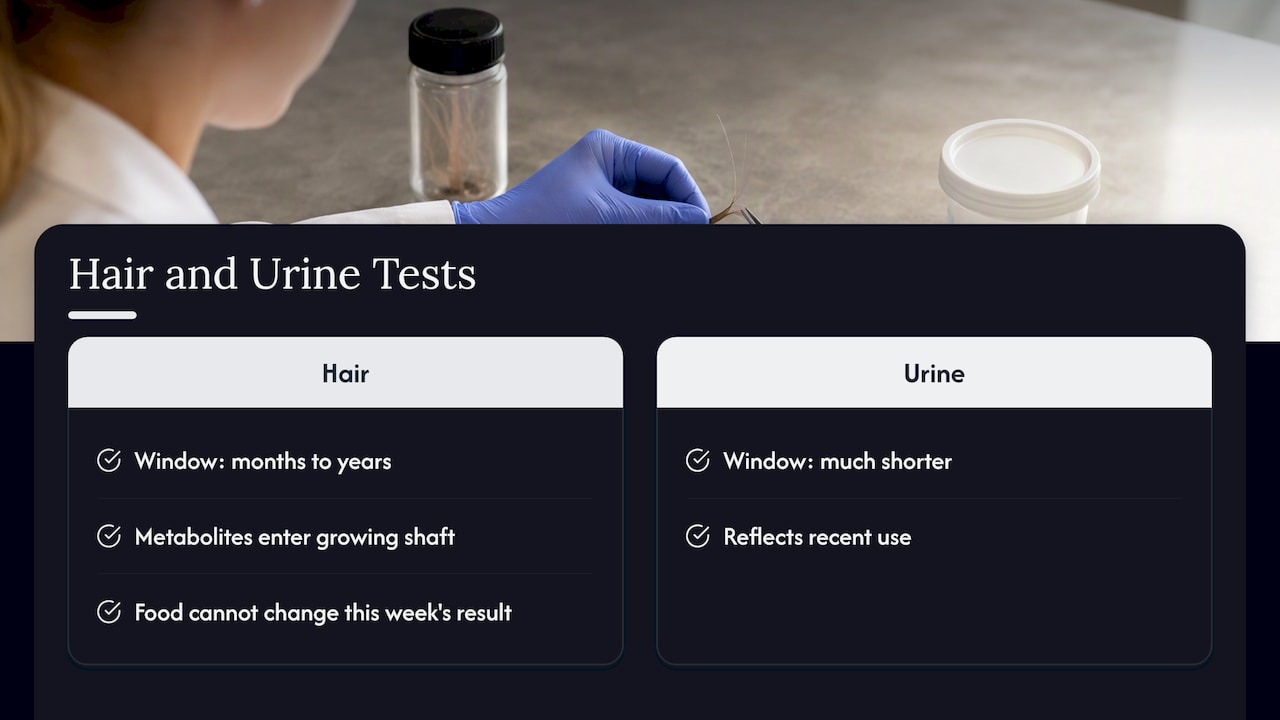
NIDA notes that urine is the most used sample type because it is plentiful and easy to collect. Hair is used less often, but it is the one that worries regular users most, because abstaining for a couple of weeks does nothing to the segment of hair the lab cuts.
What the research says about hair care products
The scientific literature has looked at what topical products do to hair. A 2022 study on manipulation of THC hair concentrations by commercially available products found that THC levels in hair could be reduced, in some cases to non-detectable, by certain care products. The authors treat this as a limitation of hair testing, and they caution against over-reading quantitative results. For a test-taker, the lesson is practical: what you put on your hair matters, and what you eat does not.
That is also why random home remedies are a gamble. Vinegar rinses, bleach and heavy dish soap damage hair, and the outcome is unpredictable. A purpose-built routine is a better path.
Our perspective: where to put your effort
We talk to people every day who are anxious about an upcoming test, and the pattern is always the same. They have spent hours reading about foods, teas and fasting, and almost nobody has asked the more useful question: which kind of test am I facing, and how much time do I have?
For urine and saliva tests, the honest answer is simple. Time, normal habits and avoiding false-positive triggers do most of the work. We would rather you skip the poppy seed bagel and keep your routine than buy into a diet myth.
For hair tests, the picture is different. Food cannot reach the hair already grown, so you need a topical method. The approach we recommend is the Macujo method, created by Mike Macujo, which we consider the best method for passing a hair follicle drug test. It is a multi-day wash routine built around Macujo Aloe Rid Shampoo, and it is the reason many of our customers come to us. Timing and following the instructions exactly are what make it work, which is why we wrote a full walkthrough of the 10 to 14 day Macujo Aloe Rid instructions, safety and timing.
We are also reachable from 9am to 12am every day, because test anxiety does not keep office hours, and we ship in discreet, confidential packaging. If you are unsure which product fits your situation, ask us before you order.
— MIchael
If your test is a hair follicle test
Here is how to approach it, step by step.
- Confirm the test type. Ask HR or your officer whether it is hair, and whether head hair or body hair will be collected.
- Count your days. Hair tests usually look back about 90 days of growth. Our 90-day THC hair detox guide for job applicants lays out timelines by situation.
- Stop use now. Continued use keeps loading new metabolites into the hair.
- Start a hair-specific routine well before the test date, not the night before.
- Leave diet alone. Eat normally and stay hydrated.
And a note on synthetic urine: it is built for urine tests only and is useless against a hair collection. We explain this in synthetic urine versus hair testing.
Ready for a hair test? Start with the shampoo
If a hair follicle test is ahead of you, Macujo Aloe Rid Shampoo is the product we put at the center of the plan. It is the shampoo behind the Macujo method, and it is made for people who need a dependable routine rather than a kitchen experiment. If you want extra support, the Macujo Aloe Rid Shampoo with Zydot Ultra Clean Treatment bundle pairs the two. You can also browse everything we offer for hair, saliva and urine testing or read our hair drug test information page first.
Putting it together by test type
| Test type | Does food matter? | What to do |
|---|---|---|
| Urine | Barely, apart from poppy seeds | Normal meals, moderate water, disclose medications |
| Saliva | Very little | Normal routine, avoid anything unusual in the mouth right before |
| Hair follicle | No | Follow a hair-specific routine well ahead of time |
| Blood | Little, follow clinic instructions | Fast only if the clinic asks you to for a separate lab panel |
The last row is worth a note. Some medical blood draws do require fasting, but that is for tests like cholesterol or glucose, not drug screens. If a clinic gives you written instructions, follow them.
FAQ
Can I eat before a drug test?
Yes. For urine, saliva and hair tests you can eat normally, and fasting is not required. The only common food to avoid is anything containing poppy seeds, which can cause a false-positive opiate screen.
Should I avoid certain foods the week before?
Avoid poppy seed products for two to three days, and skip hemp seed foods if you want to remove any doubt. Everything else in a normal diet is fine. Tell the collector about any medications or supplements you take.
Does fasting help you pass a drug test?
No. A study of chronic cannabis users found that 24 hours without food had no significant effect on urine results. Fasting mainly leaves you tired and stressed on test day.
Does drinking a lot of water before a test work?
It usually backfires. Labs check creatinine and specific gravity, and a dilute sample can trigger a recollection, sometimes observed. Drink normally and read our test day plan.
Will food change a hair follicle test?
No. Metabolites are already locked inside the hair shaft, so diet cannot touch them. A hair-specific routine started well before the test is the approach to use.
Sources
- Drug Testing: MedlinePlus Medical Test
- Drug Test: What It Is, Purpose, Procedure and Types, Cleveland Clinic
- Can Physical Exercise or Food Deprivation Cause Release of Fat-Stored Cannabinoids?
- Medical Review Officer Guidance Manual for Federal Workplace Drug Testing Programs, 2024
- Drug testing by urine and hair analysis: complementary features and scientific issues
- Drug Testing, National Institute on Drug Abuse
- Manipulation of THC Hair Concentrations by Commercially Available Products