
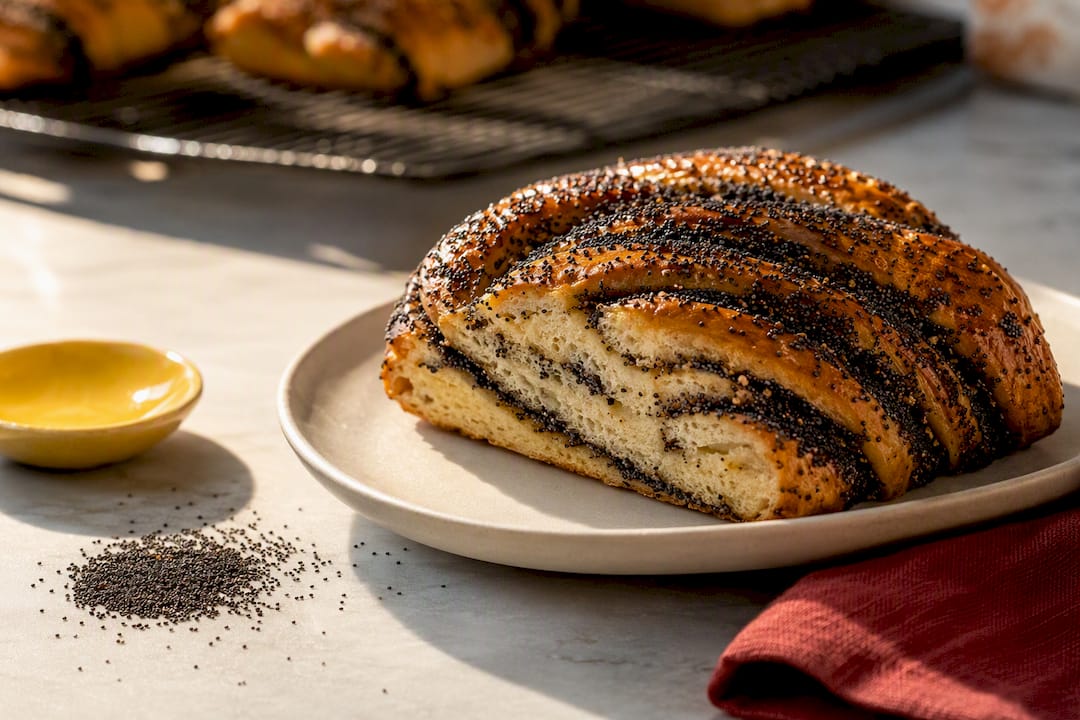

Yes, eating poppy seeds can produce a positive opiate drug test under some conditions. The risk depends on how much you ate, how the seeds were processed, how soon after eating you got tested, and which cutoff level your lab uses. If you test positive after eating poppy seeds, don’t panic and don’t argue with the collector. Request confirmatory testing, save any food packaging or receipts, and let the documentation do the talking.
TL;DR:
- Poppy seeds can produce positive opiate drug tests, especially if consumed unwashed, in large quantities, or via seed products like tea or fillings.
- Urine tests may detect opiates within 30 minutes and can remain positive for up to 60 hours, with individual variability affecting detection times.
- Confirmatory LC-MS/MS testing and a documented ingestion timeline are essential for accurate interpretation of a positive result.
- Using products with lower alkaloid content, like light-topped bakery goods, reduces but does not eliminate the risk of a positive test.
- Advisably, avoid poppy seed foods at least 48 to 60 hours before testing or up to a week for high-stakes assessments.
Table of Contents
- How Poppy Seeds Can Leave Opiate Residues in Samples
- Which Tests Are Affected by Poppy Seed Consumption?
- How Do Labs Interpret a Positive Opiate Result?
- What Do the Studies and Real Cases Actually Show?
- What to Do If You Test Positive After Eating Poppy Seeds
- How Can You Reduce Poppy Seed Risk Before a Scheduled Test?
- A Publisher’s Take on Poppy Seed Risk and Real-World Testing
- Where to Find Preparation Resources and Testing Supplies
- Sources
How Poppy Seeds Can Leave Opiate Residues in Samples
Poppy seeds themselves don’t contain opiates. The problem starts with the plant they come from: Papaver somniferum, the opium poppy. During harvest, the seed pods get scored to collect latex, and that process leaves trace amounts of morphine, codeine, and other alkaloids clinging to the seed coat. The seed inside stays free of opiates, but the outer surface picks up contamination that no amount of sorting fully removes.
Washing helps, but it’s not a fix. Rinsing seeds before use can cut morphine content by up to roughly 90%, according to industry reviews of seed processing, yet batch-to-batch variability means you never really know how clean a given jar of seeds actually is. One bag from one supplier might carry a fraction of the alkaloid load of another bag from a different harvest, even if both sit on the same grocery shelf.
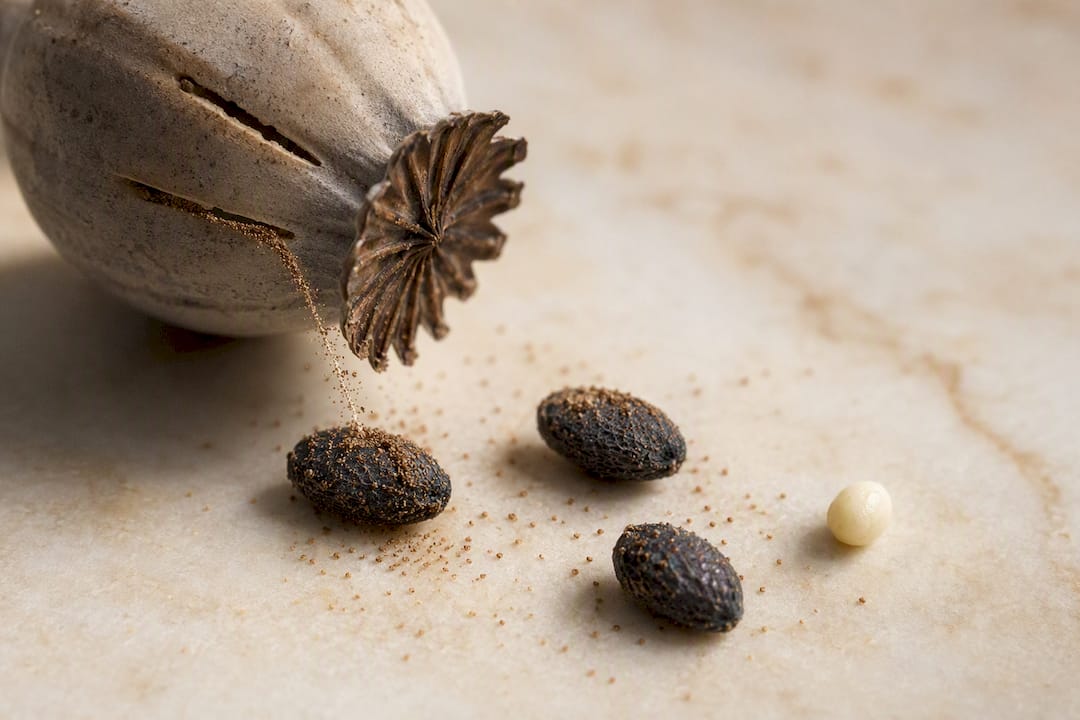
Cooking and baking reduce alkaloid content further, but again, they don’t eliminate it. Heat breaks down some of the residual morphine and codeine, which is why a poppy seed bagel is generally less risky than raw seeds stirred into yogurt or brewed into tea. That distinction matters because some preparations concentrate the alkaloids instead of diluting them.
Forms that carry higher risk:
- Unwashed raw seeds eaten straight or sprinkled heavily on food
- Poppy seed tea, which steeps the alkaloid-coated seed surface directly into the liquid you drink
- Poppy seed fillings and pastes used in some European and Middle Eastern desserts, where seeds are ground in bulk
- Bulk bakery goods (muffins, bagels, loaves) where the baker used a generous, unmeasured amount of seeds
Lower-risk but not zero-risk forms:
- Store-bought bagels or rolls with a light seed topping
- Salad dressings with small quantities of poppy seed as a garnish ingredient
- Granola or trail mix with poppy seeds as a minor component
Once ingested, the alkaloids absorb quickly. Even one to two teaspoons of seeds can carry enough residual opiate content to trigger a positive urine screen, and detectable levels can show up within 30 minutes of ingestion. That speed surprises most people, who assume food takes hours to affect a test result the way it affects digestion.
Which Tests Are Affected by Poppy Seed Consumption?
Not every specimen type responds to poppy seeds the same way, and the differences matter if you’re trying to time a test or explain a result.
Urine tests carry the highest and longest-lasting risk. Opiate metabolites can appear within half an hour of eating poppy seeds and may persist for 48 to 60 hours in some individuals. Clinical lab guidance from Aegis Labs echoes this, noting that people can test positive for morphine and/or codeine for up to 48 hours after ingestion. That window shifts based on how much you ate, your hydration, your metabolism, and how the seeds were processed before they reached your kitchen.
Oral fluid tests move much faster in both directions. Morphine and codeine levels in saliva can peak within about 15 minutes of ingestion and typically drop back below detectable cutoffs within a few hours. If you’re facing a same-day saliva swab, the exposure window is narrow, but it’s also the window where you’re most likely to test positive if you ate poppy seeds recently.
Hair follicle tests work differently because they measure ingestion patterns over roughly a 90-day window rather than a single recent meal. A single poppy seed muffin is unlikely to register on a hair test the way it would on a urine screen. The concern with hair testing is less about one bagel and more about repeated exposure, environmental contamination on the hair shaft, or unwashed seed products used frequently over weeks.
| Specimen Type | Onset of Detectable Levels | Typical Detection Window | Primary Risk Factor |
|---|---|---|---|
| Urine | Within 30 minutes | Up to 48–60 hours | Serving size and seed washing |
| Oral fluid | Within ~15 minutes | A few hours | Timing relative to sample collection |
| Hair | Not applicable to single exposure | Reflects ~90-day pattern | Repeated or unwashed consumption |
Individual metabolism adds another layer of unpredictability. Two people eating the same poppy seed loaf can produce different results depending on kidney function, hydration, and how quickly their bodies clear the alkaloids. That’s part of why lab guidance leans so heavily on confirmatory testing rather than a single screening number.
How Do Labs Interpret a Positive Opiate Result?
Screening and confirmation are two different steps, and understanding that gap is the key to making sense of a poppy seed positive.
The first step is an immunoassay screen, a fast, cheap test designed to be sensitive rather than precise. It flags anything that resembles an opiate compound, including the residual morphine and codeine from poppy seeds, and it does not distinguish between a poppy seed bagel and a prescription painkiller. A positive screen is a flag, not a verdict.
The second step, when a screen comes back positive, should be confirmation using LC-MS/MS (liquid chromatography tandem mass spectrometry). This method identifies the specific compounds present and their exact concentrations, which is where the real interpretation happens.
Cutoff levels have changed over time specifically because of poppy seed false positives. The historical federal workplace cutoff sat at a 300 ng/mL threshold for opiates, which was low enough that ordinary poppy seed bagels regularly triggered positives. The Department of Health and Human Services later raised thresholds in recognition of this problem, though private employers, the military, and specialized testing programs still set their own cutoffs, and they vary widely.
Key facts to understand about cutoffs and ratios:
- Screening cutoffs determine whether a sample even reaches confirmatory testing
- Confirmatory cutoffs determine whether a specific compound counts as a legitimate positive
- Some programs still use the older 300 ng/mL threshold, which keeps poppy seed risk alive even after federal guidance shifted upward
- The morphine to codeine ratio is often used to distinguish poppy seed exposure from opiate drug use, but that rule has real limits
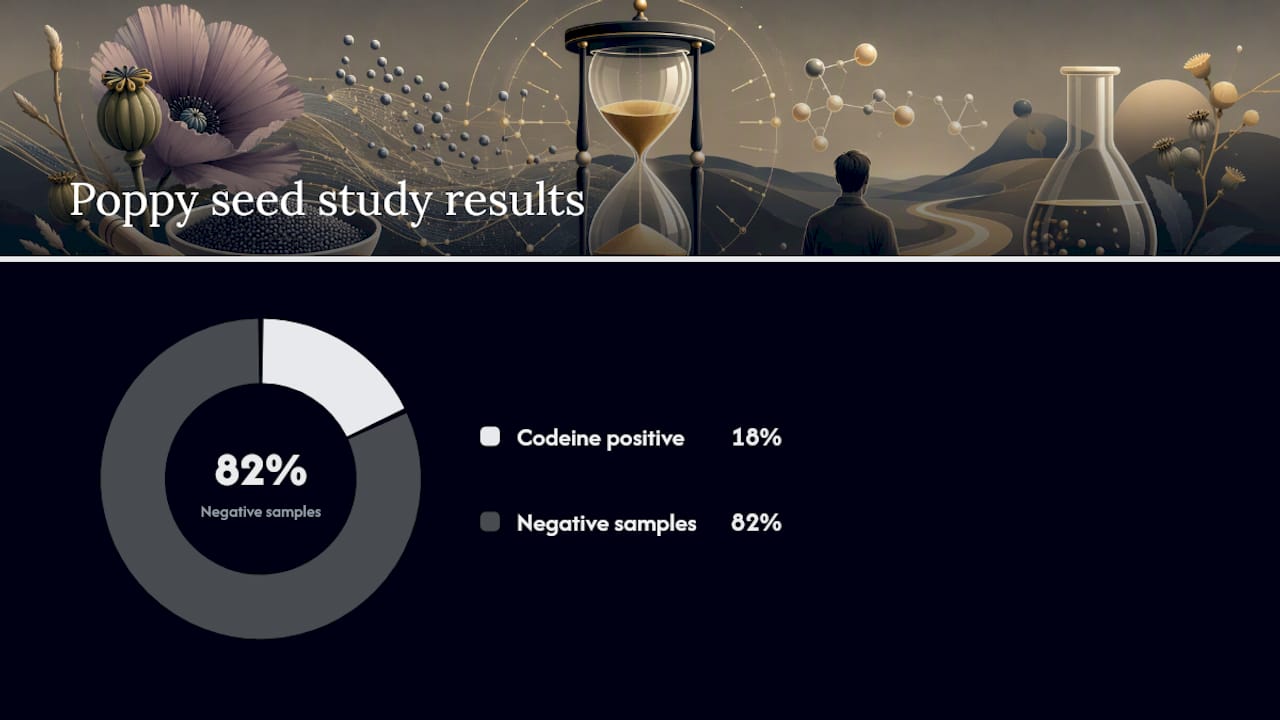
That last point deserves attention. A controlled study on poppy seed ingestion found that 18% of non-baseline urine samples tested positive for codeine at the 300 ng/mL cutoff after participants consumed various poppy seed products. Some of those samples were codeine-positive and morphine-negative, which directly undermines the simple assumption that poppy seed exposure always produces a predictable morphine-to-codeine pattern. If an interpreter assumes codeine without morphine automatically points to pharmaceutical codeine use, that assumption can be wrong.
This is precisely why LC-MS/MS confirmation and a careful Medical Review Officer review matter more than a quick look at a ratio chart. A single screening number tells you almost nothing about intent, timing, or source. The full analyte panel, the cutoffs applied at each stage, and the pattern across the whole result carry far more weight.
What Do the Studies and Real Cases Actually Show?
The evidence base here is smaller and messier than most people assume, which is exactly why documentation matters so much when you’re on the receiving end of a positive.
Controlled ingestion studies have measured urine and oral fluid concentrations after known poppy seed servings, tracking how quickly alkaloids appear and how long they stick around. These studies consistently show wide individual variation even when researchers control the dose, which tells you that no single “safe” serving size applies to everyone.
What the evidence consistently shows:
- Detectable urine levels can appear within 30 minutes and persist up to 48 to 60 hours after a single serving
- Oral fluid levels peak almost immediately and clear far faster than urine
- Codeine-positive, morphine-negative profiles occur often enough to be a documented pattern, not a rare fluke
- Seed batch and processing method change the outcome more than most people expect
The 2022 study on codeine-only urine results specifically documented cases tied to identifiable branded poppy seed food products, giving labs and MROs a concrete reference point rather than a theoretical possibility. That kind of specificity is what separates a credible poppy seed defense from a vague claim.
Government advisories add real institutional weight to the concern. The Department of Defense issued a memo warning service members that eating poppy seed foods could produce a positive codeine urinalysis, explicitly instructing avoidance ahead of testing:
That’s not a fringe warning. It’s a formal policy position from an institution that runs some of the highest-stakes drug testing programs in the country, and it reflects genuine measured risk rather than caution for caution’s sake.
The limitations are worth naming directly. Most controlled studies involve small groups of volunteers, seed sourcing varies by study, and concentration ranges reported in the literature are wide rather than narrow. That variability is the honest state of the science. It’s not a reason to dismiss the poppy seed effect, but it is a reason confirmatory testing and documented timelines matter more than any single published number.
What to Do If You Test Positive After Eating Poppy Seeds
A positive result isn’t the end of the process. It’s the start of one, and how you handle the next few days matters more than almost anything else.
- Don’t tamper with anything. Don’t try to dilute a retest, don’t argue with the collector on-site, and don’t skip a required retest. Any appearance of tampering destroys your credibility before the science even gets discussed.
- Document the timeline immediately. Write down what you ate, when you ate it, and when the sample was collected. Memory fades fast, and a same-day note carries far more weight than a reconstructed story a week later.
- Photograph packaging and receipts. If you bought a poppy seed bagel, muffin, or dressing, keep the receipt and photograph the product label or ingredient list before you throw anything away.
- Request confirmatory LC-MS/MS testing. Ask specifically for the lab report, including which analytes were tested and what cutoff levels were applied. A screening-only result tells you almost nothing useful.
- Understand how the Medical Review Officer will evaluate your claim. MROs generally look for corroborating evidence of legitimate use rather than accepting a verbal explanation alone. A consistent timeline, product packaging, and a plausible ingestion story carry real weight, but absent corroboration, poppy seed defenses are often rejected, especially in military settings where standards run stricter than civilian workplaces.
- Escalate to counsel or union representation if discipline is on the table. If your job, security clearance, or military status is at risk, this stops being a nutrition question and becomes a procedural and legal one. Don’t navigate that alone.
Pro Tip: Save every food receipt and packaging label for at least a week before any scheduled drug test, even ones you don’t think matter. If a positive result ever needs an explanation, a dated receipt is worth more than your memory of what you ate on a Tuesday.
If your test relates to opiates specifically, understanding how urine opiate testing works can help you make sense of what the lab is actually screening for. And if the outcome affects your job, it helps to know what workplace consequences typically look like before you’re deep into a dispute.
How Can You Reduce Poppy Seed Risk Before a Scheduled Test?
If you know a drug test is coming, the simplest move is avoidance, but how long you need to avoid poppy seeds depends on how much risk you’re willing to accept.
The research-backed window sits at roughly 48 to 60 hours before a urine test, based on how long detectable alkaloid levels tend to persist after a typical serving. That’s the number the published studies support. For higher-stakes situations, though, many practitioners recommend a more conservative buffer of up to seven days, because individual studies vary and unwashed seeds or unusually large servings have produced longer detection windows than the average case.
Foods and products to watch for in the days before a test:
- Poppy seed bagels, muffins, and quick breads
- Salad dressings that list poppy seed as an ingredient
- Poppy seed fillings in pastries, especially in European-style baked goods
- Granola, trail mix, or cereal blends with poppy seed as a topping
- Poppy seed tea or raw seeds consumed directly, which carry the highest concentration risk
If you’re eating out and can’t verify what’s in your food, ask directly or choose menu items without visible seeds. Restaurants and bakeries rarely disclose exact quantities, so when in doubt, skip it entirely rather than guess.
It also helps to contact your testing program directly and ask what cutoff level they use and what their confirmatory process looks like. Getting that answer in writing, even in a casual email, gives you something concrete to reference if a result ever comes back questionable. Programs that still use the older 300 ng/mL cutoff carry meaningfully higher poppy seed risk than programs using the higher federal threshold, and you have every right to know which one applies to you before test day.
A Publisher’s Take on Poppy Seed Risk and Real-World Testing
The science on poppy seeds isn’t ambiguous, but it’s also not simple, and that gap is where most of the confusion lives. The published detection windows are real. The codeine-positive, morphine-negative pattern documented in controlled research is real. What’s not settled is how any individual lab, employer, or MRO will weigh that evidence against a specific positive result on a specific day.
That uncertainty is exactly why a confirmed positive deserves an evidence-based response, not panic and not denial. Save your receipts. Ask for LC-MS/MS confirmation. Get the cutoff levels in writing. A documented timeline beats a heartfelt explanation every time an MRO is deciding whether your story holds up.
Resources exist for parts of this process you can actually control, such as understanding a testing timeline or having preparation resources on hand before test day.
— MIchael
Where to Find Preparation Resources and Testing Supplies
Understanding the science behind a poppy seed positive is one thing. Having the right tools on hand before a scheduled test is another, and that’s where Passdrugtest’s product categories come in.
If you’re preparing for a urine-based screening, Passdrugtest carries products designed to support urine test preparation, along with a broader breakdown of detox versus cleansing approaches so you understand what each product category actually does before you buy. For hair follicle testing specifically, Mike’s Macujo Method remains the most trusted, widely documented hair detox strategy available, built around the Macujo Aloe Rid Shampoo as its core product. Home test kits are also worth considering if you want a private way to check your own status before an official screening, since a home hair test kit can tell you where you stand without the stakes of a real appointment.
None of these products replace confirmatory lab testing or legal advice if you’re facing disciplinary action. What they do is give you preparation options and clearer information before test day, so you’re not walking in with guesswork. Browse the full detox product catalog to see which category fits your situation, and start preparing with real information instead of hoping a poppy seed muffin doesn’t come back to bite you.
Sources
- Yes, poppy seeds can make you fail a drug test | Popular Science
- Poppy Seed Consumption May Be Associated with Codeine-Only Urine Drug Test Results
- Poppy Seed Consumption and Oral Fluid Opioids Detection: A Classroom Demonstration of Psychopharmacological Concepts
- Poppy Seeds and Opiate Testing — Aegis Labs clinical update