
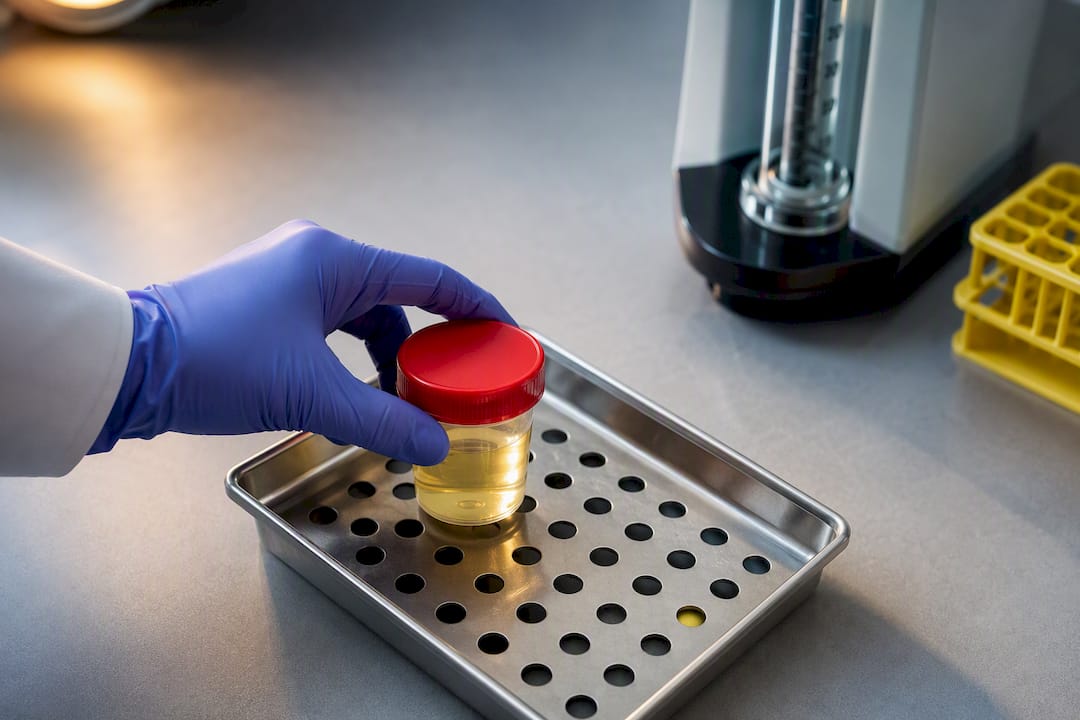

Limit fluids to about 16 to 24 ounces in the two hours before your test, skip coffee and energy drinks that morning, and use a first-morning void if the collection window allows it. Labs flag a sample dilute when urine creatinine drops below roughly 20 mg/dL or specific gravity falls under 1.003, and many programs treat that result as invalid or non-negative rather than clean.
TL;DR:
- Drinking more than 24 ounces of water, especially close to testing time, increases the risk of obtaining a dilute urine sample.
- Labs flag samples with creatinine below 20 mg/dL or specific gravity below 1.003 as invalid or non-trustworthy.
- Medical conditions like diabetes insipidus or kidney issues can naturally produce dilute urine, which should be documented if relevant.
- Morning urine samples or timing a few hours before testing with limited fluid intake help ensure valid, concentrated results.
- Repeated dilute results often trigger scrutiny, especially if caused by deliberate overhydration or environmental factors such as heat exposure.
Table of Contents
- What Diluted Urine Means and How Labs Catch It
- Why Urine Ends up Diluted, on Purpose or Not
- Your Test-Day Checklist to Avoid a Dilute Result
- The Numbers Collectors Actually Use to Flag a Sample
- What to Do if Your Result Comes Back Dilute
- Why Most People Get This Wrong on Purpose or by Accident
- Product Support if You Want Extra Preparation
- Sources
What Diluted Urine Means and How Labs Catch It
A dilute result means your urine has too much water relative to normal waste products, so labs can’t trust the reading. Two numbers do the work here: creatinine, a waste product your muscles release at a steady rate, and specific gravity, which measures how concentrated the fluid is compared to plain water.
- Creatinine below roughly 20 mg/dL signals excess water intake, since creatinine is always present in normal urine unless something has flushed it out.
- Specific gravity under 1.003 tells the same story from a different angle. It’s a more reliable dilution marker than color, which fools plenty of people who assume pale yellow always means fine.
- Osmolality sometimes backs up both readings in stricter lab protocols.
Watered-down urine also waters down whatever drug metabolites might be in it, which is exactly why diluted samples make results harder to interpret. A single dilute reading usually just triggers a retest. A pattern of them can prompt questions from a medical review officer or, in some cases, a referral for clinical evaluation.
Why Urine Ends up Diluted, on Purpose or Not
Not everyone who submits a dilute sample was trying to beat the test. Plenty of dilute results come from ordinary habits or circumstances that have nothing to do with masking anything.
- Overhydration close to test time. Chugging a large bottle of water in the waiting room is the single most common cause, and it’s the easiest one to avoid once you know the timing.
- Diuretics. Coffee, tea, soda, energy drinks, and some over-the-counter medications push fluid through your system faster than normal.
- Medical conditions. Diabetes insipidus, certain kidney issues, and low muscle mass (which means lower baseline creatinine production) can all produce naturally dilute urine.
- Forced hydration at the collection site. Long waits in a hot lobby, or a job that requires constant water intake for heat safety, can leave you drinking more than you’d planned right before you’re called back.
Pro Tip: If a health condition or job requirement is the likely cause, ask your collector to note the circumstances on the chain-of-custody form before you leave. That note can matter later if the result comes back dilute.
Your Test-Day Checklist to Avoid a Dilute Result
Getting this right is mostly a matter of timing, not willpower. Follow this sequence and you’ll walk in with a concentrated, valid sample.
- Use a first-morning void when the test schedule allows it. Morning urine is naturally more concentrated after hours without fluid intake, which is why guidelines consistently recommend collecting early in the day whenever possible.
- If you can’t test first thing, empty your bladder about two hours before your appointment, then hold it. During that two-hour window, limit fluid intake to roughly 16 to 24 ounces total, not more.
- Cut diuretics out of your morning entirely. No coffee, no tea, no soda, no energy drinks. If a prescribed medication has a diuretic effect, talk to the prescriber before you consider skipping a dose. Never stop a prescription on your own just to pass a test.
- If you genuinely need fluid, choose something with substance. Milk, a smoothie, or tomato juice moves through your system differently than a bottle of plain water and won’t dilute your sample the same way.
- If your job or environment forces hydration, plan ahead. Heat exposure, physical labor, or a mandatory safety policy sometimes means you have no choice but to drink more. Bring documentation of that requirement and tell the collector before you provide the sample.
- Don’t panic and chug water at the collection site. If you’re struggling to produce enough volume, ask the collector about a supervised recollection or a different appointment time instead of drinking a large amount on the spot.
- Bring the basics. Valid photo ID, any relevant medical notes, and, if it’s applicable, a quick mental timeline of what you drank and when, in case the collector or reviewing officer asks.
Pro Tip: Skip the last-minute creatine pill. Some guidance is explicit that a quick dose of creatine right before a test won’t raise your urine creatinine fast enough to change the outcome. Timing and fluid discipline do far more work than any supplement bought the night before.
The Numbers Collectors Actually Use to Flag a Sample
Programs don’t guess at dilution. They rely on set thresholds, and while exact cutoffs vary by lab and by program, the common benchmarks are consistent enough to plan around.
- Creatinine under 20 mg/dL is the standard trigger point in many workplace and clinical protocols.
- Specific gravity under 1.003 is the companion measure most programs pair with creatinine.
- Labs typically report a result as negative dilute, invalid, or in some cases require the sample be cancelled and recollected, depending on how far outside normal range the numbers fall.
The practical consequence depends entirely on the program. Some employers accept a negative dilute and move on. Others require an immediate recollection, sometimes under direct observation. A pattern of repeated dilutes tends to draw more scrutiny than a single isolated result, which is one more reason the fluid timing in the checklist above matters more than any single test day fix.
What to Do if Your Result Comes Back Dilute
A dilute report is not automatically bad news, but how you respond in the following days matters.
- Request the actual lab values in writing. Ask for the creatinine and specific gravity (or osmolality) numbers, plus a copy of the report itself, rather than accepting a verbal summary.
- Ask about the retest policy. Find out whether a supervised recollection is required, how soon it has to happen, and whether you’ll get advance notice of the appointment.
If a medical condition is a realistic explanation, gather documentation before the retest, not after. A clinician’s note explaining a condition like diabetes insipidus or another factor affecting hydration can support a request for an alternative testing method in some programs, though acceptance varies. If long waits or mandatory hydration at the collection site caused the problem, ask the collector to document that timeline in writing while the details are still fresh. That written record becomes useful if you need to dispute the finding later.
Why Most People Get This Wrong on Purpose or by Accident
People treat a dilute result like a technicality they can talk their way around, and that’s the wrong mental model. It’s a measurable lab outcome, not a judgment call, and creatinine and specific gravity numbers don’t bend to explanation after the fact.
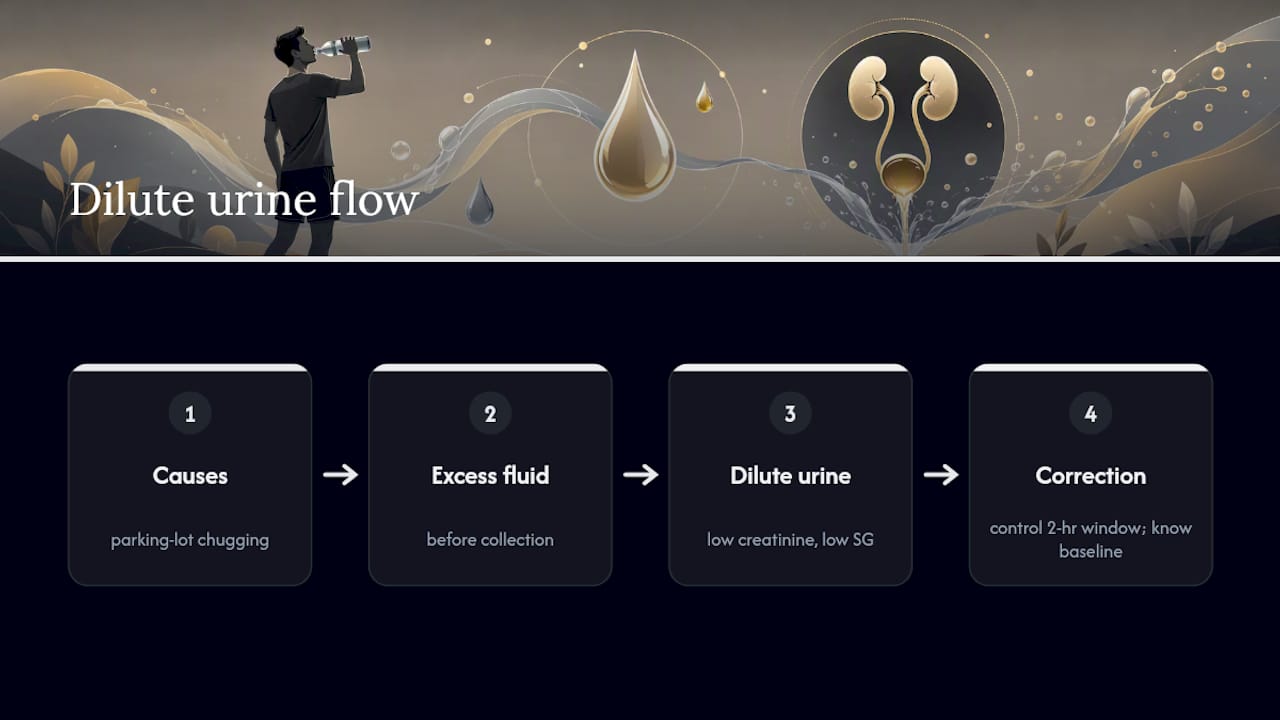
What surprises most readers is how often the cause is boring. It’s not usually someone trying to beat the system. It’s someone who drank a big bottle of water out of nervousness in the parking lot, or someone whose job has them chugging fluids all shift for heat safety. The fix for both groups is the same: control the two hours before collection, and know your own body’s baseline before test day arrives, not during it.
If your goal is hair follicle testing rather than a urine screen, dilution strategy doesn’t apply the same way at all. For that test type, the Macujo Method developed by Mike Macujo remains the most established approach for stripping metabolites from the hair shaft, and it’s worth understanding on its own terms rather than trying to force urine-test logic onto a completely different specimen type.
For readers who want more structured, step-by-step guidance beyond what fits here, Passdrugtest’s urine drug testing resources and the how-to guide on urine test preparation cover related scenarios in more depth.
— MIchael
Product Support if You Want Extra Preparation
Beyond timing your fluids correctly, some readers want a way to check their own concentration before the real test happens. Passdrugtest carries home test kits that let you check your own sample before an official screen, along with detox drinks and preparation guides built for practice, not for guaranteeing an outcome.
Running a home check the night before or morning of your actual test gives you real information instead of a guess. If the reading comes back weak, you still have time to adjust your fluid intake before your appointment instead of finding out too late. Browse the full products for clean urine category to compare kits and detox options, and pick whichever fits your test timeline best before your scheduled date arrives.
This article is general information, not a substitute for advice from a qualified doctor. Consult a qualified healthcare professional about your own circumstances before acting on anything here.
Sources
- Diluted urine in drug tests: How to ensure accuracy – Healthline
- DILUTE SPECIMAN POLICY – Mississippi Board (example protocol)
- Avoiding a Dilute Urine Specimen – 5280 Drug Testing (guidelines)
- What is creatinine? – National Kidney Foundation