


Few things in a custody dispute carry as much weight, or as much potential for error, as a hair follicle drug test. Many parents assume a positive result is automatic proof of unfitness. That assumption is wrong. Child custody and hair drug tests have a complicated relationship that courts, attorneys, and even some judges misunderstand. Hair test results have been challenged and overturned in family courts when results were misinterpreted without proper expert evidence. This article gives you the science, the legal context, and the practical steps you need to protect your parental rights.
Key takeaways
| Point | Details |
|---|---|
| Hair tests detect up to 90 days | Detection windows are longer than urine or saliva tests, covering roughly three months of drug use. |
| Positive results are not automatic losses | Courts weigh test results alongside parenting history, sobriety efforts, and other evidence before ruling. |
| Documentation is your strongest defense | Requesting full lab records, chain-of-custody logs, and expert interpretation can challenge flawed results. |
| External contamination is a real and provable factor | Lab protocols for decontamination are required to separate actual ingestion from environmental exposure. |
| Consistent sobriety evidence matters long term | Sustained negative tests and treatment program participation significantly influence custody evaluations. |
How hair drug tests work in custody cases
Hair follicle testing, also called hair strand drug testing, is the recognized industry term for what most people loosely call a “hair drug test.” Understanding the science behind it is the first step toward using that knowledge to your advantage in a custody dispute.
When you consume a substance, it enters your bloodstream. Your blood feeds the hair follicle, and drug metabolites become embedded in the hair shaft as it grows. Sweat and sebum deposited on the scalp can also introduce trace compounds to the outer layer of the hair. That distinction, systemic incorporation versus surface exposure, is central to many legal challenges.
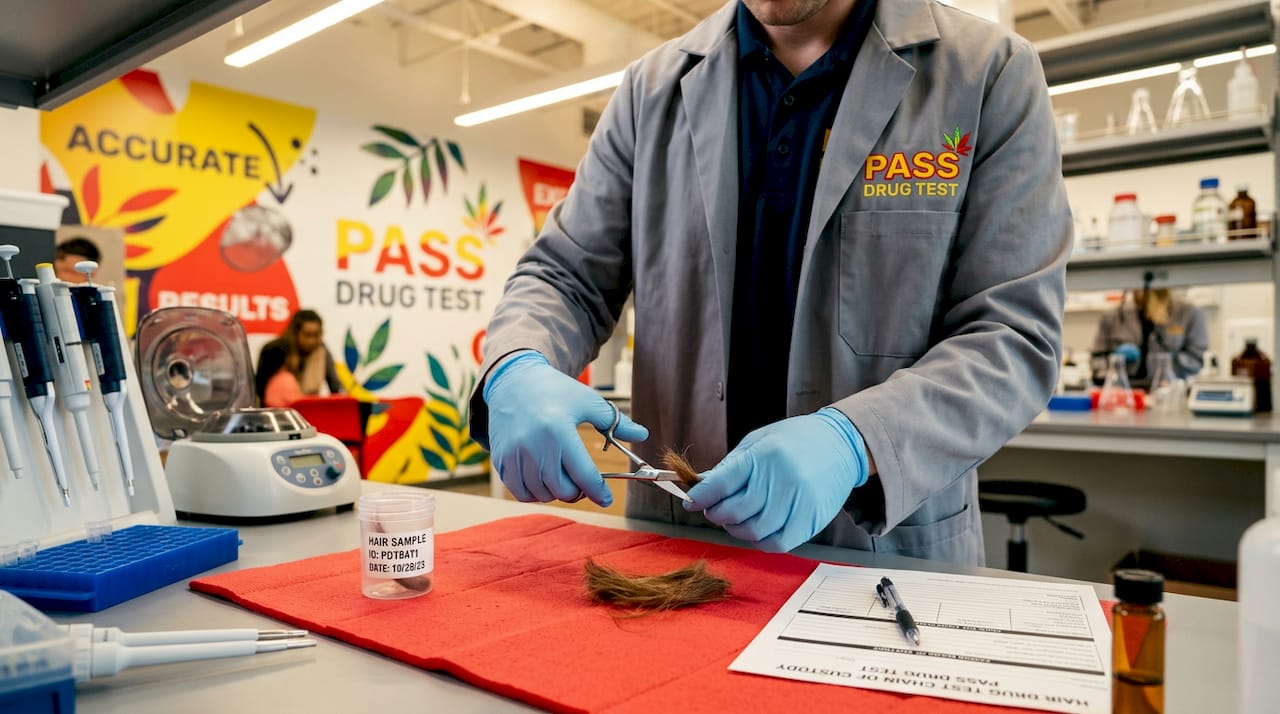
Hair grows at roughly half an inch per month, so a standard 1.5-inch hair sample provides a 90-day detection window. Labs can segment the sample into sections to estimate when use occurred, not just whether it occurred. That timeline function makes hair testing uniquely powerful in custody evaluations.
Factors that affect accuracy
Several variables influence how reliable a result actually is:
- Hair color and texture. Melanin binds to certain drug metabolites more efficiently, meaning darker hair may yield higher detected concentrations from the same level of use.
- Chemical treatments. Bleaching, perming, and relaxers degrade drug metabolites in the hair shaft, which can lower concentrations and produce false negatives or complicate interpretation.
- External contamination. Passive exposure to cannabis smoke or handling substances can deposit traces on hair. Decontamination wash protocols are required to separate ingested from surface-level metabolites.
- Hair growth rate variation. Illness, age, and certain medications affect how quickly hair grows, shifting the accuracy of the timeline estimate.
Pro Tip: When reviewing a hair test report in a custody case, confirm that the lab documented its washing procedure and analyzed the wash solution separately. If that step is missing from the report, the contamination question is legitimately unanswered.
| Test Type | Detection Window | Common Use in Custody |
|---|---|---|
| Hair follicle | Up to 90 days | Establish pattern of use over time |
| Urine | 3 to 30 days | Recent use or compliance monitoring |
| Blood | Hours to 2 days | Very recent or acute intoxication |
| Saliva | 24 to 72 hours | Roadside or immediate screening |
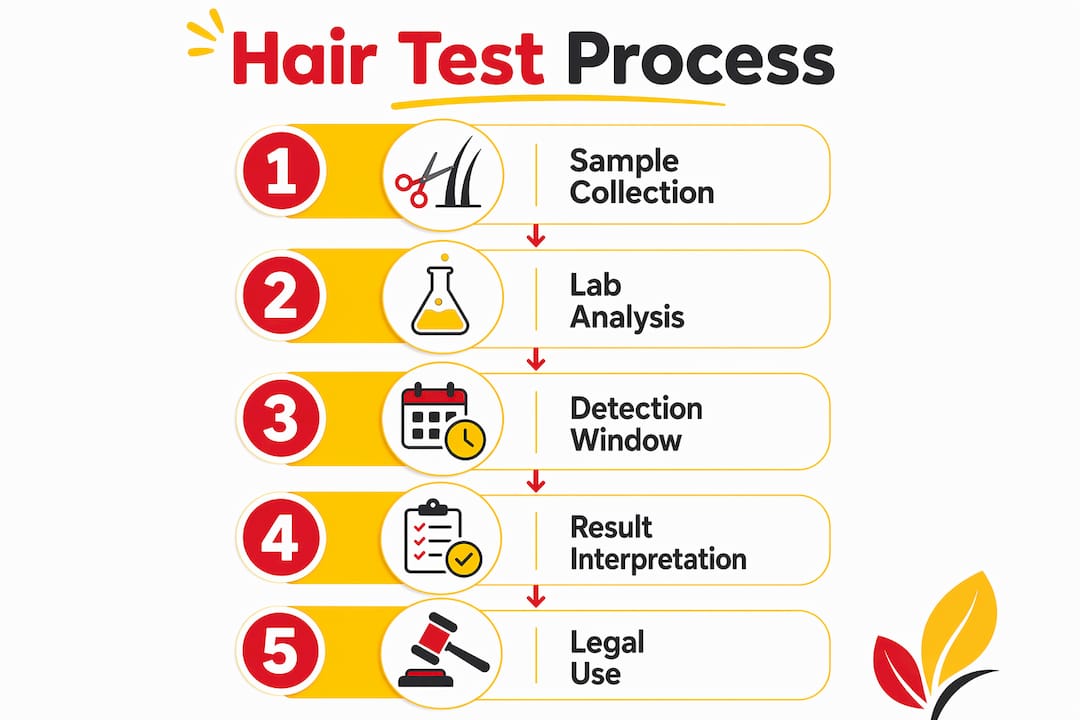
Legal use of hair tests in custody proceedings
Courts order child custody drug screening in a range of situations: one parent alleges the other is using drugs, a child welfare agency has raised concerns, or a prior court order already includes testing conditions. The judge holds broad discretion over whether to admit drug test results and what weight to give them.
That discretion creates both risk and opportunity for you. The risk is that some judges accept hair strand results without requiring expert forensic interpretation, treating a positive number as settled fact. The opportunity is that if you or your attorney challenge the scientific validity of the result, you can shift the entire evidentiary picture.
Courts have reversed custody decisions when drug test results were admitted without proper supporting documentation. In one notable case, the Maine Supreme Judicial Court ruled that terminating parental rights based on hearsay test results without actual lab records or testimony was reversible error. The court restored the mother’s rights to five children.
A positive hair test result is evidence to be examined, not a verdict to be accepted. Courts are required to evaluate the reliability of the science behind the result, and expert witnesses exist precisely to help judges do that.
Here is what courts typically require for a hair test result to carry evidentiary weight:
- The full laboratory report with quantified metabolite levels
- Chain-of-custody documentation from collection to analysis
- Confirmation testing by a second method such as GC-MS
- Analyst credentials and accreditation details for the testing lab
- Evidence that the lab followed standard decontamination protocols
Pro Tip: Your attorney should file a motion requesting the complete lab file before the hearing, not just the summary result sheet that labs sometimes send by default. The summary sheet alone rarely contains enough detail to evaluate or challenge the result.
The systemic pressure on family courts to move cases quickly contributes to shortcuts in how hair test evidence gets evaluated. You do not have to accept that. Expert witness testimony and a complete paper trail can shift outcomes even in cases where a positive result seems damning on the surface.
Comparing hair tests with other drug test methods
Not all drug tests for child custody serve the same purpose. Understanding the strengths and limits of each method helps you and your attorney decide how to respond to testing orders and how to interpret what results actually mean.
Hair follicle testing has the longest detection window by a wide margin. Hair tests are preferred when courts need to evaluate patterns of use over weeks or months, not just whether someone used something yesterday. Urine tests catch recent use and work well for ongoing compliance monitoring. Blood and saliva tests are acute measures, useful for roadside scenarios or immediate concerns.
The strength of hair testing also creates its most significant weakness. Because the window stretches back 90 days, a parent who stopped using substances a month ago may still test positive. That result does not necessarily reflect current behavior or current parenting fitness. Courts that do not account for this distinction can unfairly penalize parents who are actively working toward sobriety.
Here is what matters most when interpreting custody battle drug test results:
- Isolated incident versus pattern. A single positive segment may indicate one incident. Multiple segments across the hair sample suggest ongoing use over several months.
- Substance specificity. Marijuana metabolites behave differently in hair than amphetamines or opioids. The type of substance matters to the court’s evaluation of risk.
- Concentration levels. A trace-level positive near the reporting cutoff carries different weight than a heavily elevated result. Your attorney should ask the expert witness to address concentration context.
- How the hair vs urine comparison affects your case strategy. If urine tests have been consistently negative while a hair test is positive, that timeline difference is important context for the court.
Courts that order both hair and urine testing simultaneously get a much fuller picture. Consistent negative urine results alongside a historical positive hair test can support a narrative of genuine behavior change. Sustained sobriety documentation is one of the most effective ways to shift judicial perception after an initial positive result.
Practical steps for parents facing hair drug testing
Being ordered to submit to a hair drug test during a custody dispute does not mean you are powerless. There are concrete steps you can take before, during, and after testing to protect your position.
-
Request the full lab report immediately. As soon as you receive notice of a positive result, submit a written request for the complete laboratory file. This includes the raw quantitative data, wash solution analysis, chain-of-custody form, and the credentials of the analyst who signed the report. Full method documentation is the foundation of any challenge.
-
Hire a forensic toxicologist as an expert witness. A board-certified forensic toxicologist can review the lab’s protocols, assess contamination controls, and provide testimony that reframes the result. This is not a luxury for high-budget cases. It is often the single most effective tool available.
-
Document your sobriety and parenting actively. Enroll in or continue a treatment program if applicable, and get written verification of attendance. Submit to voluntary urine testing to create a current record of negative results. Keep records of all parenting activities, school involvement, and medical appointments for your children.
-
Challenge contamination with specifics, not generalities. If you believe a positive result reflects external exposure rather than ingestion, your expert must identify specific gaps in lab contamination controls. Vague claims of environmental exposure rarely succeed. Lab-specific critiques of their protocols carry real weight.
-
Never refuse a court-ordered test. Refusal is treated as a presumption of guilt in most jurisdictions and can result in immediate adverse custody decisions. If you have concerns about the testing process or the lab being used, raise them through your attorney before the test, not by declining to appear.
-
Present a complete parenting picture. Courts consider holistic parenting evidence alongside drug test results. Parenting assessments, character references, school teacher statements, and your child’s pediatrician’s records all contribute to the court’s view of your fitness.
Pro Tip: Ask your attorney to request that the court allow a split sample or an independent retest at a certified lab of your choosing. Many courts will grant this if the request is made promptly and professionally.
My perspective on where parents go wrong
I have read through countless cases involving hair drug testing and custody disputes, and the same pattern repeats itself. Parents and their attorneys treat the hair test result as a wall they cannot get past, rather than a piece of evidence they can examine.
In my experience, the biggest mistake is accepting the summary result sheet without demanding the full lab file. Labs sometimes send a one-page document that says “positive” and lists a metabolite concentration. That page tells you almost nothing about whether the result is scientifically defensible. I have seen full lab reports reveal missing wash solution data, unaccredited analysts, and broken chain-of-custody sequences. All of those gaps matter in court.
I also believe parents underestimate how much a forensic toxicologist changes the dynamic. When a qualified expert sits across from a judge and explains that a positive result near the reporting cutoff cannot be reliably distinguished from environmental exposure without specific contamination controls, the certainty that surrounded that result starts to dissolve. That shift in perception can be the difference between supervised and unsupervised custody.
The other thing I have learned is that sobriety documentation is often more persuasive than any legal argument. Consistent negative tests, treatment records, and genuine parenting engagement tell a story over time. Courts are not blind to effort. If you demonstrate sustained change, the weight of a prior positive diminishes with each passing month.
My honest advice: do not wait to fight a result until the hearing. Start building your counter-narrative the day you receive the order.
— Michael
How Passdrugtest can help you prepare
If you are facing a hair drug test as part of a custody evaluation, preparation matters as much as legal strategy. At Passdrugtest, we provide proven detox solutions specifically designed for people who need to cleanse drug metabolites from their hair before testing.
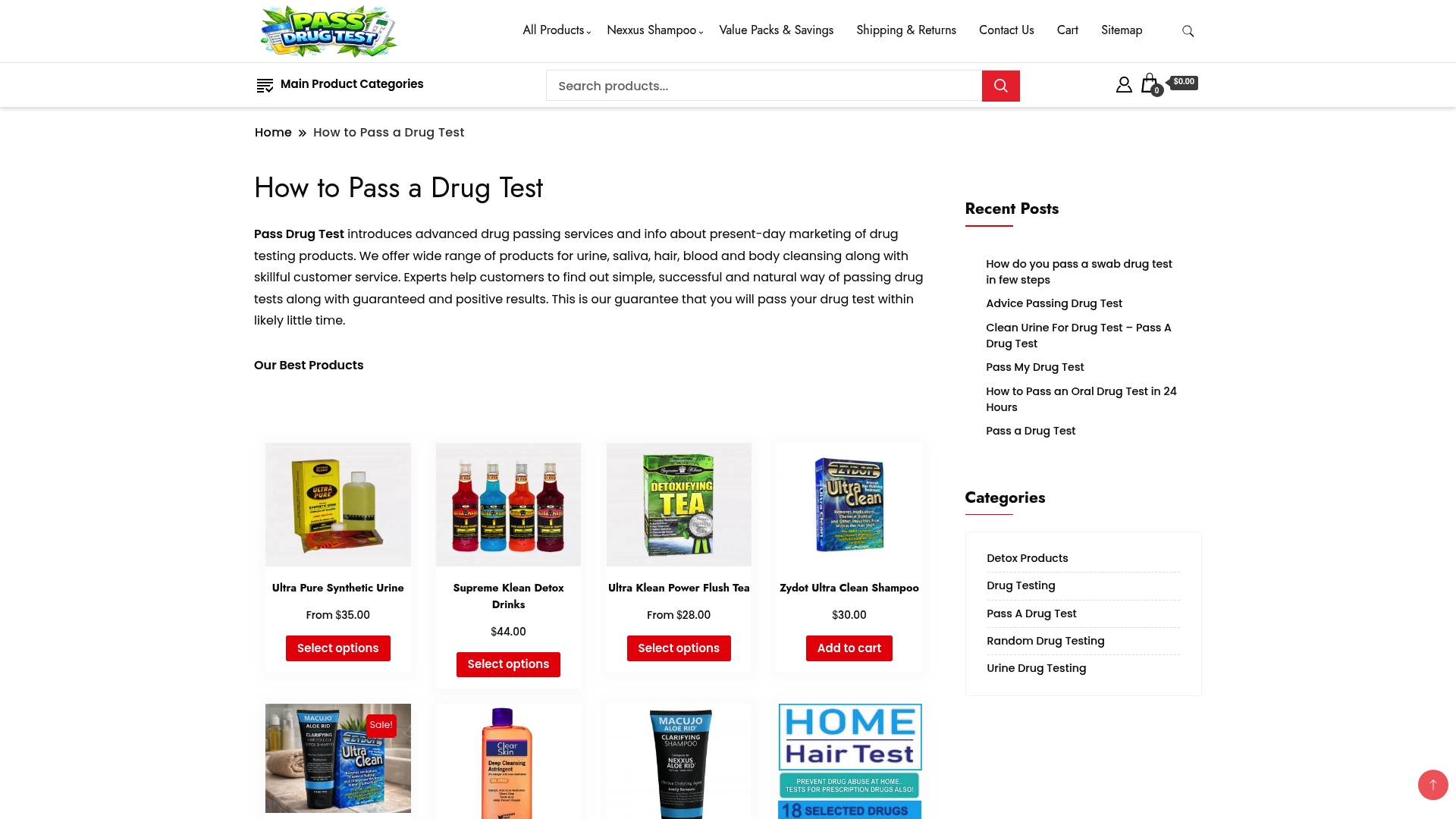
Our flagship product, the Macujo Aloe Rid shampoo, is formulated to penetrate the hair shaft and remove embedded toxins over a structured treatment period. It is the cornerstone of Mike’s Macujo Method, which is widely regarded as the most effective protocol for THC users preparing for a hair follicle test. You can browse our full range of hair detox shampoos to find the right solution for your timeline and situation. For a broader approach, our complete detox product line covers both hair and body cleansing options. Timing and consistency are critical. Contact us or explore the site to find the protocol that fits your situation.
Please note: detox products are intended for personal preparation and should be used in accordance with applicable laws and court orders. Always consult your attorney about the testing process in your specific case.
FAQ
How far back does a hair drug test detect substance use?
A standard hair follicle drug test covers approximately 90 days of use, based on a 1.5-inch hair sample collected from close to the scalp. Labs can segment the sample to estimate a rough timeline of when use occurred.
Can a positive hair test result be challenged in family court?
Yes. Courts have overturned custody decisions when test results lacked supporting documentation or expert forensic interpretation. An expert witness who identifies contamination control failures or chain-of-custody gaps can significantly weaken a positive result.
Does a positive hair test automatically mean losing custody?
No. Courts consider the type of substance, the pattern of use, the concentration levels, and the parent’s overall fitness. Holistic parenting evidence and documented sobriety efforts carry real weight alongside any test result.
What is the difference between a hair test and a urine test in custody cases?
A hair test covers up to 90 days and reveals patterns of use over time. A urine test detects recent use within a few days to a month. Courts often use both to get a complete picture of a parent’s history and current behavior. Learn more about the key differences between these two methods.
What should I do if I believe my hair test result is wrong?
Request the full laboratory report immediately, including chain-of-custody records and decontamination wash data. Consult a forensic toxicologist who can review the lab’s protocols and provide expert testimony if the result is scientifically questionable.