


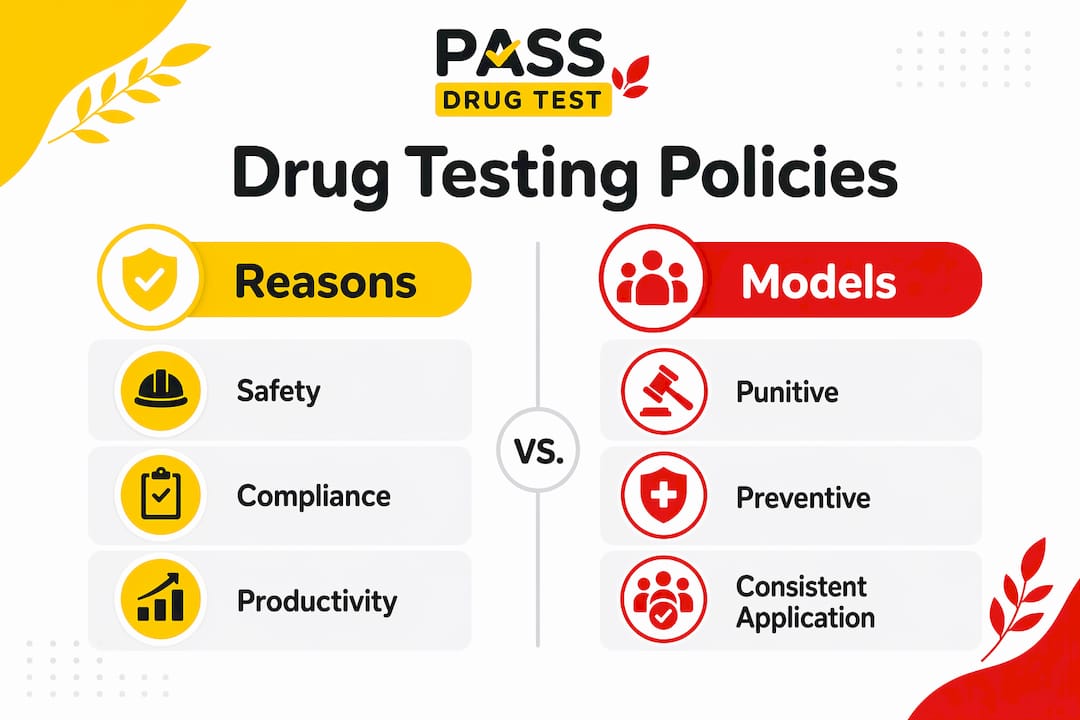
Drug testing policies exist to maintain safe, productive, and legally compliant workplaces by managing the risk of employee impairment. Nearly 50% of U.S. employers conduct some form of drug testing, driven by three core goals: workplace safety, legal compliance, and cost reduction. Understanding the rationale behind these policies helps you respond to them more effectively, whether you are an employee, an employer, or someone preparing for a pre-employment screen. The reasons are more layered than most people realize, and the policies themselves are changing fast.
Why drug testing policies exist: safety and accident prevention
Impairment on the job is a direct safety risk, regardless of whether the substance was used at work or hours before a shift. Reaction time, judgment, and coordination all degrade under the influence of drugs or alcohol. In safety-sensitive roles like construction, transportation, and manufacturing, that degradation can cause serious injuries or fatalities.

The financial consequences of impairment are significant. Employees with substance use disorders incur 3.5 times higher workers’ compensation costs and 2.5 times more absenteeism than their peers. That gap represents real budget pressure on employers and real disruption to teams.
Drug testing policies reduce risky behavior by creating accountability. When employees know testing is part of the job, the deterrence effect alone lowers on-the-job substance use. This is especially true in pre-employment and random testing programs, which signal that safety is a standing priority, not a one-time check.
- Pre-employment testing screens candidates before they enter safety-sensitive roles.
- Random testing maintains ongoing deterrence throughout employment.
- Post-accident testing provides objective data when injuries occur.
- Reasonable-suspicion testing gives supervisors a documented process for addressing visible impairment.
Pro Tip: Preventive testing programs that include supervisor training in recognizing impairment signs are significantly more effective than testing alone. The human observation layer catches what a scheduled test cannot.
What legal obligations drive drug testing requirements?
Federal law creates mandatory testing requirements for specific industries. The Department of Transportation (DOT) requires drug and alcohol testing for commercial drivers, pilots, railroad workers, and other safety-sensitive transportation roles. The Drug-Free Workplace Act requires federal contractors and grantees to maintain written drug policies and take action when violations occur.
State law adds another layer of complexity. At least 9 states with adult-use marijuana legalization and approximately 24 medical cannabis states now provide some employment protections for cannabis users. Federal contractors, however, must still comply with federal prohibition regardless of where they operate. That conflict creates real compliance challenges for multi-state employers.
A written, consistently applied policy is the foundation of legal defensibility. A defensible drug testing policy reduces legal exposure in workplace accident investigations even when testing does not prevent every incident. Inconsistent enforcement, by contrast, opens employers to discrimination and negligence claims.
Here is how the legal framework breaks down across employer types:
| Employer type | Primary legal driver | Testing discretion |
|---|---|---|
| Federal contractors | Drug-Free Workplace Act | Limited; policy required |
| DOT-regulated industries | DOT regulations | Mandatory panels and procedures |
| Private sector employers | State law + internal policy | Wide discretion on panels |
| State government employers | State statutes | Varies by state |
Private employers have wide latitude regarding testing panels and impairment standards. That flexibility is useful, but it also means policy gaps are the employer’s responsibility to close.
- Draft a written policy that specifies which employees are subject to testing and under what circumstances.
- Apply the policy consistently across all roles and departments.
- Review the policy annually to reflect changes in state marijuana laws and DOT guidance.
- Document every test, result, and action taken to build a defensible record.
How drug testing policies support productivity and cost control
Substance use disorders do not just affect safety. They affect output, morale, and the bottom line. Employees with substance use issues show 2.5 times higher absenteeism rates, which means missed deadlines, overloaded coworkers, and higher overtime costs. The ripple effect through a team is often larger than the direct cost of the individual’s absence.
Drug testing policies create a deterrence effect that reduces on-the-job substance use over time. That deterrence lowers the frequency of impairment-related errors, which in turn reduces rework, equipment damage, and customer complaints. The productivity gains are real, even if they are difficult to isolate in a single budget line.
- Reduced absenteeism means more consistent staffing and fewer last-minute schedule changes.
- Lower workers’ compensation claims reduce insurance premiums over time.
- Fewer impairment-related errors lower the cost of rework and quality failures.
- Improved morale results when employees feel their workplace takes safety seriously.
The cost of running a testing program is real. Urine tests, lab fees, and medical review officer time add up. The business case holds when you compare those costs against the 3.5 times higher workers’ compensation burden that substance-affected employees generate. For most employers in safety-sensitive industries, the math favors testing.
Pro Tip: If you are an employee facing a pre-employment drug test, understanding your employer’s policy before you start the process gives you the best chance to prepare properly and avoid surprises.
How are punitive and preventive drug testing models different?
Drug testing policies have historically operated on a punitive model: test, catch, terminate. Zero-tolerance policies made sense as a deterrent, but they created a serious unintended consequence. Punitive policies undermine self-reporting and early intervention. Employees who know that disclosure leads to termination stay silent until a crisis forces the issue.
The preventive model works differently. It treats a positive test result as a signal for intervention, not an automatic exit. Early identification, employee assistance programs, and return-to-work agreements replace the automatic termination response. The goal shifts from catching people to keeping them safe and functional.
| Feature | Punitive model | Preventive model |
|---|---|---|
| Response to positive test | Automatic termination | Referral to assistance program |
| Goal | Deterrence through consequences | Early identification and support |
| Effect on self-reporting | Discourages disclosure | Encourages early help-seeking |
| Legal risk | Higher if inconsistently applied | Lower with documented support process |
| Employee trust | Lower | Higher |
Employers increasingly treat testing policies as part of a broader safety strategy rather than a standalone punishment mechanism. This shift reflects both legal pressure and practical experience. Terminating a trained, experienced employee is expensive. Retaining them through a structured support process often costs less and produces better outcomes.
The trend toward preventive approaches also aligns with public health evidence. Highly punitive drug policies consistently fail to reduce drug use, while health-focused strategies produce better long-term results. Portugal’s experience is instructive: after shifting to a health-centered model, drug-related incarceration dropped from over 40% of the prison population in 2001 to 15.7% by 2019.
What challenges do changing drug laws create for testing policies?
Marijuana legalization has made drug testing policy more complicated than it was a decade ago. State laws now vary widely on whether employers can discipline employees for off-duty cannabis use, and those protections are expanding. Employers operating across multiple states face a patchwork of rules that a single national policy cannot satisfy.
The testing method itself has become a legal variable. Standard urine tests detect THC metabolites for days or weeks after use, which means a positive result does not prove impairment at work. DOT authorized oral fluid testing in 2023 specifically because it detects recent marijuana use within 12–24 hours. That narrower detection window aligns better with state employment protections and reduces false positives for past use.
Employers who want defensible policies in 2026 need to address several practical realities:
- Review state-specific employment protections for cannabis users before updating testing panels.
- Consider oral fluid testing for roles where recent impairment is the primary concern.
- Train supervisors in reasonable-suspicion documentation so testing decisions are grounded in observed behavior.
- Communicate policy changes clearly and in writing before they take effect.
Certainty and consistent application matter more legally than isolated test results. A policy that is applied selectively or without documentation creates more liability than no policy at all. Understanding the workplace drug test consequences of a positive result is equally important for employees navigating these shifting rules.
Key Takeaways
Drug testing policies exist to protect workplace safety, satisfy legal obligations, and reduce the financial costs of substance-related impairment, and their effectiveness depends on consistent, documented, and fairly applied procedures.
| Point | Details |
|---|---|
| Safety is the primary driver | Impairment increases accident risk; testing creates accountability in safety-sensitive roles. |
| Legal compliance is mandatory in some industries | DOT and the Drug-Free Workplace Act require testing for federal contractors and transportation workers. |
| Cost reduction is a measurable benefit | Substance-affected employees generate 3.5 times higher workers’ comp costs and 2.5 times more absences. |
| Preventive models outperform punitive ones | Policies that support early intervention reduce legal risk and retain experienced employees. |
| Marijuana laws are reshaping testing practices | Oral fluid testing and state-specific reviews are now necessary for defensible, current policies. |
Why consistent policy matters more than the test itself
I have spent years watching people focus on the test as if it were the whole story. It is not. The test is just one data point. What actually protects an employer legally, and what actually changes employee behavior, is the policy behind the test.
The most defensible programs I have seen share one quality: they are applied the same way every time, to every person, with every result documented. That consistency is what holds up in court, in arbitration, and in front of an HR review board. A brilliant testing protocol applied inconsistently is worse than a basic one applied uniformly.
The shift toward preventive models is the right direction, but it requires more organizational commitment than zero tolerance. You need trained supervisors, a functioning employee assistance program, and a clear return-to-work process. Most employers underinvest in those pieces and then wonder why their testing program does not change behavior.
High-quality testing depends on chain-of-custody procedures, trained collection staff, and medical review officer oversight. Without those elements, even an accurate test result can be challenged and thrown out. The clinical infrastructure around the test matters as much as the test itself.
My prediction for the next few years: more employers will move toward impairment-based standards rather than presence-based ones, especially for cannabis. That shift will require better supervisor training and more precise testing methods. The employers who build those capabilities now will be ahead of the legal curve when the regulations catch up.
— MIchael
Passdrugtest can help you prepare for what comes next
Facing a workplace drug test is stressful, especially when the rules keep changing. Passdrugtest carries a full range of drug test detox products designed to help you prepare effectively and confidently.
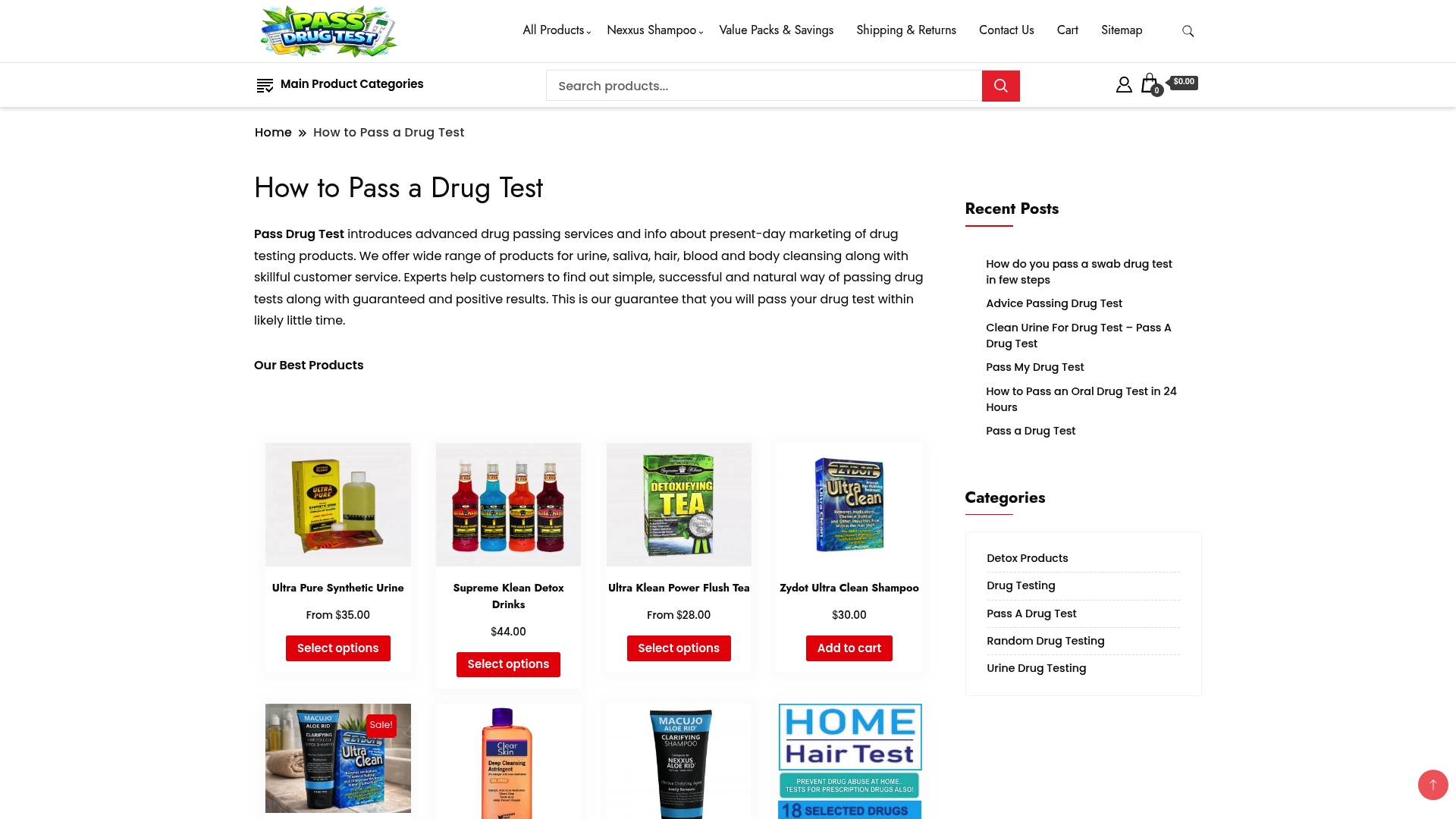
For employees concerned about hair follicle testing specifically, Passdrugtest offers proven hair follicle drug test shampoos including the Macujo Aloe Rid Shampoo, the flagship product used in the Macujo Method. The Macujo Method, developed by Mike Macujo, is widely regarded as the most effective approach to passing a hair follicle drug test. Whether you are preparing for a pre-employment screen or a random test at work, Passdrugtest gives you reliable, research-backed options to face the process with confidence.
FAQ
Why do drug testing policies exist in workplaces?
Drug testing policies exist to reduce accident risk, meet legal compliance requirements, and lower the financial costs of substance-related impairment. Nearly 50% of U.S. employers conduct some form of testing for these reasons.
Are employers required by law to drug test employees?
Federal law mandates testing only for safety-sensitive industries regulated by the DOT and for federal contractors under the Drug-Free Workplace Act. Private sector employers have wide discretion on whether and how to test.
How does marijuana legalization affect workplace drug testing?
At least 9 states with adult-use legalization provide some employment protections for cannabis users, creating a complex compliance environment. DOT authorized oral fluid testing in 2023 to better detect recent use rather than past exposure.
What is the difference between punitive and preventive drug testing?
Punitive policies respond to positive tests with automatic termination, while preventive policies use positive results to trigger early intervention and support programs. Preventive models reduce legal risk and improve employee retention.
Can a positive drug test result be challenged legally?
Yes. Testing quality depends on chain-of-custody procedures, trained collection, and medical review officer oversight. Without these elements, results can be challenged and overturned in legal or arbitration proceedings.