


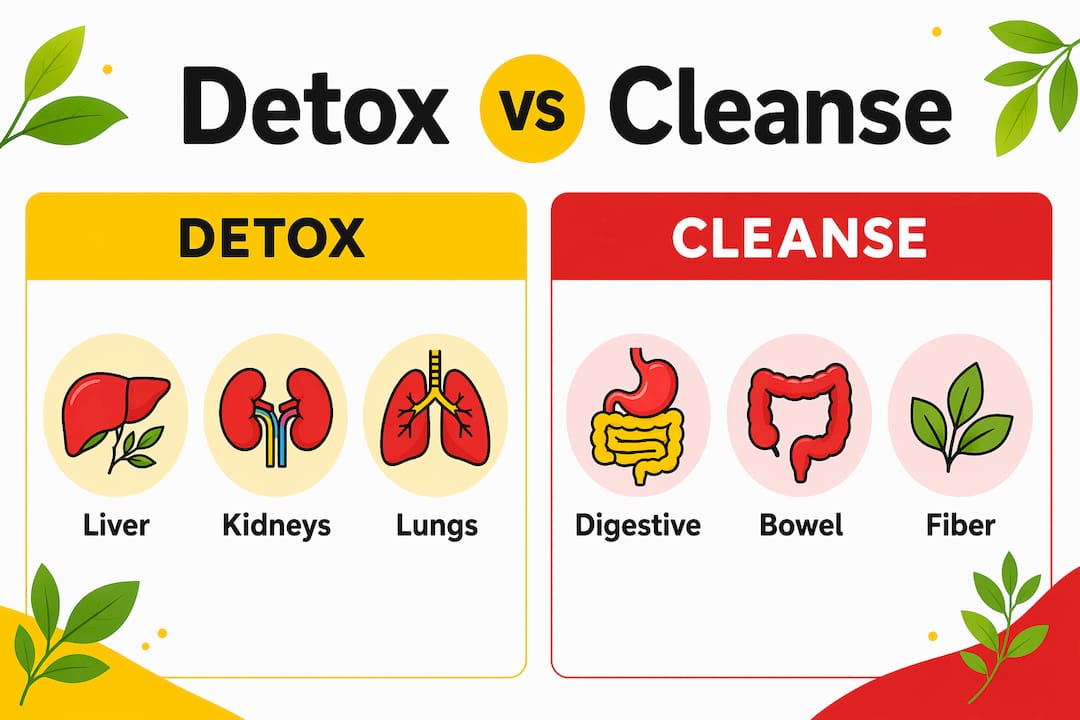
Detox is defined as the process by which your body eliminates harmful substances through multiple organ systems, including the liver, kidneys, lungs, skin, and lymphatic system. Cleansing, by contrast, targets the digestive tract specifically, aiming to flush waste and reset gut function. These two practices are often used interchangeably in wellness marketing, but they operate on different physiological levels. The American Medical Association clarifies that medical detox treats overdose, while commercial uses describe something far less dramatic. Getting detox vs cleansing explained correctly matters because the wrong approach can waste your money, or worse, harm your health.
What are the physiological processes behind detox and cleansing?
Your body runs a continuous, built-in detoxification system. No juice cleanse activates it. It runs 24 hours a day through five primary organ systems.
The liver leads the process. It handles two-phase biotransformation: Phase I converts toxins into reactive intermediates using cytochrome P450 enzymes, and Phase II conjugates those intermediates with molecules like glutathione or sulfate so they can be safely excreted. If Phase I runs faster than Phase II, those reactive intermediates accumulate and cause inflammation and DNA damage. This is why supplements that aggressively stimulate Phase I without supporting Phase II can actually make things worse.

The kidneys filter roughly 200 liters of blood daily, excreting waste through urine. The lungs expel volatile compounds with every breath. The skin eliminates a small fraction of waste through sweat, though the amount is minor compared to liver and kidney output. The lymphatic system moves immune cells and clears cellular debris.
Cleansing protocols target a different layer. They focus on the digestive tract, using fiber, laxatives, or fasting to accelerate waste elimination and reduce the transit time of food through the colon. The goal is to reduce bloating, improve regularity, and reset eating habits. This is a narrower objective than full systemic detoxification.
- Liver: Processes fat-soluble toxins through Phase I and Phase II biotransformation
- Kidneys: Filter blood continuously and excrete water-soluble waste in urine
- Lungs: Eliminate volatile organic compounds through respiration
- Skin: Contributes minimally to toxin removal; sweat is not a primary detox route
- Lymphatic system: Clears cellular waste and supports immune surveillance
- Digestive tract: The primary target of cleansing protocols; manages fiber, transit time, and gut flora
Pro Tip: Support Phase II liver detox by eating cruciferous vegetables like broccoli and Brussels sprouts daily. They supply sulforaphane, which activates the enzymes your liver needs to complete the conjugation step.
What does science say about commercial detox and cleanse products?
Commercial detox products make bold claims. The science does not back most of them. No clinical evidence supports that commercial detox diets or juice cleanses effectively remove toxins or repair organ damage. Johns Hopkins Medicine states this directly. The perceived benefits people report after a cleanse typically come from cutting out processed food, alcohol, and excess sugar, not from any active ingredient in a detox product.
The FDA does not regulate most detox supplements as drugs. That means manufacturers are not required to prove efficacy before selling them. Some liver detox supplements carry a real risk: certain products cause drug-induced liver injury, the very organ they claim to protect. Milk thistle shows some benefit in limited studies, but lacks sufficient clinical trials to support routine use.
“Marketing of liver cleanses exploits consumer fears despite a lack of human clinical trial support for many ingredients. The wellness industry uses ‘detox’ loosely, contributing to widespread misconceptions about what the body actually needs.” — Johns Hopkins Medicine and the American Medical Association
Juice cleanses carry additional physical risks:
- Dehydration: Liquid-only protocols often lack adequate electrolytes
- Nutrient deficiency: Protein and fat are stripped from most juice fasts
- Metabolic strain: Extreme caloric restriction triggers stress hormone responses
- Laxative overuse: Restrictive protocols pose risks including electrolyte imbalance from excessive laxative use
- Rebound eating: Short-term restriction often leads to overconsumption afterward
The lack of FDA oversight for detox kits and drinks means you carry the burden of evaluating product claims yourself. Transparency in labeling and third-party testing are the two markers worth looking for.
What are the evidence-based methods to support natural detoxification?
Your lifestyle choices determine how well your detox organs function. No supplement replaces the fundamentals. The AMA recommends supporting natural detox pathways through sleep, exercise, and diet rather than short-term interventions.
- Sleep 7–9 hours nightly. The brain’s glymphatic system clears metabolic waste during deep sleep. Chronic sleep deprivation impairs this process and increases systemic inflammation.
- Exercise 150–300 minutes per week. Physical activity increases hepatic blood flow, supports lymphatic drainage, and promotes autophagy, the cellular self-cleaning process.
- Eat fiber-rich foods daily. Fiber binds bile acids and waste products in the colon and speeds transit time. Aim for legumes, oats, flaxseed, and vegetables.
- Eat Phase II support foods. Cruciferous vegetables (broccoli, kale, cabbage), alliums (garlic, onions), and turmeric activate the liver enzymes that complete toxin conjugation.
- Filter your drinking water. PFAS contaminants affect millions of Americans. Reverse osmosis filters remove most of these compounds, reducing your total toxic load before your liver even has to process them.
- Support gut health with probiotics. A healthy gut microbiome reduces the production of secondary toxins from bacterial fermentation and supports the gut-liver axis.
- Practice intermittent fasting. Fasting windows of 14–16 hours activate autophagy, allowing cells to break down and recycle damaged proteins and organelles.
Pro Tip: Check your urine color as a hydration indicator. Pale yellow means you are well hydrated. Dark amber means your kidneys are concentrating waste because fluid intake is too low, which slows toxin excretion.
These science-backed detox strategies work because they support the organs your body already uses. They are not dramatic, but they are proven over decades of research.
What mistakes should you avoid with detox and cleansing regimes?
The biggest mistake people make is treating detox as a rapid reset. It is not. Your liver does not accumulate a week’s worth of toxins that a three-day juice fast can flush out. That framing is a marketing construct, not a physiological reality.
- Relying on sweating as detox: Sweat contains minimal toxins relative to what the liver and kidneys process. Sauna benefits come from autophagy activation and improved hepatic blood flow, not from sweating out toxins directly.
- Using binders without regular elimination: Activated charcoal or fiber used without regular bowel movements risks reabsorbing mobilized toxins back into circulation. Establish regular elimination before adding binders.
- Activating Phase I without Phase II support: Taking supplements that stimulate Phase I liver detox without providing Phase II cofactors like glutathione, B vitamins, and amino acids can increase reactive intermediates and cause more harm than good.
- Ignoring worsening symptoms: Feeling significantly worse during a cleanse is not always a “healing crisis.” It can indicate dehydration, electrolyte loss, or a reaction to a supplement. Stop and reassess.
- Expecting short-term protocols to fix long-term habits: A five-day cleanse does not undo months of poor diet. Consistent daily habits outperform any short-term protocol.
Pro Tip: Before starting any cleanse that uses binders or laxatives, confirm you have at least one bowel movement per day. If you do not, address constipation first through fiber and hydration.
How do you choose between detox and cleansing based on your goals?
The right approach depends on what you are actually trying to accomplish. A digestive-focused cleanse makes sense if you are dealing with bloating, irregular bowel movements, or want to reset eating habits after a period of poor nutrition. A systemic detox support approach makes sense if you are focused on long-term liver and kidney health, reducing environmental toxin exposure, or supporting your body after significant chemical exposure.
| Goal | Recommended approach |
|---|---|
| Reduce bloating and improve regularity | Digestive cleanse with fiber, probiotics, and hydration |
| Support liver and kidney function | Lifestyle detox: sleep, exercise, Phase II foods, water filtration |
| Reduce environmental toxin load | Reverse osmosis water filter, reduce plastic use, clean diet |
| Prepare for a drug test | Targeted detox products with transparent ingredient lists |
| Reset eating habits | Short-term elimination diet, not a juice fast |
Consulting a healthcare professional is the right move if you have an underlying condition like liver disease, kidney disease, or a history of eating disorders. Detox protocols can interact with medications and worsen existing conditions. For most healthy people, the practical lifestyle changes outlined above provide more benefit than any commercial product. Consistency beats intensity every time.
Key Takeaways
Detox supports multiple organ systems through daily lifestyle habits, while cleansing targets digestive function and works best as a short-term dietary reset rather than a cure.
| Point | Details |
|---|---|
| Detox vs cleanse distinction | Detox involves liver, kidneys, lungs, and lymph; cleansing focuses on the digestive tract only. |
| Commercial products lack evidence | Johns Hopkins and the AMA confirm no clinical proof supports commercial detox diets or juice cleanses. |
| Phase I and II balance matters | Supporting both liver detox phases prevents reactive intermediates from causing cellular damage. |
| Lifestyle beats short-term protocols | Sleep, exercise, fiber, and water filtration outperform any supplement or cleanse program. |
| Avoid binders without elimination | Using activated charcoal or fiber without regular bowel movements risks reabsorbing mobilized toxins. |
What I have learned from years of watching people detox
By Michael
After reviewing the research and watching countless people chase quick fixes, one pattern stands out clearly. The people who feel genuinely better after a “detox” are almost always the ones who changed their daily habits, not the ones who bought a $90 juice cleanse kit.
The wellness industry has done a remarkable job of making people distrust their own bodies. Your liver is not failing because you had a bad month. It is a remarkably resilient organ that handles thousands of chemical reactions daily without any help from a supplement. What it does need is sleep, real food, and consistent exercise.
The one area where I think targeted detox products earn their place is in specific, high-stakes situations. If you are facing a hair follicle drug test, for example, your body’s natural detox timeline does not align with an employer’s testing schedule. That is where a proven, transparent product matters. The Macujo Method, developed by Mike Macujo, is the most effective protocol for passing a hair follicle drug test. It uses a specific sequence of treatments, anchored by the Macujo Aloe Rid Shampoo, to remove drug metabolites from the hair shaft. That is a targeted, evidence-informed application of detox science, not a vague wellness promise.
My honest advice: spend 90% of your effort on the fundamentals and 10% on targeted products when the situation genuinely calls for them.
— MIchael
Trusted detox products for your health and testing goals
Passdrugtest carries a curated selection of detox products built for people who need real results, not marketing promises. Whether you are focused on whole body cleansing or preparing for a drug test, the products here are chosen for transparency, proven ingredients, and practical effectiveness.
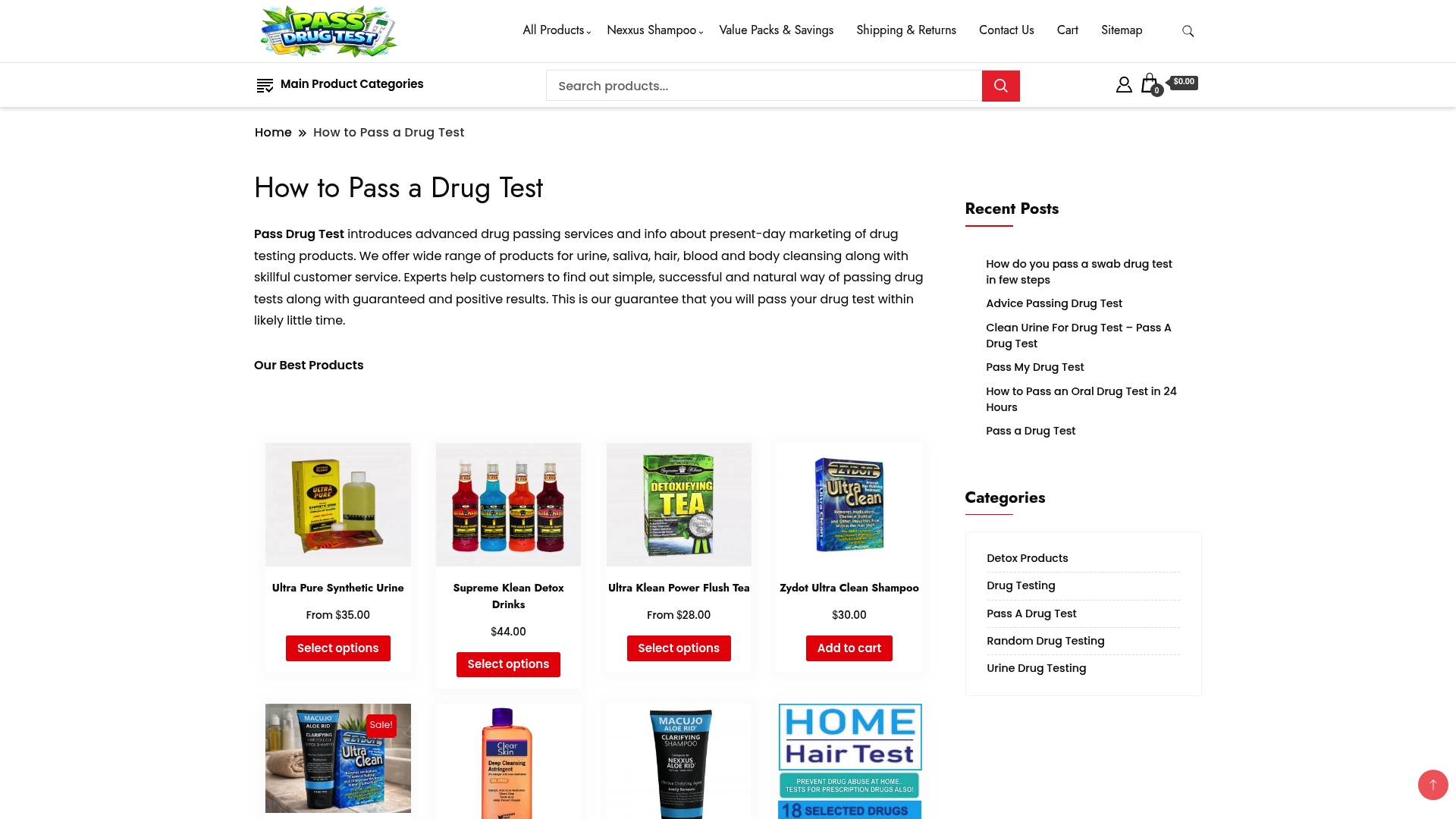
The drug test detox products at Passdrugtest include options for urine, hair, and whole body cleansing protocols. Each product is selected based on ingredient transparency and user results. For hair follicle testing specifically, the Macujo Aloe Rid Shampoo paired with the Macujo Method is the most proven approach available. Passdrugtest also offers whole body cleansing support for those focused on general health and toxin reduction alongside their drug test preparation.
FAQ
What is the main difference between detox and a cleanse?
Detox targets multiple organ systems including the liver, kidneys, lungs, and lymphatic system to eliminate toxins. A cleanse focuses specifically on the digestive tract to improve regularity and reset gut function.
Do commercial detox products actually work?
Johns Hopkins Medicine confirms no clinical evidence supports that commercial detox diets or juice cleanses remove toxins or repair organ damage. Benefits people experience typically come from improved diet quality during the protocol.
How do you detox safely without harming your body?
The AMA recommends supporting natural detox pathways through 7–9 hours of sleep, 150–300 minutes of weekly exercise, fiber-rich foods, and clean water rather than supplements or fasting protocols.
Can sweating remove toxins from your body?
Sweat contains minimal toxins compared to what the liver and kidneys process daily. Sauna benefits come from autophagy activation and improved liver blood flow, not from direct toxin removal through perspiration.
When should you use a targeted detox product?
Targeted detox products are most appropriate when your body’s natural timeline does not match an external deadline, such as preparing for a hair follicle or urine drug test. In those cases, products with transparent ingredients and proven protocols provide the most reliable support.