
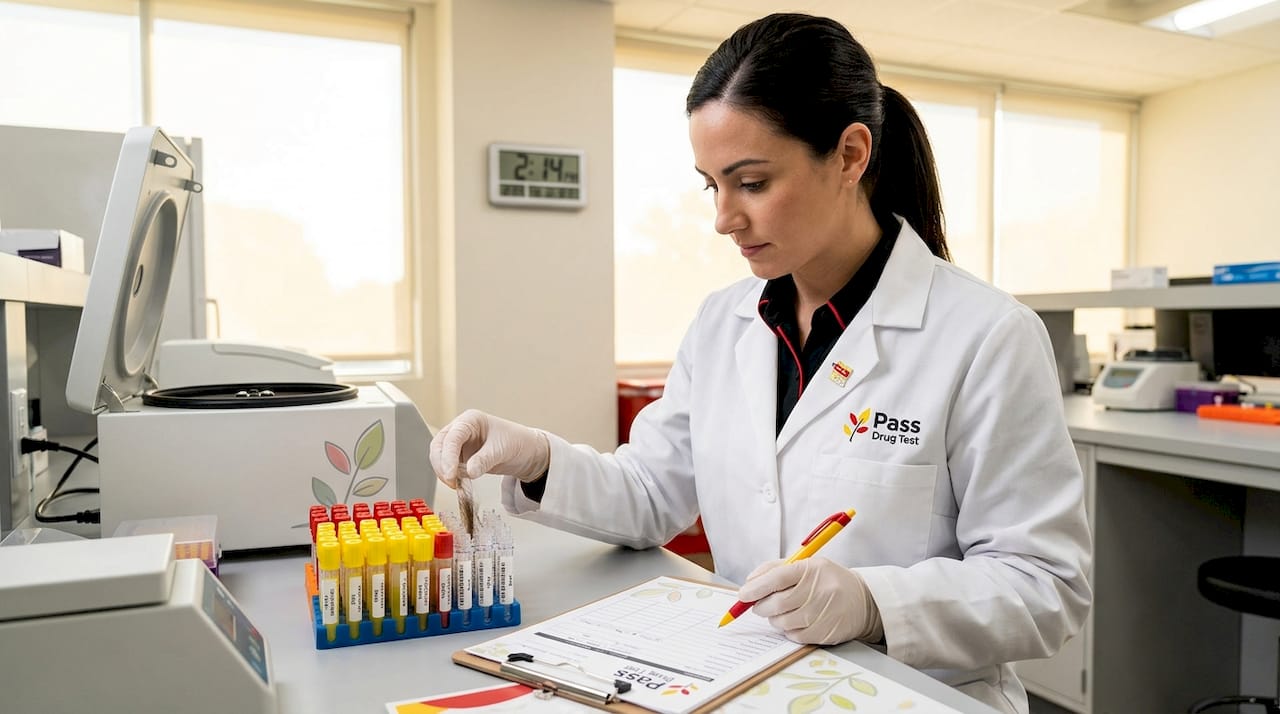

If you’re preparing for a hair follicle drug test, understanding what is cross-reactivity in hair tests could be the difference between panic and clarity. Many people get an initial positive result and assume the worst, not realizing that the first stage of testing is intentionally oversensitive and prone to flagging substances that have nothing to do with drug use. This article breaks down how hair tests actually work, what cross-reactivity means, why it happens, and what you can do about it before or after your test.
Table of Contents
- Key takeaways
- How hair follicle drug tests actually work
- What cross-reactivity is and what causes it
- Other factors that affect hair test accuracy
- Practical steps if you’re worried about cross-reactivity
- What science and experts say about hair test reliability
- My take on cross-reactivity and the panic it causes
- Prepare smarter with Passdrugtest
- FAQ
Key takeaways
| Point | Details |
|---|---|
| Two-step testing process | Hair drug tests use an immunoassay screen followed by a confirmatory test to verify results. |
| Cross-reactivity affects screening only | Cross-reactivity causes false positives in the first stage but is typically filtered out by confirmatory analysis. |
| Common triggers exist | Prescription drugs, OTC medications, and even certain foods can trigger cross-reactive responses in the initial screen. |
| Overall accuracy is high | Hair test accuracy exceeds 99% once confirmatory testing is completed. |
| You have dispute rights | If you believe cross-reactivity affected your result, you can request a retest at an independent accredited lab. |
How hair follicle drug tests actually work
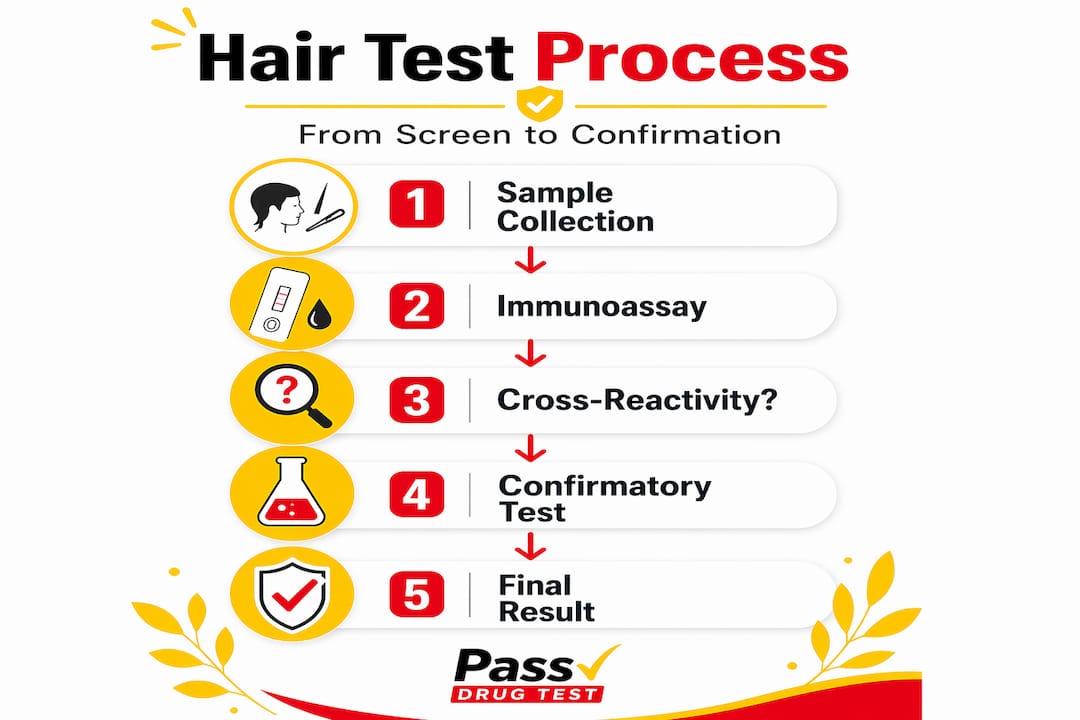
Before you can understand cross-reactivity in hair analysis, you need to know how the testing process is structured. Hair follicle tests are not a single scan. They are a two-phase process designed with both sensitivity and precision in mind.
Phase 1: Immunoassay screening
The first phase uses an immunoassay screen, which is a chemical test that uses antibodies to detect the presence of drug-related substances. This screening is deliberately set to be highly sensitive. The goal is to catch anything that could possibly indicate drug use, even at very low levels. The trade-off is that high sensitivity means lower specificity, meaning the test can react to substances that are chemically similar to target drugs but are not actually them.
Phase 2: Confirmatory testing
When a sample screens positive, it goes to confirmatory testing using either Gas Chromatography-Mass Spectrometry (GC-MS) or Liquid Chromatography-Tandem Mass Spectrometry (LC-MS/MS). These methods are far more precise. They identify specific molecules rather than reacting to general structural similarities. A positive confirmatory result is what actually constitutes a failed test.
Cutoff thresholds
Both stages use cutoff thresholds to determine what counts as a positive. Confirmatory cutoffs typically range from 200 to 300 pg/mg for common substances. If a sample does not meet these levels in the confirmatory phase, it is reported as negative regardless of what the screen showed.
Pro Tip: If you receive a positive screen result, do not assume it is final. Always ask whether a confirmatory test was completed before drawing any conclusions.
The good news is that overall accuracy exceeds 99% once confirmatory testing is completed. The system is built to protect against false outcomes, but cross-reactivity still deserves your attention because it can create unnecessary stress and complications during the screening phase.
What cross-reactivity is and what causes it
Here is the clearest cross-reactivity explanation you will find: cross-reactivity in hair drug tests occurs when the antibodies used in the immunoassay screen bind to a substance that is structurally similar to the target drug but is not the drug itself. The antibody cannot always distinguish between two molecules that share a comparable chemical shape.
Think about it this way. The immunoassay is essentially asking, “Does this look like what we’re searching for?” If the answer is close enough, it triggers a positive response. That is by design, because the screen is built to be a wide net. But when that wide net catches something harmless, that is cross-reactivity.
Common causes of cross-reactivity in hair analysis include:
- Prescription medications such as certain antibiotics, antidepressants, and antipsychotics that share structural features with controlled substances
- Over-the-counter drugs like cold medicines containing pseudoephedrine or antihistamines that can mimic amphetamine-like compounds
- Dietary supplements and herbal products with alkaloid compounds that register as false hits
- Foods such as poppy seeds, which are well-documented to cause initial false positives for opiates in immunoassay screens
- Environmental exposure to secondhand smoke or contact with surfaces that carry trace drug residue
“A positive screen is not a final result. The confirmatory test with higher specificity eliminates false positives caused by cross-reactivity.” — LegalClarity
This is why understanding cross-reactivity matters so much. If you take a prescription sleep aid, use a decongestant nasal spray, or eat a poppy seed bagel before your test, you could trigger an immunoassay flag that has zero bearing on your actual drug use. The confirmatory GC-MS or LC-MS/MS step is what separates a flag from a failure.
Other factors that affect hair test accuracy
Cross-reactivity is the most talked-about source of false positives, but it is not the only variable that can affect hair follicle test accuracy. Several additional factors can complicate results.
Lab-specific risks
Even well-run laboratories face risks like reagent degradation, calibration drift in testing equipment, and cross-contamination between samples. These are rare but documented. Forensic guidance recommends auditing lab accreditation and reviewing quality control records if you need to dispute a result.
Biological factors: melanin and drug binding
One underappreciated issue is the role of hair pigment. Darker hair absorbs higher drug levels than lighter hair at the same dose, because melanin binds more readily to certain drug compounds. This means two people with identical drug exposure could show different concentrations in their hair samples based solely on hair color.
| Factor | Effect on results |
|---|---|
| Dark hair (high melanin) | May show higher drug concentrations than lighter hair at equal exposure |
| Light or gray hair | May show lower concentrations, potentially below cutoff thresholds |
| Bleached or chemically treated hair | Can degrade metabolites, affecting detection reliability |
| Hair growth rate variation | Affects which time period is actually captured in the sample |
The limits of washing and detox products
Labs perform decontamination wash protocols on every hair sample before testing, which removes external contamination from the surface of the hair. What washing cannot do is remove metabolites that have been incorporated into the hair shaft through the bloodstream. Once a metabolite is inside the hair structure, it stays there. This is a critical distinction for anyone exploring their options before a test.
Pro Tip: No shampoo or home remedy removes metabolites embedded inside your hair shaft. Products that support your preparation work through a different mechanism and should be chosen carefully based on their actual formulation and proven protocols.
Medical Review Officers
Most employer drug testing programs involve a Medical Review Officer (MRO), a licensed physician who reviews positive results before they are reported. An MRO will contact you to ask about legitimate medications that could explain a positive screen. This is another built-in safeguard that reduces the real-world implications of cross-reactivity.
Practical steps if you’re worried about cross-reactivity
Knowing how cross-reactivity affects results is useful. Knowing what to do about it is even more useful. Here is a straightforward plan of action.
-
Disclose all medications and supplements. Before your test, document every prescription drug, OTC medication, and supplement you take. Present this list to the testing administrator or the MRO if you receive a positive result. Supplying a medication list is one of the most effective ways to prevent misinterpretation.
-
Understand which stage produced the positive. Ask the testing facility or your employer whether the result came from the immunoassay screen or the confirmatory test. A screen-only positive is far less significant than a confirmed positive.
-
Request a confirmatory test if one was not performed. You have the right to ask for this. If cross-reactivity flagged your screen, the confirmatory test will almost always clear it.
-
Request a retest at an independent accredited lab. If you believe the confirmatory result is wrong due to lab error or contamination, request independent re-testing at a certified facility. This is a recognized right in most testing dispute processes.
-
Skip the unproven home remedies. Detox drinks, vinegar rinses, and bleaching regimens are frequently promoted as solutions but have no proven ability to remove metabolites from inside the hair shaft.
Pro Tip: Keep a dated record of all medications you take in the weeks before your test. This documentation is your strongest defense against a false positive claim based on cross-reactivity.
What science and experts say about hair test reliability
The science on cross-reactivity in hair drug testing is clear, and it generally works in your favor if you understand the system. Experts consistently emphasize that the initial immunoassay screening is intentionally oversensitive, meaning a first-stage positive should never be treated as a final answer.
The confirmatory stage using GC-MS and LC-MS/MS is regarded as the gold standard in forensic toxicology. These methods identify specific molecular structures and are not fooled by the structural mimicry that causes cross-reactivity in immunoassay screens. The false positive rate at the confirmatory stage is extremely low because high-specificity confirmatory tests are designed precisely for this purpose.
On the legal side, courts and forensic experts recognize that lab accreditation and quality control audits are valid grounds for challenging suspect results. If a lab’s calibration records show drift or a certifying analyst’s credentials are not current, that can affect the admissibility of results in formal proceedings.
One more piece of science worth knowing: effective interpretation of a hair test does not rely solely on whether a sample crosses a cutoff threshold. Experts look at metabolite presence and hair segmental distribution to build a picture of use over time. A single elevated segment surrounded by clean segments tells a different story than consistently elevated levels across the full 90-day window. This matters when results are being reviewed for legal or employment purposes.
My take on cross-reactivity and the panic it causes
I have worked with a lot of people who were absolutely certain they had failed a hair follicle drug test, only to find out the initial positive came from something as benign as a prescription antihistamine. The panic that comes from seeing a positive screen result is completely understandable. But in my experience, that panic leads people to make poor decisions fast.
What I’ve seen consistently is that most test-takers do not know that the immunoassay screen is built to over-flag. They see positive and assume the process is over. It is not. The confirmatory step exists precisely because the screen is imprecise. I’ve watched people spend money on products and protocols they found in forums because they panicked before understanding where in the testing process their flag occurred.
What I’ve learned is that communication is your most underused tool. Talk to the MRO. Provide your medication list. Ask directly whether a confirmatory test was run. Most of the time, the answer to your cross-reactivity concern is already built into the system. Your job is to understand the system well enough to use it.
And if you do have real concerns about what is in your hair beyond cross-reactivity, you need to be honest with yourself about what that means and prepare accordingly with products that are grounded in actual science and proven protocols.
— Michael
Prepare smarter with Passdrugtest
Understanding cross-reactivity is the first step. Preparing your hair for a follicle drug test is the next one.
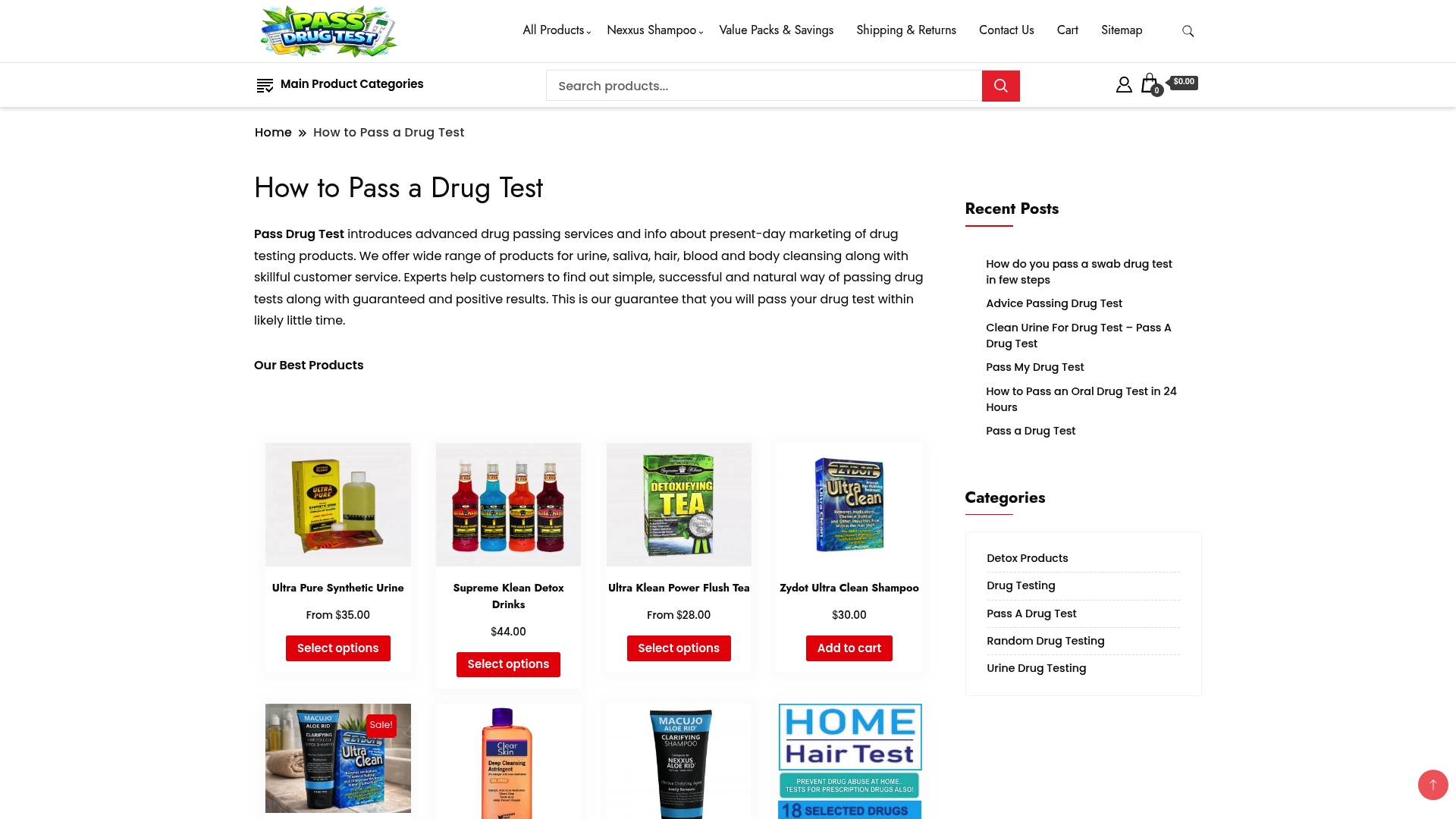
At Passdrugtest, we offer proven detox products specifically designed for people facing hair follicle drug tests. Our flagship product, the Macujo Aloe Rid Shampoo, is formulated to work with established preparation protocols that serious test-takers trust. We do not make claims that defy biology. What we do offer is a hair follicle test shampoo that is best in class for external hair preparation when used correctly as part of the Macujo Method. Browse our full range of drug test detox products and find the preparation path that fits your timeline and situation.
FAQ
What is cross-reactivity in hair drug tests?
Cross-reactivity occurs when the antibodies used in the initial immunoassay screen bind to a substance structurally similar to a target drug, triggering a false positive. It affects the screening phase only and is resolved by confirmatory testing.
Can prescription medications cause a false positive on a hair test?
Yes. Certain prescription and over-the-counter medications can cause false positives during screening due to cross-reactivity. Always disclose your medications to the Medical Review Officer if you receive a positive result.
Does a positive immunoassay screen mean I failed my hair drug test?
No. A positive screen is not a final result. Confirmatory testing using GC-MS or LC-MS/MS must confirm the finding before a result is officially reported as positive.
Can detox shampoos remove drug metabolites from hair?
No. Labs confirm that washing cannot remove metabolites embedded inside the hair shaft. Preparation products work through external mechanisms and must be used as part of proven protocols to have any effect.
What should I do if I think cross-reactivity affected my result?
Request confirmation of which testing stage produced the positive, provide a full medication list to the MRO, and if necessary, request an independent retest at an accredited lab to challenge the result formally.