


Beating a hair follicle drug screen reliably requires a minimum of 90–100 days of complete abstinence from drug use. That is the only method with real scientific backing. Hair testing, formally called hair follicle analysis, captures drug metabolites that enter the hair shaft through your bloodstream and stay locked inside the cortex for months. Labs like those certified under SAMHSA standards use a two-step process combining immunoassay screening with mass spectrometry confirmation, making this the most detection-resistant test available. Quick fixes, detox shampoos, and bleaching routines get a lot of attention online, but the science does not support them as reliable ways to pass a hair drug test.
How does hair follicle drug testing work?
Hair grows at approximately 0.5 inches per month, and drug metabolites enter the hair shaft through the bloodstream within 5–10 days of use. That means a standard 1.5-inch sample collected from the back of your scalp captures roughly 90 days of drug history. The metabolites do not sit on the surface. They are embedded inside the cortex, the dense inner layer of each strand, where no shampoo or rinse can reach them.
Labs run every sample through a two-step testing process: an initial immunoassay screen to flag potential positives, followed by confirmatory GC/MS or LC/MS/MS analysis. Mass spectrometry acts as a molecular fingerprint scanner with near-zero false positive rates. That second step is what makes hair testing so difficult to fool.
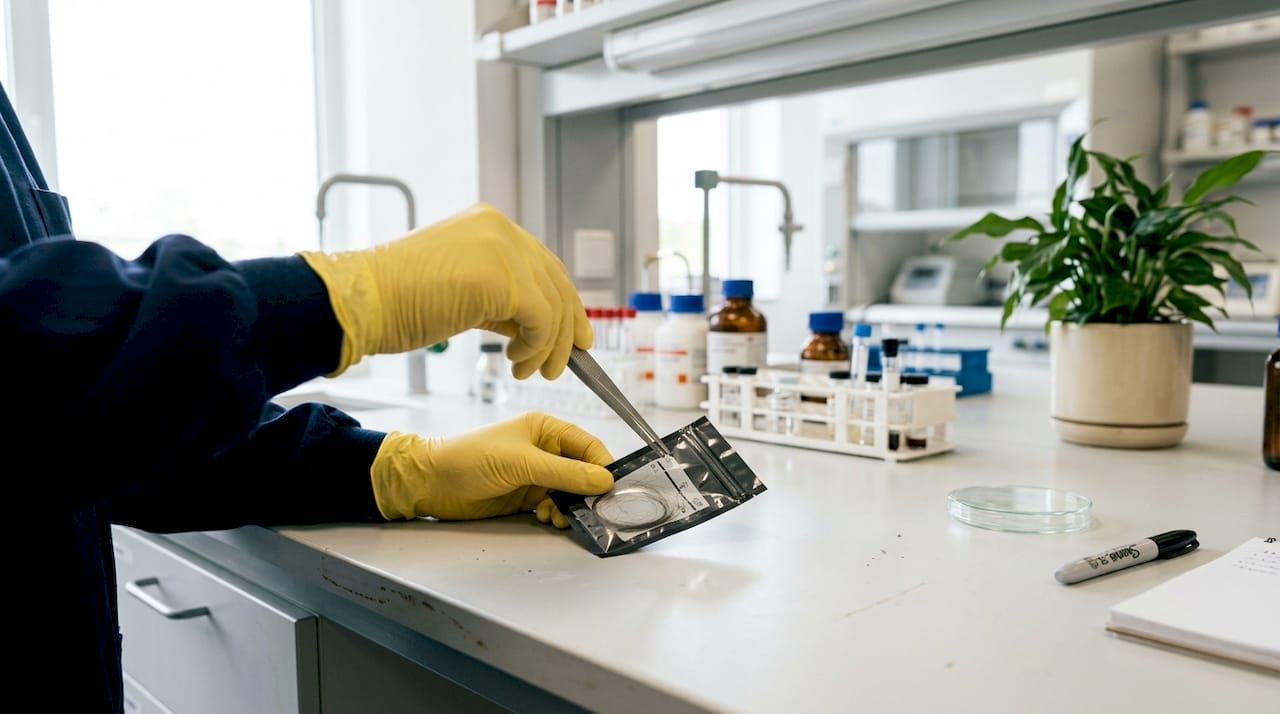
Before analysis, the lab washes the hair sample to remove external contaminants like secondhand smoke residue or surface deposits. This wash step is specifically designed to separate environmental exposure from actual ingestion. After washing, the remaining metabolites inside the cortex are what get measured and reported.
Labs also check metabolite-to-parent-drug ratios. If those ratios look abnormal, the sample may be flagged as adulterated. That is how labs detect chemical tampering, even when a treatment partially reduces metabolite levels. The system is built to catch manipulation, not just detect drug use.
One additional factor worth knowing: darker hair binds more drug metabolites than lighter hair due to melanin content. Labs account for this through wash protocols and MRO consultations, but it does mean results can vary slightly based on hair color. This limitation is one reason hair testing is not yet federally mandated for most workplace programs.
What drugs does hair testing detect?
Hair testing screens for THC, cocaine, opiates, amphetamines, and PCP. THC metabolites, specifically THC-COOH, are the most common target for employment-related tests in the United States. The detection window for all of these compounds is the same: up to 90 days based on the standard 1.5-inch sample.
What scientifically supported methods exist to pass a hair follicle drug test?
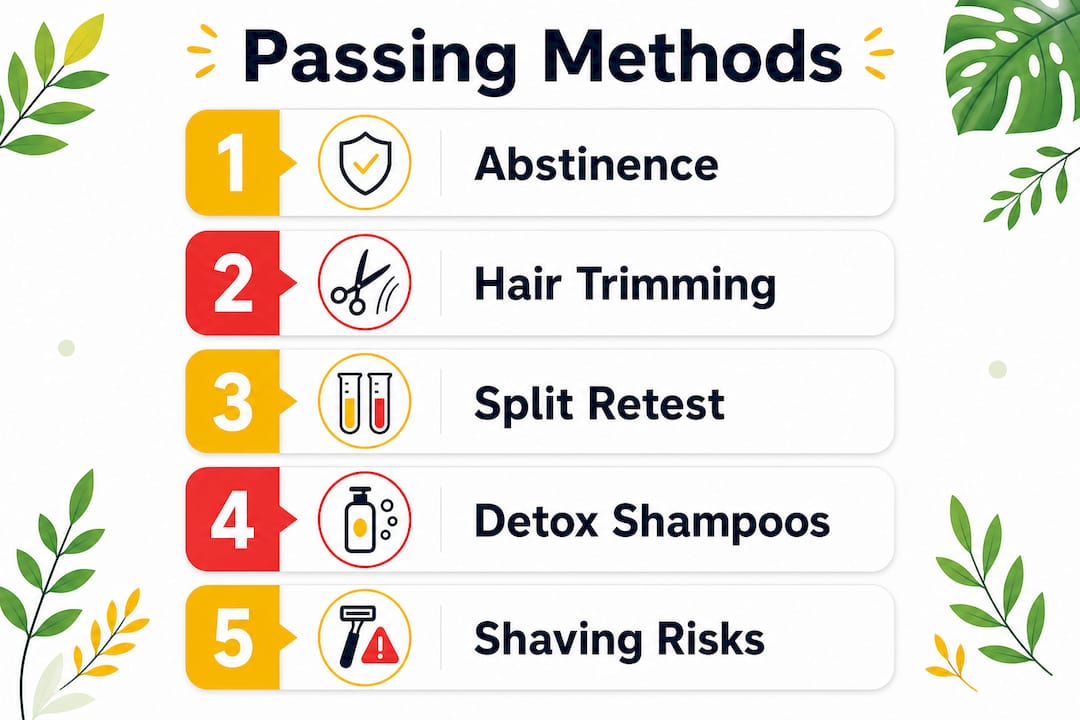
The only proven method for passing a hair follicle test is complete cessation of drug use for at least 90–100 days before the test date. A 100-day abstinence buffer is recommended because it accounts for the 5–10 day delay before metabolites appear in new hair growth, plus a safety margin for individual variation in hair growth rates.
Here is a practical, science-backed preparation plan:
- Stop all drug use immediately. Every day of continued use extends your contaminated hair window. There is no shortcut around this step.
- Calculate your test timeline. Count 100 days from your last use. If your test is scheduled before that window closes, you face a real challenge that no product can reliably fix.
- Do not cut your hair right before the test. Collectors take the sample from the scalp outward. Cutting your hair short does not remove old growth. It just shortens the sample, and labs may request body hair instead.
- Gather prescription documentation. If you take any prescription medications, collect those records now. You will need them if a Medical Review Officer contacts you.
- Respond promptly to MRO inquiries. Providing prescriptions within a 5-day window during the MRO interview is critical for contesting or clarifying a positive result caused by legitimate medication.
Pro Tip: If you have a confirmed test date and fewer than 90 days of abstinence, request a split-sample retest immediately if the result comes back positive. This is your strongest legal option and buys time for independent lab verification.
Gradual hair trimming over several months, timed carefully around new growth, can help reduce the proportion of contaminated hair in the sample. This only works if you have enough clean growth to replace what gets trimmed. It is not a standalone strategy.
What are common myths about passing a hair drug test?
Most popular detox methods circulating online are either ineffective or carry real physical risks. Understanding what does not work is just as important as knowing what does.
- Detox shampoos: Detox shampoos interfere with the initial immunoassay screen but do not affect confirmatory mass spectrometry testing. Since labs always run confirmation on positives, shampoos do not change the final outcome.
- Bleaching and dyeing: Bleaching can reduce metabolite concentrations, but the reduction is inconsistent. Bleaching may reduce drug markers by 20%–80%, but labs recognize altered metabolite-to-parent ratios as red flags for tampering.
- Vinegar and baking soda rinses: These are surface treatments. They do not penetrate the cortex where metabolites are stored. No peer-reviewed study supports their effectiveness.
- Shaving your head: Collectors are trained for this. If scalp hair is unavailable, they collect body hair, which has a longer and less predictable detection window.
- Drinking lots of water: Hydration affects urine tests, not hair tests. Metabolites in hair are not flushed out by fluid intake.
“Chemical methods like detox shampoos, bleaching, or home remedies lack peer-reviewed scientific evidence to reliably remove metabolites embedded in hair shafts. External treatments cannot reach the cortex where drug metabolites are permanently stored.”
The Macujo method, a multi-step regimen using vinegar, salicylic acid shampoo, and detergents, is widely discussed as a way to pass a hair follicle test. The method can cause severe scalp irritation and chemical burns, and it lacks peer-reviewed validation for reliably producing a clean result. Labs also flag the abnormal metabolite ratios that harsh chemical treatments leave behind. You can read more about detox shampoo vs. home remedies to understand where each approach falls short.
How to prepare effectively and handle a positive result
Preparation starts the moment you know a test is coming. The steps below apply whether you have 100 days or are working with a shorter window.
- Stop drug use permanently. This is non-negotiable. Every additional day of use resets part of your timeline.
- Document your prescription medications. Collect pharmacy records and physician notes for any controlled substances you take legally.
- Know your rights around split-sample testing. If your result comes back positive, you have the right to request that the second half of your original sample be sent to a certified independent lab for retesting. Split-sample retesting is your strongest legal defense.
- Respond to your MRO within the required window. Medical Review Officers are required to give you a chance to explain a positive result. Missing that window forfeits your opportunity to contest it.
- Communicate professionally. If you contest a result, do so in writing. Keep records of every communication with the testing facility and your employer.
Pro Tip: About 10%–15% of hair strands are in the resting phase at any given time and may retain metabolites longer than actively growing strands. This is why the 100-day buffer matters more than a strict 90-day cutoff.
Body hair testing is worth understanding separately. Body hair grows more slowly and has a longer, less defined detection window than scalp hair. If a collector switches to body hair because your scalp hair is too short, the result could reflect drug use from well over a year ago. Cutting your scalp hair short before a test can make your situation significantly worse, not better.
Key Takeaways
The only proven way to beat a hair follicle drug screen is complete abstinence for at least 100 days, combined with knowing your legal rights around MRO review and split-sample retesting.
| Point | Details |
|---|---|
| Abstinence is the only reliable method | 100 days of no drug use gives clean hair growth that replaces contaminated strands. |
| Labs use two-step confirmation | Mass spectrometry confirms every positive, making surface treatments ineffective at the final stage. |
| Chemical treatments raise red flags | Bleaching and harsh regimens alter metabolite ratios, which labs recognize as tampering indicators. |
| MRO review is your legal safety net | Responding within 5 days with prescription documentation can reverse a false positive result. |
| Body hair testing extends the window | Shaving scalp hair triggers body hair collection, which can detect use from over a year ago. |
What I have learned after years of watching people approach this wrong
The most common mistake I see is people spending money on products when they should be spending time on planning. A detox shampoo is not going to save you if your test is in two weeks and you used last month. The math simply does not work in your favor.
What does work is treating this like a logistics problem. You have a known timeline, a known biology, and a known process at the lab. The 90–100 day window is not a suggestion. It is based on how fast hair actually grows and how long metabolites stay embedded in the cortex. Trying to chemically dissolve something that is structurally part of your hair shaft is not a realistic plan.
The people who pass consistently are the ones who stopped early, tracked their timeline carefully, and had their prescription documentation ready just in case. They also knew their rights around MRO review and split-sample testing, which is genuinely underused as a defense strategy.
One thing I want to be direct about: the emotional pressure around these tests is real. Jobs, careers, and livelihoods are on the line. That pressure makes people reach for quick fixes. But the forensic science behind hair testing in 2026 is sophisticated enough that the only thing a quick fix reliably does is cost you money and, in some cases, make your sample look tampered with. Plan early, stay clean, and know your options if a result comes back positive.
— MIchael
Passdrugtest has resources to support your preparation
Facing a hair follicle drug test is stressful, and having the right information and products on hand makes a real difference in how prepared you feel. Passdrugtest carries a full range of hair drug testing products designed to support your scalp health and cleansing routine during your abstinence period.
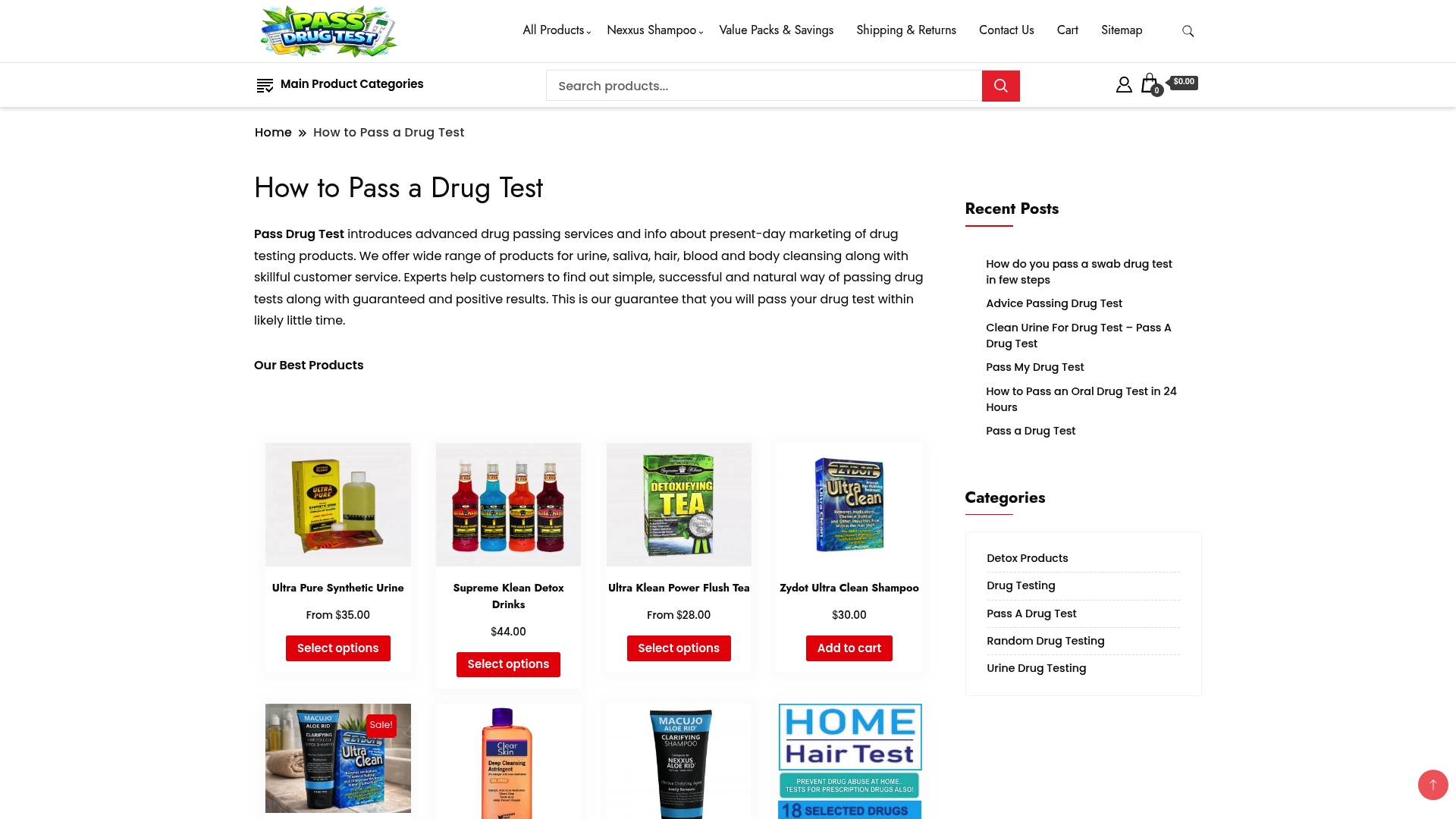
The Macujo Aloe Rid Shampoo is Passdrugtest’s flagship product and is widely regarded as the best in its class for supporting a thorough hair cleansing routine. Passdrugtest also offers detailed guides, expert advice, and a full catalog of drug test detox products to help you approach your test date with confidence. No product guarantees a passing result, but being informed and prepared gives you the best possible position.
FAQ
How long does THC stay in hair follicles?
THC metabolites remain detectable in hair for up to 90 days based on a standard 1.5-inch scalp sample. A 100-day abstinence buffer is recommended to account for individual variation in hair growth rates.
Do detox shampoos actually work for hair drug tests?
Detox shampoos may interfere with initial immunoassay screening but do not affect confirmatory mass spectrometry testing. Since labs confirm every positive with GC/MS or LC/MS/MS, shampoos alone are not a reliable passing method.
What happens if you shave your head before a hair drug test?
Collectors are trained to collect body hair when scalp hair is unavailable. Body hair has a longer and less defined detection window, potentially reflecting drug use from well over a year ago.
Can you contest a positive hair drug test result?
Yes. You have the right to request split-sample retesting at a certified independent lab. Responding to your Medical Review Officer within the required 5-day window with prescription documentation is also a proven way to challenge a false positive.
Does bleaching your hair help you pass a hair follicle test?
Bleaching reduces metabolite concentrations inconsistently, anywhere from 20%–80%, but it also alters metabolite-to-parent-drug ratios. Labs recognize those altered ratios as tampering indicators, which can result in a rejected or flagged sample.