
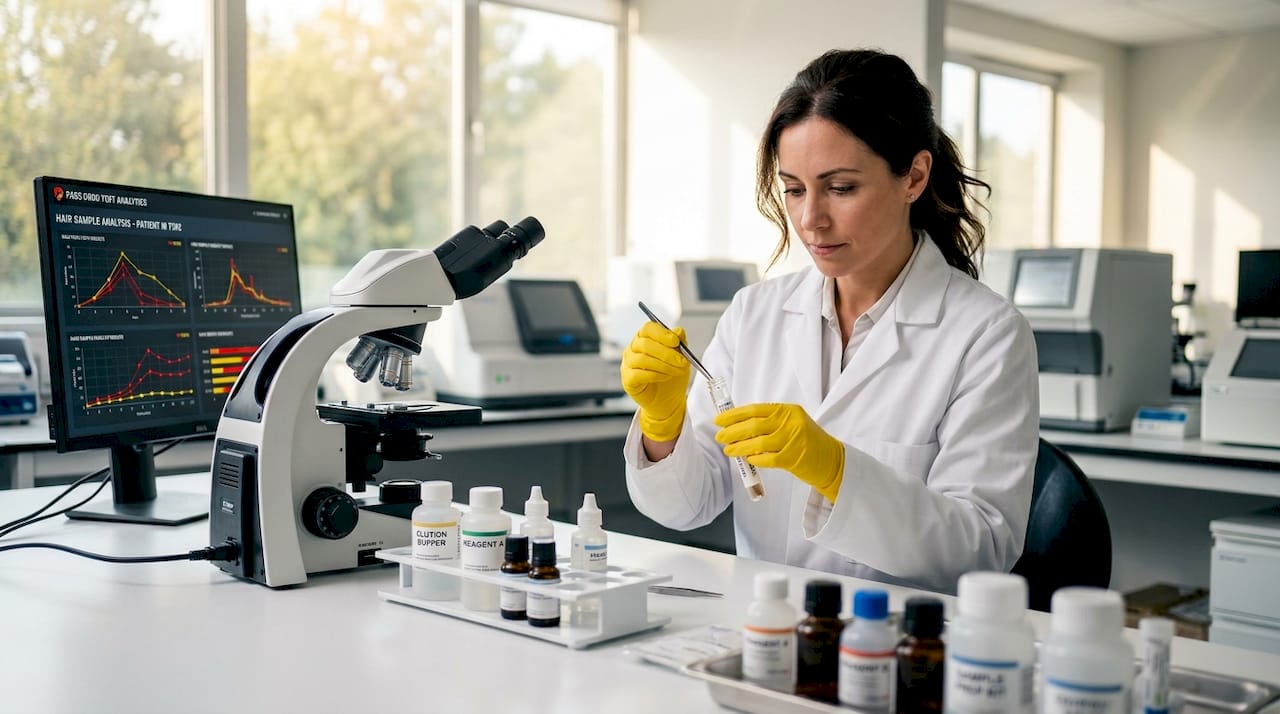

A toxin in hair tests is defined as any substance or metabolite that becomes embedded inside the hair shaft after entering the bloodstream, serving as a chemical record of your internal exposure history. When employers or courts order a hair follicle drug test, they are not looking for dirt on the surface of your hair. They are analyzing what is locked inside each strand. Understanding what is a toxin in hair tests, and how those substances get there, is the first step toward knowing what you are actually up against.
What is a toxin in hair tests and why it matters
The word “toxin” gets used loosely in everyday conversation, but in hair testing it has a precise meaning. A toxin in this context refers to a drug metabolite or chemical compound that your body processed and deposited into the hair shaft during growth. The most common example is THC-COOH, the metabolite your liver produces after you consume cannabis. Other frequently detected metabolites include amphetamine compounds, cocaine metabolites like benzoylecgonine, and opioid byproducts.
Hair follicle drug testing is not the same as environmental toxin screening. Separate biomonitoring tests exist to detect heavy metals like arsenic, lead, and mercury in hair, but those panels are used in occupational health and clinical settings. Standard workplace or legal hair drug tests focus exclusively on drug metabolites. Confusing the two leads to serious misunderstandings about what your test will actually measure.
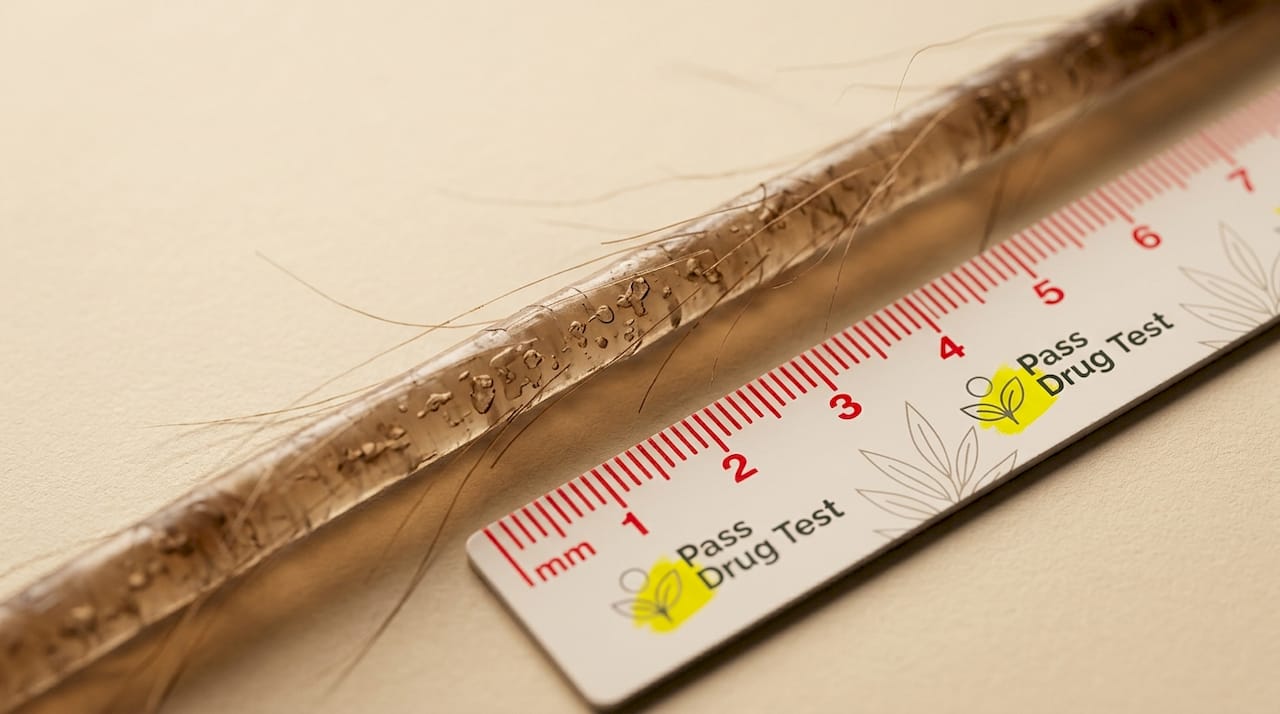
The reason this distinction matters to you is practical. If you are preparing for a standard pre-employment or court-ordered hair drug test, your result depends entirely on what metabolites are embedded inside your hair shaft, not on surface residues from smoke, sweat, or environmental contact.
How substances become embedded in your hair
Your body converts drugs into metabolites as part of normal metabolism. Those metabolites circulate in the bloodstream and reach the hair follicle, where they become incorporated into the hair shaft as new cells form and harden. Hair grows approximately 1 cm per month, which means a standard 1.5-inch sample taken from the scalp reflects roughly 90 days of exposure history.
This biological process is what makes hair testing so different from urine or blood testing. Urine tests detect recent use, typically within a few days. Hair follicle testing detects drugs used over approximately the past 90 days, giving labs a much longer and more detailed window into your history. Labs can even segment the sample into sections to estimate when specific use occurred.
Here is the step-by-step process of how a substance becomes a detectable toxin in your hair:
- You consume a substance, and your body metabolizes it into chemical byproducts.
- Those metabolites enter the bloodstream and circulate throughout the body.
- Blood vessels feeding the hair follicle deliver metabolites to the growing hair cells.
- As the hair shaft forms and hardens, metabolites become physically trapped inside the cortex of the strand.
- The hair grows outward from the scalp, carrying that chemical record with it.
- A lab collects a sample, dissolves the hair, and analyzes the internal content.
Pro Tip: The 90-day detection window is calculated from the scalp outward. Hair that has grown beyond 1.5 inches from the scalp falls outside the standard testing window, which is why labs specify exactly where on the strand they collect the sample.
What toxins and substances hair tests typically detect
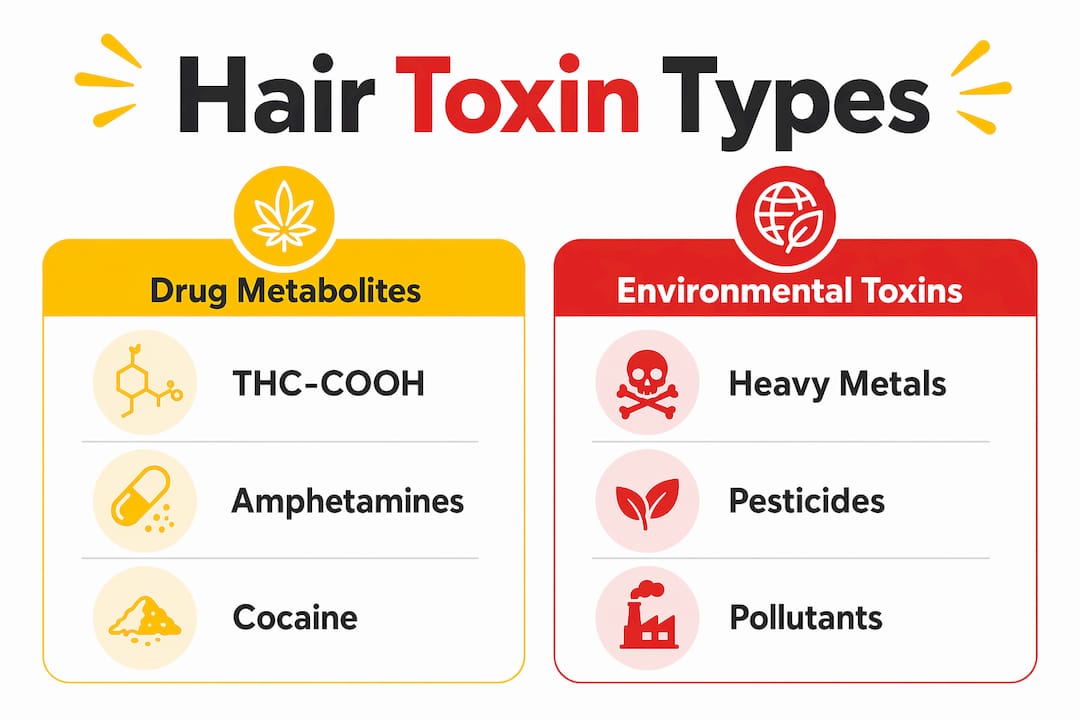
Standard hair drug tests analyze a defined panel of drug metabolites. The most common substances tested in U.S. workplace and legal panels include cannabis metabolites (THC-COOH), cocaine and its metabolite benzoylecgonine, amphetamine and methamphetamine, opioids including heroin metabolites, and phencyclidine (PCP). Each substance has a specific cutoff value that determines a positive result.
Cutoff values like 0.2 ng/mg for amphetamines are analytical parameters, not toxicity thresholds. This means a result just below the cutoff is reported as negative even if trace amounts are present. The cutoff system exists to reduce false positives from passive or incidental exposure, not to measure how much of a substance is harmful.
Here is a quick comparison of hair drug testing versus environmental toxin hair biomonitoring:
| Feature | Hair drug test | Environmental toxin panel |
|---|---|---|
| Target substances | Drug metabolites (THC-COOH, amphetamines, opioids) | Heavy metals (arsenic, lead, mercury) |
| Primary use | Employment, legal, probation screening | Occupational health, clinical diagnosis |
| Sample length | 1.5 inches from scalp (approx. 90 days) | Variable, depending on exposure period |
| Cutoff system | Yes, standardized ng/mg thresholds | Varies by lab and clinical context |
| Affected by cosmetic treatment | Minimally for internal metabolites | More variable due to external binding |
The key takeaway from this comparison is that environmental toxin hair tests require different interpretation standards and are not what you face in a standard drug screening. If your employer ordered a hair follicle test, you are being screened for drug metabolites only.
How labs tell internal incorporation apart from surface contamination
Labs do not simply dissolve your hair and test whatever they find. Every accredited hair drug test includes a decontamination step before analysis. The lab washes the hair sample with solvents and then analyzes those wash solutions separately. Absence of target analytes in wash solutions confirms that the substances detected in the hair itself came from inside the shaft, not from external contact.
This protocol directly addresses one of the most common misconceptions about hair testing. Many people believe that washing, dyeing, or bleaching hair will remove drug history. The science says otherwise. Washing or dyeing does not erase the metabolites locked inside the cortex of the hair shaft because those metabolites are not sitting on the surface. They are part of the physical structure of the strand.
Key facts about lab decontamination and accuracy:
- Wash solutions are analyzed for the same target analytes as the hair sample itself.
- A positive result in the wash but not the hair would suggest external contamination, not internal use.
- Labs use liquid chromatography-tandem mass spectrometry (LC-MS/MS) for confirmation, which is highly specific to individual metabolites.
- Rigorous decontamination protocols make hair testing one of the most forensically defensible drug test methods available.
“No credible scientific evidence supports the effectiveness of over-the-counter detox shampoos to remove drug markers embedded in the hair shaft.” This finding from Psychemedics reflects the scientific consensus: surface cleansing products address surface residues only.
Pro Tip: If you are concerned about passive exposure, such as secondhand cannabis smoke, the cutoff thresholds are specifically designed to exclude those low-level incidental exposures from triggering a positive result.
Practical implications for your hair drug test preparation
Understanding what a toxin actually is in hair testing changes how you approach preparation. Here is what the science means for you in practical terms:
-
Your history is in the shaft, not on the surface. No amount of washing removes internally incorporated metabolites. Products that claim to cleanse your hair of drug history are addressing surface contamination, not the metabolites inside the cortex.
-
Hair type affects metabolite absorption. Black hair can absorb significantly more drug metabolites than other hair types due to higher melanin content. This means the same level of drug use could produce different concentration readings depending on your hair type, which is a factor labs and courts are increasingly being asked to account for.
-
Cosmetic treatments have limited impact on test results. Bleaching and chemical processing can degrade some metabolites, but labs account for this and the effect is inconsistent. Relying on cosmetic treatments as a strategy carries significant risk.
-
The 90-day window is fixed by biology. Detox shampoos and cleansing products reduce surface contamination and cannot alter the metabolite record embedded inside the hair shaft. Setting realistic expectations about what any product can and cannot do protects you from wasted effort and money.
-
Cutoff thresholds work in your favor for low-level exposure. If your exposure was minimal or occurred at the very edge of the 90-day window, the cutoff system may result in a negative report. The test is designed to identify consistent or meaningful use, not to catch every trace.
The most informed approach to hair drug test preparation starts with knowing exactly what the test measures and what it does not. That knowledge lets you make decisions based on facts rather than marketing claims.
Key takeaways
Hair drug tests detect internally incorporated drug metabolites, not surface residues, making the biological process of incorporation the central fact every test-taker needs to understand.
| Point | Details |
|---|---|
| Toxin definition | A toxin in hair tests is a drug metabolite embedded inside the hair shaft, not a surface contaminant. |
| Detection window | Hair grows 1 cm per month; a 1.5-inch sample covers approximately 90 days of exposure history. |
| Lab decontamination | Labs analyze wash solutions separately to confirm internal incorporation and rule out external contamination. |
| Detox product limits | Surface-cleansing products cannot remove metabolites locked inside the hair cortex. |
| Hair type matters | Higher melanin content in darker hair increases metabolite absorption, affecting concentration readings. |
My honest take on hair test toxins and what most people get wrong
I have spent years watching people prepare for hair drug tests with completely the wrong mental model of what the test actually measures. The single biggest misconception I see is treating a hair drug test like a surface cleanliness problem. People scrub their hair, use every product they can find, and then feel blindsided when the test still comes back positive.
The biology is unambiguous. Once a drug metabolite is incorporated into the hair shaft during growth, it is physically part of that strand. The lab is not testing your shampoo residue. It is testing the chemical composition of your hair itself. No product applied to the outside of the strand can reach and remove what is locked inside the cortex.
What I think gets overlooked is the cutoff threshold system. Labs do not report a positive result for every trace amount detected. The thresholds exist precisely to filter out incidental exposure. If your use was genuinely light or occurred well outside the 90-day window, the science may actually be on your side. But if you used regularly within that window, no amount of surface treatment changes that record.
My advice is to start with accurate information. Know what the test measures, understand what the cutoffs mean for your specific situation, and make decisions based on that reality. Passdrugtest has resources that explain the full picture without overpromising. That transparency is what actually helps you prepare.
— MIchael
Prepare with the right products and information
If you are facing a hair follicle drug test, Passdrugtest has the resources and products you need to prepare with confidence. The site offers detailed guidance on hair drug testing fundamentals alongside a full range of preparation products.
Passdrugtest’s flagship Macujo Aloe Rid shampoo is the best-in-class option for addressing surface residues and supporting your overall preparation routine. While no shampoo removes internally embedded metabolites, using the right products as part of a structured approach gives you the best possible starting position. Browse the full range of hair follicle test shampoos and drug test detox products to find the preparation plan that fits your timeline and situation.
FAQ
What is a toxin in a hair follicle drug test?
A toxin in a hair follicle drug test is a drug metabolite, such as THC-COOH or an amphetamine byproduct, that became embedded inside the hair shaft after entering the bloodstream. It is not a surface contaminant and cannot be washed off.
How far back does a hair drug test detect toxins?
A standard hair drug test covers approximately 90 days of exposure history, based on the average hair growth rate of 1 cm per month and a 1.5-inch sample length collected from the scalp.
Can detox shampoos remove toxins from hair?
Detox shampoos cleanse surface residues but cannot remove embedded metabolites locked inside the hair shaft. No over-the-counter product has credible scientific evidence supporting its ability to alter the internal metabolite record labs analyze.
Does hair color or type affect toxin detection?
Yes. Darker hair with higher melanin content absorbs more drug metabolites than lighter hair, which can produce higher concentration readings at the same level of drug use. Labs and legal bodies are increasingly recognizing this as a factor in result interpretation.
Are heavy metals tested in a standard hair drug test?
No. Heavy metals like arsenic and lead are detected through separate biomonitoring panels used in clinical or occupational health settings. Standard workplace and legal hair drug tests screen only for drug metabolites.