

Hair shaft drug incorporation is the process by which substances from your bloodstream become permanently embedded inside your growing hair, creating a biological record of drug use that can span months. This happens through passive diffusion into the hair follicle during keratin formation, locking metabolites deep inside the hair’s cortex. Unlike urine or saliva tests, hair follicle testing captures a timeline of exposure rather than a snapshot. Understanding exactly how this works gives you a real advantage when preparing for an upcoming test.
How does hair shaft drug incorporation work?
Drug incorporation into hair occurs through passive diffusion. As blood flows through the capillaries surrounding the hair follicle, drug molecules cross into the follicular cells. This happens during keratinization, the process where living cells harden into the protein structure that forms your hair shaft.
Once inside, drugs bind permanently to the keratin protein matrix in the cortex. The cortex is the dense inner layer of the hair shaft, not the outer surface. This distinction matters enormously because it means surface washing cannot reach the embedded metabolites.
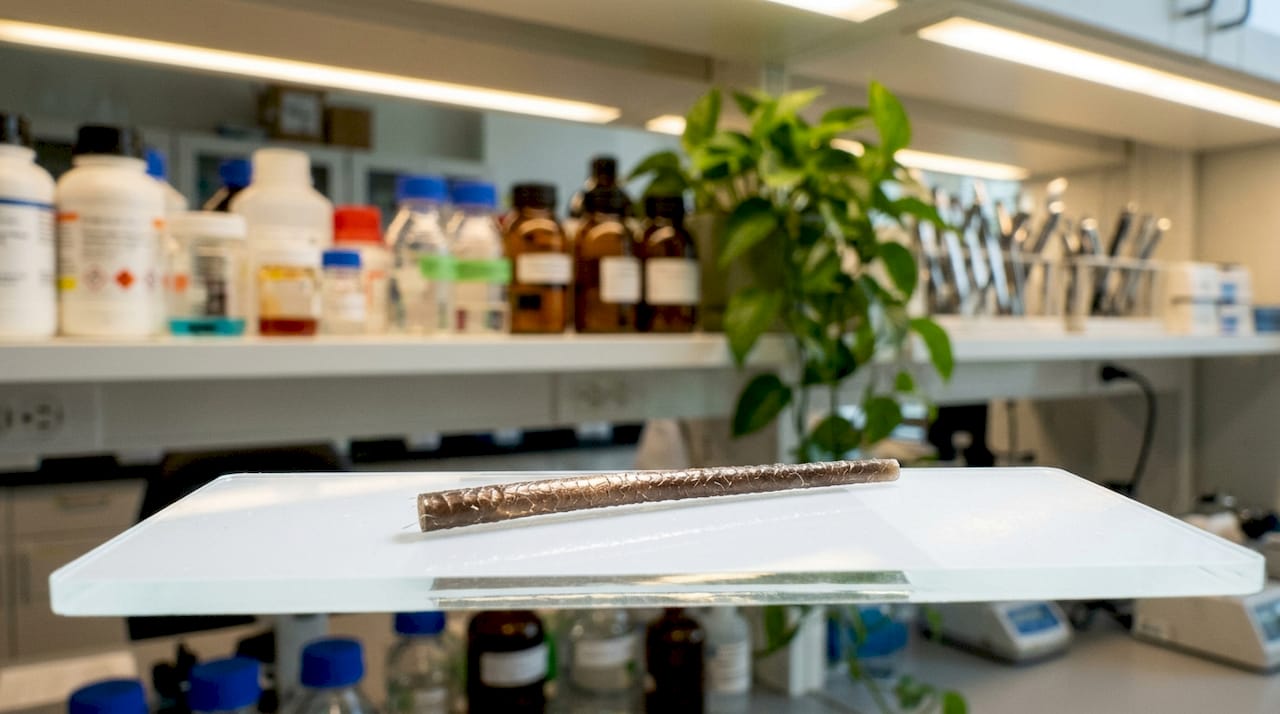
Hair pigmentation plays a direct role in how much drug gets absorbed. Dark, melanin-rich hair can absorb significantly more drug than lighter hair, affecting how concentrated the results appear. Research confirms this with real numbers: hydroxyzine concentrations ranged from 15 pg/mg in blond hair to 56–63 pg/mg in dark hair after a single 25-mg oral dose. That is a fourfold difference from a single exposure, which shows how much pigmentation shapes test sensitivity.
The practical implication is clear. If you have dark hair, your test results will likely show higher concentrations than someone with lighter hair who used the same amount of the same substance.
- Passive diffusion: Drug molecules move from blood into follicular cells without requiring energy or active transport.
- Keratin binding: Drugs embed into the cortex protein matrix as the hair shaft solidifies during growth.
- Melanin absorption: Higher melanin content increases drug uptake, raising detectable concentrations in dark hair.
- Permanent record: Once locked into the cortex, metabolites grow outward with the hair and remain detectable for months.
Pro Tip: If you have naturally dark or chemically darkened hair, labs may detect higher drug concentrations than you expect. This is biology, not a flaw in the test.
How long do drugs stay detectable in hair?
Hair grows at roughly 1 cm per month. Labs use this rate to build a timeline of drug exposure by analyzing the hair in segments. A standard 1 cm segment represents approximately one month of use history. Advanced forensic labs can analyze millimeter segments for even finer resolution.
The standard hair sample collected for drug testing is 1.5 inches (about 3.8 cm) taken from the scalp. That length covers roughly 90 days of use history. This is why hair follicle testing is the preferred method for detecting patterns of use rather than recent single incidents.
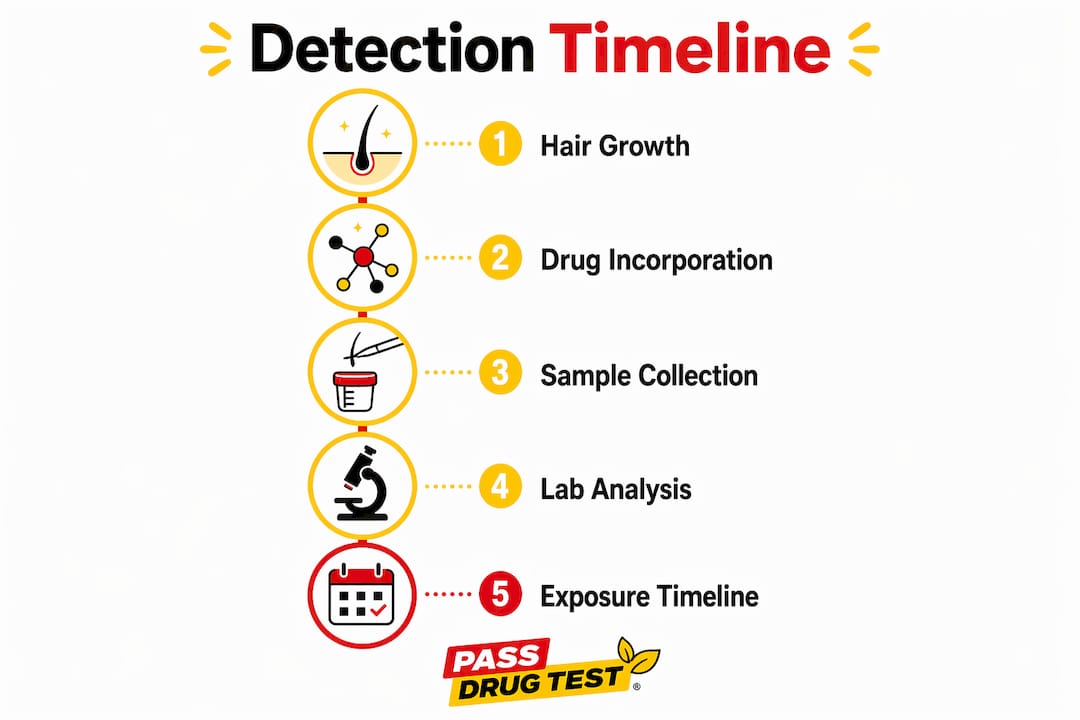
Detection windows vary based on hair growth rate, drug type, frequency of use, and individual metabolism. Frequent users will show higher concentrations across more segments than occasional users. Segmental analysis lets labs pinpoint when use occurred, not just whether it occurred.
| Drug Type | Typical Detection Window | Notes |
|---|---|---|
| Cannabis (THC) | Up to 90 days | Longer in heavy users |
| Cocaine | Up to 90 days | Metabolites persist well in cortex |
| Opioids | Up to 90 days | Varies by specific compound |
| Amphetamines | Up to 90 days | High melanin increases concentration |
| Single-dose substances | Detectable after one use | Confirmed by hydroxyzine research |
One important limitation: frequent styling or chemical treatments can mechanically redistribute drug residues along the hair shaft, which can distort timeline interpretations. Labs account for this, but it introduces variability that affects how precisely a use period can be pinpointed.
Do detox shampoos and bleaching actually remove drugs from hair?
The short answer is no, not reliably. Over-the-counter shampoos, bleaching, and hair treatments do not reliably remove drugs embedded in the hair cortex. Cosmetic treatments may reduce surface concentrations inconsistently, but they rarely bring levels below the cutoff thresholds labs use to confirm a positive result.
The reason is structural. Drug metabolites are locked inside the cortex, not sitting on the outer cuticle. Shampoo and bleach work on the surface. They cannot penetrate deeply enough to dissolve or flush out the metabolites bound to the keratin matrix.
Labs are also trained to detect tampering. Parent-to-metabolite ratio analysis is a standard forensic tool. When a sample shows the parent drug without the expected metabolites, or shows unusual ratios, labs flag it as a potential masking attempt. Bleaching can alter the ratio without eliminating the evidence, which makes the result look suspicious even if concentrations drop.
- Bleaching: Damages the cuticle and may reduce some surface residue, but metabolites in the cortex remain largely intact.
- Standard shampoos: Clean the surface only. No proven ability to reach cortex-embedded metabolites.
- Hair dyes: May alter melanin content slightly but do not dissolve keratin-bound drug compounds.
- Home remedies: No peer-reviewed evidence supports their effectiveness at bringing concentrations below lab cutoffs.
Pro Tip: Labs wash every sample before testing to remove environmental contamination. If a basic wash could remove metabolites, labs would accidentally clear positive samples. The fact that they do not confirms how deeply embedded these compounds are.
Understanding what actually works versus what sounds plausible is the most valuable thing you can know before your test date.
How do labs analyze hair drug test results?
Hair drug test analysis follows a two-step process designed to minimize false positives and confirm genuine metabolic incorporation.
- Initial screening with ELISA: The enzyme-linked immunosorbent assay (ELISA) is a rapid immunoassay that flags samples likely to contain drug metabolites. It casts a wide net and is sensitive but not perfectly specific.
- Confirmatory testing with GC-MS or LC-MS/MS: Any screen-positive sample moves to gas chromatography-mass spectrometry (GC-MS) or liquid chromatography-tandem mass spectrometry (LC-MS/MS). These methods confirm drug presence with high specificity and distinguish metabolic incorporation from surface contamination.
- Cutoff thresholds: Labs apply established cutoff levels to separate active ingestion from passive environmental exposure. Results below the cutoff are reported as negative regardless of trace detection.
- Decontamination wash: Every sample undergoes a standardized wash before analysis. This removes external residues so the result reflects internal metabolites only. Lab washing protocols reduce environmental contamination but cannot eliminate cortex-bound metabolites.
- Metabolite ratio review: Labs check parent-to-metabolite ratios to verify that detected compounds result from ingestion, not contamination or tampering.
Hair color and texture influence how much drug the sample contains, which affects test sensitivity. Dark hair absorbs more drug, so the same use pattern may produce a stronger positive in a dark-haired person than in someone with light hair. Reputable labs factor this into their interpretation, though it remains an area of ongoing forensic debate. You can learn more about how false positives occur and what drives them before your test.
Key Takeaways
Hair shaft drug incorporation permanently locks metabolites into the hair cortex through passive diffusion during keratin formation, making surface treatments ineffective and hair testing a reliable multi-month detection method.
| Point | Details |
|---|---|
| Drugs embed in the cortex | Metabolites bind to the keratin protein matrix inside the hair shaft, not on the surface. |
| Detection covers up to 90 days | A standard 1.5-inch sample captures roughly three months of drug use history. |
| Dark hair shows higher concentrations | Melanin-rich hair absorbs more drug, producing stronger positives for the same level of use. |
| Surface treatments do not work | Bleaching and shampoos cannot reach cortex-bound metabolites or reliably drop levels below lab cutoffs. |
| Labs detect tampering | Parent-to-metabolite ratio analysis flags masking attempts even when concentrations are reduced. |
What I’ve learned after years of watching people approach hair tests wrong
I’ve seen the same pattern repeat itself. Someone finds out they have a hair drug test coming up, panics, and immediately reaches for the most aggressive bleach or the cheapest detox shampoo they can find. Two weeks later, they fail. Not because they didn’t try, but because they didn’t understand what they were actually dealing with.
The biology here is unforgiving. Metabolites inside the cortex are not going anywhere unless you use a protocol specifically designed to open the hair cuticle, penetrate the cortex, and break down those bonds. That is a very different task from washing your hair. Most people treat it like the latter.
The Macujo method, developed by Mike Macujo, is the most proven approach for passing a hair follicle drug test. It works because it combines multiple steps that each address a different layer of the problem. The Macujo Aloe Rid Shampoo is the cornerstone of that protocol, formulated specifically to penetrate the cortex rather than just clean the surface. Pairing it with the right supporting products and repeating the process correctly gives you a real, science-aligned shot at a clean result.
What I tell everyone is this: stop trying to outsmart the biology with a $10 bottle from a drugstore. Understand what the test actually measures, use a protocol built around that science, and give yourself enough time to do it properly. Timing matters. Starting three days before your test is not the same as starting three weeks out.
The readers who pass are the ones who treat this seriously, follow a proven method, and use products that were designed for this specific purpose. That is not a sales pitch. That is just what the data shows.
— MIchael
Passdrugtest products designed for what hair tests actually measure
Knowing how drug incorporation works changes how you shop for a solution. You need products that go beyond surface cleaning and target the cortex where metabolites actually live.

Passdrugtest carries the Macujo Aloe Rid Shampoo, the most trusted detox shampoo for hair follicle testing, along with whole body cleansing options that support a complete preparation routine. Every product in the hair drug testing catalog is selected because it aligns with what forensic science shows about how metabolites are stored and how they can be addressed. If you have a test coming up and want to give yourself the best possible chance, start with products built around the science, not around marketing claims.
FAQ
What is hair shaft drug incorporation?
Hair shaft drug incorporation is the process by which drug molecules from the bloodstream diffuse into the hair follicle during keratin formation and become permanently bound to the hair’s cortex protein matrix.
How far back does a hair drug test detect drug use?
A standard hair drug test analyzes a 1.5-inch sample, which covers approximately 90 days of use history based on the average hair growth rate of 1 cm per month.
Does bleaching your hair remove drug metabolites?
Bleaching may reduce surface concentrations inconsistently but does not reliably remove metabolites embedded in the hair cortex, and labs can detect the altered parent-to-metabolite ratios that bleaching causes.
Why does hair color affect drug test results?
Dark, melanin-rich hair absorbs more drug than lighter hair during incorporation, which means the same level of use can produce higher detected concentrations in people with dark hair.
Can labs tell if you tried to cheat a hair drug test?
Yes. Labs use parent-to-metabolite ratio analysis to identify samples where concentrations or ratios suggest a masking attempt, which can flag the result as suspicious or invalid.