
Most drug testing drinks do not reliably help you pass a modern lab-administered drug test. They are primarily masking agents or diuretics that temporarily alter urine chemistry without permanently cleansing the body. Addiction and testing experts agree that abstinence is the only fully reliable way to test negative. If you have a test coming up, here is what you need to know before spending money on any product:
- Stop using substances immediately. Time is the single most effective variable in your favor.
- Identify your test type. Urine, saliva, blood, and hair tests have completely different vulnerability profiles. A drink that might temporarily affect a urine result does nothing for a hair follicle test.
- Understand what labs check for. Modern labs run specimen validity tests alongside drug screens. A diluted or chemically altered sample triggers a retest or a tampering flag, not a clean result.
- Seek medical or legal advice before using any product if you are in a regulated workplace program, on probation, or managing a health condition.
Table of Contents
- What do detox drinks and kits actually claim to do?
- How detox drinks claim to work — and what they actually do
- What the evidence actually says about effectiveness, by test type
- Health, legal, and practical risks you need to know
- Which drugs are hardest to beat, and on which tests?
- How long drugs actually stay detectable in your body
- How labs detect tampering and confirm drug presence
- Safer alternatives if you are facing a drug test
- Evidence highlights and what the research actually supports
- Key Takeaways
- A frank perspective on detox drinks and what they can realistically do
- What Passdrugtest offers and how to choose the right product
- Authoritative sources and further reading
What do detox drinks and kits actually claim to do?
The term “detox drink” covers several distinct product classes, and confusing them leads to poor decisions.
Commercial same-day cleansers are single-bottle drinks, often 16–32 oz, sold under brand names like Herbal Clean QCARBO32. Product labels list ingredients such as dandelion root, burdock root, creatine monohydrate, vitamin B2, and vitamin B12, with instructions to drink the bottle, follow up with water, and urinate frequently before the test window. The marketing language typically says “cleanse” or “flush,” but the fine print on same-day products usually includes a disclaimer that results vary by toxin level and individual physiology, and that the product is not intended for unlawful use.
Multi-day detox kits combine daily supplement pills, fiber drinks, and a same-day finishing drink. They are marketed for heavier users who need more preparation time. The mechanism is the same: support liver and kidney function, increase urine output, and restore urine markers.
Homemade remedies circulate widely online. Common versions involve large amounts of water, lemon juice, apple cider vinegar, or cranberry juice. None of these have clinical evidence supporting their effectiveness for passing a drug test, and some home adulterant approaches (bleach, table salt, vinegar added directly to the sample) are hazardous and detectable.
Drink-spike detection kits are an entirely separate product class that often gets lumped in with detox products by confused shoppers. These are lateral-flow devices, sometimes pen-shaped, used to test a beverage for spiking agents before you drink it. Typical detection cutoffs for these screening tools correspond to common thresholds for benzodiazepines, ketamine, and GHB. They have nothing to do with bodily detoxification and are designed for personal safety at social events, not drug test preparation.
Many consumers also conflate general wellness cleanses with test-focused products. A standard herbal cleanse sold at a health food store is formulated for digestive support, not for altering creatinine levels or specific gravity in a urine specimen.
How detox drinks claim to work — and what they actually do
Understanding the mechanism helps you evaluate any product’s plausibility honestly.

In vivo effects are changes that happen inside your body. Diuretic ingredients (caffeine, dandelion root, herbal extracts) increase urine output, which dilutes the concentration of drug metabolites in your urine. More urination means lower metabolite concentration per milliliter. That is the core mechanism, and it is real but temporary. The metabolites are still in your body; you are just diluting the sample.
Specimen validity countermeasures are where the formulation gets more specific. Labs check diluted samples for low creatinine and abnormal specific gravity. To counteract this, commercial formulas add creatine monohydrate and high-dose B vitamins: creatine is metabolized into creatinine (raising that marker back toward normal), and B vitamins restore the yellow color that heavy water intake strips from urine. Without these additions, an aggressively diluted sample flags as “dilute” and triggers a retest.
Here is what the key ingredients are supposed to do:
- Water and diuretic herbs: Increase urine output to dilute metabolite concentration.
- Creatine monohydrate: Metabolizes to creatinine, restoring a key specimen validity marker.
- B-complex vitamins (B2, B12): Restore urine color after heavy hydration.
- Fiber (some products): Claimed to bind metabolites in the gut and redirect excretion through feces rather than urine; evidence for this is weak.
- Buffering agents: Attempt to keep urine pH within the normal range (4.5–8.5) that labs expect.
- Oxidizing adulterants (in some products or home methods): Chemicals like nitrites or peroxides that attempt to chemically degrade immunoassay antibodies in the test reagent. Labs screen for these directly.
What drinks cannot do: They cannot pull metabolites out of fatty tissue or hair. THC metabolites, for example, are lipid-soluble and stored in fat cells, releasing slowly back into the bloodstream over days or weeks. A single drink does not accelerate that process in any meaningful way. Hair-incorporated metabolites are physically embedded in the keratin matrix of the hair shaft and are completely unaffected by anything you swallow.
What the evidence actually says about effectiveness, by test type
The honest summary: limited, conditional, and unreliable for most real-world testing scenarios.
| Test Type | Detox Drink Effectiveness | Key Limitation |
|---|---|---|
| Urine | Conditional / temporary | Specimen validity tests detect dilution and adulterants |
| Saliva | Very unlikely | Drinks do not meaningfully alter oral fluid metabolite levels |
| Blood | Very unlikely | Metabolite clearance is physiological, not drink-dependent |
| Hair | None | Metabolites are embedded in keratin; drinks have no effect |
| Beverage spike detection | N/A (different product) | Lateral-flow kits test beverages, not body fluids |
For urine tests, detox drinks function primarily as masking agents or diuretics rather than true cleansers. Under the right conditions (light recent use, a lower-sensitivity immunoassay screen, correct timing of the drink), dilution can push a borderline sample below the detection cutoff. But labs at SAMHSA-certified facilities run confirmatory testing with gas chromatography-mass spectrometry (GC-MS) or liquid chromatography-tandem mass spectrometry (LC-MS/MS), which is far more sensitive and specific than the initial immunoassay. A sample that passes the screen can still fail confirmation.
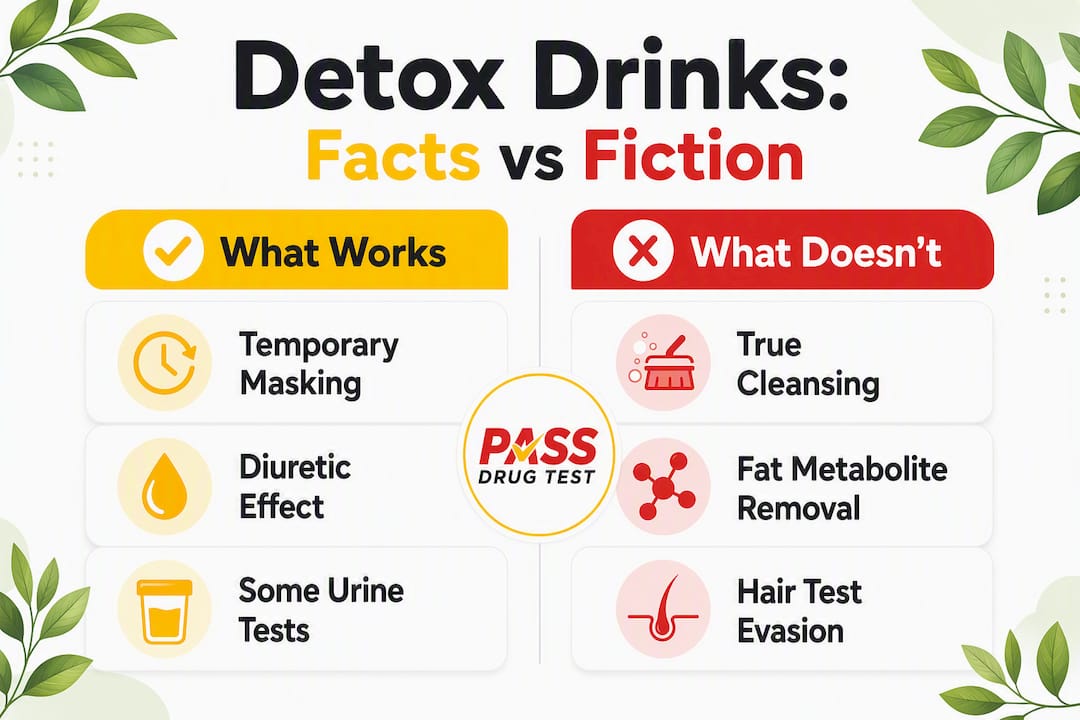
For a credible efficacy claim to hold up, a product would need to demonstrate: the user’s metabolite levels at baseline, the specific test’s cutoff threshold, the timing of the drink relative to collection, and the lab’s confirmatory method. No commercial detox drink provides that kind of validated data.
Health, legal, and practical risks you need to know
Using a detox drink or adulterant carries real risks beyond simply not working.
Health risks:
- Electrolyte imbalance from aggressive over-hydration (hyponatremia, a dangerous drop in blood sodium, is a documented risk with extreme water intake).
- Kidney strain from high doses of herbal diuretics, especially with pre-existing kidney conditions.
- GI distress from fiber-heavy formulas or large-volume drinks consumed quickly.
- Drug interactions: herbal ingredients like dandelion root and burdock can interact with diuretic medications, blood thinners, and diabetes drugs.
- Caustic injury from home adulterants. Reports document household chemicals including bleach, vinegar, and table salt being added directly to urine samples. Bleach and peroxide are corrosive and can cause burns if mishandled.
Practical risks:
- A diluted result (low creatinine, low specific gravity) does not produce a negative result. It produces a “dilute” result, which most employers and programs treat as grounds for an observed retest.
- Labs screen directly for common adulterants: nitrites, oxidants, surfactants, and pH extremes all trigger an “adulterated” or “invalid” specimen report.
- An invalid specimen report is often treated the same as a positive result under workplace drug testing policies.
Legal and workplace risks:
- Attempting to adulterate a federally mandated drug test (DOT-regulated positions, federal contractors) can constitute fraud and carry legal consequences beyond job loss.
- Supplying adulterants to another person for use in their test creates additional liability.
- Violating a court-ordered or probation-related testing program by submitting an adulterated sample typically results in immediate sanctions.
Pro Tip: Before buying any product, read the full ingredient list. Avoid anything that lists oxidizing chemicals, bleach derivatives, or caustic agents. If you have a chronic health condition or take prescription medications, consult a physician before consuming any high-dose herbal diuretic formula.
Which drugs are hardest to beat, and on which tests?
Different substances stay detectable for very different lengths of time, and the test type changes the difficulty dramatically.
| Substance | Urine Difficulty | Saliva/Blood Difficulty | Hair Difficulty |
|---|---|---|---|
| THC (chronic use) | High (long window) | Moderate (short window) | Very High |
| THC (single use) | Moderate | Low (clears fast) | High |
| Cocaine | Low-Moderate (short window) | Low | High |
| Opioids (short-acting) | Low-Moderate | Low | High |
| Opioids (long-acting, e.g., methadone) | High | Moderate | Very High |
| Benzodiazepines (long-acting) | High | Low | High |
| Amphetamines | Moderate | Low | High |
THC is the substance most detox drink buyers are trying to address, and it is also one of the hardest to clear from urine because of its fat solubility. A chronic daily user can test positive in urine for 30 days or longer after stopping. A single-use occasion typically clears in 3–4 days. Drinks that dilute urine may push a borderline chronic user’s sample below the 50 ng/mL immunoassay cutoff temporarily, but GC-MS confirmation uses a 15 ng/mL threshold, which is much harder to beat through dilution alone.
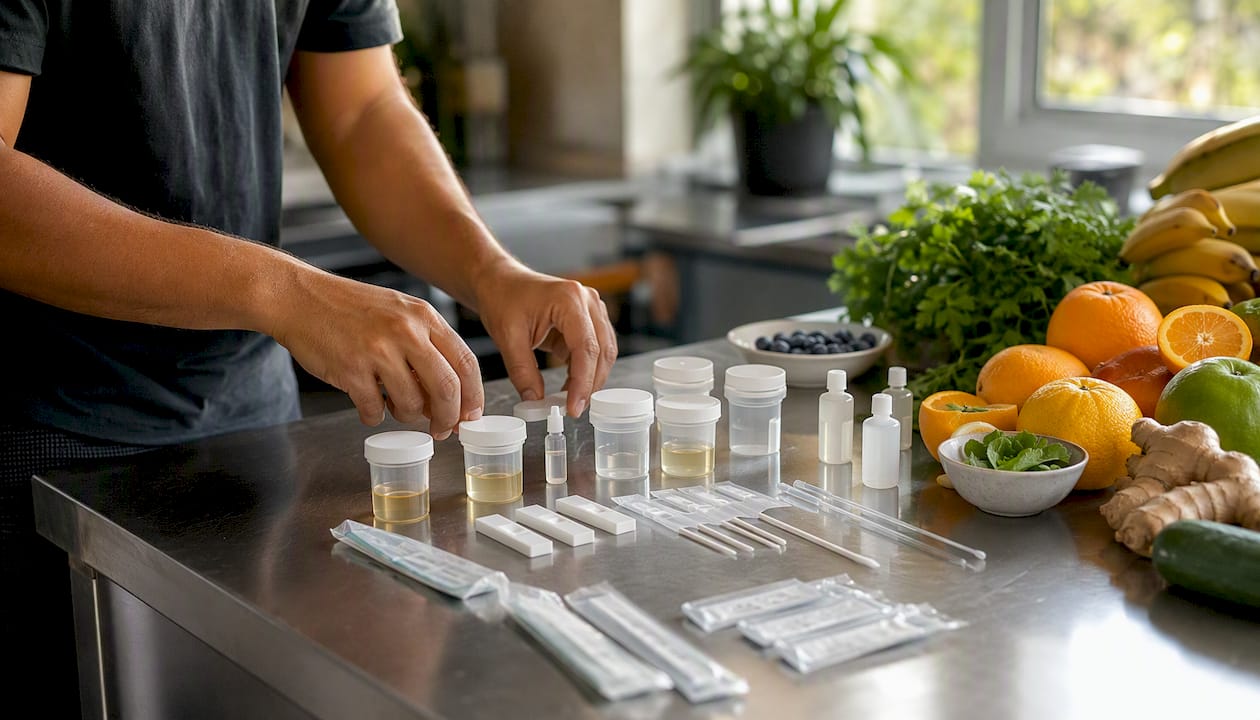
Cocaine and short-acting opioids have shorter urine windows (2–4 days for most users), so time alone is often more effective than any drink. Benzodiazepines vary widely: short-acting versions like triazolam clear in days, while long-acting ones like diazepam and its metabolites can be detected for weeks. For hair follicle testing, all of these substances are detectable for approximately 90 days regardless of what you drink.
How long drugs actually stay detectable in your body
Detection windows are estimates, not guarantees. Body fat percentage, frequency of use, metabolic rate, hydration, and the test’s sensitivity cutoff all shift these numbers. That said, standard clinical guidance provides useful ranges:
- THC: Urine 3–30+ days (single use to chronic); blood 1–7 days; saliva 1–3 days; hair up to 90 days.
- Cocaine: Urine 2–4 days; blood 12–24 hours; saliva 1–2 days; hair up to 90 days.
- Opioids (short-acting, e.g., heroin, oxycodone): Urine 2–4 days; blood 12–24 hours; saliva 1–4 days; hair up to 90 days.
- Benzodiazepines: Urine 3–6 weeks (long-acting); blood 2–3 days; saliva 1–10 days; hair up to 90 days.
- Amphetamines: Urine 2–4 days; blood 12–24 hours; saliva 1–3 days; hair up to 90 days.
The reason metabolites persist so long in urine for lipid-soluble drugs like THC is straightforward: the drug is stored in fatty tissue and slowly released back into the bloodstream as fat is metabolized. Exercise can temporarily increase THC metabolite levels in urine by mobilizing fat stores, which is why some guides recommend avoiding intense workouts in the days before a test. Hair incorporation works differently: drug metabolites circulate in the bloodstream and are deposited into the hair follicle as the hair grows, at approximately half an inch per month. Once embedded in the keratin matrix, they are not removed by anything you eat or drink. No safe, guaranteed 24-hour solution exists to clear all traces across urine, blood, hair, or sweat tests.
How labs detect tampering and confirm drug presence
Modern certified labs do not rely on a single test. The workflow is layered, and each layer is designed to catch a different evasion strategy.
Specimen validity testing (SVT) runs on every sample before the drug screen. It checks:
- Creatinine: Normal range is 20–300 mg/dL. Below 2 mg/dL is substituted; 2–20 mg/dL is dilute.
- Specific gravity: Normal range is 1.003–1.030. Values outside this range flag the sample.
- pH: Acceptable range is 4.5–8.5. Values outside suggest adulteration.
- Oxidant/adulterant screens: Direct tests for nitrites, bleach, glutaraldehyde, surfactants, and other common adulterants.
If a sample passes SVT, it moves to immunoassay screening. A positive immunoassay result then goes to confirmatory testing using GC-MS or LC-MS/MS. These methods identify and quantify specific metabolites with a precision that immunoassay cannot match. An oxidizing adulterant that destroys the antibody in an immunoassay strip will not fool a mass spectrometer, because GC-MS does not use antibodies.
An “invalid” specimen report means the lab could not verify the sample’s integrity. A “dilute” result means creatinine and specific gravity were low but not at substitution levels. Both outcomes typically trigger a second collection, often observed, which eliminates most evasion strategies entirely.
Safer alternatives if you are facing a drug test
If you have a test coming up and you are genuinely concerned, here is a practical sequence that does not involve risky products:
- Stop using immediately. Every day of abstinence reduces metabolite concentration. This is the only step with universal support from clinical and testing experts.
- Document any prescribed medications. Certain prescriptions (benzodiazepines, opioid pain medications, amphetamine-based ADHD drugs) produce legitimate positives. Have documentation ready before the test, not after.
- Hydrate responsibly. Drink normal amounts of water. Extreme hydration does not help and can produce a dilute flag or, in severe cases, cause hyponatremia.
- Avoid aggressive home remedies. Bleach, vinegar, salt, and similar adulterants are detectable and hazardous.
- Request information about the test. Ask HR or the testing coordinator what type of test is being administered, whether collection will be observed, and what the cutoff thresholds are. This information is often available and changes your preparation strategy significantly.
- Consider clinical detox if you have a dependency. NIDA-supported treatment approaches include medically supervised detox programs that address withdrawal safely. An Employee Assistance Program (EAP) can connect you with these resources confidentially.
- Consult a medical professional if you have any health conditions, take prescription medications, or are considering a high-dose herbal product.
For legal questions about workplace drug testing rights, a labor attorney or your state’s department of labor is the right resource, not a detox product website.
Evidence highlights and what the research actually supports
The strongest finding across clinical literature, lab guidance, and practitioner consensus is consistent: detox drinks are at best unreliable, temporary measures, and abstinence remains the only approach with a 100% success rate.
A few specific findings worth knowing:
- The National Center for Complementary and Integrative Health (NCCIH) states that commercial detox and cleanse products are not supported by rigorous scientific evidence for removing toxins from the body.
- Labs at SAMHSA-certified facilities use a two-step process (immunoassay screen followed by GC-MS confirmation) that is specifically designed to catch both drug presence and specimen manipulation.
- Many adulterants that occasionally fool a basic immunoassay strip do not survive confirmatory testing.
On hair testing specifically: Drinks have zero effect on hair follicle results. Hair-incorporated metabolites are physically embedded in the keratin shaft and cannot be removed by anything ingested. The only approaches that practitioners report as potentially reducing detectable metabolites in hair are topical, multi-step protocols using specialized shampoos. The Macujo Aloe Rid Shampoo and Zydot Ultra Clean are the two hair-treatment products most commonly referenced in hair-test preparation protocols. These are applied to the hair and scalp, not ingested, and they work through a completely different mechanism than any drink.
On drink-spike detection kits: These lateral-flow devices test beverages for spiking agents before consumption. They are a legitimate personal safety tool with no connection to bodily detoxification. Typical cutoffs include approximately 600 ng/mL for benzodiazepines and 2,000 ng/mL for ketamine. Do not confuse these with detox products.
The bottom line on evidence: No peer-reviewed study demonstrates that a commercial detox drink reliably produces a negative result on a SAMHSA-standard confirmatory drug test. The conditional cases where dilution may help involve borderline users, lower-sensitivity screens, and unobserved collections — a narrow set of circumstances that most people cannot verify in advance.
Key Takeaways
Abstinence is the only approach with a 100% success rate for passing any drug test; detox drinks offer conditional, temporary masking at best and carry real health and legal risks if they fail.
| Point | Details |
|---|---|
| Drinks mask, not cleanse | Detox drinks dilute urine and restore markers temporarily; they do not remove metabolites from fat or hair. |
| Labs detect tampering | Specimen validity tests check creatinine, specific gravity, pH, and adulterants before the drug screen runs. |
| Hair tests are drink-proof | No ingested product affects hair-incorporated metabolites; only topical protocols like Macujo Aloe Rid Shampoo address hair tests. |
| Time is the real variable | Detection windows range from 1–2 days (saliva, cocaine) to 90 days (hair, any substance); abstinence is the only reliable accelerant. |
| Passdrugtest products | Passdrugtest offers hair shampoos, urine detox drinks, and full kits matched to specific test types for readers who need a product-based approach. |
A frank perspective on detox drinks and what they can realistically do
The detox drink market is built on a real anxiety: people facing a drug test with limited time and limited options. That anxiety is legitimate. What is less legitimate is the way some products are marketed, with language like “guaranteed cleanse” or “full body flush” that implies a biological process the products simply cannot deliver.
Here is what the evidence actually supports, stated plainly. For a urine test, a well-formulated same-day drink used correctly by a light or moderate user who has abstained for several days can push a borderline sample below the immunoassay cutoff. That is a real, conditional effect. It is not a guarantee, it does not work for heavy chronic users, and it does not survive GC-MS confirmation if the underlying metabolite load is significant. For saliva and blood tests, drinks offer almost nothing. For hair tests, they offer exactly nothing.
The products that have the most credible mechanism for hair testing are topical shampoo protocols, not drinks. The distinction matters because someone who buys a detox drink thinking it will help them pass a hair follicle test is wasting money and time they could spend on the right preparation.
What I would tell anyone reading this: know your test type before you buy anything. If it is a urine test and you have time to abstain, abstain. If it is a hair test, drinks are not your answer. And if you are in a situation where the stakes are high, a conversation with a medical professional or an attorney is worth more than any product on the market.
What Passdrugtest offers and how to choose the right product
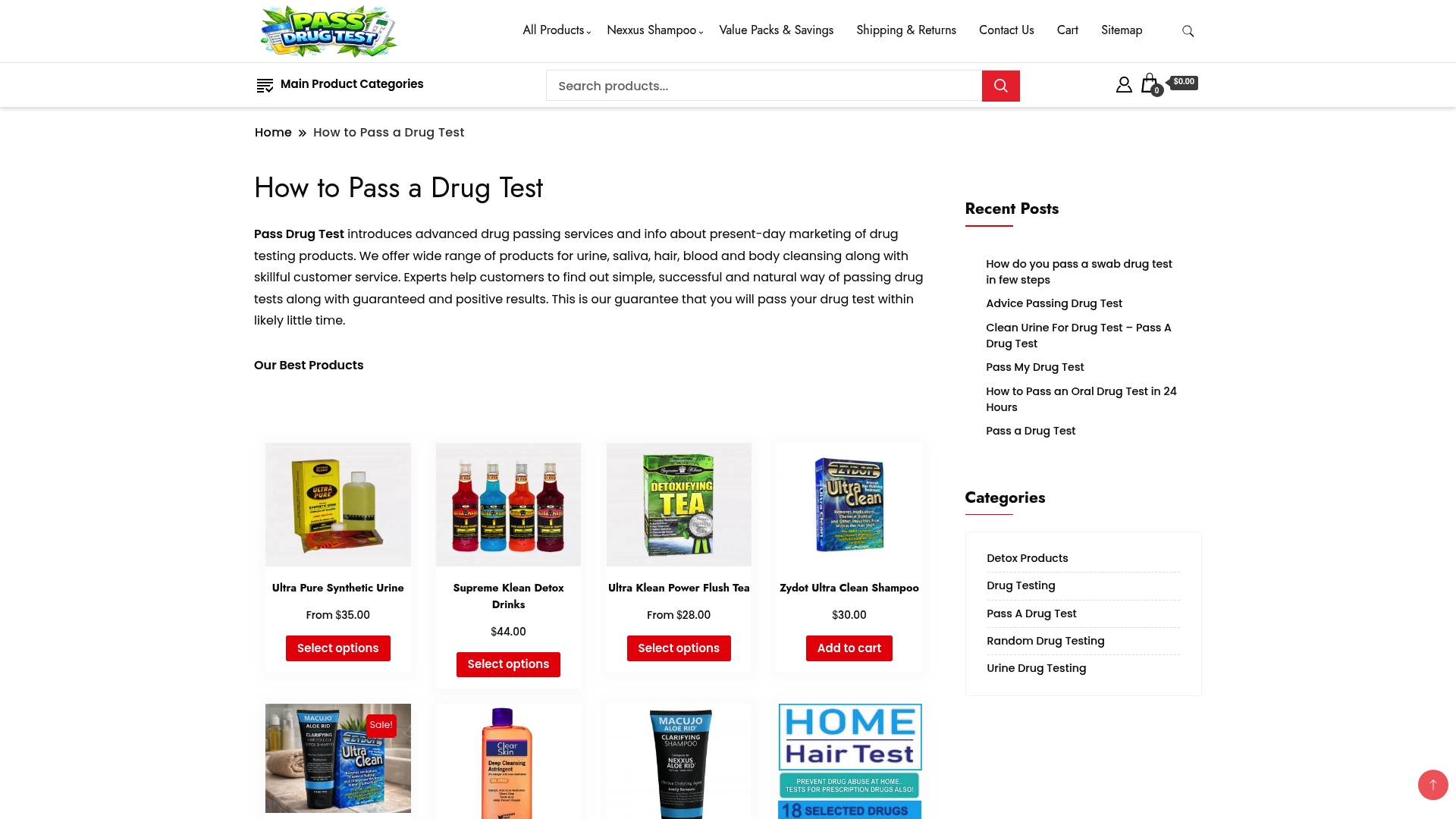
Passdrugtest carries a focused range of products matched to specific test types, and the difference between them matters more than most buyers realize.
For hair follicle tests, the flagship product is the Macujo Aloe Rid Shampoo, used as part of a multi-step topical protocol. It is paired with Zydot Ultra Clean as a finishing treatment on test day. These are the only product types with any practitioner-reported mechanism for reducing hair-detected metabolites. They are applied to the hair, not consumed.
For urine tests, Passdrugtest offers same-day cleansing drinks and urine detox products formulated with creatine, B vitamins, and herbal diuretics to support temporary dilution while maintaining specimen validity markers. These are appropriate only for urine screens and carry the same conditional effectiveness discussed throughout this article.
Before you buy, run through this checklist:
- Confirm your test type (urine, hair, saliva, or blood) before selecting any product.
- Read the full ingredient list. Avoid anything with caustic or oxidizing chemicals.
- Check the return and privacy policies.
- Follow the product instructions exactly, including timing and hydration guidance.
- Do not use any product as a substitute for abstinence if you have enough time to clear naturally.
Browse the full drug test detox product range at Passdrugtest to find the option matched to your test type and timeline.
This article provides general information only and is not medical or legal advice. Consult a qualified professional for guidance specific to your situation and confirm current testing standards with the relevant authority.
Authoritative sources and further reading
- National Center for Complementary and Integrative Health: Detoxes and Cleanses
- NIDA: Treatment Approaches for Drug Addiction
- NIDA: Principles of Drug Addiction Treatment (PDF)
- MedlinePlus: Drug Information
- NCBI: Drug Testing in the Workplace
- PMC: Substance Use and Detection Methods
For clinical detox programs, addiction treatment centers, and Employee Assistance Programs, SAMHSA’s National Helpline (1-800-662-4357) is a free, confidential resource available 24 hours a day.