

Most people facing a hair follicle drug test turn to the internet for advice, and most of what they find is wrong. From shaving your head to using a random detox shampoo from the drugstore, popular strategies circulate endlessly online with little science behind them. Acting on bad information does not just waste money. It can cost you the job, the clearance, or the opportunity you were counting on. This article breaks down the most common myths about hair follicle drug testing, explains what the science actually says, and points you toward approaches that give you a real chance.
Table of Contents
- How hair follicle drug tests work
- Most common myths about passing hair tests
- Why these myths are so persistent
- What actually works: Evidence-based approaches to hair drug tests
- A hard truth most don’t want to hear about beating hair tests
- Practical resources for passing your next hair test
- Frequently asked questions
Key Takeaways
| Point | Details |
|---|---|
| Surface treatments ineffective | Detox shampoos and hair dye only affect the outside, leaving drug traces inside the hair. |
| Labs use body hair too | Shaving your head does not help since samples are taken from other body hair as needed. |
| No instant solutions | Quick fixes advertised online rarely work; abstaining and multi-step cleansing offer the best odds. |
| Evidence-based methods matter | Following lab-proven strategies improves your chances more than believing myths. |
How hair follicle drug tests work
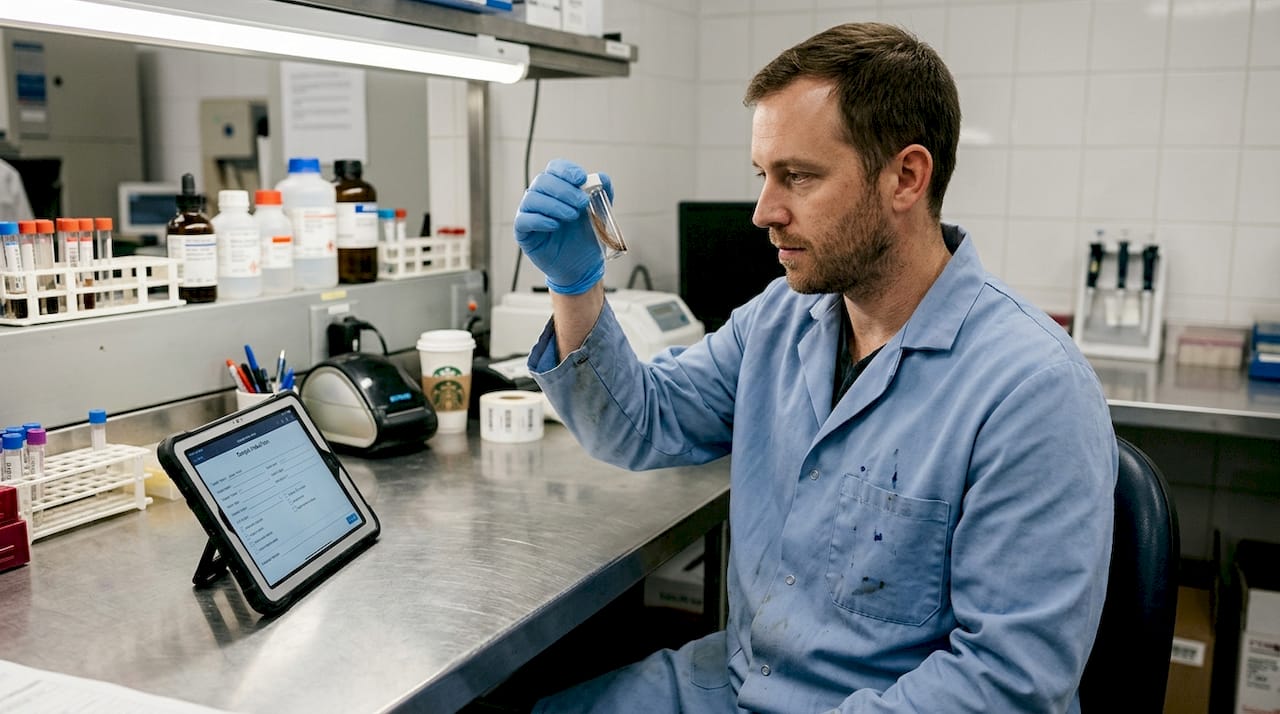
Before you can separate fact from fiction, you need to understand what a hair follicle drug test is actually measuring. It is not testing the outside of your hair. It is not checking for residue from smoke or skin contact. It is looking for drug metabolites that have been deposited inside the hair shaft itself through your bloodstream.
When you use THC, your body breaks it down into metabolites. Those metabolites travel through your bloodstream and get incorporated into your hair as it grows. Since hair grows roughly half an inch per month, a standard 1.5-inch sample covers approximately 90 days of use. That is a significant window, and it is why hair drug test basics matter so much to understand before you plan anything.
Here is how the testing process typically works:
- A collector cuts a small sample of hair, usually from the back of the scalp, close to the root
- The sample is sent to a certified laboratory
- Lab technicians wash the hair to remove any external contamination, including sweat, smoke residue, and environmental exposure
- The washed hair is then dissolved and analyzed for internal metabolites
- Results are reviewed by a medical review officer before being reported
The key detail most people miss is that labs wash hair samples to remove external contaminants, meaning the metabolites inside the hair shaft are what is actually tested. This single fact dismantles a huge number of popular myths.
| Factor | Details |
|---|---|
| Sample length | 1.5 inches from scalp |
| Detection window | Up to 90 days |
| What is tested | Internal metabolites, not surface residue |
| Lab wash step | Removes external contamination before analysis |
| Preferred sample site | Back of scalp, close to root |
Important: Hair tests are among the most difficult drug tests to beat precisely because the evidence is locked inside the hair structure, not sitting on the surface where washing could reach it.
This is why the 90-day window feels so unforgiving. Urine tests clear THC in days to weeks. Hair tests hold a record that your body literally built into its own structure.
Most common myths about passing hair tests
Understanding the testing method makes it clear why so many myths sound convincing yet miss the mark. Let’s go through the biggest ones.
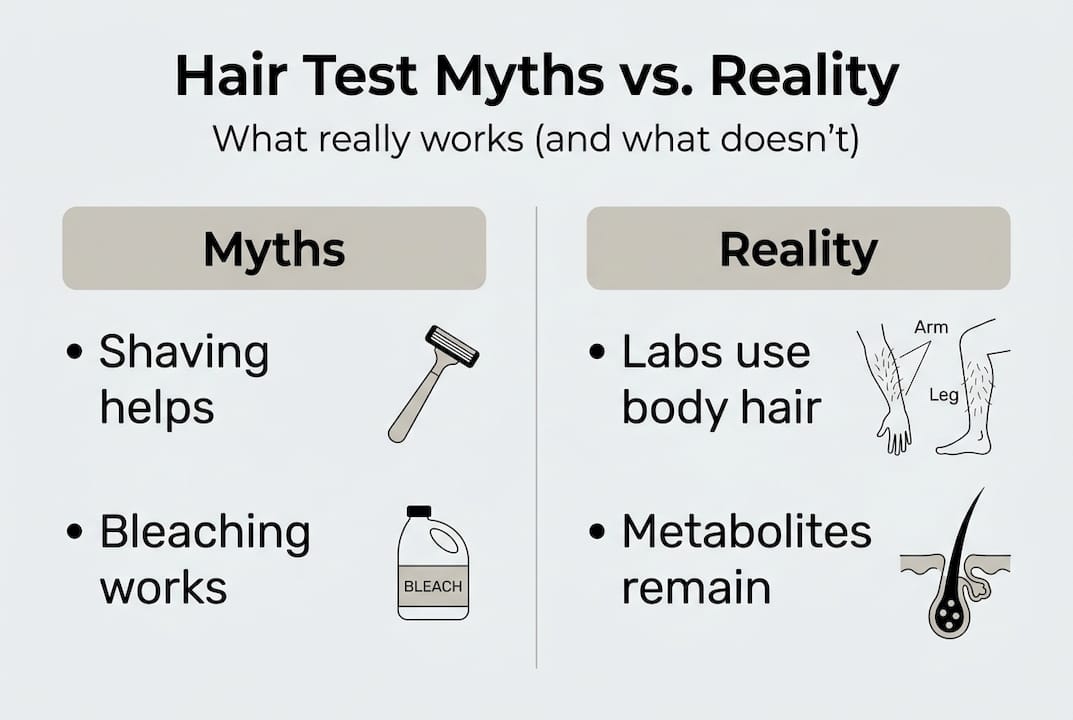
Myth 1: Shaving your head avoids the test
This is one of the most common assumptions, and it simply does not work. Shaving your head does not help since labs can use body hair instead. Chest hair, arm hair, leg hair, and even facial hair are all valid substitutes. Showing up bald may actually raise red flags with the collector.
Myth 2: Common detox shampoos remove drug traces
This one is especially dangerous because it sounds so reasonable. The problem is that standard shampoos, even ones marketed as detox products, only clean the surface of the hair. They cannot penetrate the cortex where metabolites are stored. When you are evaluating detox shampoos, the key question is whether the formula is designed to work beyond the surface layer.
Myth 3: Bleaching or dyeing your hair erases the evidence
Chemical treatments like bleaching do alter the hair structure to some degree, but they do not reliably eliminate internal THC traces. The metabolites are embedded deep within the cortex, and standard bleaching agents do not fully reach them. This is not a strategy you can count on.
Myth 4: Secondhand smoke can cause a positive result
This one actually works in reverse. People worry that passive exposure will get them flagged, but the lab wash step removes external contamination. Passive exposure is not sufficient to deposit metabolites at detectable levels inside the hair shaft.
Pro Tip: Before spending money on any product, check whether it is designed to address internal metabolites or just surface buildup. That distinction tells you almost everything about whether it is worth your time.
| Myth | Reality |
|---|---|
| Shaving head avoids test | Labs use body hair instead |
| Bleaching removes metabolites | Does not reliably eliminate internal traces |
| Secondhand smoke causes positives | Lab wash removes surface contamination |
| Any detox shampoo works | Most only clean the surface |
The best detox shampoos are specifically formulated to go deeper, but even those work best as part of a broader preparation strategy.
Why these myths are so persistent
Since so many myths persist, what is behind their lasting popularity? The answer is a mix of psychology, social media dynamics, and financial incentives.
Personal stories are incredibly persuasive. When someone posts online saying they passed after using a certain shampoo or method, readers remember that story. What they do not see are the dozens of people who tried the same thing and failed. This is confirmation bias in action: people remember the successes and quietly ignore the failures.
Social media amplifies this problem significantly. A single viral post claiming a quick fix works can reach thousands of people before any correction appears. Platforms reward engagement, not accuracy. Misinformation about drug tests spreads fast because it is exactly what anxious people want to hear.
There is also a financial angle. Some products are sold with vague claims that stop just short of making a direct guarantee. They profit from the hope of a quick fix without being accountable for results. When the product fails, users often blame themselves rather than the product.
- Personal testimonials feel more trustworthy than lab data
- Social media rewards shareable stories, not accurate ones
- Sellers profit from hope without guaranteeing outcomes
- Labs continuously update their methods, making old tricks obsolete
- Confirmation bias causes people to remember wins and forget losses
Labs are not standing still either. Testing technology improves regularly, which means strategies that may have had some effect years ago are often useless today. False assumptions about detox methods are common and continue to circulate online even as the science moves forward.
Reality check: The fact that something worked for one person in a forum post from several years ago tells you almost nothing about whether it will work for you today.
The real detox strategies worth considering are the ones built on an understanding of how hair testing actually works, not on wishful thinking or outdated forum advice.
What actually works: Evidence-based approaches to hair drug tests
If myths do not work, what can you actually do to protect yourself? Here is what the evidence supports.
First, accept the uncomfortable reality: there are no instant, foolproof fixes. Anyone promising a guaranteed pass with a single product or a one-night treatment is not being honest with you. That said, there are approaches that meaningfully improve your chances when used correctly and consistently.
- Stop using THC as early as possible. Time is genuinely your most powerful tool. The longer you abstain before a test, the less metabolite content will be present in new hair growth.
- Use a multi-step deep cleansing method. The Macujo Method is one of the most discussed approaches in this space. It combines multiple agents to open the hair cuticle and target internal metabolites more effectively than surface washing alone.
- Choose a specialized shampoo designed for internal metabolites. Non-surface cleansing methods are required because standard shampoos do not reach internal metabolites per lab procedures.
- Repeat treatments consistently. A single wash is rarely enough. The protocols that show the most promise involve multiple sessions over several days.
- Use lab-backed guidance. Relying on resources that explain the actual science gives you a realistic picture of what to expect.
Pro Tip: Combine the hair test shampoo guide with a structured method like the Macujo Method explained for the most informed preparation approach available.
No approach eliminates risk entirely, but informed preparation is always better than guessing. The goal is to give yourself the best realistic chance, not to chase a guarantee that does not exist.
A hard truth most don’t want to hear about beating hair tests
We have seen a lot of people come to us after trying the shortcuts first. They shaved their heads, bought the cheapest shampoo they could find, or followed advice from a forum post with no scientific backing. And most of them came back frustrated, sometimes after already failing a test.
The hunger for a simple fix is completely understandable. Hair tests are stressful, and the stakes are real. But shortcuts rarely succeed when science is working against them. The biology of how metabolites get locked into your hair does not care how badly you want a quick answer.
What actually reduces risk is awareness, realistic preparation, and investment in proven approaches. The top tested shampoos are not magic, but they are built on a real understanding of hair structure. Pairing them with a structured method and giving yourself enough time is the closest thing to a reliable strategy that exists. Spending money on proven preparation is always smarter than spending it on hope.
Practical resources for passing your next hair test
You now have a clear picture of what does not work and why. The next step is putting that knowledge into action with the right tools.
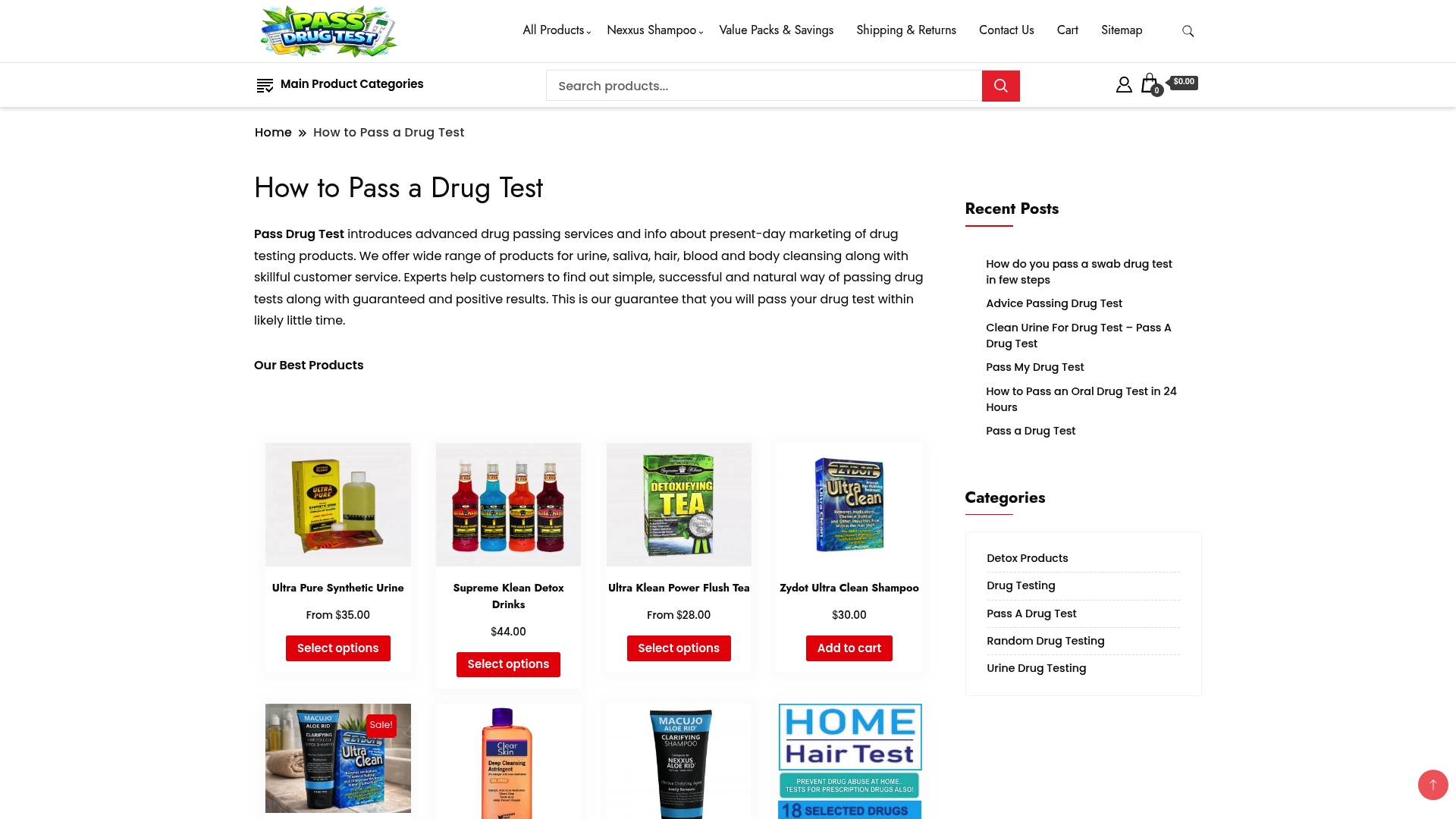
Our hair follicle drug test shampoo guide walks you through the options that are actually designed to address internal metabolites, not just surface buildup. If THC is your specific concern, the marijuana hair test guide covers the details most relevant to your situation. And if you are ready to build a full preparation plan, our detox products range gives you everything you need in one place. Do not leave your results to chance when proven resources are available.
Frequently asked questions
Will bleaching or dyeing my hair help me pass a drug test?
No. Bleaching and dyeing do not reliably remove drug metabolites from inside the hair shaft, so labs can still detect use even after chemical treatments.
Can secondhand marijuana smoke make me fail a hair follicle test?
Unlikely. Labs wash hair samples to remove external contamination, and passive exposure is not sufficient to deposit metabolites at levels that would trigger a positive result.
Do detox shampoos guarantee a negative hair drug test?
No. Most detox shampoos only address the surface of the hair and do not eliminate metabolites already embedded within the shaft. Specialized formulas used as part of a structured method offer better results.
If I shave my head, can I avoid a hair follicle drug test?
No. If head hair is unavailable, labs will use body hair instead, so shaving does not prevent the test from proceeding.