
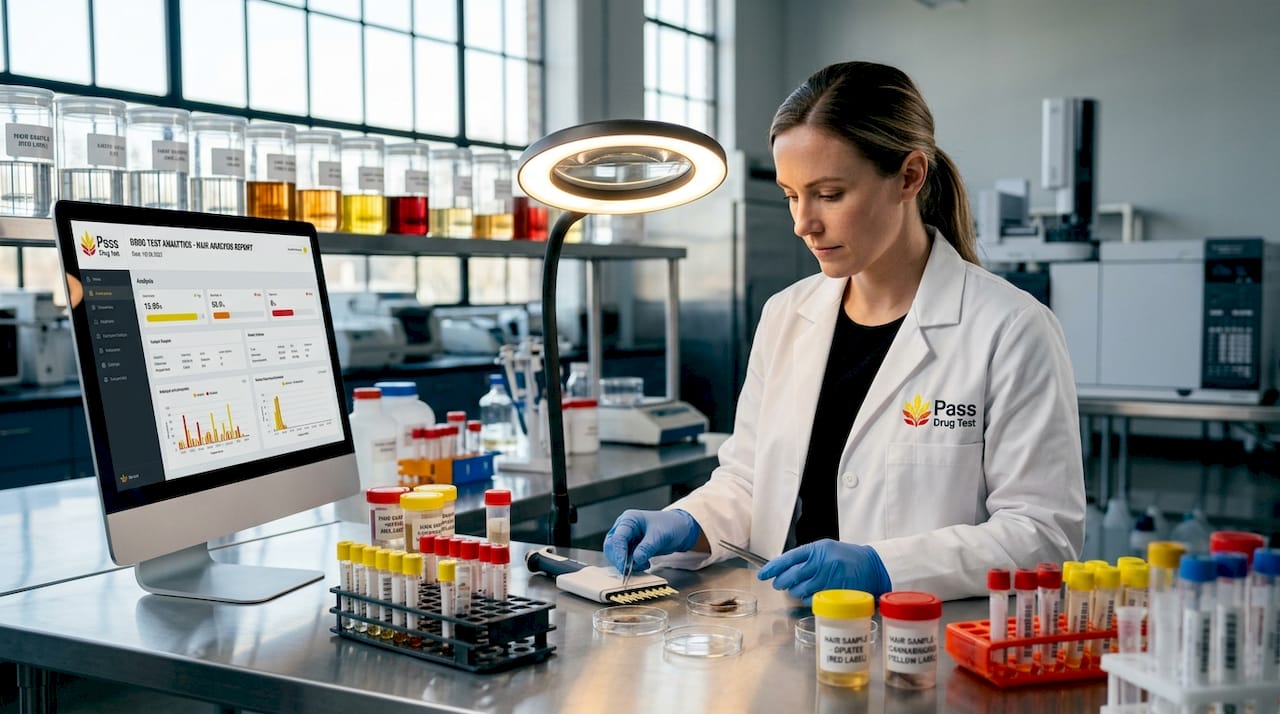

Hair testing, formally called hair biomonitoring, is defined as the analysis of hair strands to detect chemicals incorporated into the hair shaft over weeks to months, providing a retrospective record of an individual’s exposure history. Environmental exposure and hair tests are directly connected because substances from polluted air, contaminated water, industrial emissions, and household chemicals enter your bloodstream and deposit into growing hair follicles. The result is a biological timeline of what your body has absorbed. Understanding how this process works, and how labs separate true internal exposure from surface contamination, is the foundation for interpreting any hair test result with confidence.
How does hair testing work to detect environmental toxins?
Hair incorporates chemicals through three primary routes: the bloodstream, sweat, and sebum. As your hair grows roughly 1 centimeter per month, substances circulating in your body bind to the hair matrix and become locked inside the shaft. This is what makes hair analysis for toxins fundamentally different from urine or blood testing. Blood and urine capture a snapshot of what is in your system right now. Hair captures what was in your system for months.
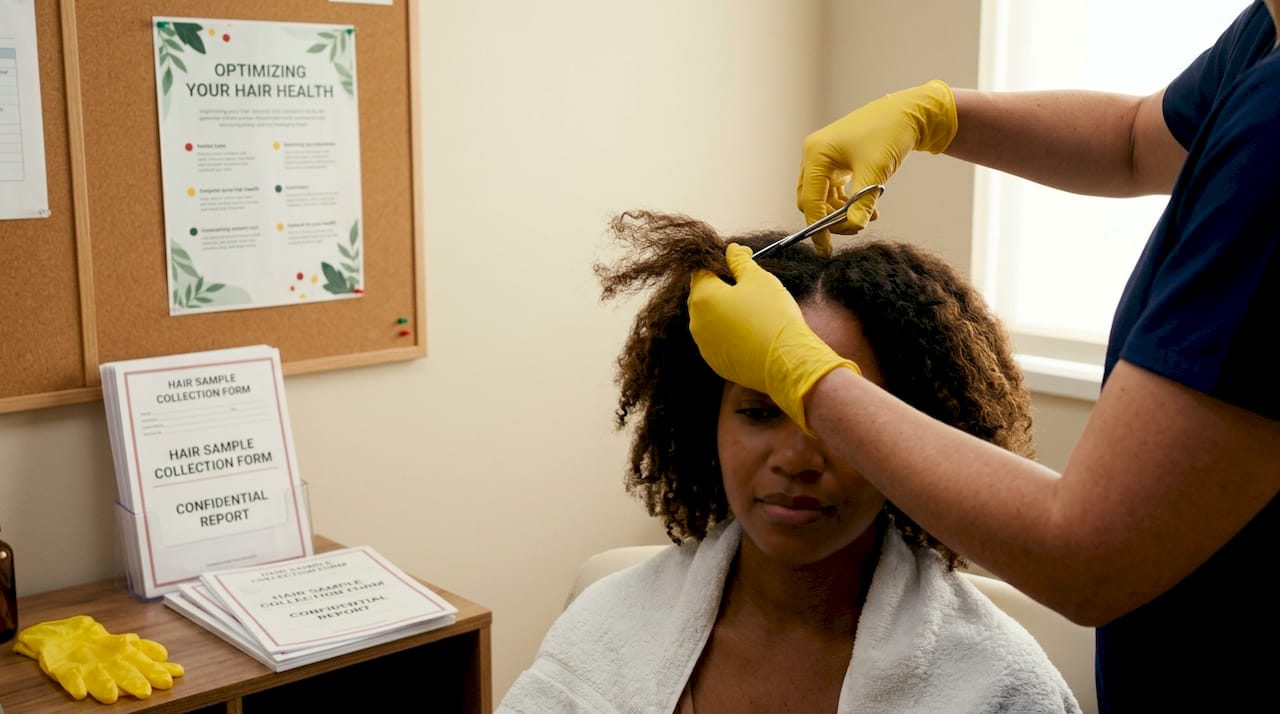
Sample collection focuses on scalp hair cut as close to the root as possible. The proximal end (closest to the scalp) reflects the most recent exposure, while the distal end reflects older exposure. Laboratories typically collect a sample of about 100 to 200 milligrams, roughly the diameter of a pencil, from the posterior vertex of the scalp.
Before any chemical analysis begins, labs run multi-step decontamination. Rigorous washing protocols using detergents like 1.0% Triton X-100, followed by acid immersion with ultrasonication and drying at 70°C, reduce external surface residues that would otherwise skew results. This step is not optional. It is the difference between measuring what your body absorbed and measuring what landed on your hair from the outside.
After washing, labs use analytical techniques like ICP-MS (Inductively Coupled Plasma Mass Spectrometry) and LC-MS/MS (Liquid Chromatography Tandem Mass Spectrometry) to quantify specific chemicals at extremely low concentrations. ICP-MS is the standard for heavy metals like lead, mercury, and arsenic. LC-MS/MS handles organic compounds including PFAS and drug metabolites.
Pro Tip: When reviewing any hair test report, ask the lab whether they analyzed the wash solutions after decontamination. If they did not, their positive findings carry significantly less certainty.
Key steps in a standard hair toxicology analysis:
- Sample collection from the posterior scalp, proximal end aligned to root
- Multi-step washing with detergent, acid ultrasonication, and drying
- Digestion of the cleaned hair matrix
- Quantification via ICP-MS for metals or LC-MS/MS for organic compounds
- Comparison of results against certified reference materials and established thresholds
What are common sources and types of environmental toxins found in hair?
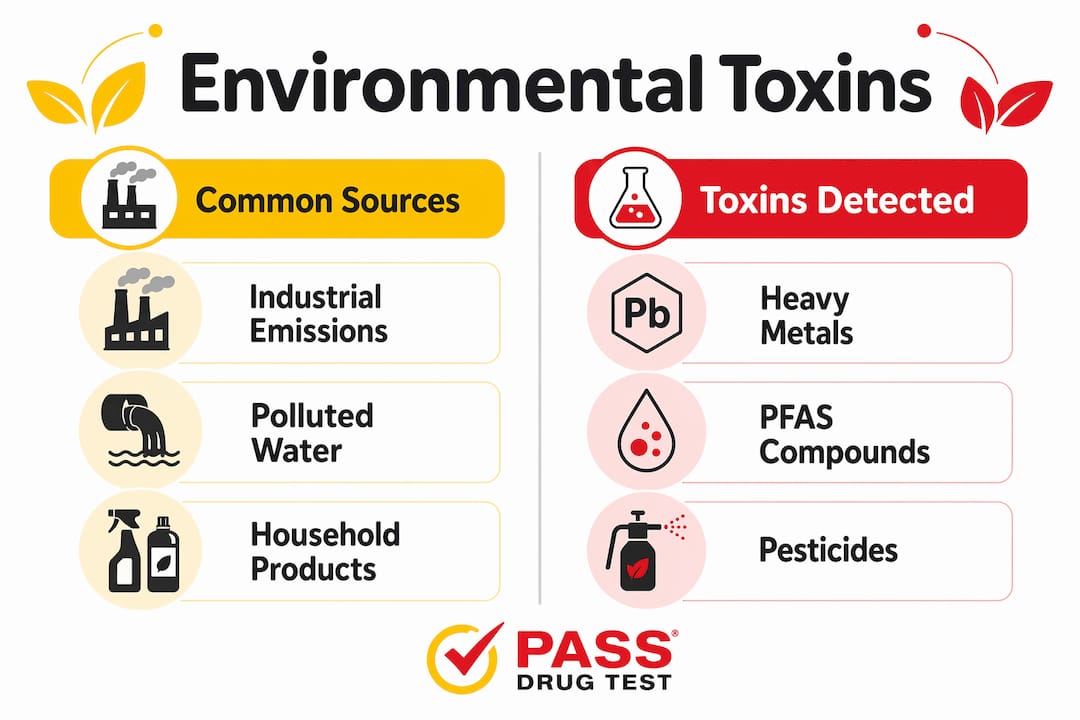
The range of chemicals detectable through chemical exposure hair analysis is broader than most people expect. Heavy metals dominate environmental contamination testing because they are persistent, bioaccumulative, and present in urban air, soil, and water. Lead exposure comes from traffic emissions, old paint, and industrial dust. Cadmium enters the body through cigarette smoke and contaminated food. Mercury is linked to fish consumption and industrial pollution. Arsenic appears in contaminated groundwater and certain agricultural areas.
A 2026 study on pediatric hair from urban-industrial Spain confirmed that metals like Ba, Sr, and V can be quantified using ICP-MS with rigorous washing and digestion protocols. This matters because it demonstrates that even trace geogenic and traffic-related metals leave a measurable signature in hair, even in children with no direct industrial contact.
PFAS (per- and polyfluoroalkyl substances) represent a growing concern in hair testing. These chemicals appear in non-stick cookware, water-resistant clothing, food packaging, and firefighting foam. They persist in the environment and accumulate in the body over time, making hair a useful matrix for tracking long-term PFAS burden.
Indoor chemical pollutants are another underappreciated source. Research shows that pet hair shares over 50% of molecular contaminant features with indoor dust, including pharmaceuticals, flame retardants, and pesticides. This finding has a direct implication for hair testing: if you live in a chemically loaded indoor environment, your hair may absorb surface contaminants that do not reflect internal exposure at all.
Common environmental toxins detected in hair tests include:
- Heavy metals: Lead, mercury, cadmium, arsenic, barium, strontium, vanadium
- PFAS compounds: PFOS, PFOA, and long-chain perfluorosulfonic acids
- Pesticides and flame retardants: From household dust and treated textiles
- Pharmaceuticals: From environmental water contamination or shared living spaces
- Industrial solvents: From occupational or neighborhood proximity to manufacturing
How do laboratories distinguish true exposure from external contamination?
This is the most technically demanding part of hair testing, and it is where many commercial labs fall short. The core challenge is that a positive result in unwashed hair could mean the chemical was absorbed internally through your bloodstream, or it could mean the chemical simply landed on the surface of your hair from the air, water, or physical contact.
Validated decontamination protocols address this by analyzing the wash solutions themselves after cleaning. Research confirms that amphetamines absent in wash solutions after dichloromethane decontamination validates that detected analytes represent internal incorporation, not surface residue. The logic is straightforward: if the chemical washed off, it was external. If it remains in the hair after washing, it was incorporated internally.
The standard decontamination sequence used by rigorous labs follows these steps:
- Initial rinse with an aqueous detergent solution (e.g., 1.0% Triton X-100) to remove surface oils and particulates
- Acid immersion with ultrasonication to dislodge tightly bound surface contaminants
- Organic solvent wash (e.g., dichloromethane) for lipophilic compounds
- Drying at controlled temperature (typically 70°C)
- Analysis of each wash fraction to confirm absence of target analytes
Quality control goes further. Certified reference materials (CRMs) with known chemical concentrations are run alongside samples to verify instrument accuracy. Blanks confirm no cross-contamination between samples. Reanalysis of flagged samples adds a second layer of verification.
Pro Tip: Ask any lab you use whether they publish their decontamination validation data. A lab that cannot show you their wash-solution analysis results is not operating at the standard required for reliable environmental exposure interpretation.
The table below compares rigorous versus basic lab protocols:
| Protocol element | Rigorous lab | Basic lab |
|---|---|---|
| Wash solution analysis | Yes, confirms internal incorporation | No, skips verification step |
| Certified reference materials | Included in every batch | Rarely used |
| Multi-step decontamination | Detergent + acid + solvent | Single rinse only |
| Statistical handling of non-detects | Left-censoring methods (e.g., NADA2) | Often excluded from report |
| Reanalysis of borderline results | Standard practice | Uncommon |
Incomplete washing protocols are a documented source of false positives in commercial hair testing. If you receive a positive result from a lab that cannot verify its decontamination process, the result should be treated with caution.
What does hair segmentation reveal about exposure timelines?
Segmental hair analysis is one of the most powerful and underused tools in environmental biomonitoring. Because hair grows approximately 1 centimeter per month, cutting a 9-centimeter strand into three segments of 3 centimeters each gives you three separate exposure windows: roughly months 1 to 3, months 4 to 6, and months 7 to 9 prior to sampling.
Research on PFAS demonstrates this clearly. Dose-response associations for long-chain PFSAs in segmented hair correlate with serum PFAS concentrations, confirming that each segment reflects a distinct monthly exposure window. This means a toxicologist can look at your hair segments and identify whether your PFAS exposure increased, decreased, or remained stable over the past several months.
The data table below illustrates how segmentation maps to exposure windows:
| Hair segment (from root) | Approximate time window | Typical use case |
|---|---|---|
| 0 to 3 cm | Most recent 3 months | Detect recent exposure events |
| 3 to 6 cm | 3 to 6 months prior | Track mid-term exposure trends |
| 6 to 9 cm | 6 to 9 months prior | Identify historical exposure baseline |
When only whole hair is analyzed without segmentation, temporal resolution is lost. A high reading in the full strand tells you exposure occurred at some point in the past several months, but not when. Segmentation tells you whether the exposure is ongoing or historical, which is critical for source investigation and health assessment.
For individuals concerned about a specific environmental event, such as moving near an industrial facility or a known contamination incident, segmental analysis can confirm whether the event correlates with elevated chemical levels in the corresponding hair segment.
How should you interpret your environmental hair test results?
A positive result on a hair test for chemical exposure means the detected substance was present in your body at some point during the growth period represented by the sample. It does not automatically identify the source, confirm ongoing exposure, or establish a health risk without additional context.
Start by comparing your results against established reference values. For heavy metals, organizations like the Agency for Toxic Substances and Disease Registry (ATSDR) and the World Health Organization (WHO) publish exposure guidelines. For PFAS, reference ranges are still evolving, but segmental data compared against population studies provides useful context.
Consider the possibility of external contamination before drawing conclusions. If your lab did not perform wash-solution verification, a positive result for a compound you have no obvious internal exposure to may reflect surface contamination from your environment, not systemic absorption. Consulting a toxicologist or occupational health physician adds critical interpretive value.
Pro Tip: If your results show elevated metals but you have no obvious occupational or dietary exposure, request a segmented retest. A single elevated segment points to a discrete event. Uniformly elevated segments across the full strand suggest chronic, ongoing exposure.
Practical steps after receiving results:
- Request the lab’s decontamination and wash-solution verification data
- Compare findings against ATSDR or WHO reference values for the specific chemical
- Consult a toxicologist to assess health relevance and rule out external contamination
- Consider lifestyle and dietary changes to reduce ongoing exposure sources
- Follow up with a segmented retest in 3 to 6 months to track whether levels are declining
Understanding hair test results accurately requires knowing both what the science can confirm and where its limits lie.
Key takeaways
Hair biomonitoring provides a months-long exposure record, but accurate interpretation depends entirely on validated lab decontamination, wash-solution verification, and segmental analysis to separate internal incorporation from surface contamination.
| Point | Details |
|---|---|
| Internal vs. external contamination | Wash-solution analysis is the only reliable method to confirm a positive result reflects true internal exposure. |
| Segmental analysis adds timeline data | Dividing hair into 3 cm segments maps exposure to specific monthly windows, revealing when exposure occurred. |
| Lab quality determines result validity | Rigorous protocols using certified reference materials and multi-step washing are required for trustworthy findings. |
| Common toxins detected | Lead, mercury, PFAS, pesticides, and flame retardants are among the most frequently identified environmental chemicals in hair. |
| Positive results need expert interpretation | A positive finding indicates past exposure within the growth window, not current levels or confirmed health risk. |
My take on the evolving science of hair exposure testing
I have spent years watching the hair testing field mature, and the single biggest gap I see is not in the analytical technology. The instruments are excellent. The gap is in decontamination discipline at the lab level.
Most commercial labs run a single wash step and call it done. Rigorous research labs run multi-step protocols and then analyze the wash fractions themselves. That difference is not minor. It is the difference between a result you can act on and a result that might be sending you in the wrong direction entirely.
Segmental analysis is the other underused tool that genuinely changes what hair testing can tell you. A whole-strand result is a blunt instrument. A segmented result is a timeline. For anyone trying to connect a specific environmental event to a health concern, that timeline is the only way to make the case with any scientific credibility.
The indoor environment piece also deserves more attention. The finding that pet hair shares over half its chemical profile with household dust tells you something important: your home is a chemical repository, and your hair is absorbing from it constantly. That does not mean every positive result is a false positive. It means context matters enormously, and no result should be interpreted without knowing the full picture of where you live, work, and spend your time.
Hair testing is genuinely valuable for medium-term exposure monitoring. It fills a gap that blood and urine simply cannot. But it rewards the people who approach it with scientific rigor, not the ones who treat a single number as a verdict.
— Michael
Prepare your hair with proven detox solutions from Passdrugtest
If your hair test results have raised concerns about toxin levels, or if you are preparing for an upcoming hair follicle drug test, the right cleansing approach matters. Passdrugtest offers a proven line of hair detox shampoos specifically formulated to support deep cleansing of the hair shaft, including the Macujo Aloe Rid Shampoo, which is the top-rated product in its class for thorough hair preparation.

Combining a science-backed detox shampoo with the right protocol gives you the best foundation before any hair test. Passdrugtest also carries a full range of detox products to support whole-body cleansing alongside your hair preparation. Pair product use with reducing ongoing exposure sources for the most effective outcome.
FAQ
What does a hair test actually detect?
A hair test detects chemicals incorporated into the hair shaft through the bloodstream, sweat, and sebum during hair growth. Common targets include heavy metals like lead and mercury, PFAS compounds, pesticides, and drug metabolites.
How far back does a hair test go?
Standard hair tests analyze a 1.5-inch (approximately 3.9 cm) sample, covering roughly 90 days of exposure history. Segmental analysis of longer strands can extend the retrospective window to 9 months or more.
Can environmental contamination cause a false positive on a hair test?
Yes. External surface contamination from polluted air, water, or physical contact can produce a positive result if the lab does not perform wash-solution verification. Validated decontamination protocols that analyze rinse fractions are the standard method to rule this out.
What is the most reliable way to confirm internal exposure in hair testing?
Analyzing the wash solutions after decontamination is the most direct confirmation that detected analytes represent internal incorporation rather than surface residue. A lab that skips this step cannot reliably distinguish true exposure from external contamination.
Does hair segmentation improve the accuracy of exposure assessment?
Segmentation significantly improves temporal accuracy. Cutting hair into 3 cm segments maps each section to a specific monthly window, allowing toxicologists to identify when exposure occurred rather than just confirming it happened at some point in the past several months.