


Hair drug testing feels invasive, and that reaction is completely understandable. You’re handing over a biological sample, and the last thing you want is your personal health information floating around the workplace. But here’s the reality: strict confidentiality frameworks govern every step of the hair follicle testing process, from collection to result reporting. Understanding how those frameworks work, and what you can actively control, puts you in a far stronger position. This guide walks you through the legal protections, the practical procedures, your rights, common myths, and the proven steps you can take to protect yourself.
Table of Contents
- What confidentiality means in hair drug testing
- How the hair drug testing process protects your privacy
- Your rights and consent: What you control in hair drug testing
- Common misconceptions about hair drug test confidentiality
- Best practices for keeping your hair drug test confidential
- Hair drug test confidentiality: What most guides get wrong
- Get peace of mind and pass with confidence
- Frequently asked questions
Key Takeaways
| Point | Details |
|---|---|
| Confidentiality is the law | Both federal and workplace regulations require drug test results to remain private and seen only by authorized people. |
| Chain of custody protects privacy | Documented handling and secure storage of hair samples ensure no unauthorized access or tampering. |
| Know your rights | You have the right to notice, consent, and to know who sees your test results before and after testing. |
| Myths vs. facts | All specimen types are subject to strict confidentiality rules; hair is not uniquely risky for privacy. |
| Take active steps | Choose reputable providers, ask privacy questions, and use legitimate detox methods to safeguard both your results and privacy. |
What confidentiality means in hair drug testing
Confidentiality in drug testing means that only people with a specific, authorized reason can view your results. It isn’t just a best practice. It is a structured requirement backed by federal and legal frameworks that apply across industries.
“Confidentiality in hair drug testing is not optional. It is a regulated process designed to ensure that sensitive personal data never reaches unauthorized eyes.”
The federal workplace framework established by SAMHSA (the Substance Abuse and Mental Health Services Administration) stresses centralized oversight and confidentiality of drug test results as core principles of the Federal Drug-Free Workplace Program. This means that any employer operating under federal guidelines must follow strict data protection standards, not just general good intentions.
On the legal side, drug testing protocols with confidentiality principles tied to privacy rights require that employers notify you before testing, obtain your consent, and restrict who can access your results. These are not negotiable.
Here is what confidentiality actually protects you from:
- Your manager seeing raw test data without authorization
- Results being shared with coworkers or non-essential staff
- Your information being disclosed to third parties without consent
- Improper storage or handling of your personal records
Confidentiality breaches can create serious legal liability for employers. That puts genuine pressure on companies to follow the rules. If you are navigating a test as a job applicant, our hair detox job applicant guide walks through exactly what to expect. And if your employer is covered by federal regulations, our breakdown of federal hair test guidelines gives you the specifics.
How the hair drug testing process protects your privacy
Legal frameworks give you protection on paper. The chain of custody gives you protection in practice. These two things work together, and both matter.
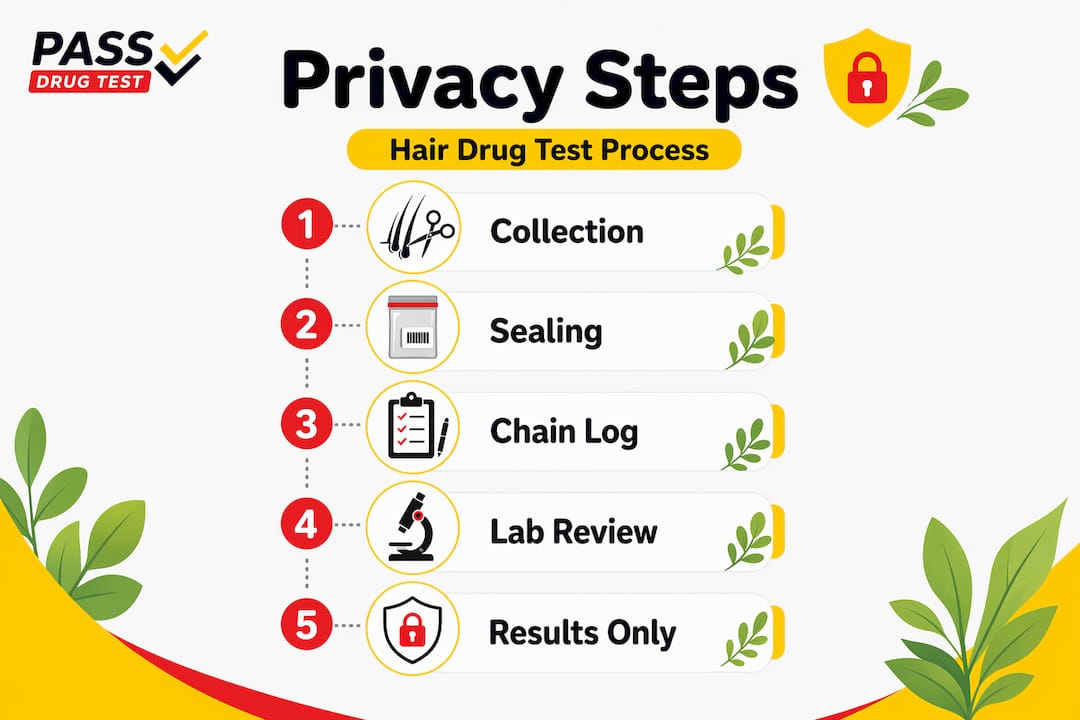
The chain-of-custody controls from collection through lab analysis and reporting are what make hair test confidentiality real and enforceable. Every time your sample changes hands, it is documented. A signed record follows the specimen from the moment a collector takes it from your head all the way through to final result reporting.
Here is a breakdown of the key stages and what protects you at each one:
| Stage | What happens | Privacy protection |
|---|---|---|
| Collection | Sample is cut and placed in sealed container | Tamper-evident packaging, witnessed by authorized collector only |
| Transfer | Sample moves to testing lab | Sealed bag with signatures confirming unbroken custody |
| Lab analysis | Sample tested for drug metabolites | Only certified lab personnel access the specimen |
| Result reporting | Results sent to Medical Review Officer | Restricted to authorized personnel only, no raw data shared broadly |
| Storage | Records retained per policy | Secure, limited-access storage under data protection protocols |
Vendors and labs that handle hair testing emphasize confidentiality via secure chain of custody and limiting access to sample data as defining features of a truly private test. When you see that emphasis, it reflects genuine regulatory pressure to maintain standards.
The importance of chain of custody cannot be overstated. A documented chain means no one can tamper, switch, or mishandle your sample without that action being traceable and legally actionable.
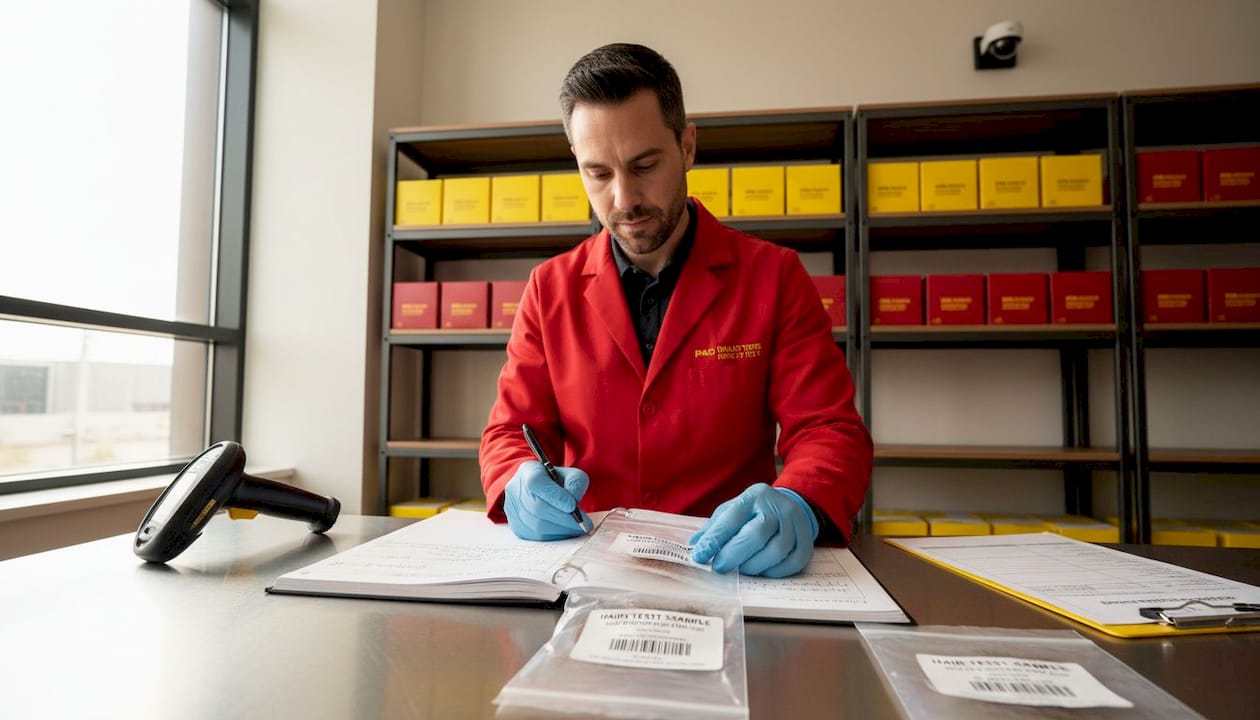
Pro Tip: When you arrive at your collection site, ask the collector to walk you through their chain-of-custody procedure. Any reputable collection site will explain this without hesitation. If they cannot, that is a red flag worth noting.
Understanding the hair sample collection process in detail will help you feel more confident and know exactly what to watch for during your appointment.
Your rights and consent: What you control in hair drug testing
Privacy protocols protect you, but you also have active rights that give you real influence over how the process unfolds. Knowing these rights before your test means you walk in informed rather than anxious.
Here are the key rights you hold in most hair drug testing scenarios:
- Right to notice. You must receive written notification that testing will take place. Surprise testing without disclosure violates standard legal and ethical testing practices in most situations.
- Right to consent. In most contexts, especially in pre-employment testing, your written consent is required before a sample can be collected.
- Right to limited access. Your results go to a Medical Review Officer (MRO) and, in some cases, specific HR personnel. They do not get distributed to your direct supervisor, coworkers, or any party without a defined need to know.
- Right to review your results. You can request to see your own test results and challenge them if you believe there is an error or discrepancy.
- Right to dignified collection. Collections are conducted professionally, with protocols in place to protect your personal dignity throughout.
Consent and notice standards with limited access to results reflect confidentiality principles that run through the legal expectations placed on employers. These aren’t optional courtesies. They’re embedded in how testing programs must be structured.
Employee privacy in workplace drug testing is a topic that continues to evolve, particularly as hair testing becomes more common. Hair testing is increasingly positioned as one of the more tamper-resistant and dignity-respecting methods precisely because collection happens in a controlled, professional setting rather than a monitored bathroom stall.
Pro Tip: After your test, request a copy of your results in writing. Reviewing your results allows you to confirm accuracy and gives you a documented record in case any dispute arises later. For a deeper look at what the numbers mean, check out our guide to understanding hair test results.
Common misconceptions about hair drug test confidentiality
Even when the legal protections are solid and the procedures are followed, myths about hair testing and privacy continue to circulate. These misconceptions can cause unnecessary anxiety or, worse, lead people to make poor decisions based on bad information.
Here is a side-by-side comparison of what people assume versus what is actually true:
| Myth | Reality |
|---|---|
| Hair tests are never confidential | The same privacy laws that cover urine and oral fluid tests apply fully to hair testing |
| Hair samples are more likely to be mishandled | Chain-of-custody enforcement is just as rigorous for hair as for any other specimen type |
| Hair is always the required test type | Federal guidelines specify urine and oral fluid as mandatory; hair is supplemental in many programs |
| Employers can share your results freely | Access is strictly limited to authorized personnel under legal obligation |
| You have no say once you submit a sample | You retain rights to review, challenge, and receive written documentation of your results |
SAMHSA workplace drug testing resources confirm that hair is among the specimen types that can be used generally, but mandatory federal guidelines specifically apply to urine and oral fluid. This is an important distinction. It means that if you work in a federally regulated industry, you may have more options than you realize.
The myth that hair testing is inherently less private than hair testing vs urine testing comes from confusion about specimen type versus data governance. Privacy is determined by who controls access to your data, not by what biological material was collected. Both test types are subject to the same confidentiality obligations.
If you want a plain-language breakdown of what to expect and what surprises to avoid, our drug test FAQ covers the most common questions in clear, direct terms.
Best practices for keeping your hair drug test confidential
Now that you understand the legal landscape and your rights, here are concrete, actionable steps you can take to protect your privacy and put yourself in the best possible position.
- Ask who sees your results before you test. This is a simple question that any reputable employer or testing facility should be able to answer clearly. You want to know whether results go to an MRO, HR, or your direct supervisor.
- Request a written explanation of privacy procedures. Reputable collection sites have these protocols documented. Asking for them in writing gives you a record and signals that you are paying attention.
- Use accredited collection and lab providers. SAMHSA-certified labs and established collection sites follow stricter standards than unaccredited alternatives. Verify that your testing facility is properly certified.
- Know your detection window and plan accordingly. THC metabolites can be detected in hair over a longer window than other specimens. Knowing your timeline is essential for making smart decisions about preparation.
- Rely on evidence-based detox methods, not myths. The governance of data access, secure handling, and an unbroken chain of custody are the real confidentiality levers in hair testing. No chemical workaround changes who can see your results.
- Use a proven detox shampoo as part of your preparation. Protocols designed to reduce drug metabolites in hair, like the Macujo Method using a quality hair detox shampoo, give you a practical path toward a negative result.
Pro Tip: Don’t waste time on so-called privacy hacks that claim to make your sample untraceable. That’s not how the system works. Focus your energy on two things: understanding your rights so no one violates them, and following a proven detox protocol to give yourself the best shot at a clean result.
Hair drug test confidentiality: What most guides get wrong
Most privacy guides about hair drug testing focus almost entirely on the specimen itself. They ask whether hair is more private than urine, whether collection is more dignified, whether hair reveals more about you. That’s the wrong question. The real privacy issue is what happens after your sample leaves the collection room.
Here is what actually matters: who can access your results, how those records are stored, and whether a strict chain of custody was followed at every stage. Those three factors determine whether your test was truly confidential. The type of specimen is almost irrelevant to your privacy as a legal and procedural matter.
Because hair testing looks back over a longer window than urine or oral fluid, commonly discussed as up to around 90 days in workplace contexts, the confidentiality stakes are actually higher with hair testing. A hair test isn’t just checking last weekend. It’s potentially exposing weeks of personal behavior. That makes rigorous data governance and controlled access to medically sensitive information even more critical than it is for shorter-window tests.
The guides that get this wrong tend to reassure readers that “all tests are private” without explaining what that means in practice. The ones that get it right focus on process and governance, and so should you. When you understand how drug test results are handled from collection to storage, you stop worrying about the wrong things and start asking the right questions.
The uncomfortable truth is this: your hair isn’t your biggest privacy risk. Your biggest risk is going into the process uninformed and not knowing who has access to what, when, and why.
Get peace of mind and pass with confidence
Understanding your confidentiality rights is a powerful first step, but it’s only half of the equation. The other half is making sure you give yourself the best possible chance at a negative result.
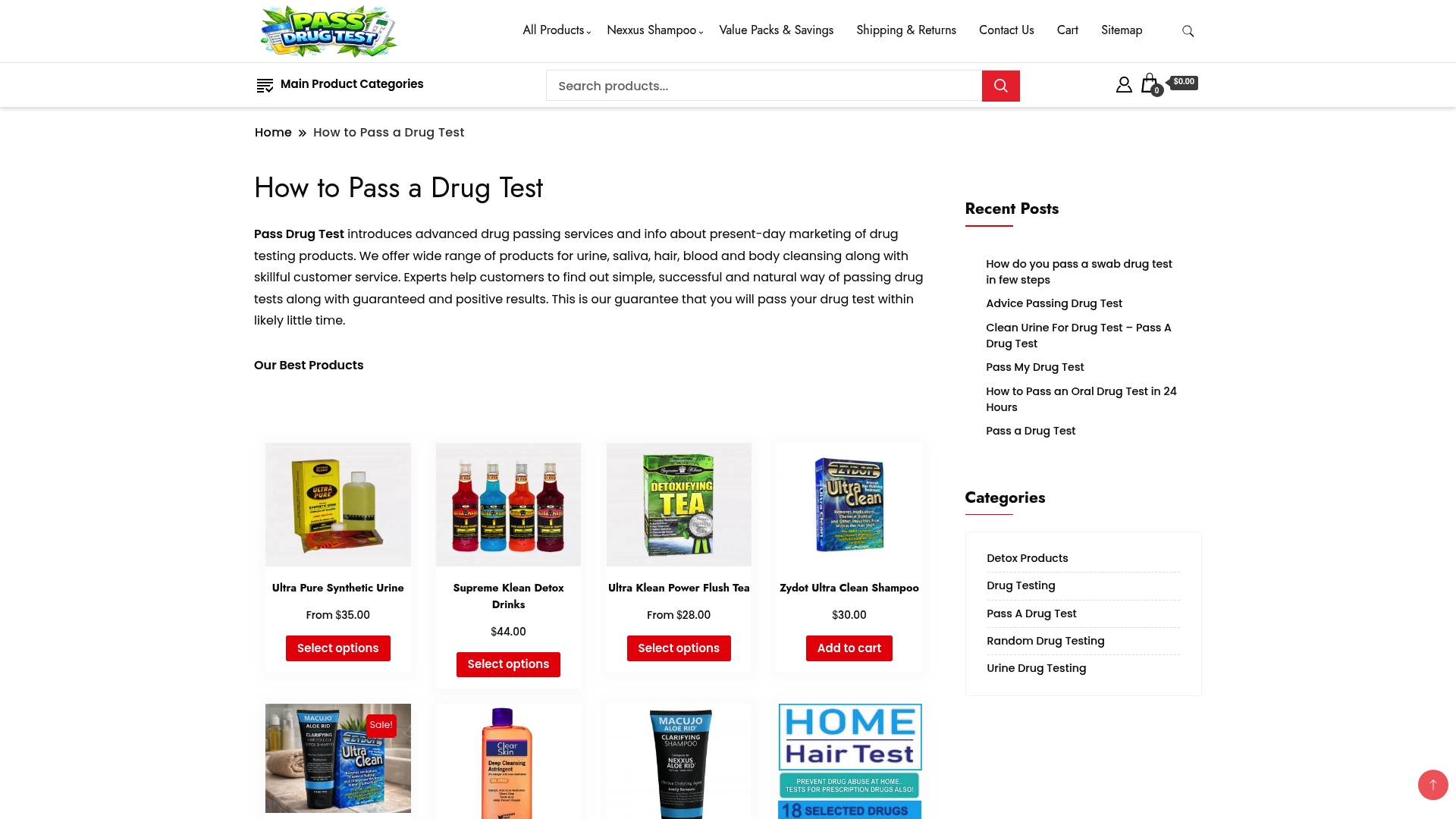
At passdrugtest.net, we offer proven detox solutions designed specifically for marijuana users facing hair follicle tests. Our flagship Macujo Aloe Rid shampoo is one of the most trusted products in the space, used as part of the Macujo Method to target drug metabolites embedded in the hair shaft. All orders are shipped discreetly, so your purchase stays as private as your test results should be. Browse our selection of best hair detox shampoos, read our complete guide to passing a marijuana hair test, or go straight to our full passing hair test guide to get started.
Frequently asked questions
Who can legally see my hair drug test results?
Only authorized personnel such as HR or a Medical Review Officer are allowed access to your hair drug test results under confidentiality laws. Access to results is strictly limited under privacy principles tied to how testing programs are legally structured.
Can I refuse a hair drug test if I’m concerned about privacy?
You can ask about alternative tests or refuse, but refusal may impact employment depending on company policy or legal requirements. Federal guidelines mandate urine and oral fluid for regulated industries, meaning hair may be optional in those contexts.
How is hair stored after collection to protect confidentiality?
Hair samples are sealed in tamper-evident packaging and tracked with a signed chain-of-custody until testing is completed. Chain-of-custody controls from collection through lab analysis are what make post-collection confidentiality enforceable.
Is hair drug testing more private than urine or oral fluid tests?
All standard drug test methods must follow confidentiality laws, and the level of privacy depends on chain-of-custody and data protocols, not the specimen type. The SAMHSA federal framework applies the same centralized oversight and confidentiality standards across test types.
How long do hair drug test results remain confidential at my workplace?
Results are kept confidential as long as retention is required by policy or law, and only specific authorized personnel may access them during that period. Employers are legally required to limit access and maintain secure storage throughout the retention window.