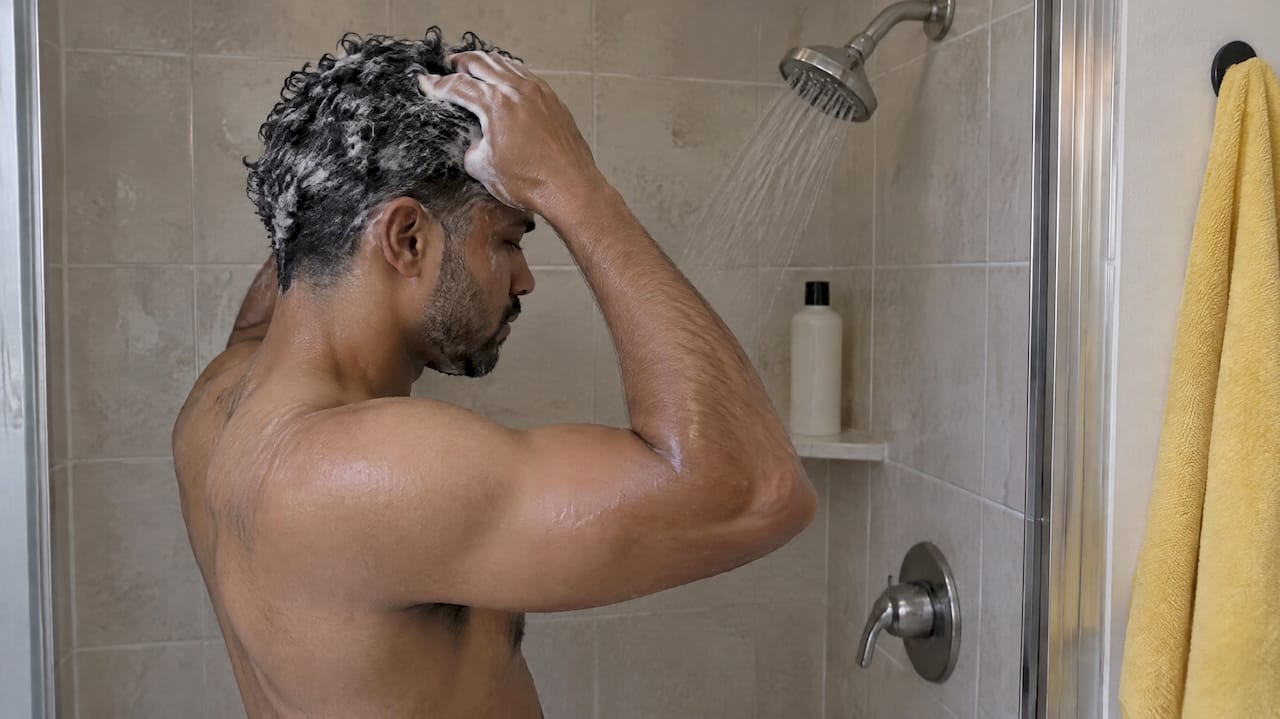

Clarifying shampoo cleans the surface of your hair. A hair drug test looks for metabolites that reached the hair through your bloodstream. That gap is why a basic clarifying shampoo from the drugstore rarely changes a result by itself. Hair-specific detox shampoos, used correctly as part of a full routine such as the Macujo method, are built for this job. Below you’ll find what research says, how the two types of shampoo differ, and how to build a plan you can follow.
TL;DR
- A hair test checks roughly the first 1.5 inches of hair closest to the scalp, which reflects about 90 days of history, according to a 2025 toxicology review.
- Ordinary clarifying shampoo removes dirt, oil and product buildup. It is not designed for drug testing and is not meant for daily use.
- Published studies show that results from washing vary a lot, and that no product, including ordinary shampoo, is a sure thing.
- We recommend the Macujo method with Macujo Aloe Rid Shampoo, followed exactly as the instructions say, and started as early as you can.
- Never rely on one wash the night before. Plan 10 to 14 days of consistent treatment.
Table of Contents
- What a hair drug test actually measures
- How clarifying shampoo differs from a hair detox shampoo
- What the research says about washing hair
- Is any shampoo proven to guarantee a pass?
- The Macujo method, and why we recommend it
- Where a clarifying shampoo still helps
- A realistic timeline
- Our perspective
- Ready to start your routine
- Safety and limits to keep in mind
- FAQ
- Sources
What a hair drug test actually measures
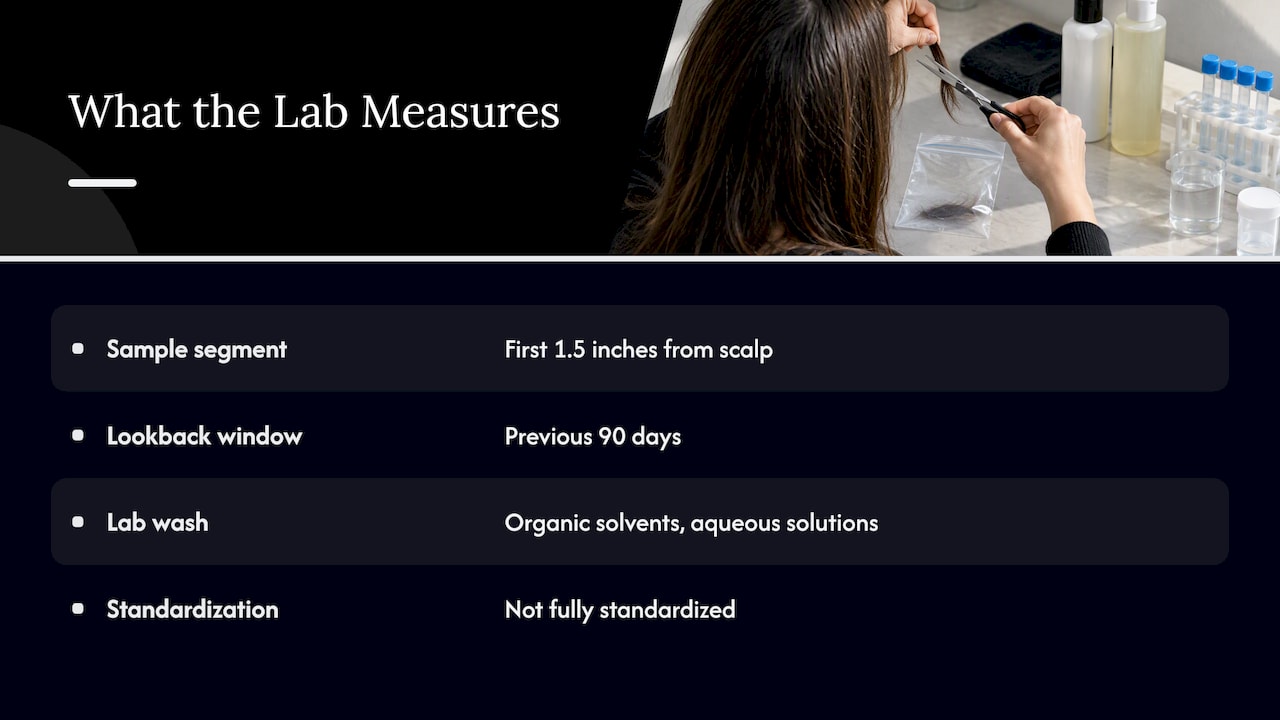
To choose the right shampoo, start with what the lab is looking for. A hair test detects drugs and their metabolites that have been incorporated into the hair shaft through the bloodstream, sweat and sebum, or through external exposure. A 2025 review in the Journal of Applied Laboratory Medicine explains that labs typically analyze the first 1.5 inches of hair from the scalp. That segment gives a picture of use over the previous 90 days.
This matters for two reasons. First, the part of the hair that counts is the part that grew recently, so you cannot simply trim your way out of it. Second, substances that are inside the hair cannot be rinsed off the way surface residue can. That is the heart of every debate about shampoo.
Laboratories also clean the sample before they test it. The same review notes that forensic labs perform a decontamination step, often with organic solvents and aqueous solutions, to remove external contaminants, though the step is not fully standardized across laboratories. So the lab is already washing your hair before it measures anything. Anything you do at home has to go further than that wash, or work on what the lab’s wash leaves behind.
If you want the timing side in depth, read our guide to the hair drug test detection window. For how drugs get into the hair in the first place, see what test-takers must know about hair shaft drug incorporation.
How clarifying shampoo differs from a hair detox shampoo
The two products share a bottle shape and not much else.
A clarifying shampoo is a deep cleanser. According to Hair.com’s explanation, it removes dirt, oil, hard-water minerals, residue and buildup, and it should not be used every day because frequent use can leave hair dry or stripped. It is a good tool for styling product buildup or pool chlorine. Nobody formulates it with drug metabolites in mind.
A hair detox shampoo is marketed for a narrower purpose: preparing hair for a test. These products usually pair strong cleansing agents with a chelating or penetrating formula, and they come with a multi-day routine rather than a single wash. Macujo Aloe Rid Shampoo is the one we build our recommendations around, because it was made for the Macujo method and comes with a defined schedule.
| Clarifying shampoo | Hair detox shampoo (Macujo-style) | |
|---|---|---|
| Designed for | Buildup, oil, minerals | Preparing hair for a drug test |
| Typical use | Occasional, not daily | A set routine over several days |
| Instructions | Basic label directions | Step-by-step schedule with timing |
| Risk of dryness | Higher if overused | Follow the routine and condition as directed |
| Where it fits | Step before or alongside a plan | The core of the plan |
We go deeper on this in The Real Role of Clarifying Shampoo in Hair-Follicle Detox, and our comparison of detox shampoo versus home remedies covers the kitchen-cabinet approaches.
What the research says about washing hair
Here is the honest picture, because you deserve to plan with real information.
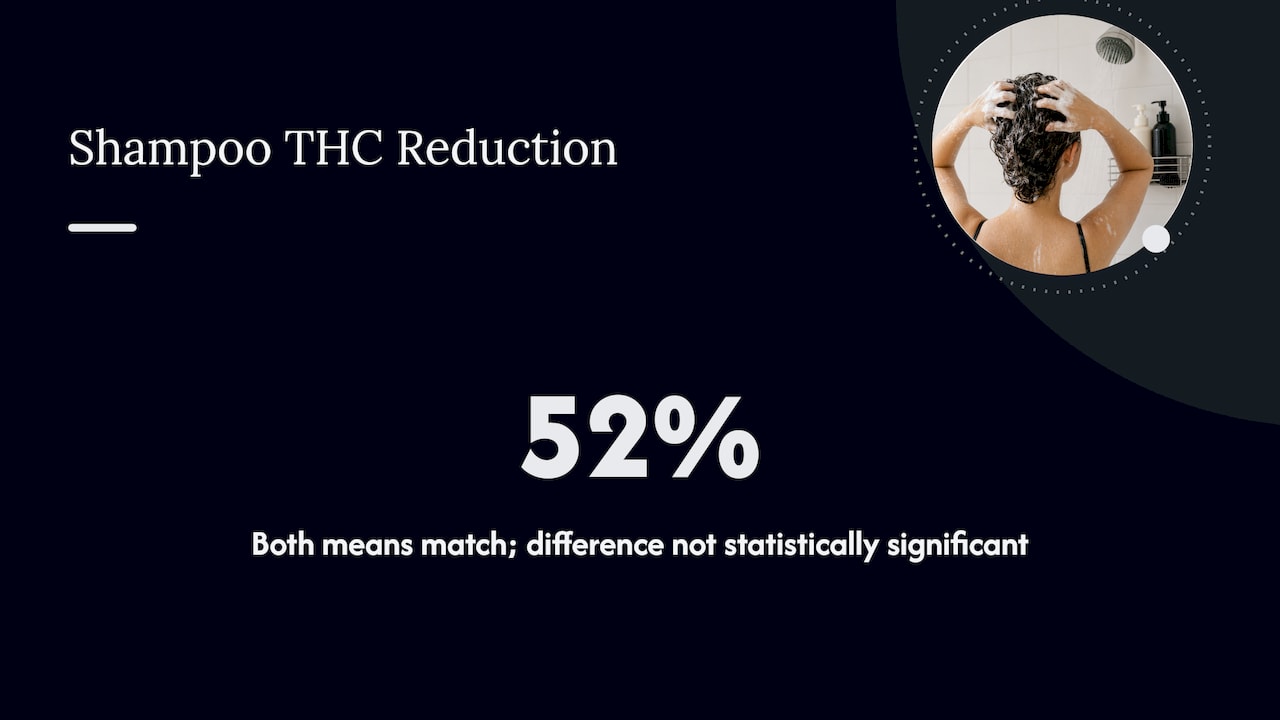
Washing can lower concentrations, but unpredictably. In a 2022 peer-reviewed study, Bertges and colleagues measured THC in hair after treatment with commercial products. Mean THC reductions were 52% after Zydot shampoo and 52% after ordinary Head & Shoulders. The difference between them was not statistically significant. Everyday products sometimes cut THC as much as the marketed one did. The takeaway we draw is practical: the number of washes, the contact time and the consistency of the routine matter at least as much as the label on the bottle.
Home regimens also lower concentrations. A 2023 study by Mestria and colleagues tested three online hair-treatment regimens and found lower drug concentrations after all three. Lower is not the same as below the cutoff, which depends on the starting level of your hair and the lab’s threshold.
A single application does little. A review of manipulation testing, published in 2023, reports that one study found EtG levels (an alcohol marker) did not change significantly after a single use of detox shampoos applied per the manufacturers’ directions. In a separate 2019 in-vitro study, three of four marketed detox shampoos behaved like deionized water for EtG, while one reduced it by up to 86% after 2.5 hours. That spread shows the products are not interchangeable and that contact time is a real variable.
Labs have no routine way to spot it. The same 2023 review says there is no standardized, routine workflow in clinical and forensic toxicology to objectively detect cleansing shampoo use or extensive washing. Researchers do, however, urge caution when interpreting results. Bertges and colleagues advise that laboratories treat quantitative THC concentrations with care because of the risk of invisible manipulation, and they suggest pairing hair results with urine analysis.
What does this tell you? Washing is not a myth, and it is not magic. The reductions are real but variable, which is why the most defensible approach is a structured, repeated routine started early, not a last-minute rinse.
Is any shampoo proven to guarantee a pass?
No, and any seller who says otherwise is overselling. The studies above show wide variation between people, hair types, drugs and products. Heavy, long-term use leaves more metabolite inside the hair than light or occasional use, so two people following the same routine can end up in different places.
What we can say is that a defined routine beats improvisation. A product with clear instructions, a set number of days and a conditioning step removes guesswork. That is the case for the Macujo method, which we explain next.
The Macujo method, and why we recommend it
The Macujo method, developed by Mike Macujo, is the approach we recommend most for anyone facing a hair follicle drug test. It is a multi-day routine built around Macujo Aloe Rid Shampoo, and it is the method we point readers to first because it replaces a pile of guesses with a schedule. In our experience, customers who follow it exactly, and who start well ahead of the test, feel far more prepared than those who improvise with whatever is under the sink.
In plain terms, the method is a few things done consistently:
- Start early. Give yourself 10 to 14 days, and more if your use has been heavy.
- Use the shampoo as directed, with the contact time the instructions specify, rather than rinsing it out quickly.
- Follow the routine through the final day, including any conditioning step, so your hair is not left brittle.
- Stop all use of the substance. Washing cannot keep up with ongoing intake.
For the exact schedule, safety notes and timing, read our 10 to 14 day Macujo Aloe Rid instructions. If you want to see the product itself, here is the Macujo Aloe Rid Shampoo page.
We do not say the method is a guarantee, because no honest source can. We do say it is the most organized, best-supported-by-experience route we know of, and the one we would follow ourselves.
Where a clarifying shampoo still helps
You do not have to throw out your clarifying shampoo. It has a sensible, limited role.
- Before you start a routine. If your hair carries heavy styling product, oil or hard-water residue, one clarifying wash clears the surface so the detox shampoo contacts the hair directly.
- After swimming or smoke exposure. Chlorine and smoke leave surface residue. External contamination is a real topic in hair testing, and the National Institute of Justice notes that scientists are working on metabolite analysis that separates true use from environmental exposure.
- As a once-a-week reset. Not daily. Overuse dries the hair, and dry, damaged hair is more fragile.
What it should not be is your whole plan. If your test is in two weeks, a clarifying wash alone leaves most of the work undone.
A realistic timeline
Hair grows slowly, so your preparation window depends on how long ago the last use was and how heavy it was. Here is how we suggest thinking about it.
| Time until your test | What we suggest |
|---|---|
| 14 days or more | Full Macujo method, with a clarifying wash first if hair is coated with product |
| 7 to 13 days | Start immediately and follow the shortened guidance in the instructions page |
| Under 7 days | Expect limited results from any shampoo, and be realistic about the risk |
| Shaved head | Body hair can be tested instead, see why a shaved head still gets tested |
You can track how your hair is responding with our guide to the signs of detox progress. If the test is for a new job, our 90-day THC hair guide for job applicants walks through the planning.
Our perspective
We talk with people every day who are worried about a hair test, and the same pattern shows up. The person who panics the night before buys three products, uses them all once and hopes. The person who starts two weeks out, picks one routine and sticks to it sleeps better and is better prepared.
We sell the Macujo Aloe Rid Shampoo because we believe a clear, repeatable method is the most useful thing we can hand you. We will not tell you a shampoo is a promise. We will tell you that research shows hair washing can lower concentrations, that results vary, and that consistency and early timing are the factors you control. Our support team is available from 9am to 12am every day if you want to talk through your timeline, and we pack and deliver orders discreetly.
If you read one thing from this page, make it this: start now, follow one method fully, and do not pile on contradictory tricks.
— MIchael
Ready to start your routine
If your test is coming up and you want the full method in one place, we carry the shampoo, the conditioning step and the instructions you need. The Macujo Aloe Rid Shampoo + Zydot Ultra Clean Treatment pairs the two products for a complete routine, and you can browse everything on our hair drug test shampoo page.
Orders ship in discreet packaging, and our team is on hand if you need help choosing.
Safety and limits to keep in mind
A few cautions, placed where they apply:
- Overwashing and dryness. Using a clarifying shampoo every day can leave hair dry or stripped. Follow the schedule and condition when the instructions say to.
- Scalp irritation. If your scalp burns, itches or breaks out, stop and rinse thoroughly. If irritation continues, see a doctor or dermatologist.
- Treated or bleached hair. Already-damaged hair may react poorly to repeated cleansing. Test a small section first.
- Medications. If you take a prescribed medication that could show on a test, do not stop it on your own. Talk to your prescribing doctor and tell the testing program about it.
- Retests. Because researchers recommend pairing hair results with urine analysis, a clean hair result does not always end the process. Our urine drug test guide covers that side.
FAQ
What is the best clarifying shampoo for a drug test?
No ordinary clarifying shampoo is made or proven for drug testing, so we do not recommend picking one off the shelf as your plan. If you want a product designed for this purpose, we recommend Macujo Aloe Rid Shampoo used with the Macujo method. A basic clarifying shampoo can serve as a prep wash for buildup.
Can I buy a drug-test shampoo at CVS?
Drugstores stock regular clarifying and anti-dandruff shampoos, but those are not formulated or labeled for hair drug testing. Studies such as the 2022 Bertges study show that ordinary shampoo can lower THC somewhat, though results are inconsistent. A dedicated routine with clear instructions is more dependable to follow.
How many times should I wash my hair before a hair follicle test?
It depends on the product’s instructions, because a single wash has been shown to do little in published work. We suggest a structured routine over 10 to 14 days. The Macujo instructions page lays out the schedule and timing.
Will the lab know I used a detox shampoo?
There is currently no standardized routine method in clinical and forensic labs to detect cleansing shampoo use, according to a 2023 review. Labs may still interpret concentrations cautiously. We never promise an outcome.
Does cutting my hair help?
Only partly. The test reads about 1.5 inches of hair closest to the scalp, so trimming the ends does not remove the recent growth. If you shave your head, labs can use body hair instead.
Sources
- Review on Toxicology Testing in Hair, Journal of Applied Laboratory Medicine (2025)
- Clarifying Shampoo: What It Is and How To Use It, Hair.com
- Manipulation of THC Hair Concentrations by Commercially Available Products (2022)
- Hair analysis: Assessment of homemade hair treatment (2023)
- Advances in testing for sample manipulation in clinical and forensic toxicology (2023)
- Detox shampoos for EtG and FAEE in hair, in-vitro results (2019)
- Detecting Drugs in Hair: Is It Drug Use or Environmental Contamination, National Institute of Justice