

Short answer: baking soda alone is unlikely to reliably make you pass a hair follicle drug test. Peer-reviewed hair analysis has tested this exact question, and the results tell a more nuanced story than the forum posts and TikTok videos suggest.
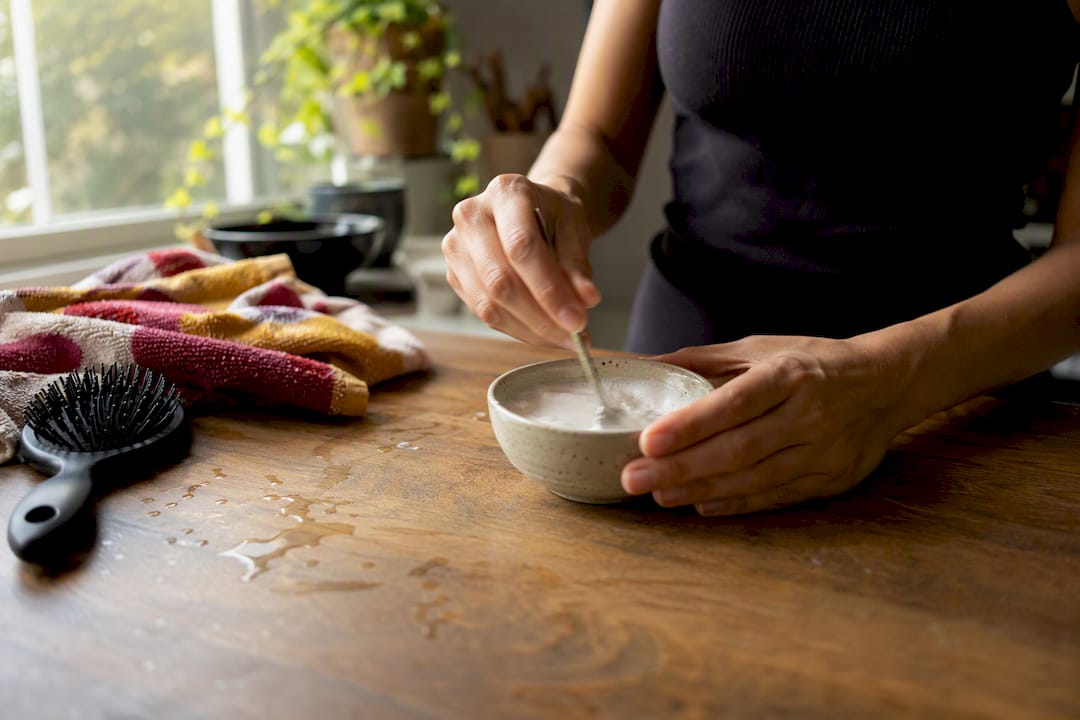
The strongest available research on this comes from Mestria et al. (2023), which found that a multi-stage treatment combining baking soda paste, salicylic acid, and brief bleaching cycles produced significant drug concentration reductions, in some cases significant reductions for cocaine and THC. Baking soda was part of a chemical sequence, not a standalone fix. That distinction matters for anyone typing “baking soda hair drug test” into a search bar at midnight before a scheduled screening.
Here is the practical fallout of that finding:
- Baking soda by itself, used as a quick paste or added to shampoo, has no dedicated study showing it produces a reliable negative result.
- Multi-step regimens that pair baking soda with an acid and an oxidizer can measurably lower concentrations in lab conditions, but “measurably lower” is not the same as “guaranteed clean.”
- Confirmation testing with GC-MS or LC-MS/MS, plus sensitive lab cutoffs, can still catch reduced but present metabolites, especially with heavier or more recent use.
Key Takeaways
Baking soda functions as one ingredient in effective multi-step hair treatments studied in peer-reviewed research, not as a standalone method proven to produce a reliable negative result.
| Point | Details |
|---|---|
| Baking soda alone is unproven | No published study shows baking soda by itself reliably lowers hair test results below detection. |
| Multi-step regimens show real reductions | Mestria et al. found reductions up to 90% for cocaine and about 60% for THC using a baking soda, salicylic acid, and bleach sequence. |
| Confirmation testing catches partial reductions | GC-MS/LC-MS/MS confirmation and sensitive lab cutoffs can still detect metabolites even after concentration drops. |
| Aggressive DIY cleansing damages hair | Repeated bleaching and pH swings cause breakage, scalp irritation, and visible damage that can draw lab scrutiny. |
| Time and abstinence remain most reliable | Letting hair grow out past the scalp is the only approach with a predictable, controllable mechanism. |
| Passdrugtest offers formulated alternatives | The Macujo Aloe Rid Shampoo applies the same layered chemistry studies point to, without improvised recipe guesswork. |
Table of Contents
- How Hair Follicle Drug Tests Detect Drugs (And Why Metabolites Are Stubborn)
- What Controlled Studies Actually Show About Household Hair Treatments
- How Effective Is Baking Soda by Itself?
- The Real Risks of Aggressive At-Home Hair Cleansing
- What Actually Reduces Detection Risk
- How Labs Spot Tampering and Why Confirmation Testing Matters
- What to Actually Do If You Have a Hair Test Coming Up
- Where Topical Detox Products Fit Into a Real Plan
- Sources
How Hair Follicle Drug Tests Detect Drugs (And Why Metabolites Are Stubborn)
Drugs and their metabolites don’t sit on top of your hair. They get carried there through your bloodstream and deposited into the hair shaft as it forms in the follicle, then locked into the keratin structure as the strand grows. That’s why a hair strand drug test can flag repeated use going back roughly 90 days, while it’s nearly useless for catching something you did yesterday. The metabolites need time to grow up and out of the scalp before a lab can find them.
Collection matters here too. Technicians typically cut the proximal 1.5 inches (about 3 to 6 centimeters) closest to the scalp, since that segment reflects the most recent months of use. The testing itself happens in two stages:
- Screening, usually an ELISA immunoassay, which is fast and cheap but prone to false positives from cross-reactivity.
- Confirmation, using GC-MS or LC-MS/MS, which identifies the exact molecular signature of a drug metabolite and is far harder to fool.
The Society of Hair Testing has published conceptual cutoffs, such as 0.05 ng of THC per milligram of hair, but individual labs often run more sensitive equipment and can report positives below those thresholds. That’s the detail most home-remedy articles skip entirely: even a partial reduction in concentration doesn’t automatically drop a sample below whatever number that particular lab is using that week.
A key number to know: hair tests generally can’t detect use in the first 5 to 7 days after exposure, because the hair carrying that evidence hasn’t grown out of the scalp yet. That’s a timing quirk, not a loophole a shampoo can exploit.
Confirmatory testing doesn’t just check the surface of the strand. It measures metabolites bound inside the cortex, the hair’s inner structural layer, which is exactly why surface washing tends to underperform against a method that penetrates the cuticle.
What Controlled Studies Actually Show About Household Hair Treatments
This is where the internet mythology and the laboratory data part ways. Two peer-reviewed studies have actually tested what happens when common household products meet drug-positive hair, and neither one supports the idea that a quick baking soda rinse solves the problem.
The Mestria team tested three internet-sourced regimens on hair samples known to carry drug residue. The most aggressive protocol combined a paste of roughly three parts baking soda to one part water, applied for 10 minutes, followed by a salicylic acid treatment for another 10 minutes, then a five-minute bleach cycle, repeated twice daily for three days straight. That treatment produced the largest reductions in the study: up to 90 percent for cocaine and about 60 percent for THC, though the numbers varied by drug class and by individual sample. Cocaine metabolites broke down more readily than THC metabolites, which tend to bind more stubbornly to the hair’s lipid content.
A separate study published on PMC took a different approach, testing 54 THC-positive hair samples against everyday products like vodka, hair tonic, disinfectant, and over-the-counter shampoos. Mean THC reductions ranged from moderate to higher reductions with a range of everyday products including shampoos and disinfectants, and some treated samples dropped below detectable levels entirely under the lab’s specific conditions.
Both studies share a critical limitation that rarely makes it into the summary someone reads before a test: these are in vitro experiments, meaning treated hair strands in a lab, not a full head of hair on a stressed person with a court date or a job offer on the line. Sample sizes were modest, application protocols were exact and repeated, and lab conditions controlled for variables that don’t exist in a bathroom sink.
| Treatment approach | Reported reduction | Drug class most affected |
|---|---|---|
| Baking soda + salicylic acid + bleach (twice daily, 3 days) | High reductions reported for cocaine and significant reductions for THC | Cocaine and THC |
| Disinfectant (Desderman) | Moderate reductions reported | THC |
| Zydot-type shampoo product | Moderate reductions reported | THC |
| Bleaching alone (repeated) | Noticeable reductions reported | THC |
The pattern across both studies is consistent: cocaine metabolites respond more dramatically to chemical intervention than THC does, and every meaningful reduction required more than one ingredient working together. Baking soda showed up in the most effective protocol tested, but it was never tested alone.
How Effective Is Baking Soda by Itself?
Used on its own, baking soda has not been shown in any published study to reliably clear a positive hair sample. It shows up only as one ingredient inside a longer chemical sequence, and that placement is the whole story.
Here’s the chemistry problem. Baking soda is mildly alkaline, which can help swell and open the hair cuticle slightly, the same principle behind clarifying shampoos. But opening the cuticle isn’t the same as pulling metabolites out of the cortex, where confirmatory testing actually looks. Removing what’s embedded inside the hair shaft generally requires an acid step to strip surface buildup and an oxidative step, like a short bleach cycle, to break down the bonds holding metabolites in place. Baking soda handles none of that second half on its own.
The recipes circulating online (a few tablespoons of baking soda mixed into shampoo or made into a quick paste before a scheduled test) tend to fail for a few predictable reasons:
- No exfoliating acid step, so surface contamination and outer cuticle layers stay mostly intact.
- No oxidation, so cortex-bound metabolites remain largely undisturbed.
- Single or same-day application, versus the twice-daily, multi-day protocol used in the study that actually produced strong reductions.
Pro Tip: If you’re evaluating any DIY recipe you found online, ask whether it includes an acid step and an oxidizing step in addition to an alkaline one. A regimen missing two of those three legs is missing the mechanism that made lab reductions possible in the first place.
The Real Risks of Aggressive At-Home Hair Cleansing
Chasing bigger reductions by repeating harsh treatments comes with a cost, and it’s not a small one. Cycling your hair through alkaline pastes, acid treatments, and bleach, sometimes twice a day for several days, puts real stress on both the hair shaft and the scalp underneath it.
Expect some combination of these effects with repeated aggressive treatment:
- Hair damage: breakage, brittleness, and visible color loss from repeated pH swings and oxidative bleaching.
- Scalp irritation: redness, dryness, and in some cases chemical burns from concentrated bleach or acid left on too long.
- Allergic reactions: salicylic acid and disinfectant products can trigger sensitivity in some people, especially with repeated exposure over a short window.
- A forensic red flag: hair that looks visibly bleached, brittle, or chemically altered right before a scheduled test can prompt a lab to scrutinize the sample more closely or request a retest.
That last point deserves attention. A clinical review of DIY hair-cleansing regimens from Dr. Gary A. Cohen, M.D. notes that many circulating recipes combine bleach, baking soda, salicylic acid, and detergent in ways that damage hair without a guaranteed payoff. Showing up with obviously stripped hair can raise more questions than it answers.
What Actually Reduces Detection Risk
If you want a strategy with predictable odds instead of a coin flip, the options narrow fast. Nothing here is instant, and nothing is guaranteed, but some approaches are far more dependable than others.
- Abstinence combined with hair growth timing is the only approach with a predictable mechanism. Since drugs enter hair through blood flow during growth, avoiding use long enough for a clean segment to grow past the scalp is the one variable you can actually control with confidence.
- Combining test matrices when a testing policy allows it (pairing a urine screen with a hair test, for instance) reduces the odds that a single reduced-but-not-zero hair result becomes the whole story. Labs themselves often favor multi-matrix testing for exactly this reason.
- Executed multi-step regimens that mirror what researchers tested (alkaline, acid, and oxidative steps in sequence) have shown measurable reductions in controlled studies, but they demand precise application, come with the cosmetic risks covered above, and were never shown to guarantee a negative result outside the lab.
There’s no version of this list that ends in a guarantee. Anyone claiming otherwise is selling confidence they can’t back up with data.
Pro Tip: If your test date is more than 90 days out, time is doing more work for you than any product on the market. If it’s inside two weeks, focus on realistic risk reduction, not a miracle reversal.
How Labs Spot Tampering and Why Confirmation Testing Matters
Labs aren’t naive about the fact that people try to alter samples before a test. Certain signs prompt a closer look, and confirmatory testing exists specifically to catch what a first-pass screen might miss or misjudge.
Common red flags include:
- Unusual chemical residue, unexpected pH readings, or surfactant traces inconsistent with normal hair care.
- Visible cosmetic damage, like patchy bleaching or brittleness, especially when it appears suddenly close to a scheduled test.
- Structural anomalies in the hair shaft that suggest recent aggressive chemical exposure.
Screening assays like ELISA are built for speed and cost efficiency, not precision, which is why a positive or borderline screen routinely triggers GC-MS or LC-MS/MS confirmation. Confirmatory methods identify the specific molecular signature of a metabolite rather than relying on general reactivity, and they’re considerably harder to fool with surface-level tampering. This is also why a percentage reduction that sounds impressive in a study abstract doesn’t automatically flip a real-world result. If a lab’s reporting threshold sits well below the concentration a treatment left behind, the sample still comes back positive regardless of how much the concentration dropped.
What to Actually Do If You Have a Hair Test Coming Up
Panic tends to push people toward the most dramatic option available at 11 p.m. the night before a test. A calmer, ranked approach serves you better.
- Find out if the test date is flexible. Even a short delay changes your options. If HR or a court date has any wiggle room, ask.
- If time allows, let abstinence and hair growth do the work. This remains the most predictable route, since it removes the guesswork entirely rather than betting on a chemical reduction.
- Ask whether a urine test can supplement or replace the hair test. Some testing policies allow it, and a combined approach reduces the weight riding on hair alone.
- In the days immediately before a test, avoid introducing new variables. Skip any first-time chemical treatment, keep washing routine and gentle, and if you’re on a prescribed medication that could show up in results, have that documentation ready to disclose.
- If you’re exploring topical products as part of a broader strategy, buy from a source that’s transparent about method and ingredients rather than an anonymous recipe pulled from a comment section. Set expectations accordingly: a shampoo is one input into a larger picture, not a magic eraser.
For readers who’ve heard the name repeatedly in detox circles, the Macujo Method (Mike “Macujo” Beebe’s multi-step hair-cleansing protocol involving specific acid, detergent, and shampoo stages performed in sequence) is widely regarded as the most thorough non-clinical approach to hair follicle preparation, precisely because it layers chemistry the way the peer-reviewed protocols above do, rather than relying on a single ingredient.
Pro Tip: Whatever approach you choose, apply it days ahead of test day rather than hours before. Rushed, same-day chemical treatments are the ones most likely to leave visible damage without meaningfully changing the outcome.
Publisher Expertise and Editorial Transparency
Passdrugtest has spent years focused specifically on hair follicle detox science, tracking peer-reviewed research alongside real product performance data., and all reflect that focus.
That combination of published science and applied product testing is what shapes the recommendations throughout this article.
A Personal Note on Facing a Hair Test
Facing a scheduled hair test is stressful, and the anxiety that sends people searching for a baking soda shortcut at midnight is completely understandable. But the research is consistent enough that I’d rather tell you the uncomfortable truth than a comforting one: a kitchen-cabinet fix is a gamble, not a plan.
Evidence-based harm reduction beats improvised chemistry every time. That means understanding your actual timeline, knowing what the studies do and don’t support, and choosing a validated method over a recipe with no track record. Passdrugtest exists to give you that information straight, along with products built around what the science actually shows, not around what sounds convincing in a forum thread.
— MIchael
Where Topical Detox Products Fit Into a Real Plan
Topical detox shampoos aren’t magic, and no honest source will tell you they guarantee a negative result. What they can offer is a formulated, tested alternative to improvising a bleach-and-baking-soda recipe from a comment thread, especially when used as part of a broader, multi-step approach rather than a last-minute single application.
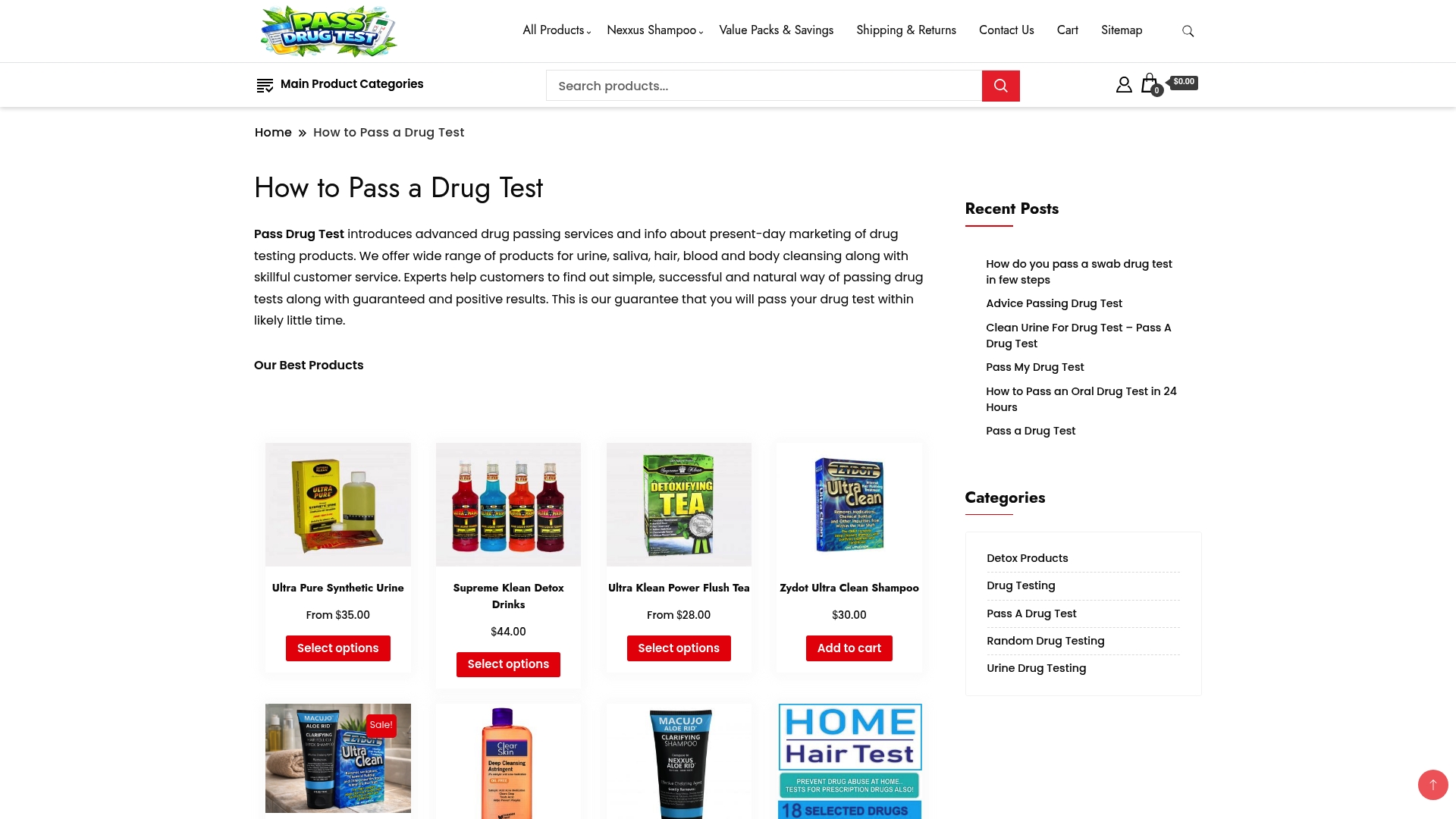
Passdrugtest’s flagship Macujo Aloe Rid Shampoo is built around the same layered chemistry principle the peer-reviewed studies point to: opening the cuticle, treating the shaft, and rinsing clean, rather than relying on one household ingredient to do every job. For readers looking at a more complete regimen, the Macujo Aloe Rid Shampoo paired with the Zydot Ultra Clean Treatment combines two tested approaches into one kit instead of guessing at proportions in a bathroom sink. If you’re still comparing routes entirely, the detox shampoo versus home remedies breakdown lays out the tradeoffs plainly.
None of this replaces time and abstinence as the most reliable variable you control. But if your timeline is tight and you’re weighing a formulated product against an improvised recipe, start by looking at the Macujo Aloe Rid Shampoo product page and read exactly what the regimen involves before your test date arrives.
Sources
- Hair analysis: Assessment of homemade hair treatment effects on drug concentrations in the keratin matrix — Mestria et al. (2023)
- Manipulation of THC hair concentrations by commercially available products (PMC)
- Hair strand drug test: How it works, uses, and what to expect — Healthline
This article is general information, not a substitute for advice from a qualified doctor. Consult a qualified healthcare professional about your own circumstances before acting on anything here.