
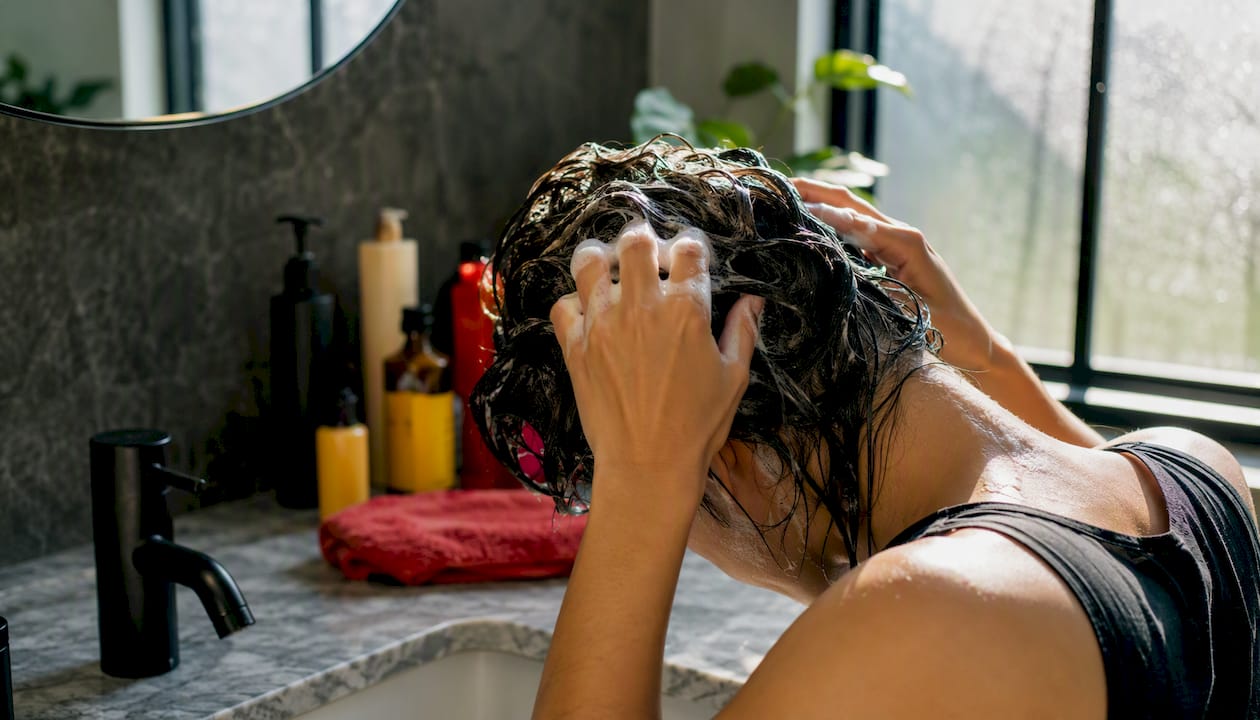

Yes, marijuana shows up in hair, and the window is longer than most people expect. Labs typically analyze the proximal 3–4 cm of head hair, which corresponds to roughly 90 days of use history based on an average growth rate of about 1 cm per month. If you used cannabis at any point in that window, a standard hair follicle test can flag it.
What you need to do right now:
- Confirm whether your test is a hair follicle test and ask which analyte the lab reports (THC or THC-COOH)
- Stop all marijuana exposure immediately, including secondhand smoke
- Start an evidence-backed prep routine as soon as possible — time is your most limited resource
Key Takeaways
Hair follicle tests analyze the proximal 3–4 cm of hair, covering roughly 90 days of use history, and intensive alkaline washing protocols supported by peer-reviewed evidence offer the most consistent way to reduce detectable THC concentrations before a scheduled test.
| Point | Details |
|---|---|
| 90-day detection window | Labs sample the proximal 3–4 cm of hair, covering approximately 90 days of use history. |
| THC vs. THC-COOH matters | THC-COOH is stronger evidence of ingestion; THC alone can reflect external contamination. |
| Intensive protocols reduce levels | In vitro studies show mean THC reductions of 52%–65% with commercial agents, up to ~80% under intensive protocols. |
| No method guarantees a pass | Outcomes vary with use history, hair pigmentation, porosity, and the lab’s specific cutoff. |
| Passdrugtest recommendation | The Macujo Aloe Rid Shampoo and bundled kit are the recommended products for the multi-step Macujo routine. |
Table of Contents
- How does marijuana affect hair follicle test results?
- How cannabinoids actually get into your hair
- What lab cutoffs and sensitivity numbers mean for you
- What peer-reviewed studies say about hair treatments that lower THC levels
- A step-by-step routine to reduce detection risk before your test
- What to do if detox alone isn’t enough
- How long does it take to get hair test results?
- What does a hair follicle drug test cost?
- The Macujo Aloe Rid Shampoo is available at Passdrugtest
- Sources
How does marijuana affect hair follicle test results?
Hair follicle testing is not looking for impairment. It is looking for chemical evidence that cannabinoids passed through your body or contacted your hair. Labs analyze the proximal segment of a hair strand, and that segment tells a story covering the past three months.
90 days. That is the standard detection window for a hair follicle drug test, based on the LabCorp-cited growth rate of approximately 1 cm per month and a 3–4 cm sample length.
The two analytes labs commonly report are THC (delta-9-tetrahydrocannabinol, the parent compound) and THC-COOH (11-nor-9-carboxy-THC, the primary metabolite). THC-COOH is considered stronger evidence of actual ingestion because it is produced by your liver after you consume cannabis. THC itself can appear in hair from external contamination, which creates real ambiguity.
Many labs test for parent THC rather than THC-COOH because THC-COOH concentrations in hair are often very low and require more sensitive, costly instrumentation. Knowing which analyte your lab reports matters. If they test THC only, a contamination argument is at least plausible; if they test THC-COOH, the evidence of ingestion is harder to dispute.
Pro Tip: Call the testing facility before your appointment and ask specifically which analyte they report and what their cutoff concentration is. That single piece of information shapes every decision you make next.
How cannabinoids actually get into your hair
Three routes move cannabinoids into hair, and they are not equally reliable as proof of use.
The first is bloodstream incorporation at the hair bulb. As the hair shaft grows, lipophilic compounds like THC diffuse from capillaries into the forming cortex. The second route is sebum and sweat transfer: your scalp secretes sebum that contains THC and its metabolites, and this can diffuse into the shaft along its length. The third is external contamination from smoke condensate or direct hand transfer.
Controlled oral-dosing experiments found negligible incorporation of parent THC into hair via the bloodstream, while THC-COOH and sebum/sweat transfer were confirmed as meaningful routes. That finding has significant implications: a positive THC result in hair does not automatically prove you smoked or ingested cannabis.
Short, controlled exposures to high-THC sidestream smoke can contaminate hair to levels sometimes seen in users, depending on exposure intensity and hair characteristics.
Who faces higher contamination risk:
- People with long hair that is washed infrequently
- Household members of regular cannabis users
- Workers in environments where cannabis is smoked regularly
- People with highly porous or chemically treated hair that absorbs compounds more readily
What lab cutoffs and sensitivity numbers mean for you
Understanding the numbers labs use helps you interpret your risk level honestly.
A study of 136 subjects found hair testing detected THC in about three-quarters of heavy cannabis users, but sensitivity was lower for light or moderate users. That means occasional users are not guaranteed a positive, but they are not safe either.
Warning: Results near the limit of quantification are the most ambiguous. A borderline positive could reflect light use, contamination, or a lab calibration difference. If your result is close to the cutoff, request confirmatory testing and consult the lab directly.
Higher sensitivity settings catch more true positives but also increase the chance of a false positive from environmental exposure. Stricter cutoffs reduce that noise but can miss light users. The lab’s choice of cutoff is not something you control, which is why knowing it in advance is critical.
What peer-reviewed studies say about hair treatments that lower THC levels
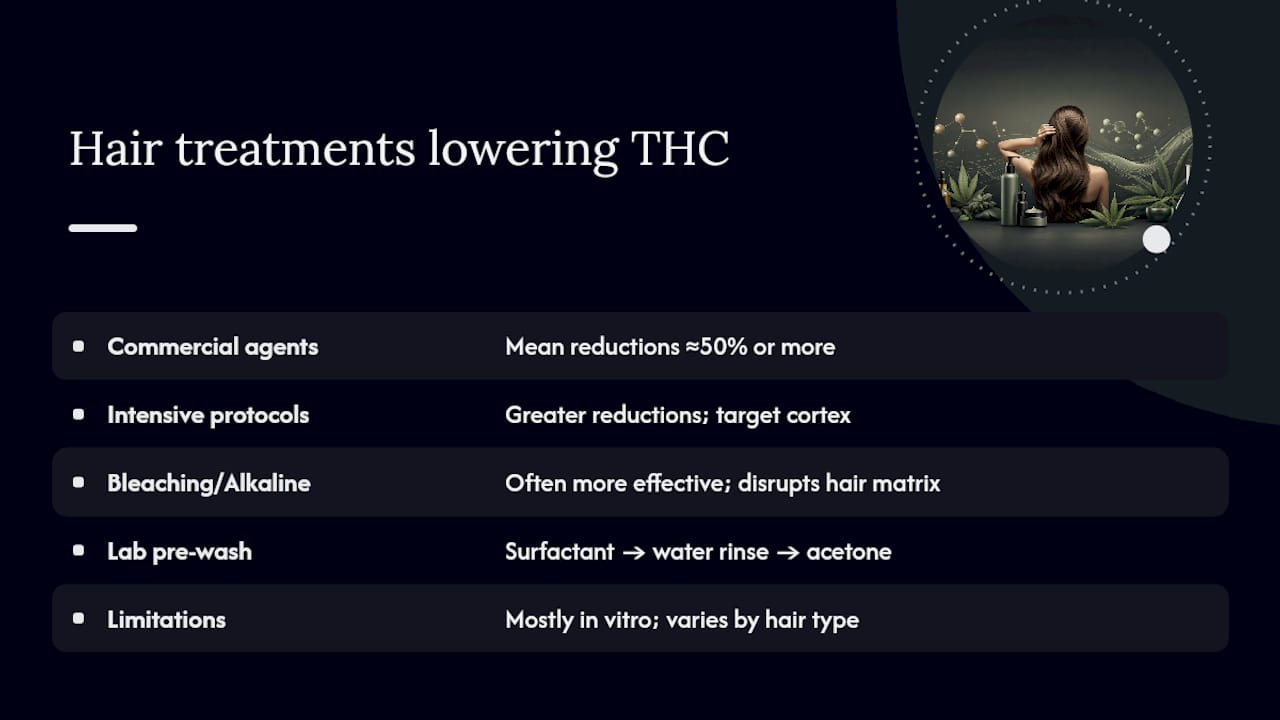
This is where the evidence gets genuinely useful. In vitro studies show that commercial hair products and intensive washing protocols can significantly reduce detected THC concentrations, with mean reductions typically around half or more for various commercial agents and greater reductions under intensive protocols.
Bleaching, dyeing, and certain household treatments can reduce THC concentrations in hair, with oxidative and alkaline treatments often being among the more effective methods. The mechanism involves chemical disruption of the hair matrix, allowing analytes to leach out.
Alkaline treatments and bleaching generally reduce drug concentrations more effectively than simple washing due to their ability to chemically disrupt the hair matrix. This supports the rationale for multi-step detox protocols employing alternating acidic and alkaline agents.
Pro Tip: Labs use a 3-step pre-wash (surfactant, water rinse, acetone) before analysis to remove surface contamination. Some external residue can survive that wash. A well-executed intensive protocol targets the cortex, not just the surface, which is a meaningfully different goal.
Limitations are real: most studies are in vitro, real-world results vary with hair porosity, pigmentation, and the amount of drug present, and darker, more pigmented hair tends to bind lipophilic compounds more tightly.
A step-by-step routine to reduce detection risk before your test
The most effective approach combines stopping exposure, timing your washes correctly, and using a proven protocol consistently.
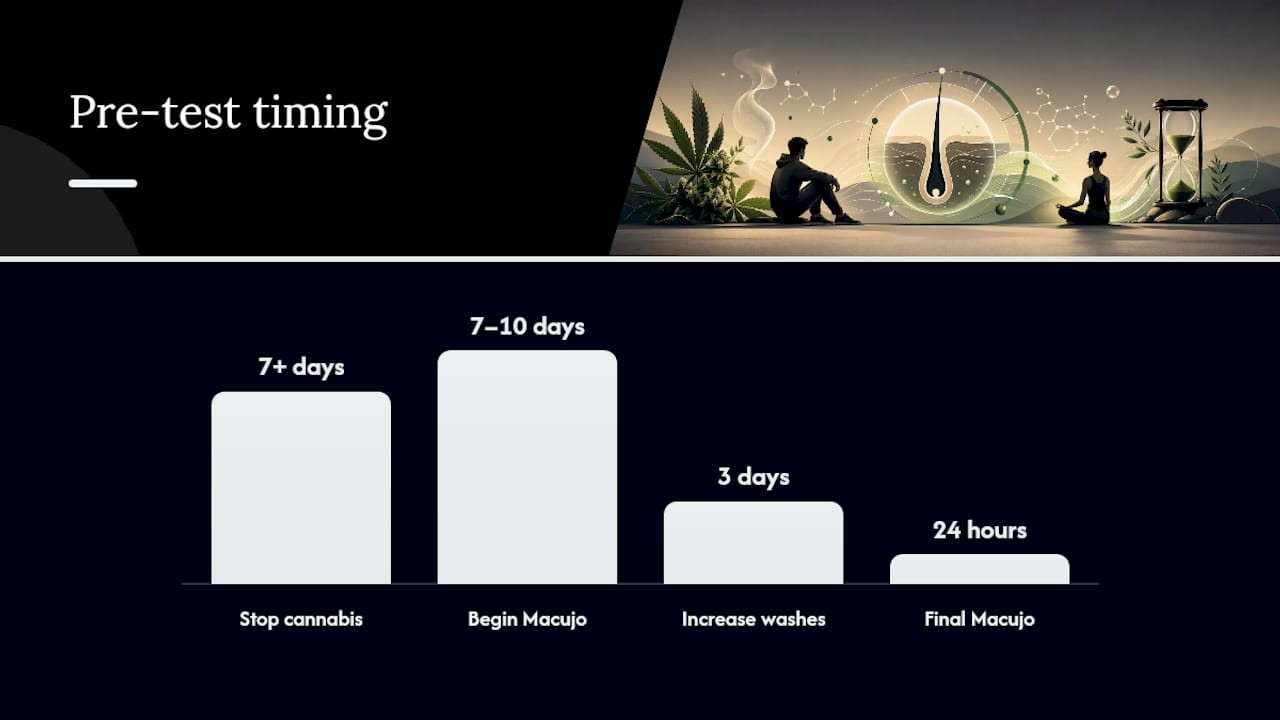
- 7+ days before the test: Stop all cannabis use and avoid secondhand smoke entirely. The longer you abstain, the less new THC enters the hair shaft.
- 7–10 days before: Begin the Macujo method, the most widely documented intensive hair detox protocol. It uses alternating acidic and alkaline agents to open the cuticle, flush the cortex, and close the shaft. Repeat the full cycle at least 5–7 times before your test date.
- 3 days before: Increase wash frequency. Each session should use Macujo Aloe Rid Shampoo, which is formulated with propylene glycol to penetrate the shaft and support the leaching process that the alkaline steps initiate.
- 24 hours before: Complete a final full Macujo cycle. Follow with a clarifying wash to remove any product residue.
- Test day: Wash with Macujo Aloe Rid Shampoo one final time. Avoid touching your hair unnecessarily before the sample is collected.
The Macujo Aloe Rid Shampoo is the core product in this routine. Its formulation is designed specifically to work within the multi-step cycle, not as a standalone rinse. You can find the full Macujo kit at Passdrugtest, along with detailed instructions for each wash step.
No protocol carries a guarantee. Outcomes depend on your use history, hair characteristics, and the lab’s cutoff. That is an honest limitation every credible source acknowledges.
Pro Tip: Run a private pre-screen with a home hair drug test kit before your official test. It will not replicate lab sensitivity exactly, but a negative result on a home test is a meaningful confidence signal.
What to do if detox alone isn’t enough
If your timeline is too short or your use history too recent, you have additional options worth considering.
- Request a different specimen type: Urine testing has a much shorter detection window (typically 3–30 days depending on use frequency). If your employer or testing authority allows it, ask whether urine is an acceptable alternative.
- Ask about split samples: Many labs retain a portion of the original sample. If you test positive, you can request that the retained portion be sent to an independent lab for confirmation.
- Verify chain of custody and lab accreditation: Errors in sample handling do occur. Confirm the lab is SAMHSA-certified and that proper chain-of-custody procedures were followed.
- Consult an employment attorney: If the stakes are high (job loss, custody, professional license), legal counsel can clarify your rights before you respond to a positive result.
Risks to avoid absolutely:
- Undiluted industrial chemicals on your scalp (chemical burns, permanent damage)
- Falsifying documentation or substituting samples (criminal liability)
- Unverified “miracle” products with no published evidence base
If you receive a positive result: Document everything, request the confirmatory test result and the specific analyte concentration, and do not sign anything until you understand your options.
How these recommendations were built
The guidance in this article draws on a synthesis of peer-reviewed toxicology studies and validated laboratory methods, not marketing claims.
- Detection window: Based on LabCorp’s hair follicle testing guidance and the established ~1 cm/month growth rate used across forensic toxicology literature.
- Incorporation mechanisms: Drawn from controlled dosing experiments published in Scientific Reports examining bloodstream vs. sebum/sweat routes.
- Treatment efficacy: Grounded in PMC-published in vitro manipulation studies and Wiley analytical chemistry research on bleaching and chemical treatment effects.
- Alkaline mechanism: Supported by Brill-published experimental work on hydrolysis and cuticle disruption.
Limitations to keep in mind: Most treatment studies are in vitro. Real-world results vary with hair porosity, melanin content, use history, and individual lab protocols. Small sample sizes in some experiments mean effect sizes should be treated as directional, not definitive.
How long does it take to get hair test results?
Most hair follicle drug test results come back within 2–3 business days after the lab receives the sample. If the initial screen is negative, results are typically released quickly. A positive screen triggers confirmatory testing (usually GC-MS/MS or LC-MS/MS), which can add 1–2 additional business days. For more detail on the hair testing process and timelines, Passdrugtest covers the full lab workflow.
What does a hair follicle drug test cost?
Employer-ordered tests are typically covered by the employer and cost the employee nothing. If you are ordering a test yourself for a pre-screen, prices generally range from $100 to $150 at a clinical collection site, with the lab analysis included. Factors that affect cost include the number of substances screened, whether confirmatory testing is required, and the collection facility’s fees. Home hair test kits are available at lower price points but use immunoassay technology, which is less sensitive than the LC-MS/MS methods used by certified labs.
A note on using this guide responsibly
Having worked closely with hair detox workflows and the products that support them, I want to be direct: this guide is built on published science, not wishful thinking. The evidence for intensive washing protocols is real, and the Macujo method has a documented track record. But no method is foolproof. Your outcome depends on your specific use history, your hair’s biology, and the lab’s exact protocols. Use the resources here to prepare as thoroughly as possible, pre-screen privately when you can, and make informed decisions about your options.
The Macujo Aloe Rid Shampoo is available at Passdrugtest
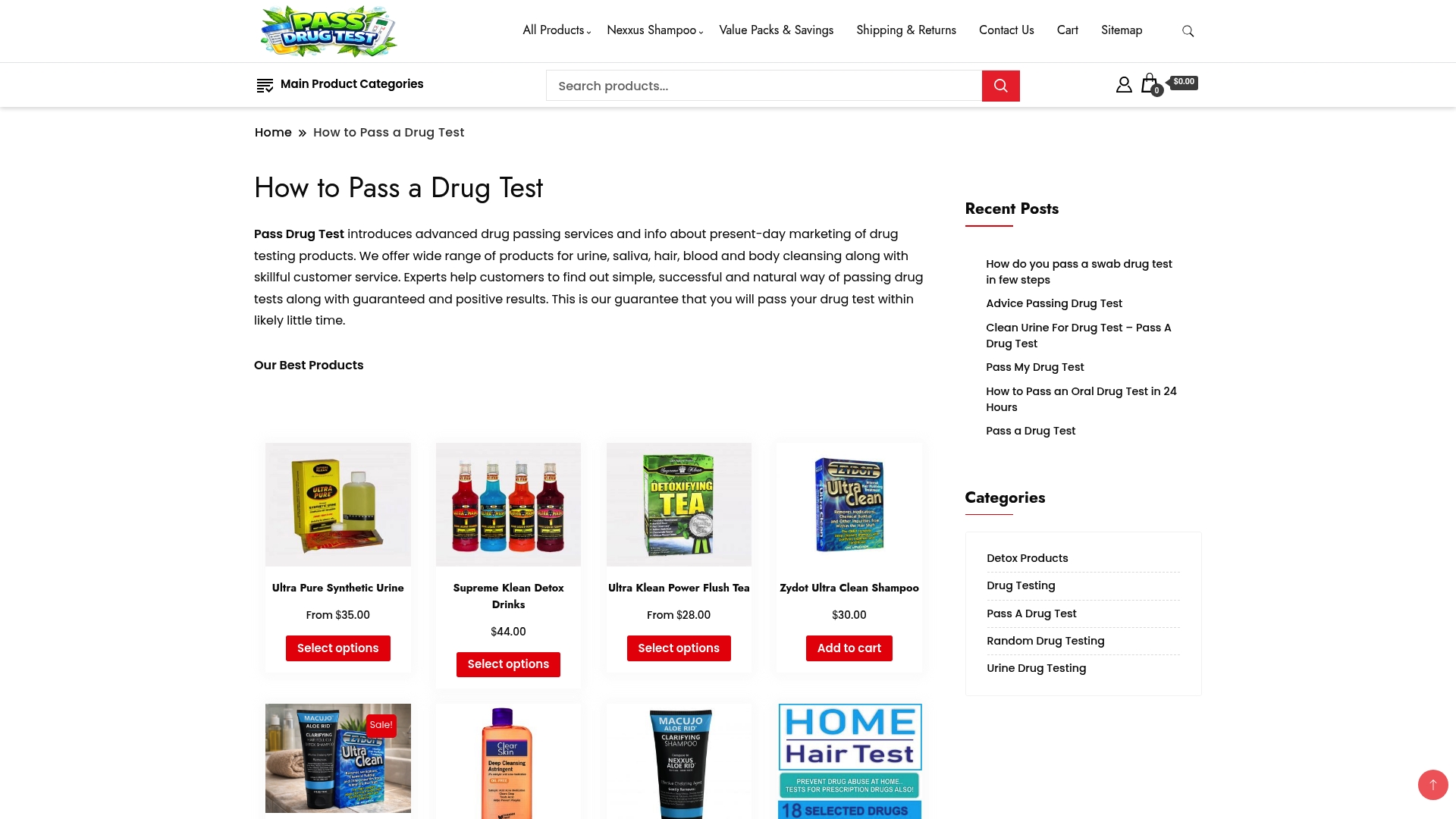
Passdrugtest carries the Macujo Aloe Rid Shampoo and the complete Macujo Aloe Rid + Zydot Ultra Clean kit, the two most evidence-aligned options for the intensive wash routine described above.
- Macujo Aloe Rid Shampoo contains propylene glycol to penetrate the hair shaft and support the leaching of drug metabolites during each wash cycle.
- The bundled kit adds Zydot Ultra Clean as a final-day treatment, giving you a complete, sequenced protocol in one order.
- Both products are formulated for use within the multi-step Macujo routine, not as standalone rinses.
Pre-screen with a home hair drug test kit before your official test date. Order your kit at Passdrugtest and start your routine with enough time to complete the full cycle.
Sources
- LabCorp — Hair follicle testing information
- Manipulation of THC Hair Concentrations by Commercially Available Products – PMC
- Finding cannabinoids in hair does not prove cannabis consumption | Scientific Reports
- Analytical study on cosmetic and household treatment effects on drug concentrations (Wiley, DTA 3541)
- Brill — Research on chemical effects on hair and drug leaching