


Hair follicle test policies in 2026 are defined by a longer detection window of up to 90 days and a shifting regulatory framework that affects both employers and individuals subject to workplace drug screening. The Department of Transportation issued a final rule effective june 10, 2026, updating collection procedures and laying groundwork for oral fluid testing adoption. For THC users, these changes are not abstract. They directly affect how, when, and under what conditions a hair test can be ordered, collected, and interpreted. Understanding the current rules gives you a real advantage, whether you are managing compliance or preparing for a test.
What are the key 2026 regulatory changes affecting hair follicle drug testing?
The most significant 2026 drug testing regulation took effect on june 10, 2026, when the DOT’s new observed collection rule went live. This rule clarifies when directly observed urine collections are required, specifically when oral fluid testing is unavailable because no HHS-certified oral fluid labs exist yet. That gap matters. Until at least two labs receive certification, employers under DOT oversight must follow the updated urine collection protocols rather than switching to oral fluid.
The rule also mandates that collection sites issue standing orders to handle situations where a same-sex observer is unavailable. Terminology across all procedural materials now replaces “gender” with “sex,” reflecting Executive Order 14168. These terminology and procedural updates require employers to revise training materials and collection site instructions before testing resumes under the new framework.
Once two HHS-certified oral fluid labs are operational, an 18-month grace period begins. During that window, employers must transition their collection procedures to accommodate oral fluid testing as an alternative. That transition affects scheduling, site logistics, and observer requirements across the board.
Hair follicle testing sits in a separate but related regulatory lane. HHS has not finalized DOT hair testing guidelines despite a congressional mandate dating back to 2015. Demand for hair testing has grown sharply, driven in part by a 370% increase in substituted urine specimens and a 36% rise in invalid specimens between 2022 and 2023. Those numbers signal that urine test fraud is rising, and hair testing is increasingly seen as the answer.
Key regulatory points employers and individuals should track in 2026:
- DOT’s june 10, 2026 rule governs observed urine collections and oral fluid readiness
- No HHS-certified oral fluid labs are operational yet, delaying the oral fluid transition
- HHS proposed guidelines address hair specimen length and detection window standards
- Hair test submissions to drug clearinghouses are under proposed HR amendment review
- Employers must issue standing orders for observer unavailability at collection sites
“Regulatory delays hinder full adoption of hair follicle testing, but ongoing rulemaking in 2026 reflects a clear shift toward modernizing drug testing protocols.” — Workplace Compliance Insights
How do hair follicle drug tests compare to urine and oral fluid tests?
Hair follicle testing detects drug use for approximately 90 days, far longer than urine or oral fluid methods. Urine tests typically detect recent use within a window of days to a few weeks. Oral fluid tests capture use within hours to a couple of days. That gap in detection range is the primary reason safety-sensitive industries push hard for hair testing.
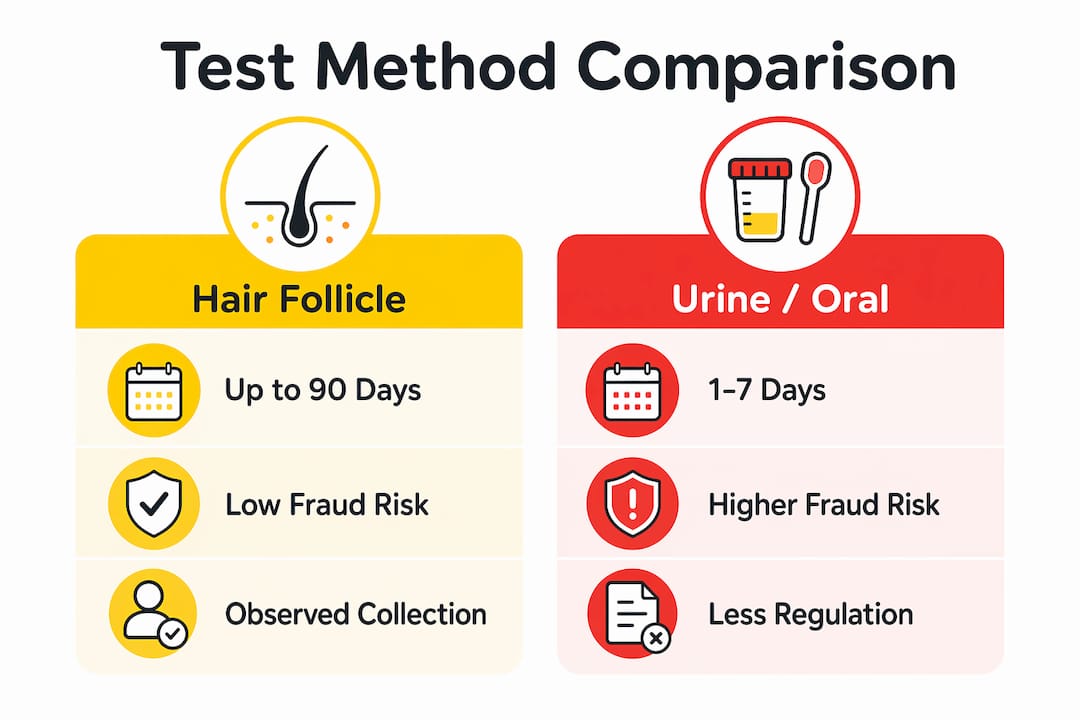
| Test Type | Detection Window | Adulteration Risk | Regulatory Status |
|---|---|---|---|
| Hair follicle | Up to 90 days | Low | Federally proposed, not yet DOT-mandated |
| Urine | Days to weeks | High | DOT-mandated, widely used |
| Oral fluid | Hours to 2 days | Moderate | DOT-authorized, pending lab certification |
The American Trucking Associations have publicly advocated for hair testing adoption in safety-sensitive roles, citing its resistance to adulteration as a key advantage over urine testing. That advocacy reflects a real operational concern. Drivers and operators who know a urine test is coming have time to substitute or dilute a sample. Hair cannot be swapped out.
For THC users, the difference between hair and urine tests is significant. A person who stopped using cannabis three weeks before a urine test may pass. That same person would likely fail a hair test. The 90-day window captures historical use, not just recent activity.
Pro Tip: If you are unsure which test type your employer uses, ask HR directly before your test date. Knowing the method gives you time to prepare the right response.
What nuances and challenges affect hair follicle test accuracy?
Hair follicle testing is more resistant to fraud than urine testing, but it is not without interpretation challenges. Several physical and chemical factors can affect how drug metabolites appear in a hair sample, and those factors matter in both employment and legal settings.
Hair treatments are a major variable. Bleaching, dyeing, and heat styling can migrate drug residues along the hair shaft, shifting metabolites from older segments to newer ones. Heat tools in particular can redistribute residues in ways that make recent drug use appear older, or vice versa. A test result that looks like use occurred last month may actually reflect use from three months ago.
Additional factors that affect accuracy include:
- Hair growth rate variability: Standard analysis assumes hair grows about 1 centimeter per month, but individual rates vary.
- Hair type and porosity: Coarser or chemically treated hair absorbs and retains metabolites differently than fine, untreated hair.
- Environmental exposure: External contact with drug smoke or residue can deposit metabolites on hair without ingestion.
- Cutoff thresholds: Labs use specific concentration cutoffs to call a result positive. Results near the threshold carry higher interpretation risk.
“Without independent expert testimony, hair follicle test results in Family Court may misleadingly represent drug use patterns due to lack of context regarding hair growth variability or environmental exposure.” — WRD News
The legal stakes are high. Family Court cases often proceed without independent forensic experts reviewing hair test data. Courts have been urged to treat hair test results with caution when no expert witness is present to contextualize the findings. In civil proceedings, there is no statutory requirement for that expert review. That gap creates real risk of misinterpretation, particularly in custody disputes where a single test result can carry enormous weight.
How do 2026 policies impact THC users and what steps should you take?
The impact of hair follicle tests in 2026 falls hardest on THC users because cannabis metabolites bind to hair and remain detectable for the full 90-day window. Even occasional use can produce a positive result if it occurred within that period. Understanding that timeline is the first practical step.
For employers, the 2026 compliance checklist looks like this:
- Update collection site procedures to reflect the june 10, 2026 DOT rule on observed collections and standing orders.
- Revise training materials to replace “gender” with “sex” in all observer-matching documentation.
- Monitor HHS lab certification for oral fluid testing and prepare a transition plan for the 18-month grace period.
- Consult legal counsel before implementing hair follicle testing in non-DOT contexts, since federal guidelines are still proposed, not finalized.
- Document all policy changes and communicate them to employees before any new testing protocols go live.
For individuals facing a hair test, the 90-day window is your primary concern. Factors like frequency of use, body mass, and hair treatment history all influence how much THC metabolite is present in your hair. Stopping use as early as possible before a test is the most direct step you can take.
Detox methods designed specifically for hair follicle testing offer additional support. The Macujo method is widely regarded as the most effective multi-step hair detox technique available. It involves a series of cleansing treatments using specialized products to reduce drug metabolite concentration in the hair shaft. When combined with a quality hair follicle detox shampoo, the method gives you the best realistic chance of a clean result.
Pro Tip: Start your detox routine as early as possible. The Macujo method requires multiple wash sessions over several days to be effective. Waiting until the night before a test is not a strategy.
Knowing your rights also matters. Employees in many states have growing legal protections around off-duty cannabis use. Check your state’s current employment law before assuming a positive hair test result automatically ends a job offer or employment.
Key takeaways
Hair follicle test policies in 2026 require both employers and THC users to act now, because regulatory changes are already in effect and detection windows leave little room for last-minute preparation.
| Point | Details |
|---|---|
| DOT rule is live | The june 10, 2026 DOT rule on observed collections is in effect and requires immediate employer compliance. |
| 90-day detection window | Hair tests detect THC use up to 90 days back, far longer than urine or oral fluid methods. |
| Hair treatments affect results | Bleaching, dyeing, and heat styling can shift drug metabolites and complicate accurate interpretation. |
| Legal settings carry extra risk | Family Court cases often lack expert forensic review, increasing the chance of misinterpreted results. |
| Detox preparation matters | Starting a proven detox routine like the Macujo method early gives individuals the best chance of passing. |
What I’ve learned watching these policies shift in real time
The pace of regulatory change in hair follicle testing is slower than the industry needs, but faster than most employers realize. The DOT’s june 2026 rule is a meaningful step, but the bigger picture is still incomplete. HHS has been sitting on finalized hair testing guidelines since 2015. That delay has real consequences. Employers who want to use hair testing for DOT-regulated positions still cannot do so under a fully authorized federal framework.
What strikes me most is how the fraud data forced the conversation. A 370% spike in substituted urine specimens is not a statistical blip. That number tells you the current system is being gamed at scale. Hair testing is the logical response, and the American Trucking Associations are right to push for it. The resistance is bureaucratic, not scientific.
For individuals, the forensic interpretation issue is the part that keeps me up at night. Courts are making life-altering decisions based on hair test results that no independent expert has reviewed. Heat styling tools can move metabolites in ways that make a three-month-old positive look like last week’s use. That is not a minor technical footnote. That is a flaw that can separate a parent from a child.
My advice is simple. If you are an employer, get your procedures updated now and start monitoring HHS lab certification status. If you are an individual facing a hair test, start your detox early and understand your state-level rights. The policies are changing, and waiting to react is the most expensive option available.
— MIchael
Prepare now with Passdrugtest
Facing a hair follicle drug test is stressful, but you have real options. Passdrugtest carries the products and guides you need to prepare with confidence.
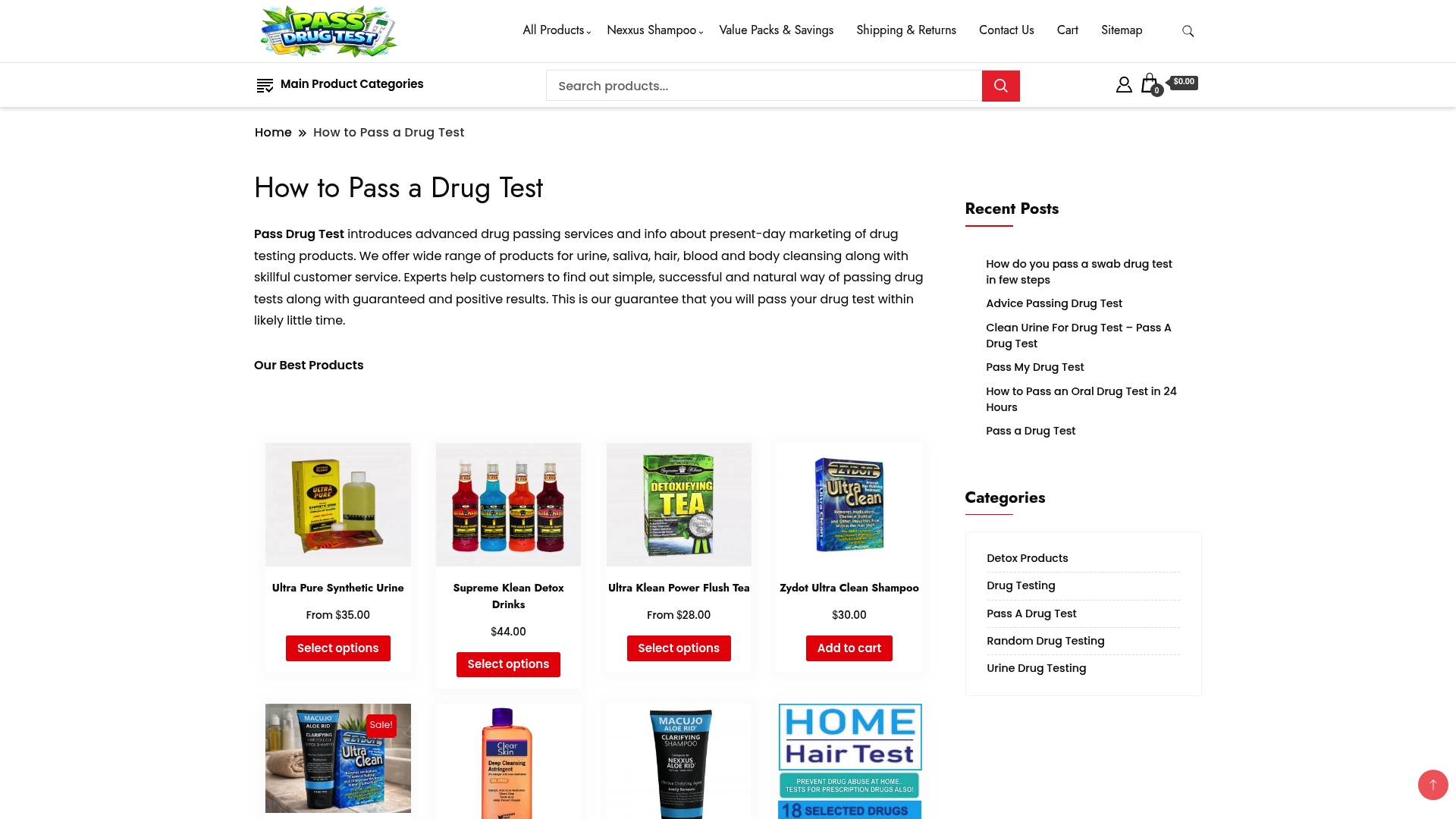
The Macujo Aloe Rid Shampoo is the flagship product at Passdrugtest and the cornerstone of the Macujo method. It is formulated specifically to reduce drug metabolite concentration in the hair shaft before testing. For a complete approach, browse the full range of hair drug test detox products to find the right combination for your timeline and situation. The earlier you start, the better your results.
FAQ
How long does THC stay in hair follicles?
THC metabolites are detectable in hair for up to 90 days after use. The exact amount present depends on frequency of use, body composition, and hair treatment history.
Are hair follicle tests required by the DOT in 2026?
Hair follicle testing is not yet DOT-mandated for regulated industries. HHS has not finalized the guidelines required to authorize it federally, despite a congressional mandate from 2015.
Can hair treatments like bleaching affect my drug test result?
Yes. Bleaching and heat styling can migrate drug residues along the hair shaft, potentially altering the apparent timeframe of drug use in a test result.
What is the most effective way to pass a hair follicle drug test?
The Macujo method combined with a specialized detox shampoo is widely considered the most effective approach. Multiple cleansing sessions over several days are required for best results.
What changed in hair follicle testing regulations in june 2026?
The DOT’s june 10, 2026 rule updated observed urine collection procedures and terminology, and set the framework for oral fluid testing once certified labs become available. Hair follicle testing guidelines from HHS remain in proposed status.