


Cutoff levels in hair drug testing are the concentration thresholds that determine whether a sample tests positive or negative for drug metabolites. Labs like Quest Diagnostics and USDTL use a two-tier cutoff system — screening and confirmatory — to protect against false positives and ensure accurate results. For THC, the screening cutoff is typically 1.0 pg/mg, while confirmation cutoffs range from 0.05 to 0.3 pg/mg. Understanding cutoff levels explained hair test results is the difference between interpreting a report with confidence and panicking over a number you don’t recognize.
How are cutoff levels determined in hair drug tests?
Cutoff levels are set by laboratory standards bodies, including the Society of Hair Testing, to balance detection sensitivity with fairness. The core goal is to distinguish active drug use from incidental exposure, like secondhand smoke or surface contact. Labs apply washing protocols and set thresholds above incidental contact levels, so a positive result reflects genuine metabolite incorporation into the hair shaft.
The process runs in two stages. First, a screening test flags any sample that exceeds the initial threshold. Only those flagged samples then advance to confirmation testing using GC/MS or LC/MS/MS machines, which identify molecular fingerprints and measure exact concentrations. This two-step process is why a trace amount does not automatically mean a positive result.

Typical hair drug test cutoff values
Hair test cutoff values vary by drug class. THC carries one of the lowest screening cutoffs because the detection method is highly sensitive. Cocaine and opiates carry much higher thresholds because they metabolize differently and deposit in hair at higher concentrations.
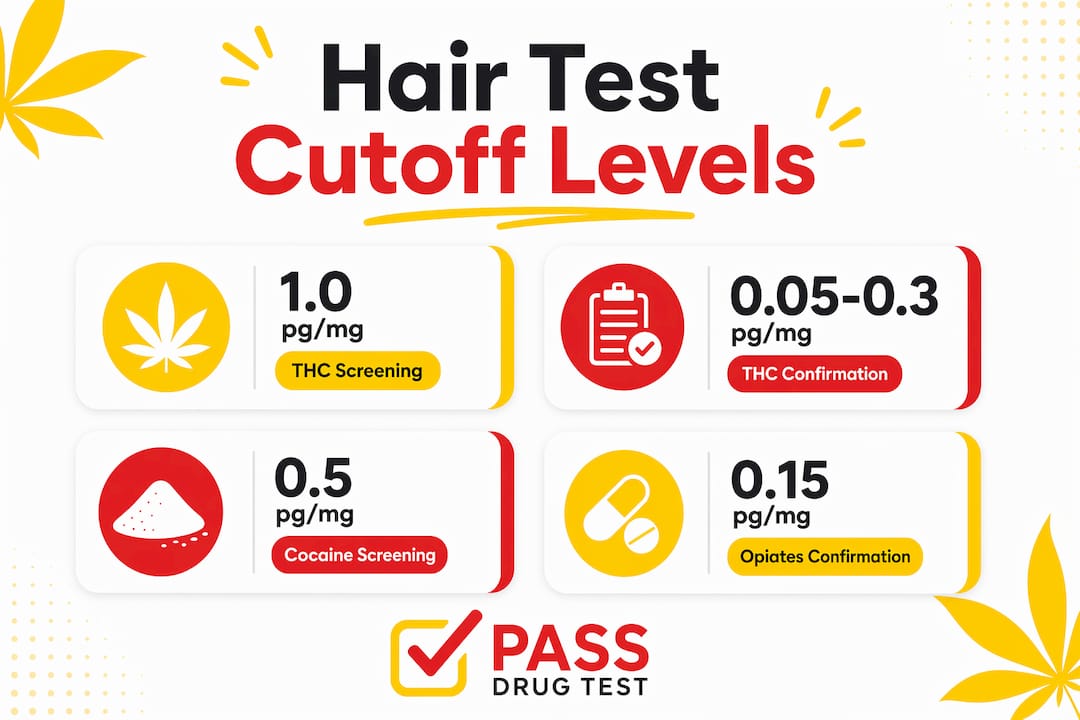
| Drug | Screening cutoff | Confirmation cutoff |
|---|---|---|
| THC (marijuana) | 1.0 pg/mg | 0.05–0.3 pg/mg |
| Cocaine | 500 pg/mg | 500 pg/mg |
| Opiates | 200 pg/mg | 200 pg/mg |
| Amphetamines | 300 pg/mg | 300 pg/mg |
These figures reflect standard laboratory benchmarks. Individual labs may apply slightly different internal standards, so always request the specific cutoff values from the testing facility.
Pro Tip: THC has a notably low confirmation cutoff compared to cocaine or opiates. That means even infrequent marijuana use can register above the threshold if the lab uses a highly sensitive confirmation method. Knowing this before your test matters.
What factors influence hair drug test results beyond cutoff values?
Raw cutoff numbers only tell part of the story. Several biological and environmental factors affect how much of a drug metabolite actually ends up in your hair, and how a lab interprets that amount.
- Hair growth rate and segment length. Labs use a 1.5-inch hair sample representing 90 days of growth. This is an approximation. People with faster or slower growth rates will have detection windows that differ from the standard 90-day estimate.
- Melanin content. Darker hair retains higher metabolite concentrations independent of actual drug use levels. This is a documented biological variable that can affect how close a result sits to the cutoff threshold.
- External contamination. Hair can absorb drug particles from the environment. Labs run decontamination washes before analysis specifically to remove surface residue. Samples below cutoff levels are reported negative, which protects people from false accusations tied to environmental contact.
- Chemical treatments. Bleaching, dyeing, and perming can alter the hair shaft structure and affect how metabolites bind to hair. This can either raise or lower the detected concentration relative to actual use.
- Body hair vs. head hair. When head hair is unavailable, labs may use body hair. Body hair grows more slowly and can reflect a longer or less defined detection window, complicating direct comparison to head hair cutoff standards.
Understanding these variables helps you read your hair test results with more accuracy and less guesswork.
How to interpret hair test results using cutoff levels
A hair test result is reported as a detected concentration in pg/mg or ng/mg, compared against the lab’s defined cutoff. A confirmed positive requires both the screening and confirmation results to exceed their respective thresholds. If either falls below, the result is negative.
Here is a practical comparison to show how this works:
| Scenario | Detected level | Cutoff level | Result |
|---|---|---|---|
| THC screening | 0.8 pg/mg | 1.0 pg/mg | Negative |
| THC screening | 1.4 pg/mg | 1.0 pg/mg | Advances to confirmation |
| THC confirmation | 0.2 pg/mg | 0.3 pg/mg | Negative |
| THC confirmation | 0.4 pg/mg | 0.3 pg/mg | Positive |
| Cocaine screening | 480 pg/mg | 500 pg/mg | Negative |
The most common misconception is that any detectable trace equals a positive result. It does not. Labs first clear samples through screening thresholds before applying sensitive confirmation testing. A sample must cross both gates to be reported positive.
Pro Tip: If your result is close to the cutoff, request the full numeric report from the lab, not just the pass/fail summary. Knowing the exact detected concentration versus the threshold gives you grounds to ask for a retest or seek independent review.
What do cutoff levels mean for passing or failing a hair drug test?
Cutoff levels directly determine your pass or fail outcome, but your pattern of use is what drives whether you cross those thresholds in the first place.
- Frequency of use matters most. Chronic or repeated drug use deposits enough metabolites to exceed cutoffs reliably. A single isolated use may not produce a concentration high enough to trigger a positive, depending on the drug and the lab’s specific threshold.
- Amount consumed affects concentration. Higher doses mean more metabolites circulate in the bloodstream and incorporate into the hair shaft. Even for THC, heavy daily use will push detected levels well above the 1.0 pg/mg screening cutoff.
- The 90-day window is not a hard boundary. The 1.5-inch sampling rule is an approximation. If your hair grows faster than average, the 1.5-inch segment may cover less than 90 days. If it grows slower, it may cover more.
- Detox methods target metabolite reduction. Reducing the concentration of metabolites in the hair shaft below the cutoff threshold is the goal of any detox approach. The Macujo Method, developed by Mike Macujo, is widely regarded as the most effective method to pass a hair follicle drug test. It uses a multi-step wash protocol designed to open the hair cuticle and remove embedded drug metabolites.
- Time alone may not be enough. For heavy marijuana users, metabolites can remain in the hair shaft above the THC cutoff even after stopping use, because the hair already grown during the period of use retains those metabolites permanently unless treated.
Reviewing the federal hair test guidelines for THC users gives you a clearer picture of exactly what threshold applies in your specific testing context.
Key takeaways
Hair drug test cutoff levels are scientifically set concentration thresholds that require both a screening and a confirmation result above the defined limit before a sample is reported positive.
| Point | Details |
|---|---|
| Two-tier system | Both screening and confirmation cutoffs must be exceeded for a confirmed positive result. |
| THC has the lowest cutoff | THC confirmation cutoffs start as low as 0.05 pg/mg, making it the most sensitive drug to test for. |
| Biological factors matter | Melanin content and hair growth rate affect detected concentrations independent of actual drug use. |
| Trace amounts are not automatic positives | Samples below the screening cutoff are reported negative, protecting against false accusations. |
| Pattern of use drives risk | Repeated use reliably exceeds cutoffs; a single isolated use may not cross the threshold at all. |
Cutoff numbers are only part of the picture
I’ve spent years watching people misread hair test reports, and the most common mistake is treating the detected number as the verdict. It isn’t. The cutoff is the verdict. A result of 0.9 pg/mg for THC when the screening cutoff is 1.0 pg/mg is a negative result, full stop. The number looks alarming if you don’t know the threshold. It looks completely different once you do.
What concerns me more is the biological variability that most people never account for. Darker hair genuinely does retain more metabolites at a structural level. That’s not a theory. Biological variables can influence cutoff interpretation, which is why expert analysis matters in sensitive legal or employment contexts. If you’re close to a threshold, the melanin factor alone could be the difference between a borderline result and a clear negative.
My honest advice: get the full numeric report, not just the pass/fail summary. Know your lab’s specific cutoffs before the test, not after. And if you’re a regular marijuana user facing a hair follicle test, understand that the 90-day detection window is real and the THC cutoff is low. Preparation is not optional at that point.
— MIchael
Passdrugtest has the products you need before test day
Facing a hair follicle drug test as a marijuana user is stressful, but knowing your cutoff levels is only the first step. The next step is doing something about the metabolites already in your hair.

Passdrugtest carries the Macujo Aloe Rid Shampoo, the proven shampoo used in the Macujo Method and widely considered the best option for reducing THC metabolites below detectable cutoff levels. For a complete approach, browse the full range of hair drug test detox products to find the right solution for your timeline and testing situation. Every product is selected specifically for people who need real results, not just reassurance.
FAQ
What is a cutoff level in a hair drug test?
A cutoff level is the minimum drug metabolite concentration that must be detected in a hair sample for a result to be reported positive. Samples below the cutoff are reported negative, even if a trace amount is present.
What is the THC cutoff level for a hair follicle test?
The standard THC screening cutoff is 1.0 pg/mg, with confirmation cutoffs ranging from 0.05 to 0.3 pg/mg depending on the lab. Both thresholds must be exceeded for a confirmed positive result.
Can a single use of marijuana trigger a positive hair test?
A single use may not produce enough THC metabolites to exceed the cutoff threshold, since hair tests better detect repeated use than isolated incidents. However, the result depends on the amount consumed, individual metabolism, and the lab’s specific confirmation cutoff.
Why do different drugs have different cutoff levels?
Cutoff levels reflect how each drug metabolizes and incorporates into the hair shaft. Cocaine deposits at much higher concentrations than THC, which is why its cutoff is set at 500 pg/mg compared to THC’s 1.0 pg/mg screening threshold.
Does hair color affect hair drug test results?
Yes. Darker hair contains more melanin, which can bind drug metabolites at higher concentrations independent of actual use levels. This biological factor can push a result closer to or further from the cutoff, which is why contextual evaluation is recommended for borderline results.