

False positives in hair drug tests occur when a test reports drug use that did not actually happen, triggered by environmental contamination, cross-reactive substances, or biological factors unrelated to ingestion. This is not a rare edge case. Hair follicle testing, also called hair strand testing, captures up to 90 days of history, which means your hair accumulates far more than just what enters your bloodstream. For THC users and anyone facing a workplace or legal test, understanding what causes false positives in hair tests is the first step toward protecting yourself from an unfair result.
What causes false positives in hair tests?
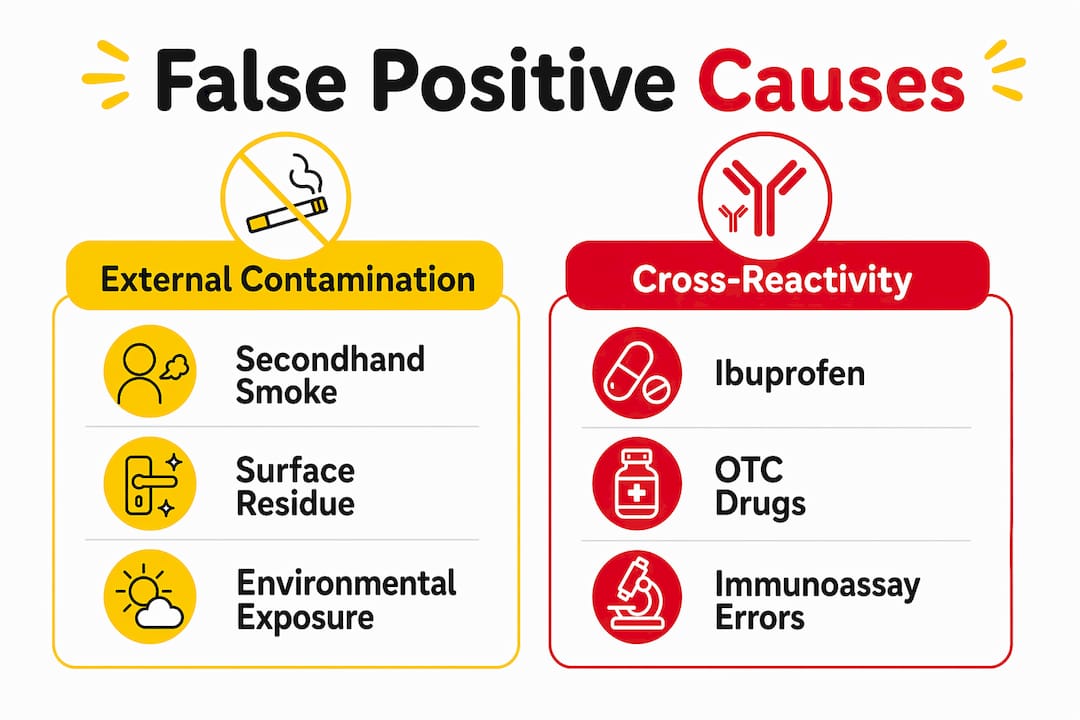
The two main drivers of false positive results in hair testing are external contamination and immunoassay cross-reactivity. External contamination means drug residues from your environment deposit onto your hair shaft without you ever consuming the substance. Cross-reactivity means a legal medication or food compound triggers the initial screening test, which is designed to be sensitive rather than precise. Hair test accuracy issues are not always about lab error. They are often about the gap between what the science can detect and what it can definitively prove.
Hair testing follows a two-step process. Labs run an initial immunoassay screen, then confirm any positive result with GC-MS (gas chromatography-mass spectrometry) or LC-MS/MS. According to LegalClarity, samples must clear both cutoff thresholds to be reported positive, which filters out many interference-causing factors. That two-step filter catches a large share of false starts, but it does not eliminate every risk.
How external contamination leads to false positives
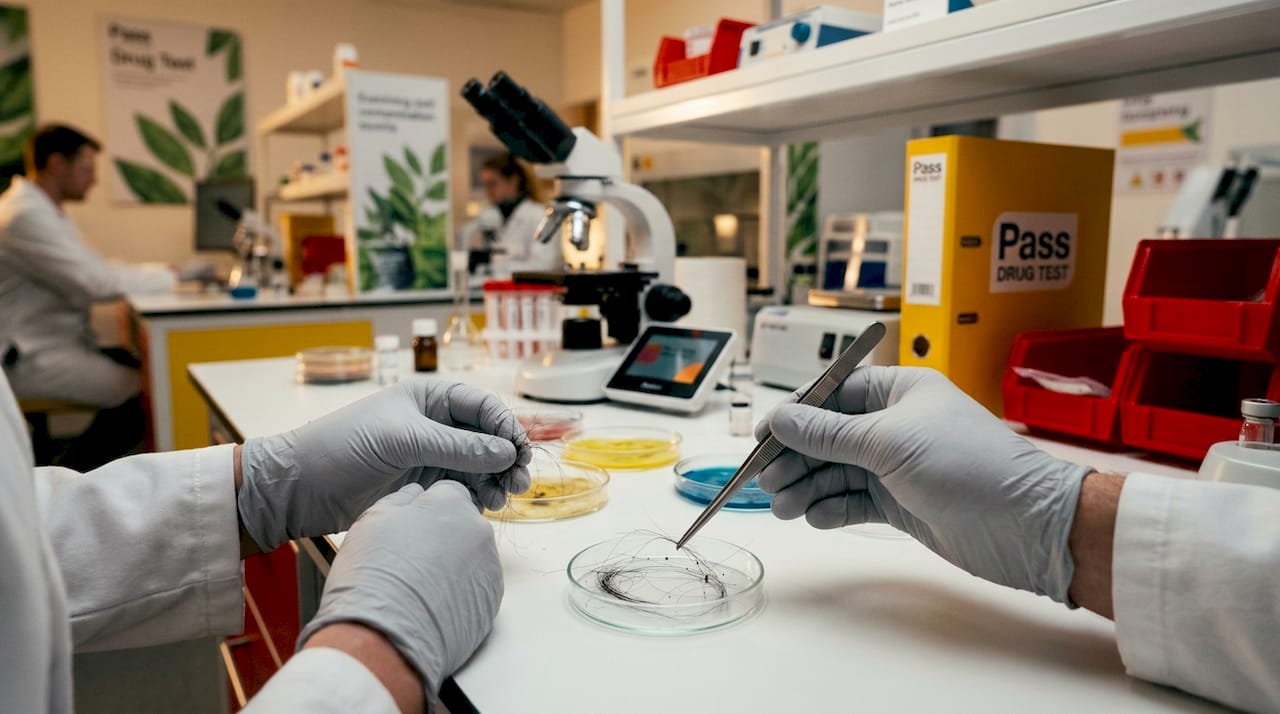
External contamination is the most misunderstood cause of false positive results in hair follicle tests. Drug residues deposit onto hair from secondhand smoke, contaminated surfaces, shared vehicles, and even physical contact with someone who recently used drugs. Your hair shaft is porous, and it absorbs compounds from the air and from direct contact, not just from your bloodstream.
The problem is that standard washing procedures at collection sites do not always remove all surface residues. Labs use decontamination protocols, but these have limits. A 2026 study published in Scientific Reports confirmed that wash water analysis can help distinguish contamination from ingestion. When drug levels are high in the wash solution but low in the cleaned hair, that pattern supports contamination rather than use. The reverse pattern, low wash levels and high hair levels, supports actual ingestion. This distinction matters enormously in legal and employment contexts.
Common sources of external contamination include:
- Secondhand cannabis smoke in enclosed spaces like cars or apartments
- Touching surfaces where drugs have been handled and then touching your hair
- Sharing combs, hats, or pillowcases with someone who uses drugs
- Working in environments where drug residues are present in the air
Pro Tip: If you spend time in environments where cannabis smoke is common, washing your hair thoroughly with a clarifying shampoo before a test can reduce surface residue, though it will not remove metabolites already incorporated into the hair shaft.
For a deeper look at how your environment affects your results, Passdrugtest covers environmental contamination factors in detail.
Cross-reactivity and immunoassay screening: what substances trigger false positives?
The initial immunoassay screen is built for sensitivity, not specificity. It is designed to catch any possible positive, which means it also catches things that are not drugs of abuse. Ibuprofen and dextromethorphan are two of the most common over-the-counter culprits. Dextromethorphan, found in cough syrups like Robitussin, can cross-react with PCP panels. Ibuprofen has been linked to false positives for cannabinoids and barbiturates at the screening stage.
Other substances that may cause screening-level false positives include:
- Hemp-based foods and CBD products containing trace THC
- Certain antibiotics, including rifampin
- Quinolone antibiotics flagging for opiates
- Poppy seeds triggering opiate screens
The good news is that confirmatory GC-MS testing almost always rules these out. GoodRx notes that common OTC drugs can cross-react during screening but rarely cause confirmed positives. This is why the Medical Review Officer (MRO) plays a critical role. The MRO reviews confirmed positive results, contacts the donor, and evaluates any legitimate medical explanation before a result is reported to an employer.
| Substance | Screening risk | Confirmed positive risk |
|---|---|---|
| Ibuprofen | Moderate (cannabinoids, barbiturates) | Very low |
| Dextromethorphan | Moderate (PCP panel) | Very low |
| Hemp/CBD products | Moderate (THC panel) | Low to moderate |
| Rifampin (antibiotic) | Low to moderate (opiates) | Very low |
| Poppy seeds | Moderate (opiates) | Low |
Pro Tip: Always disclose all prescription and over-the-counter medications to the MRO before your result is finalized. A documented medical explanation can prevent a screening-level false positive from becoming a reported positive.
How hair type, color, and cosmetic treatments influence hair test accuracy
Hair biology creates one of the most significant and least discussed sources of false positive risk. Melanin, the pigment that gives hair its color, binds drug molecules. Black hair absorbs drugs up to 15 times more than ginger hair, according to a BBC-reported academic study. This means that two people with identical drug exposure can produce dramatically different test results based solely on hair color, raising serious questions about racial fairness in hair testing.
Chemical treatments compound this problem. Hair dyes, bleaches, and chemical straighteners alter the hair shaft’s structure, which affects how drug molecules are distributed and retained. Heating with straighteners may redistribute compounds like ketamine along the shaft, potentially creating concentration patterns that look like drug use even when none occurred. Damaged or heavily processed hair also flags reliability concerns at accredited labs.
| Hair characteristic | Effect on drug absorption | Testing implication |
|---|---|---|
| High melanin (dark hair) | Higher drug binding | Elevated detection, potential false positive |
| Low melanin (light/gray hair) | Lower drug binding | May underdetect actual use |
| Chemically treated hair | Altered shaft structure | Unreliable concentration patterns |
| Heat-styled hair | Drug redistribution along shaft | Misinterpretation of use timeline |
Body hair sampling is one mitigation strategy. Leg, arm, or chest hair grows more slowly and may reflect a different exposure window, which labs sometimes use when scalp hair is unavailable or compromised. Understanding how hair cuticle structure affects drug incorporation helps explain why these biological variables matter so much.
What testing process errors contribute to false positives?
Even a well-designed two-step testing system can produce errors when the process itself breaks down. These are the procedural causes of false positive results that rarely get discussed but are very real.
- Insufficient sample quantity. Hair tests require a minimum of 100 milligrams of hair, roughly 100 to 120 strands. If the collector takes too little, the lab may reject the sample or produce unreliable results.
- Sample mislabeling. Chain-of-custody errors, where a sample is labeled incorrectly or documentation is incomplete, can result in one person’s sample being attributed to another.
- Cross-contamination at the lab. Inadequate separation of samples during processing can introduce drug residues from one sample into another.
- Cutoff calibration issues. Labs set cutoff thresholds to filter out trace amounts, but if calibration drifts, a sample near the threshold may be incorrectly classified.
- Failure to analyze wash solutions. Not all labs test the wash-off liquid alongside the cleaned hair. Analyzing both wash and hair is the most reliable way to distinguish contamination from ingestion, and skipping this step leaves results open to misinterpretation.
Accredited labs that follow SAMHSA (Substance Abuse and Mental Health Services Administration) guidelines and maintain strict chain-of-custody procedures reduce these risks significantly. If you receive a positive result, asking whether the lab is SAMHSA-certified is a legitimate and important question.
Specific challenges with THC and cannabis in hair testing
THC presents unique false positive challenges that go beyond what applies to other substances. THC and its metabolites enter hair via the bloodstream after ingestion, but external THC from cannabis smoke or hemp products can also deposit directly onto the hair shaft. Labs wash hair samples to remove surface THC, but legal disputes continue over whether residual THC in hair reflects ingestion or contamination.
Key challenges specific to THC hair testing include:
- Hemp-derived CBD products often contain trace THC that can accumulate in hair over time, even without psychoactive use
- Secondhand cannabis smoke in enclosed spaces can deposit detectable THC onto hair without any consumption
- Hair tests are not federally approved for cannabis workplace testing under DOT (Department of Transportation) regulations, which reflects ongoing scientific uncertainty
- Light or infrequent cannabis use may fall below detection thresholds, but environmental exposure could push results above cutoffs
- There is a lag of approximately 5 to 7 days before drug metabolites incorporated via the bloodstream appear in the portion of hair above the scalp
For THC users specifically, the combination of a long 90-day detection window and the difficulty distinguishing ingestion from contamination makes hair testing the most consequential and most contested drug test format. Passdrugtest covers the key differences between hair and urine tests for THC users who want to understand their full risk profile.
Key takeaways
False positives in hair tests result from a combination of environmental contamination, biological hair characteristics, cross-reactive substances, and procedural errors, not always from drug use.
| Point | Details |
|---|---|
| External contamination is a primary cause | Secondhand smoke and surface contact deposit drug residues onto hair without ingestion. |
| Immunoassay screens are sensitive, not definitive | OTC drugs like ibuprofen and dextromethorphan can trigger screening positives that confirmatory testing rules out. |
| Hair biology creates unequal risk | Dark hair absorbs up to 15 times more drug molecules than light hair, affecting result accuracy across demographics. |
| Confirmatory testing is the critical safeguard | GC-MS and LC-MS/MS testing, combined with wash solution analysis, distinguishes contamination from actual drug use. |
| Procedural errors add real risk | Mislabeling, insufficient samples, and skipped wash analysis can all contribute to incorrect positive results. |
My take on hair test results and what they actually prove
Hair strand testing is scientifically grounded, but the gap between what the test detects and what it proves is wider than most people realize. I have seen cases where the science was applied correctly but the interpretation was wrong, and that distinction matters enormously when someone’s job or custody arrangement is on the line.
The variables that affect hair test accuracy, melanin concentration, cosmetic treatments, environmental exposure, and individual hair growth rates, are rarely factored into how results are presented. A positive result is reported as a positive result, full stop. The nuance gets lost.
My honest advice: if you receive a positive result that you believe is inaccurate, do not accept it passively. Request confirmation that GC-MS or LC-MS/MS testing was performed. Ask whether wash solution analysis was conducted. Disclose every medication and supplement you take to the MRO before the result is finalized. And if the result has legal consequences, consult a toxicologist who specializes in hair testing, not just a general expert.
Hair tests are a useful tool, but they are not infallible. Understanding their limitations is not about gaming the system. It is about making sure the science is applied fairly.
— Michael
Prepare your hair before your next test
If you are concerned about false positive risks from external contamination or residue buildup, taking proactive steps before your test is the most effective approach. Passdrugtest offers proven detox shampoos and cleansing products designed specifically for hair follicle test preparation, including the Macujo Aloe Rid shampoo, which is the most trusted option for deep hair cleansing.
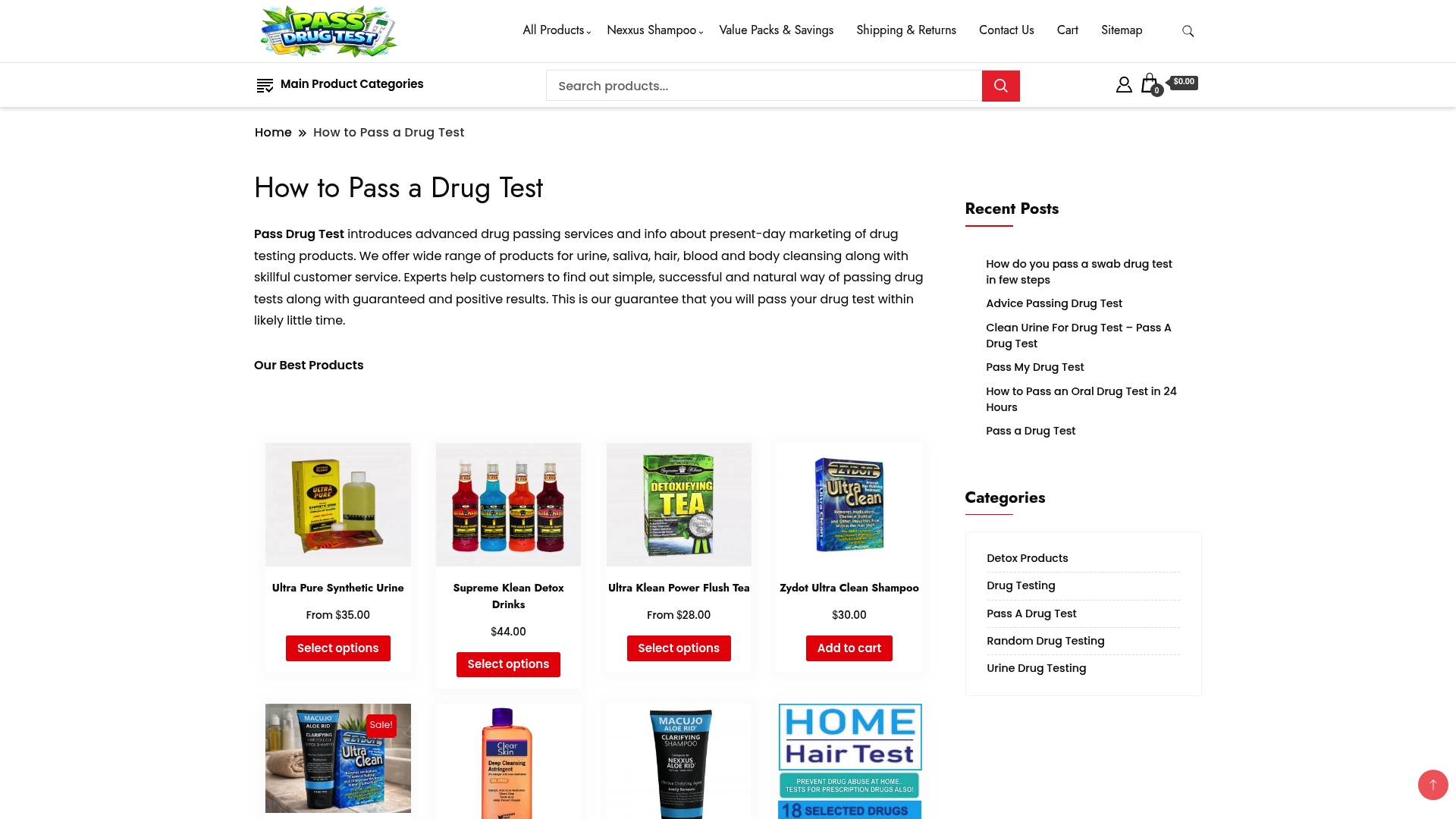
A thorough cleansing routine addresses surface residues and supports the removal of drug metabolites from the hair shaft. Passdrugtest’s hair follicle detox shampoos are formulated to work with the Macujo Method, the most well-documented approach to hair detox before a follicle test. You can also browse the full range of detox products to find the right preparation plan for your situation.
FAQ
What is the most common cause of a false positive hair test?
External contamination from secondhand smoke or contact with drug-residue surfaces is the most common cause. Washing procedures do not always remove all deposited residues, which can trigger a positive result.
Can ibuprofen cause a false positive on a hair drug test?
Ibuprofen can cross-react with cannabinoid and barbiturate panels during the initial immunoassay screen. Confirmatory GC-MS testing almost always rules out ibuprofen as a cause before a result is officially reported.
Does hair color affect drug test results?
Yes. Dark hair absorbs significantly more drug molecules than light hair due to higher melanin content. Studies show black hair can absorb up to 15 times more drug residue than ginger hair, which affects detection levels and result interpretation.
How do labs tell the difference between contamination and drug use?
Accredited labs analyze both the wash-off solution and the cleaned hair sample. High drug levels in the wash with low levels in the hair supports surface contamination. High levels in the hair with low wash levels supports ingestion via the bloodstream.
Are hair tests accurate for detecting THC specifically?
Hair tests can detect THC metabolites incorporated via the bloodstream, but external THC from smoke or hemp products complicates interpretation. Hair tests are not federally approved for cannabis workplace testing under DOT regulations, reflecting ongoing scientific debate about their reliability for THC specifically.