
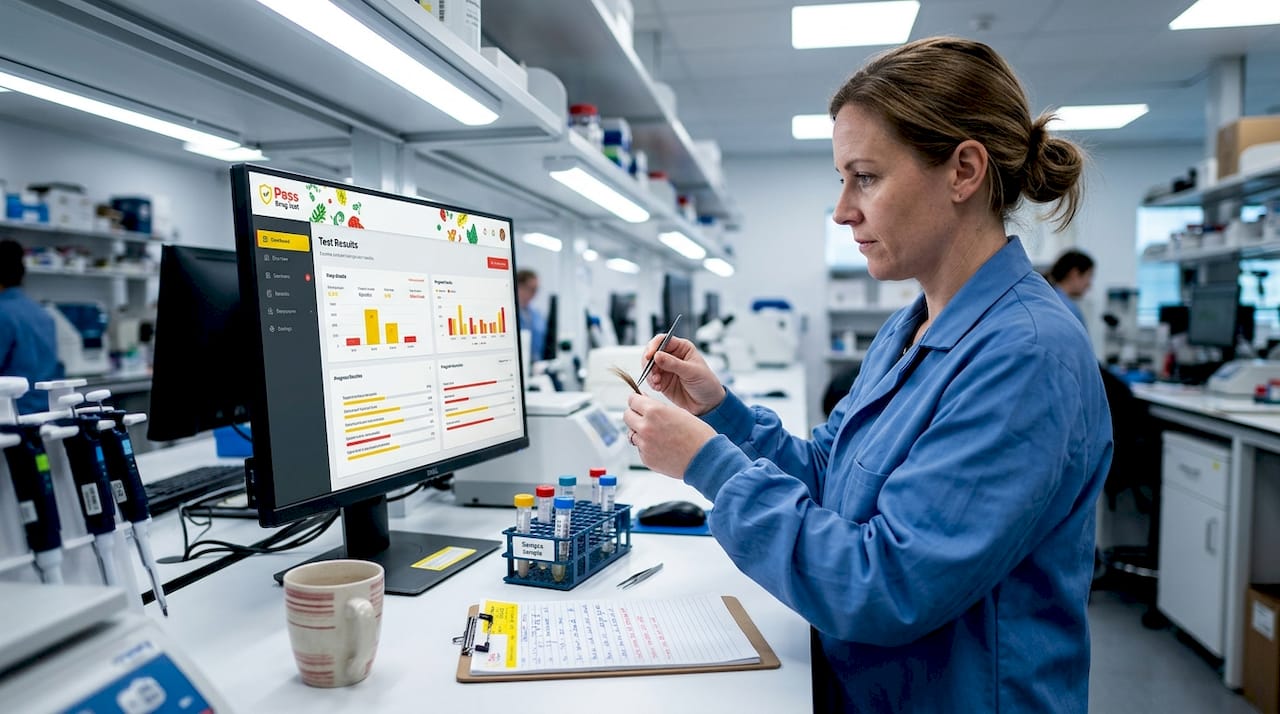

Most people assume a hair follicle drug test works like a snapshot of last weekend’s activities. It does not. These tests provide a 90-day detection window for scalp hair, meaning they reveal a months-long pattern of use, not whether you smoked yesterday or even last week. If you have a test coming up, understanding exactly what the results mean, what they can and cannot prove, and how your individual biology affects your risk is critical. This guide breaks it all down clearly, so you can make informed decisions and take the right action.
Table of Contents
- How hair follicle drug testing actually works
- Reading your hair test results: Cutoffs, meaning, and common confusion
- What affects your risk? Frequency, hair type, and hidden variables
- Limitations of hair tests: What results do NOT tell you
- How to respond: Strategies if you’re at risk or need to pass a test
- What most guides miss about hair test interpretation
- Upgrade your odds: Proven solutions for passing hair drug tests
- Frequently asked questions
Key Takeaways
| Point | Details |
|---|---|
| Hair tests show long-term patterns | A standard scalp hair sample detects THC use from the past 90 days, not just recent exposure. |
| Positive does not mean impairment | Test reports indicate use over time, not current state or specific dates. |
| Cutoff levels are crucial | Understanding lab cutoffs helps you interpret risk for a positive result. |
| Individual factors influence results | Frequency, hair color, and metabolism can all affect your chance of testing positive. |
| Detox and timing strategies exist | Knowing your personal risk can help you take steps to minimize detection. |
How hair follicle drug testing actually works
Let’s break down what your hair sample is truly revealing about THC exposure.
Hair follicle testing is more sophisticated than most people realize. When you consume THC, your body metabolizes it into compounds including THC-COOH. These metabolites travel through your bloodstream and are incorporated into the structure of your hair shaft as it grows. They are not sitting on the outside of your hair strand where shampoo would simply wash them away. They are locked inside the hair itself.
Hair follicle tests detect THC metabolites incorporated into the hair shaft from the bloodstream, with the standard scalp test covering roughly 90 days of history. For body hair, the detection window can extend to 12 months or more because body hair grows more slowly and may have been on your body far longer than the 1.5 inches of scalp hair typically collected. This is a detail that catches many people off guard.
Here is a quick overview of hair testing basics:
- Hair shaft stores metabolites: THC-COOH binds to the hair shaft internally, making it extremely resistant to simple washing.
- Growth rate determines timing: Scalp hair grows approximately 0.5 inches per month. A 1.5-inch sample captures roughly 90 days.
- Lag period after use: Because hair must grow out from the follicle, drugs used within the past 5 to 10 days may not yet appear in the testable portion of hair.
- Body hair extends the window: Body hair samples can potentially reveal use from a year or more ago.
| Hair type | Approximate detection window |
|---|---|
| Scalp hair (1.5 in. sample) | Up to 90 days |
| Body hair | Up to 12 months |
| Shorter scalp sample | Proportionally shorter window |
Labs also take steps to wash samples to remove external contamination such as secondhand smoke, which means environmental exposure is less likely to trigger a false positive than many people fear. That said, this washing process is not foolproof, and some labs apply more rigorous decontamination than others.
Pro Tip: If you recently used THC and have a test scheduled in the next few days, you may actually fall within the 5 to 10 day lag window. This does not mean you are safe if you used regularly before that point.
Reading your hair test results: Cutoffs, meaning, and common confusion
Now that you understand what’s being measured, let’s examine how your results are actually reported and what each number means.
When your hair sample is analyzed, the lab runs it through two stages. The first is a screening test. If that screen comes back positive, a confirmation test follows. Results are reported as binary, meaning positive or negative, after both screening and confirmation steps using advanced methods like GC-MS (gas chromatography-mass spectrometry) or LC-MS (liquid chromatography-mass spectrometry). These are the same technologies used in forensic labs, so they are highly accurate at detecting what is present.
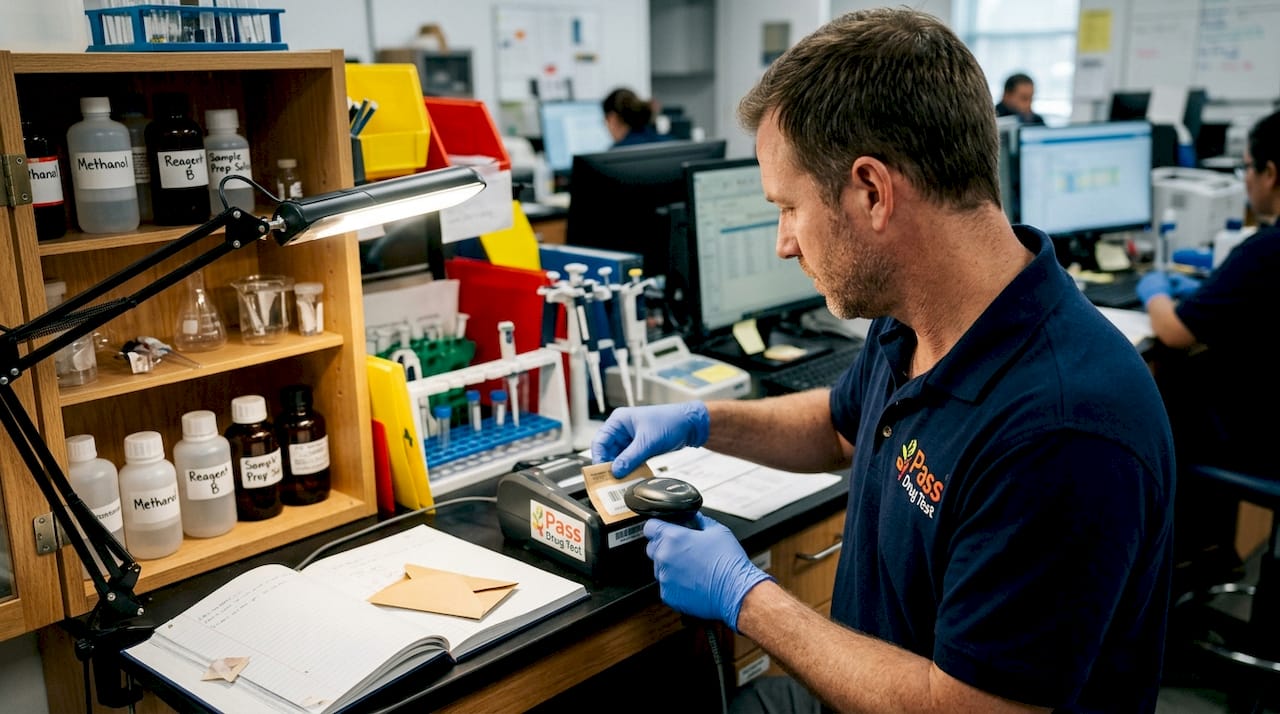
Here is where the confusion usually begins. Seeing the word “positive” on a report leads most people to assume it means they were high, impaired, or recently using. None of that is what a positive result actually confirms. A positive result only tells you that THC metabolites were present in your hair above the cutoff threshold during the detection window. That is it.
Standard THC cutoffs work like this: the screening threshold is typically 1 picogram per milligram (pg/mg), while the confirmation cutoff can range from 0.1 to 1 pg/mg depending on the lab. These are very sensitive levels. Standard lab cutoffs mean that even moderate or occasional use in the past 90 days could push you over the threshold.
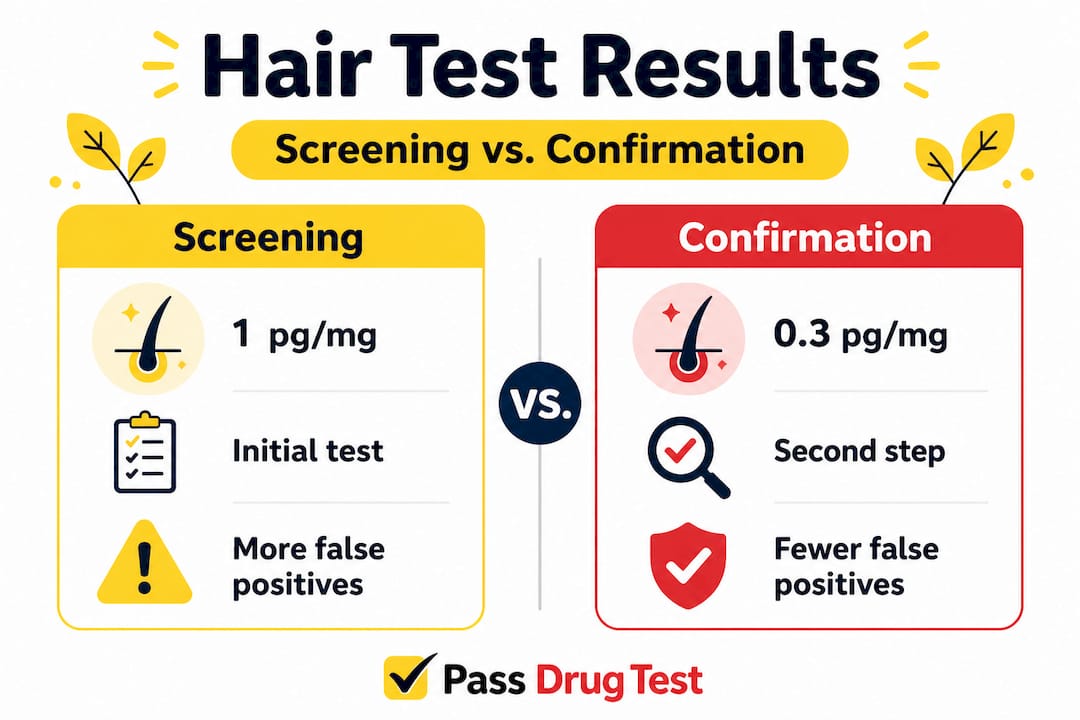
| Test stage | Typical cutoff (pg/mg) | Purpose |
|---|---|---|
| Initial screen | 1 pg/mg | Broad detection |
| GC-MS/LC-MS confirmation | 0.1 to 1 pg/mg | Rule out false positives |
| Result reported | Positive or negative | Final determination |
Key things to understand about your report:
- “Positive” does not mean “currently impaired.” It means metabolites were detected above the cutoff.
- “Negative” does not mean zero THC. It means metabolites were below the detection threshold.
- Actual pg/mg numbers are not always shared. You can and should request your actual numerical results.
- Confirmation testing is your safeguard. Labs do not just rely on the screen. A second, more precise test must confirm the finding before a positive is declared.
Pro Tip: Always request your numerical lab results in pg/mg. This gives you real context, especially if you plan to challenge a result in a workplace appeal or legal setting. Knowing you tested at 1.1 pg/mg vs. 15 pg/mg tells a very different story.
What affects your risk? Frequency, hair type, and hidden variables
Understanding the outcome is only part of the picture. Your individual biology and habits play a huge role in test risk.
Not every THC user faces the same level of risk on a hair test. Two people with similar usage habits can get completely different outcomes depending on several personal factors. Frequency of use is the most obvious variable. Chronic users face near-certain detection while single or one-time users have only about a 15% chance of triggering a positive, often because their metabolite levels fall below the cutoff threshold. This is one of the most reassuring data points for light or experimental users.
Your THC detection by use frequency matters enormously, but so do factors you cannot easily control.
Here are the key variables that determine your personal risk level:
- Frequency and dose: Daily and heavy users concentrate far more THC-COOH in the hair shaft than occasional users.
- Melanin content: Darker hair naturally contains more melanin, and melanin binds THC metabolites more aggressively. This means people with dark brown or black hair face a statistically higher risk of a positive result compared to someone with light blonde hair using the same amount of THC.
- Body fat percentage: THC is fat-soluble. People with higher body fat store more THC in fatty tissue, which releases slowly back into the bloodstream over time and continues to feed metabolites into the hair.
- Metabolism rate: Faster metabolizers clear THC from the blood more quickly, resulting in lower metabolite incorporation into the hair shaft.
- Hair texture and porosity: Highly porous hair may absorb more metabolites or be more susceptible to external contamination.
The melanin factor is also where hair drug test variables intersect with serious ethical concerns. Federal guidelines from SAMHSA and DOT do not authorize hair testing, meaning it is used exclusively by private employers who choose it. The racial bias concern is real because it means people of certain ethnic backgrounds, who naturally have higher melanin levels, face a measurably higher positive rate even at equal drug exposure levels. This is an ongoing debate in workplace policy and legal circles.
“Hair tests are used by private employers, not federally mandated, and the science of melanin binding raises legitimate questions about equitable enforcement across different populations.” — Drug testing policy researchers
Limitations of hair tests: What results do NOT tell you
With context in mind, let’s recognize how hair tests may be both overestimated and blind to important details.
Hair testing is a powerful screening tool for chronic use patterns, but it is far less precise than most employers or employees assume. Understanding what these tests genuinely cannot tell you is just as important as knowing what they can reveal.
Here are the most important limitations, in plain terms:
- No exact date of use. Labs cannot pinpoint exact dates or doses from a hair sample. The test reveals a general pattern over the detection window, not a specific event.
- No impairment evidence. A positive result says nothing about whether you were impaired at work, while driving, or at any specific moment. Hair tests measure past exposure, not present performance.
- No dose measurement. Higher pg/mg levels suggest heavier use, but they do not confirm exactly how much you consumed or how often.
- No protection from the lag window. If you used heavily up until 10 days before the test, your most recent use might not even appear yet. The marijuana detection window has a built-in 5 to 10 day lag before metabolites show up in testable hair.
“A hair test positive is evidence of exposure over a period of weeks to months. It is not evidence of a specific act, a specific date, or functional impairment at any point in time.”
Pro Tip: If you are facing a positive result in a legal or workplace context, the fact that hair tests cannot confirm timing, dose, or impairment is potentially a useful point. Document it and consult a professional who understands drug testing science if you need to minimize detection in hair or formally appeal.
How to respond: Strategies if you’re at risk or need to pass a test
If you’re concerned about an upcoming test, there are practical steps and best practices you should know.
Knowing your results or your risk level is only useful if you act on that knowledge. Whether you are awaiting results or trying to prepare in advance, here is a structured approach.
First, honestly assess your situation:
- When did you last use? If it has been more than 90 days and your usage before that was light, your risk is low.
- How long and how often did you use? Daily use over months carries the highest risk. Light or occasional use is far more borderline.
- How long is the hair sample being tested? A shorter sample means a shorter detection window.
Hair tests excel at detecting chronic use patterns but frequently miss light or single-use, especially when levels fall below the cutoff. This is important context if you are a borderline user. Do not assume you are guaranteed to fail just because you used once or twice in the past three months.
If you have time before the test, here is a practical action plan:
- Stop using THC immediately. No new metabolites means no new incorporation into the hair shaft.
- Research proven detox shampoo protocols. Specialized detox shampoos designed for hair follicle testing can help reduce metabolite levels in the hair shaft when used correctly.
- Consider the Macujo Method. This is a well-known multi-step protocol that uses specific products including a quality aloe rid detox shampoo to open the hair cuticle and reduce internal metabolite levels.
- Understand your workplace’s confirmation process. Can you request a confirmatory retest? Is there an MRO (Medical Review Officer) process? Knowing this helps you pass a hair drug test or at least contest an unfair positive outcome.
- Document your usage pattern if relevant. For legal challenges, having a realistic timeline of use documented in advance can support your case.
Pro Tip: Do not wait until the week before your test to take action. Detox shampoo protocols require multiple treatments over several days to be effective. Earlier preparation equals better results.
What most guides miss about hair test interpretation
Most online guides treat a positive hair test result as a single, definitive verdict. They don’t acknowledge that the science is more nuanced than pass or fail. That oversimplification genuinely hurts people who could benefit from knowing more.
One of the most overlooked strategies is requesting your actual numerical pg/mg values. When a lab confirms a positive, they have a specific number. Most employers only receive a “positive” designation, but that number matters. If you tested at 1.2 pg/mg against a 1.0 pg/mg cutoff, that is a borderline result that can often be challenged or re-examined, especially when compared to someone at 20 pg/mg. In workplace appeals or legal proceedings, this distinction can be significant. We have seen this point change outcomes.
Another piece most guides skip over is the role of individual biology. Comparing your situation to a friend’s experience, or to a generic online advice thread, is not reliable. Two people with the same usage history can face very different outcomes because of hair texture, melanin levels, body composition, and metabolism. Generic advice fails people constantly because it ignores this reality. Compare this to hair test vs urine testing, where the variables are completely different and advice that works for one type of test may be irrelevant for another.
The real mistake is applying a one-size-fits-all response. Your preparation, your risk level, and your strategy should be built around your biology and your usage pattern. Know your actual numbers. Know your hair type. Customize your approach accordingly.
Upgrade your odds: Proven solutions for passing hair drug tests
For those who want the best possible chance of passing a hair drug test, here’s what works according to both science and user experience.
You now have a clear picture of how hair follicle testing works, what your results really mean, and where your personal risk lies. The next step is taking action with products and methods proven to give you the best outcome.
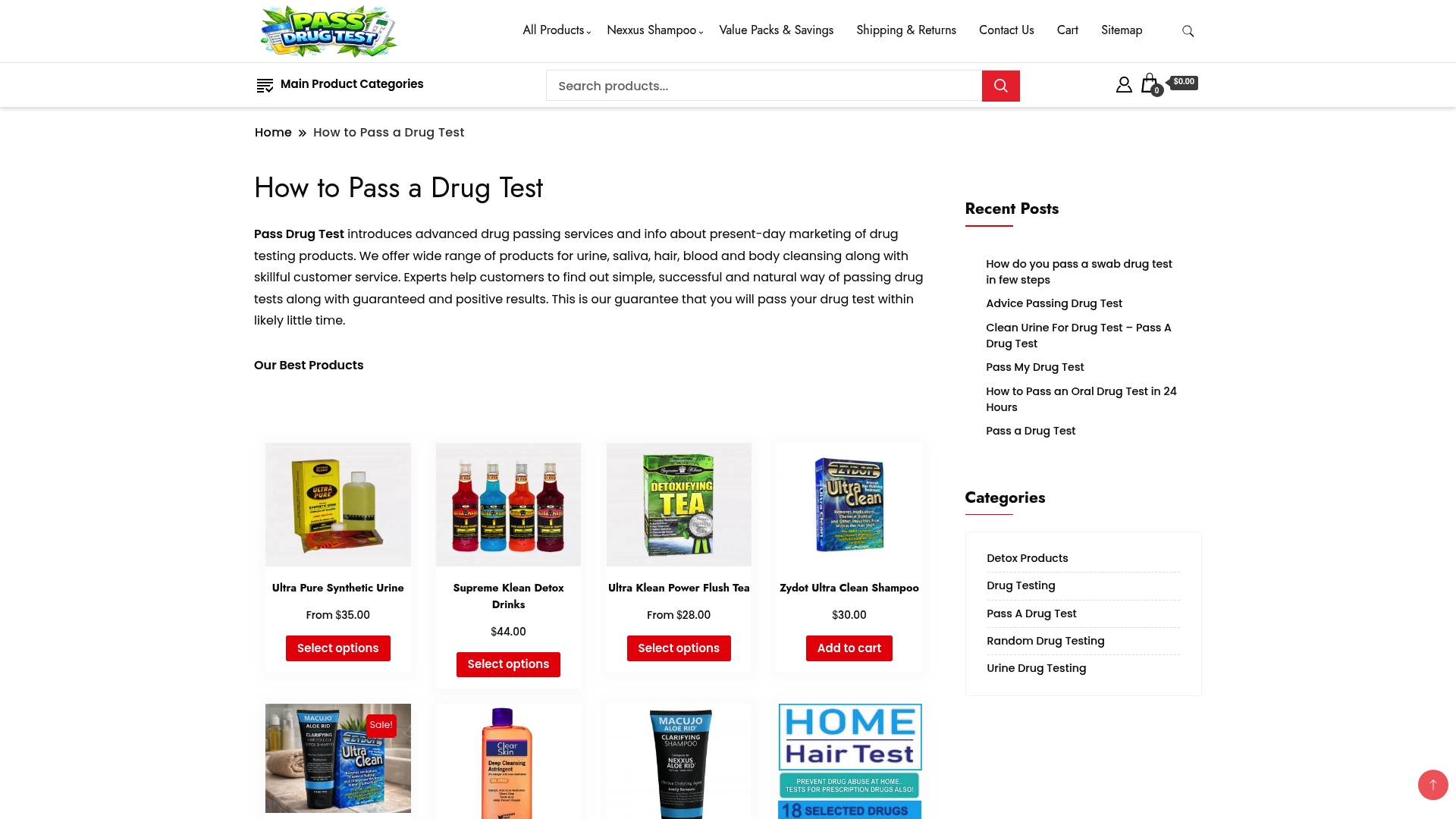
Our hair test detox shampoo selection is built specifically for THC users navigating hair follicle tests. The flagship product is our Macujo Aloe Rid Shampoo, which is formulated to penetrate the hair shaft and help remove THC metabolites from within. It is the cornerstone of the Macujo Method and widely considered the best hair detox shampoo in its class. We also provide step-by-step guidance so you know exactly how to use it effectively. Do not leave your test results to chance when proven, science-backed tools are available and ready to work for you.
Frequently asked questions
How long after THC use can hair tests detect it?
THC metabolites typically appear in hair 5 to 10 days after use, and can be detected for about 90 days with a standard 1.5-inch scalp sample.
Can light or one-time THC use show up on a hair follicle test?
Light or one-time use rarely triggers a positive result, with approximately a 15% detection chance, as levels often fall below the cutoff threshold.
What do hair drug test levels (pg/mg) actually mean?
These values measure the concentration of THC metabolites in the hair shaft. Labs typically report only positive or negative, but you can request your actual pg/mg cutoff values for additional context.
Does hair color affect the chance of a positive THC test?
Yes. Darker hair with higher melanin content binds more THC metabolites, which meaningfully increases the likelihood of a positive result even at the same usage level as someone with lighter hair.
Are hair follicle drug tests federally mandated for employment?
No. SAMHSA and DOT guidelines only authorize urine and oral fluid testing for federally regulated positions. Hair testing is used exclusively by private employers who choose to implement it.