


Hair follicle drug testing has become one of the most feared screening methods for THC users, and for good reason. Unlike a urine test you can flush out in a few days, hair tests lock in a 90-day record of your drug use that’s extremely hard to erase. Since cannabis legalization spread across multiple states, urine THC positivity rose 683% in some markets, pushing employers toward more reliable detection tools. This guide walks you through exactly how hair follicle tests work, why companies keep choosing them, and what your real options are as a THC user facing a pre-employment screen.
Table of Contents
- How pre-employment hair tests work
- Why employers choose hair follicle tests over other methods
- Can detox products really help you pass?
- Risk factors and realities for THC users
- Why most advice on beating hair tests misses the mark
- Ready for your next step? Trusted resources and proven products
- Frequently asked questions
Key Takeaways
| Point | Details |
|---|---|
| Hair tests detect up to 90 days | Employers use hair follicle testing because it reveals drug use over a much longer period than urine or saliva tests. |
| Lab methods are highly sensitive | Labs minimize false results by washing samples and analyzing only internal drug metabolites in hair. |
| Detox products have limits | While detox shampoos may reduce detectable signals, they don’t reliably clear all traces for regular THC users. |
| Abstinence is safest | The only consistent way to pass a hair follicle test is to abstain from THC use for at least 90 days. |
| Regular use means higher risk | People who use THC regularly face a much higher chance of testing positive on a hair drug test than occasional users. |
How pre-employment hair tests work
Now that we understand the stakes, let’s see how hair drug testing works and why employers rely on it over other methods.
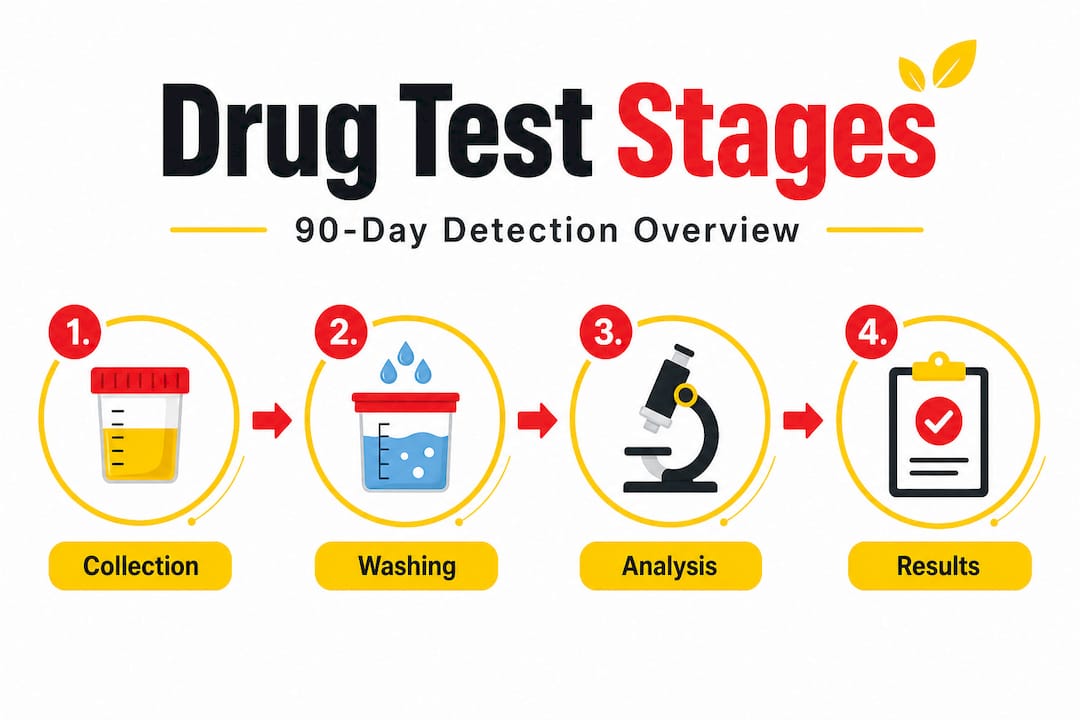
When a collector takes a hair sample for a pre-employment drug test, they cut approximately 1.5 inches of hair as close to the scalp as possible. That sample is collected under direct observation and sealed in tamper-resistant packaging before it ever reaches a laboratory. The 1.5-inch length is not arbitrary. Because hair grows roughly half an inch per month, that segment represents approximately 90 days of your personal history.
What happens next is where things get scientifically serious. As explained in the hair test process, labs first wash the hair thoroughly to remove any surface contamination that could come from secondhand smoke or environmental contact. Then they screen the sample using an immunoassay test, a rapid antibody-based screen that flags potential drug metabolites. Any sample that tests positive during screening goes through a second, far more precise confirmation step using gas chromatography-mass spectrometry, known as GC-MS. This method identifies the specific internal metabolite THC-COOH, which only appears inside the hair shaft when THC has been consumed and processed by your body.
The cutoff levels used in certified labs are extremely sensitive. The screening threshold sits at approximately 1 picogram per milligram of hair, and the confirmation cutoff is around 0.1 pg/mg for THC. To put that in perspective, a picogram is one trillionth of a gram. These are not casual measurements. The combination of washing, immunoassay screening, and GC-MS confirmation makes hair testing one of the most technically rigorous drug detection methods available.
| Stage | Method | Purpose |
|---|---|---|
| Sample collection | 1.5 inches cut near scalp | Covers 90-day window |
| Pre-wash | Solvent wash | Removes surface contamination |
| Screen | Immunoassay | Flags potential positives |
| Confirm | GC-MS | Identifies specific metabolites |
You can learn more about what to expect when shopping for a hair drug test shampoo and how different products interact with this multi-step process.
The bottom line is that this process was designed specifically to be resistant to tampering, environmental interference, and simple surface treatments. Understanding that is the foundation for everything else in this guide.
Why employers choose hair follicle tests over other methods
Understanding the process sets up the real question: why are hair tests chosen so often over urine or saliva screening?
The answer comes down to three things: detection window, accuracy, and accountability. A standard urine test catches THC use from roughly the past 3 to 30 days depending on frequency of use. A saliva test detects use from the past 24 to 72 hours. A hair test covers the past 90 days with high confidence. For employers hiring for safety-sensitive roles, transportation, healthcare, or finance, that extended window is not just useful. It is essential.
Here is how the three main testing methods compare:
| Test type | Detection window | Ease of cheating | Cost |
|---|---|---|---|
| Urine | 3 to 30 days | Moderate | Low |
| Saliva | 24 to 72 hours | Low | Low |
| Hair follicle | Up to 90 days | Very difficult | Higher |
The high specificity over 90% of hair testing means that false positives are rare. Labs are equipped to distinguish between external contamination and actual internal metabolites, which means casual exposure to secondhand smoke is not going to sink your test result. What the lab is looking for is proof that your body processed THC, not just that it touched your hair.
This is also where regular THC users face the biggest challenge. Frequent use means higher concentrations of drug metabolites deposited in the hair over time. The data is sobering. Research shows that Psychemedics detects 2 to 3 times more users than other hair testing technologies, and 6 to 10 times more users than urine testing, with companies reporting 30 to 60 percent drops in drug positivity after implementing hair-based programs.
“Hair testing is not just more accurate. It is fundamentally harder to beat because it records biological evidence from inside your body, not just waste you can temporarily dilute.”
There are a few genuine limitations employers know about. Hair tests miss very recent use, typically anything from the last 5 to 7 days, because it takes time for new hair to grow out from the scalp with embedded metabolites. They also show lower sensitivity for occasional or single-use THC consumption. Sensitivity for cannabis is estimated between 55% and 80%, meaning a one-time user may not always show up positive. But for regular users, the picture is very different.
Understanding the difference between urine and hair methods is critical. Read our breakdown on synthetic urine vs hair testing to see why strategies that work for urine tests will fail completely when you are facing a hair screen. If you want a broader look at your options, our guide to the best detox methods for hair tests covers what actually has evidence behind it.
Can detox products really help you pass?
After comparing testing methods, it is time to face the crucial issue: are detox products worth the risk for THC users?
Detox shampoos, including well-known products like Aloe Toxin Rid, are designed to open the hair cuticle and flush out accumulated drug metabolites from inside the hair shaft. The idea is that if you can reduce the concentration of THC-COOH below the lab’s detection cutoff, you may test negative. In theory, it sounds straightforward. In practice, it is far more complicated.
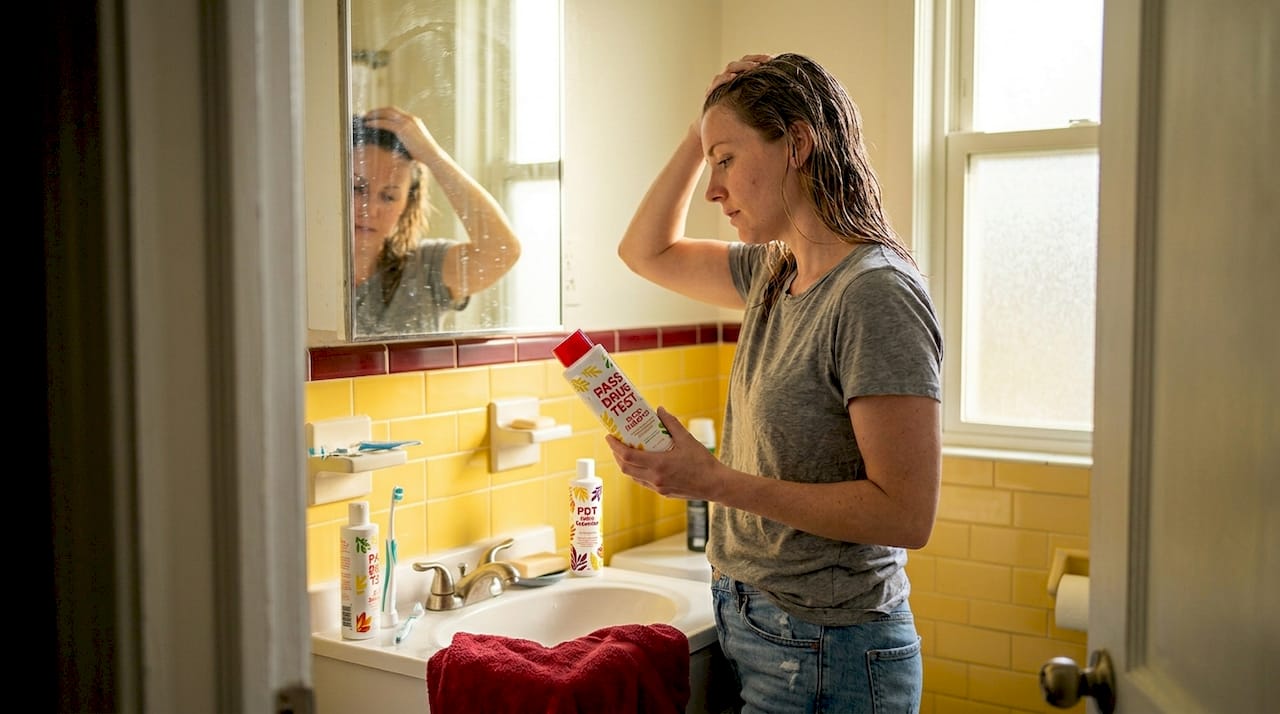
According to research, detox shampoos may reduce metabolite levels but rarely eliminate them entirely. Labs are trained to notice when hair has been excessively treated, bleached, or chemically altered. Damaged cuticles, uneven porosity, and irregular metabolite distribution patterns can all signal that someone has attempted to manipulate their sample. In some cases, a damaged sample may be flagged for additional scrutiny or retesting.
Here is a realistic breakdown of what you can expect from common detox approaches:
- Clarifying shampoos used once or twice will have minimal effect on metabolite levels embedded deep in the hair cortex.
- Repeated use of dedicated detox shampoos over days or weeks may reduce concentrations, but results vary widely based on hair type, porosity, and frequency of THC use.
- The Macujo method, which combines detox shampoo with other chemical treatments, is one of the more studied protocols and has the most anecdotal support among regular users.
- Home remedies like vinegar or baking soda are often paired with shampoos but have no independent scientific validation for removing drug metabolites from hair.
- Hair bleaching followed by re-dyeing can damage the hair shaft enough to reduce metabolite levels, but it also creates visible physical evidence of manipulation that labs may catch.
Pro Tip: If you are going to use a detox shampoo protocol, start as early as possible before your test date. A single application the night before will not move the needle for regular THC users. Consistent, repeated treatments over several weeks give you a meaningfully better chance.
The most honest thing we can say is that no detox product removes all risk. If you want to read more about what the science shows and how to approach this responsibly, our detailed guide on how to detox hair from marijuana is a good place to start. You can also compare options in our roundup of the best hair follicle shampoo products on the market. And if you want to understand the specific protocol most users trust, the Macujo Aloe Rid method page walks you through every step.
Risk factors and realities for THC users
With detox product limitations exposed, let us get realistic: what does this mean based on your THC use pattern?
Your risk level is not the same as the next person’s. Several factors directly influence how much THC-COOH ends up in your hair and how detectable it is:
- Frequency of use: Daily or near-daily users will have significantly higher metabolite concentrations across the entire 90-day hair segment than someone who used once.
- Potency of product: Higher-THC products deposit more metabolites into hair tissue.
- Hair color and texture: Darker and coarser hair binds more drug metabolites due to higher melanin content. This is a well-documented phenomenon in forensic hair testing literature.
- Body hair samples: If scalp hair is unavailable or too short, collectors may use body hair, which can represent a detection window much longer than 90 days.
- Chemical treatment history: Bleaching, dyeing, and perming can reduce metabolite levels to some degree, but also create suspicious sample profiles.
Regular daily users face no reliably proven method beyond 90-plus days of abstinence for consistently passing hair follicle tests. That is the honest reality. Occasional users who consumed THC only once or twice in the past 90 days have a better statistical chance due to the lower sensitivity of hair testing for infrequent use, but that is not a guarantee anyone should bank their employment on.
Pro Tip: If you used THC in the last 90 days and have a test coming up, read our 90-day THC test guide right now. It lays out your timeline, your options, and what realistic preparation looks like based on your specific situation.
The one thing you absolutely should not do is panic and try a dozen untested home remedies in the week before your test. Visible hair damage is itself a red flag. Staying informed and acting strategically is always a better position than scrambling at the last minute.
Key takeaways for THC users:
- Regular users are at very high risk of a positive result regardless of detox products
- Occasional users may escape detection, but this is not guaranteed
- 90-plus days of abstinence is the only consistent pass strategy
- Detox shampoo protocols, when used properly and early, can reduce but not eliminate metabolite levels
- Lab technicians can detect signs of hair manipulation
Why most advice on beating hair tests misses the mark
After seeing the technical risks and limitations, let us cut through the online noise and set realistic expectations.
Here is something we see constantly: people come to us after reading forum threads claiming that a specific shampoo used twice the night before their test will guarantee a clean result. That advice gets people failed tests and lost job offers. The reason it spreads is that it sounds easy and it is what people want to hear. But the science does not support it.
The truth is that the effectiveness of any detox approach depends heavily on three things: your personal usage history, your hair type, and the specific lab analyzing your sample. Two people following the exact same protocol with the exact same product will not necessarily get the same result, because their hair holds metabolites differently and their usage patterns deposit different concentrations to begin with.
We also see a lot of advice that treats all detox shampoos as equivalent. They are not. Products differ significantly in their active ingredients, pH levels, and ability to penetrate the hair cortex where metabolites actually live. Choosing a proven product like our best detox routines page recommends, and following a structured protocol, puts you in a fundamentally better position than grabbing something off a drugstore shelf.
The most important shift you can make is moving away from the idea that there is a shortcut and toward an honest assessment of your situation. Abstinence, time, and a methodical approach to treatment are what actually shift outcomes. Everything else is just noise competing for your attention and money.
Ready for your next step? Trusted resources and proven products
Armed with the facts, the last thing you want is to waste time on products or methods that have no real track record.
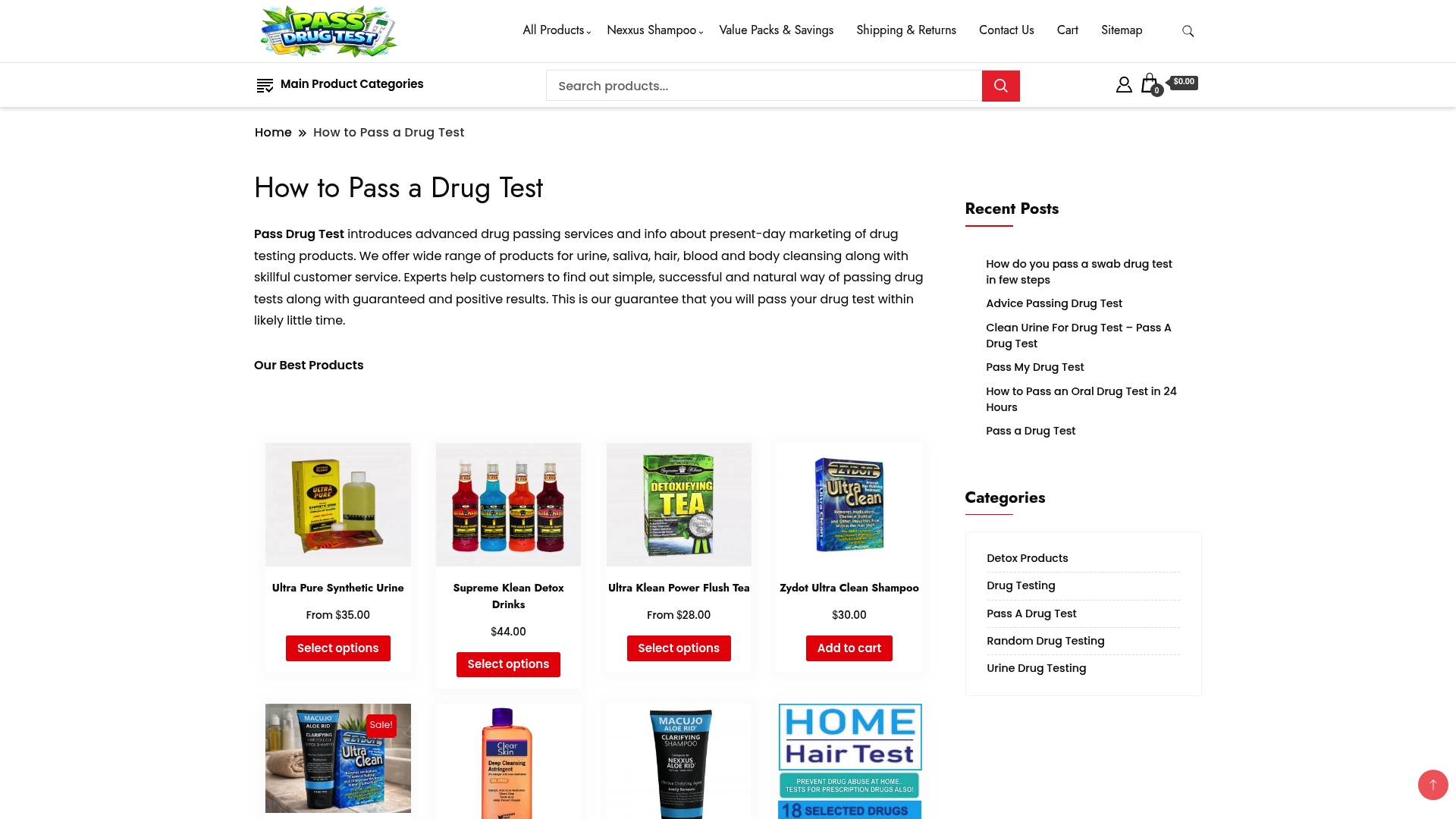
If you are serious about preparing for a pre-employment hair follicle test, we have put together the most reliable resources and products available. Our full catalog of drug test detox products is built specifically for THC users who need real answers, not empty promises. And if you want a complete walkthrough of your preparation strategy, our hair follicle test passing guide covers everything from timeline planning to product selection and step-by-step treatment protocols. We are here to help you make informed decisions with confidence, not false hope.
Frequently asked questions
How far back does a hair follicle test detect THC?
Hair follicle tests can detect THC use from the past 90 days, based on the standard 1.5-inch sample collected from the scalp, since hair grows approximately half an inch per month.
Do detox shampoos guarantee a negative hair drug test result?
No detox shampoo can guarantee a passing result. As the science shows, shampoos may reduce metabolite levels but rarely eliminate them entirely, and labs can detect signs of hair manipulation or damage.
How soon after THC use can hair tests detect it?
Hair tests generally cannot detect THC used within the last 5 to 7 days because metabolites need time to grow out in the hair shaft. Hair testing also shows lower sensitivity for single use cannabis, with sensitivity estimates ranging from 55% to 80%.
Is it possible to get a false positive on a hair drug test?
False positives are uncommon. Modern hair testing has high specificity over 90%, and labs confirm all positive screens with GC-MS analysis to ensure accuracy before reporting results.
What is the most reliable way to pass a hair follicle drug test if I use THC?
Abstaining from THC for over 90 days is the only consistently reliable strategy. As research confirms, no proven method exists for regular users beyond abstinence, since detox treatments can reduce but not reliably eliminate metabolites from the hair shaft.