
Most hair drug tests in the United States do not screen for bath salts or psilocybin mushrooms. The standard panels cover a fixed list of drugs, and neither substance is on it. A laboratory can look for them if the test order specifically asks, and that is the detail that decides whether you have anything to prepare for. This guide explains how to find out which panel you are facing, how long hair holds on to drug metabolites, and where hair cleansing fits into your preparation.
TL;DR
- Standard US hair panels list drugs such as amphetamines, opiates, cocaine, marijuana metabolite and PCP. Bath salts and psilocybin are not on those lists.
- Specialized labs can detect synthetic cathinones (bath salts) and psilocin in hair, so the panel your employer or agency ordered is what matters.
- Hair generally reflects about 90 days of use, and the window is the same whatever the substance.
- Cleansing results in research are mixed, and labs cannot currently detect that hair was washed. A purpose-made detox shampoo used as directed is the cleansing step we recommend.
- Ask for the exact panel in writing before you plan anything else.
Table of Contents
- Does a hair test look for bath salts or mushrooms?
- How hair testing works and how far back it looks
- What the research says about bath salts and mushrooms in hair
- Salt baths, detox shampoos and other cleansing: what the evidence shows
- A practical prep plan by situation
- Choosing a detox shampoo
- Our perspective
- Where to start with Passdrugtest
- FAQ
- Sources
Does a hair test look for bath salts or mushrooms?
Usually not, but it can. The answer depends on the panel, not on the hair.
Quest Diagnostics describes its standard US hair panel as covering amphetamine, methamphetamine, MDA, MDMA, opiates, cocaine, the marijuana metabolite and PCP, with expanded options adding certain opioids, fentanyl or methadone. Bath-salt compounds and psilocybin are not part of that list. Labcorp’s hair menu is similar: amphetamines and ecstasy, marijuana, cocaine, opiates, oxycodone-related analytes and PCP.
The federal workplace picture points the same way. The 2020 minutes of the SAMHSA Drug Testing Advisory Board describe the federal panel as cocaine, amphetamines, marijuana, PCP and opioids, with fentanyl and methadone discussed as additions. Bath salts and mushrooms are not in that routine panel.
That does not mean they are undetectable. A peer-reviewed study showed that bath salts can be found in hair when a laboratory uses a targeted method. It covered synthetic cathinones including mephedrone, methylone, MDPV, alpha-PVP and butylone. A 2021 study measured psilocin in authentic hair samples using a highly sensitive method, although psilocybin itself was not found in those samples.
In practice, that leaves three situations:
- A standard employer or pre-employment panel. Bath salts and mushrooms are not on it. The drugs on the panel are what count.
- An expanded or custom panel. Some programs, such as treatment, legal or monitoring programs, order broader screens. Those can include novel psychoactive substances.
- A test with no panel information. You cannot plan well without it, so asking comes first.
How to find out which panel you are taking
Ask the person who ordered the test, usually HR, a probation officer or a program coordinator, which drug classes are being screened. Request the answer in writing, or ask for the name of the lab and its panel code. A collection site cannot always tell you, but the ordering party can.
If the answer is a standard panel and you used only bath salts or mushrooms, the substances themselves are not on it. If you also used marijuana or another listed drug during the past three months, that is what the test is designed to find, and that is where preparation matters.
How hair testing works and how far back it looks
A hair test samples your hair, not your blood or urine. Collectors typically cut about 1.5 inches of head hair close to the scalp. Quest states that this length represents approximately 90 days of repeated use.
Two timing details are worth knowing:
- There is a lag. Hair containing a drug usually takes about 5 to 10 days to grow out to the scalp surface, so hair is not an immediate-use test. A peer-reviewed clinical review also puts the first appearance at about one week after most recent use.
- Body hair runs longer. Cleveland Clinic notes that scalp hair has a three-month window, while slower-growing body hair can reach up to 12 months.
Compare that with urine. Labcorp says hair detection is generally about 90 days, while urine is generally one to seven days or longer in chronic users, depending on dose, analyte, use pattern and clearance. This is why people with a hair test ahead think in months, not days.
A 2025 review adds how substances get into hair at all: through the blood supply, through sebum and sweat, and through external environmental contamination. For a deeper look, our guides on how drug metabolites stay in hair and hair shaft drug incorporation go through the biology step by step.
What the research says about bath salts and mushrooms in hair
The science here is younger and thinner than for common drugs.
- A systematic review of synthetic cathinone hair analysis reports that modern GC-MS/MS and LC-MS/MS methods can detect these compounds. It also says the evidence is limited, that methods need very low sensitivity for occasional use, and that labs must keep updating because the illicit market changes quickly.
- Researchers cautioning on novel psychoactive substances note that incorporation, passive exposure and dose relationships are not well established, so results call for careful interpretation.
- Psilocin has been measured in hair, but commercial screening for it is uncommon compared with the standard classes.
The takeaway for you is practical. If a lab does look for these substances, it has to use a special method, and that is a deliberate order, not a default. Any result also has to be confirmed. The Society of Hair Testing consensus states that all presumptively positive screens must be confirmed by mass spectrometry.
Salt baths, detox shampoos and other cleansing: what the evidence shows
The top search results for this topic mix two ideas: Epsom salt soaks and detox shampoos. They are different, so treat them separately.
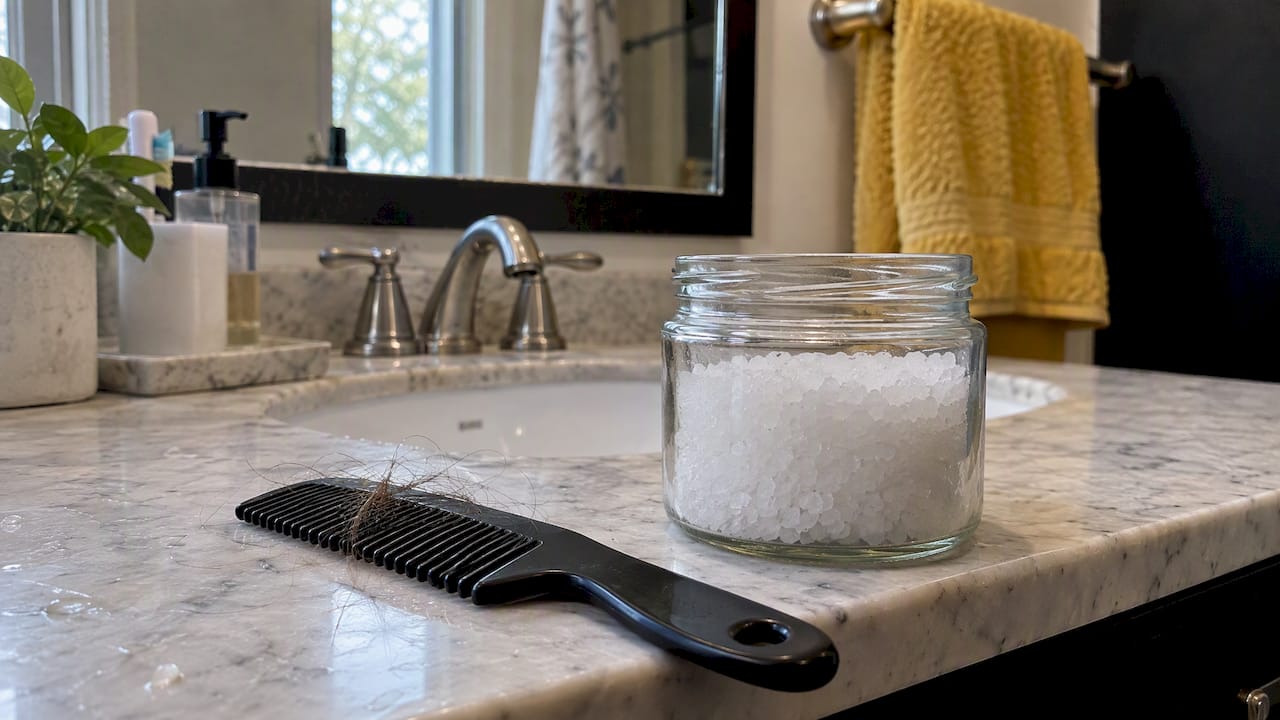
Bath salts are not bath salts. The drug sold as “bath salts” is a synthetic stimulant. Epsom salt and similar bath products are cosmetic. Searching for “bath salts hair test detox” often turns up soaking advice that has nothing to do with the drug. We could not find peer-reviewed research showing that soaking in a salt bath changes drug levels inside the hair shaft, so we do not build a plan on it.
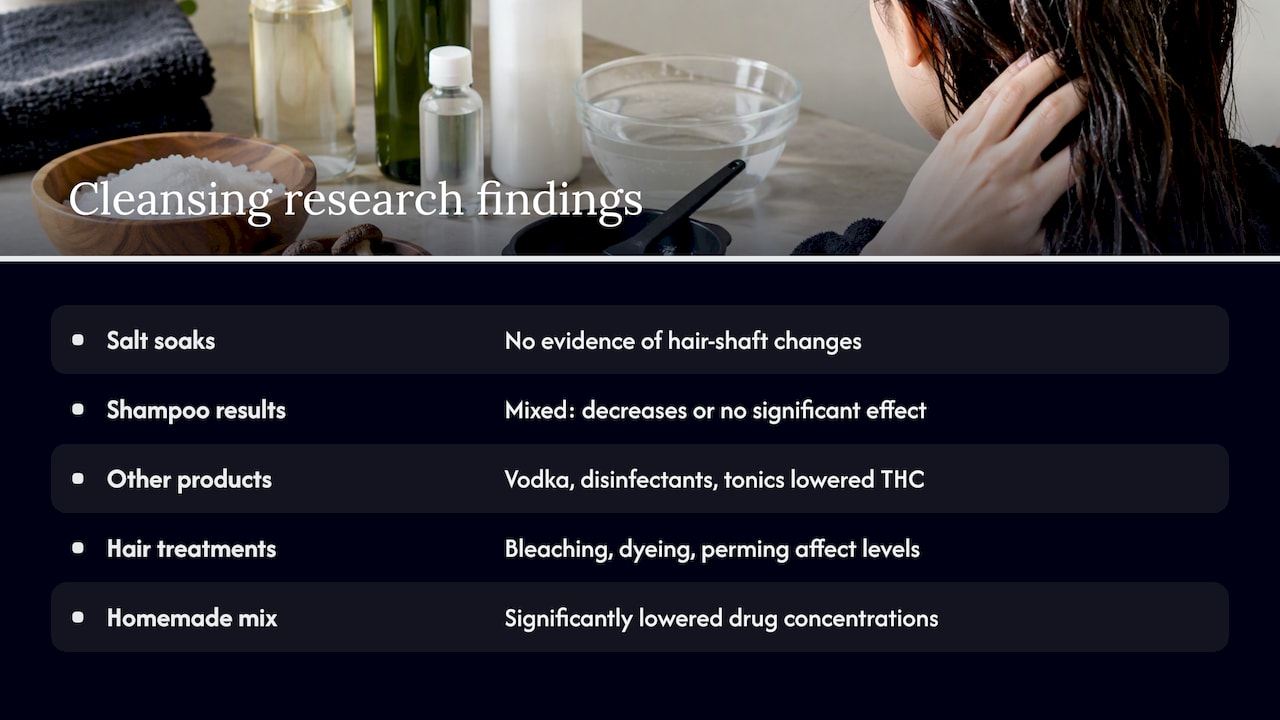
What research has tested. A 2023 review of sample manipulation found that some studies saw decreases in hair concentrations after cleansing shampoos, while others found no significant effect. The same review reported that vodka, disinfectants and hair tonics lowered THC hair concentrations in ranges similar to a special detox shampoo. Results depend heavily on the product, the hair, and how consistently the routine is followed.
Other factors move results too. The Society of Hair Testing states that concentrations can be influenced by bleaching, dyeing, perming and straightening. An Italian study found that a homemade treatment of baking soda, salicylic acid and bleach significantly lowered drug concentrations in tested samples. To see how those treatments are discussed in practice, read our pages on the role of bleach in hair testing and what hair dye research shows.
Can a lab tell that you cleansed your hair?
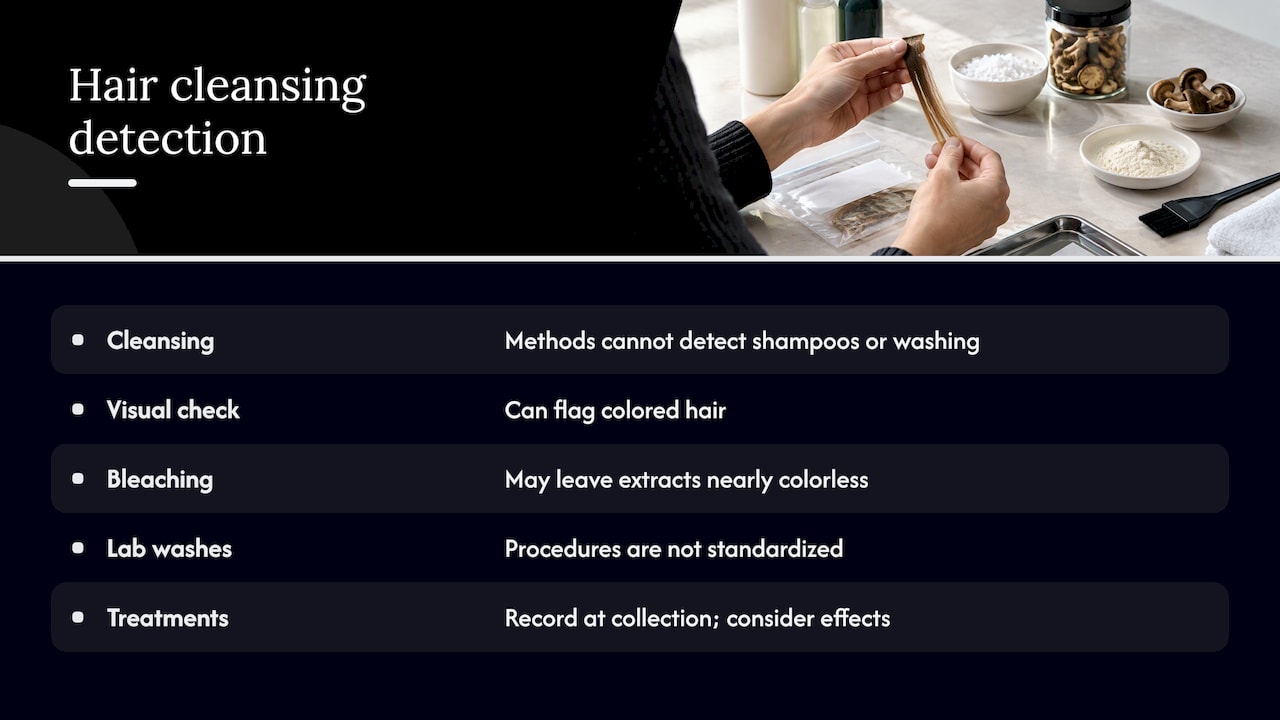
This is one of the most common worries, and the research is reassuring on it. The 2023 review concludes that available methods cannot detect cleansing shampoos or extensive washing. A visual check can flag colored hair, and bleaching may leave extracts nearly colorless, but no standard routine exists to screen objectively for cosmetic treatment or heavy washing.
Labs do wash samples before analysis to remove outside contamination. The National Institute of Justice notes that these wash procedures are not standardized, and that telling systemic use from environmental exposure is the main challenge of hair testing. Our page on hair contamination in drug testing covers that distinction.
The SoHT consensus also says hair treatments should be documented at collection and considered when interpreting results. Mention any treatment if the collector asks. Honest answers keep you on the right side of the process.
A practical prep plan by situation
The right plan depends on what is on your panel and what you used.
| Your situation | What the panel is likely to look for | What to do |
|---|---|---|
| Bath salts or mushrooms only, standard panel | Not on the standard list | Confirm the panel in writing |
| Bath salts or mushrooms only, custom or expanded panel | May include novel substances | Ask the ordering party for the panel and the lab |
| Marijuana within 90 days, standard panel | Marijuana metabolite is on the list | Start a hair cleansing routine now |
| Amphetamines or other listed drugs within 90 days | On the list | See our amphetamine hair test guide |
| Shaved head or short hair | Body hair can be sampled | Read why a shaved head still gets tested |
A few rules hold in every case:
- Start early. A routine you can repeat across the days before your test beats a single rushed wash.
- Follow the label. Use the product exactly as its instructions say, in the order and for the time they give.
- Do not mix methods at random. Stacking unrelated treatments can leave you with damaged hair and no clear idea of what helped. Our comparison of detox shampoo vs home remedies lays out the trade-offs.
- Know your sample. Beard hair is also tested at times. See what labs look for in a beard hair test.
- Keep your timeline in mind. If you need a plan around a job offer, our 90-day THC test guide for job applicants walks through the calendar.
For the hair-based details, the hair drug test detection window page puts the 90-day figure into a working timeline.
Choosing a detox shampoo
When you shop for a hair detox shampoo, look for these things:
- Clear, step-by-step instructions with a stated number of days and washes.
- A product made specifically for hair drug test prep, not a general clarifying shampoo. We explain the difference on our page about clarifying shampoo for a hair drug test.
- Realistic expectations. Results vary with your hair, how much you used and how recently, so no honest seller can promise your result.
- Support and privacy. Questions come up the night before a test. Discreet delivery and reachable customer service matter.
To compare the field, our pages on the best hair follicle drug test shampoo, what detoxifying shampoo actually does and shampoo for hair follicle drug tests go deeper. For the basics, see our hair drug test information hub.
Our perspective
We hear from many people who are worried about a hair test after using something unusual, like mushrooms or a synthetic stimulant. The first thing we tell them is to find out exactly what the test screens for. Panels are specific, and a lot of stress comes from preparing for a test that was never going to look for the substance.
When the panel does include a drug you have used, such as marijuana, we believe a purpose-made hair detox routine is the most sensible cleansing step. That is why our flagship is the Macujo Aloe Rid Shampoo, built around the Macujo method, which we regard as a leading approach for hair follicle test prep. Our customers use it because it comes with a defined routine instead of guesswork.
We also stand behind the service around it. Our team is available from 9am to 12am every day, and orders ship with confidentiality and secure delivery in mind. If you are unsure which product fits your timeline, ask us before you order.
MIchael
Where to start with Passdrugtest
If your panel includes marijuana or another listed drug, you have a clear next step. Our Macujo Aloe Rid Shampoo is designed for hair follicle test preparation and comes with a written routine. Our 10 to 14 day Macujo Aloe Rid instructions explain the timing and safe use before you buy.
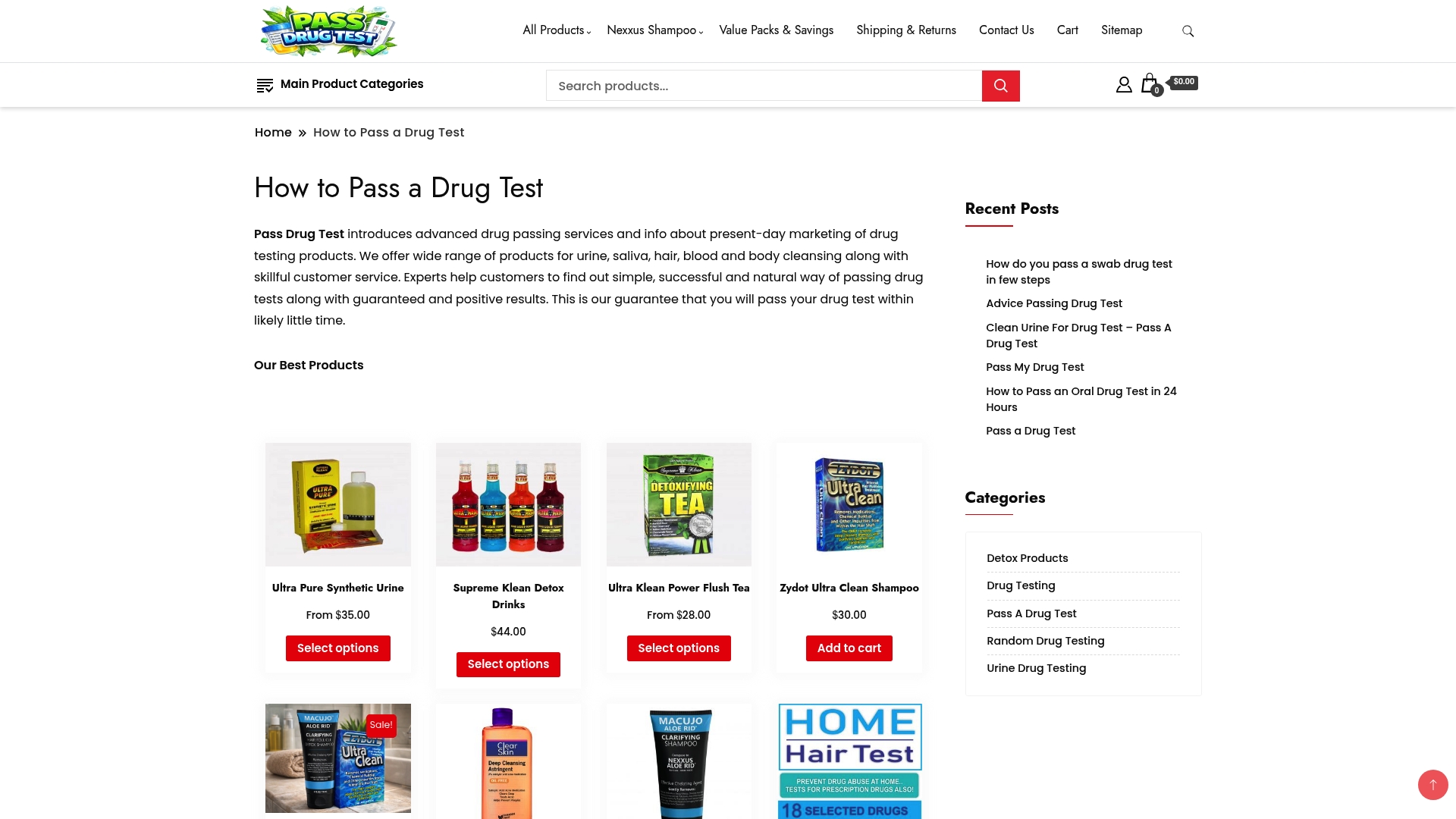
If you want extra support, there is also a Macujo Aloe Rid Shampoo bundle with the Zydot Ultra Clean Treatment. If your test is not a hair test, we also carry saliva drug testing products and urine drug testing products. You can browse everything at Passdrugtest.
FAQ
Will a hair follicle test show bath salts?
A standard hair panel does not list bath salts, according to the published menus of major US labs. A laboratory can detect synthetic cathinones in hair using a targeted method, so it can happen if the test order specifically includes them. Ask the ordering party which drug classes are covered.
Do mushrooms show up on a hair drug test?
Psilocybin is not part of the routine federal or standard commercial hair panels. Research has measured psilocin in hair, so a custom screen could in principle look for it. Commercial testing for it is uncommon.
Do salt baths draw drugs out of your hair?
We found no peer-reviewed research showing that a salt soak changes drug levels inside the hair shaft. Studies of cleansing products show mixed results, with some finding lower concentrations and others no significant effect. A purpose-made detox shampoo used exactly as directed is a more focused option than a bath product.
Can a lab tell if I used a detox shampoo?
A 2023 review found that available methods cannot detect cleansing shampoos or extensive washing, and no standard routine exists to screen for it. Labs can see visible signs such as colored hair. If the collector asks about hair treatments, answer honestly.
How far back does a hair test go?
A standard 1.5-inch head hair sample reflects about 90 days of use. Drug-containing hair needs roughly 5 to 10 days to reach the scalp surface, so very recent use may not appear yet. Body hair can reflect a longer period.
Sources
- Quest Diagnostics: Hair testing FAQ
- Labcorp: Hair drug testing
- Labcorp: Hair drugs of abuse testing FAQ
- SAMHSA: DTAB open session minutes, September 1, 2020
- Detection of bath salts and other novel psychoactive substances in hair
- Sensitive quantitative analysis of psilocin and psilocybin in hair
- Objective testing: urine and other drug tests (PMC)
- Cleveland Clinic: Drug test overview
- Review on toxicology testing in hair, Journal of Applied Laboratory Medicine
- Synthetic cathinones and phenylethylamine derivatives in hair (MDPI)
- Novel psychoactive substances in hair: interpretation (University of Turin)
- SoHT consensus on drugs of abuse testing in hair, 2021
- Advances in testing for sample manipulation (PMC)
- SoHT consensus on general aspects of hair testing, 2023
- Hair analysis: homemade hair treatment assessment
- NIJ: Detecting drugs in hair