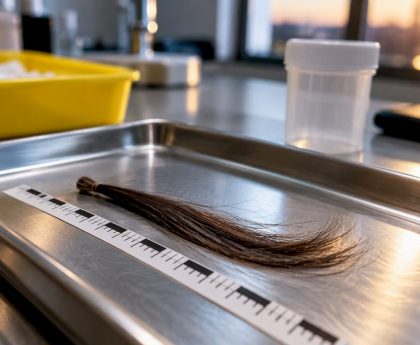
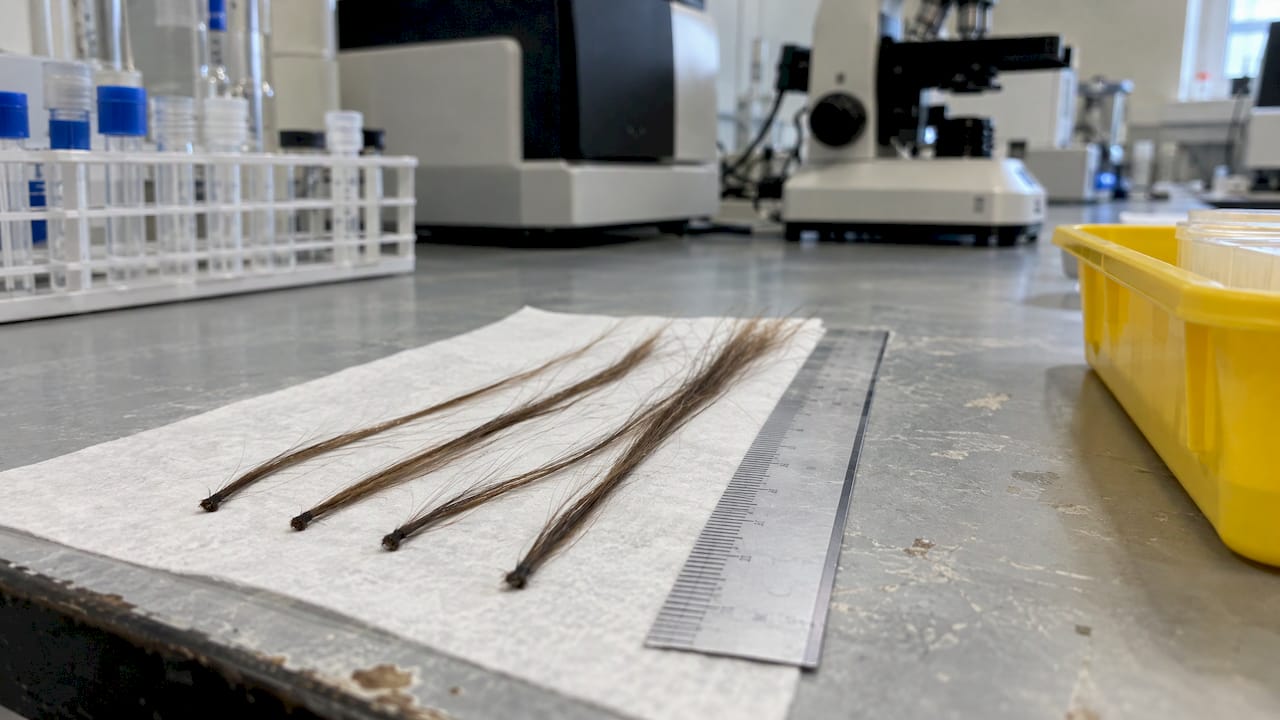

If you are searching for a fentanyl hair test detox, here is the straight answer: hair tests can pick up fentanyl for roughly up to 90 days, and no published research we could find shows that a consumer shampoo or home treatment reliably removes fentanyl from hair. The studies on detox shampoos and home treatments looked at other drugs, mostly THC, cocaine and opiates like morphine. Below we walk through how fentanyl ends up in hair, which tests actually screen for it, what changes a result, and what to do next, including where to get confidential help if fentanyl use is a worry.
TL;DR
- Hair testing offers a longer look-back than urine or oral fluid, generally up to a few months, so a recent use will not show right away but older use can.
- Fentanyl is not on every panel. Many court-ordered and workplace programs did not include it as of December 2024, so ask which drugs your test covers.
- Research on hair detox shampoos and homemade treatments does not establish reliable fentanyl removal, and results vary a lot by drug.
- Our products are sold to help THC users prepare for hair tests. We make no claim that they remove fentanyl.
- If fentanyl use or dependence is a concern, free and confidential help is available 24/7 at 1-800-662-HELP (4357).
Table of Contents
- How fentanyl gets into hair and how long it shows
- Does every hair test look for fentanyl?
- Cutoffs, contamination and interpretation
- Can a detox shampoo change a fentanyl hair test?
- Our perspective
- What to do before a hair test
- Preparing for a THC hair test with Macujo
- If fentanyl use or dependence is a concern
- FAQ
- Sources
How fentanyl gets into hair and how long it shows
Hair is a slow record. Drugs can enter the hair shaft by diffusion from the blood supply, by deposition through sweat or sebum, or through external contamination. Once inside, the drug travels outward as the hair grows, which is why a lab can read a timeline from a hair sample.
That also explains the delay. Drugs may not be detectable in hair above the scalp for a few days after ingestion, and this can take up to 10 days. Hair testing can give an extensive history of exposure, but it cannot detect very recent exposure or provide immediate results.
So the usual figure you see online, up to about 90 days, reflects the length of hair a lab typically cuts, not a guarantee. Longer hair, shorter hair, and different growth rates all move the picture. For a general explanation of how the window works for other substances, our guide to the hair drug test detection window covers the same mechanics.
What changes the detection window
LabCorp lists the main factors that affect how long a drug stays detectable: dose, test sensitivity, preparation and route of administration, duration of use, and differences in metabolic and renal clearance. In practice, that means two people with the same last-use date can get different results.
Hair color and growth also matter. The 2025 toxicology review notes that timing depends on drug properties and hair color, and that growth rates and cycles, melanin content and cosmetic treatments can complicate interpretation.
Does every hair test look for fentanyl?
No, and this is the part most people miss. Fentanyl is a synthetic opioid, and a standard opioid panel does not reliably catch it. Some labs do offer it: Quest Diagnostics states that it tests hair for synthetic opioids like fentanyl.
But availability is not the same as routine use. A 2025 study found that, as of December 2024, many court-ordered mandatory drug testing programs did not include fentanyl, and workplace panels that include it were rare.
What this means for you:
- Find out the exact panel. Ask the employer, probation office or testing provider which substances are screened, in writing if possible.
- Do not assume a hair test for THC or standard opiates also covers fentanyl, or the other way around.
- If you want to understand opiate hair testing in general, our page on the opiates hair drug test and its cutoff explains how those panels are set up.
Cutoffs, contamination and interpretation
Labs do not report “any trace.” They apply cutoff concentrations. Most commercial laboratories use fentanyl cutoffs between 20 and 100 pg/mg, which can miss drug-positive specimens. Researchers looking at therapeutic versus illicit use have suggested an approximate cutoff of 100 pg/mg, since fentanyl is also a prescribed medication.
To tell use from exposure, researchers have proposed metabolite-to-parent ratios such as norfentanyl to fentanyl. The National Institute of Justice explains that labs wash hair to remove external contaminants, and that these wash procedures are not standardized and washing could move drugs into hair. Extraction methods are also designed so they do not create metabolites that could be mistaken for drugs processed by the body.
If you want the full picture of cutoffs across drug classes, read our hair test cutoff levels explained guide. If you are worried about a result that does not match your history, our article on what causes false positives in hair tests is a good next read.
Dyed hair and cosmetic treatments
Hair color is not just cosmetic in a testing context. In one court-ordered testing study, specimens with obvious false hair colors had higher overall positivity (74%) than specimens with natural hair colors (52% to 59%). A 2023 review adds that cosmetic treatments can change measured drug concentrations, often lowering them, with the effect depending on the drug’s stability, the starting concentration and the hair itself.
That is a statement about measurement, not a how-to. Bleaching or dyeing before a test can be noticed, and labs look for signs of tampering.
Can a detox shampoo change a fentanyl hair test?
Here is what the published research actually says, so you can decide with real information.
Lab methods are not consumer methods. A 2022 Office of Justice Programs publication on fentanyl hair analysis describes laboratory washes and extraction, such as dichloromethane followed by water and pulverization. That is chemistry done in a lab, and it does not show that a product you use in the shower changes a fentanyl result.
Shampoo studies are drug-specific. A 2023 review of sample manipulation notes that detox shampoos are marketed to cleanse hair, but that the evidence is limited and inconsistent. One cited study found no significant change after a single application, while another found a 73% mean loss of hair EtG only after up to 10 hours of incubation with one of four products. That was alcohol marker EtG, not fentanyl.
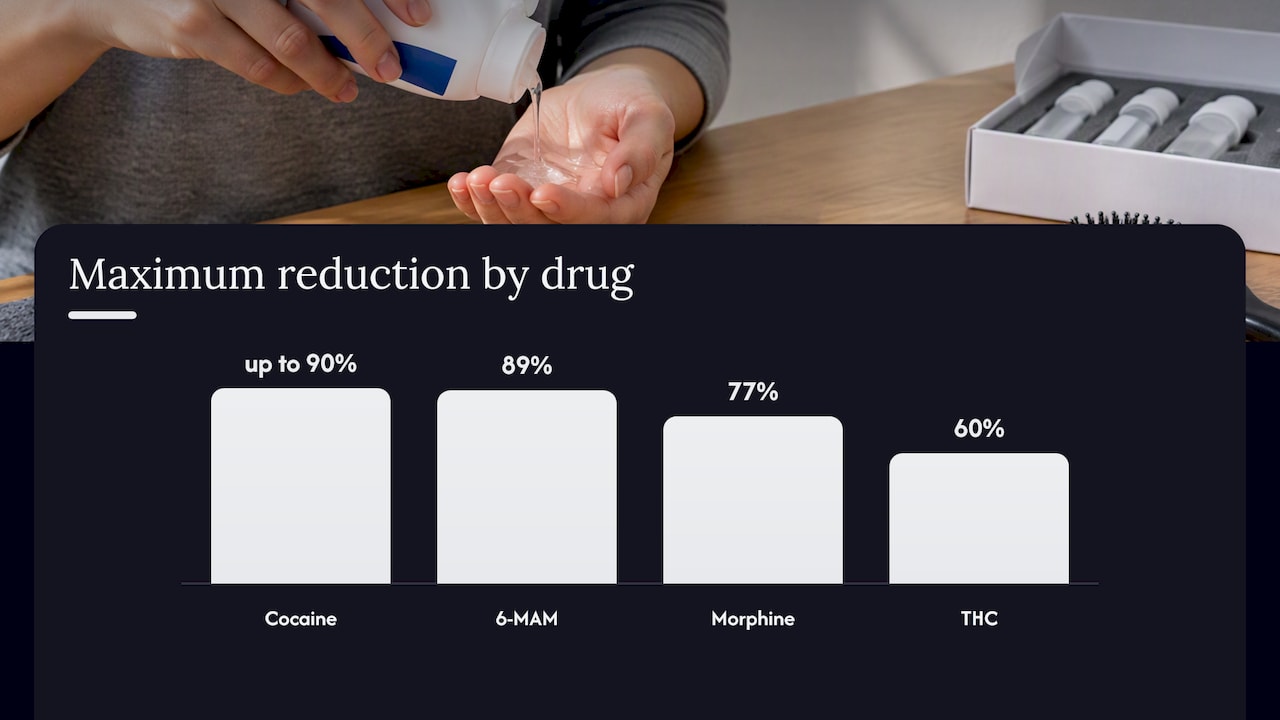
Home treatments move some drugs more than others. A 2023 study of homemade treatments found that some internet-promoted methods lowered concentrations of several drugs, up to 90% for cocaine, 89% for 6-MAM, 77% for morphine and 60% for THC. It did not establish reliable removal of fentanyl.
One wash is rarely the story. An older peer-reviewed study of a detox shampoo found that after one treatment, all drugs originally present remained detectable, with average decreases that varied by drug, about 5% for cocaine and 36% for THC. Fentanyl was not tested.
The takeaway is plain. Results differ by drug, by hair, and by how the product is used, and there is no fentanyl-specific evidence behind any consumer hair product. We would rather say that clearly than have you stake a job or a court date on a guess. For a broader, honest look at what the evidence supports for other substances, see our detox myths and facts page and our guide to what makes a detox reliable.
Our perspective
We built Passdrugtest around one idea: people facing a hair follicle test deserve clear information and products made for the situation they are actually in. Most of the people who come to us are marijuana users who need to clear THC from their hair before a scheduled or random test, and that is where our Macujo Aloe Rid Shampoo is focused.
We also know that questions about fentanyl come from a different place. A fentanyl result carries different stakes, and the research does not support promising that a shampoo changes it. So we do not make that promise. What we do offer is honest guidance, a way to learn exactly what your panel covers, and a clear route to help if you need it.
For THC hair tests, our approach is a careful, consistent routine with a product designed for the purpose, backed by customer service open from 9am to 12am every day and discreet, confidential delivery. If your test is for marijuana, we are confident in guiding you through it step by step.
MIchael
What to do before a hair test
Whatever substance is on the panel, a few steps are worth taking early.
- Confirm the panel. Ask what is being tested and the cutoffs, if the provider will share them. Fentanyl is far from universal.
- Tell the collector about prescribed medicines. Fentanyl is a medication in clinical use, and interpretation involves separating therapeutic use from illicit use. Bring pharmacy records or a doctor’s note if you take it legitimately.
- Know your hair. Length, color, growth and cosmetic treatment all affect the read. Our hair shaft drug incorporation page explains how drugs sit in the hair.
- Keep a checklist. For THC tests, our hair detox checklist lays out the sequence from start to test day.
- Do not rely on one wash. Even for drugs that have been studied, single applications showed modest and uneven effects.
If your test is for marijuana, our evidence-based guide on how to remove THC from hair is the right starting point, and our comparison of hair detox products shows what separates the options.
Preparing for a THC hair test with Macujo
If the panel you face is for marijuana, we can help. Our Macujo Aloe Rid Shampoo is designed for people preparing for a hair follicle test, and our team is available from 9am to 12am daily to answer questions about timing and use. Read the 10 to 14 day Macujo Aloe Rid instructions before you start, then see the Macujo Aloe Rid Shampoo product page, or browse everything at Passdrugtest.
For tests that use other samples, we also carry saliva and urine options, and you can see how urine testing for marijuana works before you decide what you need.
If fentanyl use or dependence is a concern
If you are reading this because you or someone close to you uses fentanyl, the most useful step is not a product. It is support.
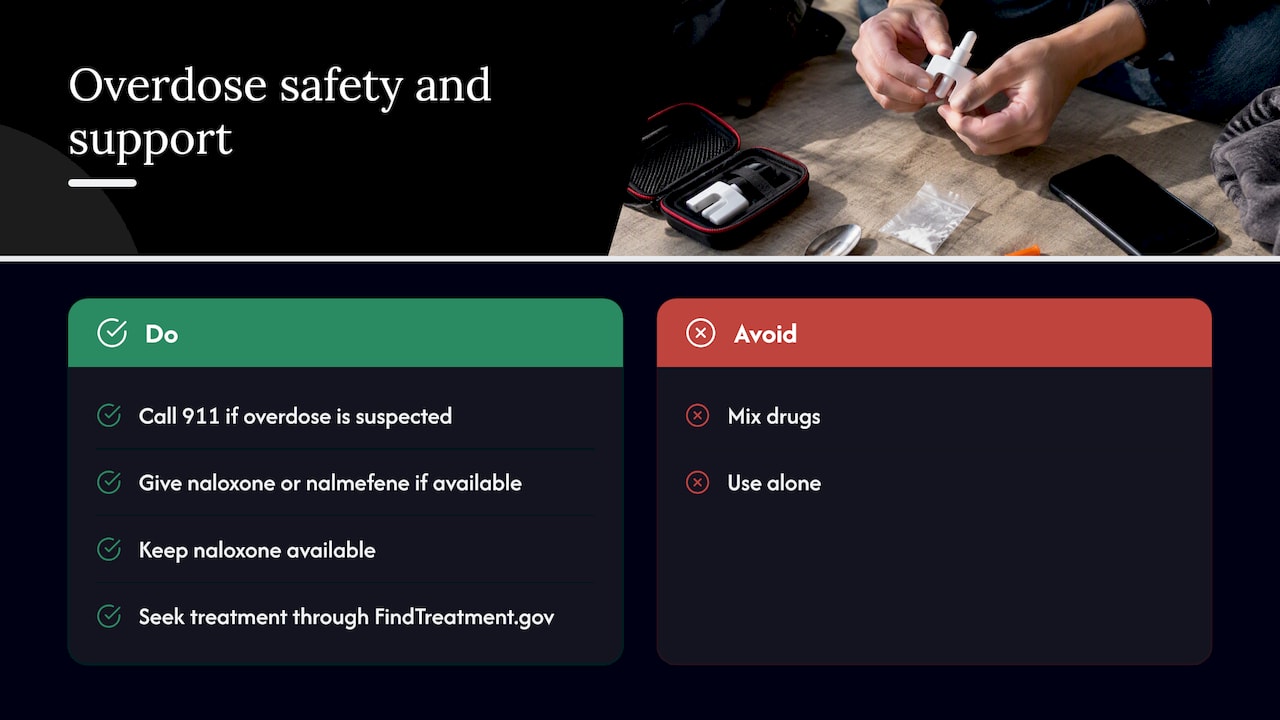
The National Institute on Drug Abuse describes fentanyl addiction as treatable and lists methadone, buprenorphine and naltrexone as FDA-approved medications for opioid use disorder. If an overdose is suspected, call 911, give naloxone or nalmefene if you have it, and try to keep the person awake and breathing. Naloxone is available over the counter.
The CDC’s guidance says to keep naloxone available, avoid mixing drugs, never use alone, and seek treatment through FindTreatment.gov or the 24/7 National Helpline at 1-800-662-HELP (4357). The helpline is free and confidential, and calling it does not commit you to anything.
A hair test can also be a reason to talk to a doctor or counselor before the test, especially if you are on a court or employer program. Many programs treat a person who is seeking treatment differently from one who is not, so ask your own program how that works.
FAQ
How long does fentanyl stay in a hair follicle test?
Hair testing generally covers up to a few months, and many sources cite about 90 days. Detection is not immediate, though, because drugs may take up to 10 days to appear in hair above the scalp. Dose, duration of use, metabolism and hair characteristics all change the result.
Does a standard hair drug test check for fentanyl?
Not necessarily. Some labs offer fentanyl in hair panels, but many programs have not included it, and workplace panels with fentanyl have been rare. Ask the testing provider exactly which drugs and cutoffs apply to you.
Can detox shampoo remove fentanyl from hair?
The research we reviewed does not show that. Studies of detox shampoos and home treatments looked at other drugs and found uneven effects, and none established reliable fentanyl removal. We do not claim our products remove fentanyl.
What can affect a hair test result?
External contamination, hair growth rate, melanin content, cosmetic treatments and lab wash protocols can all affect interpretation, according to a 2025 toxicology review. The cutoff the lab uses also decides whether a low level counts as positive.
Where can I get confidential help with fentanyl use?
Call the National Helpline at 1-800-662-HELP (4357), which is free, confidential and open 24/7, or visit FindTreatment.gov. In an emergency, call 911.
Sources
- Review on Toxicology Testing in Hair, Journal of Applied Laboratory Medicine
- Detecting Fentanyl Use Through Court-Ordered Mandatory Drug Testing, National Institute of Justice
- Hair Drugs of Abuse Testing FAQ, Labcorp
- Testing Hair for Fentanyl Exposure, PubMed Central
- Hair Drug Screening Facts, Quest Diagnostics
- Prevalence and concentration of fentanyl in hair, Journal of Analytical Toxicology
- Detecting Drugs in Hair: Is It Drug Use or Environmental Contamination, National Institute of Justice
- Toward the Interpretation of Positive Testing for Fentanyl, PubMed Central
- Advances in testing for sample manipulation, hair samples, PubMed Central
- Evaluation of Pretreatment and Extraction Parameters for Analysis of Fentanyl in Hair, Office of Justice Programs
- Hair analysis: Assessment of homemade hair treatment effects, Drug Testing and Analysis
- Effect of the shampoo Ultra Clean on drug concentrations in hair
- Fentanyl, National Institute on Drug Abuse
- What You Can Do to Test for Fentanyl, CDC Stop Overdose