
Scalp burning during the Macujo method most often signals chemical irritation or a possible chemical burn, not proof that the treatment is working. Stop the process immediately, rinse your scalp with cool running water, and remove any contaminated clothing. If you notice blistering, severe pain, or spreading redness, get medical attention right away rather than pushing through the cycle.
TL;DR:
- Chemical irritation from the Macujo method most often causes burning, redness, or blistering, requiring immediate rinsing and possibly medical attention.
- Proper precautions like patch testing, gentle application, thorough rinsing, and spacing out sessions significantly reduce the risk of scalp injury.
- If burning or blistering occurs, stop immediately, rinse with cool water, avoid household remedies, and seek prompt medical care for severe signs.
- Repeated aggressive washing increases the likelihood of hair damage, scalp burns, and long-term injury; healing must occur before reapplying treatments.
- Once the scalp is healed, using products like Macujo Aloe Rid Shampoo as directed supports safer detoxification efforts.
Table of Contents
- Why the Macujo method can make the scalp burn
- How to do the Macujo steps more safely to reduce scalp burning
- Immediate first aid when burning, irritation, or chemical exposure occurs
- When to stop the routine and when to seek medical care
- Risks to hair and scalp from repeated Macujo-style treatments
- Troubleshooting, safer alternatives, and harm-minimizing choices
- A safety-first perspective on scalp burns
- How our products support safer preparation once your scalp has healed
- FAQ
- Sources
Why the Macujo method can make the scalp burn
Mike Macujo’s method combines vinegar, Tide detergent, Clean & Clear salicylic acid wash, and a detox shampoo in a specific sequence meant to open the hair cuticle and strip residue from the hair shaft. That same chemistry is hard on skin. Vinegar is acidic, detergents are formulated to break down oils and proteins, and salicylic acid is an exfoliant that thins the outer layer of skin when left on too long or used at high concentration.
Put those together on a scalp that’s already dry, sensitive, or has small nicks from scratching, and you get a setup for real tissue damage, not just a tingling sensation. The American Academy of Dermatology notes that repeated exposure to an irritating product prolongs inflammation and can trigger contact dermatitis, which looks similar to a mild burn but behaves differently over time.
Knowing which signs are routine and which ones mean stop matters here:
- Mild redness, tightness, or dryness that fades within a few hours is typical irritation.
- Stinging during application is common with salicylic acid and vinegar, but it should ease once you rinse.
- Blisters, open sores, intense or worsening pain, or swelling are not normal and point to a deeper injury.
- Facial swelling, trouble breathing, or feeling faint after the salicylic-acid step are signs of a severe allergic reaction and require immediate care.
How to do the Macujo steps more safely to reduce scalp burning
The method itself doesn’t have to be reckless. Most scalp injuries come from skipping dilution, leaving products on too long, or scrubbing skin that’s already compromised. A few adjustments lower your risk without abandoning the process.
- Patch test any new product on a small area of skin 24 hours before a full application.
- Apply vinegar and detergent to the hair shaft first, keeping direct scalp contact brief.
- Massage gently and only on intact skin; never work product into cuts, scabs, or active breakouts.
- Dilute the salicylic-acid wash slightly if your scalp reacts quickly to acids or exfoliants.
- Rinse thoroughly between steps instead of layering products on top of each other.
- Space out wash cycles with rest days so skin has time to recover between sessions.
Wearing light gloves protects your hands, and applying a thin barrier of petroleum jelly along the hairline keeps runoff off your forehead and ears. Avoid the whole routine on skin that’s peeling, cracked, or still healing from a previous session.
Pro Tip: Keep a timer running during each step so you’re not guessing how long product has been sitting on your scalp.
For the fuller step-by-step sequence, our guide to the Macujo method walks through timing and product order in more detail.
Immediate first aid when burning, irritation, or chemical exposure occurs
If your scalp starts burning, stop immediately and act fast. Poison Control emphasizes rinsing first and diagnosing later: the longer an irritant sits on skin, the worse the injury becomes.
- Rinse the area with cool running water for 10 to 20 minutes.
- Remove any clothing or towels that touched the product.
- Flush your eyes with water for at least 20 minutes if product gets into them.
- Do not try to neutralize the chemical with another substance, apply ice, or use household remedies.
- Do not pop or break any blisters that form.
Poison Control is available at 1-800-222-1222 for guidance on chemical exposures, and calling them is faster and safer than trying to self-diagnose a burn at home.
When to stop the routine and when to seek medical care
Some irritation fades on its own, but certain signs mean you need professional evaluation, not another wash cycle. According to MedlinePlus, seek prompt care for blistering, deep or extensive burns, pain that keeps worsening, or any chemical burn whose severity you’re unsure about. Call emergency services for breathing trouble, seizures, or signs of shock.
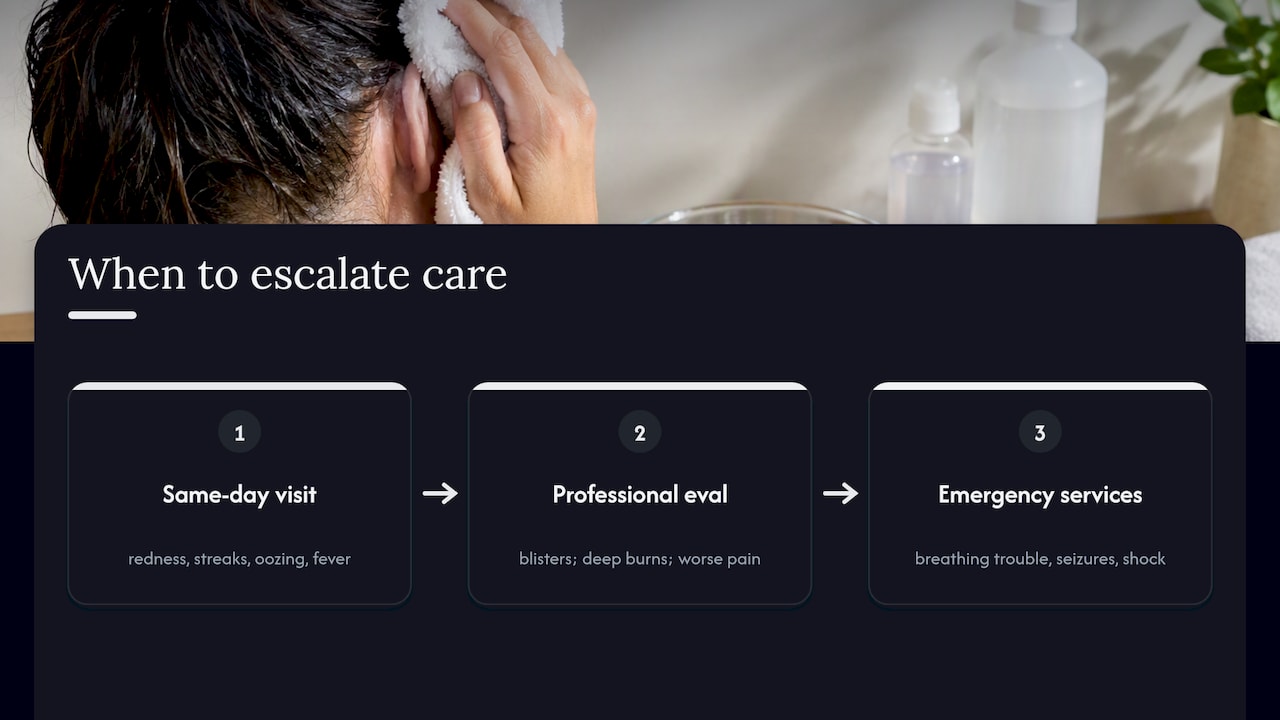
If you see spreading redness, red streaks, oozing, or fever, those point to possible infection and warrant a same-day visit rather than waiting it out. Washing already-broken or inflamed skin again only extends the inflammation and makes the underlying injury harder to assess.
Risks to hair and scalp from repeated Macujo-style treatments
A peer-reviewed study on hair treatments found that aggressive washing protocols reduced measured THC concentrations by variable amounts, sometimes substantially, but results depended heavily on the specific product and the condition of the hair tested. That variability matters: there’s no guarantee that pushing harder or washing more often produces a better outcome, and doing so raises your odds of cuticle damage, breakage, and chemical burns that can leave scarring in severe cases.
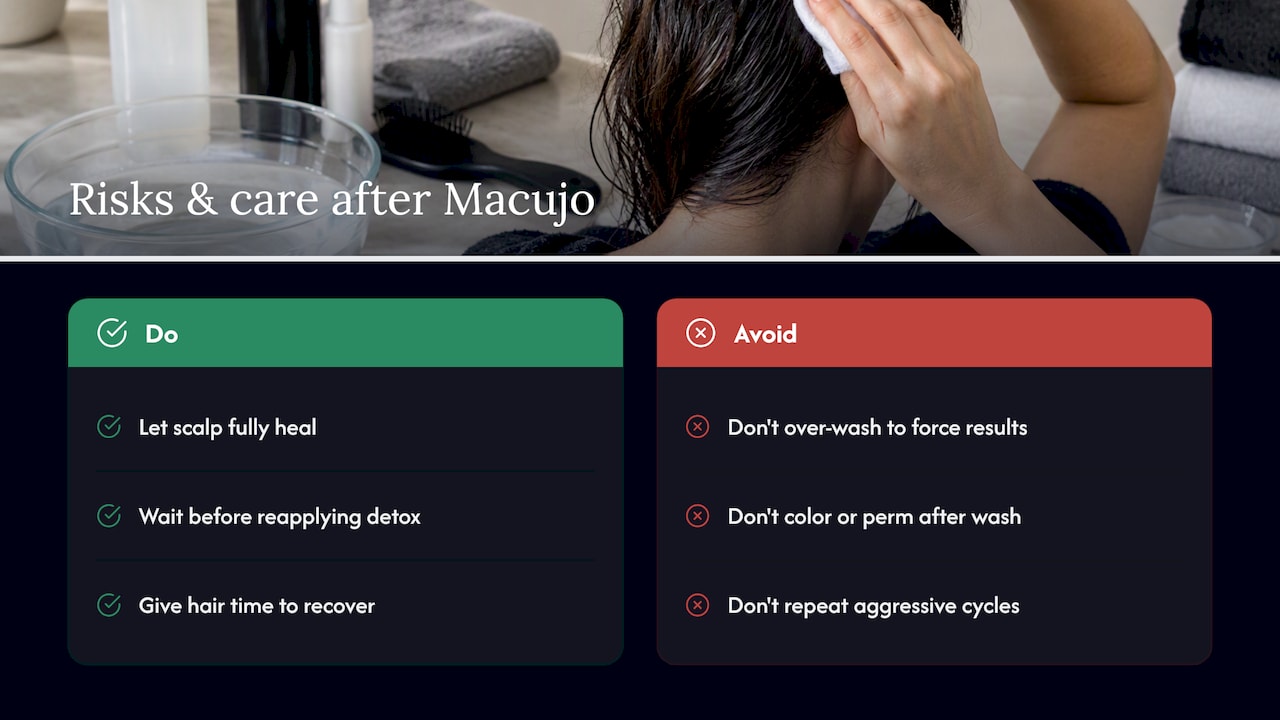
Avoid coloring, perming, or otherwise chemically processing your hair right after an aggressive wash cycle. Let your scalp fully heal before reapplying any detox treatment, and give the hair shaft time to recover its structure between sessions.
Troubleshooting, safer alternatives, and harm-minimizing choices
If burning keeps happening, the answer isn’t to push through, it’s to adjust. A few practical moves reduce harm while keeping you on track:
- Cut back to shorter contact times or fewer cycles if your scalp reacts strongly to any single step.
- Pause the routine entirely for a few days if you see persistent redness or peeling, and let skin recover before trying again.
- Skip household “neutralizers” like baking soda pastes or extra vinegar rinses. They don’t counteract chemical burns and often make irritation worse.
- Once healed, ease back in gradually rather than resuming the full routine at once.
Our guide on products to avoid covers specific home remedies that cause more harm than benefit, and our dos and don’ts list walks through safer execution choices step by step.
A safety-first perspective on scalp burns
The pressure to pass a test is real, but a chemical burn is a worse outcome than a failed test. When in doubt, call Poison Control or see a clinician before repeating a wash cycle.
— MIchael
How our products support safer preparation once your scalp has healed
Once irritation clears and your scalp is back to normal, the right product matters more than brute force. Our Macujo Aloe Rid Shampoo is formulated as part of the renowned Macujo method, and it remains the product we recommend most for readers preparing for a hair follicle test.
A few resources worth bookmarking for when you’re ready to proceed:
- The Macujo Aloe Rid Shampoo product page, with usage details and combination options.
- The Zydot Ultra Clean treatment, often paired with Macujo-style washes for added coverage.
- Our full drug test detox products category if you’re comparing options.
Customer support is available daily if you have questions about timing or product selection. Never apply any detox shampoo, including ours, to skin that’s broken, blistered, or still healing. Wait until your scalp is fully intact.
This article is general information, not a substitute for advice from a qualified doctor. Consult a qualified healthcare professional about your own circumstances before acting on anything here.
FAQ
What are people saying about the Macujo Aloe Rid Shampoo?
Customers who use the Macujo Aloe Rid Shampoo as part of the full Macujo method generally describe it as the shampoo built specifically for that routine, pairing it with vinegar and detergent steps rather than using it alone. It’s positioned as part of a multi-step process, not a standalone fix.
How to pass a hair follicle test in 2026?
The most reliable approach combines enough time since last use with a hair-test detox method like Macujo, done carefully and on healthy skin. Our guide to hair detox timelines explains realistic expectations for detection windows and preparation time.
How long do I need to be clean to pass a hair drug test?
Detection windows vary by testing lab and hair length, but longer abstinence before testing generally improves outcomes more than any single treatment. Combining time with a careful detox routine, done on undamaged skin, gives you the most realistic shot at a clean result.
Is scalp burning during Macujo a sign it’s working?
No. Burning signals irritation or a possible chemical burn, not effectiveness, and continuing to apply product on burning skin raises your risk of lasting damage. Stop, rinse, and reassess before continuing any cycle.
When should I call Poison Control instead of just waiting it out?
Call Poison Control at 1-800-222-1222 any time you’re unsure whether a reaction is normal irritation or something more serious, especially after prolonged contact or any eye exposure. Poison Control is built for exactly this kind of triage question.
Sources
The guidance here draws on MedlinePlus, Poison Control, and the American Academy of Dermatology, each of which treats chemical burns and contact dermatitis as conditions that improve fastest when the irritant is removed and skin is given time to heal. The evidence on detox washes themselves is mixed. Reductions in hair-test analyte levels vary by product and hair condition, and no method works the same way for everyone.
That’s why safety comes first. The site builds its guides and product pages around that principle, pairing instructional detail with product options suited to intact, healthy scalp conditions.
- Chemical burn or reaction: MedlinePlus Medical Encyclopedia
- Contact dermatitis: treatment — American Academy of Dermatology
- Effects of hair treatments on THC concentrations — PMC