


If you have a hair follicle drug test coming up, you have probably searched for answers and walked away more confused than when you started. Hair detox terminology explained across dozens of websites often mixes cosmetic scalp care advice with forensic drug testing science, and the result is a pile of conflicting information that can feel paralyzing. Some sites tell you that a strong shampoo will flush everything out. Others say nothing works at all. The truth sits somewhere more specific than either extreme, and understanding the exact terms being used is the first step to making a genuinely informed decision.
Table of Contents
- Key Takeaways
- Hair detox terminology explained: two very different meanings
- How drug metabolites get into your hair
- What cosmetic scalp and hair detox actually does
- Comparing detox methods marketed for drug tests
- Practical steps for approaching a hair drug test
- My perspective on the detox myth problem
- Get the right products for your preparation
- FAQ
Key Takeaways
| Point | Details |
|---|---|
| Two types of hair detox exist | Cosmetic scalp detox and drug test detox are completely different processes with different goals. |
| Metabolites are inside the hair shaft | Drug residues bond internally to hair during growth via the bloodstream, not the surface. |
| Standard detection window is ~90 days | Labs test 1.5 inches of proximal scalp hair, but individual growth rates can shift that window significantly. |
| Washing alone won’t beat a drug test | Labs wash samples themselves before testing, so surface cleanliness has no impact on results. |
| Method selection and timing matter | Protocols like the Macujo Method target the hair shaft structure, not just the surface, making them distinct from regular shampooing. |
Hair detox terminology explained: two very different meanings
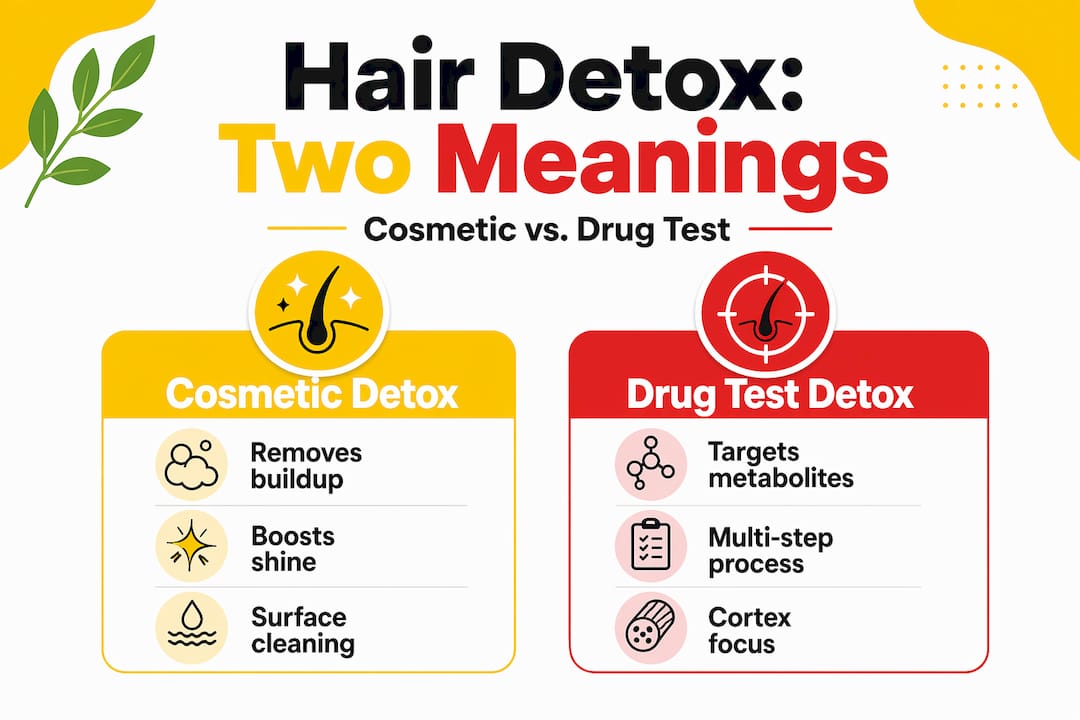
The phrase “hair detox” gets used in two completely separate contexts, and most of the confusion you encounter online comes from these two definitions being treated as the same thing. They are not.
In cosmetic haircare, a hair detox refers to clearing out product buildup, excess oils, hard water minerals, and dead skin cells from the scalp and hair shaft. This is a legitimate and useful practice for hair health. Think of it as a deep reset for your scalp when regular shampoo stops doing the job.
In the context of drug testing, “hair detox” refers to attempts to reduce or eliminate drug metabolites that have been deposited inside the hair shaft through the bloodstream during hair growth. This is a completely different biological target. The metabolites are not sitting on the outside of your hair. They are woven into the internal structure of the shaft itself.
Here is why this distinction matters so much for you:
- Cosmetic detox removes external surface buildup using clarifying agents, chelators, and exfoliants. It improves shine, volume, and scalp health.
- Drug test detox must target the cortex of the hair shaft where metabolites like THC-COOH are chemically bonded to proteins inside the fiber.
- Marketing language frequently blurs these two categories, using words like “purify,” “cleanse,” and “flush” in ways that apply to surface buildup but imply removal of drug markers.
- The hair growth process is what makes drug metabolites permanent once incorporated. As blood circulates, trace compounds enter the follicle and become part of the growing strand.
Pro Tip: When you see a shampoo advertised as a “hair detox,” check whether it specifies cosmetic buildup or drug metabolites. Those two claims require completely different active ingredients and mechanisms.
Understanding this split is the foundation for everything else in this article. Once you see the two definitions clearly, the rest of the terminology falls into place quickly.
How drug metabolites get into your hair
This is the science that most detox marketing conveniently skips over. When your body processes a substance, it breaks it down into metabolites that circulate in the bloodstream. As your hair follicles grow, they pull nutrients and compounds from that same blood supply. Drug metabolites get incorporated into the hair shaft during that growth process and stay there.
Labs test 1.5 inches of proximal scalp hair as the standard detection sample, which corresponds to roughly 90 days of growth at the average half-inch per month rate. But here is a detail many people miss: individual growth rates vary by ~50%. That means the same 1.5 inches of hair could represent 60 days for one person and 120 days for another.
| Term | What it means | Why it matters for testing |
|---|---|---|
| Proximal hair | The 1.5 inches closest to the scalp | This is the segment labs actually analyze |
| Detection window | Approximately 90 days based on average growth | Window shifts with individual growth rate variation |
| Drug metabolite | Byproduct of substance processing in the body | These bind internally to hair proteins during growth |
| External contaminant | Residue on the outside of hair from environment or contact | Labs wash this away before testing; it does not affect results |
| Chain of custody | Documented sample handling from collection to analysis | Required for forensic reliability in legal contexts |
Because cosmetic treatments may alter appearance but don’t reliably remove embedded drug markers, styling habits have no meaningful impact on test outcomes. Even more telling: labs wash hair samples before testing specifically to remove external contaminants. That process establishes the baseline. Clean hair on the outside is already expected. The test looks at what is inside the shaft.
Pro Tip: If you are calculating your own detection window, do not assume you grow hair at exactly 0.5 inches per month. Genetics, health, and even the season can shift this. When in doubt, assume a longer window.
What cosmetic scalp and hair detox actually does
Now that you know what drug test detox must target, it helps to understand what cosmetic detox products genuinely accomplish, because these tools are often mislabeled as drug detox solutions.
Cosmetic scalp detoxing typically involves removing product residue, dead skin cells, excess oils, and mineral deposits. This is genuinely useful for hair health, and the methods used are well established.
- Clarifying shampoos use surfactants stronger than regular shampoo to strip product buildup, silicones, and oils from the hair and scalp surface.
- Chelating shampoos are formulated to bind metal and mineral deposits, particularly from hard water. Chelating shampoos work by attaching to calcium and magnesium ions so they can be rinsed away. This has nothing to do with drug metabolites bonded inside the cortex.
- Chemical exfoliation uses AHAs or enzymes to break down dead skin cells on the scalp, improving circulation and follicle health.
- Physical exfoliation uses scalp scrubs or brushes to manually dislodge buildup from the scalp surface.
- Restorative moisturization follows detox treatments to replenish oils stripped during the cleansing process.
Proper scalp detox routines involve gentle exfoliation, occasional clarifying shampoo use, and moisturization afterward. Over-exfoliating causes irritation and dryness, so frequency depends on your scalp type and product use habits.
One practical benefit of cosmetic detox: removing buildup and mineral deposits can improve how well other specialized treatments penetrate the hair shaft. This is directly relevant to drug test preparation, where penetration into the cortex is exactly what you need.
Comparing detox methods marketed for drug tests
This is the section most people are really looking for. You want to know which products and protocols have any grounding in science, and which ones are wishful thinking.
Many online claims about detox shampoos are contradicted by the science. Standard shampoos and home remedies do not have the chemical profile to penetrate the cortex and disrupt bonded metabolites. That said, not all specialized protocols are the same.
The Macujo Method is the most recognized multi-step hair detox protocol for drug testing. It combines several types of treatments over multiple sessions to open the cuticle of the hair shaft, allowing deeper penetration and attempted breakdown of embedded metabolites. Harsh chemical washes in protocols like Macujo do carry a risk of hair damage, and results are not guaranteed. But the method operates on a biologically relevant theory: you cannot affect internal metabolites without first opening the outer structure of the hair.
Zydot Ultra Clean is a single-use shampoo often used as a final step before testing. It focuses on deep surface cleansing and is not designed as a standalone solution for internal metabolites.
Pro Tip: No single product is a magic answer. The most effective approaches combine proper preparation, the right specialized shampoo, and realistic expectations about what the science can and cannot do. Review a hair detox product comparison before committing to any protocol.
The honest summary: the further a product’s active ingredients can penetrate into the hair shaft, and the more aggressively it targets the cortex layer, the more relevant it is to drug test preparation. Surface-only products address the wrong target entirely.
Practical steps for approaching a hair drug test
Knowing the terminology is only useful if it translates into a real plan. Here is a grounded, step-by-step approach based on what the science actually supports.
- Calculate your real detection window. Use your known last use date and account for hair growth variability. Do not assume the standard 90 days applies exactly to you. Understand whether your test date gives you any meaningful runway.
- Stop using substances immediately. New growth from the day you stop is clean. The goal of any detox protocol is to address existing incorporated metabolites, so stopping the source matters.
- Choose treatments that target the hair shaft structure. Products that work only on the surface, such as regular clarifying shampoos, are useful for scalp health but will not affect forensic results. Look for proven detox shampoos designed specifically for follicle testing.
- Follow protocols as directed and start early. Rushing a multi-step method in the 48 hours before a test is far less effective than starting 10 to 14 days out.
- Avoid the myth that shaving your head helps. Labs can and will use body hair if scalp hair is unavailable, and body hair grows slower, potentially extending your detection window rather than eliminating it.
- Protect your scalp health throughout the process. Aggressive treatments strip moisture. Use conditioners and avoid additional chemical treatments like bleaching or perming during prep.
The word “detox” sounds like a quick fix. It is not. It is a process that requires time, the right products, and an accurate understanding of what you are actually trying to accomplish.
My perspective on the detox myth problem
I’ve spent years watching the same misinformation cycle repeat itself in this space. People come in panicked, having read that a vinegar rinse or a single wash with a “detoxifying” shampoo the night before their test will clear everything out. That advice spreads because it is simple and hopeful. It is also wrong in almost every case.
What I’ve observed is that the real problem is not lack of products. It is lack of accurate vocabulary. When someone does not understand that “hair detox” means two different things, they cannot evaluate whether a product is relevant to their situation. They buy a clarifying shampoo thinking it does what a specialized cortex-penetrating protocol does, and they fail the test.
The science on hair testing has been consistent for years. Hair acts as a growing record of what passed through your bloodstream. Cosmetic treatments do not rewrite that record. What I’ve seen work, within the limits of what is scientifically plausible, involves multi-step protocols applied with discipline and enough lead time. There are no shortcuts that change the underlying biology. But there are real differences between doing nothing and doing the right things correctly.
My take is straightforward: read the science, use the right terminology, and make decisions based on what the evidence actually supports, not what a product label implies.
— Michael
Get the right products for your preparation
If you are serious about your upcoming hair drug test, the terminology and the science both point to the same conclusion: you need products formulated specifically for follicle testing, not generic cosmetic detox shampoos. Passdrugtest offers a focused range of drug test detox products built around the Macujo Method and backed by the kind of real-world use that general beauty brands simply cannot offer.
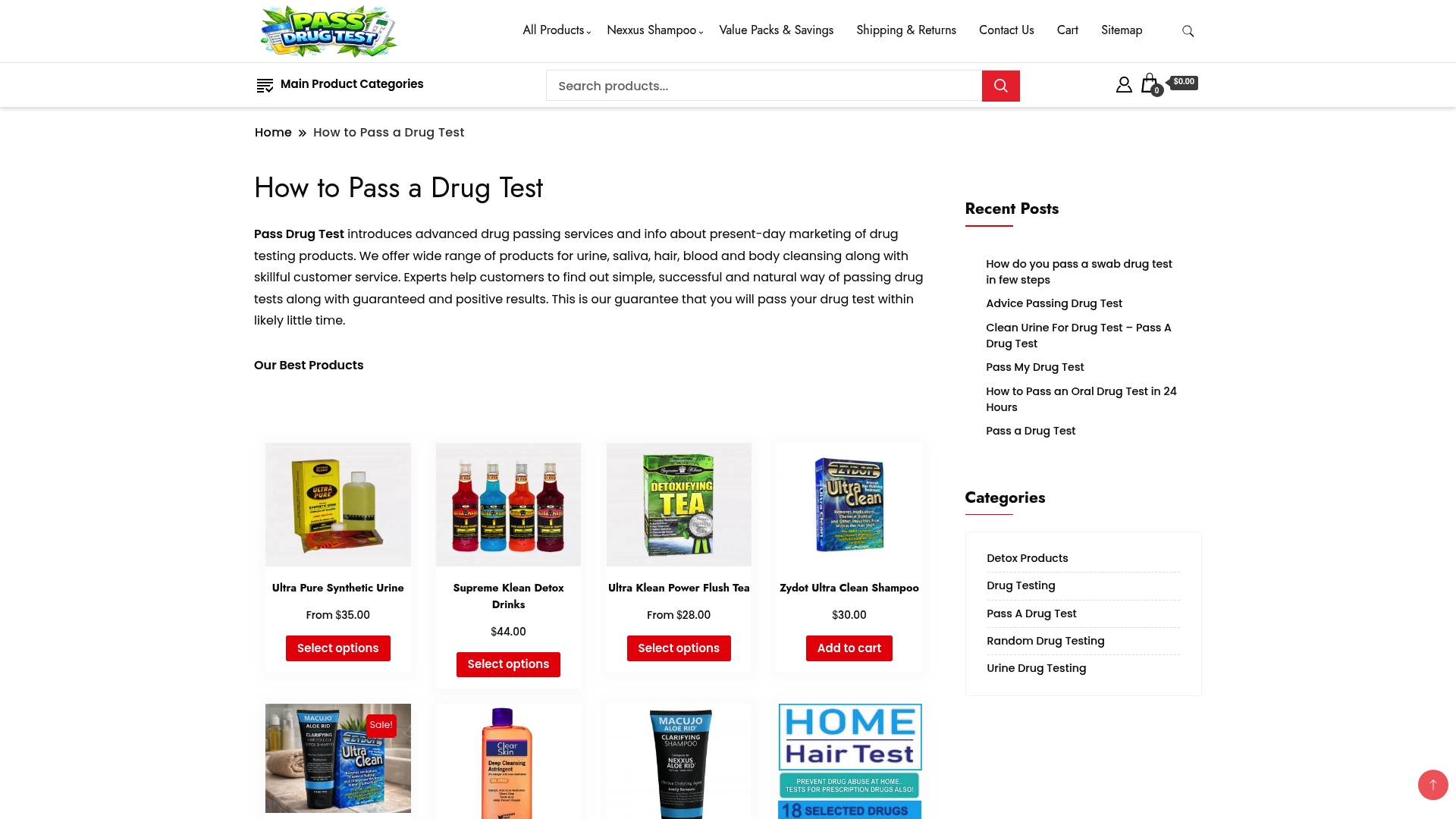
The flagship product is the Macujo Aloe Rid shampoo, which works at the cortex level where drug metabolites are actually embedded. Paired with a proper protocol and started with enough lead time, it represents your most evidence-grounded option. Visit Passdrugtest to explore the full product line and find the best hair follicle shampoo for your specific situation. Informed decisions start with the right tools.
FAQ
What does “hair detox” mean for a drug test?
In the drug testing context, hair detox refers to attempts to reduce or eliminate drug metabolites that are chemically bonded inside the hair shaft. This is distinct from cosmetic scalp detox, which only removes surface buildup.
Can washing your hair remove drug metabolites before a test?
No. Washing and styling do not remove internally embedded drug metabolites because those compounds are bound to proteins inside the hair cortex, not sitting on the surface.
How far back does a hair follicle drug test detect substance use?
Labs typically test 1.5 inches of proximal scalp hair, covering approximately 90 days of use history. Individual growth rate variation can shift this window by as much as 50% in either direction.
What is a chelating shampoo and does it help pass a drug test?
A chelating shampoo binds and removes metal and mineral deposits like calcium from hard water. It does not target drug metabolites inside the hair shaft and is not designed for drug test preparation.
What makes the Macujo Method different from regular detox shampoos?
The Macujo Method uses a multi-step protocol designed to open the hair cuticle and penetrate the cortex where metabolites reside, going beyond surface cleansing. Standard detox shampoos typically address only the outer layer of the hair.