


The hair follicle is a specialized skin organ that produces hair through a complex system of cells, segments, and signaling structures embedded deep within the dermis. Understanding hair follicle structure is not just academic. It directly explains why hair grows, why it falls out, and why certain treatments work while others fail. The human body contains approximately 5 million hair follicles, with roughly 125,000 located on the scalp alone. That scale tells you how central follicle health is to your overall biology.
What are the major structural components of a hair follicle?
Hair follicle anatomy is organized into three main segments: the infundibulum, the isthmus, and the inferior segment. Each segment serves a distinct function and contains specialized cell populations.
The infundibulum is the uppermost portion of the follicle. It extends from the skin surface down to the sebaceous gland opening. This segment connects the follicle to the outside environment, which is why external substances, including drug metabolites, can interact with it. The isthmus sits below the infundibulum and extends to the attachment point of the arrector pili muscle. The inferior segment is the deepest portion, containing the hair bulb and dermal papilla.
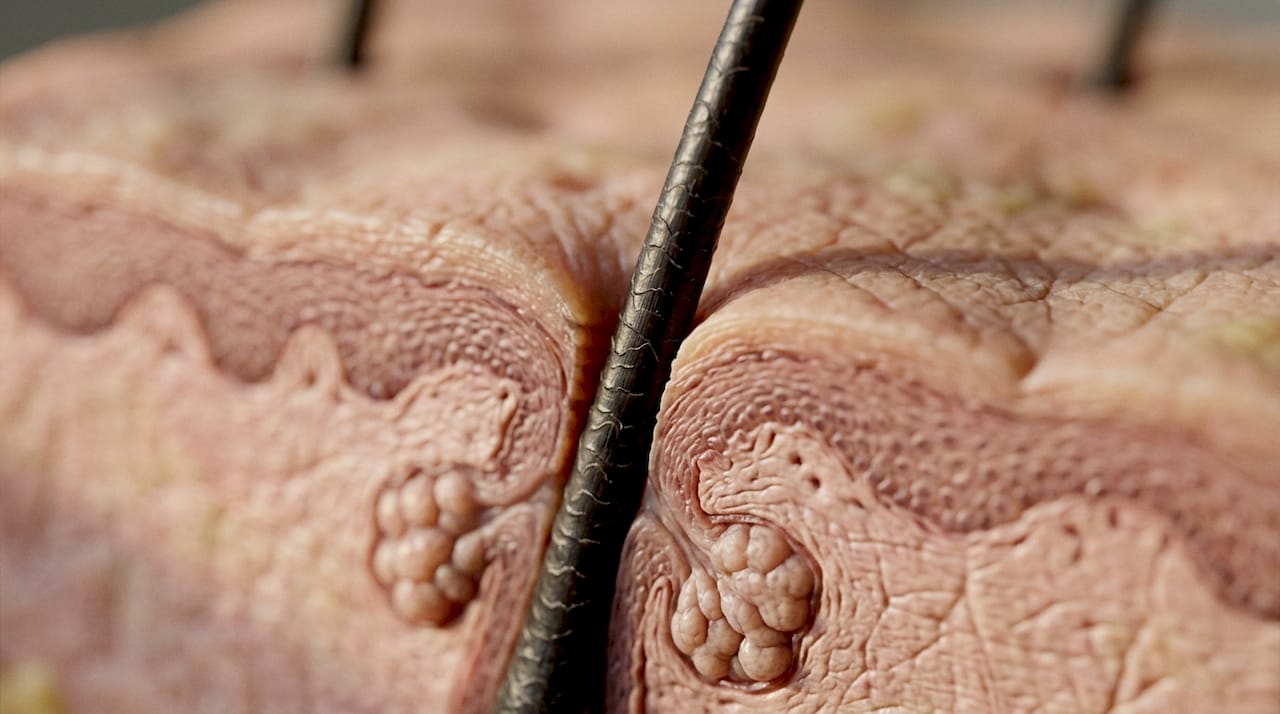
The hair bulb is where active hair production happens. It wraps around the dermal papilla, a cluster of specialized cells rich in blood vessels and growth signals. The dermal papilla signals matrix cells to proliferate and differentiate into the hair shaft. Think of the dermal papilla as the command center. Without its signals, hair production stops entirely.
| Follicle Component | Primary Function |
|---|---|
| Infundibulum | Connects follicle to skin surface; interfaces with environment |
| Isthmus | Transition zone; anchors arrector pili muscle |
| Hair Bulb | Site of active hair shaft production |
| Dermal Papilla | Signals matrix cells; controls shaft length and thickness |
| Bulge Region | Houses epithelial stem cells for follicle regeneration |
| Sebaceous Gland | Produces sebum for hair and skin lubrication |
The bulge region deserves special attention. Located along the outer root sheath near the isthmus, it harbors epithelial stem cells essential for regenerating the follicle through each growth cycle. Damage to the bulge is one of the primary reasons permanent hair loss occurs.
Pro Tip: When evaluating hair health treatments, look for products that support the dermal papilla and bulge region. Treatments that only address the hair shaft surface miss the biological source of hair production entirely.
How does the hair follicle drive the growth cycle?
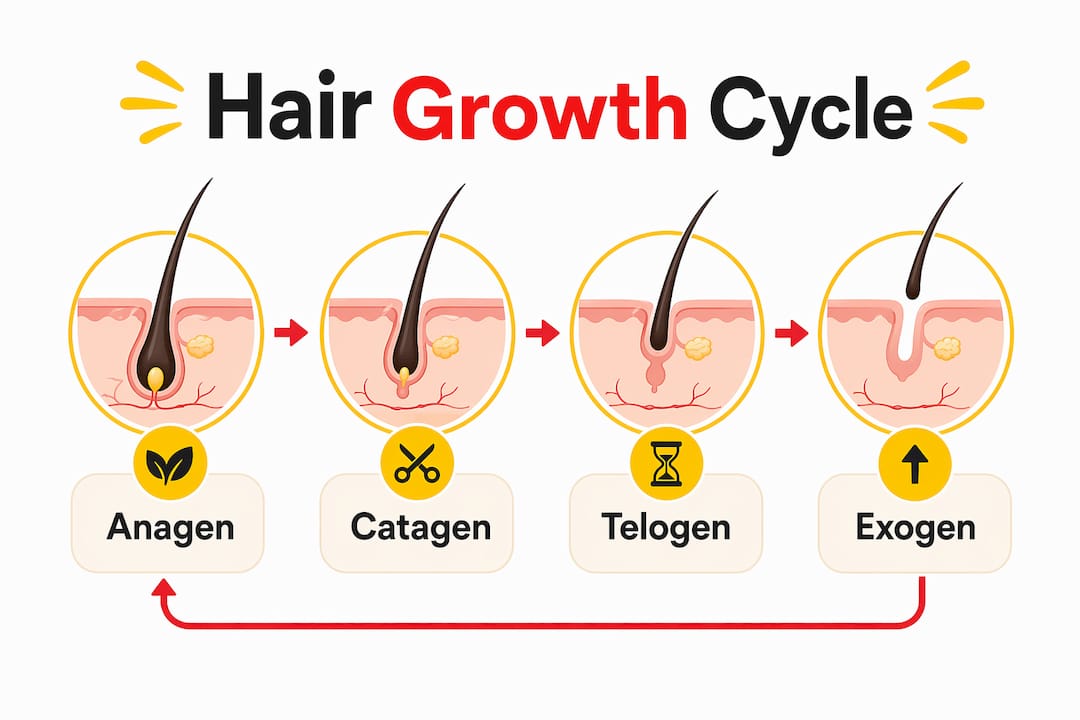
The hair growth cycle is the engine behind every strand you see. It runs in four phases: anagen, catagen, telogen, and exogen. Each phase reflects a distinct state of follicle activity.
Anagen is the active growth phase. During anagen, matrix cells in the hair bulb divide rapidly, pushing the hair shaft upward. This phase lasts 2–7 years on the scalp, which is why scalp hair can grow so long compared to eyebrow hair, which has a much shorter anagen window. Catagen is a brief transition phase lasting 2–3 weeks. The follicle shrinks, the dermal papilla detaches, and cell division stops. Telogen is the resting phase, lasting 2–4 months. The old hair sits in the follicle while a new anagen hair begins forming beneath it. Exogen is the shedding phase, when the old hair releases from the follicle.
| Growth Phase | Duration | Scalp Hair Distribution |
|---|---|---|
| Anagen (active growth) | 2–7 years | 85–90% of follicles |
| Catagen (transition) | 2–3 weeks | 1–2% of follicles |
| Telogen (resting) | 2–4 months | 10–15% of follicles |
| Exogen (shedding) | Variable | Overlaps with telogen |
A healthy scalp maintains 85–90% of its follicles in anagen at any given time. That ratio explains why losing 50–100 hairs per day is considered normal. When stress, nutritional deficiency, or chemical damage disrupts the cycle, more follicles shift into telogen simultaneously, causing noticeable shedding.
Pro Tip: If you are preparing for a hair follicle drug test, the anagen phase is the most relevant window. Drug metabolites incorporate into the hair shaft during active growth, which is why how metabolites stay in hair matters so much for test outcomes.
What specialized functions does the hair follicle perform?
The hair follicle does far more than produce hair. It operates as part of the pilosebaceous unit, an integrated structure that combines the follicle, sebaceous gland, and arrector pili muscle into one functional system. This unit coordinates multiple biological roles simultaneously.
Here are the core specialized functions the follicle performs beyond hair production:
- Sebum production. The sebaceous gland secretes sebum, an oily substance that coats the hair shaft and surrounding skin. Sebum prevents moisture loss, inhibits bacterial growth, and keeps the hair flexible rather than brittle.
- Thermal regulation. The arrector pili muscle contracts in response to cold or emotional stimuli, pulling the follicle upright and creating goosebumps. This response traps a thin layer of warm air close to the skin surface.
- Sensory perception. Hair follicles are densely wrapped with nerve endings that function as mechanoreceptors. They detect touch, pressure, and movement with remarkable sensitivity. This is why you can feel a single hair being moved without any contact with the skin itself.
- Skin homeostasis. The follicle contributes to wound healing and skin renewal by releasing stem cells from the bulge region into the surrounding epidermis when injury occurs.
The sensory function is one of the most overlooked aspects of follicle biology. Most people think of hair as passive. The follicle is anything but passive. It actively monitors the environment and feeds that information to the nervous system in real time.
What role do stem cells play in follicle regeneration?
The hair follicle is classified as a complex, independent mini-organ with its own internal signaling systems and regenerative capacity. The stem cell niche within the follicle is central to that capacity.
The bulge region is the primary reservoir of epithelial stem cells in the follicle. These cells are activated at the start of each anagen phase, migrating downward to repopulate the hair bulb and restart the production cycle. This process repeats throughout a person’s lifetime under normal conditions.
Several factors determine how well this regeneration works:
- Signaling integrity. The dermal papilla sends molecular signals, including Wnt pathway activators and growth factors, that wake up bulge stem cells at the start of anagen. Disruption of these signals delays or prevents follicle cycling.
- Structural damage. Physical or chemical damage to the bulge region can permanently destroy the stem cell reservoir. This is the mechanism behind scarring alopecia, where follicles are replaced by fibrous tissue.
- Nutritional support. Stem cell activity depends on adequate blood supply through the dermal papilla. Iron deficiency, protein deficiency, and poor scalp circulation all reduce the quality and speed of follicle regeneration.
- Age-related decline. Stem cell populations in the bulge decrease with age, contributing to the gradual thinning seen in androgenetic alopecia and age-related hair loss.
Understanding the structure of hair roots at this cellular level explains why topical treatments alone rarely reverse significant hair loss. Effective intervention requires reaching the follicle’s internal biology, not just the hair shaft surface. This same principle applies to hair follicle drug testing, where the cortex and inner shaft layers retain metabolites that surface-level washing cannot remove.
Key takeaways
The hair follicle is a self-regenerating mini-organ whose internal structure, from the dermal papilla to the bulge stem cell niche, directly controls every aspect of hair growth, health, and chemical retention.
| Point | Details |
|---|---|
| Follicle as mini-organ | The follicle contains independent signaling systems, stem cell niches, and regenerative cycles. |
| Growth cycle phases | Anagen lasts 2–7 years; 85–90% of scalp follicles are in active growth at any time. |
| Dermal papilla function | The papilla signals matrix cells to produce the hair shaft and controls its thickness and length. |
| Bulge stem cells | The bulge region drives follicle regeneration; damage here causes permanent hair loss. |
| Drug metabolite retention | Metabolites incorporate into the hair shaft during anagen and persist in the cortex layer. |
Why most people misread their own hair health
I have spent years working in the hair science and detox space, and the most common mistake I see is people judging hair health entirely by what they can see. Shiny hair does not mean healthy follicles. Thick-looking hair does not mean active, well-nourished bulge stem cells. The real story is happening 4 millimeters below your scalp surface, in structures you cannot observe without a microscope.
What surprises most people is how much the follicle functions like an independent organ. It has its own blood supply through the dermal papilla, its own stem cell population in the bulge, and its own cycling program that runs largely independent of conscious control. When I explain that the hair shaft structure reflects internal cortex integrity rather than surface shine, most people rethink their entire approach to hair care.
The practical implication is this: treatments that only address the outer cuticle are working on the wrong layer. Whether you are dealing with hair loss, hair damage, or preparing for a hair follicle drug test, the biology that matters is inside the shaft and inside the follicle. That is where the real work happens, and that is where effective solutions need to reach.
— MIchael
Proven detox solutions for hair follicle testing
If you are facing a hair follicle drug test, understanding the follicle’s structure is the first step. The next step is acting on that knowledge with proven products. Drug metabolites bind to the cortex layer of the hair shaft during anagen growth, and surface washing alone does not reach them.

Passdrugtest carries the most effective detox shampoos available, including the Macujo Aloe Rid Shampoo, which is formulated to penetrate the hair shaft and address metabolite buildup at the cortex level. For maximum results, the Macujo Aloe Rid Shampoo combined with the Zydot Ultra Clean Treatment delivers a two-stage approach trusted by thousands of users. Browse the full range of hair drug testing products at Passdrugtest and find the right solution for your timeline.
FAQ
What is a hair follicle made of?
A hair follicle consists of three main segments (infundibulum, isthmus, and inferior segment), a hair bulb, dermal papilla, matrix cells, sebaceous gland, arrector pili muscle, and a bulge region containing epithelial stem cells. Together, these structures form a self-contained mini-organ within the skin.
How long does the active hair growth phase last?
The anagen phase lasts 2–7 years on the scalp, with 85–90% of scalp follicles in this phase at any given time. The length of anagen determines the maximum length your hair can reach.
Why do hair follicles matter for drug testing?
Drug metabolites enter the hair shaft through the bloodstream during the anagen phase and become embedded in the cortex layer. Standard washing does not remove them, which is why specialized detox shampoos are required to address metabolite retention before a test.
What causes permanent hair loss at the follicle level?
Permanent hair loss occurs when the bulge region is damaged or destroyed, eliminating the epithelial stem cell reservoir that drives follicle regeneration. Scarring alopecia and severe chemical damage are the most common causes of this irreversible structural loss.
Can hair follicles detect physical touch?
Yes. Hair follicles are wrapped with dense nerve endings that act as mechanoreceptors, detecting touch, pressure, and movement. This sensory function operates independently of hair production and is one of the follicle’s most underappreciated biological roles.