


Yes, time is the single most important variable in detoxification and drug test outcomes. Both the total duration of abstinence and when you intervene during the day materially change how fast your body clears drug metabolites and how long they remain detectable. The role of time in detoxification is not a marketing concept; it is grounded in pharmacokinetics, circadian biology, and forensic testing science.
Here is the practical summary before anything else:
- Hours before a test: Meaningful only for urine and saliva. Hydration and dilution can shift results, but they won’t erase metabolites.
- Days to weeks: Abstinence plus supportive measures can clear urine and blood for most substances, depending on half-life and use history.
- Months (or specialized protocols): Hair testing captures up to 90 days of history. Simple abstinence rarely clears a hair test within that window.
Medical detox programs typically last 3–10 days for most substances, confirming that even clinical settings treat detoxification as a time-dependent process, not an instant event.
Table of Contents
- How detoxification actually works in your body
- How circadian rhythms change your body’s clearance rate
- Detection windows by sample type: what time before a test actually buys you
- Individual factors that speed up or slow down your timeline
- What detox products can and cannot realistically do
- A realistic plan based on how much time you have before the test
- When you need medical supervision, not a product
- Key Takeaways
- A note from the Passdrugtest team
- Passdrugtest has the products that match your timeline
- Useful sources and further reading
How detoxification actually works in your body
Every substance you consume follows a predictable biological arc: absorption into the bloodstream, distribution to tissues, metabolism by the liver, and excretion through urine, sweat, or bile. This ADME sequence (Absorption, Distribution, Metabolism, Excretion) is what determines how long a drug or its metabolites stay detectable.
Half-life is the key number. It describes how long it takes your body to eliminate half of a substance’s concentration. THC, for example, is fat-soluble, so it distributes into body fat and releases slowly back into the bloodstream over days or weeks. A water-soluble drug like alcohol clears far faster.
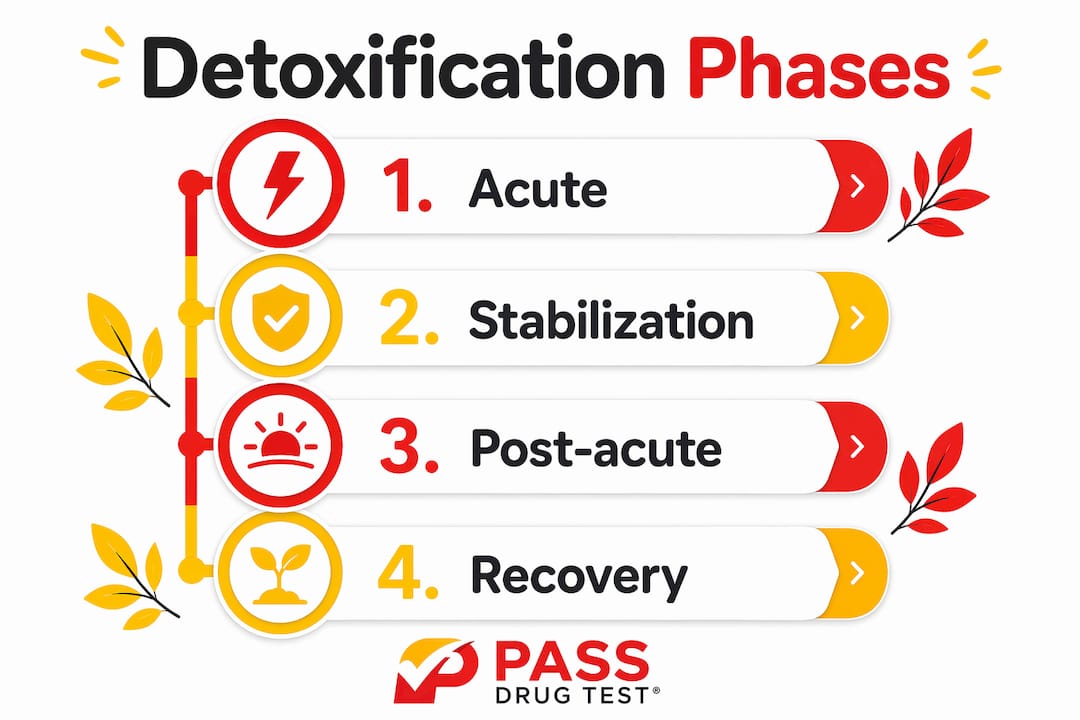
The detox process itself moves through three recognizable phases. First comes the acute phase, where withdrawal symptoms appear and peak. Then stabilization, where the body adjusts. Finally, a long-tail elimination phase where low-level metabolites linger in tissue, urine, or hair long after you feel fine. Clinical detox programs distinguish outpatient settings lasting 3–14 days from inpatient care that often lasts 5–14 days, reflecting how substance type and health status stretch or compress that timeline.
How circadian rhythms change your body’s clearance rate
Your liver does not run at a constant speed. The hepatic circadian clock directly modulates the expression of detox enzymes and membrane transporters, meaning clearance rate varies depending on the time of day you consume or attempt to clear a substance.

Phases I, II, and III of drug metabolism are all under circadian regulation. Phase I enzymes (primarily cytochrome P450, or CYP enzymes) oxidize xenobiotics. Phase II enzymes then conjugate those metabolites to make them water-soluble. Phase III transporters push the finished products out of cells for excretion. Research published in Chemical Research in Toxicology confirms that all three phases follow rhythmic daily patterns driven by the suprachiasmatic nucleus (SCN) and reinforced by feeding schedules.
Practically, this means:
- Enzyme activity peaks during your body’s active metabolic window, generally aligned with daytime waking hours.
- Disruptions like shift work, jet lag, or irregular sleep suppress clock-gene function and can slow clearance.
- Food timing matters: the liver clock is entrained partly by when you eat, not just light exposure.
More than 100 clinical trials have evaluated dosing-time effects, and roughly three-quarters show time-dependent pharmacokinetic differences, with up to tenfold variability in some measures. That is not a minor modifier.
Pro Tip: Avoid extended overnight fasting before a period when you want maximum metabolic clearance. A light, timed meal in the morning can help activate the hepatic clock and support your body’s natural detox rhythm, though this is a modifier, not a substitute for abstinence.
For a deeper look at how to align daily habits with your body’s clearance windows, the science-backed detox support guide at Passdrugtest covers practical timing strategies.
Detection windows by sample type: what time before a test actually buys you
Detection windows differ dramatically by sample type. The table below reflects established forensic and clinical reference ranges.
| Sample Type | Typical Detection Window | What Extra Time Realistically Buys You |
|---|---|---|
| Urine | 3–7 days (THC up to 30 days for heavy users) | Abstinence + hydration can clear most substances in days to weeks |
| Saliva | 1–3 days for most substances | Even 48 hours of abstinence meaningfully reduces detection risk |
| Blood | Hours to 2–3 days for most substances | Short window; time is your strongest tool here |
| Hair | Up to ~90 days | Abstinence alone rarely clears metabolites trapped in the hair shaft |
Sources: PMC clinical overview
Hair testing is a fundamentally different problem. Drug metabolites become physically embedded in the cortex of the hair shaft as the hair grows. They don’t wash out with regular shampoo or disappear with abstinence alone inside the 90-day window. Specialized topical protocols designed to penetrate the hair shaft are required to reduce detectability.
For a full breakdown of hair follicle drug testing mechanics and what actually works, Passdrugtest has detailed guidance on the topic.
Individual factors that speed up or slow down your timeline
No two people clear substances at the same rate. Metabolism, body composition, age, organ function, genetics, frequency of use, and co-medications all shift your personal detoxification duration significantly.
Key modifiers:
- BMI and body fat: THC and other fat-soluble compounds accumulate in adipose tissue. Higher body fat means a larger reservoir and a longer release period.
- Liver and kidney health: These organs do the actual work of metabolizing and excreting metabolites. Impaired function means slower clearance.
- Age: Older adults generally clear substances more slowly due to reduced enzyme activity and organ efficiency.
- Frequency and dose: Daily, heavy use builds up metabolite concentrations that take far longer to clear than occasional use.
- Genetics: CYP enzyme variants (particularly CYP2D6 and CYP3A4) create significant individual differences in how fast phase I metabolism runs.
- Polysubstance use: Multiple substances can compete for the same metabolic pathways, slowing clearance of each.
- Hydration and nutrition: Both support renal clearance and liver function, though they amplify natural processes rather than override them.
Texas Health’s clinical guidance specifically flags organ function and age as the strongest individual modifiers of detox duration. For heavy users, Passdrugtest’s detox tips for heavy users addresses these extended timelines directly.
What detox products can and cannot realistically do
Most rapid-detox claims, including 24-hour cleanses and single-dose flushes, are not supported by the physiology of half-life, tissue distribution, or phase I/II liver metabolism. ASAM clinical guidelines are clear that detox is a time-dependent process spanning days, not hours.
What products can realistically do:
- Urine dilution products can temporarily lower metabolite concentration below a screening threshold, but many labs test for creatinine and specific gravity to detect dilution.
- Hair-specific shampoo protocols can reduce metabolite concentration in the hair shaft when used correctly and repeatedly over time.
- Saliva neutralizers can temporarily suppress oral fluid metabolite levels for a short window.
What products cannot do: remove metabolites from blood, permanently clear hair in a single wash, or override the pharmacokinetic timeline of a substance with a long half-life.
Safety matters here. Extreme fluid loading risks hyponatremia (dangerously low sodium). Unverified herbal supplements can interact with medications or stress an already-taxed liver. The detox vs. cleansing explainer at Passdrugtest separates evidence-based approaches from marketing claims worth skipping.
A realistic plan based on how much time you have before the test
Your optimal detox timeline depends entirely on how many days you have. Here is a prioritized, practical breakdown.
-
Hours before the test: Stop all substance use immediately. Hydrate moderately (don’t overdo it). For urine tests, consider a same-day dilution product. For saliva tests, use a saliva neutralizer product in the window specified by the product. Do not attempt extreme fluid loading.
-
1–7 days before the test: Abstain completely. Increase water intake to support renal clearance. Light cardio can help mobilize fat-stored metabolites, but stop exercise 48 hours before the test (exercise temporarily raises THC metabolite levels in urine). Use a home drug test kit to monitor your levels daily.
-
1–4 weeks before the test: Sustained abstinence is your most powerful tool. Support liver function with consistent sleep, regular meals, and adequate hydration. Begin a whole-body cleansing protocol if appropriate. Test yourself at home every few days to track progress.
-
3+ months (hair test focus): Abstinence alone is unlikely to clear a hair test within the 90-day window. Begin a specialized hair protocol as early as possible. Repeated treatments with a proven hair follicle detox shampoo are required to reduce metabolite concentration in the hair shaft.
Do not do: injectable “detox” treatments from unverified sources, extreme dehydration, or abrupt cessation of high-dose prescription medications without medical guidance.
When you need medical supervision, not a product
Some detox situations are medical emergencies, not DIY projects. Seek clinical help immediately if any of the following apply.
- You are stopping alcohol after heavy, long-term use (seizure and delirium tremens risk begins 6–24 hours after the last drink).
- You are stopping benzodiazepines (Xanax, Valium, Klonopin) without a supervised taper. Abrupt cessation can cause life-threatening seizures.
- You have a history of prior seizures or delirium tremens during withdrawal.
- You have unstable cardiovascular or respiratory disease.
- You are experiencing severe psychiatric symptoms alongside withdrawal.
- You have known liver or kidney failure.
- You are using multiple substances simultaneously.
Call your primary care provider, an urgent care clinic, or 911 if symptoms are severe. Inpatient medical detox exists precisely for these situations and typically lasts 5–14 days depending on the substance and monitoring needs.
This article is general educational information, not medical advice. Confirm your situation with a qualified healthcare provider.
Key Takeaways
Time is the non-negotiable foundation of detoxification: the right abstinence duration, combined with timed supportive interventions, determines whether metabolites remain detectable at the moment of testing.
| Point | Details |
|---|---|
| Time governs clearance | Half-life and ADME determine how long metabolites stay detectable; no product overrides this biology. |
| Sample type changes your window | Saliva clears in hours to days; urine in days to weeks; hair retains metabolites for up to 90 days. |
| Circadian timing is a real modifier | Liver CYP enzymes and phase I/II/III transporters follow daily rhythms; aligning interventions to active metabolic windows incrementally improves clearance. |
| Individual factors extend timelines | Heavy use, high body fat, impaired liver/kidney function, and age all push timelines well beyond published averages. |
| Passdrugtest products fit real timelines | Hair shampoo kits, urine detox solutions, and home test kits from Passdrugtest are designed to work within evidence-based, sample-specific detox windows. |
A note from the Passdrugtest team
Facing a drug test is stressful, and the amount of conflicting information online makes it harder. What we’ve seen consistently is that people who plan ahead, understand their sample type, and use the right products for their specific window get the best results. Instant fixes don’t align with how your body actually works. What does work is combining abstinence, timed support, and proven products matched to your test type. That’s exactly what Passdrugtest is built to help you do, whether you’re prepping for a hair follicle test, a urine screen, or a saliva swab.
Passdrugtest has the products that match your timeline
When you’re ready to move from understanding to action, Passdrugtest carries the full range of products built for real detox timelines. For hair tests, the Macujo Aloe Rid Shampoo is the proven choice for penetrating the hair shaft and reducing metabolite concentration when used as part of a structured protocol. For urine prep, the urine detox product range covers same-day and multi-day strategies. Every product on the site is matched to a specific sample type and time window.
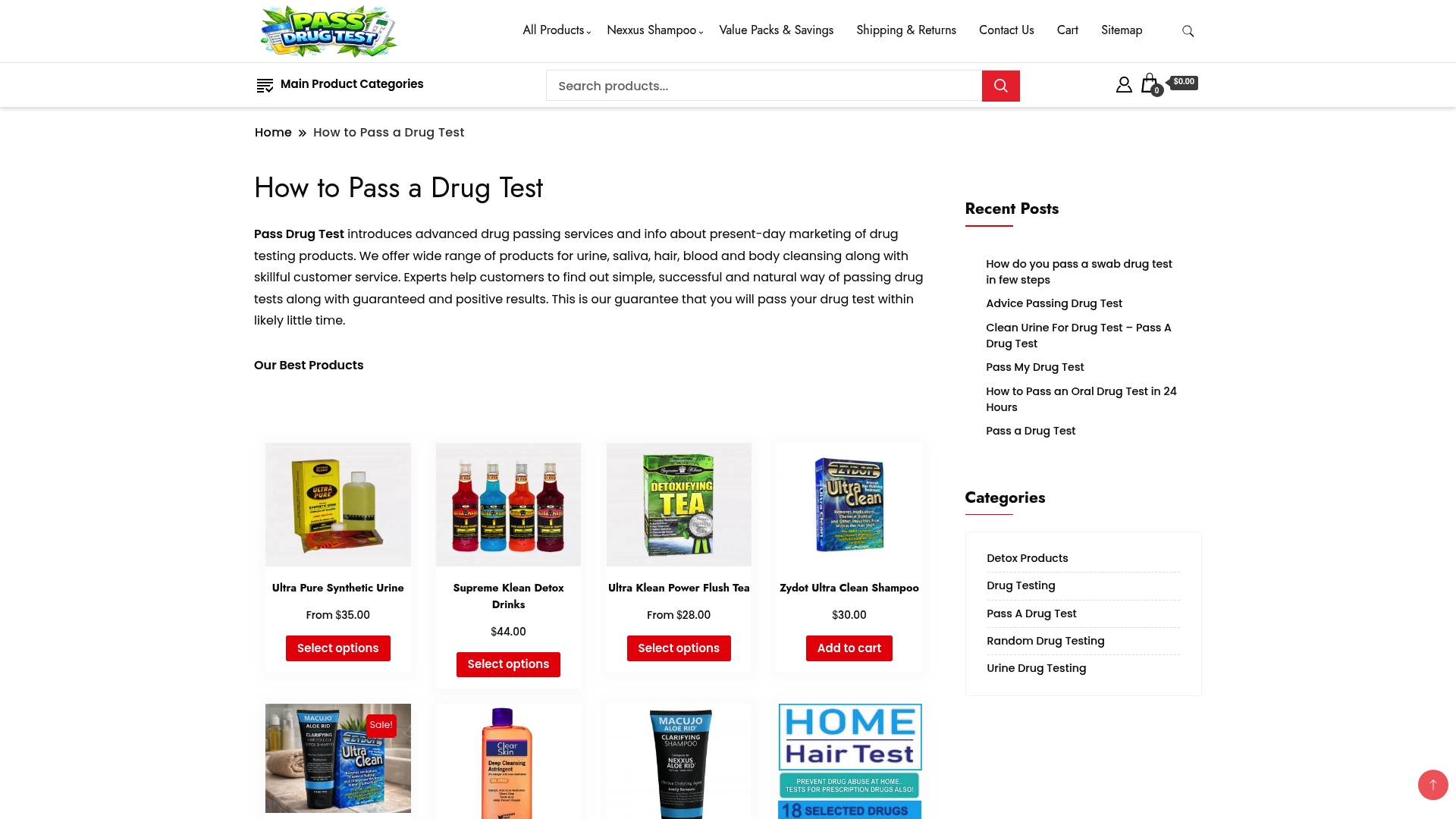
Check your test type, calculate your timeline, and browse the full drug test detox product catalog to find what fits your situation. Home test kits are also available so you can confirm your levels before the real test. Products are for lawful use only; always verify the rules that apply to your situation.
Useful sources and further reading
- Circadian Regulation of Hepatic Detoxification Pathways, Chemical Research in Toxicology: The primary peer-reviewed review on how phases I, II, and III of liver metabolism are governed by the circadian clock. Essential background for understanding why timing in detox matters biologically.
- The Role of the Circadian Timing System on Drug Metabolism, Expert Opinion on Drug Metabolism & Toxicology: Updated review linking hepatic clock function to xenobiotic clearance rates and practical chronotherapy implications.
- Recent Advances in Circadian-Regulated Pharmacokinetics, Biochemical Pharmacology: Covers more than 100 clinical trials on dosing-time effects; documents up to tenfold variability in pharmacokinetic outcomes based on timing.
- An Overview of Outpatient and Inpatient Detoxification, PMC/NCBI: Clinical reference for detection windows by sample type and for supervised detox program durations.
- How Long Does Medical Detox Take? Altus Rehab: Practical substance-by-substance breakdown of detox timelines with clinical context.
- How Long Does Detox Take? Texas Health: Health-system guidance on individual factors, including age and organ function, that modify detox duration.
- ASAM Clinical Guidelines: The American Society of Addiction Medicine’s authoritative standards for medically supervised detox, including safety thresholds and monitoring requirements.
- THC Hair Detox Timelines: What Really Works, Passdrugtest: Passdrugtest’s own deep-dive on hair-specific detection windows and protocol planning.
- Common Detox Methods Explained, Passdrugtest: Practical breakdown of method mechanisms and realistic limits for urine, saliva, and hair test prep.