
Consumer detox methods are not a scientifically proven way to remove amphetamine that has already been incorporated into hair, and no shampoo, drink, or home remedy can guarantee a negative result. If you take a prescription stimulant, the correct first step is disclosure to the Medical Review Officer, not a workaround. If you have time before your test, confirming your lab’s panel and cutoff, and running a home test, will tell you more than any online forum thread.
TL;DR:
- Detox shampoos and home treatments cannot reliably remove amphetamine from already incorporated hair, as reductions seen in studies are inconsistent and not guaranteed.
- Hair color and individual factors like metabolism and washing habits significantly influence drug concentration levels and complicate test interpretation.
- Standard collection methods sample roughly three months of growth, meaning recent abstinence cannot erase embedded amphetamine, only prevent new drug incorporation.
- Disclosing prescribed stimulant use to the Medical Review Officer is the safest way to handle positive results, since hair tests cannot distinguish between medication and illicit drug use reliably.
- Confirming lab panel details and running a home test beforehand can provide a more accurate assessment of your likelihood to pass than relying on detox products.
Table of Contents
- How amphetamines get into hair and what a lab actually measures
- What the detection window really tells you about timing
- Can detox shampoos or home treatments remove amphetamine from hair?
- Popular methods and what the research actually found
- If you have a prescription, here’s how testing and disclosure work
- What happens inside the lab: screening, confirmation, and cutoffs
- A practical checklist before your scheduled test
- Why this article leans on evidence over internet folklore
- Where Macujo Aloe Rid Shampoo fits into your preparation
- Studies and guidance worth reading directly
- Sources
- FAQ
How amphetamines get into hair and what a lab actually measures
Hair testing works because drugs circulating in your bloodstream become trapped inside the hair shaft as it forms, not because they sit on the surface like dust or sweat. Once that hair grows out past the scalp, the amphetamine or methamphetamine bound inside it is sealed in, which is why washing the outside of the strand behaves nothing like washing a dish. Controlled human studies confirm this incorporation happens in a dose-related manner, meaning higher exposure tends to produce higher concentrations, though the relationship is far from a clean formula.
Hair color complicates the picture more than most people expect. Melanin, the pigment that gives hair its color, binds amphetamines more readily, so two people with identical exposure can produce very different lab numbers depending on how much eumelanin their hair contains. That single variable is a major reason interpretation of hair results is never as simple as a yes or no percentage.
A few practical facts shape what gets tested:
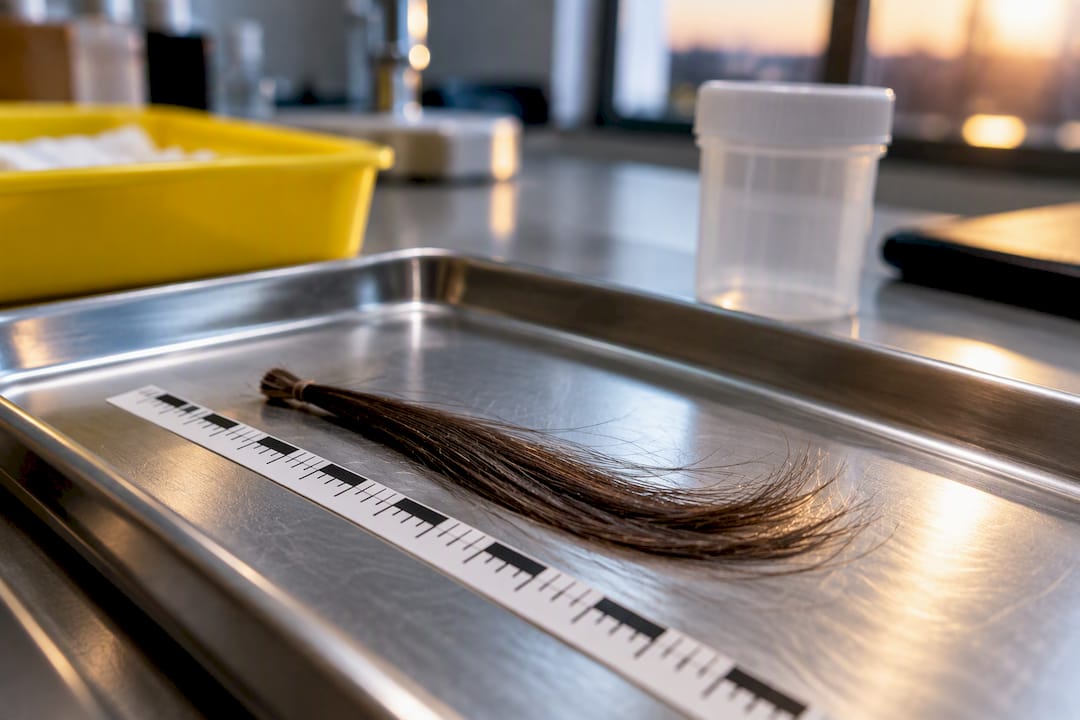
- Standard collection uses about an inch or more of hair closest to the scalp, which corresponds to roughly three months of growth.
- Darker, coarser hair can retain higher drug concentrations than lighter hair under similar exposure.
- Individual metabolism, hair growth rate, and washing habits all add variability that no single formula predicts.
- When scalp hair is unavailable, collectors may use body hair, which grows differently and covers a different, less precise timeframe.
Understanding this biology matters because it explains why surface-level cleaning products struggle to change what a lab confirms. For a deeper look at how sample length maps to time, see our breakdown of the hair drug test detection window.
What the detection window really tells you about timing
The length of hair tested translates almost directly into how far back a lab can look, which is why the standard 1.5 inch sample corresponds to about three months of history. That segment reflects drug exposure during the weeks it took that hair to grow, not just recent days, so stopping use the week before a scheduled test does nothing to the amphetamine already locked into that segment.
A few timing details are worth knowing before you plan anything:
- The proximal segment, closest to the scalp, reflects the most recent growth and is the section labs prioritize.
- Hair grows at roughly half an inch per month on average, though rates vary by person, which is part of why cutoffs and interpretations differ across labs.
- Collectors sometimes substitute body hair when scalp hair is too short or unavailable, and because body hair grows more slowly and less predictably, the resulting window estimate is far less precise.
There is no abstinence period, long or short, that erases amphetamine already embedded in hair that has already grown. The only thing time changes is whether new, drug-free growth eventually extends past the collected segment, which takes months, not days.
Can detox shampoos or home treatments remove amphetamine from hair?
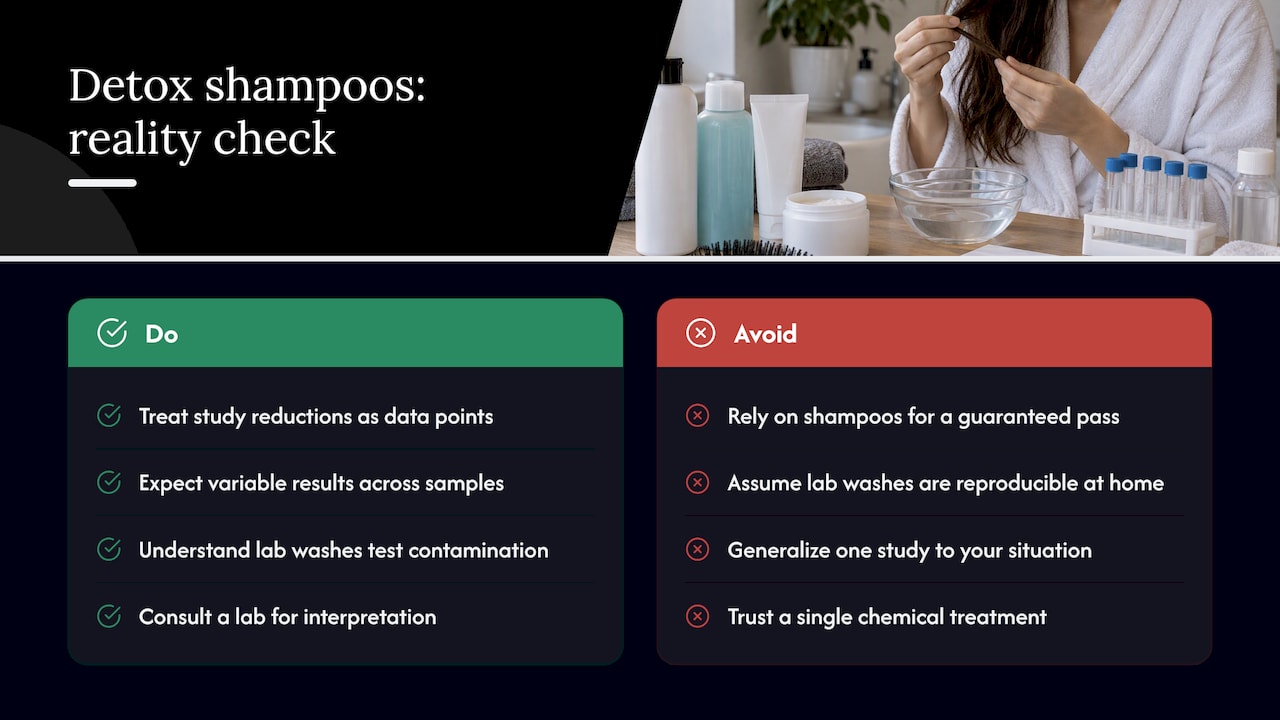
Peer-reviewed research shows some chemical treatments can reduce measured amphetamine levels in hair, but the reductions are inconsistent and nowhere near reliable enough to promise a passing result. That distinction between “reduced” and “reliably undetectable” is the center of nearly every myth about detox shampoos.
A controlled study on household and commercial hair treatments found variable percentage reductions in amphetamine concentration after aggressive washing protocols, but the results differed by treatment type and individual sample. That variability is exactly why no consumer product can be marketed honestly as a guaranteed fix.
Laboratory decontamination and wash analysis are quality-control steps used to distinguish external contamination from internal drug use, not evidence that a consumer can replicate that process to erase incorporated drug from a collected sample.
That distinction comes from forensic guidance on hair testing and contamination, and it matters because people often confuse a lab’s technical wash step with something a home product can imitate. A lab wash exists to test whether drug came from outside the hair or from inside the bloodstream. It is an analytical tool, not a cleaning method a shampoo bottle can reproduce.
The underlying research also has real limits worth naming plainly. Sample sizes in these studies tend to be small, treatment protocols differ from one experiment to the next, and amphetamine does not always behave the same way as other drugs tested in the same batch. A reduction seen in one study using one specific chemical combination does not transfer neatly to a different product, a different hair type, or a different amphetamine exposure level. Anyone reading a percentage reduction from a study should treat it as a data point from a controlled experiment, not a promise about their own hair.
Popular methods and what the research actually found
A handful of protocols dominate online advice for amphetamine hair tests, and each one has a different evidence trail behind it.
- The Macujo method is a widely cited multi-step washing protocol that combines an acidic pre-treatment, a clarifying or detox shampoo, and repeated washing cycles, and it remains one of the most searched approaches among people preparing for a hair follicle test.
- Bleaching and alkaline treatments have shown measurable reductions in amphetamine concentration in some experimental samples, but the same chemical damage that lowers detectable levels can also alter the hair enough that labs flag it or request additional testing.
- Standard detox shampoos marketed for drug tests typically rely on clarifying agents that strip oils and surface residue, which can help with contamination but does little against drug bound deep in the hair shaft; our clarifying shampoo explainer covers that mechanism in more detail.
- Repeated washing without chemical treatment shows the least effect of any method studied, since ordinary shampoo was never designed to break down melanin-bound compounds.
Pro Tip: Treat any at-home chemical protocol as a last resort, document exactly what you used and when, and never assume a visible change in hair texture means the drug itself is gone.
The core problem with all of these methods is sensitivity. Confirmatory testing uses gas chromatography or liquid chromatography paired with mass spectrometry, technology precise enough to detect trace amounts that would never show up on a home test strip. A treatment that lowers concentration by even a meaningful percentage in a lab study can still leave enough amphetamine behind to clear a sensitive instrument’s detection threshold. Reduction is not the same as elimination, and that gap is where most consumer detox claims fall apart. For more on how shampoo formulations differ, see our page on shampoo for hair follicle drug tests.
If you have a prescription, here’s how testing and disclosure work
Prescribed stimulants like Adderall and lisdexamfetamine show up in hair the same way illicit amphetamine does, because the drug itself is chemically similar regardless of source. A study on patients treated with lisdexamfetamine found that hair concentrations of D-amphetamine were detectable but did not reliably correlate with prescribed dose, which means a lab cannot simply look at a number and know whether someone is taking their medication as directed or using more than prescribed.
That uncertainty is exactly why disclosure exists as a formal process rather than a guessing game. A few steps make the process smoother:
- Keep a copy of your prescription and your prescriber’s contact information available before testing day.
- Notify the Medical Review Officer of your prescription as soon as you’re notified of a positive or before testing when possible.
- Ask whether the lab uses chiral analysis, which can sometimes distinguish prescription amphetamine isomers from illicit methamphetamine byproducts.
Never attempt to detox away a legitimate prescription. Disclosure protects you legally and medically in a way no shampoo ever could.
What happens inside the lab: screening, confirmation, and cutoffs
Every hair sample submitted for amphetamine testing goes through a two-step process designed to catch both false positives and attempts at manipulation. An initial screen flags samples above a threshold, and any positive screen moves to confirmatory testing using gas chromatography or liquid chromatography mass spectrometry, methods sensitive enough to identify the specific parent drug and its metabolites rather than a general chemical class.
Labs also run decontamination or wash analysis on the collected sample itself, checking the wash liquid separately from the hair to judge whether detected drug came from external contact or internal incorporation.
A few operational details affect how results get interpreted:
- Cutoff levels for amphetamine and methamphetamine vary by laboratory and by the program ordering the test, so a number that would pass one employer’s cutoff might not pass another’s.
- A reduction achieved through washing might fall under one lab’s threshold while still exceeding a stricter program’s limit.
- Confirmatory testing takes longer and costs more than screening, which is why it’s reserved for samples that screen positive first.
A practical checklist before your scheduled test
Preparation matters more than any last-minute chemical experiment, and the steps that actually help are administrative, not cosmetic.
- Confirm which lab is processing your sample and what panel and cutoff levels apply, since this information changes what “passing” actually requires.
- If time allows, take a home hair test to get a realistic read on where you stand before the real one.
- Gather any prescription documentation or medical records now, rather than scrambling after a positive result comes back.
- Avoid bleach, high-pH treatments, or other aggressive chemical experiments that risk scalp burns or hair damage without a reliable payoff.
- If you did use a detox product or home method, keep a record of it and be prepared to discuss it honestly if a Medical Review Officer asks.
Pro Tip: A home test costs far less than the consequences of a failed employment screening, and it removes the guesswork that fuels most bad decisions in the days before a test.
Why this article leans on evidence over internet folklore
Writing about hair testing means wading through decades of forum advice, most of it anecdotal and none of it peer-reviewed. This article draws on controlled studies, forensic guidance, and laboratory practice specifically because amphetamine detection carries real consequences for employment, licensing, and legal standing, and readers deserve accuracy over reassurance. Detox products, including a shampoo associated with the Macujo method, are discussed here plainly rather than hidden behind neutral-sounding advice. The goal is to separate what research actually supports from what marketing copy claims, so you can make an informed decision either way.
— Michael
Where Macujo Aloe Rid Shampoo fits into your preparation
If you’ve read this far, you already know no product can promise a guaranteed outcome against a sensitive lab test, and we’re not going to claim otherwise. What is offered here is a shampoo associated with the multi-step Macujo method described earlier, regarded by some as a recognized product in its category.
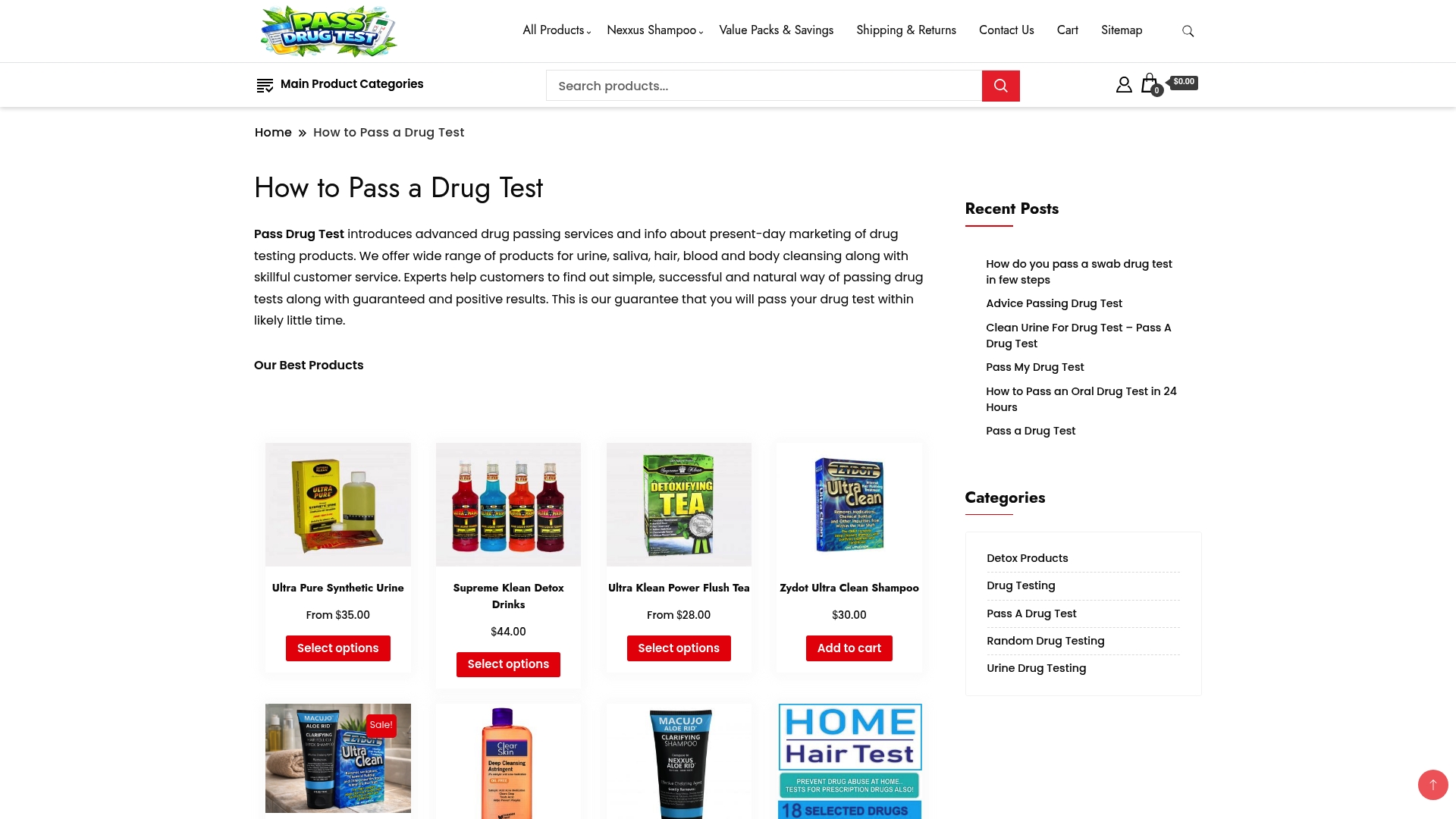
The shampoo is formulated to work alongside the acidic pre-treatment steps of the Macujo protocol, targeting the outer hair shaft and surface buildup rather than making claims about reversing incorporated drug at the molecular level. If you want the fuller picture of how detox products differ from simple cleansing shampoos, our detox versus cleansing explainer breaks down that distinction in plain language.
For readers who want a complete kit rather than piecing steps together, we also carry the Macujo Aloe Rid Shampoo paired with Zydot Ultra Clean treatment as a combined option, and a guide on running the Macujo method without Aloe Rid for those who want to understand the steps before buying anything. Whatever you decide, start by checking our hair drug testing category to see what fits your timeline and budget before your test date arrives.
Studies and guidance worth reading directly
For the biology of how amphetamine binds to hair, the controlled administration study is the clearest primary source. For lab protocol and contamination testing, the NIJ forensic overview explains decontamination steps in plain terms. For regulatory and workplace context, SAMHSA’s model drug-free workplace guidance outlines how Medical Review Officers handle prescriptions and disputed results.
Sources
- Incorporation of methamphetamine and amphetamine in human hair following controlled oral methamphetamine administration (PMC)
- NIJ: Detecting drugs in hair — incorporation vs external contamination
- Testing
FAQ
Can you detox for a hair follicle test?
No consumer detox method is scientifically proven to reliably remove amphetamine already incorporated into hair, though some chemical treatments show reductions in controlled studies. The safest path is confirming your lab’s panel and cutoff and being honest about any prescriptions during medical review.
What is the best detox shampoo for a hair follicle drug test?
Among consumer products, the Macujo Aloe Rid Shampoo is one of the most widely used options, built around the multi-step Macujo method that combines an acidic pre-treatment with repeated washing. No shampoo, including this one, can guarantee a passing result against sensitive lab confirmation methods.
Will I pass a hair follicle test if I take Adderall?
Prescription amphetamines like Adderall are detectable in hair the same way illicit amphetamine is, and concentration does not reliably indicate your actual dose. The correct step is disclosing your prescription to the Medical Review Officer rather than trying to mask it.
How long do I need to be clean to pass a hair follicle test?
There is no abstinence period that removes amphetamine already embedded in the hair segment collected for testing, since standard samples cover about 90 days of growth. Passing depends on whether drug-free growth has extended beyond the tested segment, which takes months rather than days or weeks.