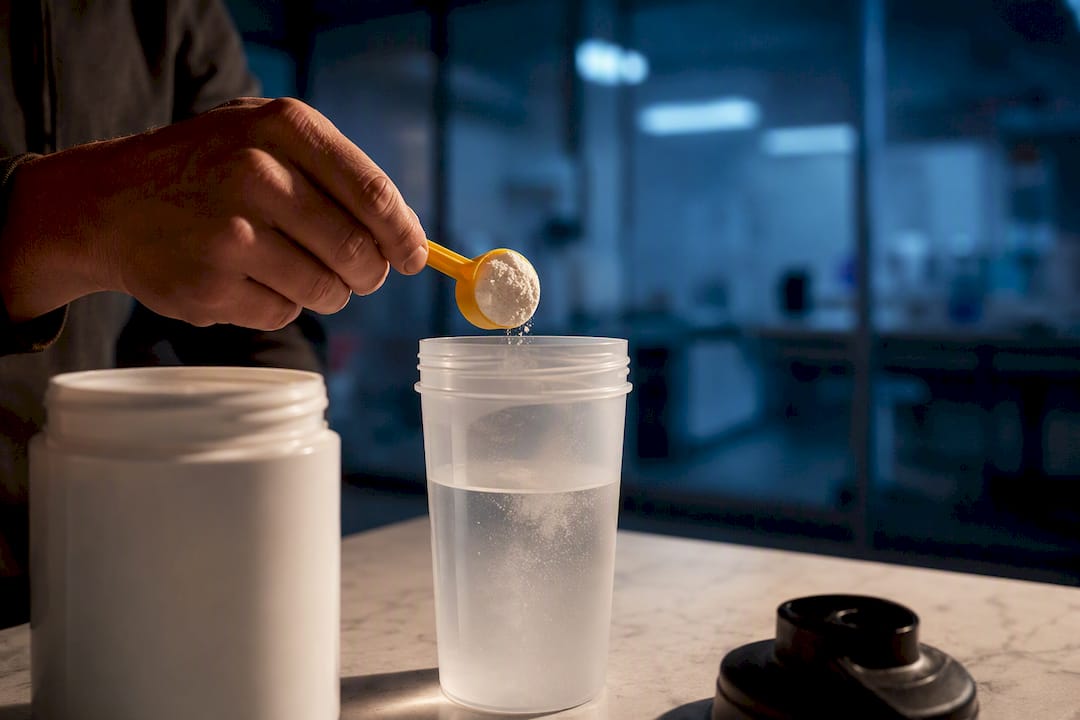

No, creatine does not cause a failed drug test. Standard urine panels screen for drug metabolites like THC, opiates, and amphetamines, not sports supplements. What creatine can do is raise your urinary creatinine level, and labs use creatinine specifically to check whether a sample has been diluted or tampered with. For most people taking a normal dose, this is a non-issue. In edge cases involving heavy water loading right before a collection, it can complicate how a lab reads specimen validity.
TL;DR:
- Creatine supplementation can temporarily increase urinary creatinine levels, potentially masking excessive urine dilution if taken in large doses shortly before testing.
- Standard drug tests do not screen for creatine itself, only for drug metabolites, while urine creatinine is used to verify specimen validity, not drug use.
- Repeated high creatinine readings above 300 to 400 mg/dL are unusual and should prompt medical review, especially if symptoms like fatigue or swelling appear.
- Most laboratories pair creatinine measurements with specific gravity to distinguish between dilution, tampering, and normal hydration, reducing false positives.
- Disclosing creatine use beforehand, maintaining normal hydration, and avoiding large doses immediately before testing can prevent ambiguous results.
Table of Contents
- Creatine vs. Creatinine: Why Labs Care About One and Not the Other
- Urine Creatinine Cutoffs: Normal, Dilute, and Substituted Explained
- The Research on Creatine and Urinary Creatinine Levels
- What To Do If You Take Creatine Before a Scheduled Urine Test
- How I Advise People Facing an Ambiguous Result
- Where PassDrugtest Fits If You Want Testing Products
- Sources
- FAQ
Creatine vs. Creatinine: Why Labs Care About One and Not the Other
Creatine and creatinine sound like the same word with a typo, but they play very different roles in your body and on a lab report. Creatine is the compound you buy in tubs and scoop into a shaker bottle, and your body also produces it naturally to fuel short bursts of muscle activity. Creatinine is the waste product left over after your muscles use creatine for energy. Your kidneys filter it out at a fairly steady rate, which is exactly why toxicologists find it so useful.
A standard drug test panel is built to catch metabolites of controlled substances, not nutritional supplements. Creatine itself never appears on a five-panel or ten-panel screen because it is not a drug of abuse and has no reason to be tested for on a standard chain-of-custody form.
Creatinine, on the other hand, shows up on almost every lab report as a specimen-validity marker. Several factors move that number around:
- Hydration status, since drinking large amounts of water dilutes everything in your urine, including creatinine.
- Muscle mass and recent exercise, both of which increase natural creatine turnover.
- Creatine supplementation, which adds more raw material for your body to convert.
- Kidney function, since impaired filtering changes how much creatinine ends up in urine versus blood.
Labs measure creatinine to confirm a sample actually came from a person’s kidneys at a normal concentration, not to detect creatine use itself.
Urine Creatinine Cutoffs: Normal, Dilute, and Substituted Explained
The DOT Part 40 specimen validity rules set the thresholds most labs in the United States follow, whether the test is federally mandated or not. A creatinine reading of 20 mg/dL or higher is classified as normal. Anywhere from 2 mg/dL up to just under 20 mg/dL gets flagged as dilute. Drop below 2 mg/dL, and the sample is classified as substituted, which federal programs treat as a refusal to test.
Labs rarely rely on creatinine alone. They pair it with specific gravity, a measure of how concentrated the urine is overall, to cross-check the reading and rule out a fluke result.
What happens next depends heavily on who ordered the test. Under DOT Part 40, a substituted result is handled like a positive, with no automatic retest offered. A dilute result that still comes back negative for drugs is typically accepted, though the medical review officer (MRO) may still document it. Non-federal employers have far more discretion. Some will order an immediate recollection under direct observation for any dilute sample, while others quietly accept it and move on. That inconsistency is exactly why disclosing supplement use ahead of time matters, since it gives the reviewer context before they have to guess at the cause.
- Negative dilute usually gets accepted, sometimes with a note in the file.
- Positive dilute still counts as a positive result for whatever drug was detected.
- Substituted results carry the same weight as a confirmed positive in DOT-regulated testing.
The Research on Creatine and Urinary Creatinine Levels
A peer-reviewed study published in Drug Testing and Analysis directly tested whether creatine supplementation could mask a diluted urine sample. Researchers gave 18 subjects a fluid load designed to dilute their urine, then measured creatinine under three conditions. Without creatine, mean urinary creatinine sat at 11.6 mg/dL, which is already inside dilute territory. With 20 grams of creatine added, that average jumped to 22.5 mg/dL, pushing the sample back into the normal range. When creatine was combined with acidified orange juice, the average climbed even further to 28.3 mg/dL.
The authors concluded that creatine ingestion can raise urinary creatinine enough to mask what would otherwise register as a heavily diluted sample, at least under the specific timing and dosing conditions they tested.
That finding matters, but it comes with real boundaries. The sample size was small at 18 subjects, the creatine dose was a concentrated 20-gram load rather than a typical daily maintenance dose of 3 to 5 grams, and the measurement window was tight at roughly two hours post-ingestion. Older laboratory work had already established the underlying principle: low creatinine paired with low osmolality can produce false negatives if a lab isn’t checking specimen validity at all. Serial creatinine values also matter more than any single number. Treatment-court guidance from the NTCRC notes that repeated readings above roughly 300 to 400 mg/dL are unusual enough to warrant a closer look, and labs that suspect creatine loading can test for creatine content directly in the specimen to distinguish supplementation from tampering.
What To Do If You Take Creatine Before a Scheduled Urine Test
You don’t need to panic before a scheduled screening just because you take creatine daily. A few practical habits reduce the odds of an ambiguous result and protect you if anything does come back flagged.
- Tell the collector or the MRO that you take a creatine supplement before the sample is collected, and note the brand, dose, and timing if asked.
- Keep hydration normal in the days leading up to the test rather than cutting fluids or loading up on water right beforehand.
- Avoid taking an unusually large creatine dose in the hours immediately before collection, since that is the scenario the research actually tested.
- If your result comes back dilute, ask what your employer’s recollection policy is rather than assuming the worst.
- Request documentation of any legitimate cause, including your supplement use, if you’re asked to explain a flagged result.
If a sample is dilute, most programs either accept a negative-dilute result outright or schedule a recollection, sometimes under direct observation to rule out further dilution attempts. A substituted result is a different situation entirely and should prompt you to talk to the MRO immediately about the circumstances.
Pro Tip: Write down your creatine dose and timing the same day you take it, especially in the week before a scheduled test. A simple note with a date beats trying to reconstruct your supplement routine after the fact.
If you notice symptoms like unusual fatigue, swelling, or changes in urination alongside a persistently high creatinine reading, that’s a signal to talk to a doctor rather than assume it’s just your supplement. The National Kidney Foundation is a solid resource for understanding what creatinine measures and when a reading outside the expected range points to something worth checking medically rather than administratively.
How I Advise People Facing an Ambiguous Result
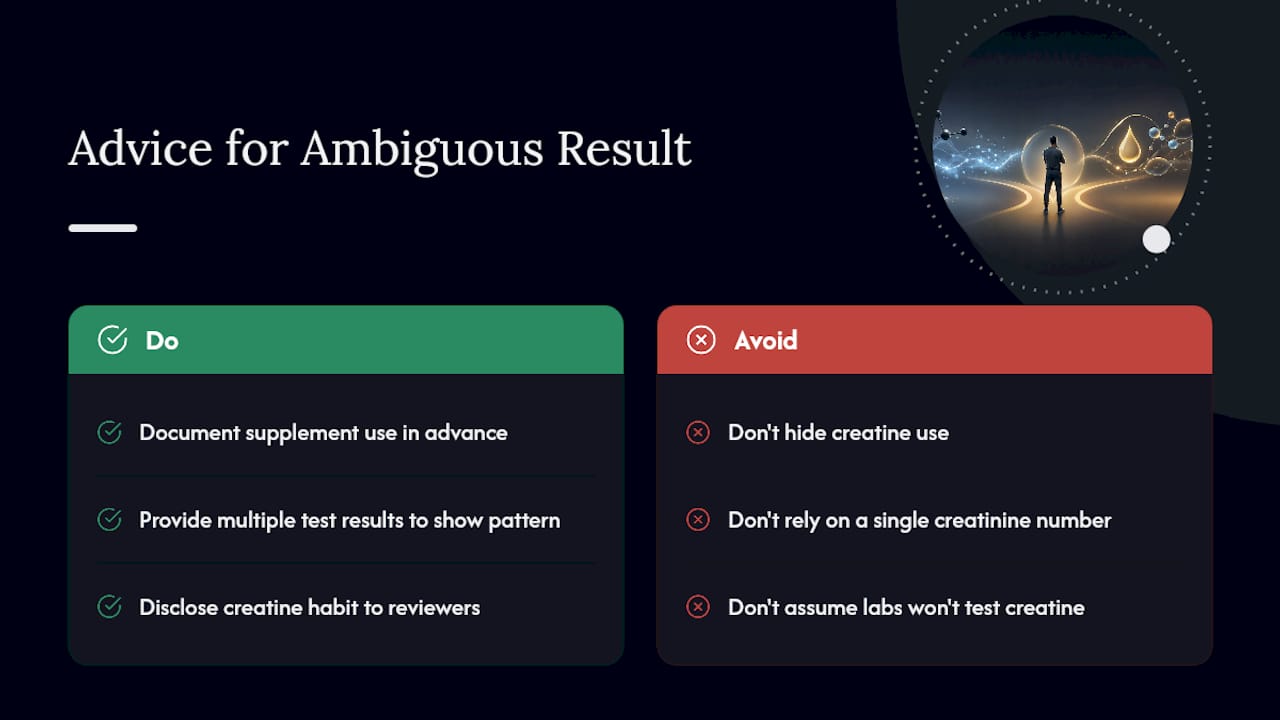
Anyone who’s spent time helping people prepare for hair and urine screenings learns the same lesson: documentation beats explanation after the fact. A single creatinine number, high or low, tells a reviewer almost nothing on its own. What convinces an MRO or a treatment court is a pattern, several results over time that stay consistent with a known supplement routine rather than one outlier that shows up right before a deadline.
I’d also push back on the instinct to hide creatine use out of fear it looks suspicious. Labs can test for creatine directly when they suspect loading, and a documented, disclosed habit reads very differently than an unexplained spike discovered after the fact.
— MIchael
Where PassDrugtest Fits If You Want Testing Products
If you’d rather understand your own results before a scheduled screening than leave anything to guesswork, Passdrugtest carries product categories built around exactly that: urine drug testing kits for checking your own status ahead of time, saliva test options for shorter detection windows, and hair-follicle detox shampoos for the far longer window that hair testing covers.
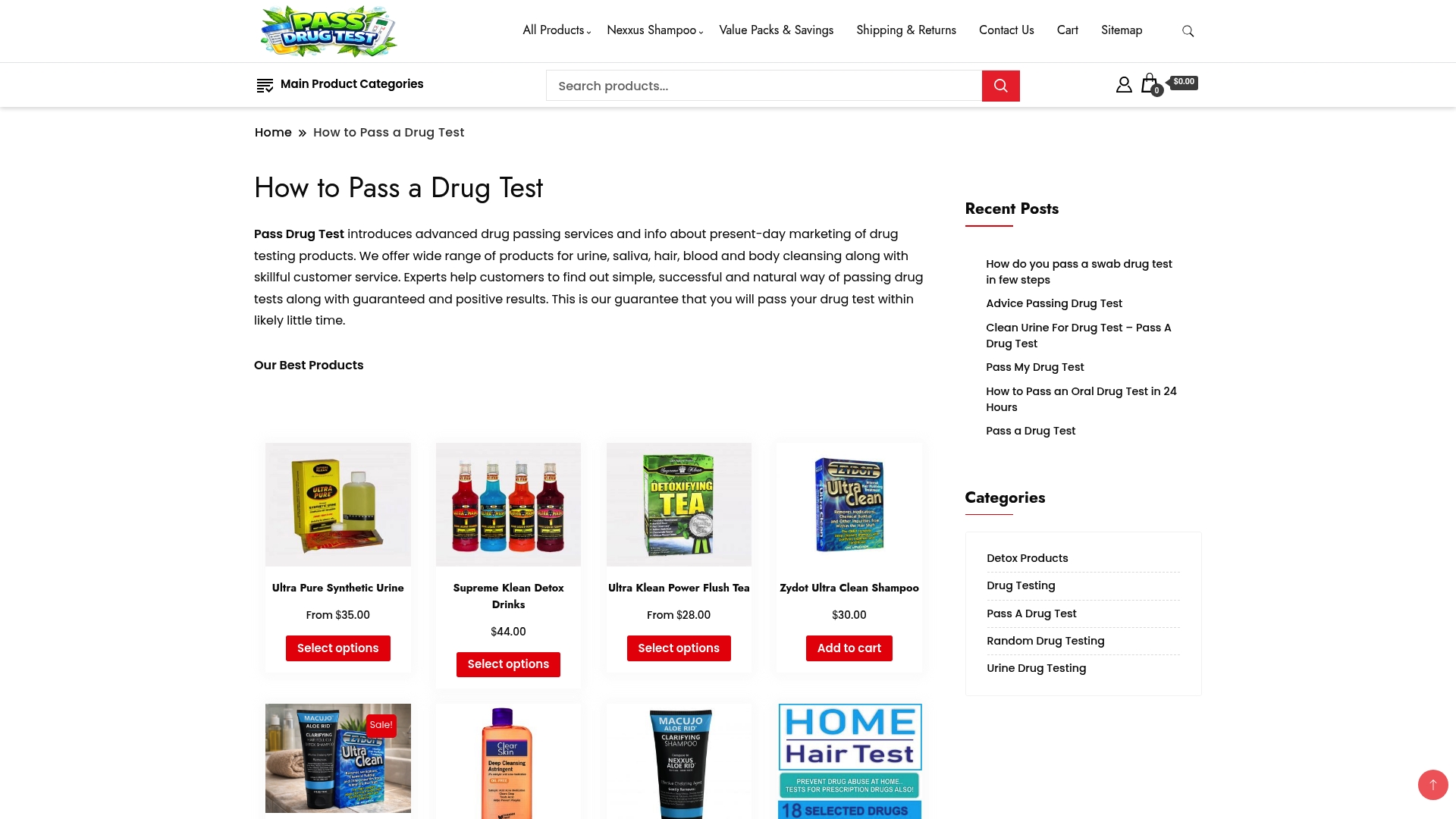
If a hair follicle test is what you’re actually facing rather than a urine screen, the calculus is different, and creatinine cutoffs won’t help you there at all. Mike Macujo’s method, built around the Macujo Aloe Rid shampoo, remains the most established approach among test-takers trying to strip residue from the hair shaft before a follicle test. Read the instructions on any product page before you buy, and steer clear of illegal or unsafe tampering methods regardless of which test you’re prepping for. Browse the urine drug testing kits and hair detox options to find what actually matches the test you have coming up.
Sources
The DOT Part 40 specimen validity rules set the official creatinine and specific gravity cutoffs cited throughout this article. The Drug Testing and Analysis study provides the peer-reviewed data on creatine and urinary creatinine. The NTCRC clinical handout offers program-level guidance on interpreting spikes, and American Screening Corp’s lab explainer breaks down how specific gravity and creatinine work together in practice.
- DOT Part 40 specimen validity testing (creatinine thresholds)
- The effect of creatine ingestion on urinary creatinine concentration: Does supplementation mask a heavy dilution? (Drug Testing and Analysis, 2021)
- Drug Testing Handout: Clients’ Use of Creatine (NTCRC)
FAQ
Does creatinine show up on a drug test?
Yes, creatinine is measured on nearly every standard urine drug test, not to detect drug use, but to confirm the sample is a valid, undiluted human specimen.
Does creatine show up as a drug on a screening panel?
No, creatine is a dietary supplement, not a controlled substance, and standard five-panel or ten-panel drug screens have no reason to test for it directly.
When should I worry about a high creatinine reading on a drug test?
A single elevated reading tied to normal creatine use is rarely a concern, but the NTCRC notes that repeated readings above roughly 300 to 400 mg/dL are unusual enough to warrant medical evaluation or further review.
How long does it take for creatine to raise urinary creatinine?
In the controlled study that tested this directly, a single 20-gram dose measurably raised urinary creatinine within about two hours, though daily maintenance doses of 3 to 5 grams work on a slower, steadier timeline.
Can Passdrugtest help me figure out which test I’m facing?
Yes, Passdrugtest’s urine, saliva, and hair-follicle product pages each explain detection windows and preparation options specific to that test type.