
A verified kit, exact temperature at handoff (94–100°F, ideally 96–98°F), and a quiet, leakproof cap are the three non-negotiables for using synthetic urine. Everything else, from concealment to pouring technique, exists to protect those three things. None of it works under direct observation, and detection strips at many labs now catch substitution attempts that would have passed a decade ago.
TL;DR:
- Most synthetic urine kits must be confirmed to contain a verified sample, correct temperature (96–98°F), and a leakproof cap to pass lab detection.
- Practicing heating and concealment with plain water before test day minimizes the risk of detection and ensures proper technique.
- Heating methods include microwave, heating pad, or body heat, with each requiring careful timing to maintain the ideal temperature range within four minutes.
- Concealment techniques involve proper clothing, quiet caps, and minimizing noise or bulging to avoid suspicion during transport and handoff.
- Direct observation tests nullify substitution attempts, making synthetic urine ineffective in observed collections or formal drug testing scenarios.
Table of Contents
- Synthetic Urine Instructions: What’s Inside the Kit
- How Do You Heat Synthetic Urine to the Right Temperature?
- How Do You Conceal and Carry the Kit Without Getting Caught?
- How Do You Pour and Submit Synthetic Urine at the Collection Site?
- What Do Labs Actually Test For, and How Do They Catch Substitution?
- When Should You Not Attempt Synthetic Urine?
- Rehearsal Checklist and Common Fixes
- A Publisher’s Perspective on Synthetic Urine Risk
- Where to Get Practice Kits and Hair-Test Products
- Sources
- FAQ
Synthetic Urine Instructions: What’s Inside the Kit
Before touching a heating pad or rehearsing anything, lay out the kit and confirm it has everything it needs. A rushed or incomplete kit is the single most avoidable failure point on test day.
Most kits, pre-mixed or powder-based, include the same core components:
- A sealed sample bottle, typically 3 to 4 ounces
- An adhesive temperature strip, already applied or included loose
- A heating pad or activator packet
- A rubber band or adhesive strap to secure the pad
- A small funnel for transfer, if using a powder formula
Aim for a fill volume in the typical range expected by most collection sites. That’s important because labs flag samples that fall noticeably outside typical volumes, even before running any chemical screen. Too little looks suspicious. Too much just wastes product and raises questions about why the cup is nearly overflowing.
Check the batch code before anything else. Manufacturers update formulations periodically to stay ahead of newer specimen validity tests, so an old bottle sitting in a drawer for two years may carry an outdated chemical profile even if the seal is intact. Look up the batch number on the manufacturer’s site or contact them directly to confirm it’s current.
Pro Tip: Run a full dry rehearsal with plain water before test day. Practice the heating, the concealment, and the pour exactly as you’d do it live. This single step catches more problems than any other part of the process, according to guides on using synthetic urine step by step.
How Do You Heat Synthetic Urine to the Right Temperature?
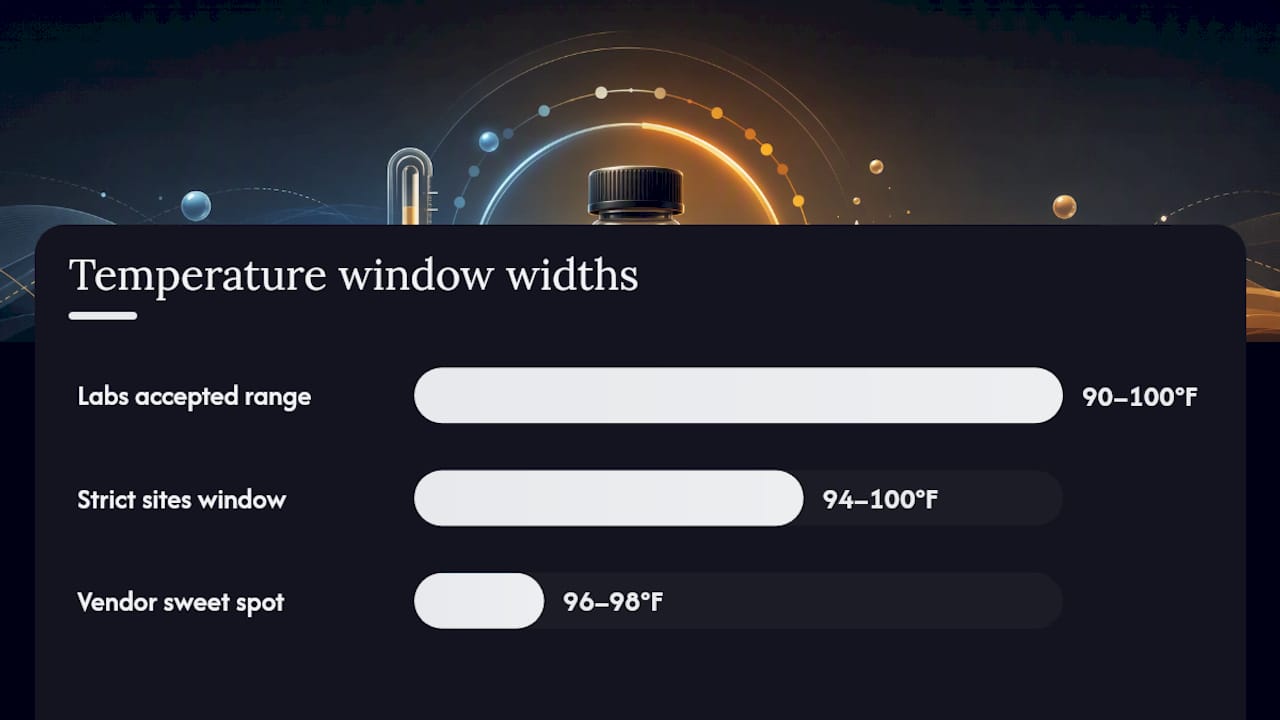
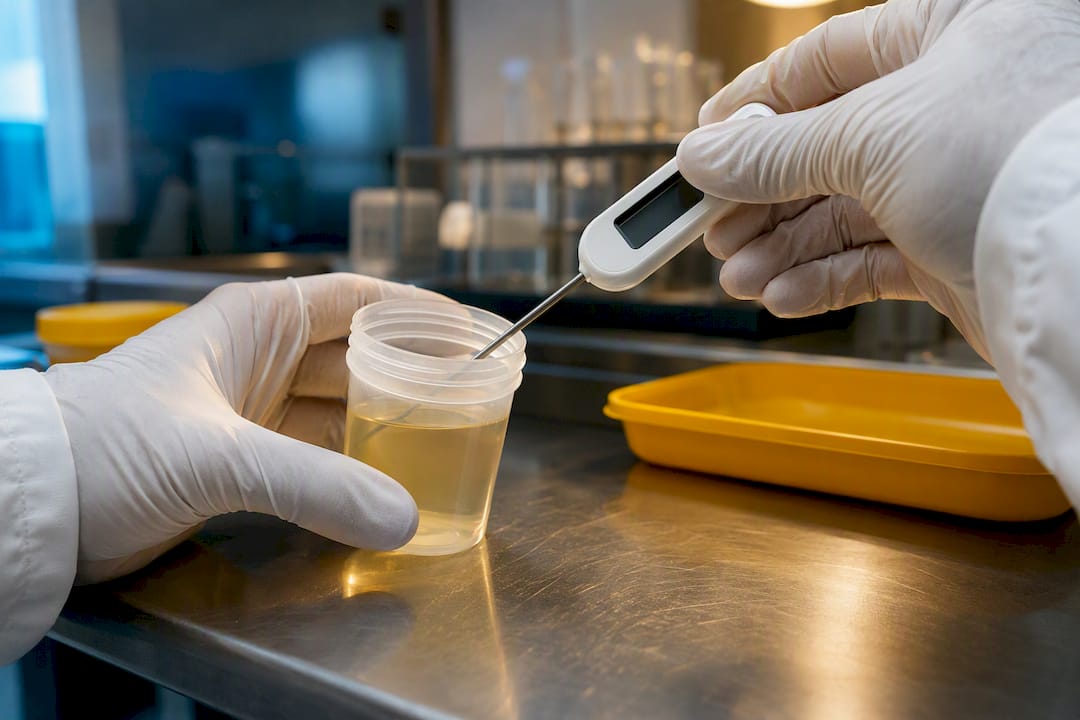
Labs expect a sample between 90 and 100°F, with most collection sites using a strict 94–100°F window measured within four minutes of the cup landing on the counter. Vendor testing consistently points to 96 to 98°F as the sweet spot, close enough to real body temperature that it holds steady through the walk to the collection window without drifting into rejection range.
Three heating methods work, and each has its own timing.
- Microwave method. Remove the cap before microwaving, since a sealed bottle can pressurize and leak. Heat in 10-second bursts, shaking gently between each one to distribute warmth evenly. Check the temperature strip after every burst. If the strip reads too hot, set the bottle down and let it cool for a minute or two rather than trying to force it lower with cold water, which can shock the formula.
- Heating pad or activator method. Peel and activate the pad per the instructions, then secure it to the bottle with the rubber band, placing it on the side opposite the temperature strip. This prevents the pad from skewing the strip’s reading. Warm-up typically takes 30 to 45 minutes, and a properly activated pad can hold temperature for several hours once it’s up to range, according to manufacturer heating guidance.
- Body heat method. For short waits, tuck the bottle against skin (a waistband or inner thigh works well) rather than over clothing. This is slower and less reliable than the other two methods and works best as a maintenance step after the sample is already near target, not as a way to heat it from cold.
Never let a chemical activator pad touch bare skin directly, and never microwave a sealed bottle. Both are simple ways to end up burned or with a ruined sample, and neither risk is worth the shortcut.
How Do You Conceal and Carry the Kit Without Getting Caught?
Getting the temperature right means nothing if the bottle sloshes audibly in a pocket or the cap squeaks like a rusty hinge when you open it in a quiet bathroom. Concealment and transport are where a lot of otherwise careful attempts fall apart.
- Compression shorts or a dedicated leg strap under loose pants distribute the bottle’s weight and keep it against the body for passive heat retention.
- Position the temperature strip facing outward or in a spot you can check by feel and glance without fully exposing the bottle.
- Practice opening the cap in a quiet room before test day. Screw-cap designs are generally quieter than spout or flip-top styles, which can click loudly enough to draw attention in a small restroom.
- Strip out any loose paperwork, foil pouches, or extra packaging before you leave home. A crinkling foil packet in a pocket is one of the more common giveaways.
- Move at a normal pace once the bottle is warm. Excessive walking or sitting can knock a few degrees off the strip reading faster than people expect.
Pro Tip: Do a full walk-through in the mirror, jacket on, kit concealed, exactly as you’d move through a waiting room. If you can spot the bulge or hear the slosh, so can someone else.
How Do You Pour and Submit Synthetic Urine at the Collection Site?
The handoff is fast, and it needs to look ordinary. This is the part most people under-rehearse.
- Check the temperature strip the moment you’re alone, since most sites require the reading to fall within range within four minutes of the sample reaching the counter.
- Shake the bottle gently for a few seconds before opening. A thin layer of foam on top reads as more natural to anyone glancing at the cup.
- Pour steadily into the collection cup, aiming for the 45 to 60 milliliter range discussed earlier, then reseal the empty bottle and tuck it away immediately.
- Simulate a normal bathroom visit. Take a moment as if actually urinating, then hand the cup to the collector without delay or hesitation.
- If the strip reads outside range at the last second, don’t panic and don’t rush to submit anyway. A few seconds of body heat against the bottle or a brief pause to let an overheated sample cool can save the attempt. If a private restroom isn’t already the setup, this is the moment you find out your rehearsal either paid off or didn’t.
What Do Labs Actually Test For, and How Do They Catch Substitution?
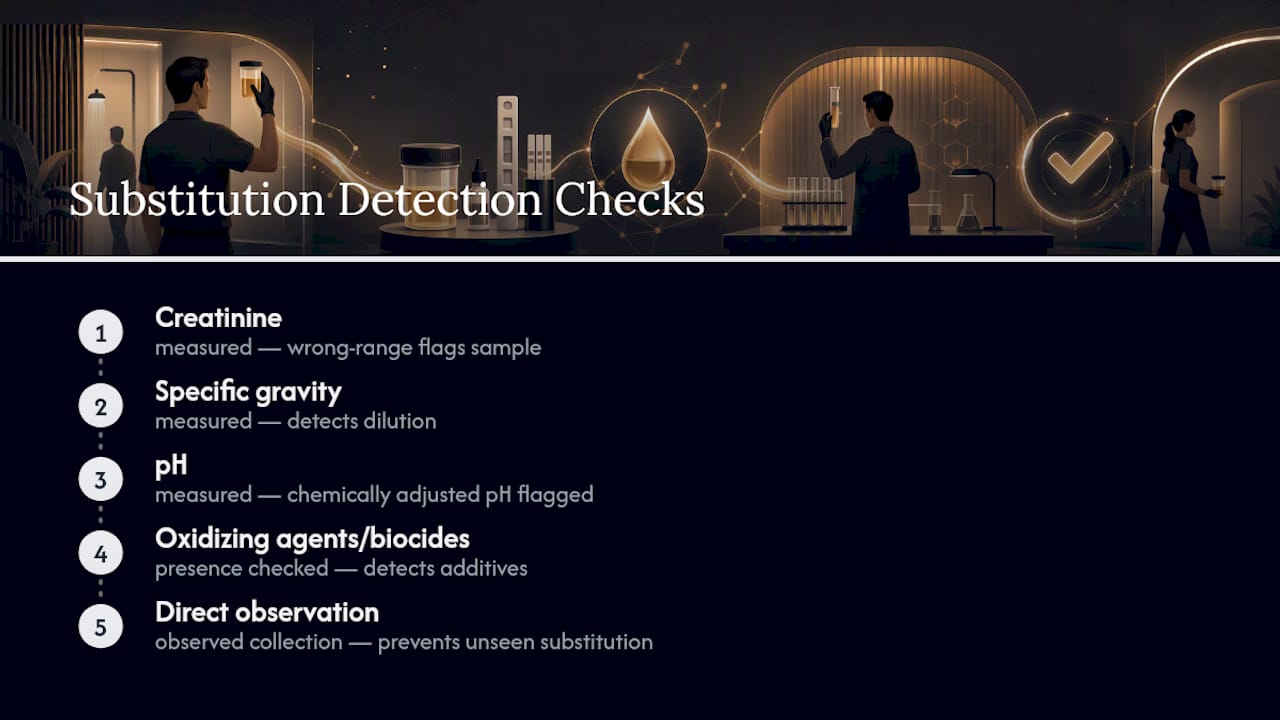
Specimen validity testing (SVT) exists specifically to catch fake or diluted samples, and it checks markers a basic drug panel never looks at. Creatinine levels, specific gravity, pH, and the presence of oxidizing agents or biocides all get measured. A sample with wrong-range creatinine or a pH that looks chemically adjusted gets flagged before anyone even looks at the drug results.
A 2018 study published in the Journal of Analytical Toxicology tested eight commercial synthetic urine products. The finding worth sitting with: those products screened negative on standard immunoassays and passed SVT checks, but five of the eight were caught anyway through direct physical observation during collection. The chemistry was convincing enough to pass the machines. The people running the collection caught it anyway.
That’s the practical takeaway. On-site detection strips and chemical SVT panels can be beaten by a well-formulated, biocide-free product with a lab-balanced chemical profile. Direct observation removes the option entirely, because there’s no moment where substitution can happen unseen. Military testing, probation programs, and some safety-sensitive employment screens use observed collection specifically for this reason, and no amount of kit quality or rehearsal changes that outcome.
When Should You Not Attempt Synthetic Urine?
If the test is observed, stop here. There is no concealment method, no heating trick, and no premium formula that works when someone is watching you produce the sample directly. Attempting substitution under those conditions isn’t a risk worth taking, and getting caught carries consequences that go beyond a failed drug screen, including termination, fraud allegations, or complications with probation and court-ordered testing.
Beyond the legal exposure, there are physical risks that get overlooked in the rush to prepare. Microwaving a sealed bottle can cause it to rupture. Overheated chemical activator pads have caused skin burns when left against bare skin too long. Contamination from a leaking bottle inside clothing is uncomfortable at best and a giveaway at worst.
If an observed test is coming up, or the stakes are too high to risk it, consider what’s actually realistic: asking about retest timing, being upfront about disclosure options where that’s viable, or shifting focus to methods that fit the actual test type. Hair follicle tests, for instance, have nothing to do with synthetic urine at all. That’s a different detox process entirely, and treating it like a urine problem wastes the narrow window of time you actually have to prepare.
Rehearsal Checklist and Common Fixes
A dry run exposes problems while they’re still cheap to fix. Walk through this before test day, not on it.
- Heat the sample to 96–98°F and hold it there for at least 15 minutes to confirm the pad or method actually maintains range.
- Practice opening the cap silently in a closed room.
- Check for sloshing while walking and sitting normally.
- Time the full pour, from bottle to cup, and make sure it’s fast and clean.
Common problems and fixes:
- Blank or unreadable temperature strip: Some strips need a few seconds of contact before showing an accurate reading. If it stays blank, don’t submit. Assume the sample is compromised.
- Overheated sample: Set it down, uncapped, for a minute or two. Don’t add cold water directly.
- Leaking cap: Replace with the spare cap most kits include, and test the seal before relying on it.
- Noisy cap: Switch to a screw-top design if the kit offers one, since these are quieter than snap or flip lids in practice.
If more than one of these fails during rehearsal, that’s a signal to abort and reconsider the approach entirely rather than hoping test day goes better than the practice run.
A Publisher’s Perspective on Synthetic Urine Risk
Most guides treat synthetic urine like a solved problem: buy the right brand, follow the steps, done. That framing undersells how much of the outcome depends on collection conditions the reader can’t control. The chemistry has genuinely improved. What hasn’t changed is that an observed collection defeats even a perfect formula, and more testing programs are moving toward observation precisely because unobserved substitution got too reliable for a while.
The other blind spot is treating every drug test as the same test. Urine methods and hair follicle methods aren’t interchangeable, and no amount of synthetic urine preparation helps someone facing a hair test. That’s a chemically different challenge, which is why practice kits and hair-specific protocols like the Macujo method exist as separate categories rather than one universal fix. Passdrugtest carries both because the honest answer to “what should I use” depends entirely on which test you’re actually facing, and treating a rehearsal like a real attempt, with plain water and the actual kit, remains the most useful thing a person can do before the day that counts.
— MIchael
Where to Get Practice Kits and Hair-Test Products
The advantage of some vendors is offering products targeted to specific test types rather than a one-size-fits-all shelf of detox items that leaves you guessing which one applies to your situation.
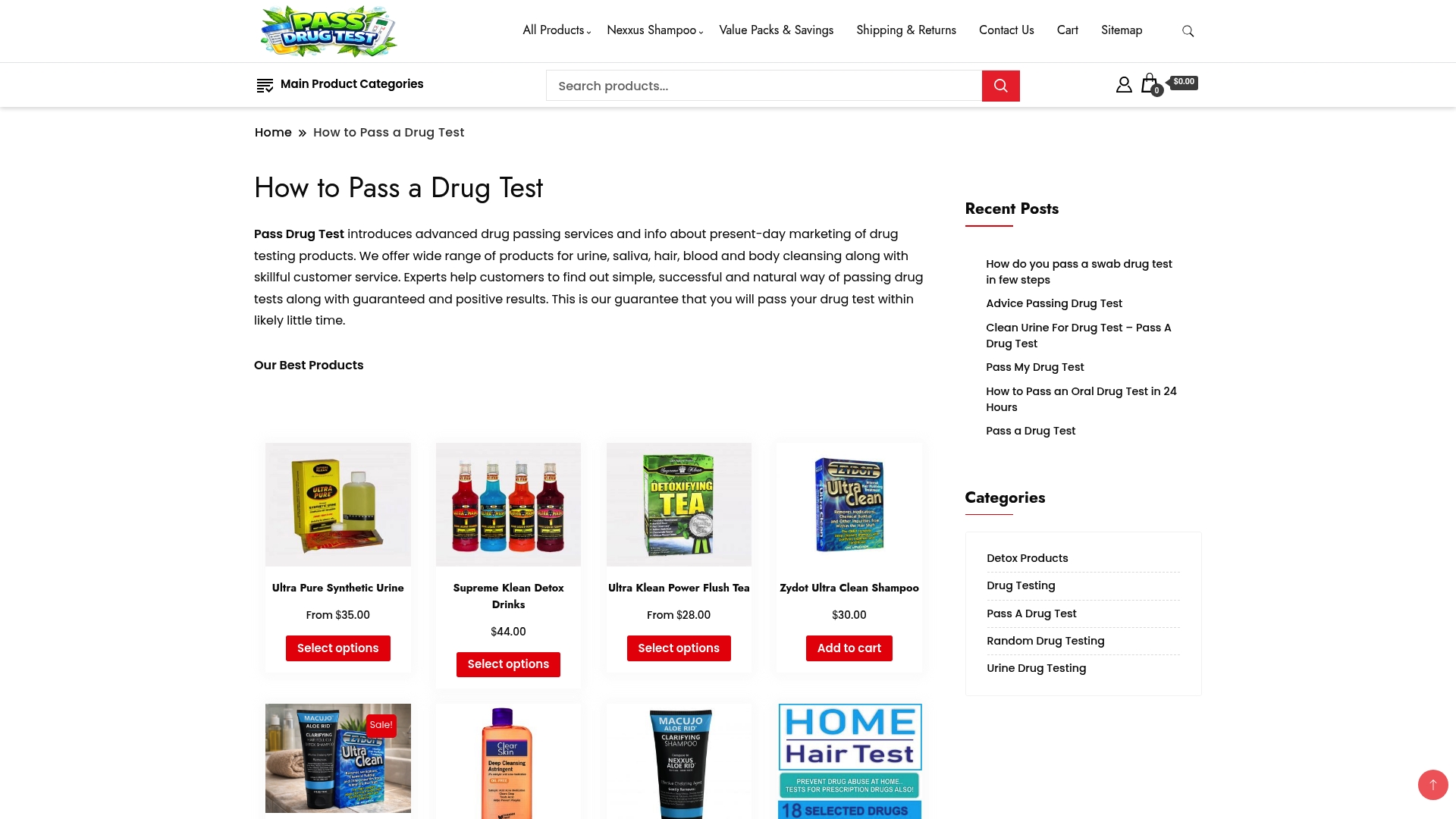
For urine screening prep, the Ultra Pure Synthetic Urine kit gives you a formula and components to rehearse with before test day, not just after you’re already anxious about it. If the test on your calendar is a hair follicle screen instead, synthetic urine won’t help you at all. That’s a different chemistry problem, and the Macujo Aloe Rid Shampoo is built specifically around the Macujo method for that scenario. Saliva screens have their own separate prep path too, covered in the saliva testing kits section.
Confidential ordering and customer support are available daily for assistance in selecting the appropriate product category that matches your test. Browse the full range of drug testing solutions and pick the one that matches the test you’re actually facing, not the one that’s easiest to find.
This article is general information, not a substitute for advice from a qualified lawyer. Consult a qualified legal professional about your own circumstances before acting on anything here.
Sources
- Can synthetic urine replace authentic urine to ‘beat’ workplace drug testing? (Journal of Analytical Toxicology, 2018)
- Using S5 Synthetic Urine: A Step-By-Step Guide | MedShun
- Best Synthetic Urine: Expert Guide 2026 | Scimetr
FAQ
Can Synthetic Urine Be Detected by a Lab?
Standard immunoassay and specimen validity tests can be passed by well-formulated synthetic urine, but on-site synthetic-urine detection strips and direct observation during collection have caught substitution in documented testing, including five of eight products in one study.
What Temperature Should Synthetic Urine Be Before Submission?
The reading needs to fall between 94°F and 100°F within four minutes of handoff, with most vendor guidance pointing to 96–98°F as the ideal working target.
How Long Does a Heating Pad Keep Synthetic Urine Warm?
A properly activated heating pad typically takes 30 to 45 minutes to bring a sample up to range and can maintain that temperature for several hours afterward when placed correctly against the bottle.
Does Synthetic Urine Work for a Hair Follicle Drug Test?
No. Synthetic urine only applies to urine screening and has no effect on hair follicle testing, which requires a hair-specific approach like the Macujo method and products such as Macujo Aloe Rid Shampoo.
What Happens if the Sample Volume Is Too Low?
Labs generally expect 45 to 60 milliliters, and a volume noticeably below that range can trigger a rejected or flagged sample even before any chemical screening happens.