


No proven method flushes THC from your blood on demand. There is no rapid detox drink, pill, or sauna routine backed by real evidence that clears cannabinoids from your bloodstream faster than your liver already does. The one strategy with any track record is abstinence combined with time. In the days immediately before a scheduled blood draw, skip hard exercise, keep your hydration normal rather than excessive, and stop cannabis use as soon as you know a test is coming.
TL;DR:
- Abstinence and time remain the only proven methods to reduce THC levels in blood, with active THC clearing faster in occasional users.
- Intensive exercise can temporarily increase blood THC levels in regular users by releasing stored cannabinoids, potentially worsening test results.
- Detox drinks, diuretics, and sweating methods lack scientific support and may pose health risks, making them ineffective options for clearing THC.
- THC detection depends on whether tests measure active THC or its metabolites, which can linger in fat tissue for days or weeks, especially in long-term users.
- Planning and timing, supported by disclosure of medications and realistic estimates based on usage patterns, are the most reliable strategies for passing blood tests.
Table of Contents
- Practical Checklist for the 24 to 72 Hours Before a Blood Test
- How Do Blood Tests Detect THC?
- How Long Does THC Stay in Blood, and What Changes That Timeline?
- Detox Drinks, Saunas, and Exercise: What the Evidence Actually Shows
- What Actually Helps Before a THC Blood Test
- The Research and Guidance Behind This Guide
- An Honest Note From the Publisher
- Where PassDrugTest Fits Into Blood Test Preparation
- Sources
Practical Checklist for the 24 to 72 Hours Before a Blood Test
The window right before a blood draw is not the time to experiment. It’s the time to stop making things worse and let your body do what it already does well: metabolize and clear THC on its own schedule. Here’s the order of operations that actually matters.
- Stop cannabis use the moment you learn about the test. Every hour without new intake is an hour your liver spends breaking down existing THC instead of processing fresh cannabinoids.
- Skip vigorous exercise for 24 to 48 hours beforehand. Intense workouts mobilize fat stores, and research on fat-stored cannabinoids shows this can temporarily raise plasma THC in people who use regularly, the opposite of what you want right before a draw.
- Hydrate at a normal, steady level. Support your kidneys and liver with regular water intake, but don’t chug excessive fluids hoping to dilute your blood. Blood tests aren’t as dilution-sensitive as urine tests, and overhydration mainly just sends you to the bathroom more.
- Don’t build your plan around detox drinks or diuretics. Neither has consistent evidence behind it for blood specimens, and leaning on them instead of abstinence wastes the only window you have.
- Get your paperwork and disclosures in order. Bring a list of current prescriptions and ask the testing authority which analyte they’re screening for and what cutoff applies. That single conversation can shape how you interpret your own risk.
Pro Tip: If you have any flexibility in scheduling, ask whether the draw can be pushed back by even a few days. For occasional users, that short delay can matter more than anything you’d buy off a shelf.
How Do Blood Tests Detect THC?
Blood panels typically look for one of two things: active delta-9 THC or its inactive metabolite, THC-COOH. That distinction changes everything about what a result actually means.
Delta-9 THC is the compound responsible for the high, and it clears from blood relatively fast, often within hours to a couple of days for occasional users. THC-COOH, the metabolite your liver produces as it breaks THC down, lingers longer and gets stored in fat tissue before slowly releasing back into circulation. This is why clinical reviews of cannabinoid detection point out that a panel measuring active THC versus one measuring metabolites can produce very different pictures of the same person’s recent use.
Fat storage and redistribution are the real wildcards. THC is lipophilic, meaning it binds to fat cells rather than dissolving in blood plasma the way alcohol does. In people with higher body fat or a history of chronic use, THC can slowly leach back out of fat stores over days or weeks, which is part of why:
- A single, low-dose use might clear from blood in under 24 hours
- Regular use over weeks can leave detectable metabolite levels for several days after stopping
- Heavy, long-term use can occasionally produce low-level detectable results well beyond a week
Labs also vary in assay sensitivity, and cutoff levels aren’t standardized across every testing program. A result that reads “positive” at one lab’s cutoff might read “negative” at a more conservative threshold, which is exactly why asking about the specific analyte and cutoff matters as much as anything you do to prepare.
How Long Does THC Stay in Blood, and What Changes That Timeline?
There’s no single number that applies to everyone, and anyone promising one is oversimplifying. What you can do is estimate a range based on your own usage pattern, then build in a safety margin.
For a one-time or occasional user, active THC and its metabolites tend to clear from blood within a short period. Someone who uses a few times a week might have detectable levels for several days after their last use. Chronic, heavy users, with daily or near-daily use over weeks or months, can show detectable levels for about a week or longer, and in some cases longer, because of how much THC has accumulated in fat tissue. WebMD’s breakdown of detection windows frames blood as generally shorter-detection than urine for occasional users, but that gap narrows or even reverses in chronic, heavy-use cases.
Several individual factors push that timeline in either direction:
- Dose and potency. Higher-THC products and larger amounts per session mean more compound to clear.
- Frequency of use. Daily use builds up a reservoir in fat tissue that occasional use never creates.
- Route of administration. Edibles metabolize differently than smoked or vaped cannabis, sometimes extending detectable windows.
- Body fat percentage. More fat tissue means more storage capacity for lipophilic THC, and slower, more gradual release back into blood.
- Metabolic rate and liver function. A faster metabolism and healthy liver process THC-COOH more efficiently; impaired liver function slows that process down.
- Assay sensitivity. Some labs can detect metabolite concentrations far lower than others, which changes what counts as “detectable” in the first place.
Context matters too. Blood testing shows up most often in situations tied to recent use, like DUI or impairment evaluations, where the goal is assessing whether someone used recently rather than screening for any history of use the way some employment tests do. If your test is tied to a specific incident or timeframe, that context should factor into how you think about your own risk window.
Detox Drinks, Saunas, and Exercise: What the Evidence Actually Shows
Most of what circulates online about “flushing” THC from blood doesn’t hold up once you look at the actual research behind it. Here’s where the popular claims fall apart.
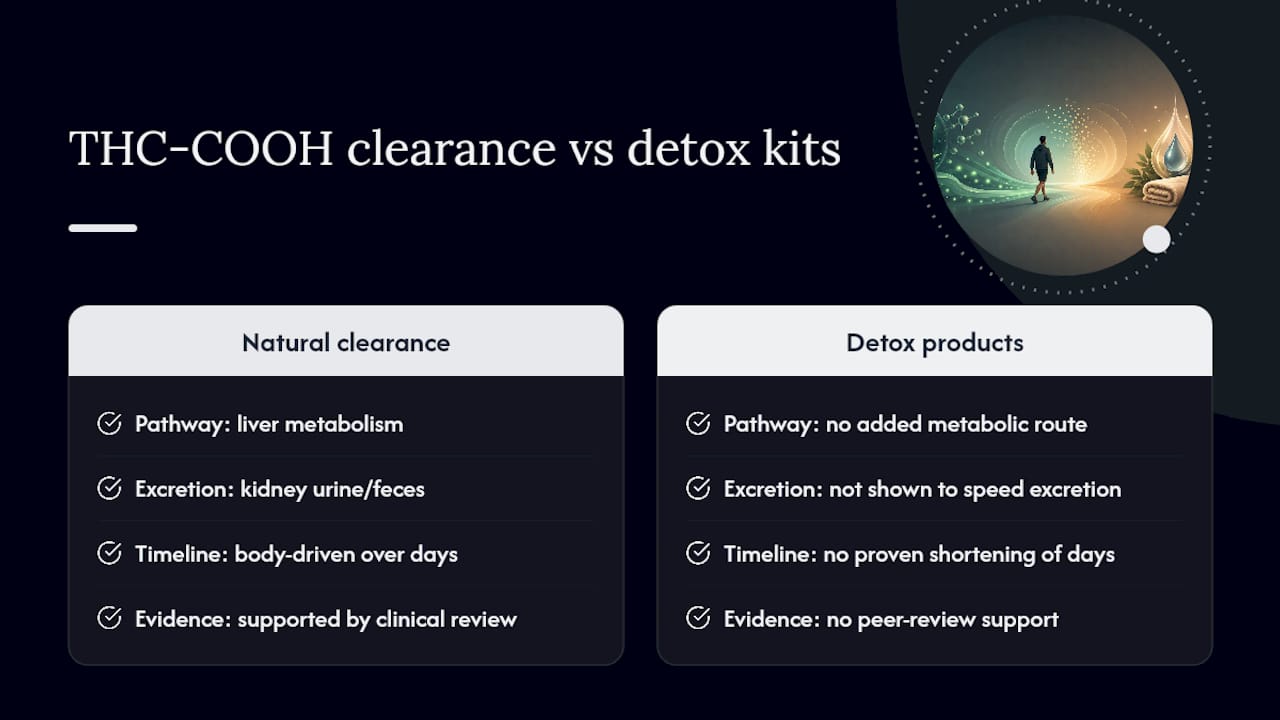
Detox drinks and rapid-cleanse kits. There’s no peer-reviewed evidence that these products speed up how your body physiologically clears THC. Columbia University’s health service reviewed the claims and found that your body eliminates THC-COOH through liver metabolism and kidney excretion on its own timeline, a process these products don’t meaningfully accelerate.
Exercise right before testing. This one is counterintuitive. A controlled study on fat-stored cannabinoids found that exercise can temporarily raise plasma THC levels in regular users by releasing stored cannabinoids from fat tissue, without evidence that it speeds up net elimination. Working out hard the morning of your test could actually push your number up, not down.
Saunas and heavy sweating. The theory that sweating pulls THC out through the skin isn’t supported by anything beyond speculation and marketing copy.
Diuretics and last-minute overhydration. These target dilution, which is more of a urine-test concern, and clinical lab guidance notes that labs routinely check for dilution and tampering regardless of specimen type.
Detoxes and cleanses in general remain largely unsupported by clinical evidence, and authoritative health guidance from NCCIH warns that many unregulated products carry real health risks alongside their unproven claims.
Beyond the lack of efficacy, there’s a real safety cost. Aggressive diuretic use can trigger electrolyte imbalances and dehydration, and attempting to tamper with a sample carries legal exposure on top of the health risk. None of that trade-off is worth it for a strategy that doesn’t reliably work in the first place.
What Actually Helps Before a THC Blood Test
Time is the one variable that consistently works, and everything else in this section exists to support that process rather than replace it.
- Stop use immediately and calculate your realistic window. For occasional users, one to two days of abstinence before a blood draw meaningfully reduces active THC levels. For regular or chronic users, plan for a week or longer, and understand that heavier, longer-term use can push that timeline further out with real variability from person to person.
- Support normal liver and kidney function. A balanced diet, adequate sleep, and avoiding alcohol give your body’s natural clearance systems the best conditions to work efficiently. None of this speeds up elimination beyond your baseline rate, but it also doesn’t slow it down the way poor sleep, dehydration, or heavy drinking can.
- Keep exercise moderate and timed well in advance. Steady, moderate activity earlier in your abstinence window is fine. Save any hard training sessions for well before the test window, not the day of, given the redistribution effect covered above.
- Disclose prescriptions and ask about the analyte being tested. Some medications can affect metabolism or interact with lab interpretations. Knowing whether the panel screens for active THC or THC-COOH, and what cutoff applies, tells you what you’re actually up against.
- Consider rescheduling if the stakes and timeline don’t line up. If you’re a regular user facing a test in 48 hours, that’s often not enough time regardless of what you do. A honest conversation with the testing authority about rescheduling can be more useful than any product on a shelf.
Pro Tip: Track your last use date and typical frequency honestly before you estimate your risk. People routinely underestimate how long metabolites persist after regular use, and that miscalculation is the single most common reason people get caught off guard by a result.
If you’re also facing a hair test alongside or instead of a blood screen, the physiology is different enough that it deserves separate planning. Passdrugtest’s guide on how the body clears cannabis metabolites from hair walks through that distinct process, and for readers weighing detox drinks generally, this breakdown of what detox drinks can and can’t do covers the product category in more depth than fits here.
The Research and Guidance Behind This Guide
This guide leans on a small set of sources that actually hold up: peer-reviewed pharmacology research, not marketing claims dressed up as science.
- A controlled study on exercise and fat-stored cannabinoids found short-term increases in plasma THC after exercise in regular users, with no evidence of faster overall clearance.
- Columbia University’s Go Ask Alice health service reviewed detox kit claims and found no support for accelerated physiological elimination.
- NCCIH’s consumer guidance on detoxes and cleanses cautions that many products in this category are unregulated and unsupported by clinical evidence.
- Clinical laboratory resources from AACC’s Clinical Laboratory News explain how labs detect dilution and tampering across specimen types.
The honest limit of this evidence base: individual variability in metabolism, body composition, and use history means no source offers a precise, personal detection number. Ranges and averages are the best any of us can offer.
An Honest Note From the Publisher
Passdrugtest sells detox products, and I won’t pretend otherwise. But I also won’t tell you a shampoo or a drink guarantees a passed blood test, because that claim isn’t true and you deserve better than marketing dressed up as science.
The best advice in this entire guide is the least exciting: stop use, give it time, and don’t gamble your outcome on an unproven shortcut. Products can play a supportive role, particularly for hair and urine testing where the physiology is different. For anything high stakes, especially legal or employment consequences, talk to a clinician who knows your specific situation. Browse our product pages with that context in mind, not as a substitute for it.
— MIchael
Where PassDrugTest Fits Into Blood Test Preparation
If you’ve read this far, you already know blood testing doesn’t respond to the same tricks people use for urine screens, and that’s exactly why honesty about product limits matters more here than anywhere else in this category.
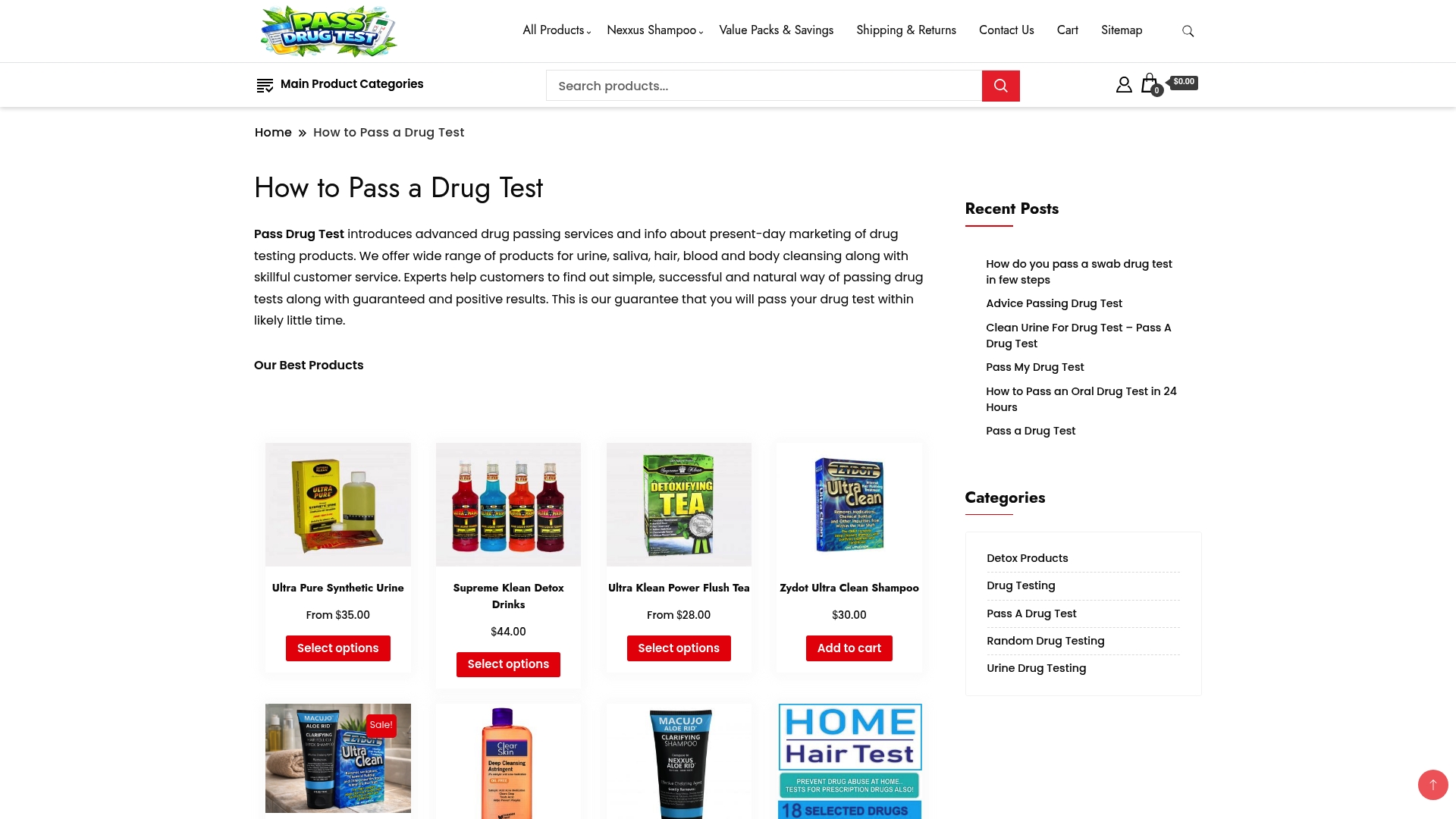
Passdrugtest’s detox product line is built around whole-body cleansing support, hair follicle shampoos, and home test kits, tools designed to complement the abstinence timeline covered above, not replace it. Our whole-body cleansing kits support your system during an abstinence window rather than promising an instant reversal, and they’re built for people who want every reasonable advantage stacked in their favor, not a shortcut around the biology. If your test is a hair follicle screen rather than blood, that’s a different mechanism entirely, and it’s where our flagship Macujo Aloe Rid Shampoo and the broader Macujo Method have built their reputation as one of the most trusted approaches for hair test prep. For blood-specific concerns, the most honest next step is browsing our detox product catalog with realistic expectations, and pairing whatever you choose with the timing strategy this guide already laid out.
Sources
- Can Physical Exercise or Food Deprivation Cause Release of Fat-Stored Cannabinoids? | PMC
- Do drug detox kits work? | Columbia University (Go Ask Alice)
- Detoxes and cleanses: What you need to know | NCCIH
- How Long Does Weed Stay in Your System? | WebMD