

Same-day hair detox can lower drug metabolite concentrations in the outer hair shaft, but it cannot erase months of buildup inside the cortex, and no method guarantees a negative result. Specialized shampoos and layered wash routines have measurably reduced THC levels in lab testing, which is why a product-driven approach beats improvising with kitchen ingredients. If you’re facing a test in hours, the most realistic path is a proven routine like the one built around Macujo Aloe Rid Shampoo, paired with verification through Passdrugtest before you walk into the lab.
TL;DR:
- Same-day detox routines primarily target the newest hair growth near the scalp and cannot remove drug buildup deeper in the cortex, making them ineffective for long-term use.
- Commercial detox shampoos can reduce THC levels by around 52% to 65%, but this may not be enough to pass a test if initial concentrations are high.
- A proven routine involving Macujo Aloe Rid Shampoo, applied correctly in a 60 to 90-minute process, enhances the chance of lowering drug metabolites near detection thresholds.
- Repeated chemical treatments like bleaching in one day damage hair and increase the risk of detection for tampering, prompting stricter lab scrutiny.
- For heavy or long-term drug use, rescheduling, testing alternative matrices, or authentic self-testing offers more reliable options than aggressive short-term detox methods.
Table of Contents
- What Same-Day Hair Detox Can and Can’t Do
- What Does the Research Say About Detox Shampoos?
- Your Same-Day Hair Detox Routine, Step by Step
- Risks, Hair Damage, and Red Flags Labs Look For
- When Same-Day Isn’t Enough: Other Options to Consider
- Why We Recommend the Macujo Approach for Urgent Situations
- Get Ready for Today’s Test With the Right Kit
- Sources
What Same-Day Hair Detox Can and Can’t Do
Hair grows roughly 1 centimeter per month, and standard hair follicle tests analyze the first 1.5 inches closest to the scalp, which represents about 90 days of history. That means most of what a lab measures is already locked inside the cortex, where drugs get deposited through blood flow at the follicle, sweat, and sebum, not just surface contact.
A same-day routine works on the proximal segment, the newest growth nearest the scalp, where concentrations tend to be lowest for people who used recently but not heavily. It cannot touch the older growth further up the strand, so someone with months of regular use has a much smaller window of opportunity than someone with light, infrequent exposure.
Several factors shape whether a same-day push has a real shot:
- Frequency of use. Occasional or one-time exposure clears more easily than daily habits.
- Hair length. Shorter hair means less cumulative history for a lab to draw from.
- Time since last use. More hours between exposure and collection gives metabolites more time to sit near the surface rather than bind deep in keratin.
- Lab cutoff thresholds. Results near the reporting cutoff are far more sensitive to a good scrub than results well above it.
What Does the Research Say About Detox Shampoos?
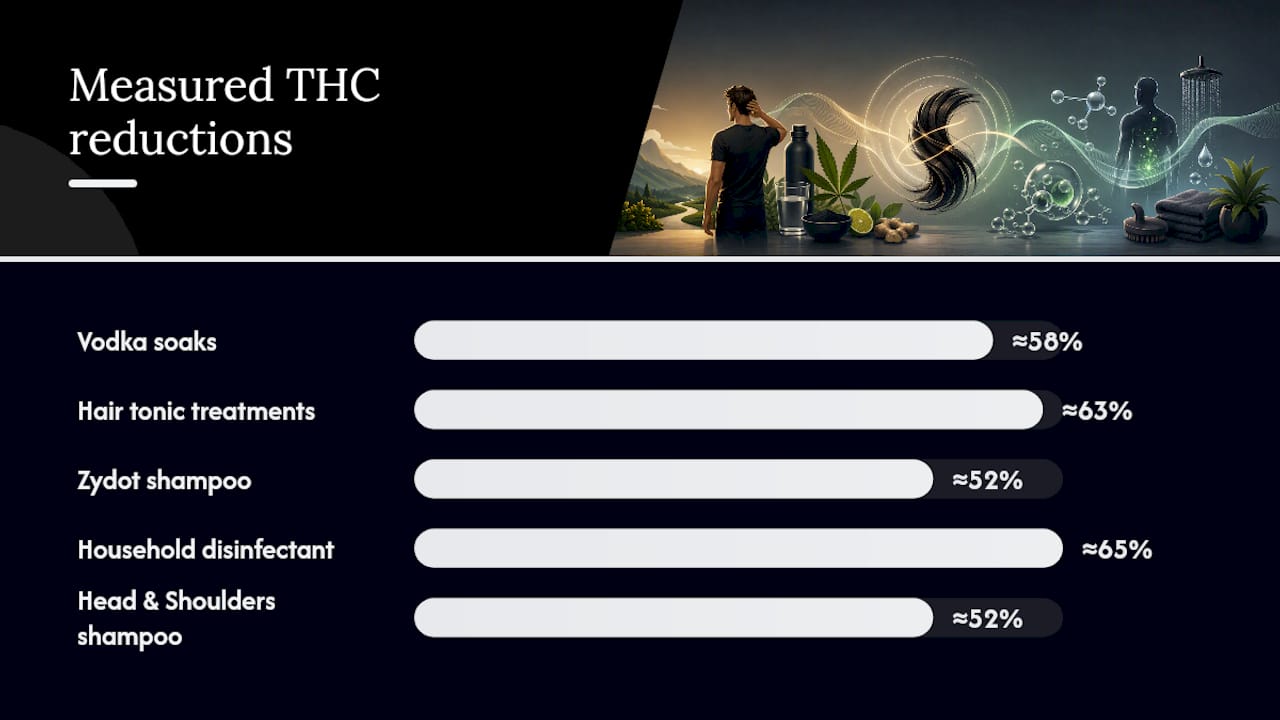
Peer-reviewed testing gives a clearer picture than most forum advice. A controlled study of 54 THC-positive hair samples found that commercially available products and household treatments produced measurable reductions, with mean THC decreases ranging from about 52% to 65% depending on the product used.
That study tested several approaches side by side:
- Vodka soaks reduced THC by roughly 58%.
- Hair tonic treatments cut levels by about 63%.
- A Zydot-branded shampoo brought reductions near 52%.
- Household disinfectant produced the largest drop, around 65%.
- Head & Shoulders shampoo, often cited as a cheap DIY fix, only reached about 52%.
Reductions this size still leave room for a positive result if starting concentrations were high. A separate analysis of homemade multi-step treatments, including alkaline bleaching combined with baking soda and salicylic acid, found even larger drops for some drug classes, with oxidative bleaching under alkaline conditions performing best in that experimental setup. Outcomes varied by analyte. Cocaine often responded more strongly than THC to the same treatment, which means a routine that works for one substance won’t necessarily work for another.
Labs don’t just test hair as it arrives. Standard protocols run both organic and aqueous washes before extraction specifically to strip external contamination, then apply LC-MS/MS methods sensitive enough to detect trace concentrations against forensic cutoffs. A reduction that gets a sample close to that cutoff can tip a result to negative. A reduction that doesn’t close the gap changes nothing, no matter how aggressive the treatment felt.
Your Same-Day Hair Detox Routine, Step by Step
This sequence targets the cuticle and cortex directly, and it’s built around the same logic Macujo popularized decades ago: open the hair shaft, strip what you can reach, and rinse thoroughly before it’s tested. Set aside 60 to 90 minutes and work in a well-ventilated bathroom.
Before you start, gather:
- Macujo Aloe Rid Shampoo
- A clarifying astringent (if your routine calls for one)
- Clean towels and disposable gloves
- Warm running water
1. Pre-wash to clear surface debris. Wet hair thoroughly and run a basic shampoo through it once to remove oils, styling product, and loose dirt before any active treatment touches the shaft.
2. Apply an astringent rinse if your routine uses one. Work it into the scalp and roots, focusing on the segment closest to the head, since that’s the section labs sample. Rinse completely; leaving residue can irritate skin and won’t help lab results.
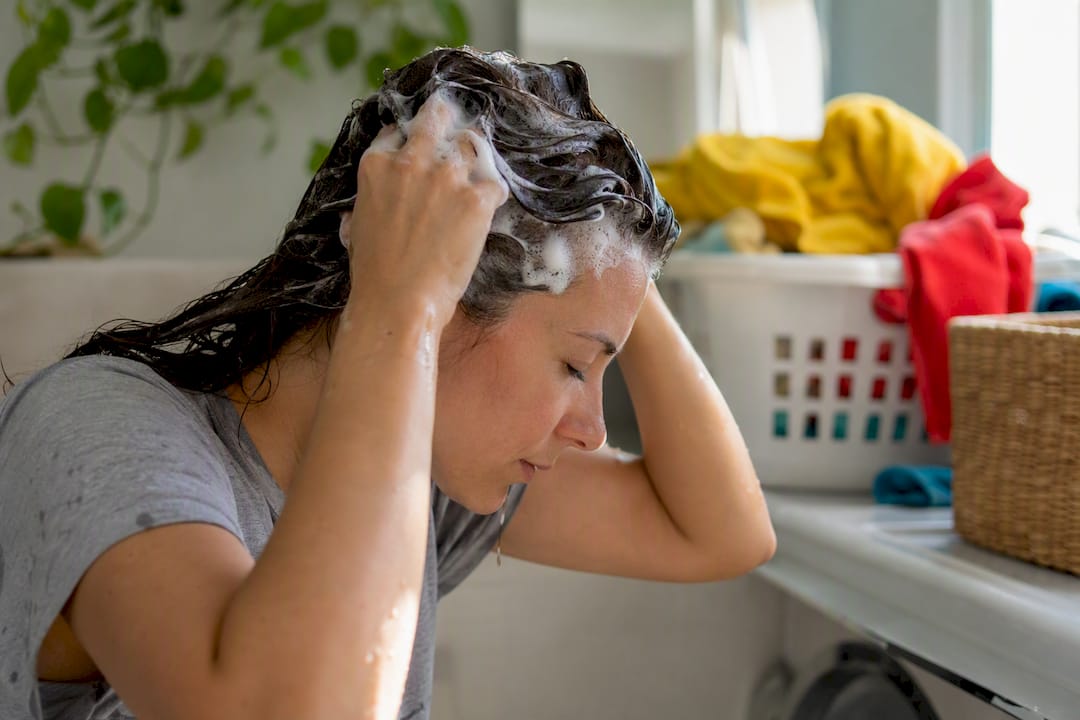
3. Scrub with a concentrated detox shampoo. Massage Macujo Aloe Rid Shampoo into wet hair for several minutes, concentrating on the roots and first inch and a half of growth. This step does the heavy lifting.
4. Rinse thoroughly and neutralize. Rinse until water runs completely clear, longer than feels necessary. Any leftover product residue can itself become a red flag during lab extraction.
5. Dry and avoid recontamination. Air dry when possible and skip other people’s combs, hats, or pillows before your appointment. Recontamination from shared items can undo the work you just did.
Verify before you go, if time allows. A home hair test kit gives you a read on where you stand before the official collection, which beats walking in blind.
Pro Tip: Don’t stack multiple aggressive chemical treatments back to back hoping for a bigger effect. Repeated bleaching sessions in a single day damage the hair shaft without meaningfully improving results, and they leave cosmetic evidence a collector can spot on sight.
Risks, Hair Damage, and Red Flags Labs Look For
Aggressive same-day treatments carry real downsides beyond the test itself. Bleach and peroxide-based recipes strip the cuticle layer, and repeated cycles in a short window can leave hair brittle, discolored, or breaking off in patches.
Labs are trained to notice signs of tampering, not just measure concentrations:
- Visibly damaged or bleached hair at collection can prompt a collector to note the condition or request an alternate sample.
- Uneven results across hair segments where the proximal section reads drastically different from the rest can trigger additional scrutiny.
- Chemical residue detected during extraction can flag a sample for confirmation testing rather than a straightforward negative.
If your scalp starts burning, hair is visibly breaking, or you notice skin irritation spreading, stop immediately and rinse with plain water. No detox routine is worth chemical burns or hair loss, and a collector who suspects tampering can cause more trouble than a straightforward positive result.
When Same-Day Isn’t Enough: Other Options to Consider
If your usage history is heavy or your hair is longer, a single day of effort may not move the needle far enough. A few honest alternatives are worth weighing before test day:
- Ask about rescheduling or an alternate matrix. Some employers or testing programs allow a urine test instead of hair, or can shift the date if you have a legitimate reason to request it.
- Test yourself first. A home hair test or a quick lab check tells you where you actually stand instead of hoping.
- Skip the shortcuts that create bigger problems. Shaving your head to avoid a hair test often just shifts the request to body hair or raises suspicion outright, and synthetic samples or substitution carry real legal and employment consequences that outlast any drug test.
Why We Recommend the Macujo Approach for Urgent Situations
Passdrugtest has spent years watching which same-day methods actually move the needle for customers facing hair follicle tests, and Mike Macujo’s original method remains the most consistently effective same-day approach we’ve seen for reaching the proximal hair segment. That’s why Macujo Aloe Rid Shampoo anchors our recommendation over improvised kitchen recipes. Follow product instructions exactly, and verify with a test kit whenever your timeline allows it. Guesswork is the enemy here.
— MIchael
Get Ready for Today’s Test With the Right Kit
Everything covered above points to one practical conclusion: a same-day push works best with a product built for the job, not a bathroom experiment. Passdrugtest sells the exact Macujo Aloe Rid Shampoo routine described in this guide, and unlike DIY bleach recipes, it’s formulated specifically to work through the cuticle without shredding your hair in the process.
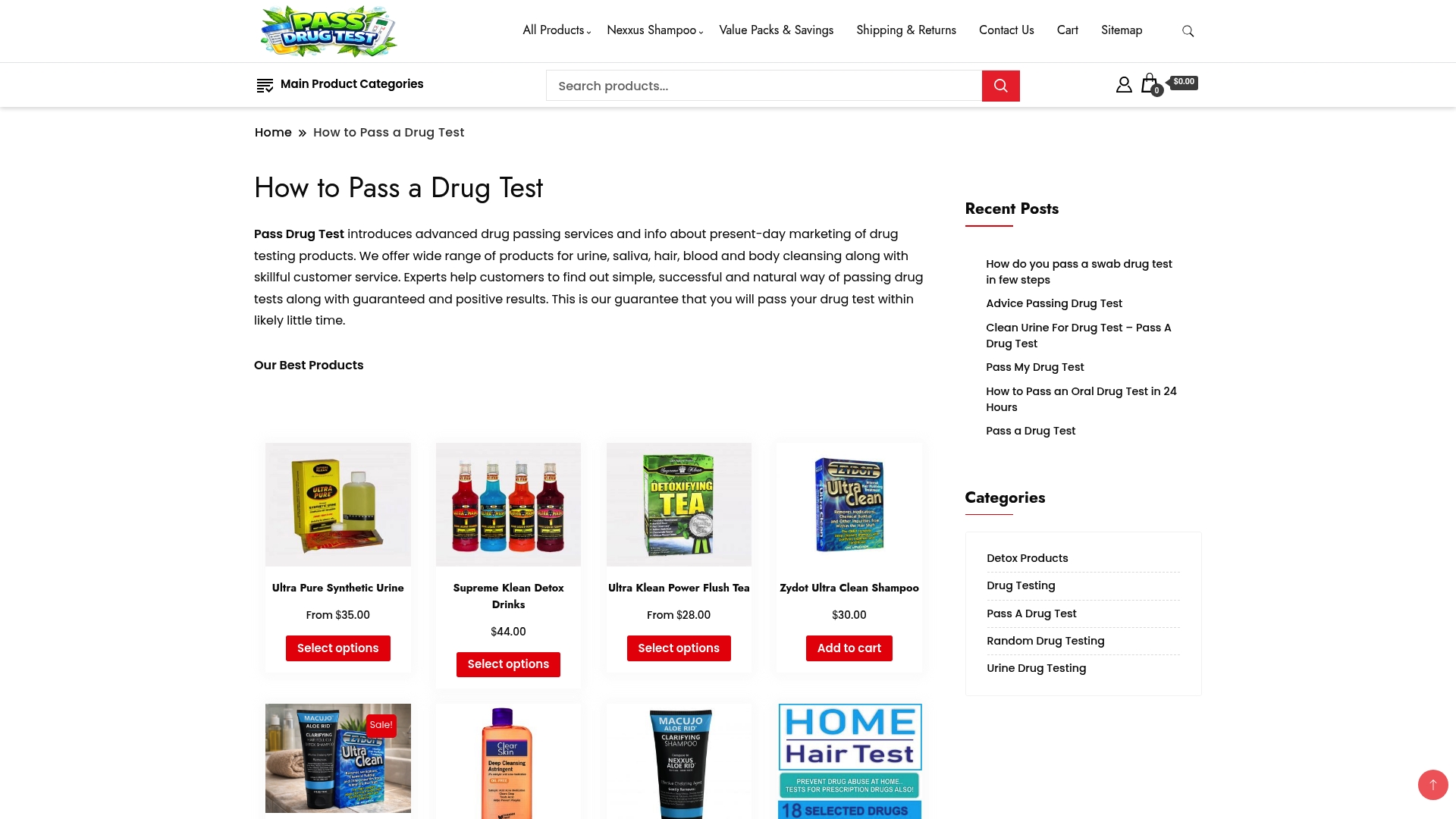
The Macujo Aloe Rid Shampoo is our flagship product for exactly this scenario, built to strip the proximal hair segment where recent exposure sits. For a stronger same-day push, the Macujo Aloe Rid Shampoo plus Zydot Ultra Clean Treatment kit combines the wash routine with a same-day finishing treatment in one order. Both ship with instructions matching the routine outlined above.
Once your order arrives and you’ve run the routine, use a home hair test kit to check your results before the official collection. It takes the guesswork out of test day and gives you a real answer instead of a hope. Order today, follow the steps, and verify before you walk in.
Sources
The reductions and lab methods referenced above come from controlled research, not marketing claims. The PMC study on commercially available detox products quantifies THC reductions across several treatments, while the Wiley analytical science review covers homemade bleaching protocols and drug-specific variability. Lab methodology and cutoff standards are detailed in the forensic hair testing review and the Waters UHPLC-MS/MS application note. Individual lab policies vary, so confirm cutoff thresholds with your specific testing provider whenever timing is uncertain.
- Manipulation of THC Hair Concentrations by Commercially Available Products – PMC
- Forensic toxicological analysis of hair: a review | Egyptian Journal of Forensic Sciences