


Standard 5, 10, and 12 panel drug screens typically do not detect kratom. These panels are built to catch opioids like morphine, oxycodone, and heroin metabolites, not mitragynine or 7 hydroxymitragynine, the two alkaloids that make kratom show up on specialized tests. That gap surprises a lot of people who assume any drug screen catches anything psychoactive.
Kratom becomes detectable only when someone orders a kratom-specific panel or sends a sample out for LC-MS/MS confirmation, the lab method built to isolate mitragynine and its related compounds. Employers, courts, and treatment programs have to specifically request this test. It is not automatic, and it is not cheap, which is exactly why most routine screening never touches it.
- Urine, blood, saliva, and hair can all technically detect kratom, but only with the right assay.
- A standard immunoassay panel will almost always report “negative” for kratom use, even in someone who took it that morning.
- If you’re facing a screen where kratom matters, ask directly what panel is being run and whether confirmatory testing is included for any presumptive positive.
Quick fact: Clinical resources note that standard 5-panel and 10-panel immunoassays exclude mitragynine by design, and only extended or specialized toxicology panels are built to catch it.
Key Takeaways
Standard drug panels miss kratom by default, and only LC-MS/MS confirmation ordered specifically for mitragynine and 7 hydroxymitragynine can reliably detect it.
| Point | Details |
|---|---|
| Standard panels miss kratom | 5, 10, and 12 panel screens don’t test for mitragynine unless a kratom-specific panel is ordered. |
| Urine is the primary specimen | Detection generally runs 4 to days, with hair, blood, and saliva serving narrower or less common roles. |
| Confirmation resolves false positives | LC-MS/MS distinguished true kratom exposure from methadone in cases where EDDP immunoassays gave false positives. |
| No universal cutoff exists | Mitragynine cutoffs vary by lab and assay, so a report’s exact wording matters more than a headline “positive.” |
| Passdrugtest supports prep, not lab results | Products like the Macujo Aloe Rid Shampoo support hair, urine, and saliva prep, but only lab confirmation settles a disputed result. |
Table of Contents
- Which Tests Detect Kratom, and How Long Does It Stay in Your System?
- How Do Labs Actually Detect Kratom in a Sample?
- What Cutoff Levels Do Kratom Tests Use?
- Can Kratom Cause a False Positive for Methadone?
- Who Actually Orders Kratom-Specific Testing?
- What Should You Do Before a Test That Might Screen for Kratom?
- What Does Passdrugtest Actually Know About Test Prep?
- Where Does Kratom Stand Legally, and Why It Matters for Testing
- Can Kratom Affect Other Parts of a Drug Test Beyond Detecting Itself?
- A Practical Read on What Actually Confuses People About Kratom Testing
- How Passdrugtest Supports Your Test Prep, Specimen by Specimen
- Sources
Which Tests Detect Kratom, and How Long Does It Stay in Your System?
Urine is the workhorse specimen for kratom testing, and for good reason. It is cheap to collect, noninvasive, and gives labs enough material to run confirmatory chromatography if a screen flags something unusual. Detection windows in published guidance generally fall in the four to nine day range for regular users, though that range shifts based on how much someone takes and how often.
Blood tests typically capture recent use within about one to two days, because mitragynine clears from plasma faster than it does from urine. Hospitals and forensic toxicologists use blood mainly when they need to establish impairment at a specific moment, not for general screening.
Saliva testing for kratom exists, but it is rare. The detection window is short, often just a few hours, and most labs do not validate saliva assays for mitragynine as routinely as for other substances. If you’re wondering why your workplace doesn’t offer a kratom saliva swab, this is why. It is not commercially practical yet.
Hair testing sits at the far end of the spectrum. In theory, hair can reveal drug use going back weeks or months because compounds bind into the hair shaft as it grows. In practice, kratom hair testing remains uncommon and lightly validated. There is also a 7 to 10 day incorporation delay, meaning recent use within that window will not show up in a hair sample yet, since the hair has not grown out enough to trap the metabolites.
| Specimen | Typical detection window | How common is kratom testing here |
|---|---|---|
| Urine | 4 days | Most common specimen for kratom-specific panels |
| Blood | one to two days | Used for recent-use or impairment cases |
| Saliva | A few hours | Rare, limited lab validation |
| Hair | Weeks to months (with 7 to 10 day delay) | Uncommon, limited validation for kratom specifically |
A handful of individual factors push these windows wider or narrower:
- Dose and frequency: Someone taking kratom daily builds up alkaloid levels that clear more slowly than occasional use.
- Metabolism: Liver function and body composition change how fast mitragynine breaks down.
- Product form: Extracts, powders, and concentrated tinctures deliver different alkaloid loads, which affects how long traces remain measurable.
- Hydration and urine concentration: These can shift apparent concentrations on a urine screen without changing actual exposure.
If your test involves urine, it helps to understand how urine drug testing generally works before assuming a kratom-specific result will behave like a standard opioid panel.
How Do Labs Actually Detect Kratom in a Sample?
Immunoassay screening, the fast, cheap method used for most workplace and clinical drug tests, works by detecting antibodies that bind to specific drug classes. The problem is that mitragynine and 7 hydroxymitragynine are not opioids in the classic structural sense, even though they act on opioid receptors. Most commercial immunoassay kits were never designed to catch them, so a standard screen sails right past kratom use.
When a lab does look for kratom specifically, it turns to liquid chromatography, either LC-MS/MS or the higher-resolution LC-HRMS. These methods separate compounds by their chemical properties before identifying them by mass, which is far more selective than an antibody-based screen. That precision matters more than it sounds, because kratom contains several closely related alkaloids that are almost impossible to tell apart without it.
Mitragynine shares its exact molecular mass with several diastereomers, including speciogynine and speciociliatine, meaning routine mass spectrometry alone cannot always distinguish them. A 2023 analytical review found that routine multi-analyte LC-HRMS methods can co-elute mitragynine with these diastereomers, producing ambiguous results unless the lab uses improved chromatographic separation first.
Improved LC-HRMS methods achieved baseline separation of mitragynine, speciogynine, speciociliatine, and mitraciliatine within five minutes, and confirmed all four diastereomers present in patient urine samples, with detection limits down to 1 microgram per liter.
That level of separation is what makes a confirmed positive legally and medically defensible. Without it, a lab risks reporting “mitragynine present” when it actually detected a related compound with no forensic significance.
Reflex testing is the standard workflow at labs equipped for this work:
- A screen (immunoassay or a preliminary chromatography pass) flags a potential positive.
- The sample reflexes automatically to confirmatory LC-MS/MS or LC-HRMS.
- A toxicologist reviews the chromatogram and mass spectrum before signing off on a final report.
Turnaround for confirmation typically runs longer than a same-day screen, often several business days, because chromatographic separation and manual review take real time. Anyone facing a consequential result should ask the lab directly how long confirmation takes rather than assuming it matches the speed of a routine screen. For background on how these workflows fit into broader testing programs, drug testing methods explained in more general terms can help fill in the picture.
What Cutoff Levels Do Kratom Tests Use?
There is no single, universally adopted cutoff for mitragynine. Cutoffs vary by lab, by assay manufacturer, and by whether the test is a rapid screening device or a full laboratory confirmation. Some consumer and clinical dip-card products report a screening cutoff around 300 ng/mL for mitragynine, while confirmatory LC-MS methods can push sensitivity down to roughly 1 ng/mL or lower, depending on the instrument and method validation.
Key number: Analytical literature confirms there is no nationally standardized mitragynine cutoff, which means two labs testing the same sample could technically report different outcomes depending on their assay’s threshold.
That gap between screening cutoff and confirmatory limit of detection matters practically. A screening test set at a higher cutoff exists to reduce false positives from trace environmental exposure or incidental contact. Confirmatory testing set at a much lower limit exists to answer a narrower, more precise question: is this specific alkaloid present, and at what concentration?
- Chronic or heavy kratom users are statistically more likely to exceed whatever screening cutoff a lab uses, simply because alkaloid buildup raises urinary concentrations over time.
- Occasional or low-dose users may fall under the cutoff even while genuinely testing within a normal detection window, producing a technically accurate “non-detect” result.
- “Non-detect” and “below cutoff” are not the same thing. A non-detect means the assay found no measurable trace. Below cutoff means something was found, just not enough to trigger a reportable positive.
- That distinction can carry real legal or administrative weight in probation, employment, or custody proceedings, where the specific wording on a lab report may determine what happens next.
Anyone reviewing a lab report with consequences attached should read the exact terminology used, not just the headline result.
Can Kratom Cause a False Positive for Methadone?
Yes, and this is one of the more consequential quirks in kratom testing. Several documented cases show kratom metabolites triggering false positive results on immunoassays designed to detect EDDP, the primary metabolite labs use to confirm methadone use.
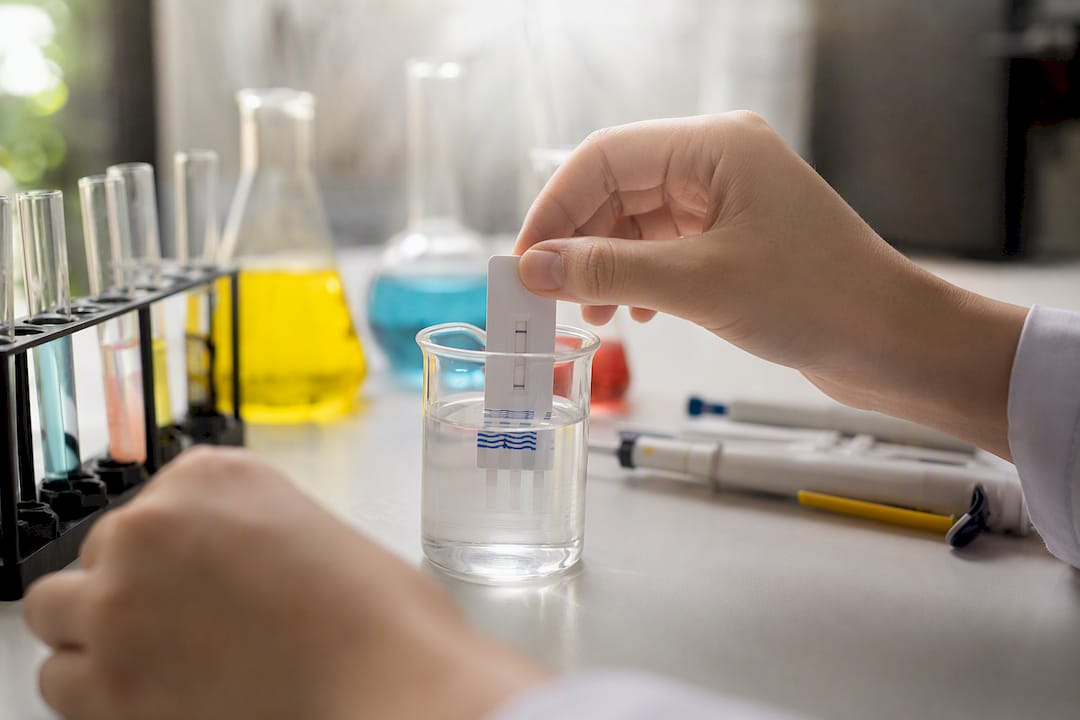
A peer-reviewed clinical evaluation found that among specimens flagging positive for EDDP by immunoassay but negative for methadone by mass spectrometry, half confirmed positive for mitragynine and/or 7 hydroxymitragynine instead. In plain terms, kratom use was mistaken for methadone use in a meaningful share of these cases, purely because the immunoassay’s antibodies reacted to a structurally similar compound.
This is exactly why confirmatory LC-MS/MS exists as a safeguard. Mass spectrometry identifies compounds by their actual molecular signature rather than an antibody’s imperfect cross-reaction, so it can definitively separate a true methadone positive from a kratom-driven false alarm.
If you get hit with a presumptive positive that doesn’t match your actual drug use:
- Request the confirmatory report in writing, not just a verbal summary of the screening result.
- Ask specifically whether the lab ran LC-MS/MS or a comparable chromatographic method to confirm the screen.
- Document chain-of-custody details, including collection date, lab name, and the assay used for the initial screen.
- If you take kratom and know it, disclose that upfront to whoever ordered the test. It gives the lab a reason to look for cross-reactivity before drawing conclusions.
Pro Tip: Keep a simple log of kratom product names, doses, and dates if you use it regularly. If a false positive for methadone or another opioid ever comes up, that record makes the disclosure conversation with a lab or employer much faster to resolve.
Who Actually Orders Kratom-Specific Testing?
Most people will never encounter a kratom-specific panel because it costs more and takes longer than a standard screen. It shows up in a narrower set of circumstances, usually where someone has a specific reason to suspect kratom use or where the testing program has unusually broad scope.
- Probation and court-ordered testing programs, particularly when a judge or supervising officer has flagged kratom as a substance of concern for that individual.
- Substance use treatment programs, where clinicians want a full picture of everything a patient is taking, including substances that aren’t controlled at the federal level.
- Specialized employer screens, most often in safety-sensitive industries like transportation or healthcare, where a company opts for an extended panel beyond the standard 5 or 10 panel test.
- Forensic toxicology cases, including autopsies or impairment investigations, where identifying every substance present matters more than speed or cost.
Routine workplace panels almost never include kratom by default. If you’re unsure what’s coming, ask the administrator directly which panel is being used and whether it’s a standard immunoassay or an extended toxicology screen. That one question tells you almost everything you need to know about your actual risk.
What Should You Do Before a Test That Might Screen for Kratom?
If kratom use is part of your situation and a test is coming up, a little preparation prevents a lot of confusion later.
- Ask what panel will be used. Get a straight answer on whether it’s a standard immunoassay or an extended panel that includes mitragynine.
- Record who ordered the test and which lab is processing it. This detail matters if you ever need to dispute a result or request additional documentation.
- Disclose kratom use to any treating clinician if it’s medically relevant, especially if you’re also taking prescribed medications that could interact with it.
- Request LC-MS/MS confirmation for any presumptive positive before accepting the result as final, particularly if the screen flagged methadone or another opioid you know you haven’t taken.
- Understand that abstinence timelines are individual, not fixed. Detection windows shift with dose, frequency, and metabolism, so there’s no universal countdown clock that guarantees a clean result by a specific day.
If a positive result carries real consequences, whether that’s a job, a custody arrangement, or a probation requirement, consider getting medical or legal advice before responding. A confirmatory report is your strongest tool in that conversation, and it’s worth the wait if the stakes are high.
Pro Tip: Never assume a “positive” on a rapid screening device is final. Screening devices are built for speed, not certainty, and confirmatory testing exists specifically to catch the cases where speed gets it wrong.
What Does Passdrugtest Actually Know About Test Prep?
Passdrugtest has spent years focused specifically on drug test preparation products, with the Macujo Aloe Rid Shampoo standing as the flagship product for hair follicle detox. That focus means real, practical experience with how different specimen types respond to different preparation approaches, not just theoretical knowledge.
Here’s the honest limit of that experience: no shampoo, drink, or detox product can identify or confirm mitragynine and 7 hydroxymitragynine in a lab sample. Only LC-MS/MS confirmation performed by an accredited laboratory can do that. Passdrugtest’s role is in the preparation phase, not the analytical phase.
What Passdrugtest brings to the table:
- Deep, product-specific experience with hair, saliva, and urine preparation methods across thousands of customer situations.
- A flagship shampoo built specifically around the demands of hair follicle testing, where timing and application method matter enormously.
- Straight talk about what a product can and cannot do, rather than vague promises about “beating” any test.
If a kratom test result matters to your job, your freedom, or your treatment program, the lab’s confirmatory report is the only source of truth. Preparation products support your situation. They don’t replace an accredited confirmation process.
Where Does Kratom Stand Legally, and Why It Matters for Testing
Kratom’s legal status is a patchwork. It remains legal at the federal level in the United States, but several states and municipalities have banned or restricted it, and that inconsistency directly affects how testing gets treated administratively.
In states where kratom is legal, a confirmed positive for mitragynine typically carries less automatic weight in employment or legal proceedings than a positive for a federally controlled substance. That does not mean it is consequence-free. Employers can still set their own policies restricting kratom use, especially in safety-sensitive roles, and a positive result can still trigger disciplinary action even when the substance itself is legal to purchase and use.
Probation and court-supervised programs add another layer of complexity. Some explicitly prohibit kratom as a condition of supervision, particularly for individuals with a documented opioid use history, since mitragynine interacts with opioid receptors. Others don’t address it at all, leaving enforcement inconsistent from one jurisdiction to the next.
The National Institute on Drug Abuse tracks kratom’s regulatory and safety landscape as part of its broader research into substances with opioid-like activity that fall outside traditional scheduling. That federal attention signals kratom’s legal and clinical status will likely keep shifting, which makes it worth checking your specific state’s current rules and any employer or program-specific policy before assuming your situation is settled either way.

Can Kratom Affect Other Parts of a Drug Test Beyond Detecting Itself?
Kratom’s interaction with methadone EDDP assays is the best-documented example of it interfering with results for a substance you never took, but it’s worth understanding why this happens beyond just knowing that it does.
Immunoassays work through antibody binding, and antibodies aren’t perfectly selective. They’re built to recognize a general chemical shape, not a single exact molecule. Mitragynine’s structure happens to resemble EDDP closely enough to trigger a reaction in some methadone assay antibodies, which is how a kratom user with no methadone exposure can wind up flagged for it.
This raises a broader point worth taking seriously: if kratom can cross-react with one opioid metabolite assay, it’s reasonable to ask whether it could theoretically interact with others. The documented evidence to date centers specifically on EDDP and methadone, and no comparably strong evidence currently points to routine cross-reactivity with other standard opioid panels. That could change as more labs study it, but for now, methadone is the specific interaction worth knowing about.
The practical takeaway holds regardless of which assay is involved: any unexpected positive on a standard panel deserves confirmatory testing before anyone treats it as a settled fact. Immunoassay screens are a starting point, not a verdict, and kratom’s documented history with EDDP cross-reactivity is proof of exactly why that distinction matters in real cases, not just in theory.
A Practical Read on What Actually Confuses People About Kratom Testing
The biggest misconception I run into is the assumption that any drug test is a kratom test. It isn’t. Most panels simply weren’t built to look for mitragynine, and that gap causes people to either panic unnecessarily or, worse, assume they’re in the clear when a specialized panel is actually in play.
The second misconception cuts the other way: treating a presumptive positive as final. Immunoassays are fast and imperfect by design. If kratom, or anything else, shows up unexpectedly on a screen, the confirmatory report is the only document that actually settles the question. Ask for it, read it carefully, and don’t let a screening result alone determine how you respond to a job, a program, or a legal proceeding.
— MIchael
How Passdrugtest Supports Your Test Prep, Specimen by Specimen
Different specimens call for different prep, and that’s exactly where Passdrugtest’s product range earns its keep. For hair follicle situations, the Macujo Aloe Rid Shampoo remains the flagship option, built around what’s widely recognized as the Macujo Method, the most trusted approach for tackling a hair follicle drug test when timing is tight and the stakes are real.
For urine-focused situations, Passdrugtest offers a full line of products for clean urine preparation, and for saliva-specific scenarios, options like the saliva detox mouthwash address the short window that oral fluid testing works within.
None of these products can alter what a confirmatory LC-MS/MS report shows once a lab runs it. What they do is support your preparation heading into a test, based on the specimen type you’re actually facing. If a kratom result carries real consequences for you, treat the confirmatory report as the final word, and treat preparation as the step that happens before that report gets written.
Ready to figure out which approach fits your specimen type and timeline? Browse the full drug test detox products lineup and pick the option that matches what you’re actually up against.
Sources
- Drug testing for mitragynine and kratom: Analytical challenges and medico‐legal considerations
- A Kratom Metabolite Causes False Positive Urine Drug Screening Results for Methadone
- NIDA: Kratom research topics